7 Proven Strategies to Reduce Homework Stress for Kids
Discover 7 proven strategies to reduce homework stress for children. Learn actionable tips and how iBloom can help. Try iBloom free today.

Start with the Matching Practice
Use this guide with a direct iBloom worksheet or lesson so children can move from reading the explanation into real practice.
Introduction
Homework stress is a familiar challenge for many parents and educators. Imagine a child sitting at a cluttered desk, overwhelmed by a mountain of assignments, unsure where to start. This scenario is all too common and can lead to anxiety and frustration for both children and parents. The key to overcoming this lies in understanding how to reduce homework stress for children effectively. iBloom, with its AI-powered interactive worksheets and adaptive lessons, offers a solution that transforms this daunting experience into an engaging and manageable task. By pinpointing specific learning gaps and tailoring content to individual needs, iBloom ensures that homework becomes a productive and stress-free activity. Explore our interactive digital worksheets and diagnostic assessments to see how iBloom can help.
Understanding Homework Stress in Children
Identifying Common Stressors
Homework stress can stem from various sources, including the volume of assignments, difficulty level, and lack of understanding. A 2024 study by Stanford University found that 56% of students consider homework a primary source of stress. Parents and teachers must recognise these stressors to address them effectively.
Creating a dialogue with children about their homework experiences can reveal specific challenges they face. For instance, some might struggle with time management, while others find certain subjects particularly daunting. Understanding these issues is the first step towards implementing effective solutions that can ease homework stress.
The Psychological Impact of Homework Stress
The psychological effects of homework stress can be profound, affecting a child's emotional well-being and academic performance. According to the American Psychological Association (APA), chronic stress can lead to anxiety, depression, and a decline in academic achievement. It's crucial for parents and educators to be aware of these potential impacts and take proactive steps to mitigate them.
| Stress Factor | Impact on Child | Potential Solution |
|---|---|---|
| Volume of Homework | Overwhelm and fatigue | Prioritise tasks, break into smaller parts |
| Difficulty Level | Frustration and avoidance | Provide additional support, use resources like iBloom |
| Lack of Understanding | Anxiety and decreased confidence | Encourage asking questions, use diagnostic assessments |
| Time Constraints | Rushed work, errors | Implement time management strategies |
Creating a Productive Homework Environment
Designing an Ideal Homework Space
A well-organised, quiet, and well-lit homework space can significantly reduce homework stress. This environment should be free from distractions and have all necessary supplies within reach. Encourage children to personalise their space to make it more inviting and conducive to concentration.
The physical setup of a homework area can influence a child's ability to focus and complete tasks efficiently. A 2025 study by the University of California emphasises the importance of an ergonomic setup, which includes a comfortable chair and desk, to prevent physical strain and enhance productivity.
Establishing a Consistent Homework Routine
Consistency is key to reducing homework stress. Establishing a regular homework schedule helps children develop a sense of routine and predictability, making the task less daunting. Parents should work with their children to identify the best times for homework, considering the child's energy levels and extracurricular activities.
- Set a specific start time for homework each day.
- Break tasks into manageable segments with short breaks in between.
- Use tools like planners or apps to track assignments and deadlines.
- Create a reward system to motivate and reinforce positive habits.
- Encourage open communication about any difficulties encountered.

Time Management Techniques for Kids
Teaching Prioritisation and Planning
Effective time management is crucial for reducing homework stress. Teaching children how to prioritise tasks and plan their workload can prevent last-minute rushes and reduce anxiety. Encourage children to list their assignments and evaluate what needs immediate attention.
Time management skills are not innate and must be cultivated over time. Parents and educators can guide children in creating a homework timetable, setting realistic goals, and using visual aids like calendars and checklists to track progress.
Techniques for Effective Time Management
Implementing practical time management strategies can help children balance their academic responsibilities with leisure and rest. Here are some actionable tips:
- Use a timer to allocate specific periods for each task.
- Break homework into smaller, more manageable tasks.
- Set clear, achievable goals for each study session.
- Encourage regular short breaks to maintain focus and energy.
- Limit distractions by keeping technology and social media usage in check.
- Review completed tasks and adjust plans as needed.
- Reward accomplishments to reinforce good habits.
Incorporating Breaks and Physical Activity
The Importance of Breaks in Learning
Regular breaks during homework sessions are essential for maintaining concentration and reducing stress. A 2026 study by the National Education Association highlights that short, frequent breaks can improve children's focus and productivity. Breaks allow the mind to rest, leading to better retention of information and increased creativity.
Parents and teachers should encourage children to take breaks after every 20-30 minutes of focused work. These breaks should involve activities that relax the mind, such as stretching, deep breathing, or a quick walk outside.
Integrating Physical Activity into Study Time
Physical activity is a powerful tool for reducing homework stress. Exercise releases endorphins, which are natural stress relievers, and helps children return to their studies with a refreshed mind. Schools and parents should strive to incorporate physical activity into daily routines.
"Integrating short bursts of physical activity into study sessions can significantly enhance a child's ability to concentrate and reduce stress," says Dr. Emily Harris, a child psychologist specialising in educational development.
Utilising Technology to Aid Learning
The Role of Technology in Stress Reduction
Technology, when used wisely, can be a powerful ally in reducing homework stress. Platforms like iBloom offer AI-powered interactive worksheets and adaptive lessons that make learning engaging and personalised. These tools cater to individual learning styles and help children grasp complex concepts more easily.
Digital resources provide instant feedback, allowing children to learn from mistakes and improve their understanding. This immediate reinforcement can boost confidence and reduce the anxiety associated with traditional homework methods.
Benefits of iBloom's Interactive Tools
iBloom's educational technology solutions are designed to alleviate homework stress by making learning fun and effective. Here are some benefits:
- Personalised learning paths that adapt to each child's needs.
- Interactive content that keeps children engaged and motivated.
- Diagnostic assessments to identify and address learning gaps.
- Access to a wide range of subjects and grade levels.
- Support for both parents and educators in guiding children's learning journeys.

Collaborating with Teachers and Schools
Building a Supportive Network
Collaboration between parents, teachers, and schools is vital in reducing homework stress. Open communication ensures that everyone is on the same page regarding a child's academic progress and challenges. Regular meetings and updates can help identify issues early and develop strategies to address them.
Parents should feel empowered to reach out to teachers with concerns and seek guidance on how to support their child's learning at home. Schools can facilitate workshops or information sessions to provide parents with tools and techniques for managing homework stress.
Effective Communication Strategies
Establishing clear communication channels is essential for effective collaboration. Here are some strategies:
| Strategy | Description |
|---|---|
| Regular Parent-Teacher Meetings | Discuss progress and challenges, align on goals |
| Feedback Mechanisms | Encourage feedback from children, parents, and teachers |
| Use of Technology | Leverage communication apps for updates and reminders |
| Collaborative Planning | Involve parents in setting realistic homework expectations |
Frequently Asked Questions
How can I help my child manage homework stress?
Help your child by creating a structured homework routine, providing a quiet and organised workspace, and encouraging regular breaks. Consider using tools like iBloom's interactive digital worksheets to make learning engaging.
What are some signs that my child is stressed by homework?
Look for signs such as reluctance to start homework, frequent complaints of headaches or stomachaches, and decreased interest in school. Open communication is key to identifying and addressing stress.
How can technology help reduce homework stress?
Technology offers interactive and personalised learning experiences. Platforms like iBloom provide resources that adapt to individual needs, making homework more engaging and less stressful.
What role do teachers play in reducing homework stress?
Teachers can help by setting realistic homework expectations, providing clear instructions, and maintaining open communication with parents to create a supportive learning environment.
How important is physical activity in managing homework stress?
Physical activity is crucial as it helps reduce stress, improve mood, and enhance concentration. Encourage children to engage in regular exercise as part of their homework routine.
Conclusion
Reducing homework stress for children is an achievable goal with the right strategies and support. By understanding the sources of stress, creating a conducive homework environment, and leveraging tools like iBloom, parents and educators can transform homework into a positive experience. Start your journey towards stress-free homework by starting a free trial on iBloom today.
Practice This Skill Next
After reading this guide, children can practise the same skill on iBloom. Start with interactive digital worksheets, then ask the child to explain one answer before moving on.
Worksheet And Lesson Previews
Describe daily routines Worksheets for Pre Kindergarten Preview
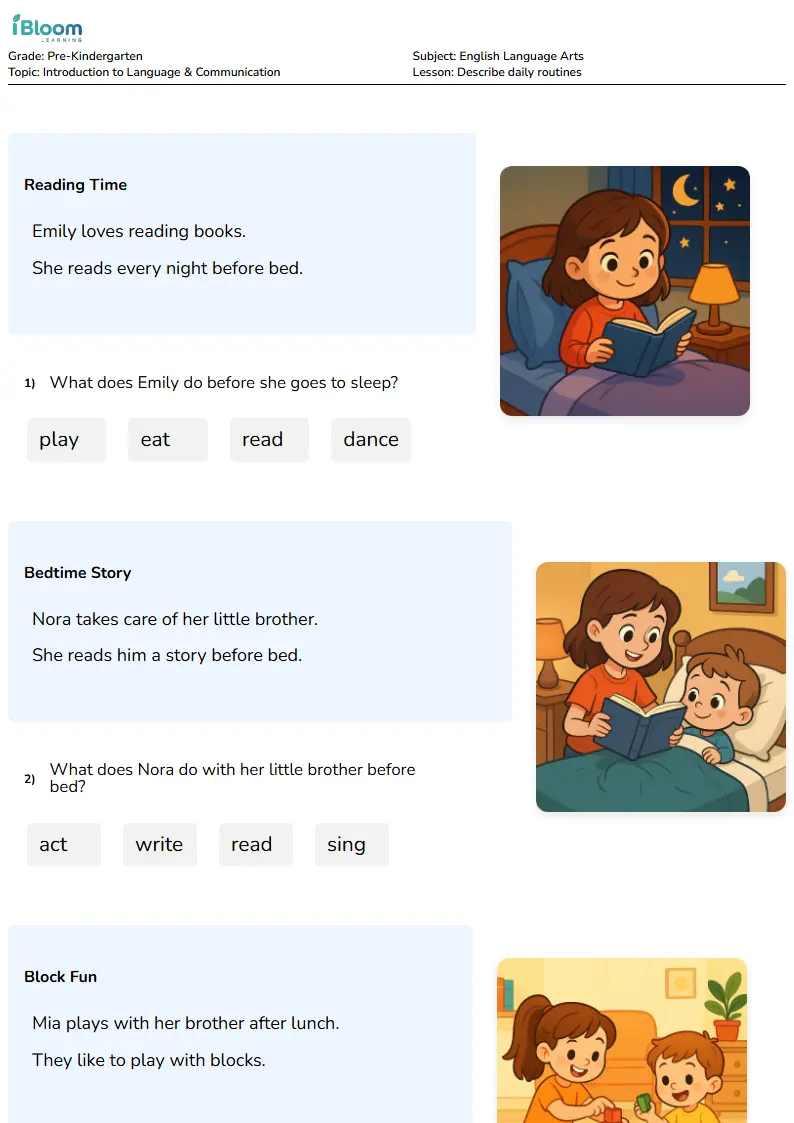
Use this preview to see the kind of practice children will open before you start the routine.