Building Sentences with Nouns and Verbs for Class 1
Help Class 1 children build sentences with nouns and verbs using examples, routines, worksheet links, and parent-teacher guidance.

Overview
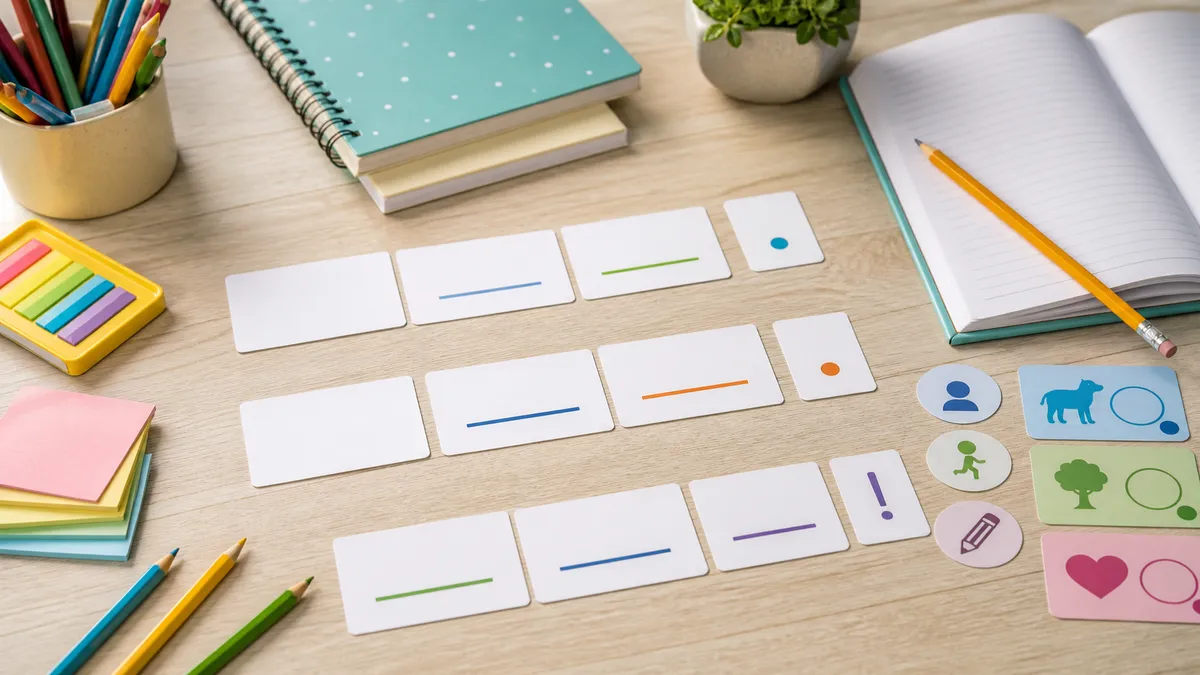
Building Sentences with Nouns and Verbs for Class 1 is a practical guide for parents, teachers, tutors, and children who need clearer English practice. It is built around build sentence for class 1, fresh Google Search Console evidence, and connected iBloom pages such as Building Sentences with Nouns and Verbs, Building Sentences Worksheet, and Correcting Sentences Worksheet.

Start with the Matching Practice
Use this guide with a direct iBloom worksheet or lesson so children can move from reading the explanation into real practice.


Worksheet And Lesson Previews
Building Sentences with Nouns and Verbs Worksheets for Class 1 Preview
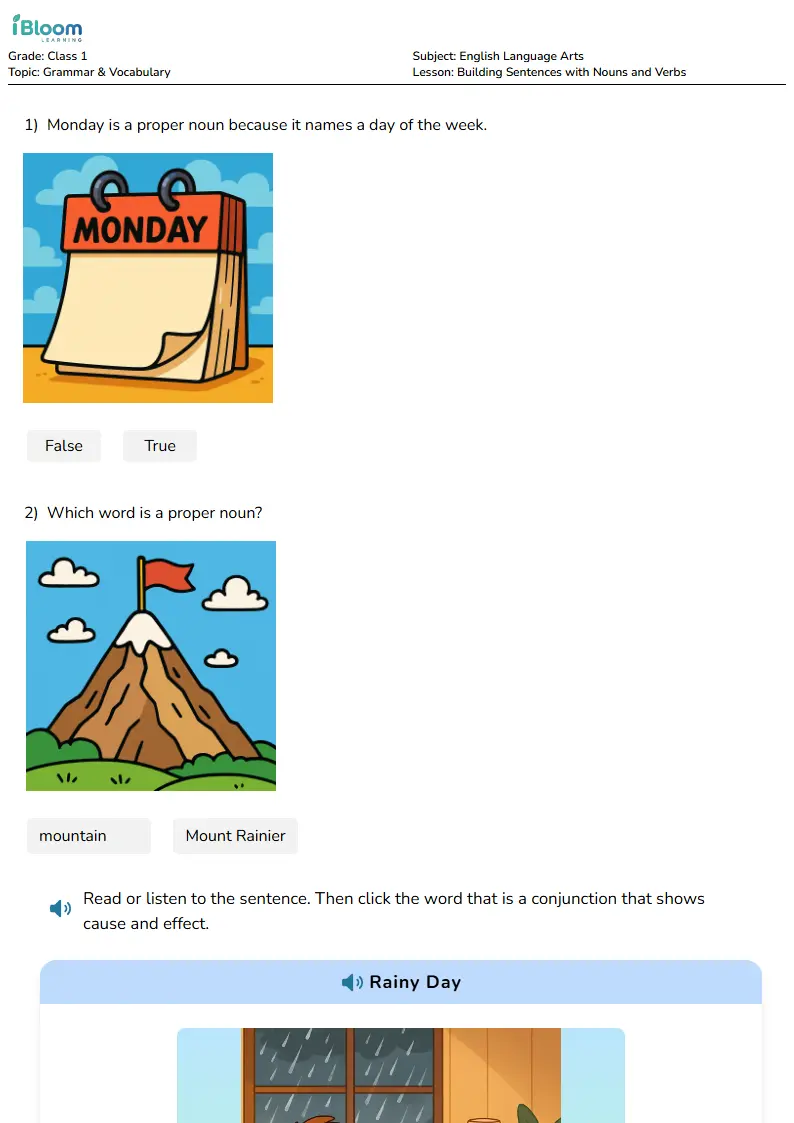
Use this preview to see the kind of practice children will open before you start the routine.
- Open the worksheet: Building Sentences with Nouns and Verbs Worksheets for Class 1
- Open the lesson: Building Sentences with Nouns and Verbs Lesson for Class 1
Correcting Sentences Worksheets for Class 1 Preview
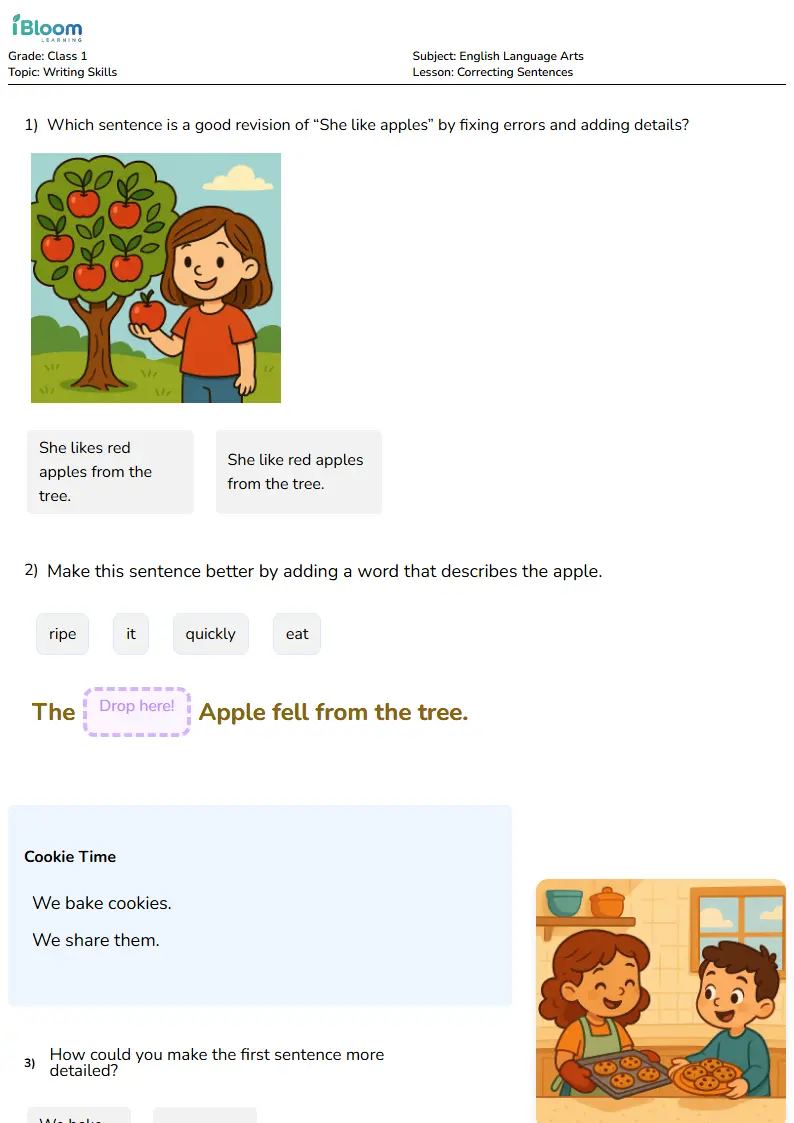
Use this preview to see the kind of practice children will open before you start the routine.

Key Takeaways
- Building Sentences with Nouns and Verbs for Class 1 should combine oral language, examples, guided practice, and one clear next step.
- Children need to explain their thinking, not only complete an English page silently.
- Parents can support the skill in short, calm sessions.
- Teachers can use this as a mini-lesson, small-group task, or project bridge.
- iBloom links should be used throughout the routine, not only at the end.

Why This Skill Matters
Sentence building starts with a clear actor and a clear action. A child can say "The cat sleeps," then expand it to "The sleepy cat sleeps on the mat." The noun gives the sentence a person, place, animal, or thing; the verb gives the sentence an action or state. Use cards, pictures, oral rehearsal, and Building Sentences with Nouns and Verbs before asking for independent writing.
The IES practice guide on elementary writing recommends explicit instruction, strategy teaching, and a supportive writing environment. The Common Core English language and reading standards also emphasize conventions, sentence command, details, and text evidence. Adult-facing sources such as https://ies.ed.gov/ncee/WWC/PracticeGuide/17 and https://www.thecorestandards.org/ELA-Literacy/L/1/ help adults plan better prompts; iBloom gives children the practice surface.
Step-by-Step Routine
Start with one model. Ask the child to say the idea aloud. Let the child try a similar example. Ask for an explanation. Then move to an iBloom page. This order matters because children often understand the spoken idea before they can write it fluently.
- Preview the task and name the skill.
- Model one example aloud.
- Let the child try one example with support.
- Ask, "How did you know?" or "What did you add?"
- Use Building Sentences with Nouns and Verbs or Building Sentences Worksheet for connected practice.

Examples for Children
For younger learners, keep the sentence or project short. Use familiar people, places, actions, objects, and pictures. For older learners, ask for evidence, reasons, transitions, and a short written explanation. A strong response can be simple: "I chose this detail because it proves the main idea," or "I added a verb so the sentence tells what happened."
Parent Guidance
Parents can use Building Sentences with Nouns and Verbs for Class 1 in ten to fifteen minutes. Choose one sentence, one picture, one paragraph, or one project card. Let the child speak first, then write. If the child makes a mistake, ask them to reread, point, revise, or add one missing part. Use Writing Sentences in Grade 1 when the child needs a wider guide.
Teacher Guidance
Teachers can use Building Sentences with Nouns and Verbs for Class 1 for a mini-lesson, a literacy center, small-group support, or homework preparation. The best classroom routine is model, talk, try, explain, revise. Use English Worksheets for wider reading practice and Correcting Sentences Worksheet when the class needs more connected English pages.
Regional Learning Notes
In India, this can support CBSE, ICSE, and state-board English work in Delhi, Mumbai, Bengaluru, Chennai, Hyderabad, Pune, Kolkata, Ahmedabad, Jaipur, Lucknow, Kerala, Tamil Nadu, Karnataka, Maharashtra, Telangana, Gujarat, Rajasthan, and West Bengal. In the United States, it fits classroom and home literacy practice in California, Texas, Florida, New York, Illinois, Pennsylvania, Ohio, Georgia, North Carolina, Michigan, Los Angeles, Houston, Chicago, Phoenix, Philadelphia, Dallas, Austin, Seattle, Boston, Denver, Atlanta, and Miami. In the UAE, the routine works for Dubai, Abu Dhabi, Sharjah, Ajman, Ras Al Khaimah, Fujairah, Umm Al Quwain, and Al Ain families across British, American, IB, and Indian curriculum settings.
Common Mistakes
One mistake is asking for polished writing before the child has enough oral language. Another is giving too many examples at once. A third is correcting every error without naming the skill. Keep the feedback specific: add a verb, choose the key detail, use a capital letter, say the reason, or reread the sentence.
Related Blogs
Frequently Asked Questions
Who should use Building Sentences with Nouns and Verbs for Class 1?
Use it with elementary learners who need clearer English practice, whether the support comes from a parent, teacher, tutor, homeschool adult, or older sibling.
How long should one session take?
Ten to fifteen focused minutes is enough. Stop after one strong explanation or one clear revision.
Which iBloom page should I use first?
Start with Building Sentences with Nouns and Verbs, then move to Building Sentences Worksheet or Correcting Sentences Worksheet for connected practice.
What should parents do after a mistake?
Ask the child to reread, say the sentence aloud, point to the detail, or revise one part. Keep the correction specific and calm.
What should teachers check?
Teachers should check whether the child can explain the sentence part, project idea, or key detail in their own words.
Practice This Skill Next
After reading this guide, children can practise the same skill on iBloom. Start with Building Sentences with Nouns and Verbs or Building Sentences Worksheet, then ask the child to explain one answer before moving on.