What Should You Do When a Child Reads Accurately but Cannot Retell the Story?
A practical U.S.-focused guide for identifying why an accurate reader cannot retell and building comprehension, sequence, and explanation.
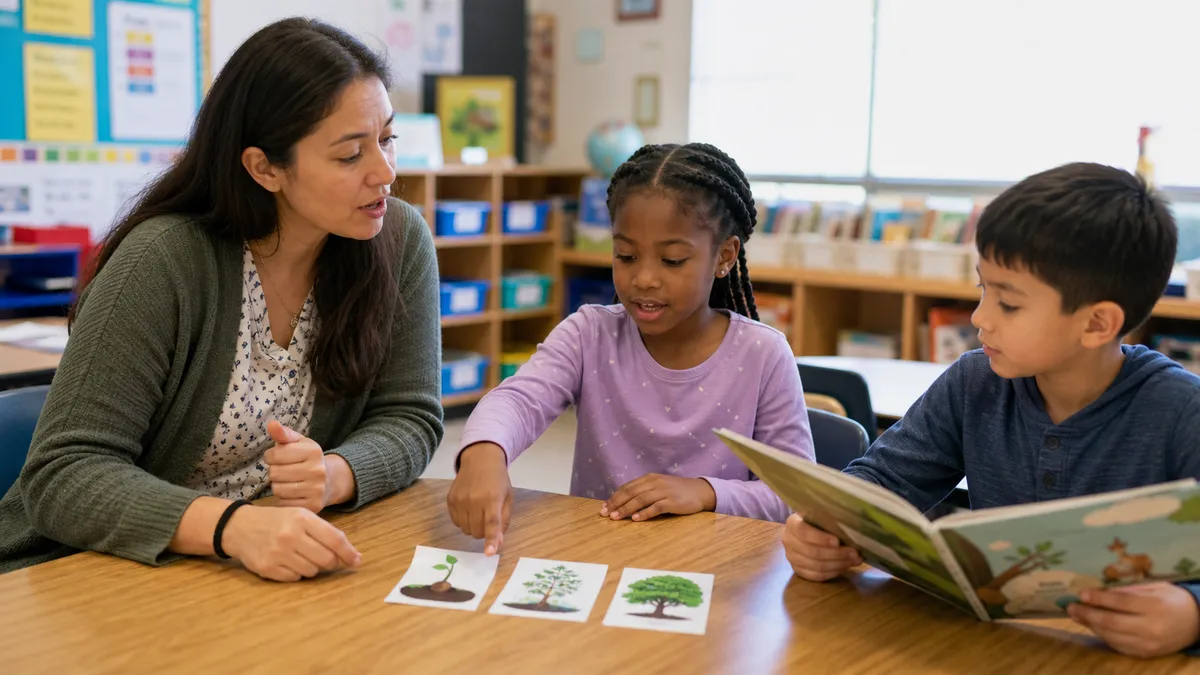
What Should You Do When a Child Reads Accurately but Cannot Retell the Story?
If a child reads the words accurately but cannot retell the story, do not assume the child was not listening or needs a harder book. First reduce the memory load: pause after a short section, ask who or what the section was mainly about, name the most important event, and point to one sentence or picture that proves it. Then connect those notes into a beginning, middle, and end. Accurate word reading is valuable, but it does not automatically show that the reader selected important information, connected events, or built a coherent mental model of the text.
The most useful response is a short diagnostic routine, not a demand to “read it again” without a purpose. Check whether the difficulty comes from vocabulary, sentence meaning, attention, story structure, too much text at once, or the retelling task itself. A child who can answer focused questions but freezes when asked “Tell me everything” may understand more than the broad prompt reveals. A child who cannot answer even with the page open needs support during reading, not only after it.
This guide is for United States parents, homeschoolers, tutors, and elementary teachers, especially those supporting children from kindergarten through Grade 3. It explains what to observe, what to say, how to practice without turning reading into an interrogation, and when to bring specific evidence to the teacher.
Use a Five-Minute Diagnostic Before Choosing Practice
Choose an unfamiliar, age-appropriate story that the child can read without constant decoding help. Use only a page or a short section. Say, “Read this so we can figure out what happens.” This gives reading a meaning-focused purpose.
After the child reads, try the following sequence.
Step 1: Ask for one sentence
Say, “Tell me the most important thing that happened in this part.” A child who gives a reasonable central event may understand the section but feel overwhelmed by a full retell. A child who repeats the final sentence may be relying on the most recent information rather than selecting importance.
Step 2: Keep the page open
Say, “Show me the words or picture that helped you.” Keeping the text visible separates comprehension from unaided memory. If the child succeeds with the page open, the next instructional step may be organizing and gradually recalling information, not rereading harder material.
Step 3: Ask about one connection
Say, “Why did that happen?” or “How did the character’s action change the problem?” A list of disconnected events is not yet a coherent retell. This question checks whether the child connected cause, response, and result.
Step 4: Offer three choices
Ask whether the section was mainly about a character solving a problem, learning information, or describing a setting. Choices should be plausible, not silly. Success with choices suggests the child may recognize meaning before being able to generate a complete response independently.
Step 5: Ask for a second attempt
Give a simple frame: “First ___. Then ___. Finally ___.” If the retell improves immediately, the barrier was partly organization. If it remains unrelated to the text, move back into the story and build meaning one section at a time.
Record the exact pattern rather than labeling the child “bad at comprehension.” Useful notes sound like: “Reads the page accurately; names the character; cannot state the problem until offered choices; sequences events after using three boxes.” This evidence tells a teacher much more than “doesn’t understand reading.”
Identify the Specific Breakdown
Several different problems can produce the same blank look after reading. The right practice depends on which one you observe.
The child does not know key vocabulary
A reader may pronounce a word accurately without knowing what it means. If the story turns on words such as “reluctant,” “discover,” “enormous,” or “whispered,” correct pronunciation alone will not build the event. Ask the child to explain the important word in the sentence, act it out, point to an illustration, or replace it with familiar language.
Do not preteach every unfamiliar word. Select words that are essential to the central event or relationship. After explaining one, reread the sentence and ask what changed in the story. This keeps vocabulary connected to comprehension.
The child understands sentences but loses the sequence
Some children answer questions about each page but scramble the order afterward. Use three boxes labeled beginning, middle, and end. Draw or write one event in each box immediately after it occurs. Then cover the text and use the boxes to retell.
The iBloom First Grade retell stories in sequence worksheet gives a focused next step for sequencing. Pair it with the First Grade retell stories in sequence lesson when the child needs a modeled explanation before independent practice.
The child includes everything and cannot choose what matters
A retell can fail because it is overloaded with names, colors, dialogue, and decorative details. Ask, “If we could keep only three events, which ones would make the ending understandable?” Have the child cross out a detail that can disappear without changing the main story.
For younger readers, the Kindergarten identify main ideas and details lesson helps separate a central idea from supporting information. Follow with the matching main ideas and details worksheet and ask the child to justify why one detail matters.
The child remembers facts but not relationships
A child may recall that a dog ran away, a storm began, and a neighbor arrived, yet not explain how those events connect. Use arrows and relationship words: because, so, but, before, after, and therefore. Ask the child to combine two events: “The dog ran away because ___,” or “The storm began, so ___.”
This is not grammar practice for its own sake. The connecting word forces the reader to express a relationship that makes the story coherent.
The child understands but cannot produce an oral retell
Language formulation, shyness, performance pressure, or an overly broad prompt can hide understanding. Let the child point, arrange picture cards, draw three scenes, answer yes-or-no questions, or tell the story to a toy before speaking to an adult. Accept the strongest available response mode first, then build toward a spoken retell.
The text is too demanding
Accurate reading can be slow and effortful even when errors are rare. If nearly all attention goes to recognizing words, little capacity may remain for connecting ideas. Try a shorter passage with familiar vocabulary. If comprehension improves, the earlier text may not have been a useful independent-reading match for this diagnostic task.
Teach a Stop, Name, Connect Routine
Use the same three actions during several short reading sessions.
Stop
Pause at a meaningful boundary: after a scene, paragraph, page, or important event. Do not stop after every sentence unless the text or learner requires it. Too many interruptions can destroy the flow that comprehension needs.
Name
Ask the child to name the important information in a few words. For narrative text, that may be “Maya lost the key.” For informational text, it may be “Roots take in water.” Write the phrase on a sticky note or let the child draw it.
Connect
Ask how the new note relates to the earlier one. Did it cause something, solve something, add an example, or change the reader’s understanding? Use an arrow and one connecting word.
At the end, the notes become a retell plan. The child should not simply read the notes aloud. Ask for complete sentences that explain the links among them. Gradually reduce the notes from one per page to one per major section, and eventually to a mental plan.
The First Grade identify the main idea and sequence events lesson is useful when a learner needs to coordinate importance and order. The matching sequence-events worksheet can serve as an independent check after the routine is familiar.
A Parent Plan for One Week
Keep each session between ten and fifteen focused minutes. Use a different short text or section each day so the child applies the process rather than memorizing one story.
Day 1: Make understanding visible
Read one short page. Keep it open and ask who, what happened, and how you know. Do not require a full retell. The goal is to establish that answers come from meaning and evidence.
Day 2: Use three event boxes
After each major event, draw a quick symbol in one of three boxes. At the end, point to each box and retell with “first, then, finally.” If the story has a different structure, rename the boxes “problem, attempts, result.”
Day 3: Practice importance
Write five remembered details. Ask the child to choose the three needed to make the story understandable. Discuss why the other two are interesting but optional. There may be more than one defensible set; require a reason rather than one secret answer.
Day 4: Add relationships
Use because, but, and so to connect events. Say, “The character wanted ___, but ___, so ___.” Let the child return to the page. Accuracy of the relationship matters more than speed.
Day 5: Retell to a new listener
Ask the child to retell the story to someone who did not read it. The listener may ask one genuine clarifying question. This reveals whether the retell contains enough context for another person.
End the week by comparing the first and final attempts. Praise a specific improvement: choosing important events, keeping order, explaining causes, or checking the text. Avoid promising that one week will remove every difficulty. The purpose is to identify a productive routine and collect useful evidence.
A Teacher Small-Group Lesson
Plan a fifteen- to twenty-minute lesson around a short shared text.
First, state the purpose: “We are going to notice how important events fit together so we can retell the story clearly.” Read the opening section and model one concise note. Think aloud briefly: “This detail matters because it creates the problem.”
Second, assign students a limited task during the next section. One student identifies the character’s goal, one identifies the obstacle, and one finds evidence. Students compare answers and agree on a group note.
Third, place notes on a visible sequence line. Ask students to move any note that is out of order. Then add arrows labeled because, but, or so where appropriate.
Fourth, remove the text and invite a partner retell. The listening partner checks only three features: important events, correct order, and one clear connection. A narrow checklist prevents feedback from becoming vague or overwhelming.
Finally, use an exit ticket with a new short paragraph. Ask students to write or draw the most important event and explain why it matters. The ticket shows whether the strategy transfers beyond the shared text.
The Third Grade identify key details worksheet can support students who need more practice selecting evidence. For younger learners, the Kindergarten recall key details worksheet keeps the task concrete and brief.
Adjust the Routine by Grade and Text Type
Kindergarten
Use familiar read-alouds, pictures, puppets, and three-event sequences. The adult may do the reading while the child retells. Focus on characters, setting, and major events rather than expecting independent decoding and retelling at the same time. The Pre-K retell familiar stories lesson can provide a simpler oral-language starting point.
Grade 1
Use short decodable or controlled passages that the child can read with reasonable ease. Ask for beginning, middle, and end, then add a problem-and-solution frame. Keep the text available while teaching the routine.
Grade 2
Ask children to include the character’s goal, important attempts, and outcome. Compare two possible details and decide which better explains the ending. Begin shifting from picture notes to short phrases.
Grade 3
Expect clearer causal connections and evidence. Ask how a character’s actions, feelings, or decisions changed across the story. For informational text, replace story sequence with topic, main idea, key details, and relationships such as cause and effect or comparison.
Narrative and informational texts require different retell frames. A story frame should not be forced onto a science paragraph. For informational reading, ask: “What is the topic? What is the author teaching about it? Which two details explain that idea? How are the details connected?”
Protect Comprehension While Supporting Word Reading
When a child misreads an important word, correct or decode it, reread the whole sentence, and ask what the sentence now means. This repairs the link between word recognition and comprehension. If adults focus only on pronouncing the word and immediately move on, the story connection may remain broken.
The U.S. Department of Education’s foundational reading practice guide recommends instruction in decoding, word analysis, and connected-text reading. Connected text matters here because word work should ultimately support meaning across sentences, not remain an isolated performance.
Do not interrupt every harmless hesitation. Decide whether the word changes meaning. A substitution such as “house” for “home” may preserve the sentence’s gist, while changing “before” to “after” reverses the sequence. After reading, revisit meaning-changing errors and have the child reread enough context to rebuild the event.
Misconceptions Adults Should Avoid
“They read every word correctly, so they understood it” is not a safe conclusion. Accurate reading is important evidence, but comprehension must be checked through meaning, connections, and evidence.
“They cannot retell, so they were not paying attention” is also too broad. Vocabulary, language organization, memory load, text difficulty, or an unclear prompt may explain the response. Observe before assigning a cause.
“Just read it again” gives no purpose. Rereading can help when the child knows what to look for: the character’s goal, the cause of an event, or evidence for a main idea. Assign the purpose before rereading.
“A good retell includes every detail” creates overload. A useful retell is selective and coherent. Teach the child to preserve what another listener needs to understand the central story.
“Use beginning, middle, and end for every text” ignores structure. That frame helps many narratives, but informational text may require description, sequence, cause and effect, problem and solution, or comparison. The National Center on Improving Literacy provides literacy resources for parents and families that can help adults connect reading support to a child’s needs without reducing comprehension to one worksheet format.
Accessibility and Multilingual Support
Reduce output demands without reducing thinking. A child may demonstrate understanding by arranging pictures, pointing to evidence, drawing events, using a speech-to-text tool, or answering focused questions. Once the ideas are organized, help the child express them in complete spoken or written sentences.
For multilingual learners, allow discussion in the language that best reveals understanding when possible. Then jointly build the English retell using sentence frames. Preteach only essential vocabulary, pair words with pictures or actions, and distinguish limited English expression from limited comprehension.
For children who have difficulty holding several events in mind, keep visual notes visible and reduce the amount read before each checkpoint. For children sensitive to writing demands, let an adult scribe the retell. For children who become anxious when questioned, frame the task as collaborative: “Let’s build the story map together.”
Accessibility supports should make the target visible. If the target is comprehension, handwriting quality should not determine success. If the target is an independent oral retell, visual scaffolds can be gradually reduced after the child experiences the structure successfully.
When to Talk With the Teacher
Bring a pattern, not a diagnosis. Note the text, whether it was read aloud or independently, whether the page stayed open, which prompts helped, and whether the child could sequence or explain causes. Include strengths such as accurate decoding, vocabulary knowledge, or success with picture supports.
Ask questions such as:
- Does this pattern also appear during classroom reading?
- Is it stronger with stories or informational text?
- Can the child answer focused questions even when a broad retell is difficult?
- Is word reading effortful despite being accurate?
- Which comprehension or oral-language strategies are already being taught?
- What shared prompt should we use at home and school?
Seek a broader school conversation when the difficulty is persistent across settings, appears with both listened-to and independently read text, or significantly limits access to classroom learning. One weak retell after a tiring day is not enough to identify a lasting problem. Repeated observations across appropriate texts are more useful.
How to Know the Routine Is Working
Look for qualitative changes before expecting a perfect retell. The child pauses at meaningful points without being reminded, selects fewer but more important events, checks the text for evidence, uses relationship words, notices when an event is out of order, and revises an explanation after rereading.
Use a simple four-part record once or twice a week:
- Names the central character or topic.
- Selects important events or details.
- Keeps a logical order or structure.
- Explains at least one relationship or supporting reason.
Mark “independent,” “with prompt,” or “not yet” for each. Do not turn the record into a score shown after every reading. It is an adult planning tool. When one feature becomes independent, reduce that scaffold and focus on the next need.
Frequently Asked Questions
Should I make my child reread the entire story?
Usually start with the section where meaning broke down. Give the rereading a purpose, such as finding the character’s problem or the cause of an event. An entire reread may add fatigue without clarifying the specific difficulty.
What if my child can answer questions but cannot retell?
That pattern suggests the broad retell prompt may require more organization than the focused questions. Use a story map, three event boxes, or a problem-attempt-result frame. Gradually reduce the prompts while preserving the child’s accurate understanding.
What if my child retells in the wrong order?
Use event cards or quick drawings and physically arrange them. Ask which event caused another or which must happen first for the ending to make sense. Then retell from the ordered sequence.
Is memorizing the story the goal?
No. The goal is a coherent explanation of central ideas and relationships. The child may return to the text while learning the strategy. Memory demands can increase gradually after comprehension and organization are secure.
Should I correct every inaccurate detail?
Correct details that change the central meaning, sequence, cause, or outcome. For minor details, ask whether they are necessary for a listener to understand the story. Too many corrections can shift attention from coherence to performance anxiety.
Can pictures be used during a retell?
Yes. Pictures can cue events and reduce memory load. Ask the child to explain how the picture connects to the text rather than merely naming visible objects. Reduce picture support when the child can organize the retell more independently.
How long should practice last?
Short, focused practice is usually more useful than a long session. Stop after the child successfully applies one strategy and explains one connection. The exact time should fit the child, text, and setting.
Does a weak retell mean dyslexia or another disability?
A weak retell by itself does not identify a disability. It may reflect vocabulary, comprehension, language organization, attention, memory load, text difficulty, or an unfamiliar task. Share persistent patterns with the teacher or appropriate school professional rather than diagnosing from one behavior.
What is the best first sentence frame?
For a simple narrative, try: “The character wanted ___, but ___, so ___.” It captures a goal, obstacle, and response. For informational text, try: “This section is mainly about ___; the important details are ___ and ___.”
When should I remove the story map?
Reduce it when the child consistently uses the structure with little prompting. Move from drawings to keywords, from keywords to headings, and then to a mental plan. Remove one support at a time so you can see which part remains independent.
The Practical Next Step
At the next reading session, use only one short section. Keep the page open. Ask for the most important event, one piece of evidence, and one connection to what happened before. Put those ideas into a simple three-part map and invite a second retell. That small cycle shows whether the child needs help with meaning, selection, sequence, relationships, memory load, or expression. Once the need is visible, practice can be specific, calm, and useful.