Daily Spelling Puzzle for Kids
A daily spelling puzzle for kids works best when it feels like a short word-thinking routine, not a guessing contest.
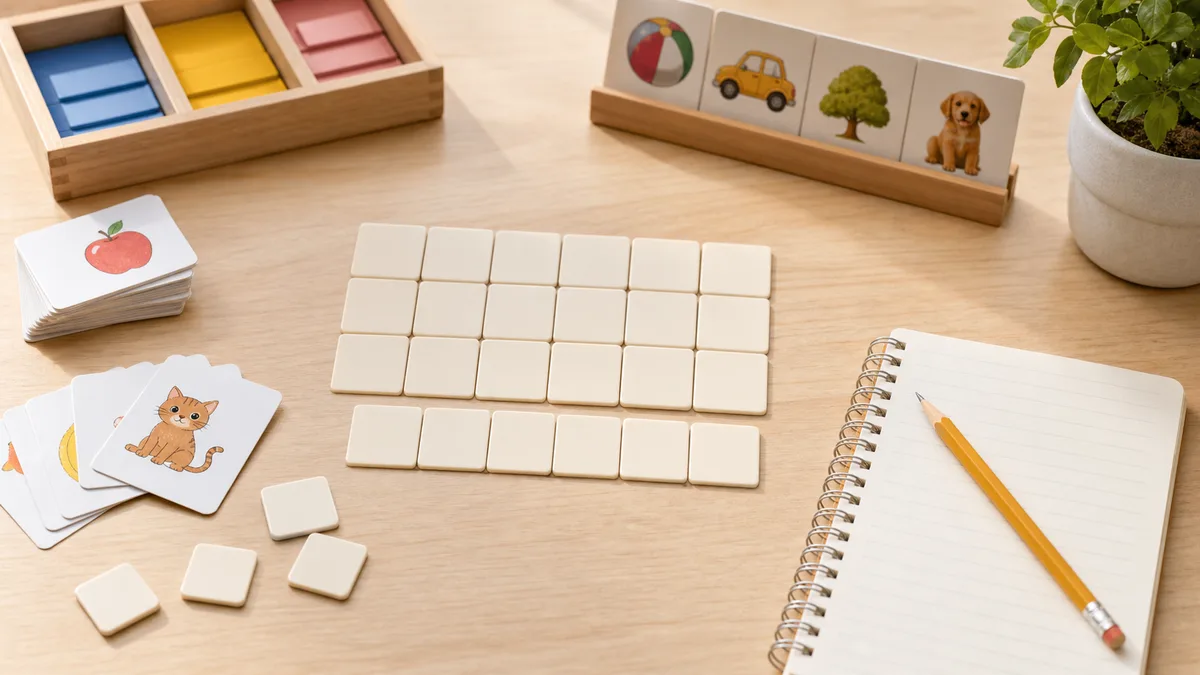
A daily spelling puzzle for kids works best when it feels like a short word-thinking routine, not a guessing contest. This guide is for parents, teachers, tutors, homeschool families, and children who want spelling and vocabulary practice that is useful, calm, and connected to real reading. It builds a safe educational word-puzzle path around iBloom SpellBee, Spelling Bee Words by Grade Level, Spelling Bee Practice Questions for Kids, and direct iBloom pages such as Short Vowel Sounds, Use Context Clues to Determine Word Meaning, and Determine Scientific Vocabulary Meaning.
Start With iBloom Practice
Use this guide with direct iBloom practice so children move from word talk into real reading, spelling, and vocabulary work.
Table of Contents
Worksheet And Lesson Previews
Context Clues Word Meaning Lesson Preview
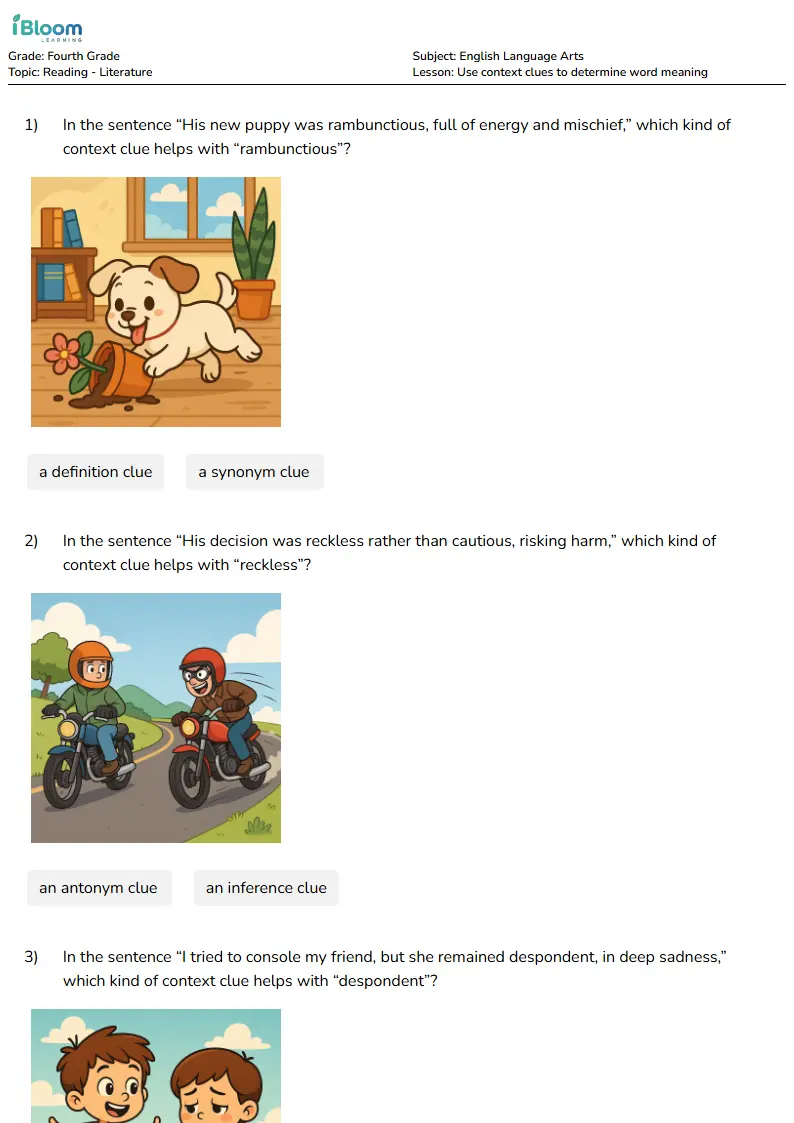
Use this preview to see the kind of practice children will open before you start the routine.
Scientific Vocabulary Meaning Worksheet Preview
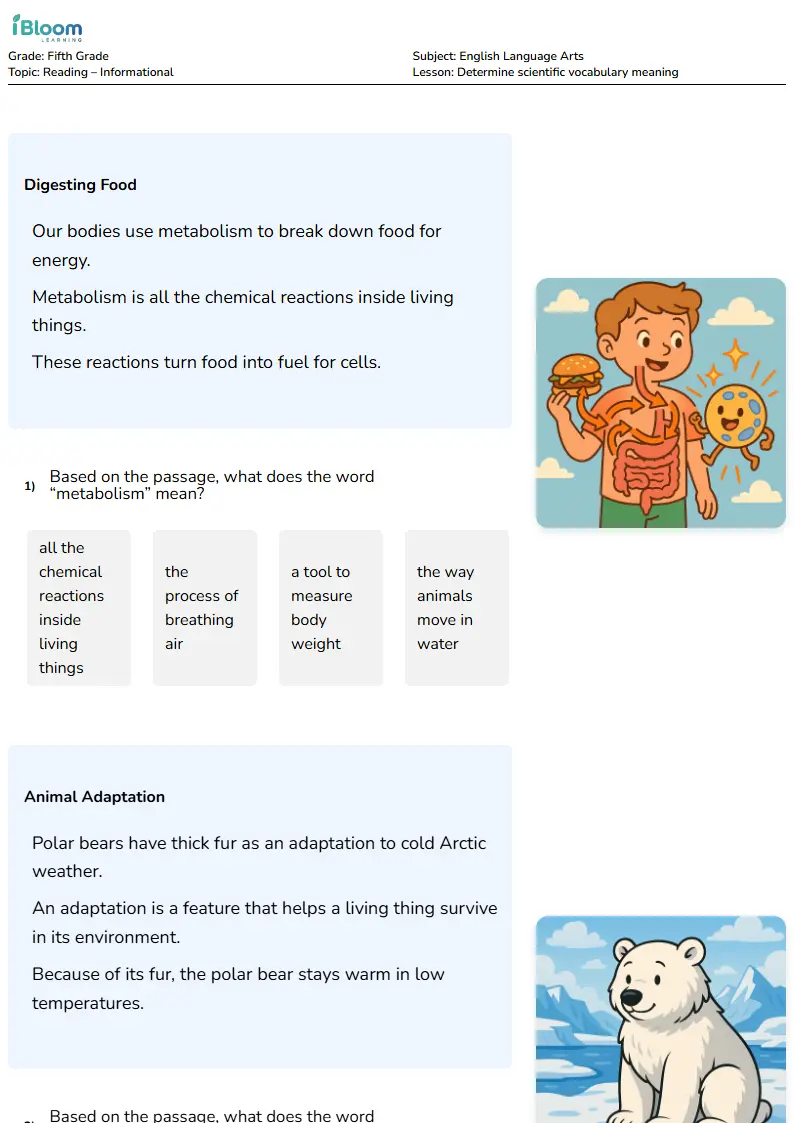
Use this preview to see the kind of practice children will open before you start the routine.
Using Clues to Find Meanings Lesson for Class 4 Preview
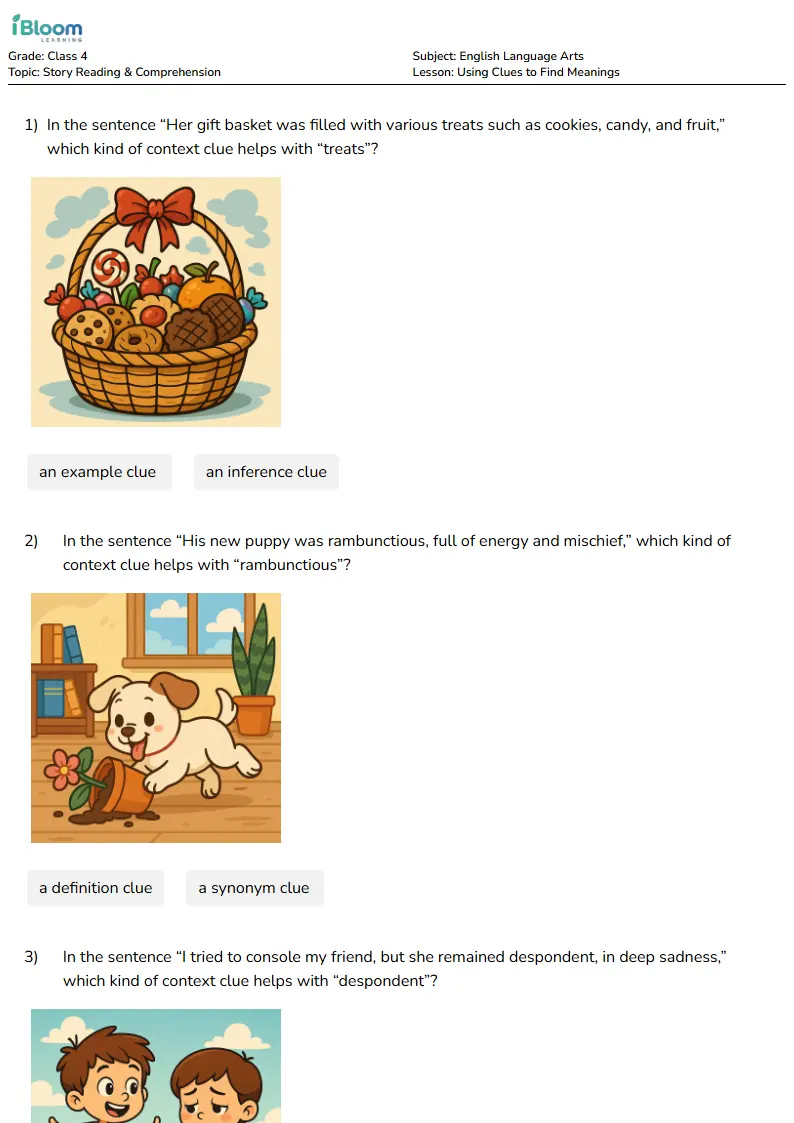
Use this preview to see the kind of practice children will open before you start the routine.
Key Takeaways
- Word puzzles help when children explain sounds, spelling patterns, word parts, and meanings.
- A strong daily routine should be short enough for daily use and rich enough for real learning.
- Parents should ask one evidence question after the answer: "How did you know?"
- Teachers can turn the same activity into a warm-up, center, small-group task, or exit ticket.
- The best next step is always connected practice, such as a phonics worksheet, context clues lesson, vocabulary page, or SpellBee round.
Why Word Puzzles Help
Word puzzles can build attention, spelling, vocabulary, and reading confidence when adults keep the learning goal visible. The point is not to beat a timer or guess a secret word. The point is to notice patterns, test a word, read it aloud, explain it, and connect it to a sentence or passage.
The IES reading comprehension practice guide supports explicit strategy instruction, vocabulary teaching, and discussion around text meaning. Reading Rockets vocabulary practice also highlights the importance of repeated exposure, word-learning strategies, and active use of new words. For older readers, AdLit vocabulary resources support instruction around academic language and word meaning. Those research ideas fit naturally with iBloom pages because children can practise a word pattern, then use it in a reading or vocabulary task.
For example, a child using Short Vowel Sounds can build a word, say the vowel sound, sort it with similar words, and then use it in a sentence. A child using Use Context Clues to Determine Word Meaning can solve a clue, explain the evidence, and then add the word to a puzzle board. A child using iBloom SpellBee can hear a word, spell it, ask about meaning, and revisit it later in a short review.
A Simple Daily Routine
Start with five to ten minutes. Choose one target: short vowel words, prefixes, suffixes, context clues, science vocabulary, spelling bee review, or word families. Then follow the same pattern each day:
- Say the word or read the clue.
- Break the word into sounds, syllables, or parts.
- Build or write the word.
- Explain the meaning or use it in a sentence.
- Check the spelling and fix one thing if needed.
This routine works because it gives children a repeatable path. A child is not just filling blanks. They are learning how to think about words. If the child is young, keep the word set small. If the child is older, add prefixes, suffixes, roots, synonyms, antonyms, and context clues.
Use Word Study Games for Spelling Practice when you want more game formats, Vocabulary Activities for Upper Elementary for older students, and Context Clues for Kids when word meaning is the main goal. If the child enjoys crossword-style review, connect this page to Crossword Puzzles for Vocabulary Practice, but keep the current activity distinct: spelling puzzles are about building and explaining words, while crosswords are about solving clues.
Parent Plan
Parents do not need to create a long lesson. Pick one iBloom practice page and one short word activity. Keep the same order each time so the child knows what is coming. A useful home routine is: open the page, choose three words, build one word, explain one word, and end with one sentence.
If your child guesses, ask them to show the sound, part, clue, or sentence that helped. If your child rushes, slow the activity down by asking for one neat explanation. If writing causes frustration, let the child build the word with tiles or say the answer first, then write only the strongest example.
In India, this can support CBSE, ICSE, state-board, Class 1 through Class 5, and after-school English practice in Delhi, Mumbai, Bengaluru, Chennai, Hyderabad, Pune, Kolkata, Ahmedabad, Jaipur, Kerala, Tamil Nadu, Karnataka, Maharashtra, Telangana, Gujarat, Rajasthan, and West Bengal. In the United States, it can support elementary reading and spelling practice in California, Texas, Florida, New York, Illinois, Pennsylvania, Ohio, Georgia, North Carolina, Michigan, Los Angeles, Houston, Chicago, Dallas, Seattle, Boston, Denver, Atlanta, and Miami. In the UAE, it fits British, American, IB, and Indian curriculum families in Dubai, Abu Dhabi, Sharjah, Ajman, Al Ain, Ras Al Khaimah, Fujairah, and Umm Al Quwain.
Teacher Plan
Teachers can use daily routine as a structured literacy warm-up. Put the target words on cards, use a visible routine, and ask children to explain before they move on. This prevents the activity from becoming a fast-finisher worksheet with little learning.
For small groups, sort children by need: short vowels, blends, word endings, prefixes, context clues, or academic vocabulary. Use Decode Words With Prefixes for morphology, Word Endings Suffixes) for suffix review, and Determine Scientific Vocabulary Meaning for older readers who need academic vocabulary practice.
A classroom routine can look like this:
- Warm-up: build two words from a pattern.
- Pair work: explain one word meaning to a partner.
- Independent practice: complete a linked iBloom page.
- Exit ticket: write one sentence with the strongest word.
Teachers can also use this for intervention. A child who struggles with decoding needs sound-by-sound support. A child who spells accurately but cannot explain meaning needs vocabulary discussion. A child who knows the meaning but misspells the word needs pattern practice.
India, US, and UAE Notes
The curriculum words may change, but the child task is similar: hear the word, build the word, read the word, explain the word, and use the word. Some schools call this spelling practice, word work, vocabulary review, phonics, morphology, English language arts, language study, literacy centers, or grammar enrichment. The routine can support CBSE, ICSE, state-board, American curriculum, British curriculum, IB, homeschool, tutoring, and after-school learning.
For multilingual learners, allow the child to explain the meaning in the home language first if needed. Then connect it to the English spelling, pronunciation, and sentence. This helps children in India, the US, and the UAE use what they already know while building school English.
Examples Children Can Try
- Build three short-vowel words, then change one letter to make a new word.
- Choose one prefix and make three related words.
- Read a sentence and underline the clue that shows word meaning.
- Sort five spelling words by sound pattern.
- Use one vocabulary word in a sentence about school, home, or a story.
- After a SpellBee round, choose one missed word and explain how to remember it.
For a screen-free version, use blank cards, tiles, counters, or a notebook. Families can pair this with 7 No-Screen Learning Activities for Kids when a child needs a break from devices but still benefits from structured word practice.
Common Mistakes
- Making the puzzle too hard before the child knows the pattern.
- Letting the child guess without explaining the clue.
- Using rare words the child cannot define or use.
- Treating spelling as memorization only.
- Putting every internal link in one section instead of connecting practice naturally through the guide.
When a mistake appears, shrink the task. One explained word is better than ten rushed guesses. Ask the child to show a sound, a word part, a sentence clue, or a memory strategy.
Keep Practicing With iBloom
Frequently Asked Questions
Are word puzzles good for spelling practice?
Yes, when children explain sounds, patterns, and meanings. A puzzle alone is not enough; the learning comes from building, reading, explaining, and checking words.
Should children use a timer?
Use a timer only to keep practice short and calm. Do not make speed the main goal for children who are still learning the word pattern.
What is the best first iBloom page to use?
Start with the page that matches the child's need: Short Vowel Sounds for early phonics, Use Context Clues for word meaning, Scientific Vocabulary Meaning for older vocabulary, or iBloom SpellBee for spelling review.
Can teachers use this in centers?
Yes. Use a small word set, a visible routine, and one explanation step before children rotate to the next center.
How can parents keep practice from feeling repetitive?
Change the word set, not the whole routine. Children benefit from a predictable structure with fresh words and examples.