Free 2nd Grade Math Worksheets — Printable PDF for Parents & Teachers
Download free 2nd grade math worksheets covering addition, subtraction, place value, and more. Aligned to Common Core, educator-reviewed, and ready to print.
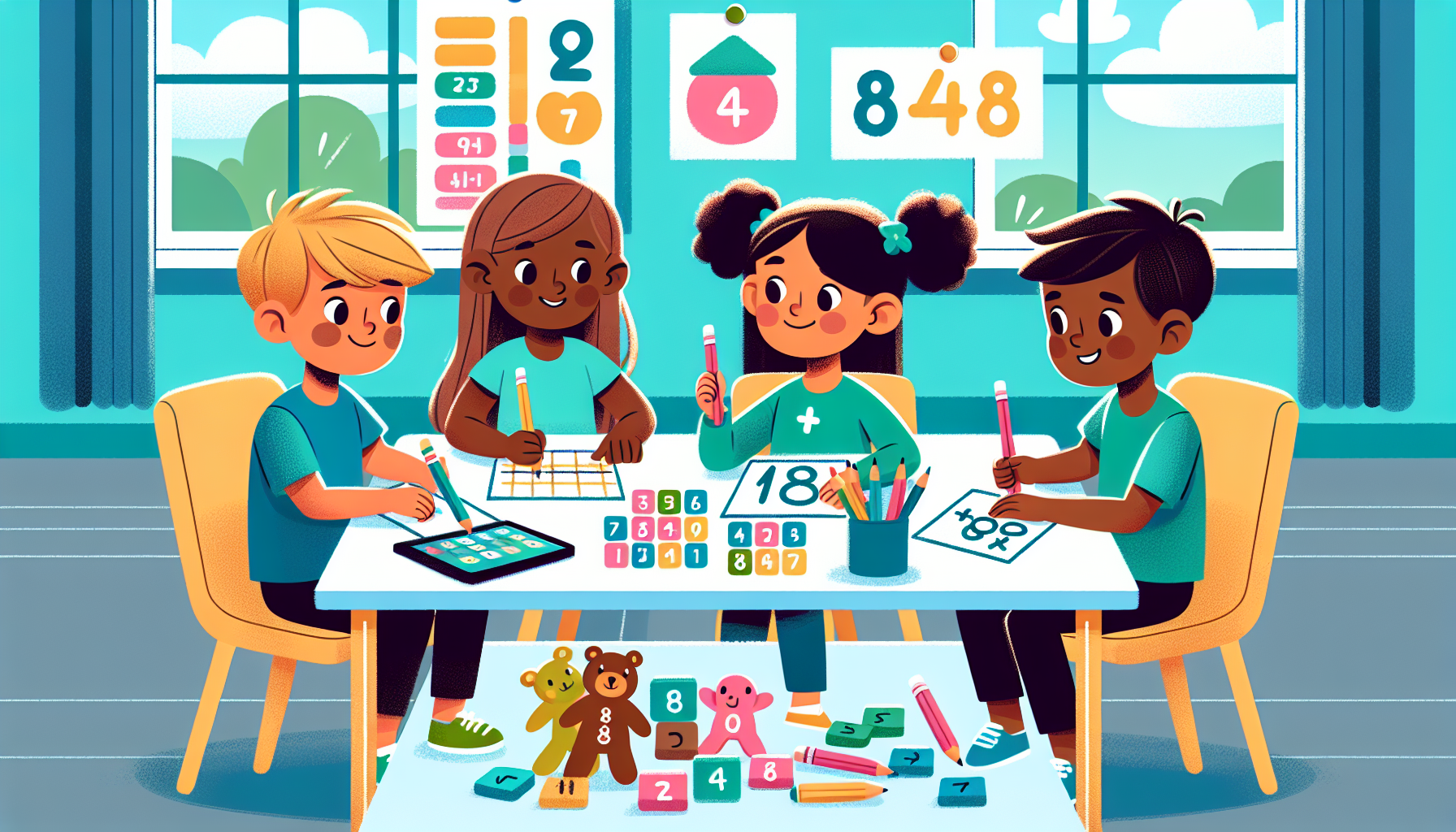
When a child enters second grade, math stops being about counting and starts being about thinking. They move from recognizing numbers to understanding what those numbers mean in context — place value, two-digit arithmetic, early measurement, and the foundations of multiplication.
Having the right 2nd grade math worksheets at the right moment can transform this transition from overwhelming to exciting. Research from the National Council of Teachers of Mathematics confirms that children who receive targeted, grade-appropriate practice improve significantly faster than those who work through generic worksheets.
iBloom's approach to 2nd grade math combines educator-reviewed content with adaptive difficulty — ensuring every child gets practice at their exact level. But even without the adaptive engine, structured worksheets done consistently make a measurable difference.
This guide covers the complete range of free 2nd grade math worksheets available, organized by skill, with guidance on how to use each type effectively at home or in the classroom.
Start with the Matching Practice
Use this guide with a direct iBloom worksheet or lesson so children can move from reading the explanation into real practice.
What Skills Are Covered in 2nd Grade Math?
2nd grade math builds on first grade foundations while introducing new concepts that prepare children for grade 3 multiplication and division. Here's what a comprehensive 2nd grade math curriculum covers:
Number Sense and Place Value
Place value is the most important concept in 2nd grade math. Before children can add and subtract larger numbers, they need to understand that 23 means "two tens and three ones" — not just a random collection of digits.
Key skills include:
- Understanding ones, tens, and hundreds places
- Reading and writing numbers up to 1,000 in standard, expanded, and word forms
- Comparing and ordering three-digit numbers using greater than, less than, and equal to symbols
- Skip counting by 2, 5, 10, and 100 from any starting point
Addition and Subtraction Within 100
This is the operational heart of 2nd grade math. Children learn to:
- Add and subtract within 100, with and without regrouping (borrowing/carrying)
- Solve one-step and two-step word problems using addition and subtraction
- Understand the inverse relationship between addition and subtraction (if 7 + 5 = 12, then 12 - 5 = 7)
- Use mental math strategies for adding and subtracting multiples of 10
Measurement and Data
Real-world application is a key part of 2nd grade:
- Measuring length using inches, feet, and centimeters
- Estimating and comparing lengths before measuring
- Reading and creating picture graphs and bar graphs
- Telling time to the nearest five minutes (including half past, quarter past)
Geometry
2nd grade geometry introduces more complex shape work:
- Recognizing and drawing basic 2D shapes including triangles, quadrilaterals, pentagons, and hexagons
- Partitioning rectangles into equal shares (halves, thirds, fourths) and describing each part
- Identifying edges, vertices, and faces of 3D shapes
How to Use These Free 2nd Grade Math Worksheets
These worksheets are designed for three distinct use cases:
At Home: Daily Practice
Spend 10-15 minutes a day on one worksheet. Consistent, short practice is significantly more effective than long, irregular sessions. Focus on one skill at a time until your child shows mastery before moving on.
The key is targeted repetition with variation — the same skill practiced in different formats. A child who can solve 8 + 7 on a worksheet needs to also solve it in a word problem, a number line context, and a mental math exercise before the skill is truly consolidated.
In the Classroom: Guided Practice
Use worksheets as a follow-up after a live lesson. The structured format helps students consolidate what they just learned. Collect completed worksheets to track individual progress — especially useful in classrooms where children are working at different paces.
For Assessment: Check for Understanding
Each worksheet in a good set includes a mix of easy, medium, and challenging problems. This natural gradient lets you identify whether a child has understood a concept or needs more practice — without needing a formal test.
Why Free Worksheets Alone Are Not Enough
Free 2nd grade math worksheets are a valuable tool, but they have three significant limitations:
No adaptation. A printed worksheet presents the same problems to every child. For a child who finds the work too easy, it's wasted time. For a child who finds it too hard, it's frustrating — and potentially confidence-damaging.
No progress tracking. When you use printed worksheets, you manually have to track what your child has completed and where they struggled. This requires significant parent time and attention that many families don't have.
No immediate feedback. In a classroom or at home, children typically find out if they got an answer right only when an adult marks the worksheet — minutes or hours later. Immediate feedback is one of the most powerful learning tools, and printed worksheets can't provide it.
iBloom addresses all three limitations. The adaptive worksheet engine generates practice problems matched to each child's exact level, tracks progress automatically, and provides immediate feedback on every answer. As the child improves, the difficulty adjusts in real time.
The Scope and Sequence of 2nd Grade Math
Understanding what comes when helps parents know whether their child is on track. Here's a typical scope and sequence for 2nd grade:
| Quarter | Focus Areas | Example Skills |
|---|---|---|
| Q1 | Place value, addition to 20 review | Counting by 1s, 5s, 10s, 100s |
| Q2 | Two-digit addition and subtraction | Adding and subtracting within 100 |
| Q3 | Measurement, time, and data | Reading clocks, measuring length |
| Q4 | Geometry, arrays, and word problems | Partitioning shapes, intro to multiplication |
If your child is struggling with a Q4 skill, they may be missing a foundational Q1 or Q2 concept. Use a diagnostic assessment to identify where the gap actually is.
Common 2nd Grade Math Challenges
Challenge 1: Regrouping in Addition and Subtraction
When adding 47 + 38, a child who doesn't understand regrouping will write 7+8=15, write 5, carry the 1 to the tens column, then 4+3+1=8 — resulting in 85. But if the concept of "trading ten ones for one ten" isn't solid, this procedure is meaningless.
Worksheet fix: Start with base-ten blocks or visual representations before moving to the abstract algorithm. Use worksheets that show the regrouping process visually before asking for the bare algorithm.
Challenge 2: Understanding Place Value in Three-Digit Numbers
Children who understand 23 as "two tens and three ones" can extend this to 234 as "two hundreds, three tens, and four ones." But children who've memorized the names without understanding the value often confuse the columns.
Worksheet fix: Use place value charts and hundreds grids. Worksheets that ask children to identify the value of the digit 3 in 234 versus 372 build the deep understanding needed for later arithmetic.
Challenge 3: Solving Two-Step Word Problems
A two-step word problem requires a child to do two operations in sequence — and keep the first answer in mind while working on the second. This is cognitively demanding even for children who can do each operation individually.
Worksheet fix: Start with two-step problems where the intermediate answer is obviously the starting point for the second step. For example: "Emma had 34 marbles. She won 15 more at recess. Then she gave 12 to her brother. How many does she have now?" The structure is clear. Make the problems progressively less obvious.
How iBloom's Adaptive Engine Works for 2nd Grade Math
iBloom's worksheet generator doesn't just create random math problems. It uses a model of each child's current skill level — derived from assessment data and worksheet performance — to select problems that are at the edge of their capability.
This is called zone of proximal development practice: problems that are hard enough to require effort, but not so hard that a child gives up. Research consistently shows that this level of challenge produces the fastest skill development.
The system adjusts in real time. If a child answers three addition problems correctly in a row, the next problem might push them to the next level — perhaps introducing regrouping. If they miss three in a row, the system drops back to simpler problems to rebuild confidence and accuracy.
Frequently Asked Questions
What math skills should a 2nd grader know by the end of the year?
By the end of 2nd grade, children should be able to add and subtract within 100 (with and without regrouping), understand place value up to 1,000, measure length in standard units, tell time to the nearest five minutes, and describe basic 2D and 3D shapes. They should also be able to solve one- and two-step word problems involving addition and subtraction.
How can I help my 2nd grader with math at home without a math background?
Focus on three things: make it frequent (10-15 minutes daily is better than an hour once a week), make it contextual (count money, measure ingredients, read clocks), and make it positive (celebrate process, not just correct answers). Use free worksheets as a supplement, not the core of your approach.
Where can I find free 2nd grade math worksheets?
iBloom offers free 2nd grade math worksheets across all topics: addition, subtraction, place value, measurement, and geometry. Browse by topic at /landing-learning All worksheets are educator-reviewed and aligned to Common Core standards.
How do I know if my child is behind in 2nd grade math?
A free diagnostic assessment identifies exactly where your child stands. iBloom's free assessment covers Math and English, takes under 20 minutes, and provides a detailed breakdown of skills mastered, skills developing, and skills that need attention.
What's the difference between free worksheets and adaptive worksheets?
Free worksheets are static: every child gets the same problems regardless of their level. Adaptive worksheets adjust difficulty based on performance — if a child answers correctly, problems get harder; if they struggle, problems get easier. Adaptive worksheets are more efficient and more engaging.
How do I know which grade-level worksheets my child needs?
Start with a free diagnostic assessment. It will tell you exactly which grade-level content is appropriate for your child — they may be ready for grade 3 material in some areas while still needing grade 1 support in others. This is completely normal and the adaptive approach handles it automatically on iBloom.
Conclusion
2nd grade is a pivotal year in mathematics. The skills children develop here — place value, two-digit arithmetic, measurement, and geometric reasoning — form the foundation for everything that follows. Free 2nd grade math worksheets are a valuable starting point, but the most effective approach combines consistent practice with adaptive feedback that meets each child exactly where they are.
Start with a free diagnostic assessment to understand your child's current level, then explore unlimited 2nd grade math worksheets tailored to their specific needs. With 10-15 minutes of focused daily practice, most children make measurable progress within 4-6 weeks.
Start a free diagnostic assessment on iBloom Browse 2nd Grade Math Worksheets Browse 2nd Grade English Worksheets
Practice This Skill Next
After reading this guide, children can practise the same skill on iBloom. Start with Browse 2nd Grade Math Worksheets or Browse 2nd Grade English Worksheets, then ask the child to explain one answer before moving on.