How Should Students Cite Sources in a School Project?
A practical citation routine that helps students show where borrowed ideas appear and record enough details for readers to find each source.
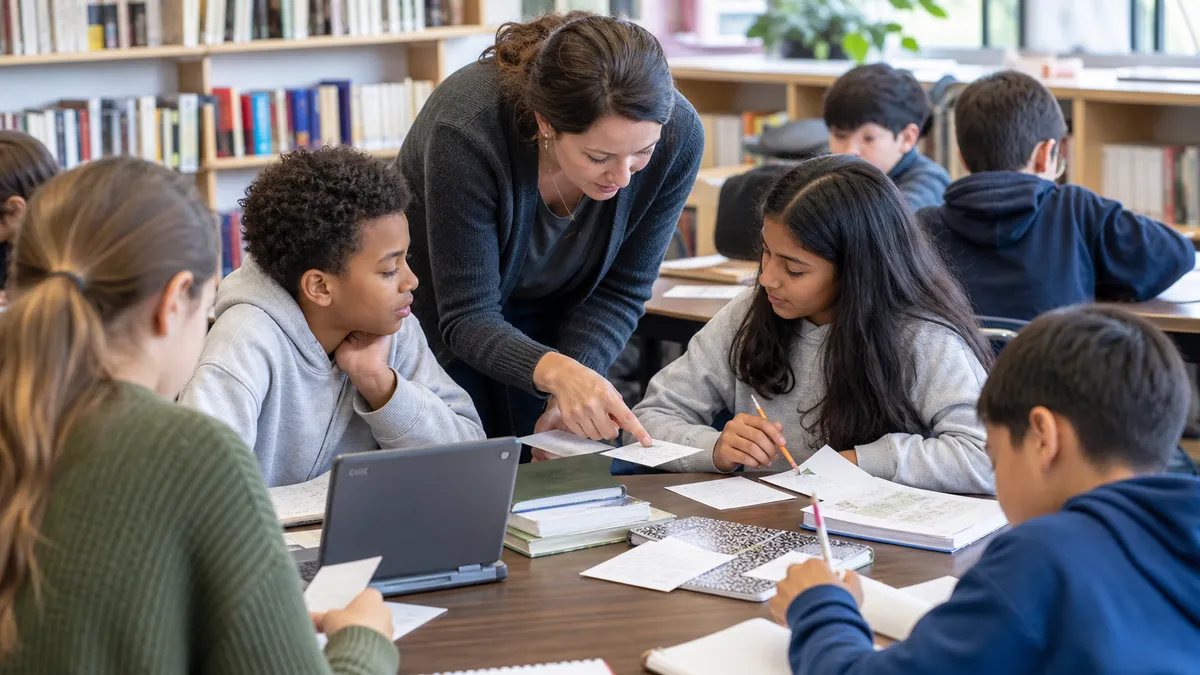
Children can learn to cite sources when adults separate two simple jobs: show where each borrowed idea appears in the project, and provide enough source details for another person to find the original. For ages 8 to 12, begin with clear source phrases and a simple bibliography before expecting perfect MLA, APA, or school-specific punctuation. If the project is not yet focused, start with the iBloom guide to what makes a good student research question.
This guide gives parents and teachers a complete progression for Classes 3 to 5 in India and Grades 3 to 5 in the United States. It covers books, websites, videos, images, interviews, quotations, paraphrases, bibliography entries, common errors, accessibility, and practical assessment.
What Does “Cite Your Sources” Mean for a Child?
Use this child-friendly explanation:
“When an idea, fact, image, or exact sentence came from someone else, tell your reader who or what helped you, and leave a trail back to the source.”
That trail has two parts:
- Credit beside the borrowed material. A source phrase, parenthetical reference, footnote, or numbered marker tells the reader which source supports a particular idea.
- A source list at the end. A bibliography, references page, or works cited page provides the details needed to locate each source.
A child does not cite common personal experiences such as “Our class planted beans on Monday.” A child should cite a book's explanation of germination, a website's rainfall data, a museum photograph, an expert's interview answer, or a sentence quoted from an article.
The ReadWriteThink lesson on citing sources for Grades 3–5 explicitly connects source credit with paraphrasing, quotations, and research reports. That is a useful age range for introducing habits without turning citation into a punctuation test.
Why Citation Matters Before Formal Formatting
Children sometimes hear citation described only as a rule against plagiarism. Honesty matters, but citation also does positive work:
- It recognizes the people and organizations that created knowledge.
- It lets a reader check a claim or learn more.
- It distinguishes evidence from the child's own observation or conclusion.
- It helps a writer remember which source supplied each note.
- It makes disagreement more precise: readers can examine the source rather than argue about memory.
- It shows the path the learner took through a research project.
If adults begin with commas, italics, and alphabetization, children may miss the central idea. Start with ownership and traceability. Add the required format after the habit is clear. Before a source enters the project, use the iBloom routine for checking whether an online source is reliable.
Citation, Bibliography, Reference List, and Works Cited
Schools use different labels. Explain them without making one system seem universally correct.
| Term | Child-friendly meaning |
|---|---|
| Citation | A marker or source phrase showing where information came from |
| Bibliography | A list of sources used or consulted, depending on the assignment |
| Works cited | A list of sources actually cited in the project |
| References | A source list used in some styles, including APA |
| Attribution | Naming the creator or source in words |
The teacher's instructions decide which label and style to use. The Purdue OWL guide to the basic MLA works cited page explains the adult-facing MLA structure. For primary learners, use only the elements required by the school and provide a model.
The CREDIT Routine
Teach a consistent six-step routine:
C: Capture source details immediately
Before taking notes, record the source. Do not wait until the report is finished. For a book, capture author, title, publisher, year, and relevant page. For a website, capture creator or organization, page title, website name, publication or update date when available, exact URL, and access date if required.
A source card can have fields rather than punctuation:
- Creator:
- Title:
- Website or publisher:
- Date:
- Page or URL:
- Date accessed:
The final citation can be formatted later.
R: Record which note came from which source
Give each source a short code, such as B1 for book one and W2 for website two. Write that code beside every note. If the child switches sources, start a new note section.
This prevents the common end-of-project problem: a child remembers a fact but cannot remember where it came from.
The iBloom note-taking guide for ages 8–12 helps children choose useful information rather than copy entire passages. Add the source code during the same note-taking step.
E: Explain the idea in the child's own words
Most research writing should not be a chain of quotations. Ask the child to understand the information, close the source, explain it aloud, and write a fresh sentence.
The iBloom guide to paraphrasing without copying gives a complete routine. Citation is still required after a paraphrase because the wording is new but the information came from the source.
D: Decide whether to quote, paraphrase, or summarize
Use a quotation when exact wording matters. Use a paraphrase for a specific idea at similar detail. Use a summary for the main point of a larger section.
Children should be able to explain the choice. “I quoted this sentence because the scientist's definition is precise” is a purpose. “I copied it because it sounded good” is not.
I: Insert credit beside the information
For early learners, a source phrase is enough:
- “The National Book Trust article explains that…”
- “According to the museum guide…”
- “In our interview, the gardener said…”
For older learners, follow the teacher's required in-text format. The goal is to connect the claim to the source without making the writing unreadable.
T: Tidy the final source list
Check that every source cited in the project appears in the final list, every required detail is present, entries follow one consistent style, and the order matches the teacher's directions.
Do not let a citation generator replace this review. A tool may misidentify a page title, omit an author, use the wrong date, or format the home page instead of the actual source page.
What Information Belongs in a Citation?
Teach children to look for source “identity clues.”
Book
- author or editor;
- full title;
- publisher;
- publication year;
- page number for a specific quotation or detail, if required.
Example field card:
Author: Asha Rao
Title: Rivers Around Us
Publisher: Green Leaf Books
Year: 2023
Page used: 18
Website article
- author, if named;
- organization, if it acts as creator;
- page or article title;
- website name;
- publication or updated date, if shown;
- exact page URL;
- access date, if required.
“Google” is not the source. Google may help locate a page, but the cited source is the page's creator and website.
Video
- creator or channel;
- video title;
- platform;
- publication date;
- exact URL;
- timestamp for a specific quotation or moment, if useful.
Image, map, or chart
- creator or organization;
- title or description;
- date, if available;
- collection or website;
- exact URL;
- licence or usage information when relevant.
Interview
- name or appropriate description of the person;
- role or expertise;
- type of interview;
- date;
- whether the interview is private or publicly available.
Protect privacy. Do not publish a child's contact details or sensitive information merely to make an entry look complete.
Worked Example: From Note to Bibliography
Imagine a Class 4 project asking, “How do trees help keep a school campus cooler?”
Source card
Source code: W1
Organization: Example City Environment Department
Page title: Trees and Urban Shade
Website: Example City
Updated: 12 May 2025
Exact page: recorded by the student
Accessed: 26 July 2026
Source note
W1: Tree canopies block some direct sunlight from reaching roads and walls. Shade can make those surfaces less hot.
Paraphrased sentence with credit
“The city environment department explains that tree canopies reduce direct sunlight on built surfaces, which can help those surfaces stay cooler.”
Simple bibliography entry
Example City Environment Department. “Trees and Urban Shade.” Example City, 12 May 2025. Accessed 26 July 2026.
The example is invented to demonstrate structure. A real project must record the real exact URL and use the school's required punctuation.
A Five-Day Teaching Plan
Day 1: Sort “mine” and “from a source”
Give students statements from personal observation, common classroom knowledge, books, websites, and interviews. Ask which ones require credit and why.
Avoid tricky edge cases at first. Establish the principle that borrowed words, ideas, facts, data, and media need a trail.
Day 2: Become a source-detail detective
Use one physical book and one web page. Pairs locate creator, title, date, publisher or website, page, and URL. Discuss what to do when an author or date is absent.
Do not invent missing information. Use the organization as creator when appropriate, or follow the teacher's “no author” and “no date” guidance.
Day 3: Link notes to sources
Provide three short sources with codes. Students make notes and label every note. Mix the cards and ask whether another person can reconstruct the trail.
Day 4: Add credit to writing
Students write one quotation, one paraphrase, and one summary. Each gets an adjacent source phrase or required in-text citation.
Day 5: Build and audit the bibliography
Students convert source cards into entries using a template. Then they run a two-way audit:
- Every citation in the writing points to an entry.
- Every listed entry was actually used or belongs under the assignment's bibliography rule.
For a complete project context, the iBloom Class 4 research report lesson helps children move from gathered evidence to organized writing. The matching research report worksheet supports a guided independent attempt.
Parent Guidance for Homework
Parents can help without doing the formatting for the child.
Ask:
- Which part of this paragraph came from a source?
- Where is the source card for that fact?
- Can another person find the exact page?
- Did you use exact words or your own explanation?
- If exact words appear, are quotation marks present?
- Does the bibliography entry match the teacher's model?
- Is every image credited too?
Avoid rebuilding the bibliography after the child goes to bed. That produces a polished page but teaches no transferable habit.
A ten-minute home routine
- Choose one book or reliable web page.
- Record its details on a source card.
- Read one short section.
- Make one labelled note.
- Write one paraphrase.
- Add a source phrase.
- Build one bibliography entry from the card.
- Check whether a family member can locate the source.
One complete citation cycle teaches more than copying ten formatted entries.
Teacher Implementation
Provide style-specific templates
If the assignment requires MLA, APA, Chicago, or a school format, give exact models for every source type students may use. Do not mix conventions from several systems in one worksheet.
The MLA Works Cited quick guide shows how MLA builds entries from core elements. Teachers can translate the required elements into age-appropriate source cards.
Grade habits separately from punctuation
Use separate criteria:
- source captured;
- notes linked;
- borrowed material credited;
- quotations marked;
- bibliography complete;
- format consistent.
A missing period should not receive the same feedback as missing source credit.
Model uncertainty
Project a source with no named author or unclear date. Think aloud: “I will not guess. I will check the page footer and About page, then follow our style rule.”
Cite classroom media
Credit photographs, diagrams, videos, and reading passages used in teacher materials. Children learn from what adults model.
Coordinate with the librarian
A school librarian can teach source discovery, creator identification, database records, and citation exports. Teachers can then reinforce source use in subject writing.
The American Association of School Librarians' elementary research guidance emphasizes modeling research steps and giving young learners manageable practice. Citation instruction fits naturally within that process.
Grade and Age Progression
Ages 6 to 8
Use oral attribution and simple labels:
- Book title;
- author or organization;
- “I learned this from…”
Credit images by naming the book or website. Do not require complex punctuation.
Ages 8 to 10
Use source cards for books and websites. Require a source phrase beside borrowed facts and a simple end list with creator, title, date, and location.
Ages 10 to 12
Introduce quotation marks, page numbers, in-text references, alphabetization, hanging indents if required, and consistent treatment of web pages, videos, images, and interviews.
Older students
Add disciplinary styles, containers, digital object identifiers, annotated bibliographies, source evaluation, and careful distinction between primary and secondary sources.
Move forward only when the child understands why the trail exists.
Support for Multilingual Learners and Diverse Needs
Citation language can be formulaic in a helpful way. Provide source-phrase frames:
- “According to ___, …”
- “The ___ report states that…”
- “In the article ___, the author explains…”
- “The data from ___ show…”
- “During an interview, ___ described…”
Allow multilingual learners to explain source ownership in their strongest language before writing the required frame.
For dyslexia or handwriting difficulty, use printed source cards, copy-and-paste only for exact URLs, and speech-to-text for source phrases. For attention difficulties, color-code each source and its notes. For visual-processing needs, keep templates spacious and reveal one field at a time.
Advanced learners can compare how MLA and APA represent the same source and explain why consistency helps a reader.
Common Citation Mistakes
Listing “Google” as the source
Fix: Return to the result page and identify the actual article, organization, or book.
Saving only the home page
Fix: Record the exact page used. A reader should not have to search an entire site.
Building the bibliography at the end
Fix: Capture source details before note-taking. Make source cards a required checkpoint.
Citing a paraphrase but forgetting a quotation mark
Fix: Citation and quotation marks do different jobs. Credit identifies the source; quotation marks identify copied wording.
Quoting everything
Fix: Ask whether the exact wording matters. If not, paraphrase after understanding and still cite.
Citing only the bibliography
Fix: Add credit beside borrowed information so readers know which entry supports which claim.
Trusting generated citations without checking
Fix: Compare every field with the original source. Citation tools format data; they do not guarantee the data are correct.
Ignoring images
Fix: Treat photographs, charts, maps, diagrams, audio, and video as created works that need credit and may have usage restrictions.
Citation and AI-Generated Material
Schools have different rules for generative AI. Follow the assignment policy rather than assuming a standard citation makes prohibited use acceptable.
If use is allowed, record:
- tool name and provider;
- date used;
- purpose;
- relevant prompt or method when required;
- what the child independently verified and changed.
Do not cite an AI answer as proof of a factual claim when a reliable underlying source is available. Find and cite the source that actually supports the information. Never upload private school records, personal data, or another child's work.
A Simple Citation Rubric
Score each area from 0 to 2:
| Area | 0 | 1 | 2 |
|---|---|---|---|
| Source capture | Details missing | Some fields present | Required details complete |
| Note linkage | Notes unlabelled | Some notes linked | Every borrowed note linked |
| In-text credit | Missing | Inconsistent | Borrowed ideas clearly credited |
| Quotations | Unmarked copying | Some marking errors | Exact words marked and cited |
| Bibliography | Missing or unusable | Mostly findable | Complete and consistent |
| Verification | Cannot locate sources | Some links work | Sources and details verified |
Use the pattern to choose the next lesson. Missing source details requires a capture routine. Missing in-text credit requires claim-to-source matching. Punctuation errors require a style model, not a lecture about honesty.
Practical Citation Activities
Source trail relay
Teams receive a claim and several source cards. They identify the supporting source, add a source phrase, and build an entry.
Citation repair shop
Give flawed examples: a home-page URL, “Google” as author, missing title, invented date, or unmarked quotation. Students diagnose one problem at a time.
Book-part scavenger hunt
Students locate title page, copyright page, author, publisher, year, and page number in a real book.
Website identity check
Students distinguish page title, website name, organization, author, publication date, and URL.
Two-way bibliography audit
Partners highlight every in-text citation in one color and its matching entry in another. Unmatched items become a clear revision list.
Citation choice cards
Students decide whether a scenario needs no citation, attribution, quotation plus citation, paraphrase plus citation, or image credit. They explain why.
Frequently Asked Questions
At what age should children learn to cite sources?
Children can begin oral source credit in early primary years. Around ages 8 to 10, many can use source cards, source phrases, and a simple bibliography. Formal style expectations should increase gradually.
Does a paraphrase need a citation?
Yes. The words are new, but the information or idea came from a source.
Does every sentence need a citation?
No. Cite borrowed facts, ideas, data, images, and wording. Personal observations and the child's own analysis do not need source credit, although nearby evidence should be cited clearly.
Is a bibliography enough?
Usually not. A final list shows which sources were used, but adjacent credit shows which source supports a specific claim. Follow the teacher's directions.
Can a child cite Wikipedia?
Follow school policy. Wikipedia can help identify keywords and linked references, but important claims should usually be checked against reliable underlying sources appropriate to the assignment.
Should children use a citation generator?
It can assist after the child captures correct details. Every output must be checked against the original source and the required style.
How should a website with no author be cited?
Look for an organization responsible for the page and follow the required style's no-author rule. Never invent an author.
Do images need citations?
Yes, unless the child created the image or the teacher explicitly provides it as assignment material. Record creator, title or description, source, date, URL, and licence details when relevant.
Final Checklist
Before submission, ask:
- Did the child capture every source before taking notes?
- Does every borrowed note have a source code?
- Are exact words inside quotation marks?
- Are paraphrases genuinely rewritten and still cited?
- Is credit placed beside the relevant information?
- Does every in-text citation match a final entry?
- Can every source be found from the recorded details?
- Are book pages and exact web pages recorded?
- Are images, charts, videos, and interviews credited?
- Does the format match the teacher's required style?
- Were generated citations checked manually?
- Was private information excluded?
Citation is not clerical decoration added after research. It is the visible connection between a question, evidence, writing, and the people who created the source. Teach children to capture details early, link every note, write honestly, and check the trail. Formal formatting becomes much easier once that habit is secure.