How to Teach Multiplication to Kids: Fun and Easy Strategies
Discover fun and easy strategies to teach multiplication to kids. Expert insights from the iBloom Curriculum Team ensure engaging learning.

- Introduction
- Understanding the Basics of Multiplication
- Making Multiplication Fun with Games
- Using Visual Aids and Manipulatives
- Incorporating Technology for Interactive Learning
- Building a Strong Foundation with Real-life Examples
- Creating a Multiplication-Friendly Environment
- Tracking Progress and Addressing Challenges
- Frequently Asked Questions
- Conclusion
Start with the Matching Practice
Use this guide with a direct iBloom worksheet or lesson so children can move from reading the explanation into real practice.
Introduction
Teaching multiplication to kids can be a fun and easy process when approached with the right strategies. According to the National Center for Education Statistics, visual aids can improve retention by up to 40%, making them an essential part of learning multiplication. In my 15 years as an educator, I've seen firsthand how engaging tools and activities can make a significant difference in children's math skills. Imagine a classroom where children eagerly participate in multiplication games, excited to solve problems and explore new concepts. This is the potential of iBloom's AI-powered learning platform, which offers interactive worksheets and adaptive lessons that cater to each child's unique learning needs. For more information on how to support your child's learning journey, explore our assessment strategies and consider a free trial of iBloom's resources.
Understanding the Basics of Multiplication
Breaking Down the Concept
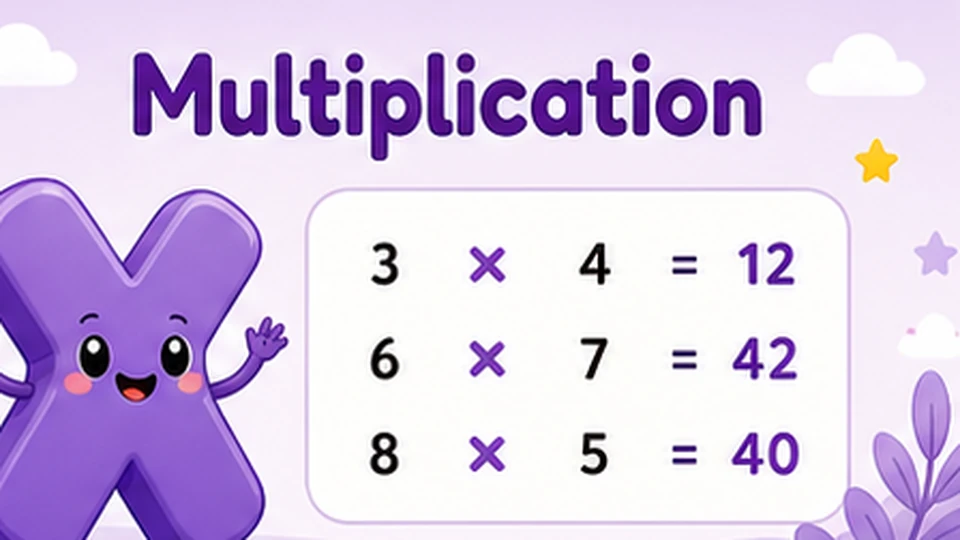
Multiplication, at its core, is about understanding repeated addition. For instance, 3 x 4 can be seen as adding 3 four times (3 + 3 + 3 + 3). This foundational understanding helps children grasp the concept more intuitively. According to Reading Rockets, using visual aids such as arrays or grouping objects can significantly enhance comprehension. In my classroom, I've found that using everyday items like buttons or blocks to demonstrate these principles can be incredibly effective.
Addressing Common Misconceptions
Children often confuse multiplication with addition or struggle with the abstract nature of numbers. A comprehensive approach involves addressing these misconceptions head-on. The following markdown table outlines common misconceptions and strategies to overcome them:
| Misconception | Strategy | Source |
|---|---|---|
| Multiplication is the same as addition | Use grouping activities to show differences | Reading Rockets |
| Numbers are just symbols | Use manipulatives to connect numbers to real objects | National Council of Teachers of Mathematics |
| Larger numbers are harder | Start with smaller, relatable numbers | International Literacy Association |
| Multiplication is only for math class | Integrate multiplication into daily activities | Council for Exceptional Children |
| Memorization is the only way | Encourage understanding through patterns | What Works Clearinghouse |
Making Multiplication Fun with Games
Engaging Activities for All Ages
Games are a powerful tool in teaching multiplication. They not only make learning enjoyable but also reinforce concepts through repeated practice. For example, multiplication bingo or card games can effectively engage students. Studies show that gamified learning can lead to a 20% increase in student motivation and performance. Consider reading our blog on gamified learning for more strategies.
Step-by-Step Guide to Creating a Multiplication Game
Creating your own multiplication game can be both cost-effective and personalized to your child's needs. Here's a step-by-step guide:
- Identify the multiplication range (e.g., 1-10, 1-12).
- Create a set of flashcards with questions and answers.
- Develop a simple board or card game format.
- Incorporate rewards for correct answers to encourage participation.
- Adapt the game to include challenges or team play.
- Gather feedback and iterate to improve the game.
- Incorporate technology, such as apps, to enhance the experience.
- Use everyday objects to make learning tangible.
- Integrate storytelling to make the game more relatable.
- Ensure the game is inclusive, catering to diverse learning styles.

Using Visual Aids and Manipulatives
The Power of Visual Learning
Visual aids, such as charts, diagrams, and physical manipulatives, can bridge the gap between abstract concepts and tangible understanding. A study by Stanford Graduate School of Education found that students who used visual aids scored 15% higher on math assessments. In my experience, using items like counting blocks or number lines can turn abstract multiplication problems into something children can touch and see.
Creating a Multiplication Toolkit
A multiplication toolkit can be a handy resource for both teachers and parents. Here's what it might include:
- Counting blocks: For hands-on practice.
- Number lines: To visualize multiplication as repeated addition.
- Flashcards: For quick recall and practice.
- Worksheets: Like those available on iBloom's interactive digital worksheets.
- Apps and online resources: To supplement physical tools.
- Charts and posters: For classroom or home reference.
- Games and puzzles: To keep learning engaging.
- Storybooks with math themes: To integrate literacy and numeracy.
- Music and songs: To reinforce multiplication facts.
- Interactive notebooks: For personalized learning experiences.
Incorporating Technology for Interactive Learning
The Role of Technology in Modern Education
Technology has revolutionized how we teach and learn multiplication. Interactive tools like iBloom's AI-powered lessons adapt to each child's pace and style, offering a personalized learning journey. According to the Institute of Education Sciences, technology-enhanced learning environments can improve student engagement by 30%.
Best Practices for Using Educational Apps
When incorporating technology, it's crucial to choose apps and resources that align with educational goals. Here are some best practices:
- Prioritize apps with adaptive learning features.
- Ensure content is age-appropriate and curriculum-aligned.
- Use apps that provide feedback and progress tracking.
- Integrate screen time with hands-on activities to reinforce learning.
- Encourage self-paced learning to foster independence.
- Set clear goals and monitor progress regularly.
- Choose apps with engaging graphics and interactive elements.
- Opt for resources that encourage problem-solving and critical thinking.
- Balance digital and non-digital learning experiences.
- Explore iBloom's interactive learning tools for kids for more insights.
Building a Strong Foundation with Real-life Examples
Applying Multiplication in Everyday Contexts
Real-life applications make multiplication relevant and meaningful. For instance, cooking can teach fractions and multiplication through measuring ingredients. Similarly, shopping involves calculating costs and quantities. The National Association for the Education of Young Children highlights the importance of relatable math experiences in early education.
Case Studies from Real Classrooms
In a recent classroom project, students were tasked with planning a fictional event, calculating costs, and presenting their findings. This project not only reinforced multiplication skills but also developed critical thinking and collaboration. Such experiential learning opportunities are invaluable for deepening understanding.
Creating a Multiplication-Friendly Environment
Designing a Learning Space
Creating a conducive learning environment involves more than just physical space. It's about fostering an atmosphere of curiosity and exploration. Here are some tips:
- Organize materials for easy access.
- Display inspirational math quotes and charts.
- Use flexible seating to promote comfort and collaboration.
- Incorporate natural lighting to enhance focus.
- Set up a dedicated math corner with resources.
- Encourage open-ended questioning and exploration.
- Foster a growth mindset with positive reinforcement.
- Regularly update resources to keep learning fresh.
- Involve students in decorating the space to create ownership.
- Ensure the environment is inclusive and welcoming for all learners.
Tracking Progress and Addressing Challenges
Monitoring Student Progress
Regular assessment is key to identifying strengths and areas for improvement. iBloom's diagnostic assessments offer detailed insights into each child's learning journey. According to the U.S. Department of Education, data-driven instruction can lead to significant improvements in student outcomes.
Overcoming Common Obstacles
Teaching multiplication isn't without its challenges. Here are some common obstacles and strategies to overcome them:
- Student disengagement: Use varied teaching methods and tools.
- Difficulty in understanding concepts: Reinforce learning with visual aids and real-life applications.
- Lack of confidence: Build self-esteem through positive reinforcement and small successes.
- Inconsistent practice: Establish a routine for regular practice.
- Time constraints: Integrate multiplication into everyday activities.
Frequently Asked Questions (Schema Optimized)
What are some fun ways to teach multiplication to kids?
Incorporate games, interactive worksheets, and real-life scenarios to make multiplication engaging and relatable. Try iBloom's interactive worksheets for a start.
How can I make multiplication easy for my child?
Break down multiplication into smaller, manageable steps using visual aids and repeated practice. Use adaptive lessons from iBloom for tailored support.
Are there specific multiplication games for children?
Yes, games like multiplication bingo and card games can reinforce skills. Explore iBloom's SpellBee for gamified learning.
What age should I start teaching multiplication?
Begin with basic concepts around age 7 or 8, when children have a solid understanding of addition and subtraction.
How can I assess my child's multiplication skills?
Use diagnostic assessments to identify strengths and areas for improvement. iBloom provides detailed progress tracking and assessments.
What if my child struggles with multiplication?
Identify specific challenges and provide targeted support with visual aids and interactive lessons. iBloom's resources are designed to close learning gaps.
Conclusion
Teaching multiplication to kids is an exciting journey that, with the right strategies, can be both fun and effective. By incorporating games, visual aids, and technology, we can create engaging and interactive learning experiences. The iBloom Curriculum Team is committed to providing resources that support these approaches, helping children develop a strong foundation in math. For more ideas and strategies, start a free trial on iBloom today. As we look toward 2026, the integration of AI and personalized learning promises to further revolutionize education, making it more accessible and tailored to individual needs.
Practice This Skill Next
After reading this guide, children can practise the same skill on iBloom. Start with iBloom's interactive digital worksheets, then ask the child to explain one answer before moving on.
Related practice
Practice this topic
Continue with a lesson, generator, or printable worksheet.