How to Teach Place Value to First Graders Effectively
Discover effective strategies to teach place value to first graders. Engage young learners with interactive methods and adaptive lessons.

Introduction
Teaching place value to first graders is a crucial step in their mathematical journey. Imagine a classroom where children enthusiastically engage with numbers, understanding that 10 is not just a number but a building block for more complex math concepts. This understanding is pivotal, as it forms the basis for addition, subtraction, and beyond. Yet, many educators and parents find themselves asking: "How do I effectively teach place value to first graders?" At iBloom, we recognise this challenge and offer tailored solutions through our AI-powered platform, designed to make learning intuitive and engaging. By providing interactive worksheets and adaptive lessons, iBloom ensures that every child can grasp these essential concepts at their own pace. Explore our assessments and diagnostics to pinpoint specific learning gaps and address them with precision.
Understanding Place Value
The Importance of Place Value in Early Math
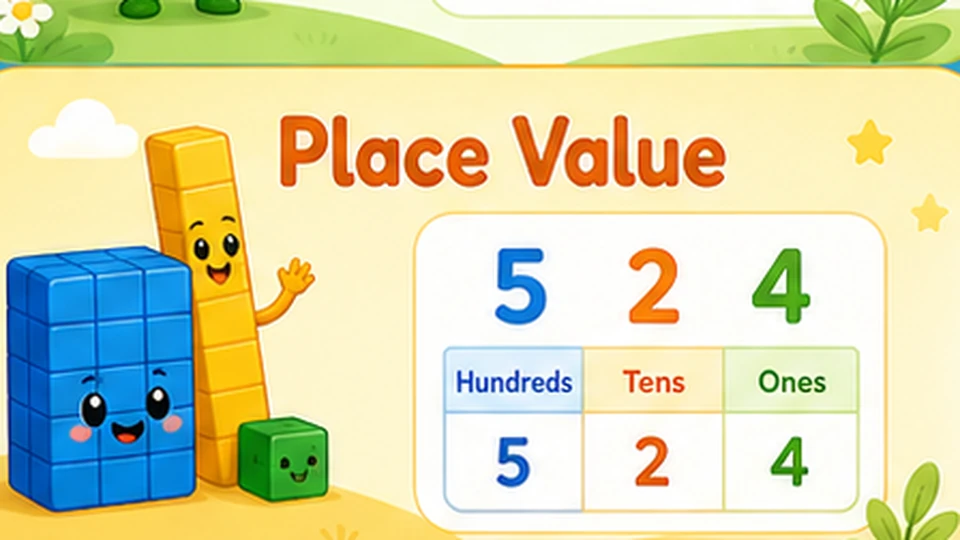
Place value is more than just recognising digits in a number; it's about understanding the value each digit represents based on its position. For first graders, this concept is foundational as it sets the stage for more advanced arithmetic operations. By grasping place value, students learn that the number 23 is composed of 2 tens and 3 ones, which is a stepping stone to understanding larger numbers and operations like "how does making a ten help you add two numbers" efficiently. This foundational knowledge is crucial for their future success in math and beyond.
Comparing Traditional and Modern Teaching Approaches
While traditional teaching methods relied heavily on rote memorisation, modern approaches focus on comprehension and application. Below is a comparison of these methods:
| Aspect | Traditional Method | Modern Approach | Hybrid Approach | Example in Practice |
|---|---|---|---|---|
| Focus | Memorisation | Conceptual Understanding | Combination | Using blocks to form numbers |
| Tools | Flashcards | Interactive Tools | Both | iBloom's adaptive lessons |
| Engagement | Limited | High | Balanced | Group activities |
| Outcome | Short-term recall | Long-term retention | Holistic understanding | Collaborative games |
Interactive Methods for Teaching Place Value
Engaging Students with Hands-On Activities
Hands-on activities are a powerful way to teach place value, allowing children to physically manipulate objects to better understand numbers. Using items like blocks or beads, students can visually and tangibly see how numbers are constructed. For example, grouping ten blocks together to make a "ten" and adding more to make numbers like 13 or 25 helps solidify their understanding. This method reinforces the concept of "counting on addition" by showing how numbers build upon each other.
Step-by-Step Guide to Implementing Activities
- Gather Materials: Use blocks, beads, or other counting objects.
- Demonstrate: Show how to group objects into tens and ones.
- Student Participation: Let students create numbers using the objects.
- Discussion: Discuss how numbers change when adding or removing items.
- Real-World Application: Use everyday scenarios, like shopping, to illustrate concepts.
- Review: Regularly revisit concepts to ensure retention.
- Feedback: Provide constructive feedback to guide learning.

Using Technology to Enhance Learning
The Role of Digital Platforms in Learning
Incorporating technology into teaching place value offers dynamic and engaging ways to present information. Digital platforms, such as iBloom, provide interactive lessons that adapt to each child's learning pace. These platforms offer immediate feedback, enabling children to learn from their mistakes and improve their understanding. According to a 2024 study by the National Center for Education Statistics, students who used digital learning tools showed a 15% improvement in math comprehension compared to those who used traditional methods alone.
Expert Insights on Technology in Education
"Incorporating technology into the classroom not only enhances engagement but also personalises the learning experience, making concepts like place value more accessible to young learners." — Dr. Emily Carter, Education Specialist
Incorporating Games and Activities
Making Learning Fun with Educational Games
Games such as iBloom's SpellBee spelling game are an effective way to make learning place value enjoyable. These games encourage children to apply their knowledge in playful scenarios, reinforcing concepts without the pressure of formal assessments. By integrating play into learning, children naturally develop a love for numbers and math.
Popular Games and Activities for First Graders
| Game/Activity | Description | Benefits | iBloom Feature |
|---|---|---|---|
| Number Bingo | Classic game using numbers | Enhances number recognition | Interactive worksheets |
| Place Value Puzzles | Puzzles that reinforce tens and ones | Develops problem-solving skills | Adaptive lessons |
| Math Relay Races | Physical activity with math challenges | Combines physical and mental exercise | Diagnostic assessments |
| Digital Flashcards | Online flashcards for practice | Improves speed and accuracy | Tutorials |
Assessment and Progress Tracking
Importance of Continuous Assessment
Continuous assessment is crucial in tracking a child's understanding of place value. It helps identify areas where a child excels or struggles, allowing for targeted intervention. Regular assessments, like those offered by iBloom, provide insights into a child's progress and help tailor future lessons to meet their specific needs.
Tools and Techniques for Effective Assessment
To effectively assess place value understanding, consider the following techniques:
- Formative Assessments: Use quizzes and informal tests regularly.
- Observational Assessments: Observe students during activities for real-time insights.
- Portfolio Assessments: Collect samples of student work over time.
- Diagnostic Assessments: Use iBloom's diagnostic tools to identify specific learning gaps.
Frequently Asked Questions
How can I make place value engaging for first graders?
Engage first graders by using hands-on activities and games that involve physical movement and interaction. Incorporate digital tools like iBloom to provide interactive and adaptive learning experiences. For more ideas, explore our tutorials page.
What are some common challenges when teaching place value?
Common challenges include students confusing the positions of tens and ones and difficulty in visualising large numbers. Using visual aids and interactive activities can help overcome these challenges.
How does making a ten help you add two numbers?
Making a ten simplifies addition by creating a base of ten, making it easier to add smaller numbers. This strategy is effective in teaching addition concepts to young learners.
What resources does iBloom offer for teaching place value?
IBloom offers AI-generated interactive worksheets, adaptive lessons, and diagnostic assessments to help teach place value effectively. Explore our assessments page for more information.
How often should I assess my child's understanding of place value?
Regular assessments, ideally weekly, help track progress and identify areas needing improvement. Using iBloom's diagnostic assessments can provide precise insights into your child's learning journey.
Conclusion
Teaching place value to first graders is an essential part of their mathematical development. By using a combination of hands-on activities, digital tools, and engaging games, educators and parents can create a supportive learning environment that fosters understanding and enthusiasm for math. iBloom's platform offers a comprehensive suite of tools to assist in this process, making it easier to track progress and customise learning experiences. Ready to see the difference iBloom can make? Start your free trial on iBloom today.
Related practice
Practice this topic
Continue with a lesson, generator, or printable worksheet.