Reading Comprehension Worksheets Grade 3 Common Core
Reading Comprehension Worksheets Grade 3 with direct iBloom worksheet and lesson links, practical routines, examples, and FAQs.
Reading Comprehension Worksheets Grade 3 should feel practical for the adult and clear for the child. This guide is written for parents, teachers, tutors, school leaders, and learning-support teams who want a calm way to use reading comprehension worksheets grade 3 without turning practice into a long or confusing assignment.
Start Here: Worksheets And Lessons
Begin with one practice surface. Open the worksheet when the child is ready to try items. Open the lesson when the child needs a model, reminder, or slower explanation.
Worksheets
- Open Reading Comprehension Worksheets Grade 3 worksheet 1
- Open Reading Comprehension Worksheets Grade 3 worksheet 2
Lessons
Worksheet And Lesson Previews
Practice reading with pacing and expression Worksheets for Third Grade Preview
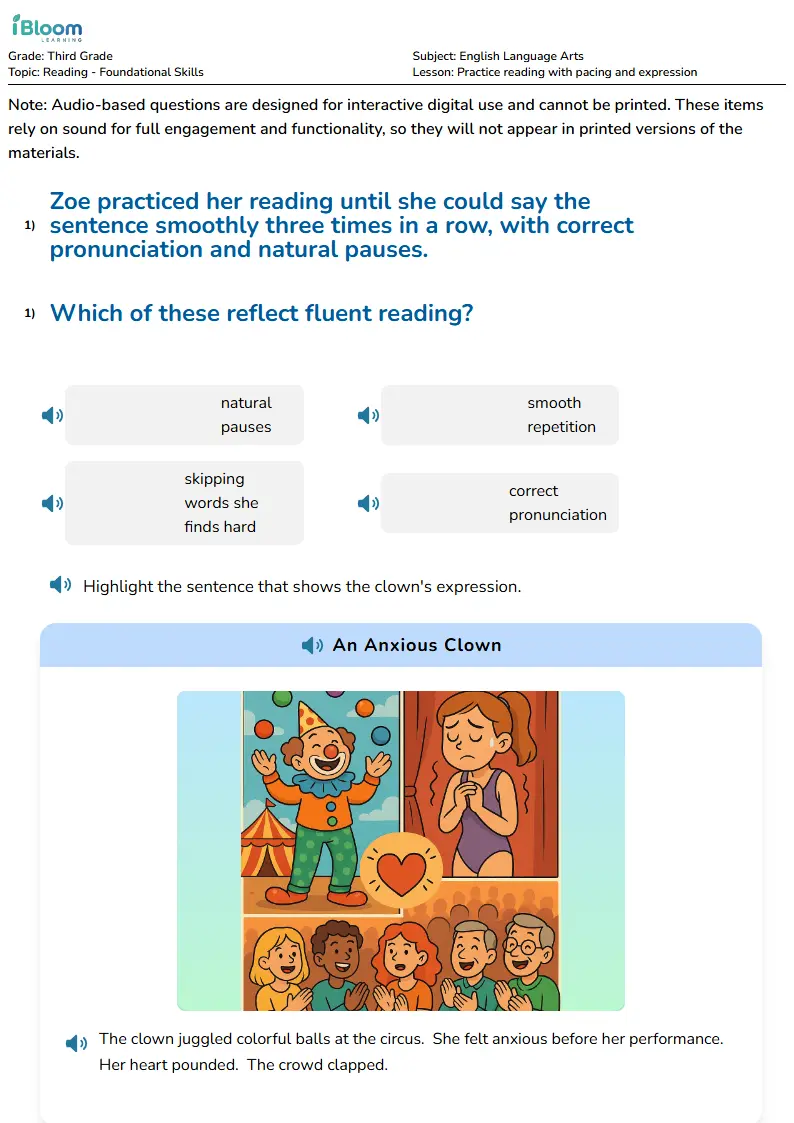
Use this preview to see the kind of practice children will open before you start the routine.
- Open the worksheet: Practice reading with pacing and expression Worksheets for Third Grade
- Open the lesson: Practice reading with pacing and expression Lesson for Third Grade
Use context clues to decode words Worksheets for Third Grade Preview
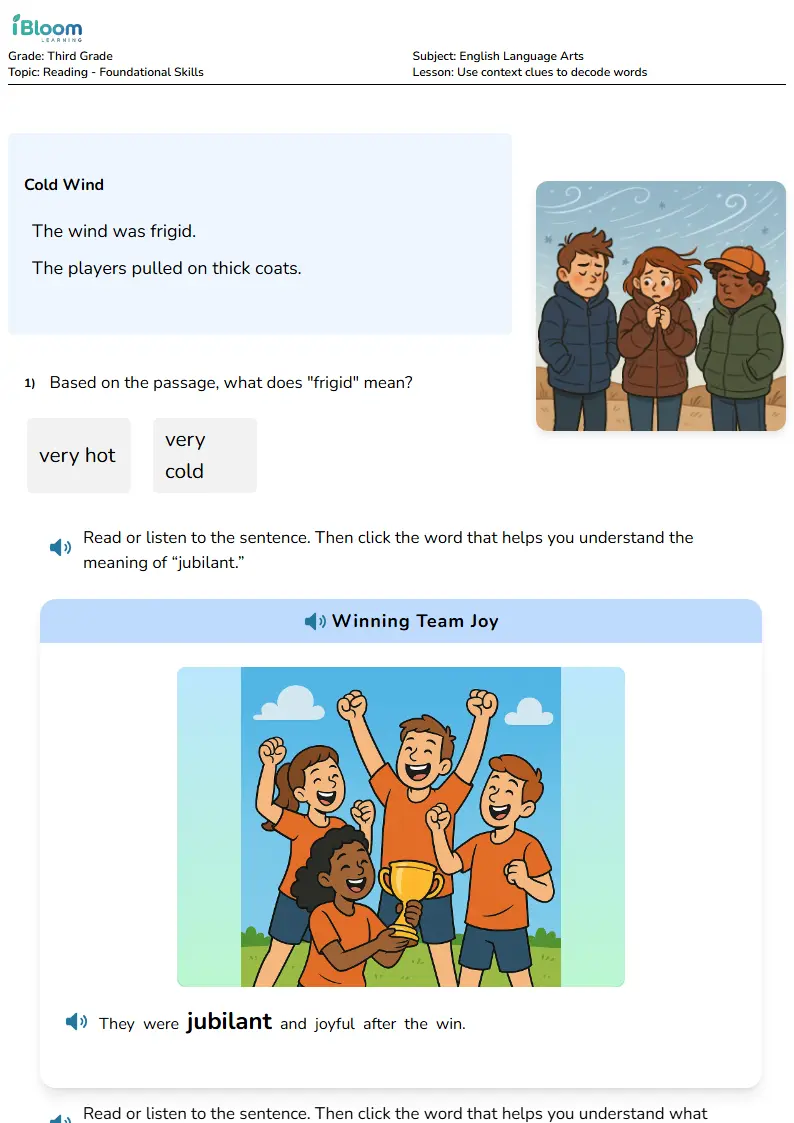
Use this preview to see the kind of practice children will open before you start the routine.
Key Takeaways
- Start with one short activity and one clear explanation.
- Adults should model the first item before asking for independent work.
- Children should be able to say what they noticed and why the answer makes sense.
- Teachers can use this for warm-ups, small groups, centers, homework links, or review.
- Parents and tutors can use it for five to ten minutes at a time.
- For US classrooms, home practice, tutoring, homeschool support, and intervention groups, keep the routine concrete, supportive, and easy to repeat.
Who This Helps
Reading Comprehension Worksheets Grade 3 is useful when a child needs structured practice with reading comprehension, vocabulary clues, sentence meaning, and spoken explanation. It can support a whole-class review, a small-group reteaching session, one-to-one tutoring, or a quiet home practice routine.
The goal is not to finish a large stack of questions. The goal is to help the child notice the right detail, try a small amount of work, and explain one answer clearly.
What Children Will Practice
Children will practise reading comprehension, vocabulary clues, sentence meaning, and spoken explanation. Ask them to notice the word, sentence, picture, clue, or surrounding detail that helps the child decide. This keeps the work active instead of turning the page into silent guessing.
A child who can explain one answer is showing more useful progress than a child who completes many items without understanding the step they used.
How Parents Can Use This At Home
Choose a calm moment and set a small goal. Read the direction aloud, model one item, and ask the child to try two more. If the child succeeds, ask them to explain one answer. If the child is unsure, return to the lesson link or show the skill with an object, drawing, word card, or sentence clue.
Home practice works best when it ends before frustration builds. Five focused minutes can be more useful than a long session that ends with guessing.
How Teachers Can Use This In Class
Use Reading Comprehension Worksheets Grade 3 as a warm-up, station task, review page, homework support link, or quick small-group check. Start by naming the skill in child-friendly language. Then model one item and ask students what they noticed first.
For a class routine, collect one explanation instead of only checking final answers. This helps you see whether the child understands the strategy or only copied the surface pattern.
A Simple Practice Routine
- Read the direction together.
- Ask the child what the task is asking.
- Model one item slowly.
- Let the child try two or three items.
- Ask, "How do you know?"
- Correct one mistake pattern.
- Try one similar item.
- Stop while the child is still focused.
Example Adult Prompts
| Situation | What the adult can ask | Why it helps |
|---|---|---|
| The child guesses quickly | "Show me what helped you decide." | It moves attention back to evidence. |
| The child waits for the answer | "What should we notice first?" | It gives the child a starting point. |
| The answer is right but unexplained | "Can you teach me your thinking?" | It checks real understanding. |
| The answer is wrong | "Which part should we fix first?" | It treats mistakes as information. |
Example Practice Moment
If a child meets an unfamiliar word, ask them to reread the sentence before and after it. Then ask which words give a hint. The answer matters, but the explanation is the stronger sign of understanding.
Common Mistakes To Watch For
- Asking for a definition before the child has looked for clues.
- Letting the child guess from one word only.
- Moving to a harder passage before the child can explain the clue.
Support For Different Learners
Some children need an object model. Some need a picture, word bank, number line, sentence frame, or adult read-aloud. Some need fewer items on the page. Some are ready for a challenge question after they succeed.
Adjust the support without changing the learning goal. The child should still practise the same skill and explain the answer in a way an adult can understand.
Ways To Extend The Activity
After the child completes a small set, ask them to make one similar question. Ask them to explain a wrong answer. Ask them to teach the first step to someone else. Ask them to draw, point, underline, count, sort, or say the clue that proves the answer.
For school use, one item can become an exit ticket. For home use, one clear explanation can be the end of the session. For tutoring, write down the mistake pattern and return to it next time.
When To Use The Lesson Instead
Use the lesson when the child cannot start, cannot explain the first step, or repeats the same mistake after feedback. A worksheet is best for practice. A lesson is better for modeling, language, and first understanding.
Switching back to the lesson is not a setback. It is often the fastest way to make the next worksheet attempt more confident.
Helpful Planning Sources
Review Before Moving On
Before adding more work, ask for one complete explanation. The child should be able to say what they noticed, what they did first, and why the answer makes sense.
If that explanation is missing, use a clearer model or a smaller set. If the explanation is strong, add a little more independent practice or move to a related iBloom page.
Frequently Asked Questions
Who should use Reading Comprehension Worksheets Grade 3?
Parents, teachers, tutors, and school support teams can use it when a child needs guided practice with reading comprehension worksheets grade 3.
How long should one session take?
Five to ten minutes is enough for many children. Stop after a clear explanation rather than forcing a long page.
What if the child is confused?
Use the lesson first, model one item, and reduce the worksheet to two or three questions.
What should the child be able to say?
The child should explain what they noticed and why the answer makes sense.
How can teachers use this without adding extra planning time?
Use one item as a warm-up, one as a small-group check, or one as an exit ticket. The explanation tells you more than the number of completed questions.