Screen-Free Learning Breaks for Kids
Screen-free learning breaks for kids help attention recover without turning a short pause into a long distraction.
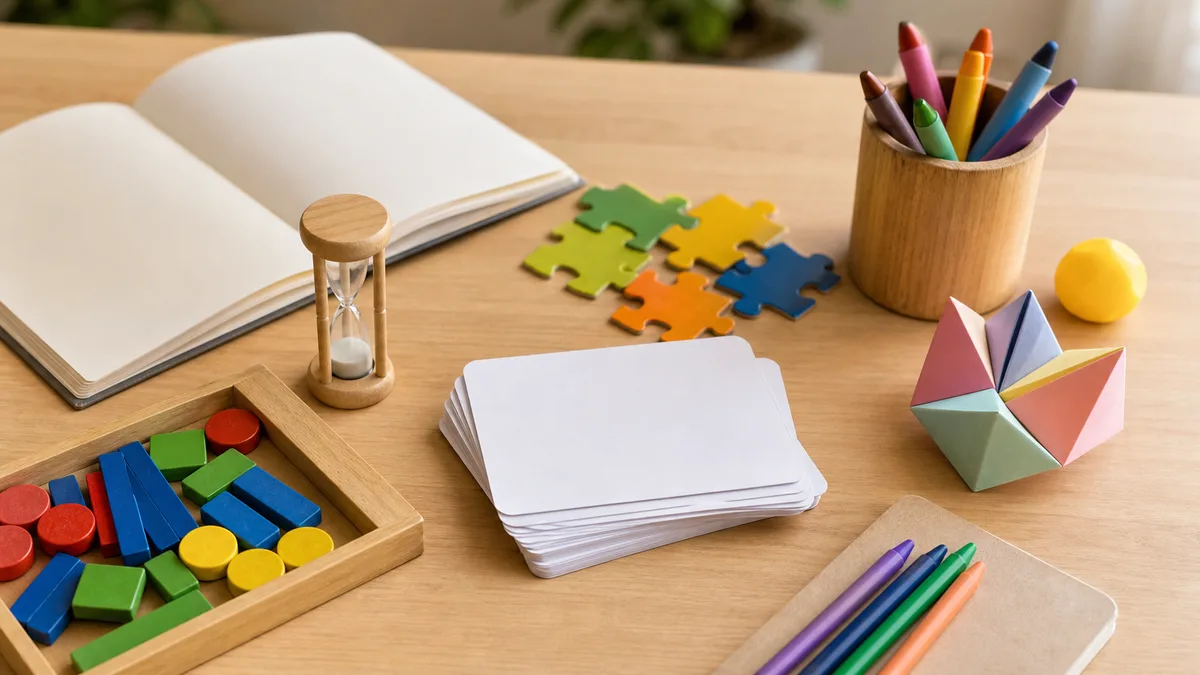
Screen-free learning breaks for kids help attention recover without turning a short pause into a long distraction. This guide is for parents, teachers, tutors, homeschool families, and children who need practical study support without turning learning into pressure. Use it with iBloom practice such as Retell Fables and Identify the Main Message, Identifying Topic and Purpose, Use Context Clues to Determine Word Meaning, Short Vowel Sounds, and nearby support from Focus Worksheets for Kids and Homework Routine for Kids.
Start With iBloom Practice
Choose one direct practice page first, then use the routine below to help the child stay with it.
Table of Contents
Worksheet And Lesson Previews
Retell fables and identify the main message Worksheets for Second Grade Preview
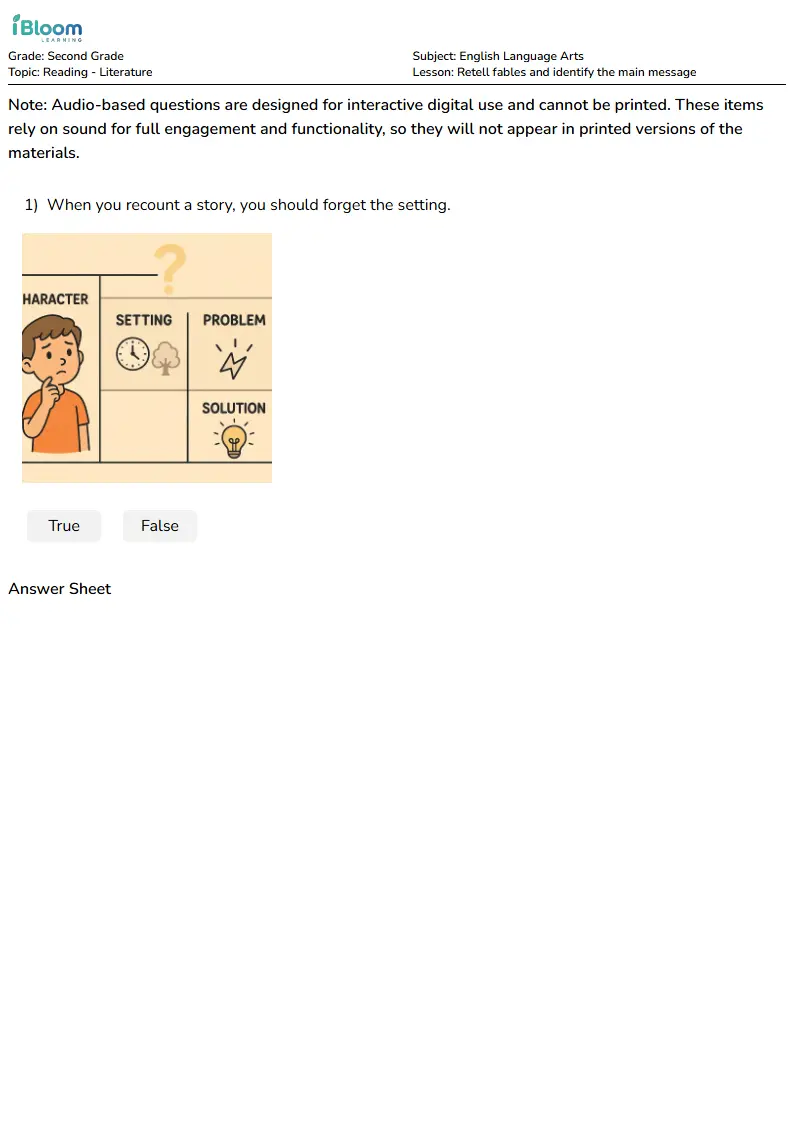
Use this preview to see the kind of practice children will open before you start the routine.
Telling Time in Half Hours using Analog clocks Worksheets for First Grade Preview
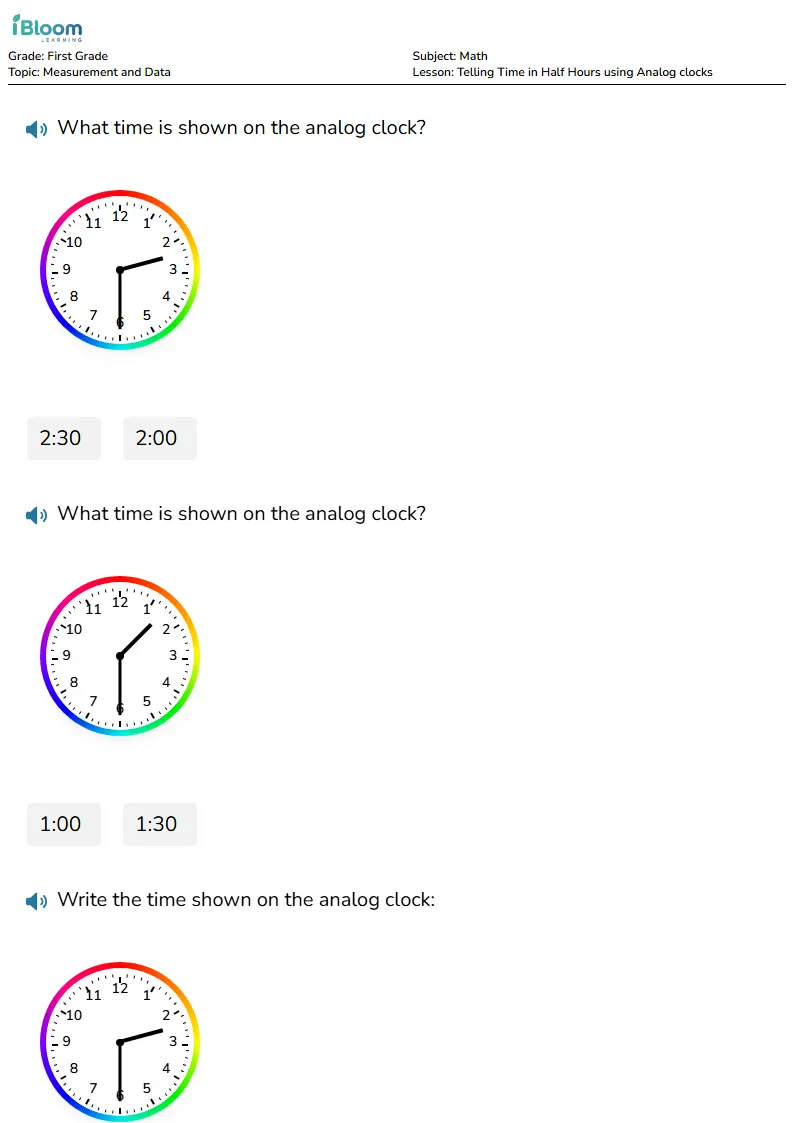
Use this preview to see the kind of practice children will open before you start the routine.
Key Takeaways
- Focus improves when the task is visible, short, and started with one easy win.
- Children need routines that tell them what to do next, not only reminders to pay attention.
- Parents and teachers should pair a focus routine with one real worksheet, lesson, reading passage, or math page.
- Screen-free breaks work best when they are short, physical, and followed by a clear return cue.
- Children should finish with one spoken explanation so adults can hear whether the learning stuck.
Why Focus Breaks Down
Children can look distracted for many reasons. Sometimes the page is too hard. Sometimes the child does not know where to start. Sometimes the environment has too many choices. Sometimes the child can do the skill but not for a long stretch yet. A useful routine treats focus as a skill to practise, not a personality label.
The IES practice guide on reducing behavior problems in elementary classrooms supports prevention, clear expectations, and active engagement. The CDC positive parenting guidance is useful background for families building predictable routines. For media and attention balance, the American Academy of Pediatrics media guidance can help adults make screen choices that fit the child. These adult resources support planning; the child still needs a small, concrete task in front of them.
That is where iBloom pages help. A child can open a worksheet such as Identifying Topic and Purpose, complete one item, explain the answer, and return after a short break. A parent can use Use Context Clues to Determine Word Meaning for vocabulary practice. A teacher can link a focus routine to Retell Fables and Identify the Main Message during a reading center.
The Practice Routine
1. Make the first step visible
Do not begin with a long instruction. Put the worksheet or lesson on the screen, point to the first item, and say the first action: read, circle, match, count, underline, or explain. When the first action is clear, children spend less energy guessing what adults want.
2. Use a short timer
Set a five- to ten-minute practice window. The timer is not a threat; it is a boundary. Children who struggle with attention often do better when they know the task will end soon. A short window also helps parents and teachers avoid turning practice into a negotiation.
3. Ask for one answer and one reason
The reason matters. Ask, "How did you know?" after one answer. In reading, the child can point to a sentence. In phonics, the child can say the sound. In math, the child can show the count or comparison. This turns the routine from busy work into learning.
4. Add a bounded break
A good break has a beginning and an end. Try twenty jumping jacks, three deep breaths, a short walk to get water, sorting five counters, or stretching hands. Avoid a break that opens a new activity with no return point.
5. Return to the same page
The return is the most important part. The child learns, "I can pause and come back." Use the same page, not a new page, so the brain does not have to restart the entire task.
Parent Plan
For parents, the important move is to make the break useful but bounded: a timer, one physical activity, one return cue, and the next worksheet already open. In India, this can fit CBSE, ICSE, state-board, Delhi, Mumbai, Bengaluru, Chennai, Hyderabad, Pune, Kolkata, Ahmedabad, Jaipur, Kerala, Tamil Nadu, Karnataka, Maharashtra, Telangana, Gujarat, Rajasthan, and West Bengal home routines. In the United States, it fits after-school practice in California, Texas, Florida, New York, Illinois, Pennsylvania, Ohio, Georgia, North Carolina, Michigan, Los Angeles, Houston, Chicago, Dallas, Seattle, Boston, Denver, Atlanta, and Miami. In the UAE, it can support Dubai, Abu Dhabi, Sharjah, Ajman, Al Ain, Ras Al Khaimah, Fujairah, Umm Al Quwain, and British, American, IB, and Indian curriculum families.
Parents can start with three questions:
- What is the first thing my child should do?
- How long will this round last?
- What will my child say or show before the break?
If the child resists writing, begin orally. If reading feels hard, read the prompt together. If the page is easy, ask for a better explanation. For more support, use Focus Strategies for Kids While Studying and What to Do When Your Child Gets Distracted Easily While Studying.
Teacher Plan
For teachers, the same routine can become a warm-up, center rotation, or exit ticket because the steps are visible and quick. The routine can be used during whole-class transitions, small groups, literacy centers, math stations, or independent practice. A teacher might say: "Open the page, complete number one, then show me where you found the answer." That cue is specific enough to start the work.
In a reading block, use Retell Fables and Identify the Main Message for one short response. In vocabulary practice, use Use Context Clues to Determine Word Meaning. In phonics review, use Short Vowel Sounds. For a child who needs a non-reading reset, use Telling Time in Half Hours for a short visual task.
Teachers can also build a classroom language set:
- "Start with one."
- "Point before you answer."
- "Show the clue."
- "Take a short reset."
- "Come back to the same page."
India, US, and UAE Notes
Focus routines travel well across school systems because children everywhere need clear starts, short steps, and visible success. The curriculum words may change: Class 1, Grade 1, LKG, UKG, preschool, pre-K, kindergarten, KG1, KG2, primary, elementary, British curriculum, American curriculum, IB, CBSE, ICSE, or state-board. The practical routine remains similar.
For multilingual children, allow the child to explain the task in the home language first, then connect the key school words in English. A child in Dubai, Abu Dhabi, Delhi, Mumbai, Bengaluru, Houston, Chicago, Dallas, New York, or Los Angeles may be learning academic vocabulary in more than one language. The adult can support focus by making the answer visible: point to the clue, show the count, say the sound, or draw the example.
Examples Children Can Try
- Complete one reading question and point to the sentence that helped.
- Read five words, then sort them by sound.
- Solve two math items, then explain one answer.
- Take a thirty-second movement break and return to the same item.
- Use one iBloom page for practice and one related blog for adult support.
For spelling and vocabulary motivation, families can also explore iBloom SpellBee. For children who need breaks away from devices, pair this routine with 7 No-Screen Learning Activities for Kids.
Common Mistakes
- Telling the child to focus without naming the first action.
- Starting with a page that is too long for the child's current stamina.
- Using screen breaks that become the main activity.
- Switching pages every time the child struggles.
- Treating distraction as misbehavior when the child may need a smaller step.
When one of these happens, shrink the task. One item with a good explanation is better than ten rushed answers. The routine should help the child feel the pattern: start, practise, explain, break, return.
Keep Practicing With iBloom
Pick one page, finish one short round, and ask the child to explain one answer.
Frequently Asked Questions
How long should a focus routine be?
Five to ten minutes is enough for many children. The goal is a successful practice loop, not a long session.
What should I do if my child keeps leaving the page?
Make the first action smaller. Ask for one answer, one reason, and one short return after a break.
Are screen-free breaks always better?
Screen-free breaks are often easier to end because they do not open a new digital activity. Use a timer and a clear return cue.
Can teachers use this with a whole class?
Yes. Use a shared cue such as "start with one," then ask children to show or explain one answer.
Which iBloom page should we start with?
Choose a page connected to today's learning goal. Reading, phonics, vocabulary, math, and spelling pages can all work when the first step is clear.