Short Vowel Worksheets for Kindergarten
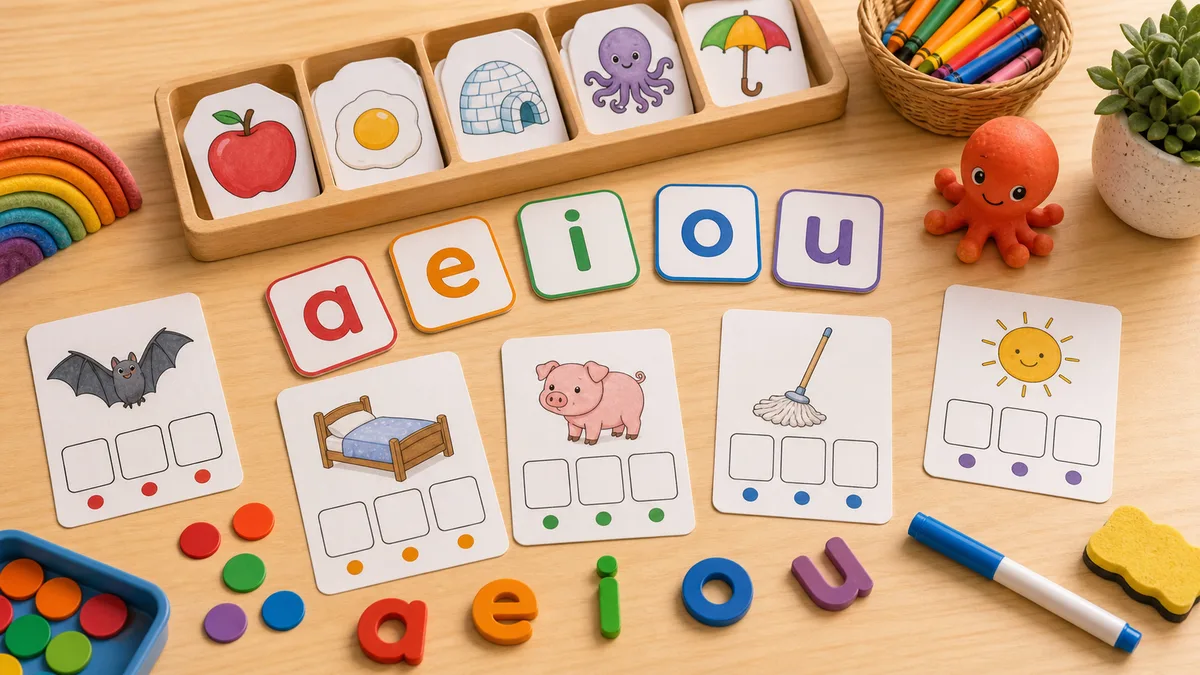
Short vowel worksheets for kindergarten help children hear, say, match, blend, and read words with short a, e, i, o, and u sounds.

Overview
Short vowel worksheets for kindergarten help children hear, say, match, blend, and read words with short a, e, i, o, and u sounds.

Start With the Matching iBloom Practice
Use this short vowel worksheet guide with direct kindergarten practice first.


Worksheet And Lesson Previews
Short and Long Vowel Sounds Worksheet Preview
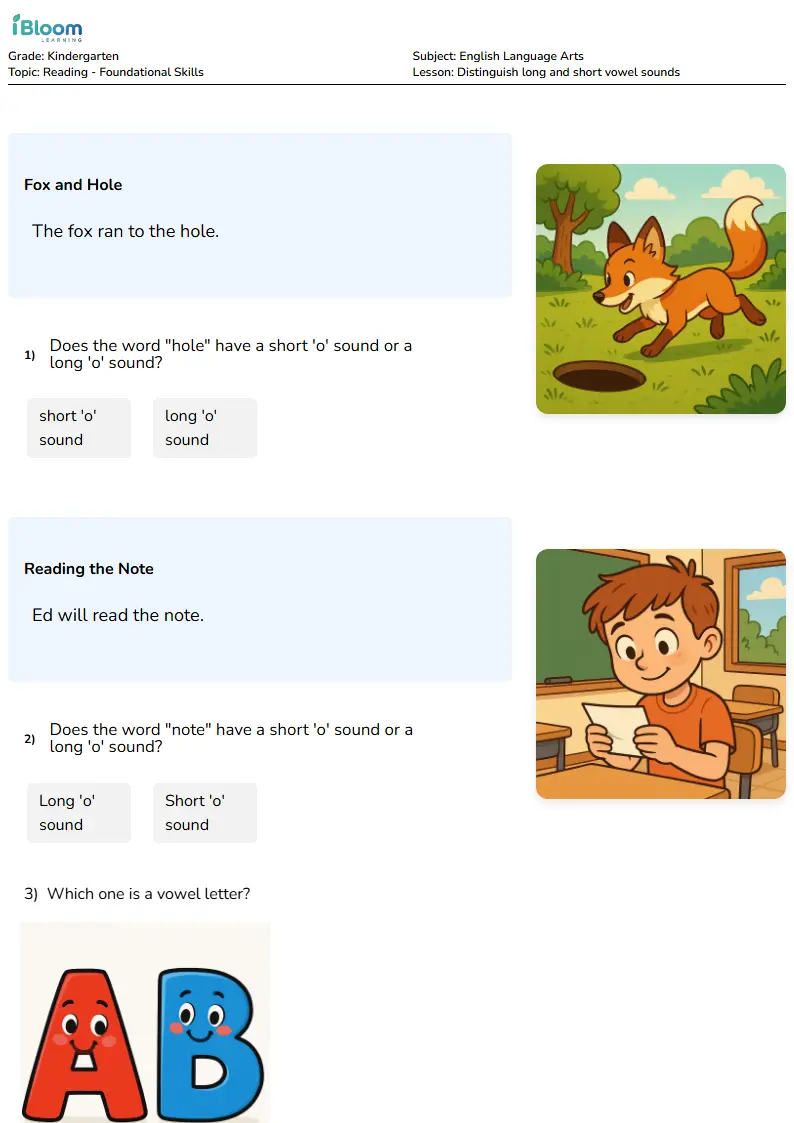
Use this preview to see the kind of practice children will open before you start the routine.
Identify vowels Worksheets for Kindergarten Preview
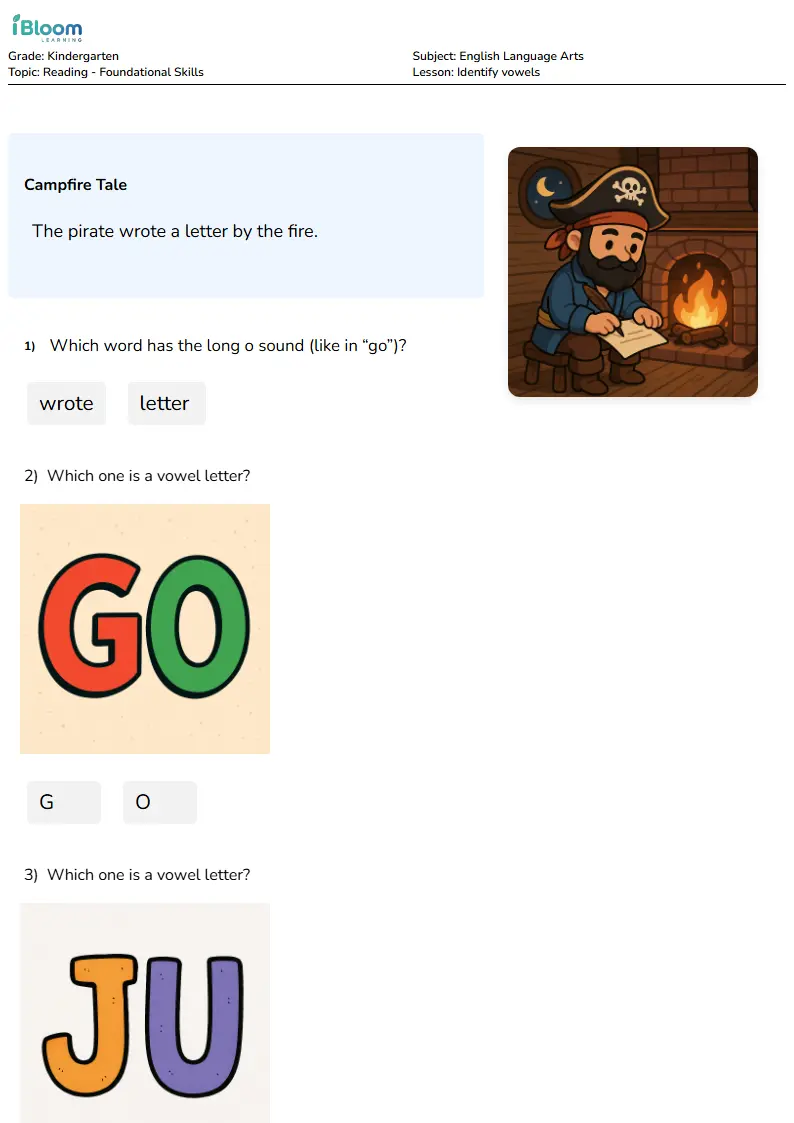
Use this preview to see the kind of practice children will open before you start the routine.
Key Takeaways
- short vowel worksheets kindergarten works best when children practise a small set and explain one answer.
- Parents should use short daily practice instead of a long worksheet packet.
- Teachers can turn one page into a warm-up, center, small-group reteach, or exit ticket.
- Children need examples, feedback, and a next step inside iBloom.
- The goal is useful learning for children, not a list of disconnected terms.

Why This Skill Matters
Short vowels are a foundation for early decoding. Children need to hear the vowel sound, connect it to a printed letter, blend it inside a CVC word, and use the word in a small reading or writing task.
The same skill can appear under different curriculum labels. A family in California may search by grade level, a teacher in Dubai may use KG or year-group language, and a parent in India may search by CBSE, ICSE, Class, LKG, or UKG. The label matters for finding the right page, but the learning routine matters more once the child begins.
Use this article with Free Kindergarten Phonics Worksheets, First Grade Phonics Worksheets, KG2 Phonics Worksheets UAE so children can move from reading advice into actual practice. When adults connect one guide to one worksheet or lesson, children are less likely to treat the task as a random page.
Practice Routine
Start with one clear model. Say the skill aloud, show one example, and ask the child what they notice. Then let the child try three to five items independently. The adult should listen for thinking: Does the child use a clue, sound, pattern, word part, sentence, or count? Does the child guess? Does the child know why the answer works?
Use this sequence:
- Preview the skill in one sentence.
- Model one item slowly.
- Let the child complete a small set.
- Ask for one explanation.
- Choose one follow-up page for spaced review.
For children who need support, make the task smaller. For children who finish quickly, ask them to write or say a new example. A child who can create a similar question is usually showing stronger understanding than a child who only marks answers.

Examples Children Can Try
- Match
cat,map, andjamto short a. - Say whether
sit,sun, andsockbegin, middle, or end with the target sound. - Blend
m-a-t,p-e-n,f-i-n,h-o-t, andb-u-g. - Sort picture cards by the middle vowel sound.
These examples are intentionally simple enough for home and classroom use. Parents can ask them orally, tutors can use them as warm-ups, and teachers can put them in small-group folders. If a child struggles, return to the easiest example and build back up.
Parent Guide
Parents should keep practice calm and visible. Sit beside the child, name the skill, and let the child do the thinking. A helpful prompt is, "Show me how you knew." Another useful prompt is, "Can you make one more like this?"
In India, families can connect the page to school notebooks, CBSE or ICSE revision, tuition review, and short holiday practice. In the US, families can connect it to homework folders, homeschool plans, classroom center review, and intervention practice. In the UAE, multilingual families can let children explain in a home language first and then repeat the important English word, sound, or sentence.
Teacher Guide
Teachers can use this guide for small groups, independent centers, parent communication, or quick diagnostics. The most useful classroom move is to record the mistake pattern. Did the child miss the clue? skip the vowel sound? confuse the word meaning? rush the answer? copy without understanding?
Use one page for four purposes:
- Warm-up: one item on the board or projector.
- Small group: three items with adult feedback.
- Center: one worksheet plus one oral explanation.
- Exit ticket: one transfer question before leaving the group.
India, US, and UAE Notes
India examples may include Delhi, Mumbai, Bengaluru, Chennai, Hyderabad, Pune, Kolkata, Ahmedabad, Jaipur, Lucknow, Kerala, Tamil Nadu, Karnataka, Maharashtra, Telangana, Gujarat, Rajasthan, and West Bengal. US examples may include California, Texas, Florida, New York, Illinois, Pennsylvania, Ohio, Georgia, North Carolina, Michigan, Los Angeles, Houston, Chicago, Phoenix, Philadelphia, Dallas, Austin, Seattle, Boston, Denver, Atlanta, and Miami. UAE examples may include Dubai, Abu Dhabi, Sharjah, Ajman, Al Ain, Ras Al Khaimah, Fujairah, and Umm Al Quwain.
These places are included because real families search with school systems, regions, and curriculum names in mind. The article still keeps the child task clear: practise a small set, explain the answer, and continue with the most relevant iBloom page.
Related iBloom Practice
- Free Kindergarten Phonics Worksheets
- First Grade Phonics Worksheets
- KG2 Phonics Worksheets UAE
- Long Vowel Sounds Grade 2
- iBloom SpellBee
- English Worksheets
Adults who want planning background can use these sources:
Frequently Asked Questions
Who is this guide for?
It is for parents, teachers, tutors, homeschool families, and children who need a practical routine for short vowel worksheets kindergarten.
How long should practice take?
Most children do well with 10 to 15 minutes. Stop after one useful correction or one confident explanation.
Should children finish every worksheet?
No. A short completed set with one explanation is usually more useful than a long page completed silently.
Can this work for multilingual children?
Yes. Let the child explain the idea in the strongest language first if needed, then repeat the important English word, sound, sentence, or answer.
What should we do next?
Choose one related iBloom lesson, worksheet, or blog from the links above so the skill appears again in a new context.