Spelling Bee Rules for Kids
A parent and teacher guide to spelling bee rules for kids, with pronouncer questions, round formats, mock practice routines, mistakes to avoid, and iBloom study links.
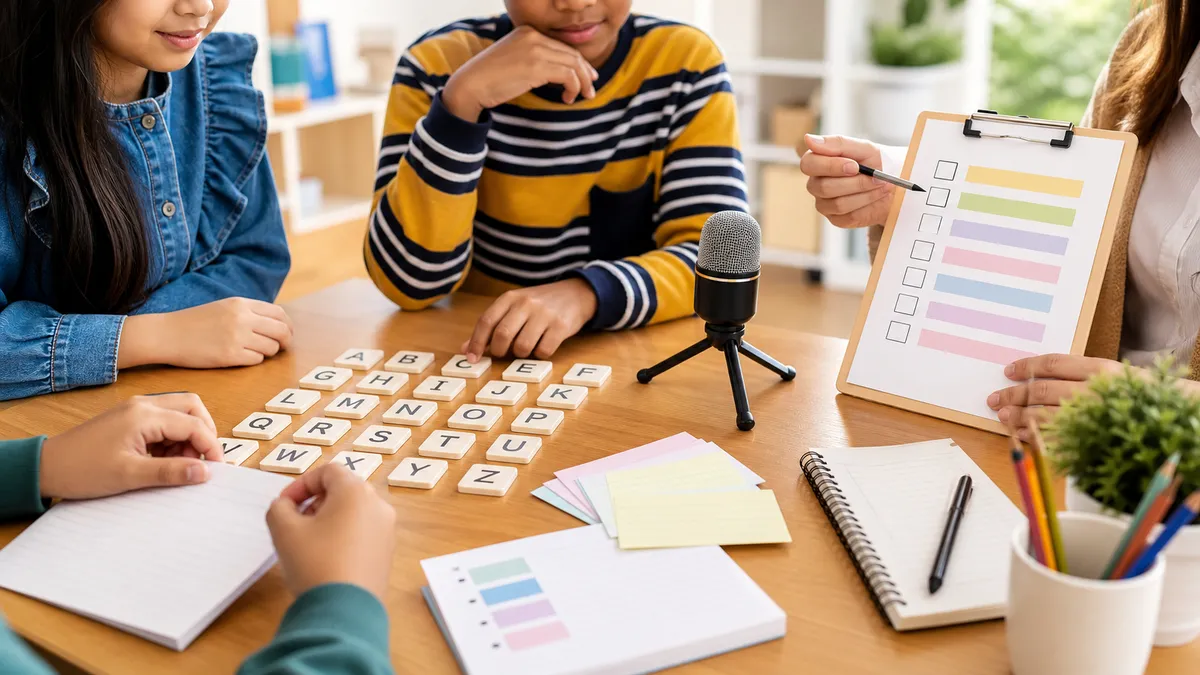
Start with the Matching Practice
Use this guide with a direct iBloom worksheet or lesson so children can move from reading the explanation into real practice.
Why Spelling Bee Rules Matter
Spelling bee rules for kids can feel simple from the outside: hear a word, spell it, and stay in the competition. In practice, young learners need a much clearer routine. They need to understand what they may ask, when they may pause, how to correct themselves before finishing, what happens in vocabulary rounds, and how judges decide whether an answer is correct.
This matters because many children lose points for process errors, not only word knowledge. A child may know the word but rushes the first letter. Another child may forget to ask for the definition. A third child may spell a homophone correctly but not the intended word. Clear rules turn the spelling bee from a scary performance into a predictable literacy routine.
The official Scripps National Spelling Bee rules are the best reference for national-level format, and Scripps also maintains study resources for serious preparation. For classroom, school, district, club, or India-based spelling contests, always read the local rule sheet too. Local bees may change timing, word sources, vocabulary rounds, tie-breakers, or elimination format.
Rules also support literacy. Reading Rockets explains that spelling is connected to reading because children build knowledge of sounds, letters, word parts, and meaning as they spell. That is why rule practice should connect to word study, not only stage rehearsal. The Reading Rockets article on how spelling supports reading is a useful research-backed source for parents and teachers who want to understand the reading-spelling connection.
Quick Spelling Bee Rules for Kids
Use this child-friendly version first. It is short enough to print, rehearse, and repeat before each practice round.
| Rule | What it means for the child |
|---|---|
| Listen first | Wait for the pronouncer to finish the word before speaking. |
| Ask allowed questions | You may ask for the definition, sentence, part of speech, language of origin, alternate pronunciation, or for the word to be repeated, if your contest allows it. |
| Repeat the word | Say the word before spelling so everyone knows what you heard. |
| Spell one letter at a time | Speak clearly and do not mumble letters together. |
| Correct before finishing | If you restart, spell from the beginning and make the correction before you say the final word again. |
| End clearly | Say the word again when you are done, if your contest uses that routine. |
| Respect the judges | The judges' decision follows the published rules. |
| Keep learning | A missed word becomes a study word for the next practice session. |
For daily practice, pair these rules with iBloom SpellBee, which gives children repeated spelling and vocabulary practice, and with the spelling bee practice schedule for kids for a simple weekly rhythm.
What a Child May Ask the Pronouncer
One of the most important spelling bee skills is knowing what to ask. Children often think asking a question means they are unsure. In a real spelling bee, smart questions are a strategy.
Common allowed requests include:
- "Please repeat the word."
- "May I have the definition?"
- "May I have the word in a sentence?"
- "What is the part of speech?"
- "What is the language of origin?"
- "Are there alternate pronunciations?"
- "Are there homonyms?"
The exact list depends on the contest, so teachers should review the event's rule sheet. Still, every practice round should train children to ask at least one useful question before spelling harder words.
Example: How questions help
Suppose the word is "principal." A child who only hears the word may confuse it with "principle." If the pronouncer gives the sentence, "The principal greeted students at the gate," the child has a better clue. If the part of speech is noun and the definition refers to a school leader, the child can choose the correct spelling.
That is also why vocabulary matters. The iBloom article spelling bee words by grade level helps families build word lists, while spelling bee preparation for young learners explains how to turn those words into actual study routines.
Round-by-Round Format
Different competitions use different formats, but most school spelling bees follow one of these patterns.
Traditional elimination round
Each child receives one word. If the child spells it correctly, the child moves to the next round. If the child misses, the child is usually eliminated after the judges confirm the word.
Written preliminary round
Some contests begin with a written spelling test or vocabulary test. This is common when many students enter. Children need to practice careful handwriting, answer review, and pacing.
Oral spelling round
The child stands, hears the word, asks questions, spells aloud, and waits for the result. This is the format most families imagine when they hear "spelling bee."
Vocabulary round
Some bees include word meaning. A child may hear a word and choose the correct definition. This makes reading and vocabulary practice essential. For vocabulary-building variety, connect spelling work with crossword puzzles for vocabulary practice and iBloom SpellBee.
Championship or tie-breaker round
The final rounds may use harder words, a spell-off, vocabulary items, or special tie-breaker rules. Children should know that late-round format can change, so they should listen carefully to the pronouncer and judges.
How to Practice Rules at Home
A strong spelling bee routine has three parts: word study, rule rehearsal, and reflection. Do not wait until the week before the event to practice stage rules. Add them into normal study sessions.
The 15-minute spelling bee rules routine
Use this short routine four or five days a week.
- Two-minute warm-up: Review five older words from the child's miss list.
- Four-minute word study: Break two new words into sounds, syllables, roots, prefixes, suffixes, or word families.
- Five-minute mock round: Parent or teacher acts as pronouncer. Child asks questions and spells aloud.
- Two-minute correction: Child writes missed words, marks the tricky part, and says the rule that would help next time.
- Two-minute confidence finish: End with two easier words the child can spell clearly.
For a fuller weekly plan, use Spelling Bee Practice Schedule for Kids. For word difficulty, use Spelling Bee Words by Grade Level. For motivation, explain spelling bee ranks and levels so children understand progress instead of seeing the bee as pass/fail.
Parent script for mock rounds
Use the same lines every time:
- "Your word is..."
- "Would you like the word repeated, a definition, or a sentence?"
- "Begin when ready."
- "Please say the word when you finish."
- "Correct. The next word is..."
- "The correct spelling is... Let's mark the tricky part."
This consistency lowers anxiety. Children in Mumbai, Delhi, Bengaluru, Chennai, Hyderabad, Pune, Kochi, Kolkata, Ahmedabad, Jaipur, and smaller towns can use the same home routine whether their competition follows a school, club, online, CBSE, ICSE, state-board, or international-school format.
Grade-Level Rule Practice
Kindergarten, LKG, and UKG
Keep rules simple. Children should learn to listen, repeat the word, spell slowly, and celebrate effort. Use short CVC words, sight words, color words, number words, and family words. Avoid long elimination-style sessions. At this age, the best spelling bee practice feels like oral language, sound play, and confidence building.
Good early prompts:
- "Say the word."
- "Tap the sounds."
- "Spell slowly."
- "Say it again."
- "Which letter was tricky?"
Grade 1 and Grade 2
Children can handle basic contest questions: repeat, sentence, and definition. Add vowel teams, digraphs, blends, silent e, and common suffixes. Connect spelling to reading by asking children to read the word in a sentence after spelling it.
Useful iBloom follow-up links include Pictures Help Us Read, Building Sentences with Nouns and Verbs, and English worksheets for broader literacy practice.
Grade 3 to Grade 5
Older elementary spellers should learn language of origin, roots, prefixes, suffixes, homophones, and vocabulary meaning. They should keep a miss list with columns for word, definition, word family, tricky part, and one original sentence.
For advanced readers, connect spelling bee practice to Use Context Clues to Determine Word Meaning and Identify and Analyze Key Details. Strong spelling bee performance depends on meaning, not just letter memory.
Common Mistakes That Cause Missed Words
Mistake 1: Starting too quickly
Children often begin spelling before the word is fully clear. Teach a pause: hear the word, breathe, ask one question, repeat the word, then spell.
Mistake 2: Not asking for a sentence
A sentence can reveal meaning, part of speech, and homophones. This is especially useful for words such as "there," "their," and "they're," or "capital" and "capitol."
Mistake 3: Changing letters after finishing
Most contests do not allow a child to correct a word after completing it. The safe habit is to restart before finishing if the child catches a mistake.
Mistake 4: Memorizing without patterns
Word lists help, but children also need patterns: long vowels, silent letters, Greek and Latin roots, prefixes, suffixes, plurals, and word families. This is why the best practice routine mixes word lists, daily schedules, preparation strategies, and adaptive practice through SpellBee.
Mistake 5: Treating a missed word as failure
A missed word is data. Add it to the miss list, identify the pattern, use it in a sentence, and review it again in two days.
Spelling Bee Rules Checklist
Use this before each school, classroom, or home mock bee.
| Checklist item | Parent or teacher note |
|---|---|
| Rule sheet read | Check whether the contest uses spelling only, vocabulary, written rounds, oral rounds, or tie-breakers. |
| Word source known | Use official lists when available, then add grade-level practice words. |
| Questions practiced | Child can ask for repeat, definition, sentence, part of speech, and origin when allowed. |
| Restart rule practiced | Child knows how to restart before finishing if a correction is needed. |
| Miss list ready | Every missed word becomes a review word. |
| Calm routine rehearsed | Breathe, ask, repeat, spell, finish. |
| Internal practice mapped | Use iBloom SpellBee, word lists, schedules, and reading practice after each session. |
Frequently Asked Questions
What are the basic spelling bee rules for kids?
The basic rules are to listen to the word, ask allowed questions, repeat the word, spell clearly one letter at a time, make any correction before finishing, and wait for the judges' decision. Local contests may add written rounds, vocabulary questions, or tie-breakers.
Can a child ask for the word in a sentence?
In many spelling bees, yes. A sentence is one of the most useful requests because it can reveal the word's meaning and help with homophones. Always check the local rule sheet.
Can a child restart a word after making a mistake?
Often a child may restart before finishing, but the corrected spelling must be clear and complete from the beginning. Once the child finishes the word, changes are usually not accepted. Check the contest rules before the bee.
Are spelling bee rules the same in every school?
No. Classroom bees, school bees, regional bees, online bees, and national-level bees may use different formats. Parents and teachers should read the official local rules and use Scripps rules as a reference for formal contest structure.
How should beginners prepare for spelling bee rules?
Beginners should practice short mock rounds. They should learn to repeat the word, ask for a sentence, spell slowly, and review missed words. A 10- to 15-minute routine is better than a long stressful session.
What is the best iBloom page for spelling bee practice?
Start with iBloom SpellBee, then use Spelling Bee Words by Grade Level, Spelling Bee Practice Schedule for Kids, and Spelling Bee Preparation Guide for Kids.
Conclusion
Spelling bee success is not just a memory contest. Children need word knowledge, listening discipline, vocabulary, reading confidence, and a clear understanding of contest rules. When parents and teachers teach the process early, children walk into the bee knowing what to do before, during, and after each word.
Use official rules for accuracy, iBloom's spelling cluster for practice, and short mock rounds for confidence. The strongest spellers are not the children who never miss a word. They are the children who know how to learn from every word they meet.
Practice This Skill Next
After reading this guide, children can practise the same skill on iBloom. Start with Pictures Help Us Read or Use Context Clues to Determine Word Meaning, then ask the child to explain one answer before moving on.
Worksheet And Lesson Previews
Pictures Help Us Read Worksheets for Class 1 Preview
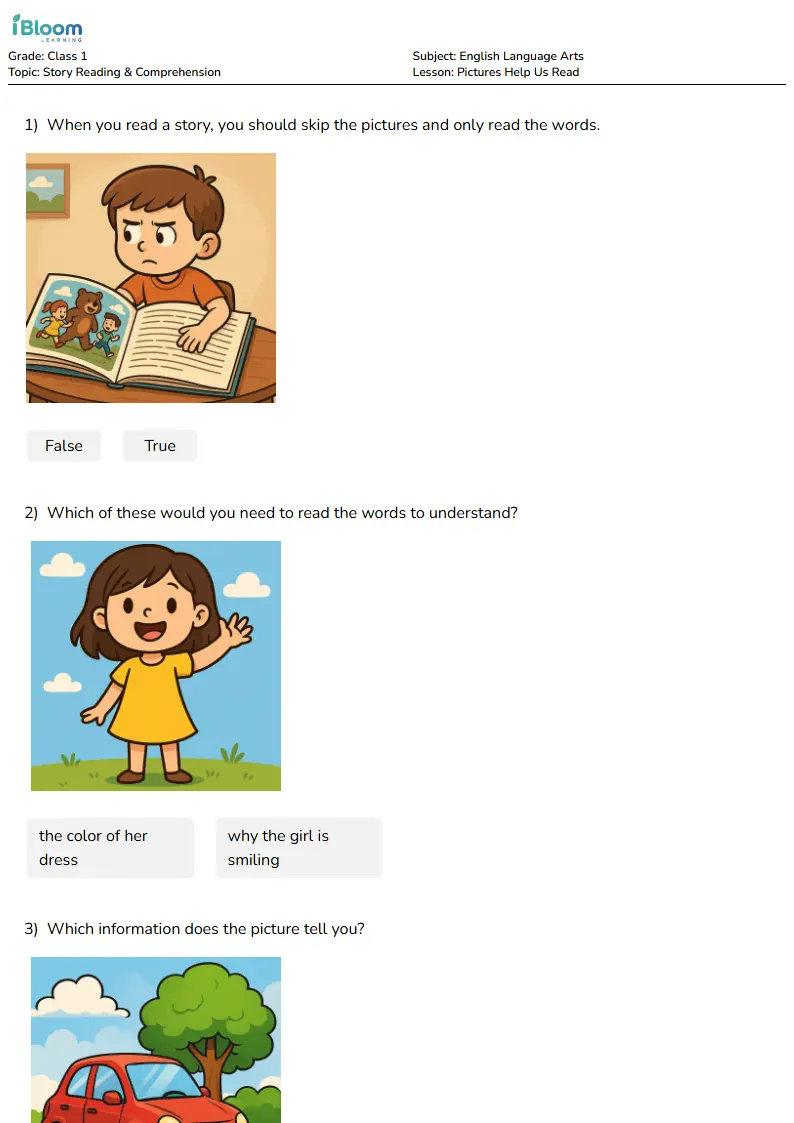
Use this preview to see the kind of practice children will open before you start the routine.
Building Sentences with Nouns and Verbs Lesson for Class 1 Preview
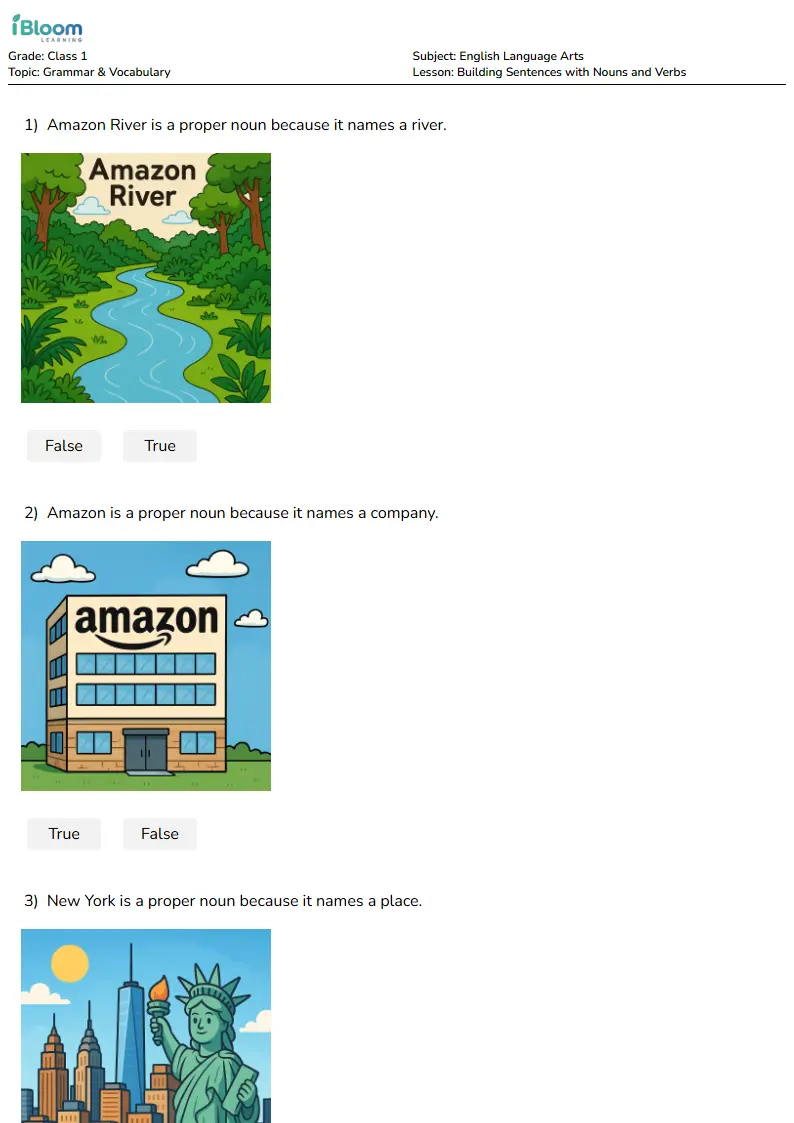
Use this preview to see the kind of practice children will open before you start the routine.
Identify and analyze key details Lesson for Fourth Grade Preview
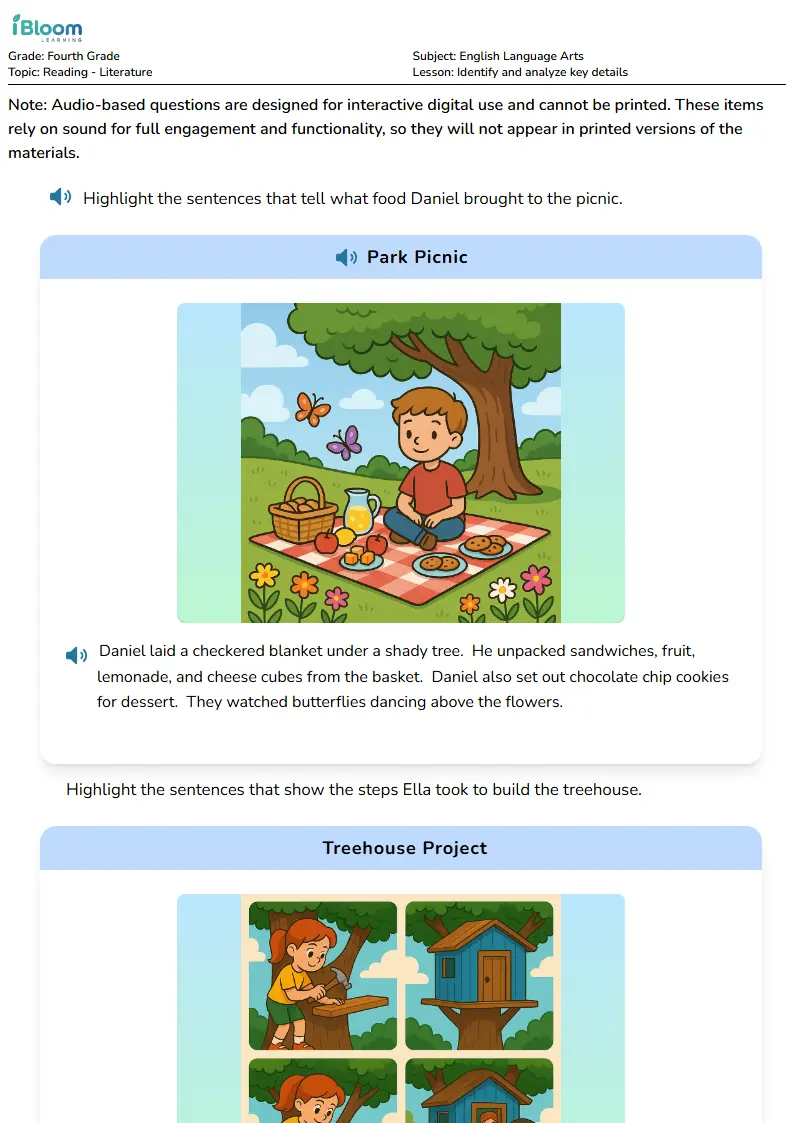
Use this preview to see the kind of practice children will open before you start the routine.