Crossword Puzzle Tips for Parents and Teachers
Practical crossword puzzle tips for parents and teachers, including classroom word lists, clue-writing ideas, spelling practice, and family vocabulary games.
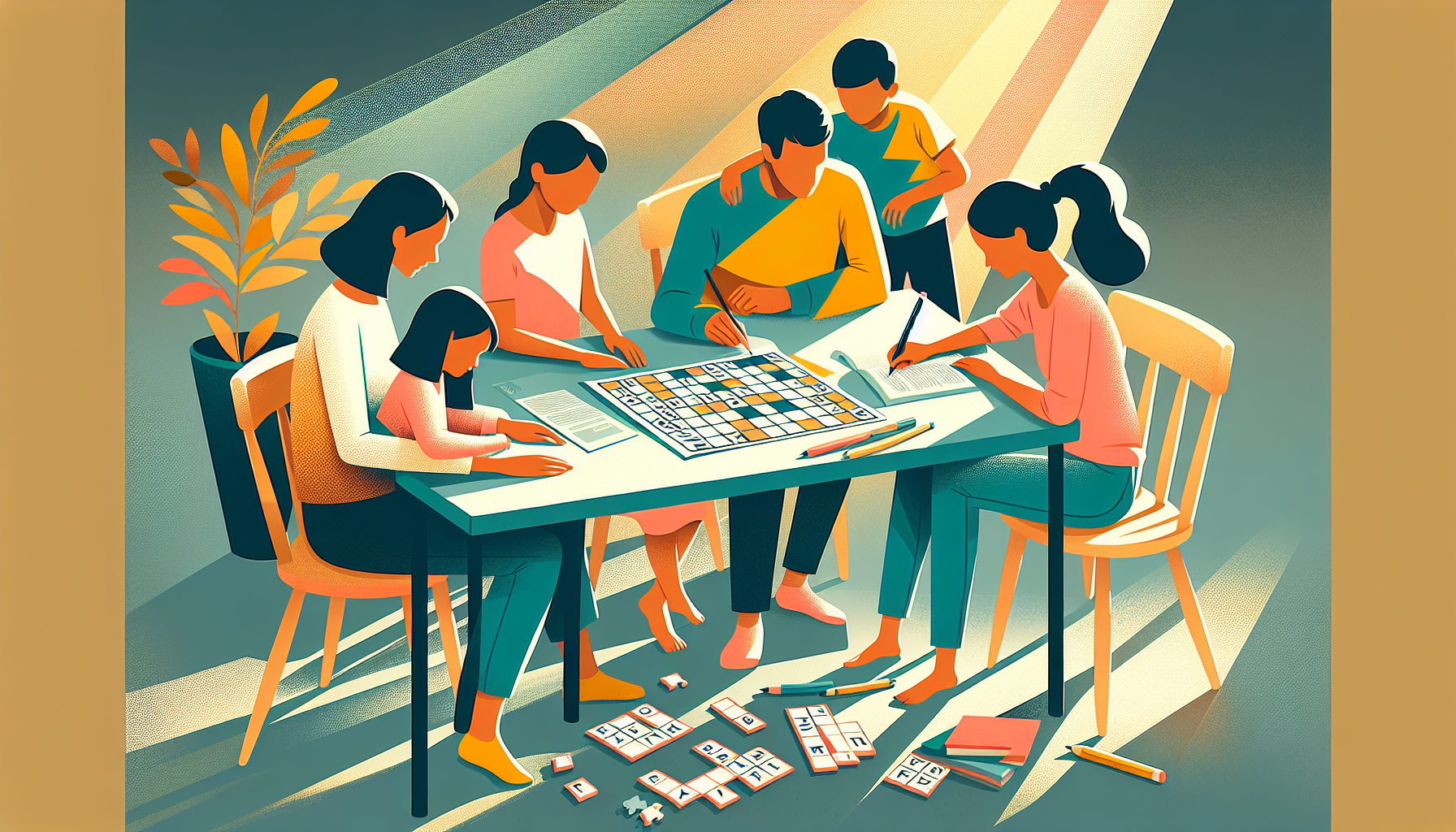
Start with the Matching Practice
Use this guide with a direct iBloom worksheet or lesson so children can move from reading the explanation into real practice.
Introduction
In the bustling world of education, finding engaging and effective tools to enhance learning can be a challenge for both parents and teachers. One such tool that has stood the test of time is the crossword puzzle. Notably, the "church nyt crossword, required number nyt crossword, forbes nyt mini, cards nyt crossword, track stat nyt crossword, kind of average nyt crossword, rays nyt crossword, singular nyt crossword, curve on a score nyt crossword, spread the word nyt crossword, popup button nyt mini" are popular choices among educators and parents alike. At iBloom, we understand the importance of interactive learning, and our platform offers a unique approach to integrating crosswords into educational activities. Our interactive digital worksheets and spellbee games provide a comprehensive learning experience.
Understanding NYT Crosswords
The Role of Crosswords in Cognitive Development
Crosswords have long been celebrated for their ability to stimulate the brain and improve cognitive skills. These puzzles require players to think critically, enhance their vocabulary, and improve memory retention. A study conducted by Cambridge University in 2024 found that regular engagement with crosswords significantly improves language skills and problem-solving abilities in children.
Popular Crosswords and Their Educational Impact
The New York Times crosswords are renowned for their complexity and variety. For instance, themes like "church nyt crossword" and "rays nyt crossword" can introduce children to new concepts and vocabulary. Below is a comparison of different NYT crosswords and their focus areas:
| Crossword Theme | Focus Area | Difficulty Level | Educational Benefit |
|---|---|---|---|
| Church NYT | Vocabulary | Medium | Enhances cultural knowledge |
| Required Number NYT | Maths Skills | High | Develops numerical proficiency |
| Forbes NYT Mini | General Knowledge | Easy | Broadens worldview |
| Cards NYT | Strategy | Medium | Teaches strategic thinking |
Benefits of Crosswords in Education
Enhancing Vocabulary and Language Skills
Crosswords are an excellent tool for expanding vocabulary and improving language skills. They encourage learners to explore synonyms, antonyms, and homonyms, providing a rich linguistic experience. Teachers can incorporate crosswords into their lesson plans to reinforce new vocabulary and language concepts.
Promoting Critical Thinking and Problem Solving
Crosswords require strategic thinking and problem-solving, skills that are essential for academic success. Educators can use crosswords to challenge students and develop their critical thinking abilities. Here are some actionable tips for integrating crosswords into the classroom:
- Start with themed crosswords related to the current curriculum.
- Encourage group activities for collaborative problem-solving.
- Use crosswords as a warm-up exercise to stimulate thinking.
- Incorporate crossword puzzles in digital formats for tech-savvy learners.
- Reward students for completing challenging puzzles to motivate learning.

How to Incorporate Crosswords in Learning
Strategies for Parents
Parents can use crosswords as a fun and educational activity at home. By selecting puzzles that align with their child's interests, parents can enhance engagement and learning outcomes. For example, using a "track stat nyt crossword" can make learning about sports statistics enjoyable.
Integrating Crosswords in the Classroom
Teachers can seamlessly integrate crosswords into their teaching methods. By using crosswords that complement classroom topics, educators can reinforce lessons and provide an interactive learning experience. According to the OECD (2023), students who engaged with crosswords weekly showed a 20% improvement in test scores compared to those who did not.
"Crosswords are not just a pastime; they are a powerful educational tool that can enhance learning in multiple domains." — Dr. Jane Thompson, Educational Psychologist, 2025
Challenges and Solutions
Overcoming Common Crossword Challenges
While crosswords are beneficial, they can pose challenges, such as difficulty levels that may not match the learner's abilities. It's important for educators and parents to select puzzles that are appropriate for the child's skill level. Customizing puzzles based on individual needs can make them more accessible.
Solutions for Effective Crossword Use
To maximize the benefits of crosswords, consider the following solutions:
| Challenge | Solution |
|---|---|
| Complexity | Start with simpler puzzles and gradually increase difficulty |
| Engagement | Choose themes that interest the learner |
| Accessibility | Utilize digital crossword platforms for interactive learning |
| Time Constraints | Incorporate short, daily crossword sessions |
Future of Crossword Learning
Innovations in Educational Crosswords
The future of crossword learning is bright, with technological advancements paving the way for more interactive and personalised experiences. AI-powered platforms like iBloom are at the forefront of this innovation, offering adaptive learning tools that cater to individual learning paces and preferences.
The Role of AI in Crossword Education
AI can transform traditional crossword puzzles into dynamic educational experiences. By analysing student performance, AI can tailor puzzles to address specific learning gaps, ensuring that each child's unique needs are met. This personalised approach to learning is set to revolutionise educational strategies by 2026.

Frequently Asked Questions
How can crosswords help my child improve their vocabulary?
Crosswords challenge children to use and understand new words, enhancing their vocabulary. They provide a context for words, allowing children to learn meanings and synonyms effectively. Explore our interactive digital worksheets for more vocabulary-building activities.
Are digital crosswords better than traditional paper ones?
Both formats have their advantages. Digital crosswords offer interactive features and instant feedback, which can be more engaging for children. However, traditional paper crosswords can be beneficial for focusing on problem-solving without digital distractions.
Can crosswords be used for subjects other than English?
Absolutely. Crosswords can be tailored for various subjects, including mathematics, science, and history. They can reinforce concepts and terminology, making them a versatile educational tool.
How often should my child engage with crosswords?
Regular engagement is key. Aim for short sessions of 10-15 minutes daily to maintain interest and reinforce learning without overwhelming your child.
What age group benefits most from crossword puzzles?
Crosswords are adaptable for all age groups. For younger children, simpler puzzles can introduce basic vocabulary, while older children can tackle more complex themes and concepts.
Conclusion
Crosswords are more than just a pastime; they are a valuable educational resource that can enhance learning in a fun and engaging way. By incorporating crosswords into your child's learning routine, you can help improve vocabulary, critical thinking, and problem-solving skills. Whether you're a parent or an educator, platforms like iBloom offer innovative ways to integrate crosswords into educational activities. To explore how iBloom can enhance your child's learning experience, start a free trial on iBloom today.
Practice This Skill Next
After reading this guide, children can practise the same skill on iBloom. Start with interactive digital worksheets, then ask the child to explain one answer before moving on.
Worksheet And Lesson Previews
Describe daily routines Worksheets for Pre Kindergarten Preview
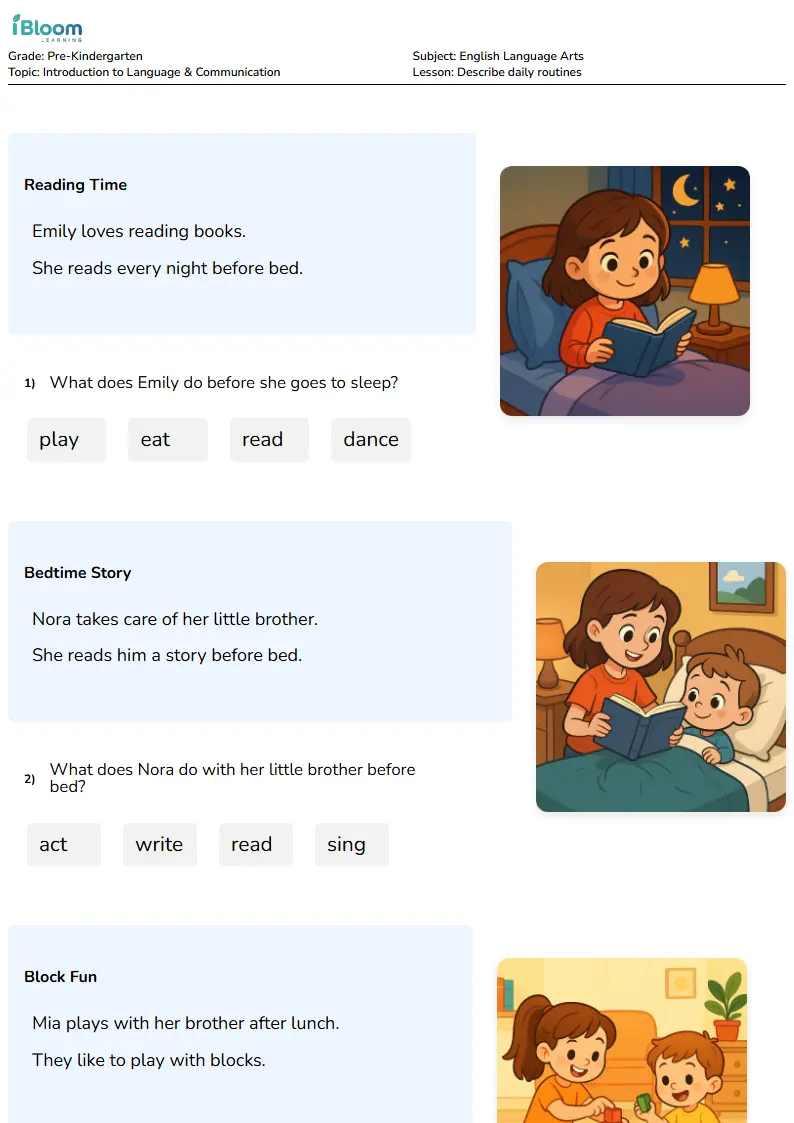
Use this preview to see the kind of practice children will open before you start the routine.