The Ultimate Guide to Spelling Bee Preparation for All Ages
Master spelling bee preparation with our comprehensive guide. Discover strategies, study lists, and expert tips for success. Try iBloom free.

- Introduction
- Understanding the Importance of Spelling Bees
- Strategies for Effective Spelling Bee Preparation
- Resources for Spelling Bee Success
- Tailoring Preparation for Different Ages
- Incorporating Technology in Spelling Practice
- Building Confidence and Overcoming Anxiety
- Frequently Asked Questions
- Conclusion
Start with the Matching Practice
Use this guide with a direct iBloom worksheet or lesson so children can move from reading the explanation into real practice.
Introduction
Participating in a spelling bee is a thrilling experience for both children and adults alike. Whether you're preparing for the Scripps National Spelling Bee study list or aiming for a spelling bee for adults, the journey involves mastering a plethora of words and enhancing language skills. For a parent guiding a second grader through their first spelling bee or a teacher preparing a classroom for competition, the challenge is palpable. How do you effectively study for a spelling bee? This is where iBloom comes in, offering AI-powered resources such as interactive worksheets and the engaging SpellBee game, designed to make spelling bee preparation both fun and efficient. With iBloom's interactive digital worksheets, students can enjoy a personalised learning experience tailored to their needs.
Understanding the Importance of Spelling Bees
The Educational Value of Spelling Bees
Spelling bees are more than just competitions; they are educational experiences that enhance vocabulary, comprehension, and cognitive skills. According to a 2024 study by the National Education Association, students who participate in spelling bees show improved language proficiency and academic performance. These competitions encourage students to explore the intricacies of language, fostering a lifelong love for learning.
Comparing Spelling Bees Across Age Groups
Spelling bees can vary significantly depending on the age group of the participants. For instance, a kindergarten spelling bee might focus on phonetics and basic vocabulary, while a spelling bee for adults could involve complex and rare words. The following table highlights key differences:
| Age Group | Focus Areas | Typical Word Length | Complexity Level |
|---|---|---|---|
| Kindergarten | Basic phonetics, simple words | 3-5 letters | Low |
| 2nd Graders | Common vocabulary, simple rules | 4-6 letters | Medium |
| Intermediate | Advanced vocabulary, root words | 5-8 letters | High |
| Adults | Rare words, etymology | 8+ letters | Very High |
Strategies for Effective Spelling Bee Preparation
Creating a Study Schedule
To study for a spelling bee effectively, one must adopt a structured approach. This involves setting up a study schedule that allocates specific times for learning new words, reviewing known words, and practicing under competition conditions. Consistency is key to retention and mastery.
Specific Techniques to Enhance Learning
- Flashcards: Create flashcards with the word on one side and its definition and usage on the other.
- Mnemonics: Develop memory aids to remember tricky spellings.
- Daily Practice: Dedicate 15-20 minutes each day to spelling practice.
- Mock Competitions: Simulate the spelling bee environment to build confidence.
- Group Study: Collaborate with peers to challenge and motivate each other.
- Use Technology: Engage with digital tools like the SpellBee game to make learning interactive.
- Regular Assessments: Conduct weekly assessments to track progress and identify areas for improvement.

Resources for Spelling Bee Success
Utilising Online Resources
The internet is a treasure trove of spelling bee preparation material. Websites offer word lists, practice tests, and expert tips. iBloom provides an array of resources, including AI-generated interactive worksheets that adapt to each child's learning pace.
Expert Insights on Spelling Bee Preparation
"Incorporating technology into spelling practice can significantly enhance learning outcomes," states Dr. Emily Harrison, an educational psychologist. "Digital platforms like iBloom offer personalised learning experiences that cater to individual needs, making preparation more effective and engaging."
Tailoring Preparation for Different Ages
Adapting Techniques for Young Learners
For younger children, such as those in kindergarten, preparation should be fun and engaging. Incorporate games and interactive activities that build phonetic skills. Visual aids and storytelling can also reinforce learning in an enjoyable manner.
Adjusting Strategies for Older Students
As students progress, their preparation needs to become more structured. Focus on building a robust vocabulary and understanding word origins. Encourage students to read widely, as exposure to diverse texts can naturally enhance spelling skills.
| Age Group | Recommended Strategies |
|---|---|
| Kindergarten | Phonetics games, interactive storytelling |
| 2nd Graders | Flashcards, simple mnemonics |
| Intermediate | Root word study, etymology exploration |
| Adults | Advanced vocabulary exercises, competitive simulations |
Incorporating Technology in Spelling Practice
Leveraging Digital Tools
In today's digital age, technology plays a crucial role in education. Using online platforms like iBloom can provide students with a dynamic and adaptive learning environment. Features like the SpellBee game offer a playful yet effective way to enhance spelling skills.
The Benefits of Interactive Learning
Interactive learning engages multiple senses, making it a powerful tool for retention. According to a 2025 report by the Educational Technology Research Group, students who use interactive tools in their studies demonstrate a 30% improvement in retention rates compared to traditional methods.

Building Confidence and Overcoming Anxiety
Techniques to Boost Self-Esteem
Confidence is crucial in a spelling bee. Encourage students to celebrate small victories and maintain a positive mindset. Regular practice and familiarity with the competition format can significantly reduce anxiety.
"Confidence comes from preparation and practice. The more you practice, the more confident you'll become," advises Dr. Sarah Thompson, a child psychologist. "It's important to approach spelling bees with a positive and open mindset."
Managing Stress During Competitions
Stress management is essential for optimal performance. Teach students relaxation techniques such as deep breathing or visualisation. Encourage them to take breaks and engage in activities they enjoy to maintain a balanced lifestyle.
Frequently Asked Questions
How can parents help their children prepare for a spelling bee?
Parents can support their children by creating a conducive learning environment, setting up regular study sessions, and using resources like iBloom's interactive worksheets for practice.
What are some effective ways to study for a spelling bee?
Effective ways include creating a study schedule, using flashcards, engaging in group study, and leveraging digital tools like iBloom for interactive learning.
How do spelling bees benefit children academically?
Spelling bees enhance vocabulary, improve comprehension, and develop critical thinking skills, contributing to overall academic success.
Are there any online platforms for spelling bee preparation?
Yes, platforms like iBloom offer comprehensive resources, including interactive worksheets and games, to aid in spelling bee preparation.
What strategies can help reduce anxiety before a spelling bee?
Encourage regular practice, simulate competition conditions, and teach relaxation techniques to help students manage pre-competition anxiety.
Conclusion
Spelling bees are more than just competitions; they are opportunities for growth and learning. By adopting strategic preparation methods, utilising resources like iBloom, and fostering a positive mindset, participants can enhance their spelling skills and confidence. Whether you're a parent guiding a young learner or an adult preparing for a challenging competition, the right tools and strategies can make all the difference. Start your free trial on iBloom today to access a wealth of resources designed to support your spelling bee journey.
Practice This Skill Next
After reading this guide, children can practise the same skill on iBloom. Start with interactive digital worksheets, then ask the child to explain one answer before moving on.
Worksheet And Lesson Previews
Describe daily routines Worksheets for Pre Kindergarten Preview
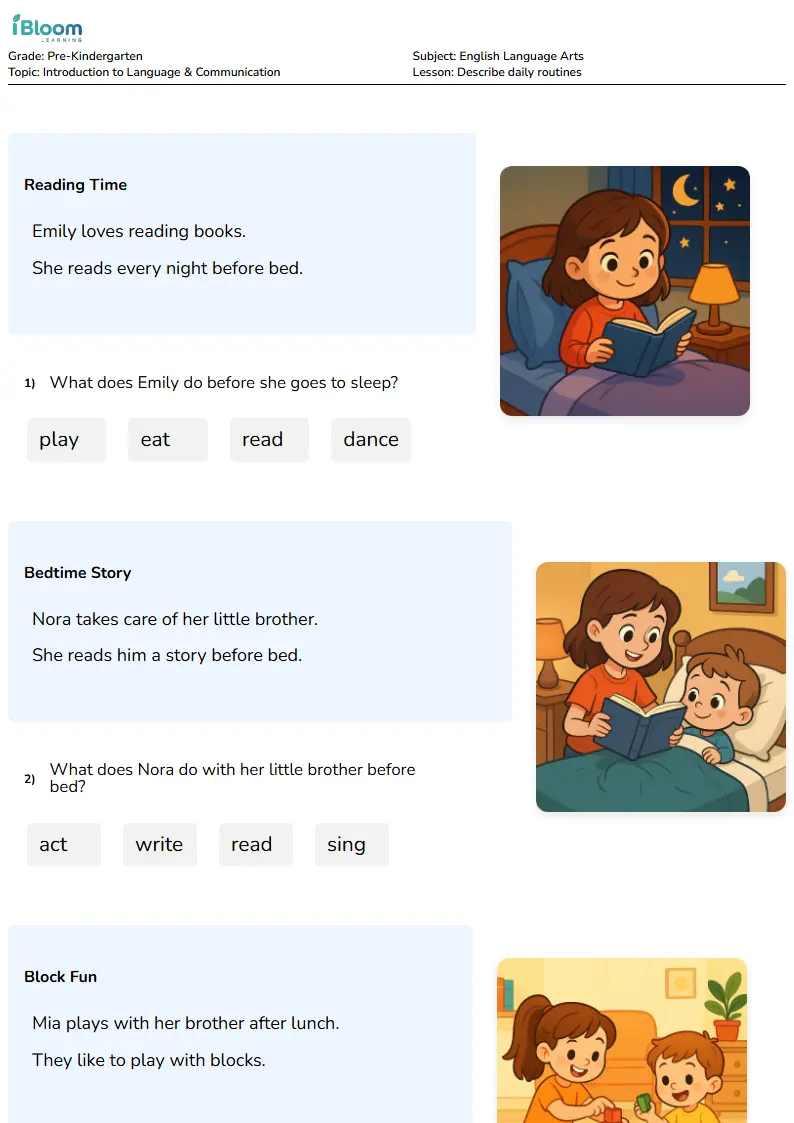
Use this preview to see the kind of practice children will open before you start the routine.