Vowel Worksheets for Class 1 Practice
Vowel Worksheets for Class 1 Practice helps Class 1 children learning to hear, sort, and spell short vowel sounds practise class 1 vowels with examples, routines, and iBloom links.
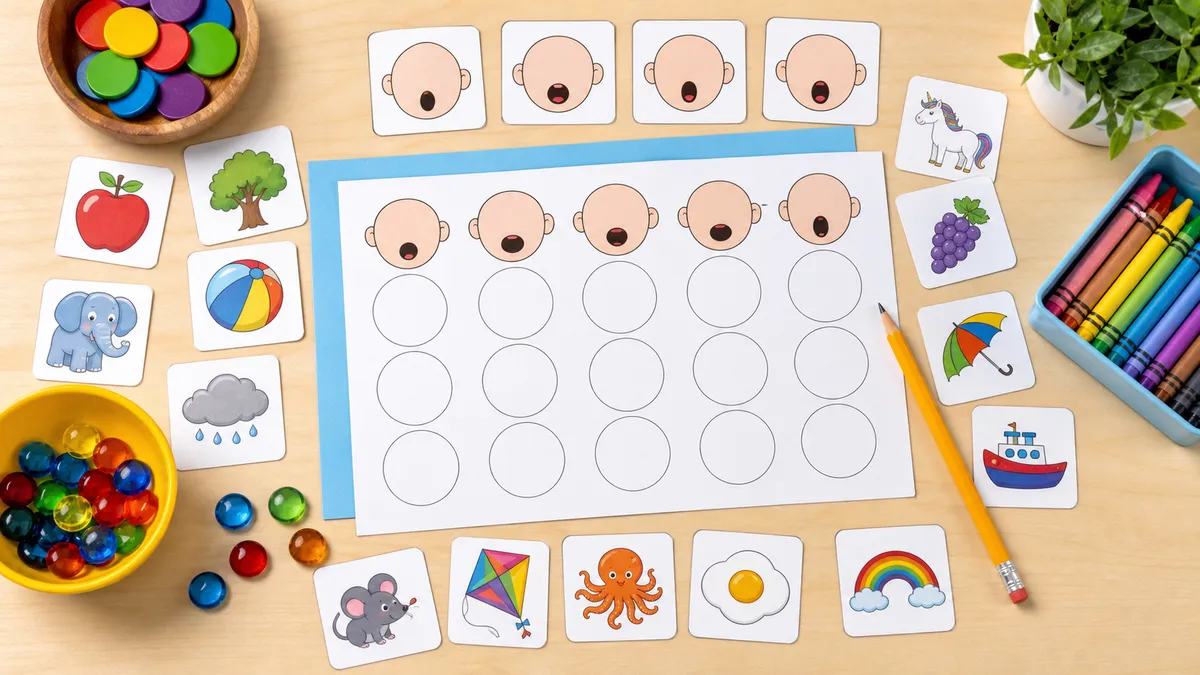
Vowel Worksheets for Class 1 Practice gives Class 1 children learning to hear, sort, and spell short vowel sounds a practical way to work on class 1 vowels with clear examples, short routines, and direct iBloom practice. The goal is not to finish a page quickly. The goal is to help a child notice the important clue, choose a sensible answer, and explain why it works.
Start With iBloom Practice
Use the guide with direct practice before or after reading:
Table of Contents
Worksheet And Lesson Previews
Context Clues Word Meaning Lesson Preview
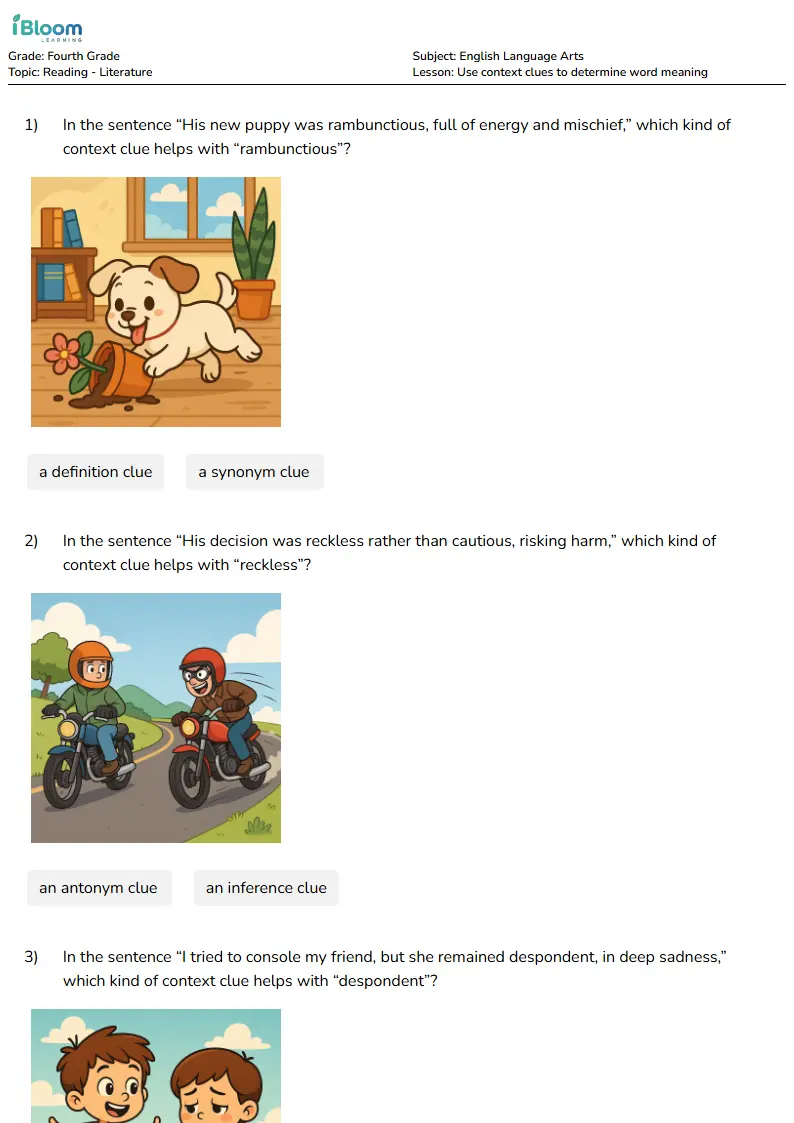
Use this preview to see the kind of practice children will open before you start the routine.
Key Takeaways
- vowel worksheets for class 1 should be taught with a visible model, child explanation, and short follow-up practice.
- Children learn more when they say how they know, not only what answer they chose.
- Parents can use a five- to ten-minute routine at home without creating a long lesson.
- Teachers can use the same structure for warm-ups, small groups, centers, homework, or exit checks.
- The best next step is a direct worksheet, lesson, SpellBee activity, or related iBloom article that keeps the child on the same skill family.
Why This Skill Matters
class 1 vowels is a small search phrase, but it points to a real classroom problem. A child may know part of the answer and still need support with language, reasoning, or accuracy. If the adult only marks the answer right or wrong, the child may not learn the pattern behind it. This is why the page should include a model, a chance to practise, and a simple explanation prompt.
For reading and vocabulary topics, the most important question is often, "What clue proves your answer?" For math topics, it may be, "What changed, what stayed the same, and what operation or comparison fits?" For AI safety, the question becomes, "Did you check the answer and protect private information?" Each version asks children to slow down and think.
The approach also matches reliable education guidance. - Review the research-backed teaching guidance
How to Teach It Step by Step
Start with one example that is easier than the independent task. Say the learning goal aloud, show the child what to notice, and ask for a short explanation. Then move into iBloom practice while the idea is still fresh.
Use this sequence:
- Name the skill: vowel worksheets for class 1.
- Show one example and one non-example.
- Ask the child to point to the important clue, number, sound, word, or safety rule.
- Let the child try one item independently.
- Ask for one complete sentence explaining the answer.
- Use the connected iBloom page for practice.
- Review one missed item before ending.
This structure keeps the task focused. It also works across home, tutoring, school, and online practice because the adult does not need a new lesson every time.
Examples to Try
- Children can sort picture cards by the middle sound they hear.
- A short vowel routine should include listen, say, blend, spell, and read.
- Mistakes often happen when children look at the first letter but ignore the middle sound.
After each example, ask the child to say one reason. A useful sentence frame is: "I know because..." For younger children, let them point first and speak second. For older children, ask them to write one explanation after speaking it.
Parent Routine
Parents can keep this simple. Choose one iBloom link from the practice section, read the first item together, and ask the child to explain what they notice. If the child is stuck, reduce the task to one clue, one object, one word, or one number. If the child answers correctly, ask for a better explanation instead of adding many more questions.
A short home routine can look like this:
- Open the practice page.
- Complete one example together.
- Let the child try one item alone.
- Ask for the reason.
- Fix one mistake.
- End with one review word, sentence, number, or safety rule.
Teacher Routine
Teachers can use this topic as a warm-up, small-group station, lesson extension, intervention task, or homework support link. The strongest classroom use is not a long lecture. It is a short cycle: model, practise, explain, and connect.
For a small group, ask each child to complete one part of the reasoning. One child reads the prompt, one points to the clue or model, one gives the answer, and one explains why. This turns vowel worksheets for class 1 into a collaborative reasoning task rather than a worksheet race.
For independent work, keep a visible reminder on the board: read carefully, find the clue, answer, explain, check. Children who finish early can write one extra example for a partner.
Regional Use Notes
Families and schools can adapt this for India, the United States, and the UAE. In India, it can support CBSE, ICSE, state-board, Delhi, Mumbai, Bengaluru, Chennai, Hyderabad, Pune, Kolkata, Ahmedabad, Jaipur, Kerala, Tamil Nadu, Karnataka, Maharashtra, Telangana, Gujarat, Rajasthan, and West Bengal routines. In the US, it can support classroom, homeschool, and intervention work in California, Texas, Florida, New York, Illinois, Pennsylvania, Ohio, Georgia, North Carolina, Michigan, Los Angeles, Houston, Chicago, Dallas, Seattle, Boston, Denver, Atlanta, and Miami. In the UAE, it can support British, American, IB, and Indian curriculum families in Dubai, Abu Dhabi, Sharjah, Ajman, Al Ain, Ras Al Khaimah, Fujairah, and Umm Al Quwain.
Use location and curriculum context as support, not filler. The child-facing task remains the same: understand the prompt, practise the skill, and explain the answer.
Common Mistakes
- The child guesses without pointing to evidence.
- The adult gives too many items before the child understands the first example.
- The worksheet is treated as a speed task.
- The child answers correctly but cannot explain the reason.
- The next activity is unrelated, so practice does not build a cluster.
When one of these mistakes appears, shrink the task. Ask for one answer and one reason. Then connect back to iBloom practice so the child repeats the same skill in a new form.
Keep Practicing With iBloom
Choose one direct practice page and one related article. Avoid opening too many tabs. Children build confidence when the next step is obvious.
Frequently Asked Questions
Who should use this guide?
Use it for Class 1 children learning to hear, sort, and spell short vowel sounds. It is especially useful when a child needs a short model before independent work.
How long should one practice session take?
Five to ten minutes is enough for most children. A short accurate session with one explanation is better than a long rushed session.
What should I do if the child guesses?
Ask the child to point to the clue, number, sound, word, object, or safety rule that proves the answer. If they cannot, return to the model example.
Should this replace worksheets or lessons?
No. Use this as a guide that prepares children for direct iBloom worksheets, lessons, SpellBee practice, or related reading.
What is the next best step?
Open one link under Related iBloom Practice and ask the child to explain one answer in a full sentence.