Weekly Spelling Test Practice
Plan weekly spelling test practice with word sorting, dictation, review days, mock tests, and parent routines.
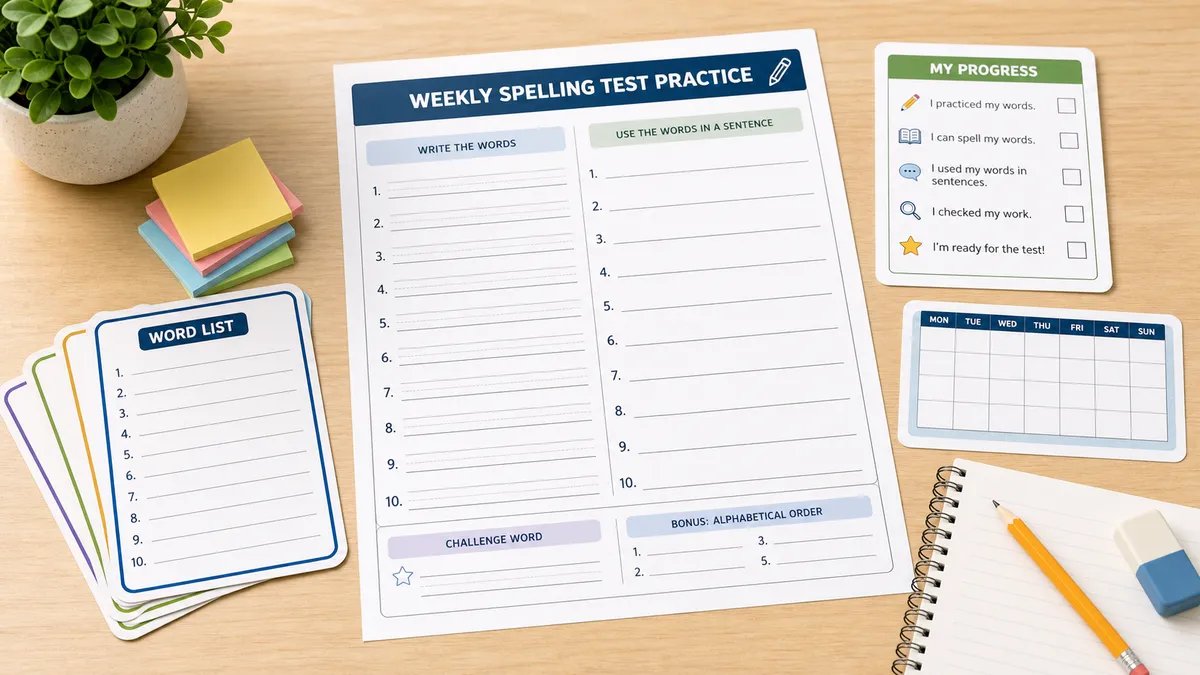
Weekly Spelling Test Practice is a practical guide for parents, teachers, tutors, and children who need giving parents and teachers a calm weekly spelling routine that builds retention before test day. It supports iBloom's active spelling cluster without repeating the existing spelling bee word-list, rules, online practice, or study-schedule articles. Use it with Spelling Bee Practice Schedule for Kids, Spelling Bee Words: Easy to Hard, and the exact iBloom practice pages linked throughout this guide.
Start with the Matching Practice
Use this guide with a direct iBloom worksheet or lesson so children can move from reading the explanation into real practice.
Table of Contents
Worksheet And Lesson Previews
Read sight words Worksheets for Kindergarten Preview
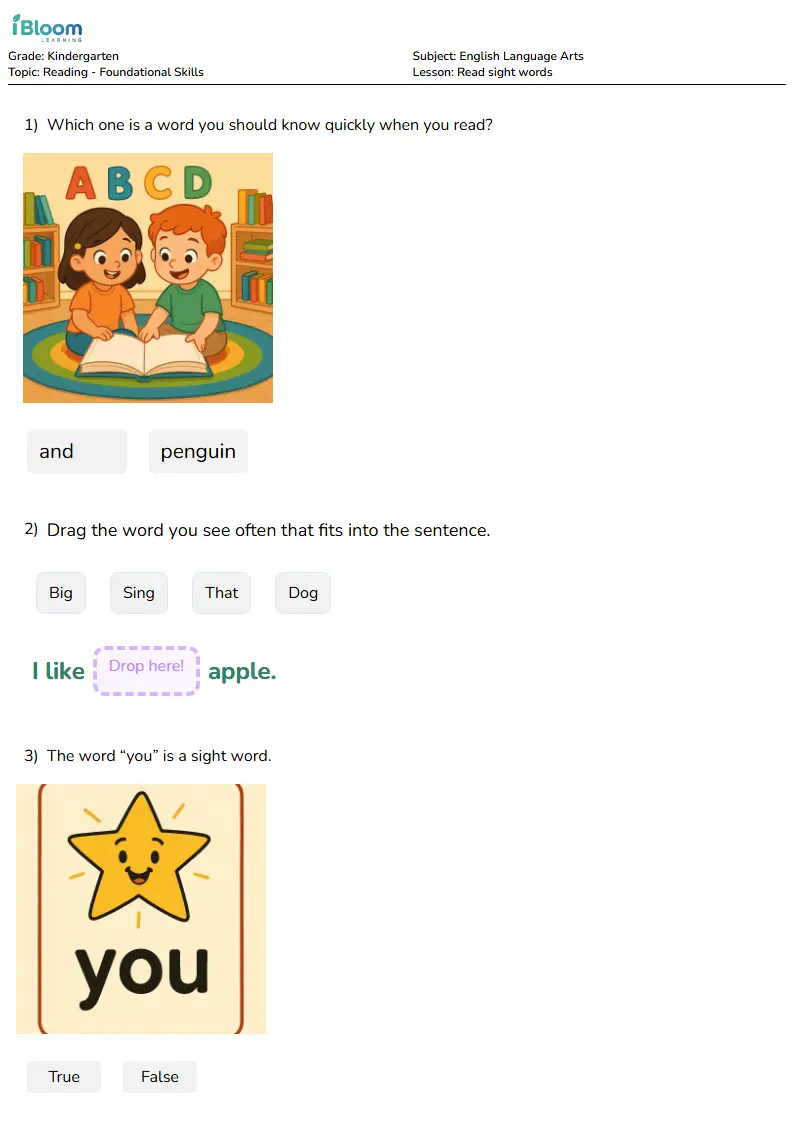
Use this preview to see the kind of practice children will open before you start the routine.
Build words with phonics patterns Worksheets for First Grade Preview
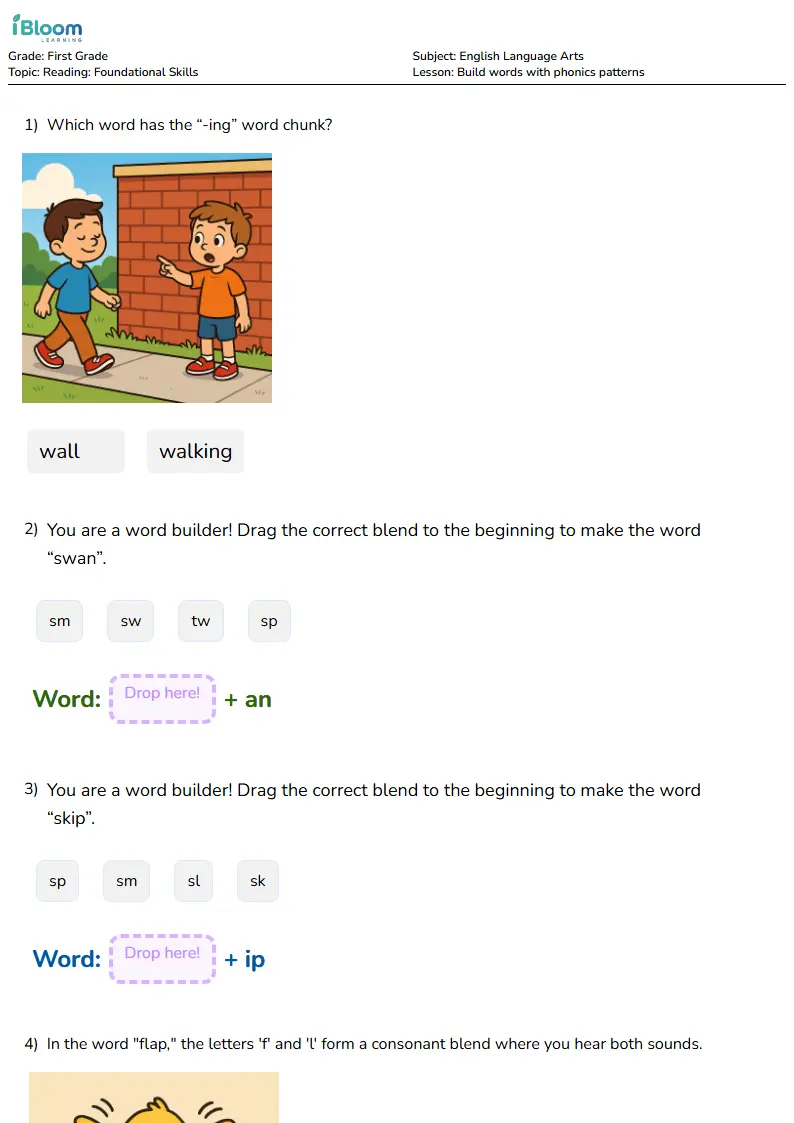
Use this preview to see the kind of practice children will open before you start the routine.
Key Takeaways
- Spelling improves when children connect sound, meaning, pattern, and sentence use.
- A good spelling routine reviews old words as well as new words.
- Mistakes are useful when children can identify the tricky part and correct it calmly.
- Parents and teachers should include oral practice, dictation, word sorting, and short writing.
- iBloom spelling, vocabulary, and SpellBee pages work best when linked into one steady practice path.
Why This Skill Matters
Many children practise spelling by copying words several times. Copying can help handwriting and memory, but it is not enough by itself. A child may copy because the adult asked, then miss the same word in a sentence, story, spelling test, or spelling bee round. Weekly Spelling Test Practice gives the word a job: hear it, understand it, use it, check it, and review it later.
Word resources from Scripps Word Club, Merriam-Webster, and Reading Rockets vocabulary guidance support regular word exposure, vocabulary growth, and meaning-rich practice. Children need more than a list. They need a routine that helps words stay available during reading and writing.
What Good Practice Looks Like
A useful spelling activity includes four parts. First, the child hears the word. Second, the child notices a spelling pattern or tricky part. Third, the child uses the word in speech or writing. Fourth, the child reviews the word later. This sequence works for weekly spelling tests, school spelling bees, tutoring, homeschool practice, and general vocabulary development.
Adults can keep the routine gentle. Instead of saying, "You got it wrong," say, "Which part changed?" Instead of asking for twenty copies, ask for one sentence, one sound check, and one corrected rewrite.
Examples and Mini-Lessons
| Example | What Children Do | Why It Helps |
|---|---|---|
| Monday sorts words, Tuesday uses sentences, Wednesday reviews mistakes. | Hear and use the word | It links spelling with language |
| Thursday runs a short mock test. | Correct a precise mistake | It builds self-checking habits |
| Friday becomes calm because review already happened. | Follow a weekly rhythm | It prevents last-minute cramming |
For a quick mini-lesson, choose five words. Sort them by sound, pattern, or meaning. Ask the child to use two in sentences. Run a short dictation. Then review one mistake and one success. This takes less than fifteen minutes and gives better feedback than a long silent worksheet.
Home Practice Routine
Parents can use this daily routine:
- Say the word aloud.
- Ask the child to repeat it.
- Ask for one meaning or example.
- Write the word.
- Use it in a sentence.
- Check the tricky part.
- Review it again later in the week.
This works after school in Delhi, Mumbai, Bengaluru, Chennai, Hyderabad, Pune, Kolkata, Los Angeles, Houston, Chicago, Dallas, Seattle, Boston, Dubai, Abu Dhabi, Sharjah, Ajman, and Al Ain. The school system may differ, but children everywhere benefit from hearing, saying, writing, and using words.
Classroom and Tutoring Routine
Teachers can use Weekly Spelling Test Practice as a word-study center, dictation station, spelling bee prep routine, or vocabulary warm-up. Model one word, let partners explain one pattern, and then move students into iBloom practice. Tutors can use the same activity diagnostically: if a child hears the word correctly but misspells it, work on patterns; if a child spells it but cannot use it, work on meaning.
Use 7 Fun Spelling Activities for Grade 2 for word lists and grade-level practice, Read Sight Words for word-study variety, and Build Words with Phonics Patterns for adaptive spelling practice where useful.
Regional Practice Notes
In India, this supports English dictation, Class 1-5 word practice, spelling bee clubs, CBSE, ICSE, and state-board review. In the United States, it fits phonics, word study, weekly spelling tests, and vocabulary blocks. In the UAE, it helps multilingual learners use one consistent spelling routine across British, American, IB, and Indian curriculum schools.
iBloom Practice Path
- Start with Spelling Bee Practice Schedule for Kids.
- Add Spelling Bee Words: Easy to Hard for the closest support guide.
- Use 7 Fun Spelling Activities for Grade 2 for grade-level or direct word practice.
- Continue with Read Sight Words when the child needs variety.
- Use Build Words with Phonics Patterns for exact worksheet practice.
- Keep SpellBee as the next internal step.
Frequently Asked Questions
How often should children practise spelling?
Short daily practice is best. Five to fifteen minutes with sound, meaning, and sentence use is usually stronger than one long cramming session.
Should children copy spelling words many times?
Copying can help, but it should not be the only method. Children should also hear the word, say it, sort it, use it in a sentence, and correct mistakes.
What is the best way to fix repeated spelling mistakes?
Find the exact tricky part. Circle it, say it, compare it with a known pattern, and then write the word in a sentence.
Can this help spelling bee preparation?
Yes. Spelling bee preparation improves when children practise listening, meaning, word origin or pattern clues, calm correction, and spaced review.
Which iBloom page should I use next?
Choose the linked page that matches the child: dictation, mistake correction, weekly spelling tests, grade-level spelling bee words, online spelling practice, or SpellBee.
Practice This Skill Next
After reading this guide, children can practise the same skill on iBloom. Start with Read Sight Words or Build Words with Phonics Patterns, then ask the child to explain one answer before moving on.