Why Do Kids Guess at Words Instead of Sounding Them Out?
A practical USA-focused guide for parents and teachers when children guess at words instead of checking the letters and sounding them out.
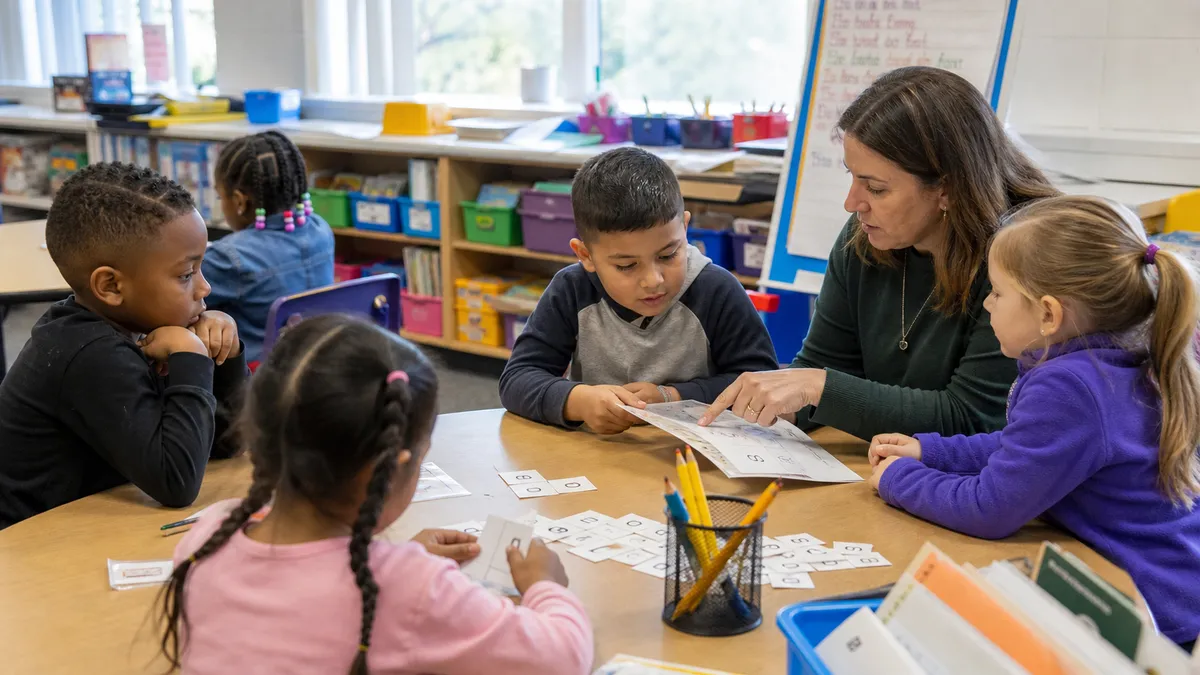
When kids guess at words instead of sounding them out, they are usually trying to keep reading moving with a strategy that feels faster than decoding. Guessing can happen because the book is not matched to the phonics patterns the child has learned, the child is relying on pictures or the first letter, decoding feels too slow, or the child has not yet built a routine for checking every sound in the word. The fix is not to scold guessing. The fix is to make the word small enough to read, use decodable practice, prompt the child to look through the whole word, and then return to meaning after the word is read accurately.
Quick Takeaways
- Word guessing is a sign to slow down and inspect the print, not a sign that a child is lazy.
- A child may guess because the text asks for phonics patterns they have not learned yet.
- Pictures, memorized page patterns, and first-letter clues can help with meaning, but they should not replace looking across the whole word.
- Short decodable practice helps children apply taught letter-sound relationships in real reading.
- Parents and teachers can use a calm three-step prompt: cover the picture, read the sounds, blend the word, then reread the sentence for meaning.
- If guessing continues across many books and lessons, the child may need more explicit phonics, decoding, fluency, or reading intervention support.
Why guessing becomes a habit
Children want reading to make sense. When they meet a hard word, they often reach for whatever strategy gives them an answer quickly. If the page shows a dog, the sentence starts with "The d...", and the child says "dog" before checking the rest of the letters, that is not random behavior. The child is combining a picture clue, a first-letter clue, and a guess that fits the story.
The problem is that this strategy can work just often enough to feel useful. It may work on predictable books with repeated sentence patterns. It may work when the picture gives away the noun. It may work when the adult quickly corrects the word and the child keeps going. Over time, the child learns that reading means "make a smart guess and see whether someone stops me."
That habit breaks down as soon as texts become less predictable. A child who guesses "horse" for "house" may still understand one simple sentence. But later the same child may guess through science vocabulary, math directions, social studies passages, chapter books, and test questions. Then the child is not just missing words. The child is losing the reliable pathway from print to speech to meaning.
The better habit is print-first reading. The child still uses meaning, pictures, and background knowledge, but only after checking the letters. Reading Rockets explains phonics and decoding as using letter-sound relationships to read printed words. That matters because a child needs a repeatable method for words that are not memorized and not obvious from a picture.
At home or in a classroom, the first goal is to make the child successful with the right kind of support. The adult can say, "Let's check the whole word," instead of "Stop guessing." The second wording is more useful because it names the action the child should take.
What the child may be doing instead of decoding
Word guessing usually has a pattern. Watch for these common versions.
First-letter guessing
The child looks at the first letter and says a word that begins with that letter. A sentence says "The rabbit ran into the burrow," and the child reads "basket" for "burrow" because both begin with b. This often means the child has learned to glance at print but has not learned to track every sound-spelling part from left to right.
Picture guessing
The child names the picture instead of reading the word. If the page shows a train, the child may say "train" even if the text says "tracks." Picture clues can support comprehension, but they should not be the main word-reading strategy. A child should be able to cover the picture, look at the word, and still make a reasonable attempt.
Pattern guessing
Predictable texts often repeat a frame such as "I see the..." or "Here is the..." A child may memorize the frame and guess the final word from the picture. This can make reading look fluent while hiding weak decoding. The child is participating in the book, but the adult still needs to know whether the child can read the printed words.
Meaning-only guessing
Some children guess a word that would make sense in the sentence but does not match the print. They may read "small" for "tiny" or "house" for "home." This shows that the child is thinking about meaning, which is good, but the word-reading part is not accurate enough yet.
Avoidance guessing
Some children guess quickly because they want to avoid the effort or embarrassment of sounding out a word. They may rush, mumble, skip, or say "I know it" before checking. This is especially common when reading has become stressful. The child may need shorter practice, easier text, and a calmer routine before the adult increases the challenge.
Why "sound it out" may not be enough
"Sound it out" is a reasonable idea, but it can be too vague for a child who does not know which sounds to use. A child may know individual letter sounds but still struggle to blend them. Another child may know short vowels but not silent-e patterns. Another may know the pattern in isolation but fail to recognize it inside a sentence.
The Institute of Education Sciences practice guide on foundational reading skills for kindergarten through grade 3 emphasizes explicit instruction and practice with foundational skills. In practical terms, children need adults to teach the specific skill, model it, let the child try it, and return to the skill in connected reading. A general reminder may not be enough.
For example, if the word is "ship," a child needs to know that sh represents one sound. If the word is "cake," the child needs to know how silent e changes the vowel sound. If the word is "jumped," the child may need help seeing the base word and ending. If the child has not learned the pattern yet, guessing is predictable because the child does not have the tool needed for the word.
That is why the adult prompt should match the word. Instead of saying only "sound it out," try:
- "Point under each sound."
- "What sound do these two letters make together?"
- "Cover the ending. What is the base word?"
- "Try the vowel sound we practiced today."
- "Blend it slowly, then say it fast."
- "Now reread the sentence so it sounds like language."
The point is to give a clear next move. A child who guesses needs a replacement action, not just a correction.
Use decodable practice when the child needs the decoding habit
Decodable text is useful because it lets a child practice the letter-sound relationships they have actually been taught. Reading Rockets' guide on using decodable books explains that these texts help children apply phonics knowledge in connected reading. That is exactly what a guessing reader needs: controlled practice where looking through the word is possible and rewarding.
A decodable book is not meant to be the only reading a child hears or enjoys. Children still need rich read-alouds, classroom discussion, vocabulary, background knowledge, and enjoyable library books. But when the goal is to stop guessing and build accurate word reading, the practice text should give the child a fair chance to decode.
At home, that may mean choosing a very short page with only a few new patterns. In a classroom, it may mean matching the text to the week's phonics sequence. On iBloom, a teacher might pair oral blending with making words from sounds or use putting word parts together before asking children to read a sentence.
The practice should feel small and precise. If a child is working on short a words, the adult can use mat, sat, tap, map, and clap before moving to mixed vowel patterns. If the child is working on beginning sounds, use a focused task like identify beginning sounds in words. If the child is ready for onset and rime, build words with onset and rime gives a useful bridge from sounds to word parts.
The adult should not turn decodable practice into a long test. Five accurate minutes can be better than twenty frustrated minutes. Accuracy comes first, then smoothness, then meaning.
A parent routine for one guessed word
Use this routine when your child guesses a word during reading.
Step 1: Pause without shame
Say, "Let's check that word." Keep your voice neutral. The goal is to interrupt the guessing habit without making the child afraid to try.
Step 2: Cover the picture if needed
If the child is relying on the picture, cover it for a moment. Say, "The picture can help us think, but the letters tell us the word."
Step 3: Point through the word
Have the child point under the letters or word parts from left to right. If the word has a known pattern, name it briefly: "This says sh," "This is a short a word," or "This ending says ed."
Step 4: Blend the word
Ask the child to say the sounds slowly, then blend them into a whole word. If the child cannot do it after a reasonable try, model the word and have the child repeat it. Do not let the child struggle so long that the sentence loses meaning.
Step 5: Check meaning
After the word is read, ask, "Does that make sense in the sentence?" This keeps decoding connected to comprehension. The child learns that accurate reading and meaning work together.
Step 6: Reread the sentence
Have the child reread the sentence smoothly. This helps the corrected word become part of fluent reading, not just a one-word drill.
Here is a sample:
Child reads: "The dog sat on the log," but the text says "The dog sat on the rug."
Adult: "Let's check the whole word. Cover the picture. What sound is first? What vowel do you see? Blend it."
Child: "/r/ /u/ /g/, rug."
Adult: "Good. Now reread the sentence so it makes sense."
This routine is simple, but it changes the child's default response. The child learns to inspect print before guessing.
A teacher routine for small groups
In a small group, guessing often spreads because children hear each other call out words quickly. Use a routine that makes print attention visible.
Start with a two-minute sound review. Use the exact sound-spelling patterns children will meet in the text. Then read three to five words out of context. Ask children to tap, map, or underline the sound parts. Next, read one short decodable sentence. Finally, ask a meaning question after the sentence is read accurately.
For example:
- Review: m, s, t, short a.
- Word practice: mat, sat, Sam.
- Sentence: Sam sat.
- Meaning check: Who sat?
For older beginners, the routine can use larger chunks:
- Review: sh, ch, th.
- Word practice: shop, much, thin.
- Sentence: The thin dog ran to the shop.
- Meaning check: Where did the dog run?
The teacher's language matters. Say, "Use the sounds we know," "Track the whole word," and "Reread for meaning." Avoid turning every error into a lecture. The child needs many correct repetitions of the right process.
When several children guess the same way, that is instruction data. First-letter guessing may mean the group needs more left-to-right tracking. Vowel errors may mean the group needs short vowel contrast. Skipping endings may mean the group needs inflectional ending work. Repeated picture guessing may mean the text is too predictable for the decoding goal.
When the book is too hard
Sometimes a child guesses because the book is simply too difficult. That does not mean the book is bad. It means the book is not the right independent decoding text for that moment.
Signs that the book is too hard include:
- The child guesses on many words per page.
- The child cannot apply the phonics pattern taught that week.
- The child reads so slowly that the sentence no longer makes sense.
- The child becomes upset, silly, avoidant, or unusually tired.
- The adult has to supply many words.
- The child can retell a page only because of the pictures.
In that case, change the task. You can still read the harder book aloud for language and enjoyment, but use an easier decodable text for child reading. If the child loves the hard book, let the child read a few known words while you read the rest. Then return to a controlled practice page for decoding.
The iBloom guide on CVC words worksheets for kindergarten can help adults choose short word patterns before moving into more complex texts. The related article Why Can My Child Read a Word Once but Not Again? is useful when guessing is mixed with inconsistent word recognition.
What to say instead of "guess again"
Adult prompts should be short, calm, and specific. Use prompts that direct the child's eyes back to the word.
Try these:
- "Look all the way through the word."
- "Point to the sound you know."
- "What vowel pattern do you see?"
- "Try that again from the first sound."
- "Cover the ending first."
- "Blend it, then reread."
- "Does your word match every letter?"
Avoid prompts that push more guessing:
- "Look at the picture and guess."
- "What word would make sense?"
- "Try something that starts with b."
- "Just skip it."
- "You know this word."
Meaning prompts are not wrong, but they should come after print checking. A balanced prompt might be: "Check the letters first. Now reread and see whether it makes sense." This keeps both parts of reading in the right order.
Understood's explanation of decodable and non-decodable words is helpful for parents because not every word can be solved the same way. Some words follow patterns the child has learned. Some are irregular or not yet taught. The adult's job is to know which kind of word is in front of the child and choose the right support.
How to handle sight words without encouraging guessing
Sight words can confuse adults because some are regular and some are irregular. The phrase "sight word" means the child recognizes the word automatically. It does not always mean the word must be memorized as a shape.
For a regular word, help the child connect the letters and sounds. For an irregular word, point out the part that is regular and the part that needs special attention. For example, in a word like said, a child can notice the first and last sounds while learning that the middle spelling is unusual.
Do not ask children to identify words by outline, color, page position, or guessing from context. Those shortcuts may produce a correct answer once, but they do not build a reliable word-reading system. The child should learn to ask, "What do the letters show me?"
Teachers can keep a small chart:
| Word type | Adult move | Child action |
|---|---|---|
| Fully decodable | Prompt the phonics pattern | Sound and blend |
| Partly irregular | Mark the tricky part | Read known parts and remember the irregular part |
| Not yet taught | Model quickly | Repeat and continue reading |
| Too difficult for now | Save for read-aloud | Return to matched practice |
This keeps instruction honest. The child is not blamed for failing to decode a word that has not been taught.
A five-day home plan
Use this short plan if your child has started guessing often.
Day 1: Notice the pattern
Listen for ten minutes and write down what happens. Does the child guess from the first letter? Guess from pictures? Skip endings? Read too fast? This is not a test. It is a way to choose the right next practice.
Day 2: Pick one phonics focus
Choose one focus only: short a words, beginning sounds, ending sounds, silent e, blends, or one vowel team. Do not mix too many patterns. Short practice works better when the child knows what to look for.
Day 3: Read words before sentences
Practice five to eight words with the target pattern. Then read one or two short sentences using the same pattern. Ask the child to point under the letters or word parts.
Day 4: Add a decodable page
Use a short decodable text or worksheet that mostly uses taught patterns. If the child guesses, use the pause-check-blend-reread routine.
Day 5: Reread for fluency and meaning
Return to the same text. The goal is not speed alone. The goal is accurate word reading, smoother phrasing, and understanding. Ask one simple question about what happened in the sentence or page.
If the child improves, keep the routine going with the next pattern. If the child still guesses heavily, shorten the task and consider asking the teacher what phonics pattern the class is practicing.
When to ask for extra help
Occasional guessing is normal. Persistent guessing across many simple words is different. Ask the teacher or reading specialist for guidance if your child:
- Guesses most unfamiliar words from the first letter.
- Avoids reading even very short texts.
- Cannot blend simple sounds after repeated instruction.
- Reads a word correctly on one page but cannot recognize or decode it again soon after.
- Has weak letter-sound knowledge for their grade or instruction level.
- Reads so slowly that comprehension breaks down.
- Becomes distressed whenever word reading is required.
Reading Rockets lists word decoding and phonics signs in its page on word decoding and phonics problems, including guessing from the first letters and struggling to sound out words. Use those signs as a conversation starter with the school, not as a diagnosis.
Parents can ask:
- "Which phonics patterns has my child been taught?"
- "Is my child guessing from pictures, first letters, or sentence meaning?"
- "What decodable text level or pattern should we practice at home?"
- "How should I prompt errors without overhelping?"
- "When should we consider a reading intervention or screening?"
Teachers can answer with observed data: the pattern taught, words read accurately, error types, and next instruction steps.
How iBloom fits
iBloom is useful after the adult identifies the child's exact decoding need. If the child guesses from pictures, start with sounds and word parts. If the child skips vowels, choose short vowel work. If the child can read single words but guesses in sentences, move into short connected practice and rereading.
Use iBloom as a practice surface, not as a replacement for teacher judgment. A parent can sit beside the child and prompt calmly. A teacher can assign a focused worksheet after a mini-lesson. A homeschool parent can use a short task to check whether a new phonics pattern is ready for text reading.
The important point is that the child should leave the session with a stronger habit: look at the whole word, use the sound-spelling pattern, blend, check meaning, and reread.
Frequently Asked Questions
Is guessing at words always bad?
No. Children sometimes make reasonable attempts while learning. The concern is repeated guessing that replaces checking the letters. If guessing becomes the main strategy, the child needs more explicit decoding practice and better-matched text.
Should I cover the pictures when my child reads?
Sometimes. Pictures are valuable for discussion and comprehension, but covering the picture briefly can show whether the child is reading the word or naming the image. Uncover it again after the word is decoded and use it to discuss meaning.
Are decodable books enough for reading growth?
No. Decodable books support decoding practice, but children also need rich read-alouds, vocabulary, background knowledge, comprehension discussion, writing, and enjoyable books. Use decodable text for the specific job of practicing taught phonics patterns.
What if my child cannot sound out the word after trying?
Model the word, explain the useful pattern briefly, and keep reading. Long struggle can make reading feel punishing. Return to easier practice later if the pattern is not secure.
How long should home decoding practice last?
For many young readers, five to ten focused minutes is enough. Stop while the child is still reasonably successful. Frequent short practice is usually more productive than one long frustrated session.
Should I ask my child to guess from context?
Use context to check meaning after the child inspects the print. A good prompt is, "Check the letters first, then reread and see if it makes sense." That keeps meaning connected to accurate word reading.