Free printable practice
Cursive Letter Guide Practice Activities
Printable cursive letter guide worksheets help children practise letter formation, joins, slant, spacing, and neat alphabet writing.
Free printable worksheet PDFs
Preview every available page, then download the free worksheet PDF for home, homeschool, tutoring, or classroom practice.
Preview the exact activity before downloading it.
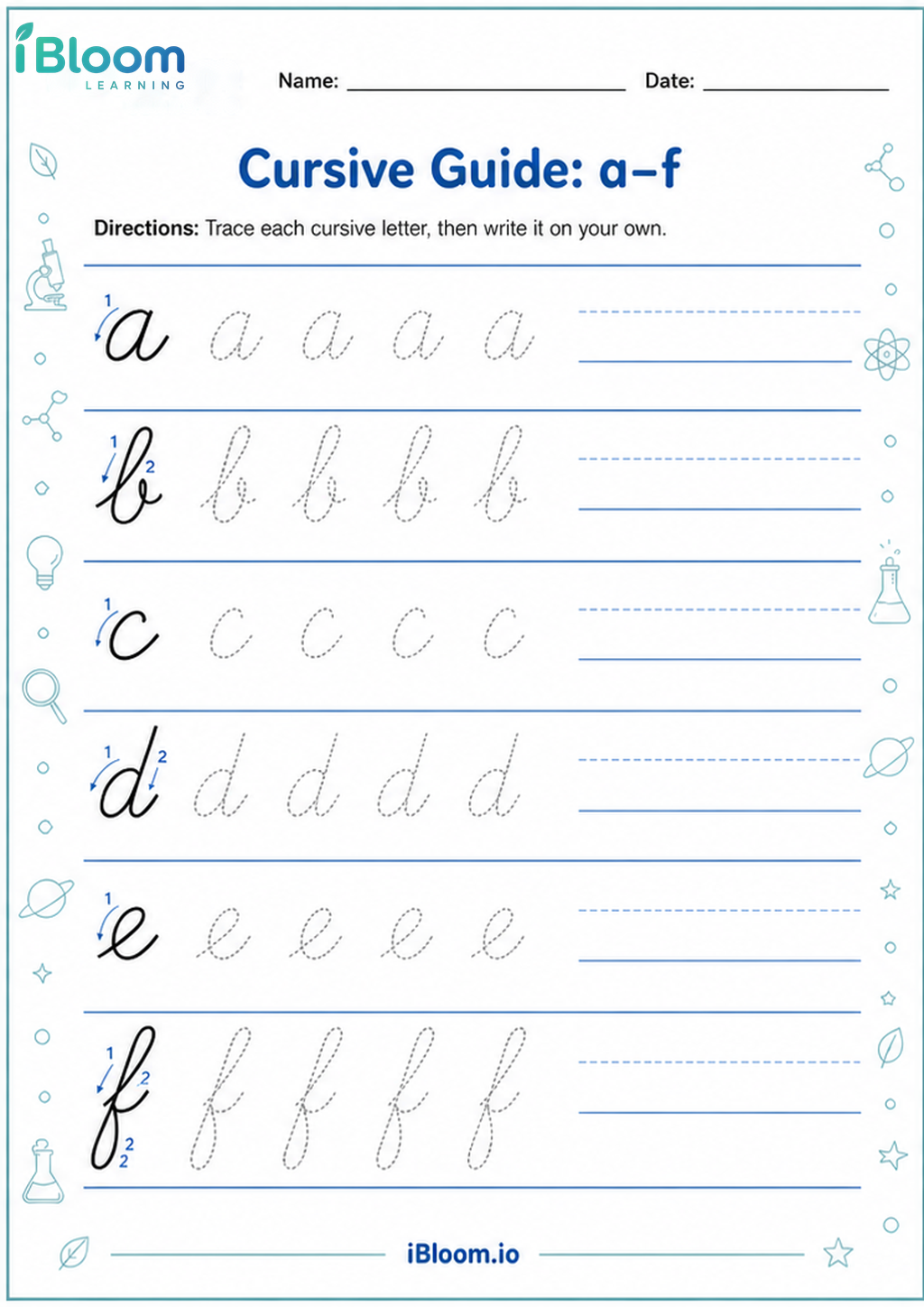 Cursive Guide: a–fClass 2 printable practice for Cursive Letter Guide.Class 2Free PDF preview
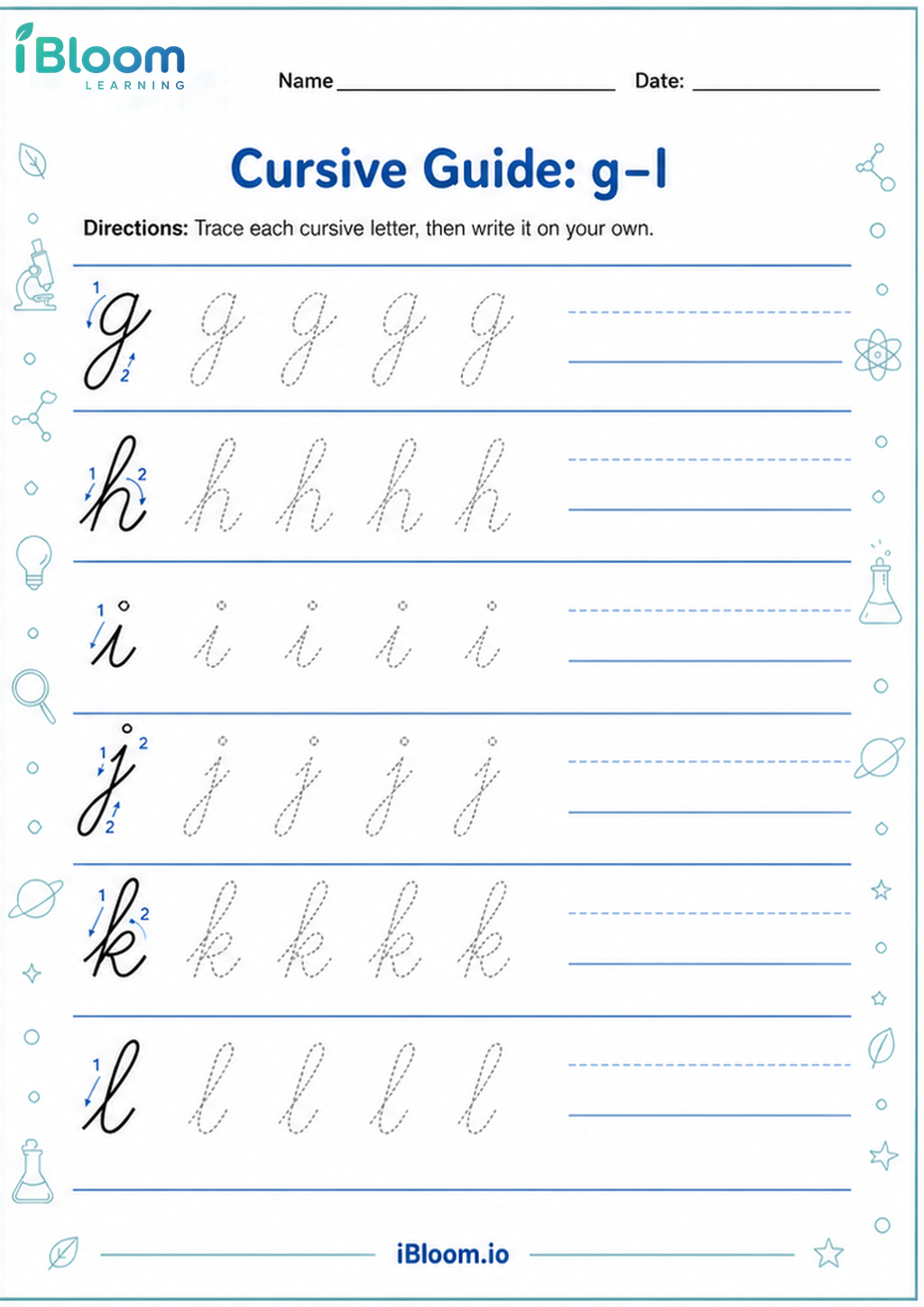 Cursive Guide: g–lClass 2 printable practice for Cursive Letter Guide.Class 2Free PDF preview
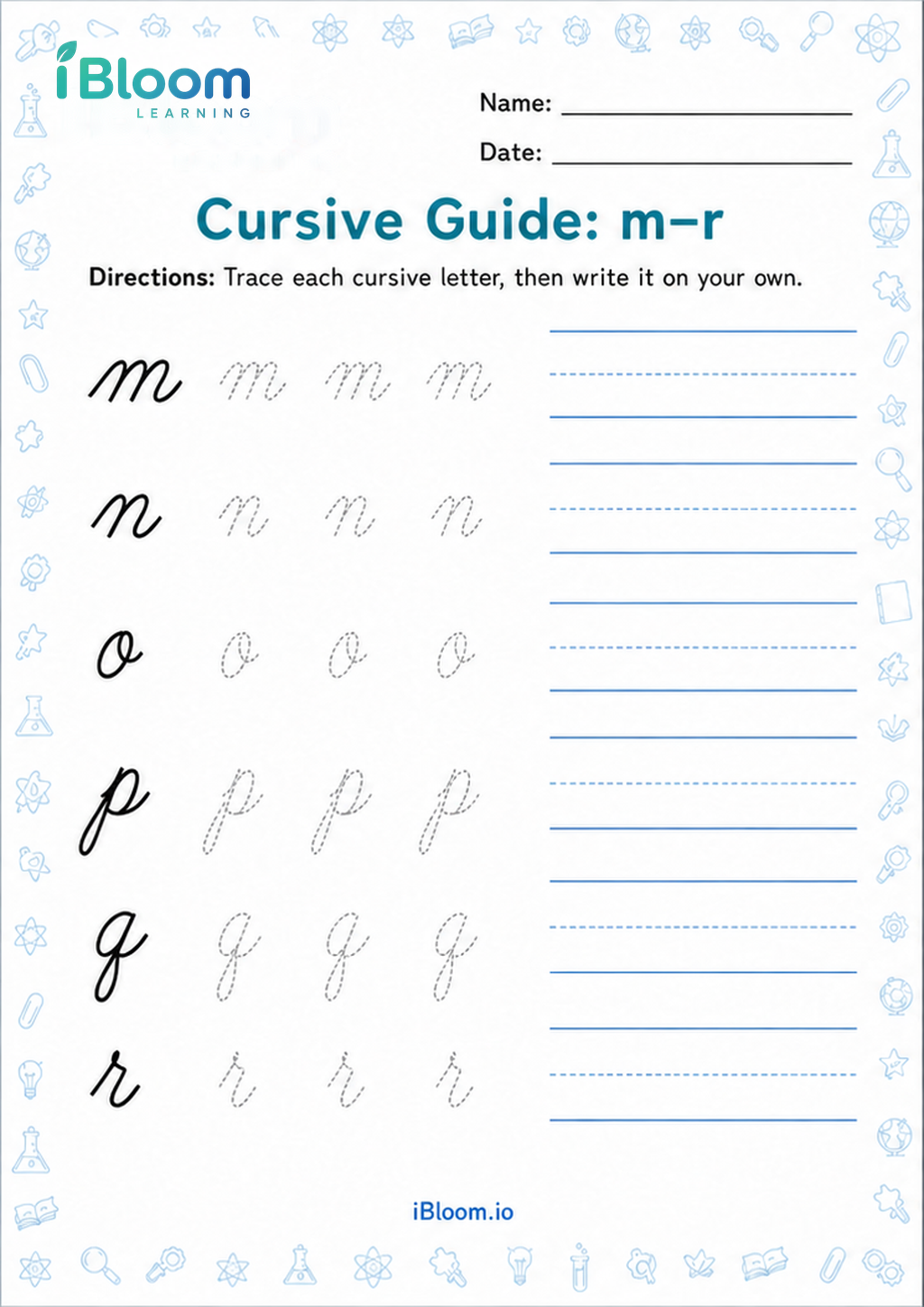 Cursive Guide: m–rClass 2 printable practice for Cursive Letter Guide.Class 2Free PDF preview
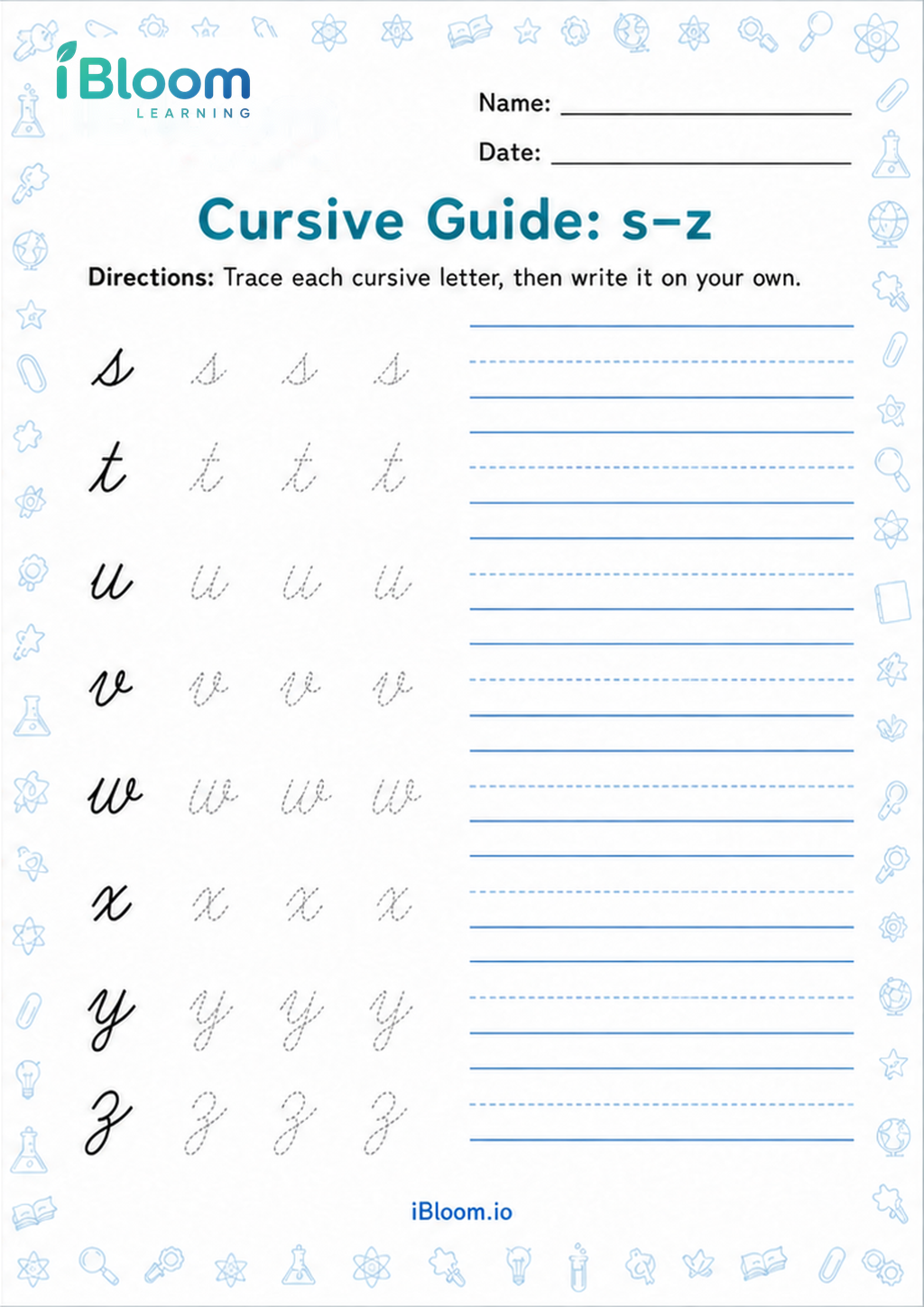 Cursive Guide: s–zClass 2 printable practice for Cursive Letter Guide.Class 2Free PDF preview
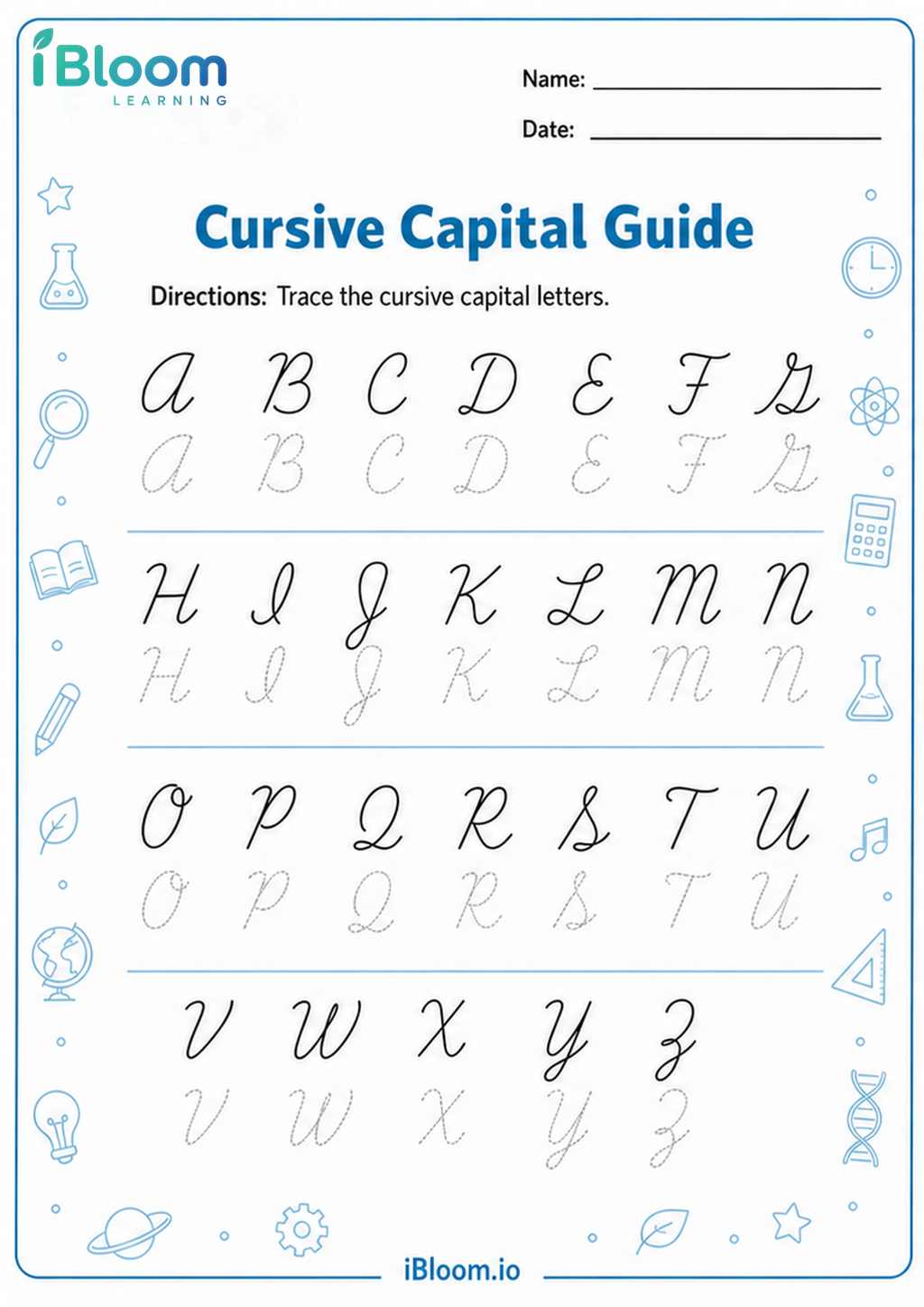 Cursive Capital GuideClass 2 printable practice for Cursive Letter Guide.Class 2Free PDF preview
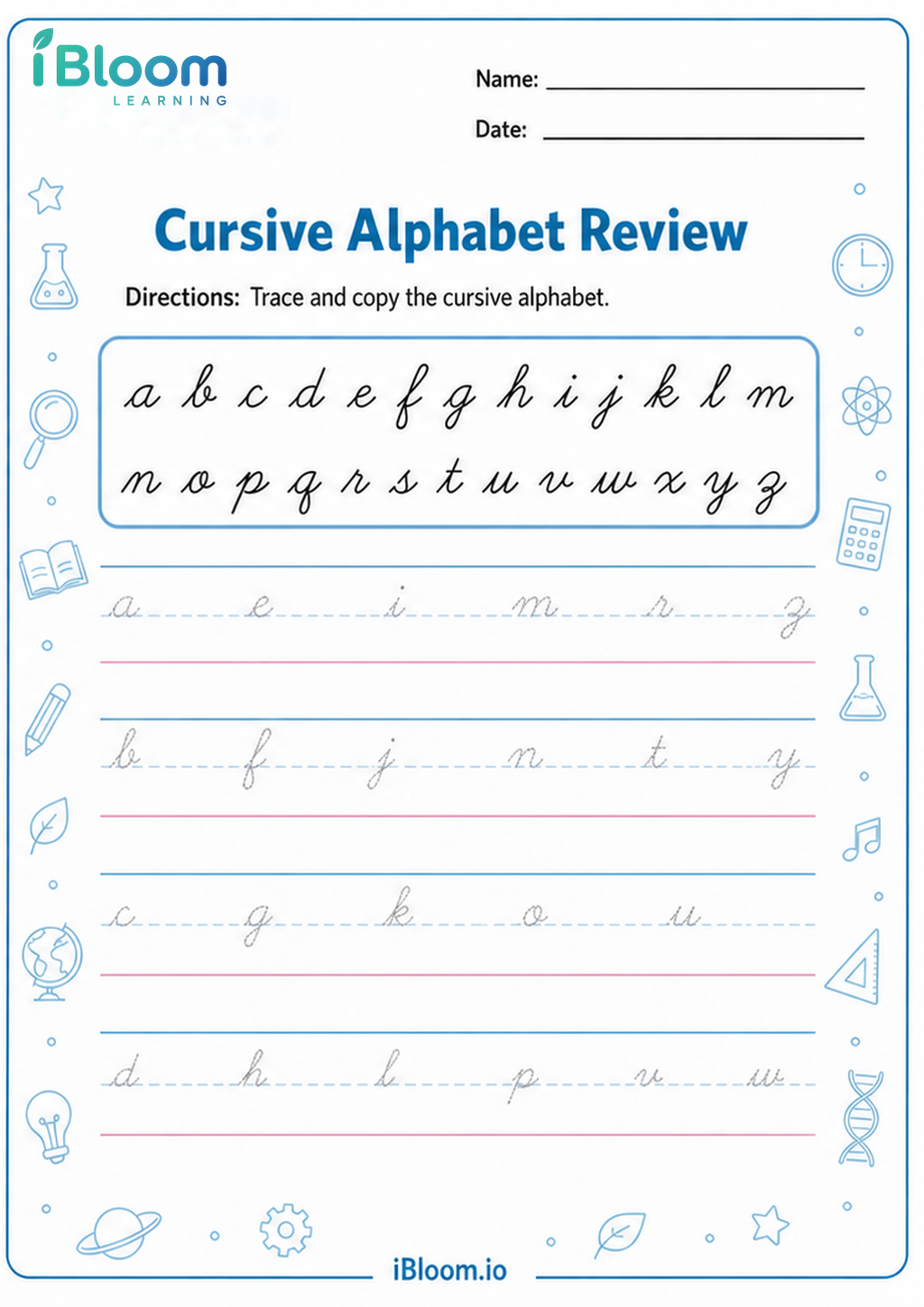 Cursive Alphabet ReviewClass 2 printable practice for Cursive Letter Guide.Class 2Free PDF preview
Practice that builds confidence
Building correct cursive movement
These cursive letter guide practice activities help children learn how each cursive alphabet letter begins, moves, joins, and ends. Learners practise controlled pencil movement, consistent slant, smooth curves, and clear spacing while building confidence with upper-case and lower-case cursive forms.
The printable worksheets include guided tracing, letter formation support, and independent writing space so children can move from following a model to writing neatly on their own. They are useful for home practice, classroom handwriting lessons, and revision of the cursive alphabet.
Cursive writing is not only about making letters look decorative. Children need to understand direction, height, loops, entry strokes, exit strokes, and how one letter can flow into the next. These worksheets guide learners through the cursive alphabet so they can notice where to start, when to curve, and how to finish each letter cleanly.

From tracing to independent writing
The practice usually works best in a clear sequence: first observe the model letter, then trace slowly, then copy with light guidance, and finally write without tracing. This progression helps children avoid guessing the shape. It also supports muscle memory, which is especially important for letters with loops, tails, and similar-looking forms.
A simple parent routine
At home, ask your child to sit with feet steady and paper slightly tilted. Begin with one or two letters rather than the whole alphabet. Say the movement aloud, such as “start low, curve up, loop, and come down”, while the child traces. After a short row, choose the neatest letter together and discuss why it is clear. This keeps practice positive and focused.

Classroom uses for teachers
Teachers can use these printables for handwriting warm-ups, cursive alphabet revision, remedial practice, or early finisher work. They also fit well in language notebook routines, where children first practise the letter guide and then use the same letters in simple words. For mixed-ability classes, tracing lines support beginners while blank lines challenge confident writers.

Common errors to watch for
Children may start letters from the wrong point, make loops too large, forget the exit stroke, press too hard, or leave uneven spaces between letters. Some may write upright print-style shapes instead of cursive forms. Encourage slow, smooth movement before speed. A helpful child-friendly strategy is: “trace, say, copy, check” — trace the model, say the movement, copy it, then check size, slant, and spacing.
Free printable PDF download
Use this cursive letter guide worksheet page to preview the activity, print it, or download it as a PDF for quick practice. It works well for homework, homeschool lessons, tutoring, morning work, revision, and classroom centers.
Answers and answer key support
After the child completes the worksheet independently, parents and teachers can use the answer support or answer key information to check the work, review mistakes, and choose the next practice step.
Why iBloom worksheets help
iBloom cursive letter guide worksheets give children structured repetition without making handwriting feel random. The guided layout supports neat formation, while independent practice helps learners take ownership of their writing. Because the focus stays on one clear handwriting skill, children can improve accuracy before moving on to longer cursive words and sentences.
Helpful answers
Frequently asked questions
What does a cursive letter guide worksheet teach?
It teaches children how to form cursive letters correctly, including the starting point, direction of movement, loops, curves, slant, and finishing stroke.
Should children trace or copy first?
Most children should trace first, then copy. Tracing helps them feel the correct movement before they try writing the letter independently.
How can I help my child who writes cursive letters too large or uneven?
Ask your child to slow down, follow the guide lines, and compare each letter with the model. Practising fewer letters neatly is better than filling a page quickly.
Are these worksheets useful before writing cursive words?
Yes. A strong letter guide practice stage helps children form individual letters clearly before they begin joining letters in words.
Can teachers use these for handwriting correction in class?
Yes. Teachers can use them for targeted practice when students need help with letter shape, slant, spacing, or consistent cursive movement.
Is this cursive letter guide worksheet free?
Yes. You can preview it for free and use the printable worksheet for home or classroom practice.
Can I download this cursive letter guide worksheet as a PDF?
Yes. Use the worksheet download option to save a printable PDF, or print the worksheet directly from the page.
Does this cursive letter guide worksheet include answers or an answer key?
When the activity has fixed answers, iBloom includes answer support so parents and teachers can check the completed worksheet.