Free printable practice
UKG Letters and Phonics Worksheets
Printable UKG English worksheets for recognising letters, matching sounds, tracing neatly, and building early phonics confidence.
Free printable worksheet PDFs
Preview every available page, then download the free worksheet PDF for home, homeschool, tutoring, or classroom practice.
Preview the exact activity before downloading it.
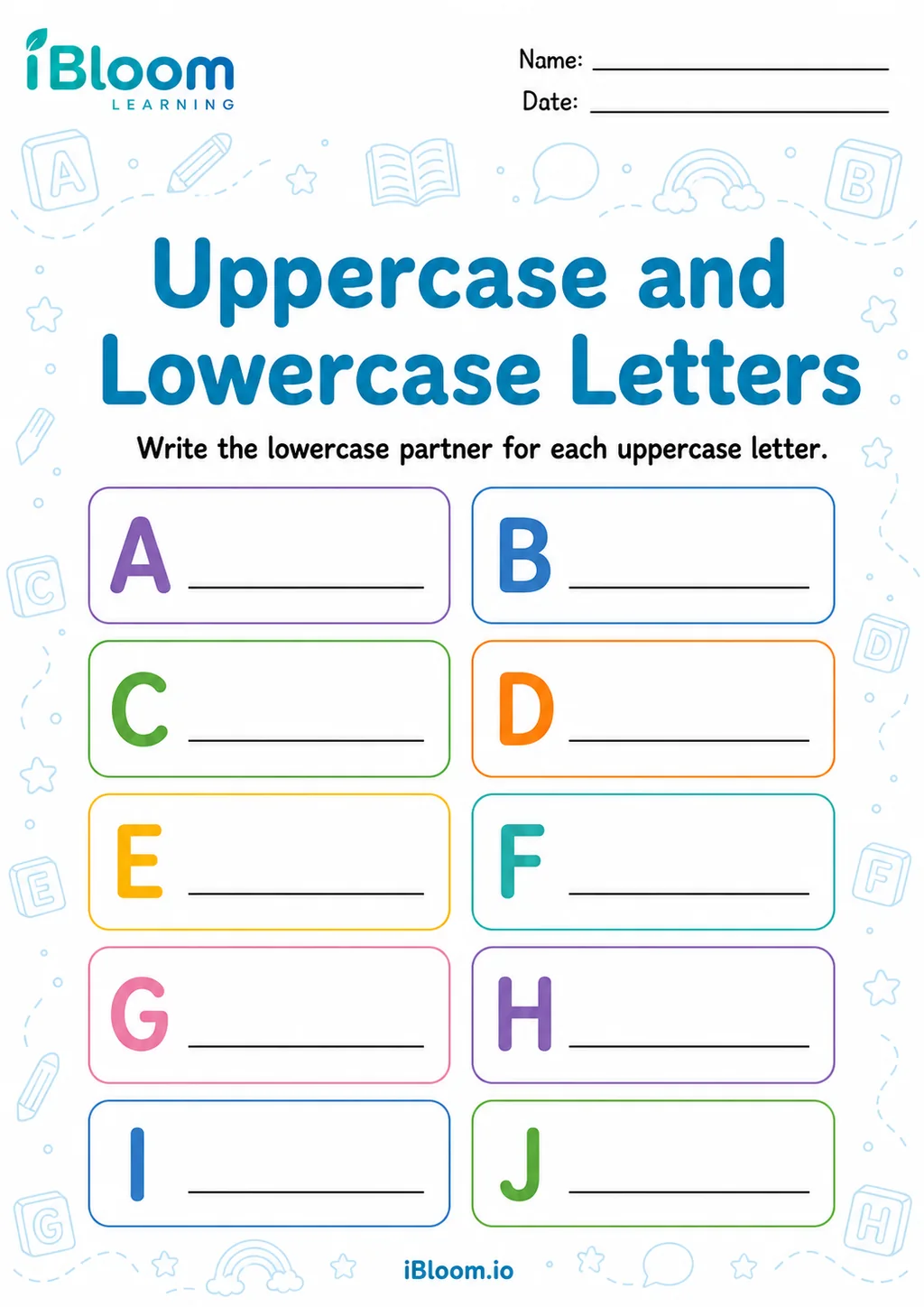 Uppercase and Lowercase LettersA focused printable activity for uppercase and lowercase letters.UKGFree PDF preview
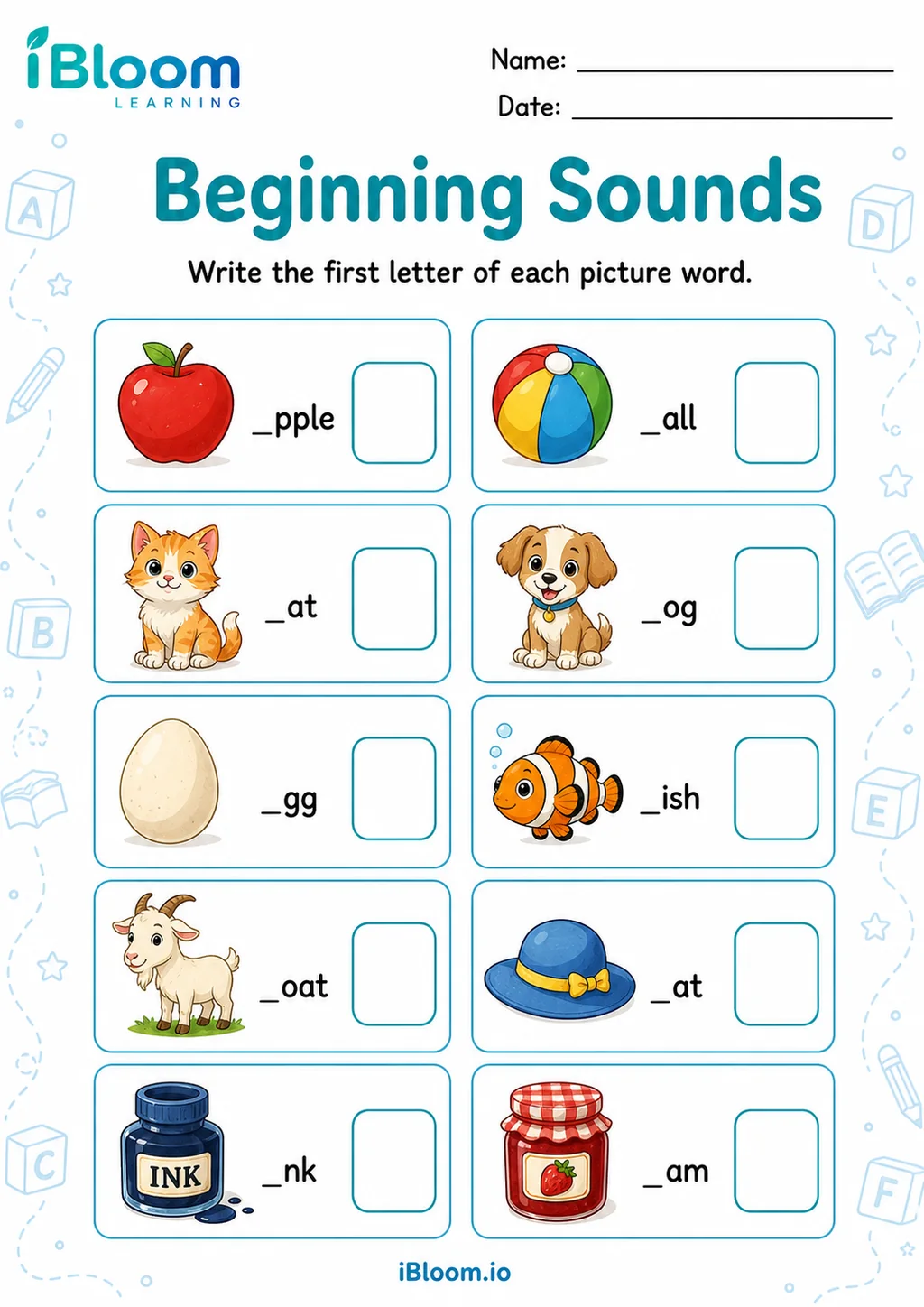 Beginning SoundsA focused printable activity for beginning sounds.UKGFree PDF preview
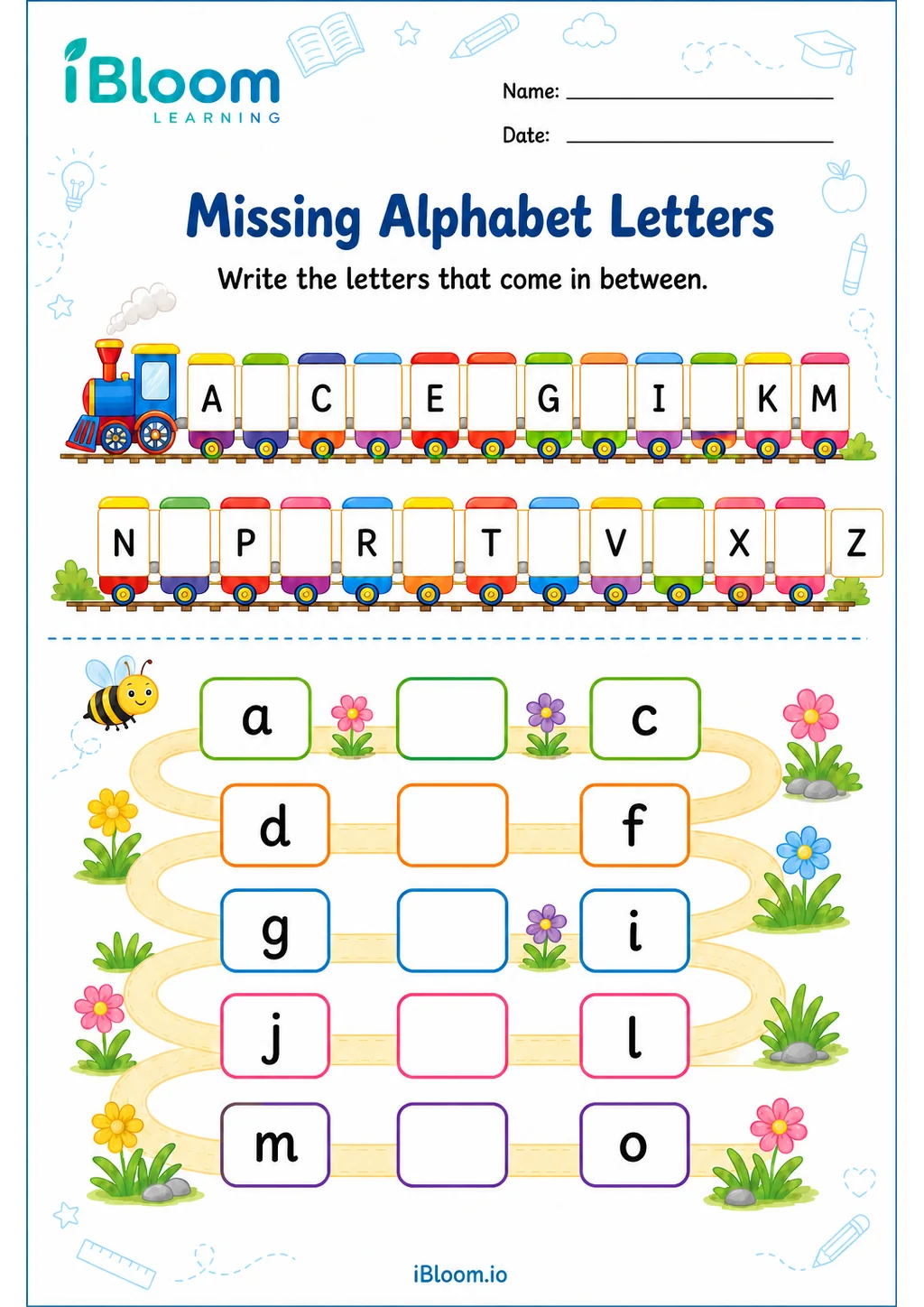 Missing Alphabet LettersA focused printable activity for missing alphabet letters.UKGFree PDF preview
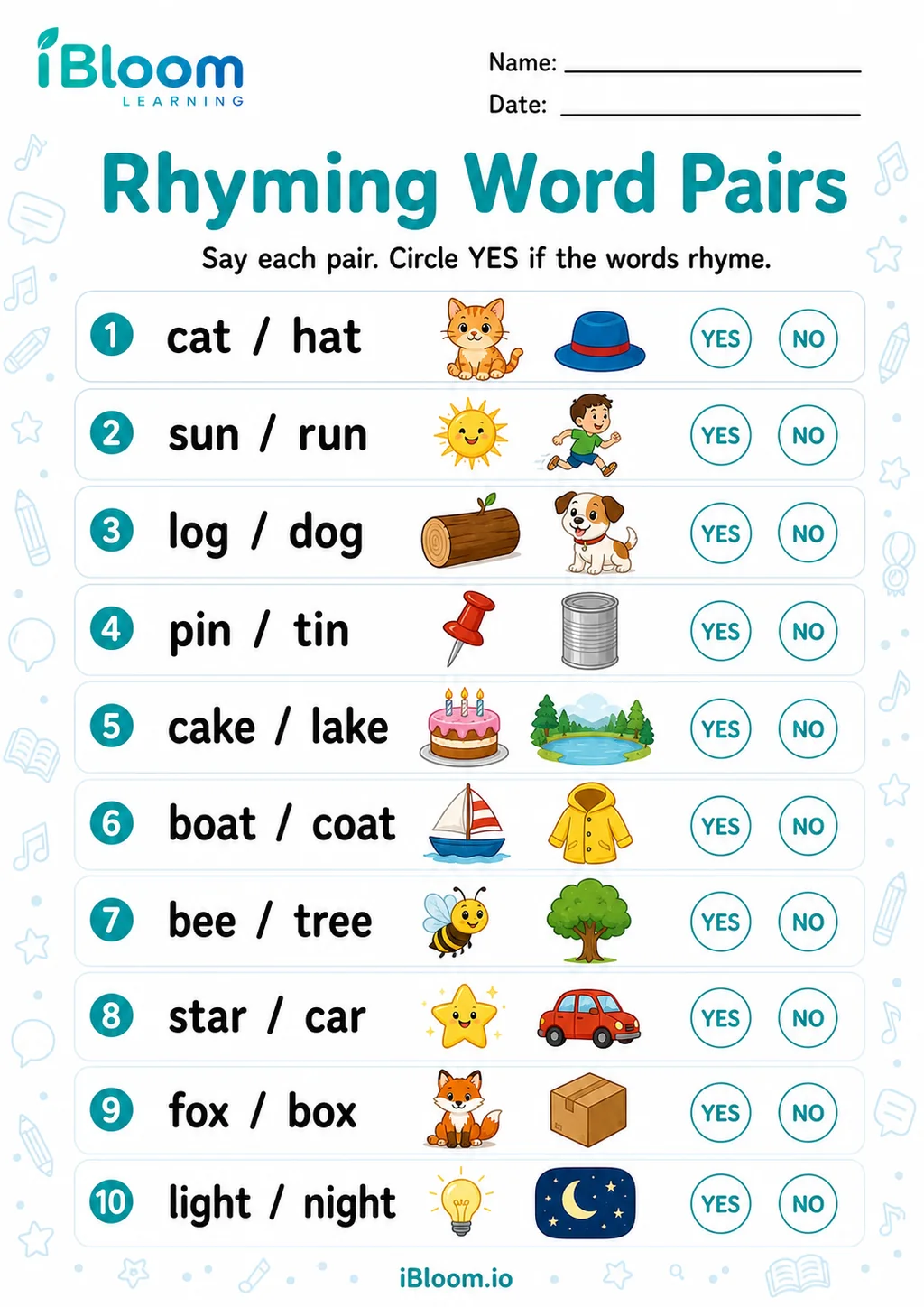 Rhyming Word PairsA focused printable activity for rhyming word pairs.UKGFree PDF preview
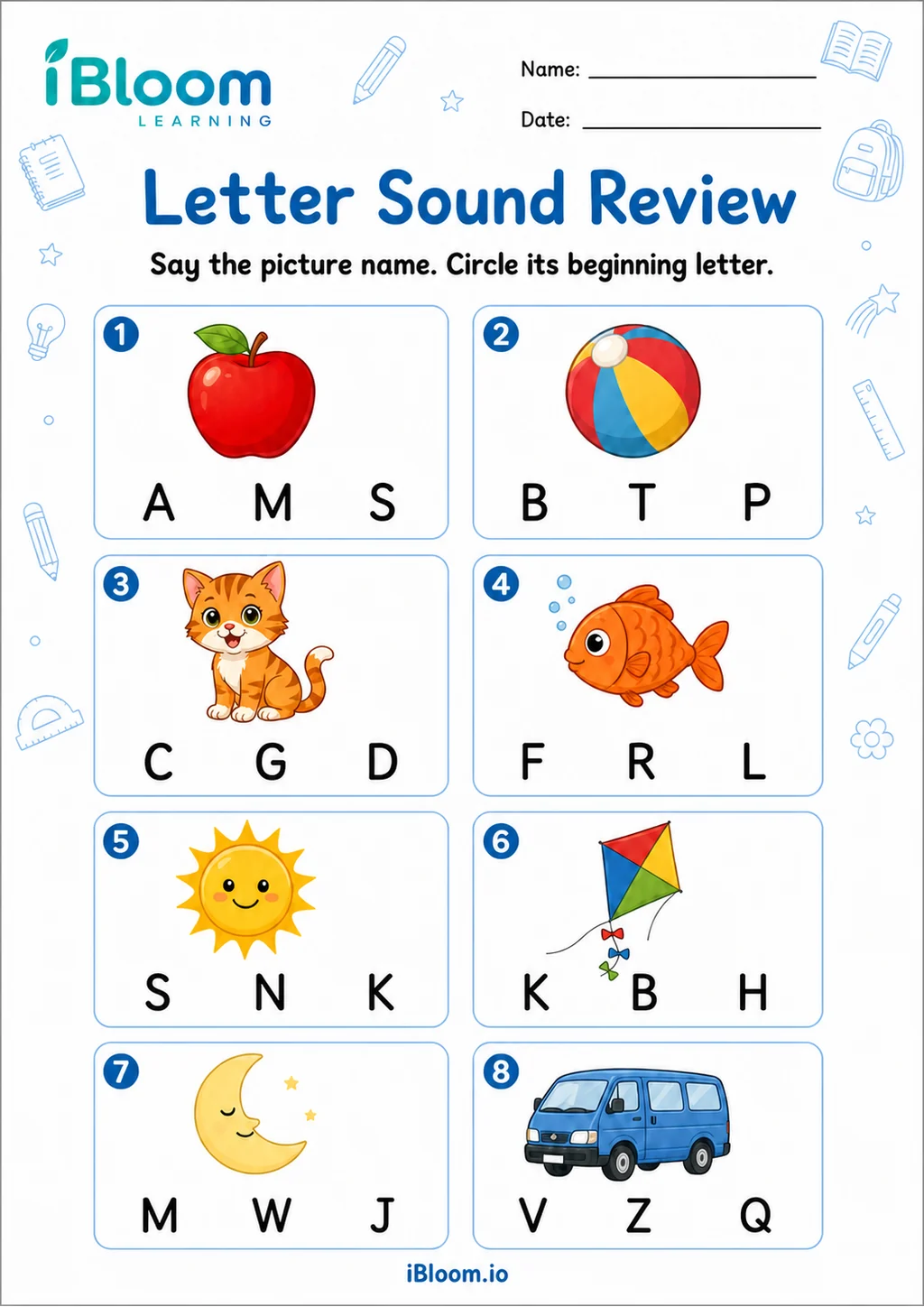 Letter Sound ReviewA focused printable activity for letter sound review.UKGFree PDF preview
Practice that builds confidence
What children practise
These UKG Letters and Phonics worksheets help children practise the first building blocks of English reading and writing: recognising alphabets, connecting letters to sounds, and forming letters with control.
The printable activities include tracing, picture-sound matching, letter identification, beginning-sound practice, and simple phonics tasks that support children as they move from saying sounds to reading small words.
UKG children are ready to notice that letters are not just shapes; they carry sounds. These worksheets build that connection through uppercase and lowercase recognition, alphabet order, beginning sounds, and neat letter formation. A child may identify the letter m, say /m/, and match it with a picture such as mango or moon.

Progression from letters to phonics
The practice starts with seeing and naming letters, then moves to tracing and writing them. Next, children listen for the first sound in a word and choose the matching letter. As confidence grows, they begin blending simple sound patterns and recognising short, familiar words. This step-by-step movement is important because many children can sing the alphabet before they can use letter sounds for reading.
A simple parent routine
At home, choose one worksheet and begin with oral practice. Point to a letter, say its sound clearly, and ask your child to repeat it. Then name two or three familiar objects around the house that start with the same sound. After tracing, ask the child to circle their best-formed letter and read the pictures aloud. Keep corrections gentle: “Start at the top” or “Listen to the first sound again.”

Classroom use for teachers
Teachers can use these printables for phonics warm-ups, English centres, small-group reinforcement, or extra practice after introducing a letter sound. Picture-based tasks are useful for mixed-ability UKG groups because children can respond by pointing, colouring, matching, tracing, or saying the sound aloud before writing independently.

Common errors to watch for
Children may confuse similar-looking letters such as b and d, reverse letters while writing, or say the letter name when the task asks for the sound. Some may match a picture by meaning instead of listening to the beginning sound. Encourage slow listening: say the word, stretch the first sound, and then choose the letter.
Free printable PDF download
Use this UKG letters and phonics worksheet page to preview the activity, print it, or download it as a PDF for quick practice. It works well for homework, homeschool lessons, tutoring, morning work, revision, and classroom centers.
Answers and answer key support
After the child completes the worksheet independently, parents and teachers can use the answer support or answer key information to check the work, review mistakes, and choose the next practice step.
Why iBloom worksheets help
iBloom worksheets combine visual cues, handwriting practice, and sound-based tasks so children use more than one route to learn. A child-friendly strategy is: look at the letter, say the sound, trace it, then find a picture that starts with it. This makes phonics active, memorable, and easier to apply in early reading.
Helpful answers
Frequently asked questions
What skills do these UKG letters and phonics worksheets cover?
They cover alphabet recognition, uppercase and lowercase letters, tracing, letter formation, beginning sounds, and simple picture-based phonics practice.
Should my child learn letter names or letter sounds first?
Both are useful, but for early reading, letter sounds need regular practice. For example, children should know that the letter m is named “em” but makes the /m/ sound in words like mango.
How can I help if my child confuses b and d?
Use slow visual comparison and repeated tracing. Ask your child to say the sound, trace the letter from the correct starting point, and match it with a familiar picture. Avoid rushing between similar letters.
Are these worksheets suitable for classroom phonics practice?
Yes. Teachers can use them for English centres, small-group revision, morning practice, or reinforcement after teaching a new letter sound.
Do the worksheets include writing practice?
Yes. The activities include tracing and letter formation practice along with sound matching, so children connect handwriting with phonics learning.
Is this UKG letters and phonics worksheet free?
Yes. You can preview it for free and use the printable worksheet for home or classroom practice.
Can I download this UKG letters and phonics worksheet as a PDF?
Yes. Use the worksheet download option to save a printable PDF, or print the worksheet directly from the page.
Does this UKG letters and phonics worksheet include answers or an answer key?
When the activity has fixed answers, iBloom includes answer support so parents and teachers can check the completed worksheet.