Free printable practice
Perfect Meal Practice Activities
Class 1 children write about their perfect meal using food words, simple sentences, personal choices, and early descriptive details.
Free printable worksheet PDFs
Preview every available page, then download the free worksheet PDF for home, homeschool, tutoring, or classroom practice.
Preview the exact activity before downloading it.
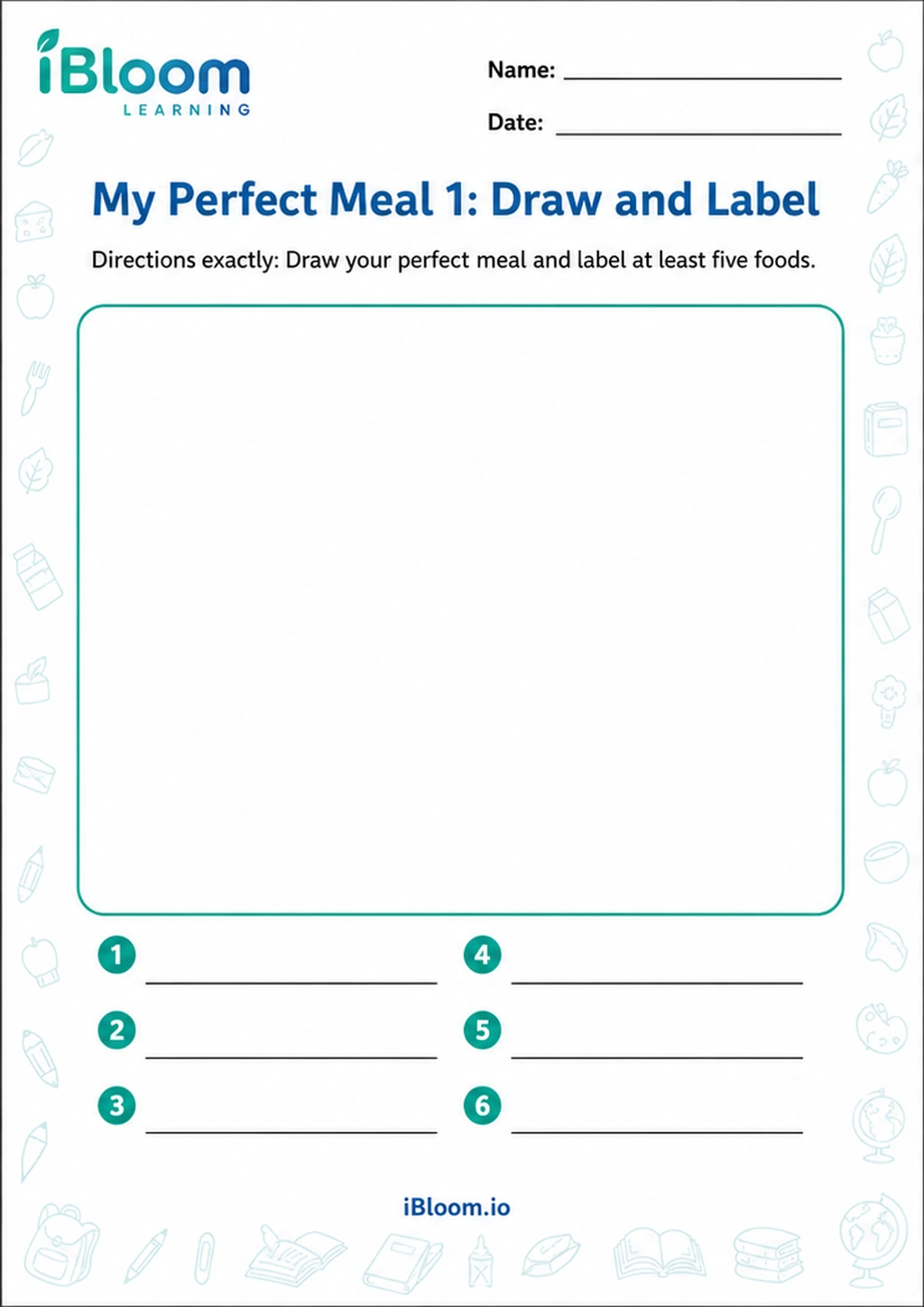 My Perfect Meal 1: Draw and LabelClass 1 printable practice for My Perfect Meal.Class 1Free PDF preview
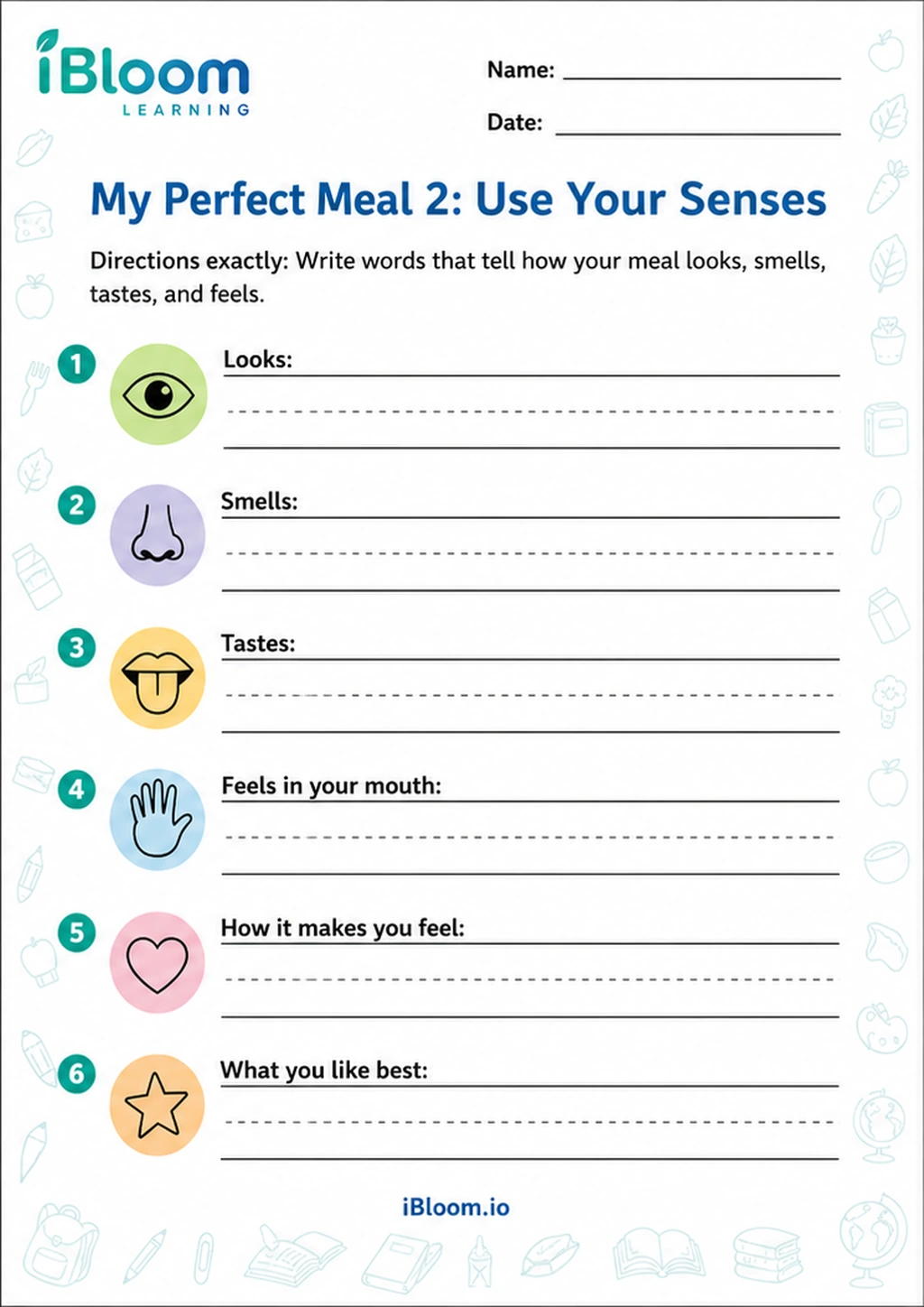 My Perfect Meal 2: Use Your SensesClass 1 printable practice for My Perfect Meal.Class 1Free PDF preview
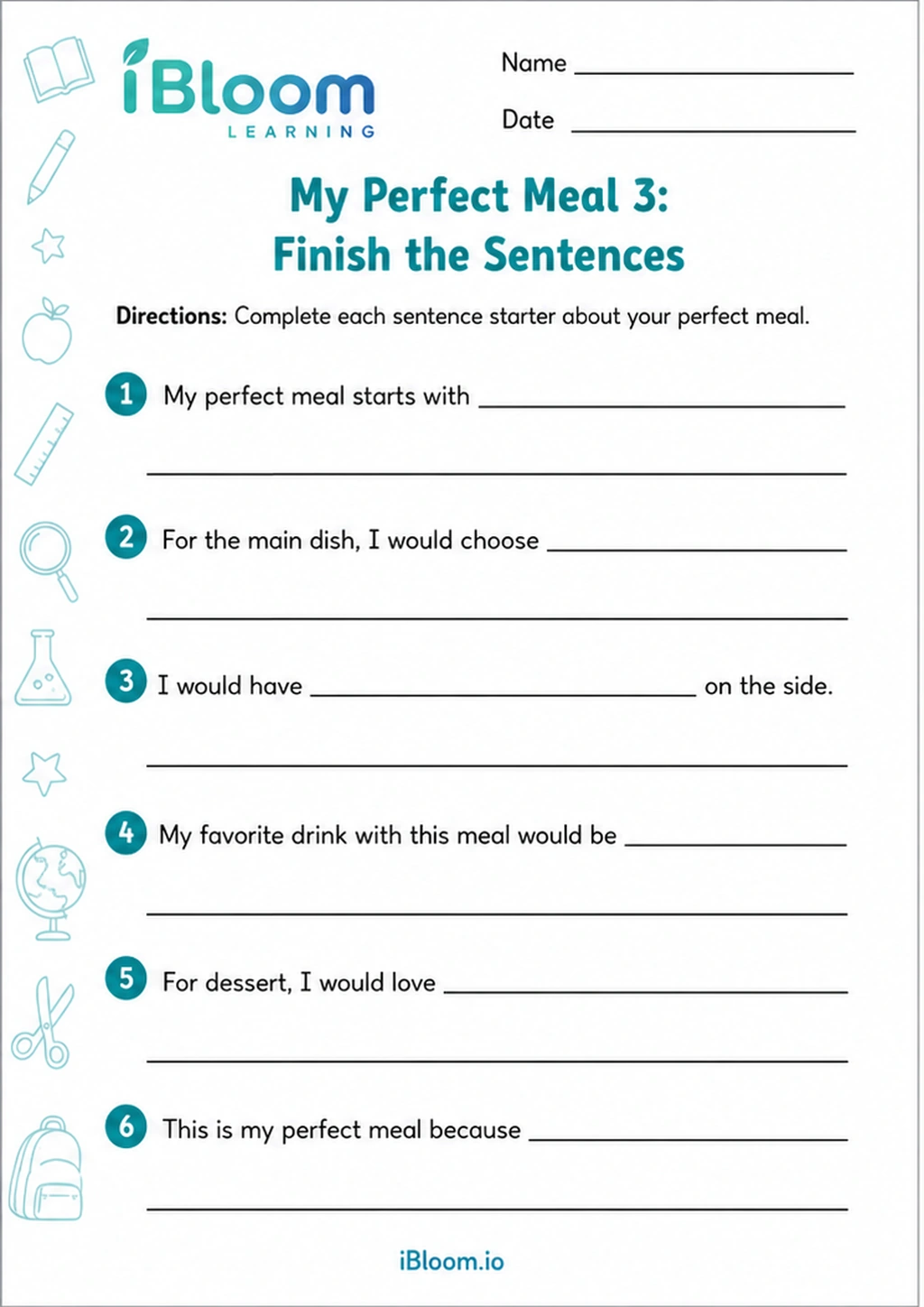 My Perfect Meal 3: Finish the SentencesClass 1 printable practice for My Perfect Meal.Class 1Free PDF preview
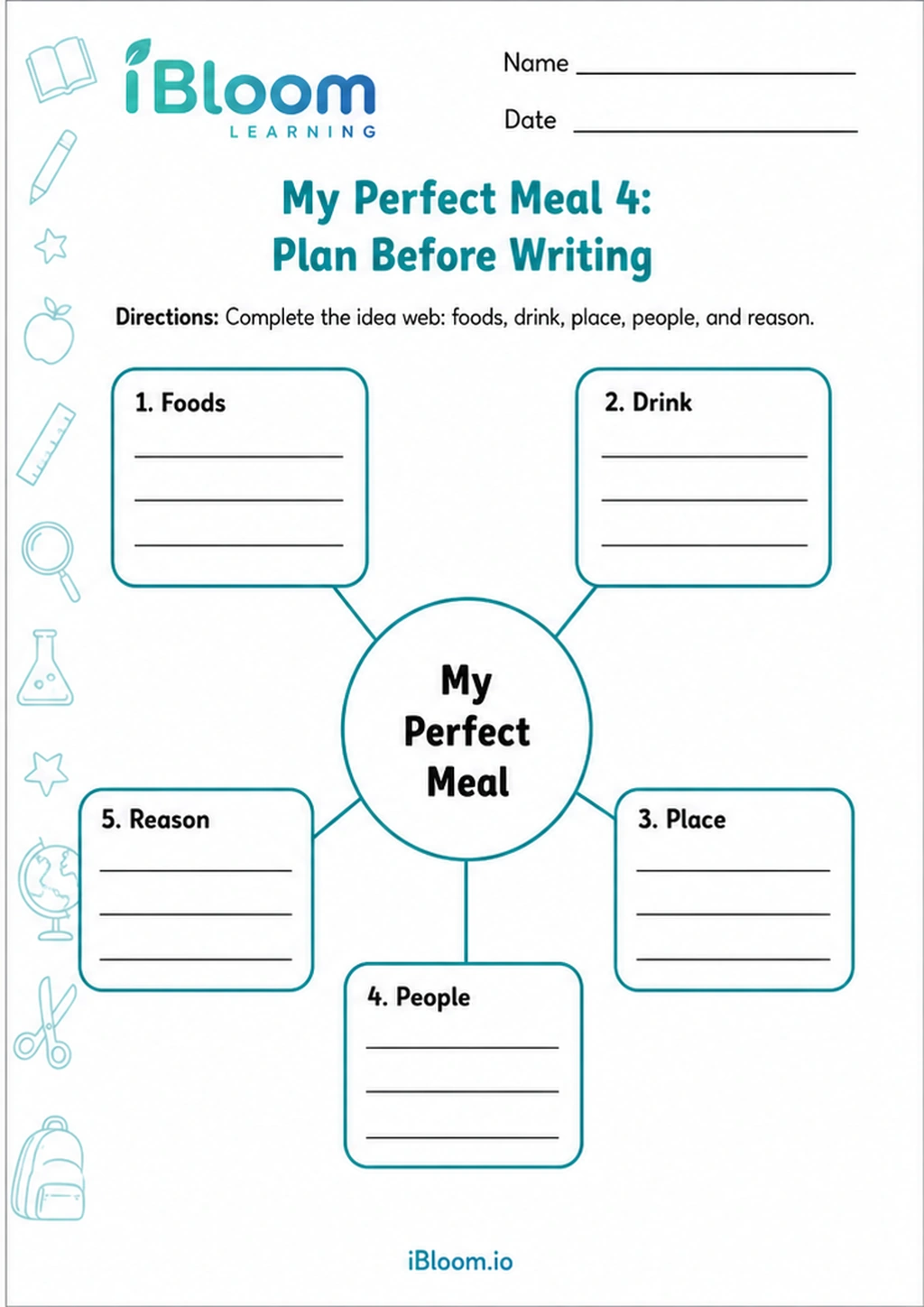 My Perfect Meal 4: Plan Before WritingClass 1 printable practice for My Perfect Meal.Class 1Free PDF preview
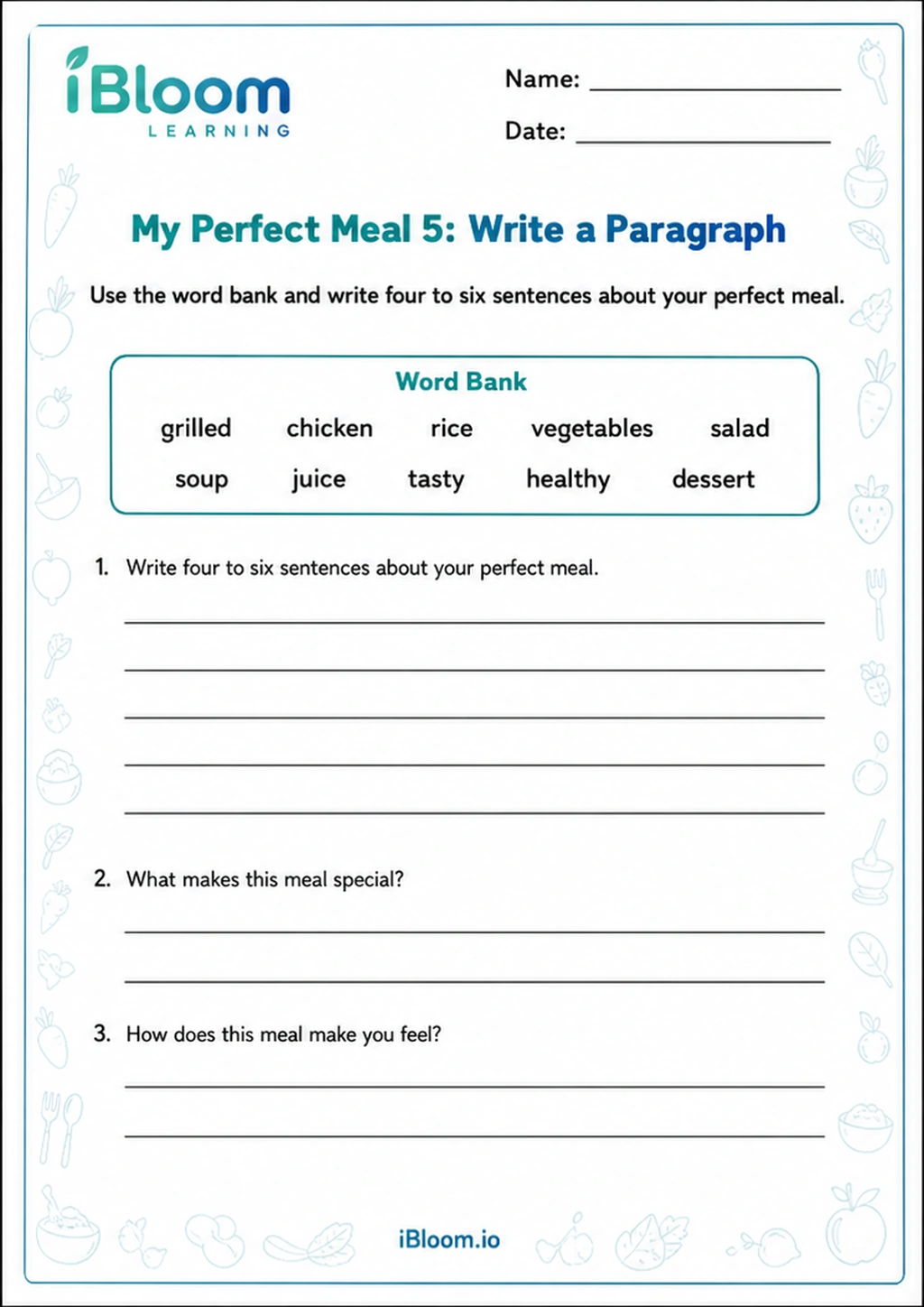 My Perfect Meal 5: Write a ParagraphClass 1 printable practice for My Perfect Meal.Class 1Free PDF preview
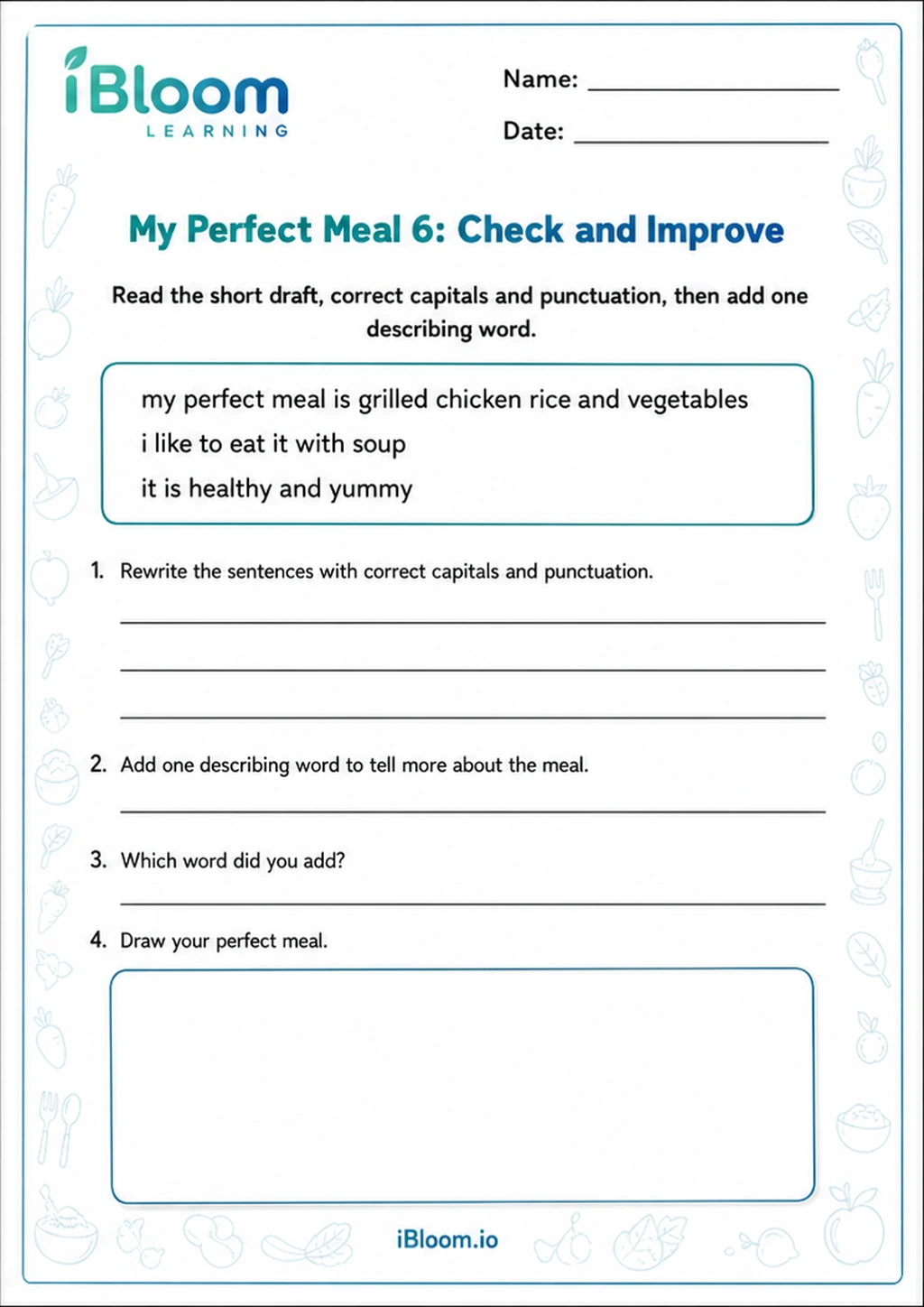 My Perfect Meal 6: Check and ImproveClass 1 printable practice for My Perfect Meal.Class 1Free PDF preview
Practice that builds confidence
Writing from a familiar experience
These Class 1 Perfect Meal writing prompt worksheets help children turn a familiar idea—food they would love to eat—into simple written sentences. Learners practise naming dishes, sharing preferences, adding details, and expressing a complete thought.
The printable activities use an open, free-form prompt so each child can write in their own way. Pages may include space for drawing, food vocabulary, sentence starters, and lines for describing a dream breakfast, lunch, dinner, or tiffin.
A perfect meal is an easy prompt for young writers because every child has real memories of taste, smell, colour, family meals, and school tiffin. Instead of searching for an unfamiliar topic, children can begin with foods they know: rice, dal, roti, idli, fruit, vegetables, curd, sweets, or any favourite dish from home.

Moving from words to sentences
These worksheets guide Class 1 children from listing food names to writing complete ideas. A child may start with “pizza, mango, juice” and then build sentences such as “I want mango juice” or “My perfect meal has hot rice and dal.” The focus is not on writing a long essay. It is on using capital letters, finger spaces, full stops, and clear word order.
A simple routine for parents
Before writing, talk for a few minutes: “What would be on your plate?” “Who would eat with you?” “Is it sweet, spicy, hot, cold, crunchy, or soft?” Let the child draw the meal first if that helps. Then ask them to say one sentence aloud and write it. Encourage invented spelling for difficult food names, but model common words like my, I, like, eat, and favourite.

Classroom uses for teachers
Teachers can use these pages during writing practice, theme work on food, morning work, or language centres. Children can share their meal drawings with a partner before writing, build a class word bank of dishes and describing words, or compare meals respectfully across different homes. The prompt also supports speaking and listening before independent writing.

Common errors to watch for
Young writers may write only a list, forget spaces, mix upper- and lower-case letters, or leave out the full stop. Some may write “I like” again and again without adding detail. Prompt them gently with questions: “What kind?” “How does it taste?” “Who made it?” Avoid correcting every spelling; choose one or two skills so writing still feels enjoyable.
Free printable PDF download
Use this perfect meal writing prompt class 1 worksheet page to preview the activity, print it, or download it as a PDF for quick practice. It works well for homework, homeschool lessons, tutoring, morning work, revision, and classroom centers.
Answers and answer key support
After the child completes the worksheet independently, parents and teachers can use the answer support or answer key information to check the work, review mistakes, and choose the next practice step.
Why iBloom worksheets help
The Perfect Meal prompt gives children choice while keeping the task small enough for Class 1. A child-friendly strategy is: think of the plate, say the sentence, tap each word, then write. This helps children connect oral language, drawing, vocabulary, and early grammar in a meaningful piece of writing.
Helpful answers
Frequently asked questions
What should a Class 1 child write in a Perfect Meal prompt?
A child can name the foods in their perfect meal, say why they like them, describe the taste or colour, and write who they would eat with.
Is this worksheet meant for a story or a short response?
It is a free-form writing prompt, so a short response is fine. Class 1 children may write a few simple sentences rather than a full story.
Can my child draw the meal before writing?
Yes. Drawing the plate first often helps young children organise ideas and find words before they begin writing sentences.
How much spelling correction is useful for this activity?
Correct a few common words gently, but do not stop the flow of ideas. Food names can be tricky, so the main aim is clear expression and sentence practice.
How can teachers extend the Perfect Meal activity?
Teachers can make a class food word bank, ask children to share their meal orally, or have them add one describing word such as sweet, hot, crunchy, soft, or colourful.
Is this perfect meal writing prompt class 1 worksheet free?
Yes. You can preview it for free and use the printable worksheet for home or classroom practice.
Can I download this perfect meal writing prompt class 1 worksheet as a PDF?
Yes. Use the worksheet download option to save a printable PDF, or print the worksheet directly from the page.
Does this perfect meal writing prompt class 1 worksheet include answers or an answer key?
When the activity has fixed answers, iBloom includes answer support so parents and teachers can check the completed worksheet.