Free printable practice
Informative Writing Practice Activities
Class 4 informative writing worksheets for introductions, paragraphs, essays, research writing, biographies, compare-contrast tasks and supporting details.
Explore Informative Writing
Free printable worksheet PDFs
Preview every available page, then download the free worksheet PDF for home, homeschool, tutoring, or classroom practice.
Preview the exact activity before downloading it.
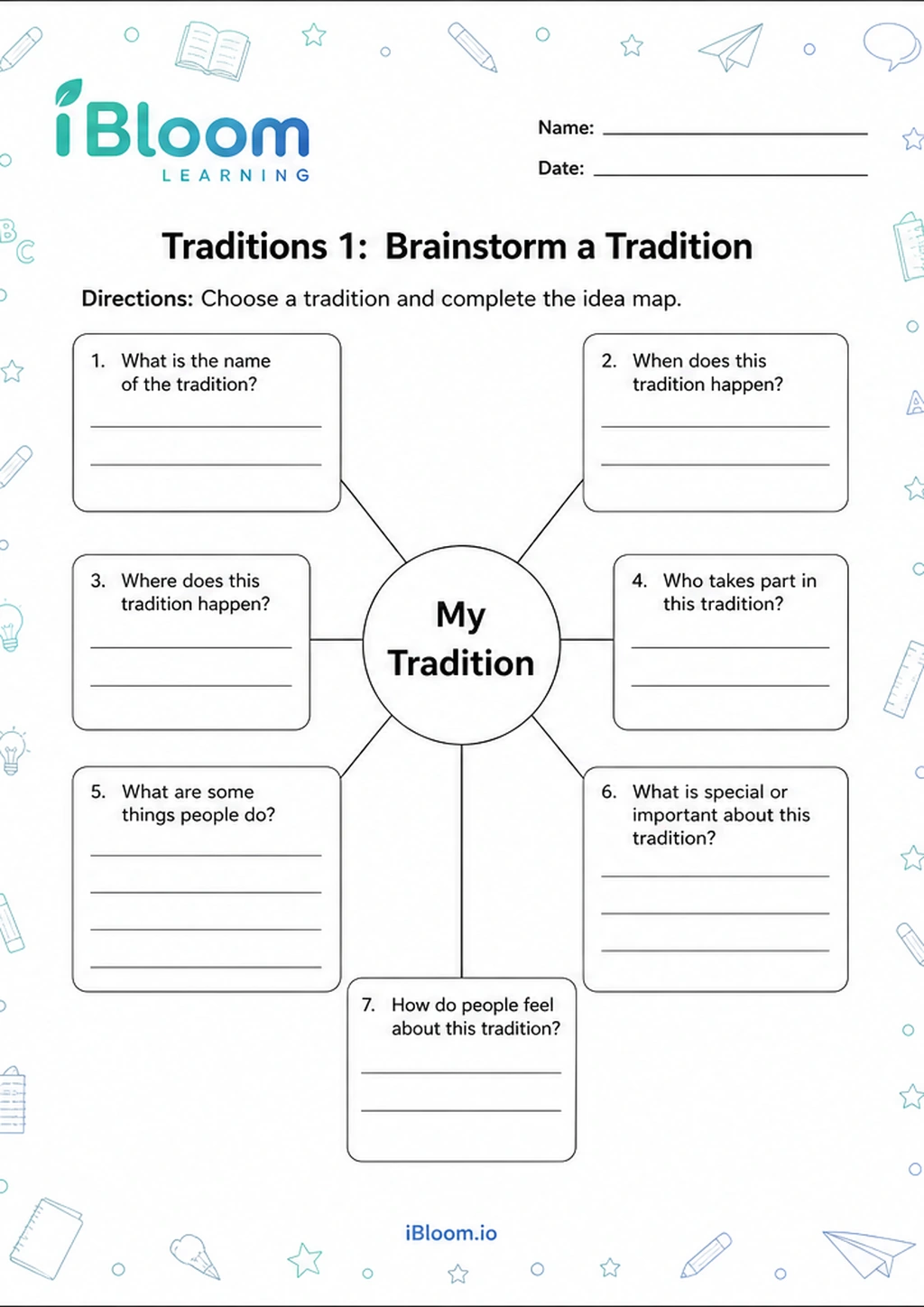 Traditions 1: Brainstorm a TraditionClass 4 printable practice for Writing About Traditions.Class 4Free PDF preview
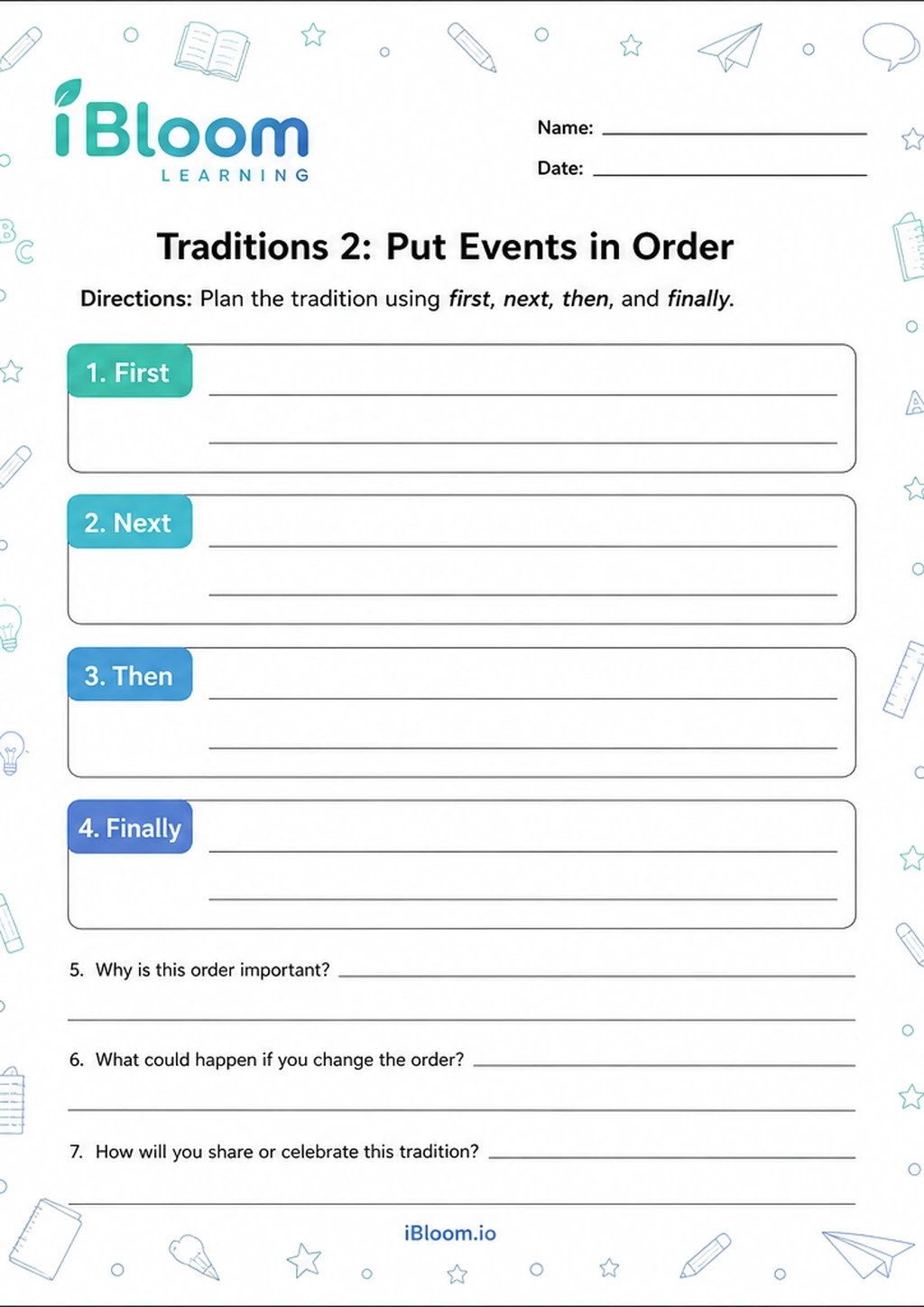 Traditions 2: Put Events in OrderClass 4 printable practice for Writing About Traditions.Class 4Free PDF preview
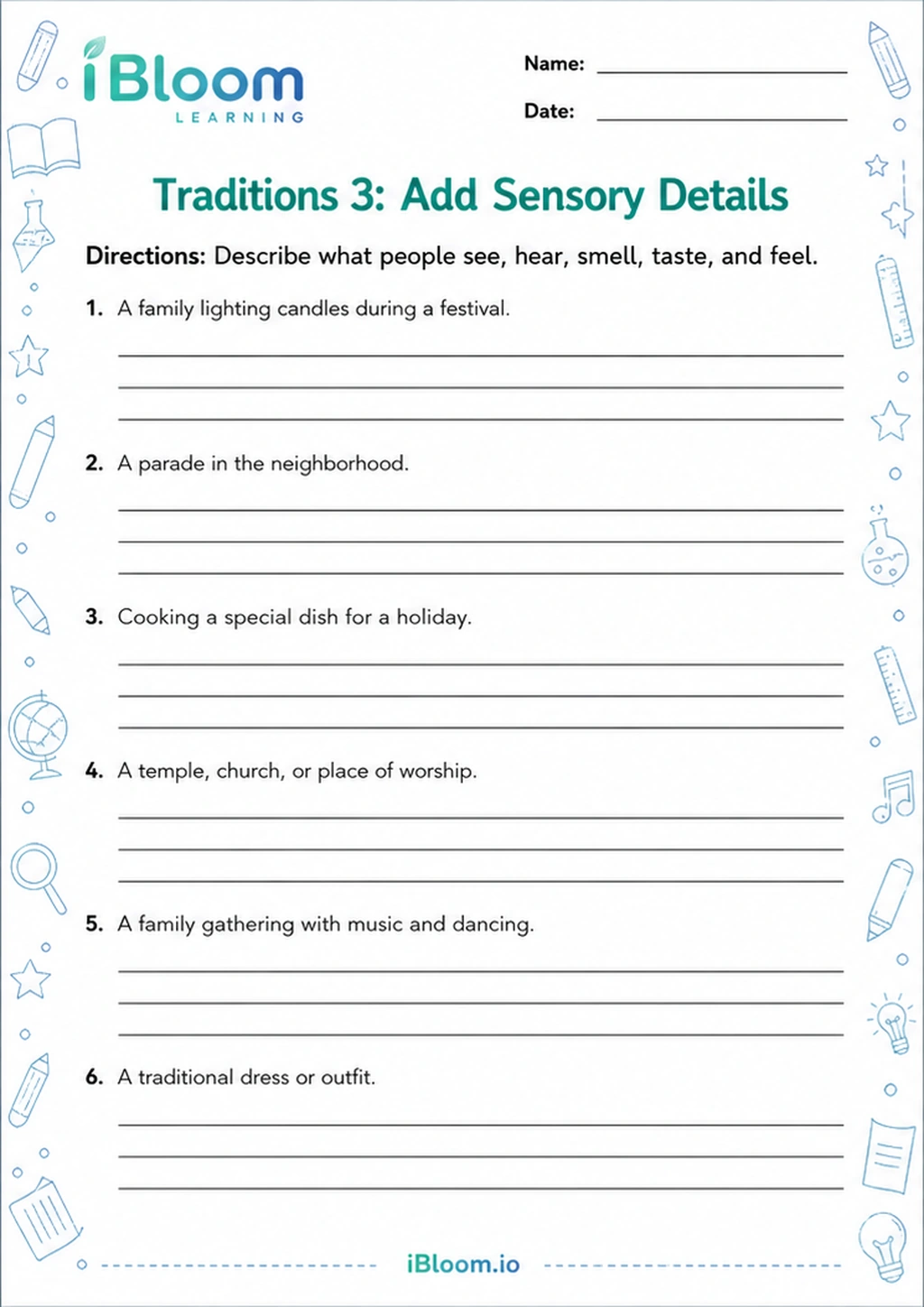 Traditions 3: Add Sensory DetailsClass 4 printable practice for Writing About Traditions.Class 4Free PDF preview
 Traditions 4: Family Interview NotesClass 4 printable practice for Writing About Traditions.Class 4Free PDF preview
 Traditions 5: Informative ParagraphClass 4 printable practice for Writing About Traditions.Class 4Free PDF preview
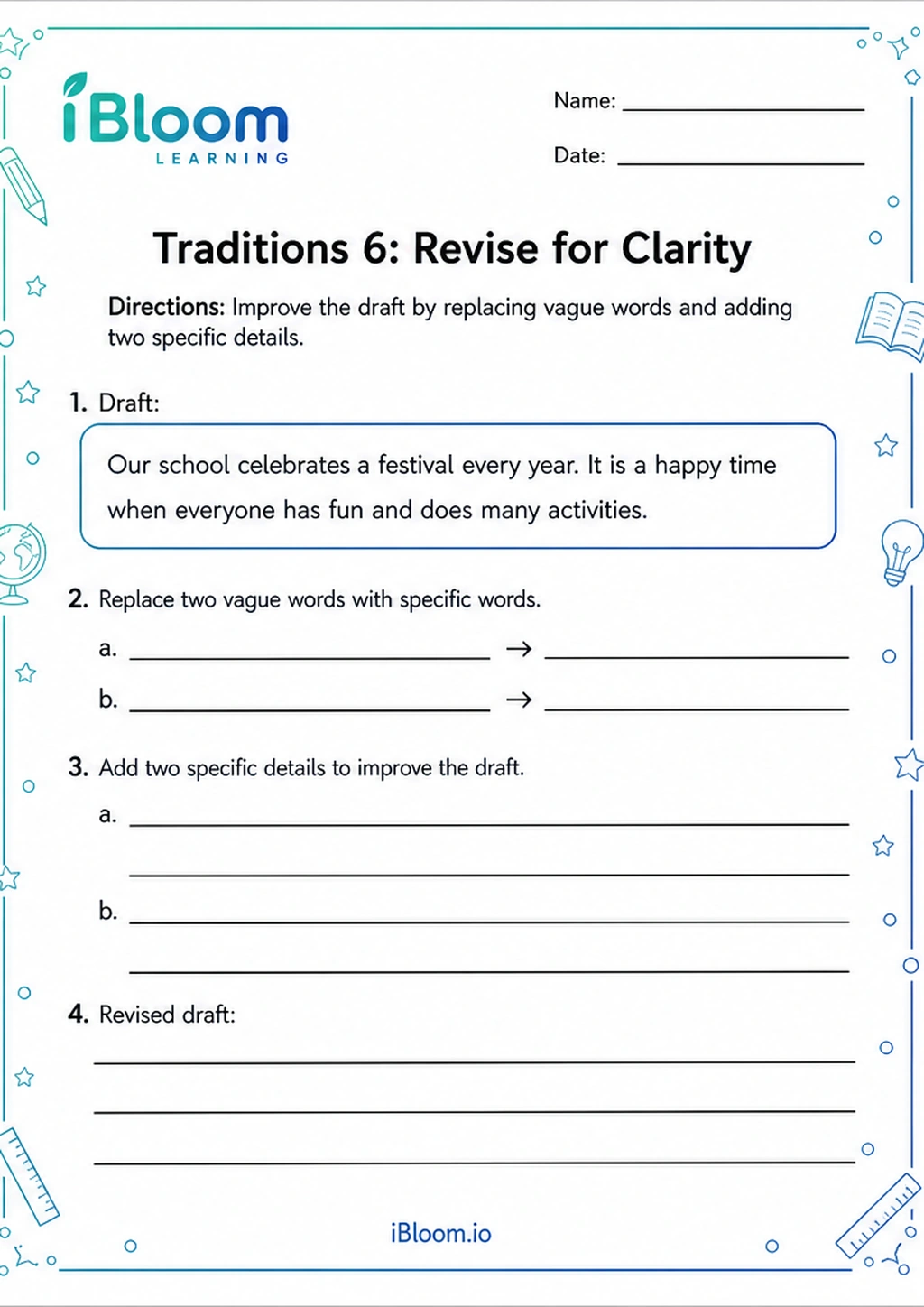 Traditions 6: Revise for ClarityClass 4 printable practice for Writing About Traditions.Class 4Free PDF preview
Practice that builds confidence
Building clear informative writing
These Class 4 informative writing worksheets help children explain facts clearly, organise ideas, and write with a reader in mind. Learners practise informative paragraphs, introductions, essays, compare-contrast writing, biographical writing, and short research-based responses.
The printable activities include prompts, planning organisers, detail-building exercises, and writing tasks that guide children from choosing relevant information to presenting it in a neat, logical form. They support stronger grammar, clearer topic sentences, and better use of facts and examples.
Informative writing asks children to teach, describe, explain, or report without turning the piece into a story or personal opinion. In Class 4, the focus is on a strong topic, a clear introduction, well-linked facts, and a closing sentence that completes the idea. Worksheets in this collection cover informative prompts, informative paragraphs, essays, supporting details, research write-ups, biographies, and compare-contrast writing.

From sentence facts to organised paragraphs
Children begin by identifying the main idea and adding supporting details that answer questions such as who, what, where, when, why, and how. They then practise turning notes into paragraphs with a topic sentence, facts in a sensible order, and a concluding line. Activities on writing introductions help them avoid starting too suddenly and teach them to prepare the reader for the information that follows.
Research, biographies and comparison tasks
Research write worksheets guide children to collect simple facts, sort them, and write in their own words. Biographical writing helps them present a person’s life using dates, achievements, and important events. Compare contrast writing builds vocabulary such as both, however, similarly, unlike, and whereas, so children can explain similarities and differences without mixing up points.
A simple parent routine
At home, choose one topic and ask your child to say three facts aloud before writing. Help them underline the main idea, number the facts in order, and check whether each sentence gives useful information. After writing, ask: “Did you explain the topic?”, “Did you include facts, not just opinions?”, and “Will a reader learn something new?” This keeps revision short and purposeful.

Classroom uses for teachers
Teachers can use these printables for writing centres, guided writing groups, topic-linked projects, homework, or assessment preparation. Planning pages work well before science or social studies writing, while prompt pages can be used for independent practice. Compare-contrast and supporting detail sheets are useful for small-group reteaching when children need help developing ideas.

Common errors and a child-friendly strategy
Watch for copied research sentences, missing introductions, unrelated details, repeated facts, and opinion phrases such as “I like” in place of information. A useful strategy is: Plan it, Prove it, Polish it. Plan the main idea, prove it with facts and examples, then polish by checking order, capital letters, punctuation, and linking words.
Free printable PDF download
Use this class 4 informative writing worksheet page to preview the activity, print it, or download it as a PDF for quick practice. It works well for homework, homeschool lessons, tutoring, morning work, revision, and classroom centers.
Answers and answer key support
After the child completes the worksheet independently, parents and teachers can use the answer support or answer key information to check the work, review mistakes, and choose the next practice step.
Why iBloom worksheets help
The iBloom worksheets break informative writing into manageable steps instead of asking children to write a full essay too soon. Each activity targets a specific skill, so Class 4 learners can practise introductions, details, paragraph structure, research notes, biographies, and essays with growing confidence.
Helpful answers
Frequently asked questions
What does informative writing mean for Class 4 children?
Informative writing means writing to explain or teach facts about a topic. In Class 4, children learn to use a main idea, supporting details, clear order, and a short conclusion.
Which skills are practised in these worksheets?
Children practise writing introductions, informative paragraphs, short essays, research-based responses, biographies, compare-contrast pieces, prompts, and supporting details.
How can I help my child write better supporting details?
Ask your child to choose one main idea and add facts that answer who, what, where, when, why, or how. Remove any sentence that does not explain the topic.
Are these worksheets useful for research writing?
Yes. The research writing activities help children collect simple facts, organise notes, avoid copying full sentences, and turn information into their own paragraph or short write-up.
How is compare-contrast writing included?
Children practise explaining similarities and differences using clear comparison words such as both, similarly, however, unlike, and whereas.
Is this class 4 informative writing worksheet free?
Yes. You can preview it for free and use the printable worksheet for home or classroom practice.
Can I download this class 4 informative writing worksheet as a PDF?
Yes. Use the worksheet download option to save a printable PDF, or print the worksheet directly from the page.
Does this class 4 informative writing worksheet include answers or an answer key?
When the activity has fixed answers, iBloom includes answer support so parents and teachers can check the completed worksheet.