Free printable practice
Narrative Prompts Practice Activities
Class 4 children practise planning and writing imaginative narratives from prompts about robots, trips, magic, time travel, animals, games and more.
Explore Narrative Prompts
Free printable worksheet PDFs
Preview every available page, then download the free worksheet PDF for home, homeschool, tutoring, or classroom practice.
Preview the exact activity before downloading it.
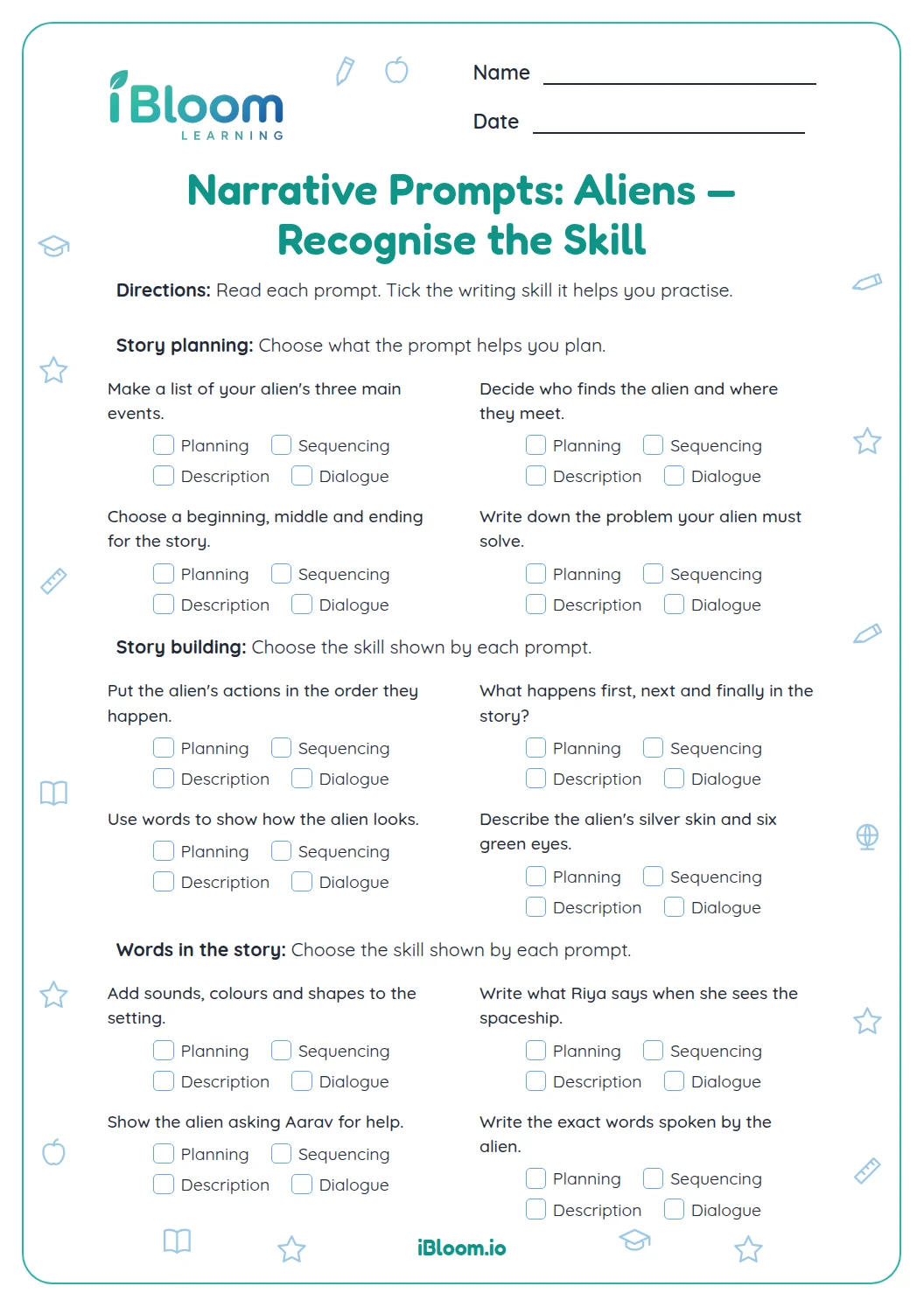 Narrative Prompts: Aliens — Recognise the SkillRecognise the Skill for narrative prompts: aliens in Class 4. Read each alien-story prompt and identify whether it helps with planning, sequencing, description or dialogue.Class 4Free PDF preview
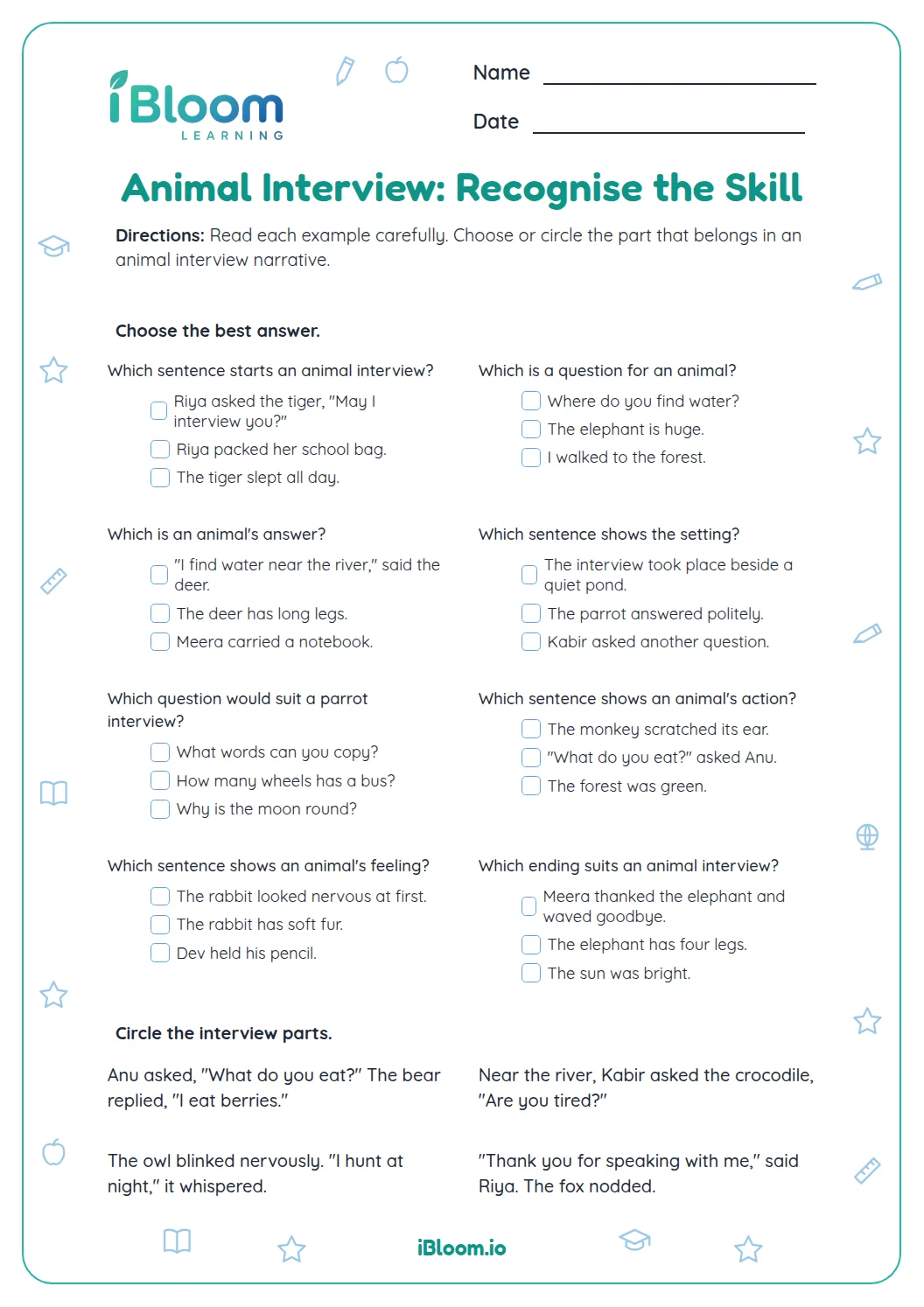 Narrative Prompts: Animal Interview — Recognise the SkillRecognise the Skill for narrative prompts: animal interview in Class 4. Identify the parts and features of a lively animal interview narrative by choosing and circling correct examples.Class 4Free PDF preview
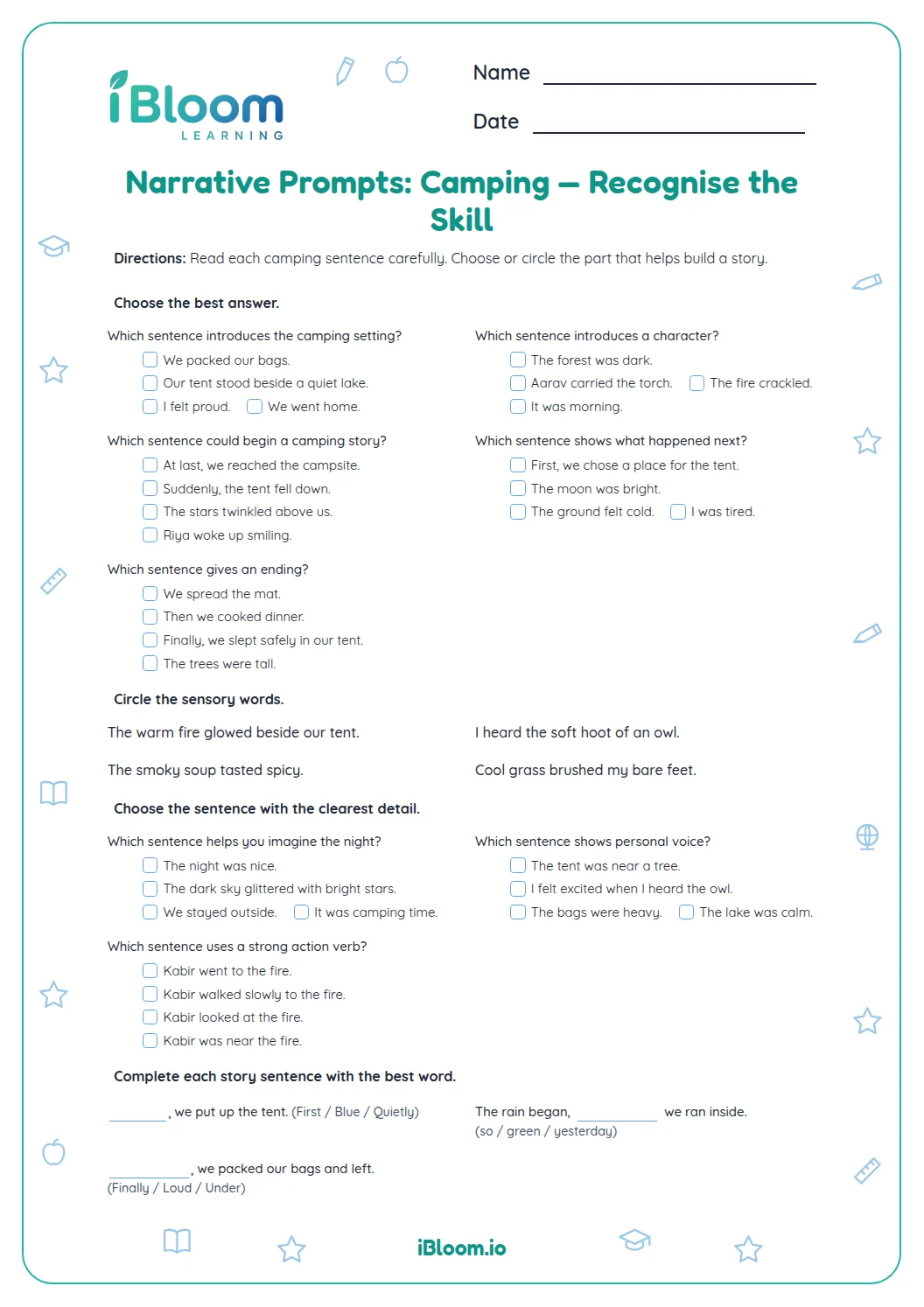 Narrative Prompts: Camping — Recognise the SkillRecognise the Skill for narrative prompts: camping in Class 4. Recognise camping narrative features by choosing story parts, spotting sensory details, and identifying clear sequence words.Class 4Free PDF preview
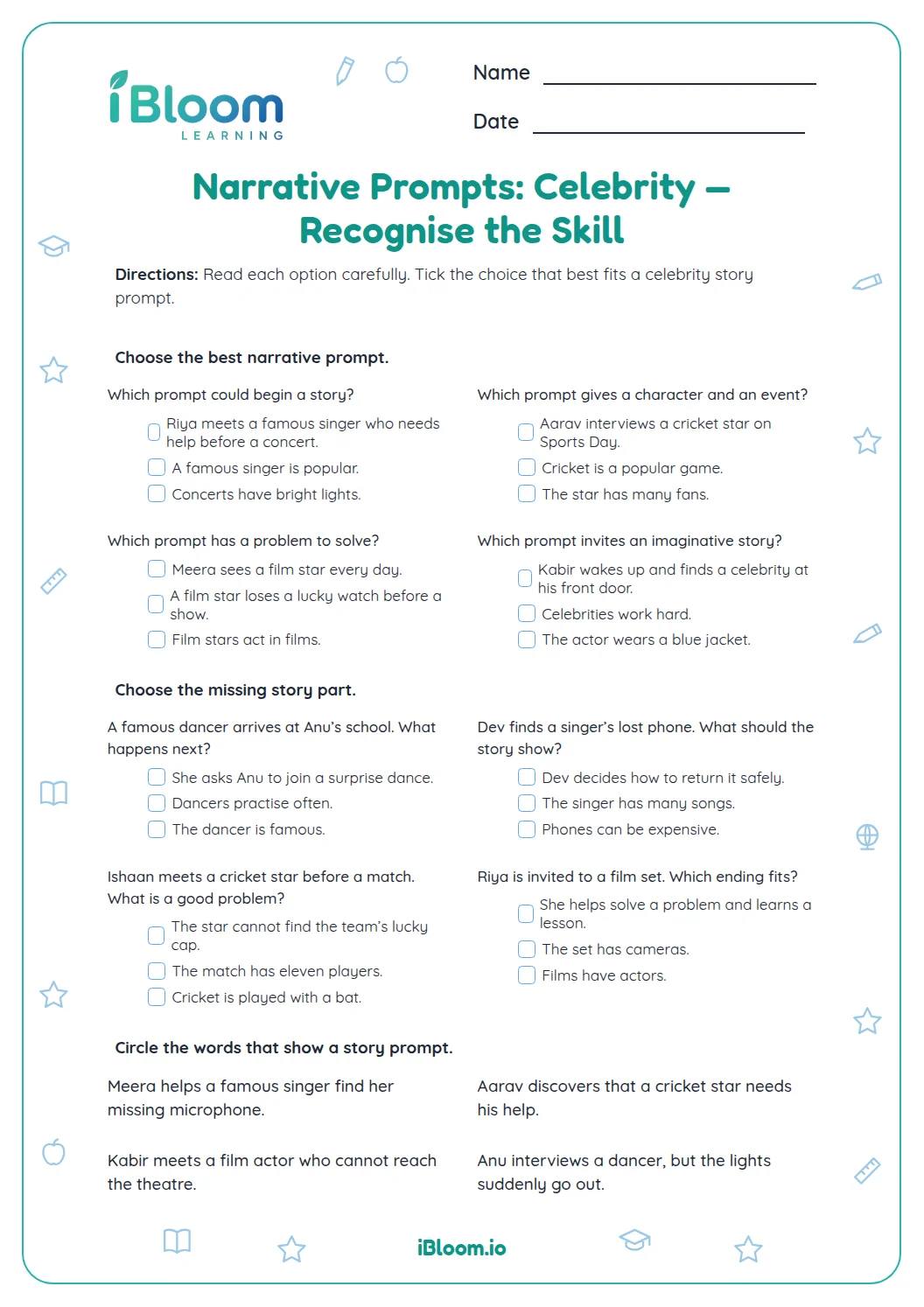 Narrative Prompts: Celebrity — Recognise the SkillRecognise the Skill for narrative prompts: celebrity in Class 4. Choose the parts that make a clear celebrity narrative prompt and identify the best story ideas.Class 4Free PDF preview
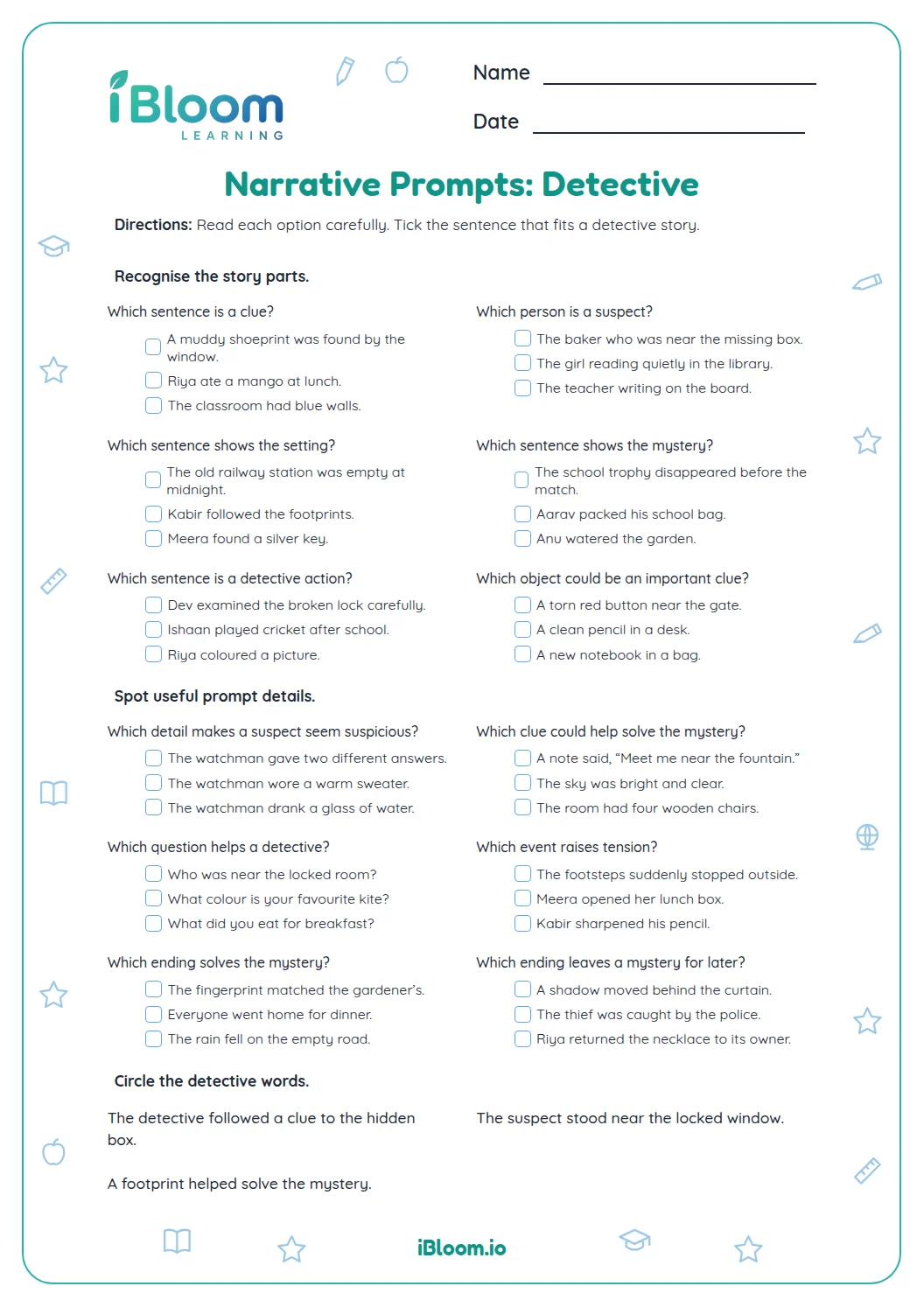 Narrative Prompts: Detective — Recognise the SkillRecognise the Skill for narrative prompts: detective in Class 4. Choose and identify clues, suspects, settings, problems and endings in detective narrative prompts.Class 4Free PDF preview
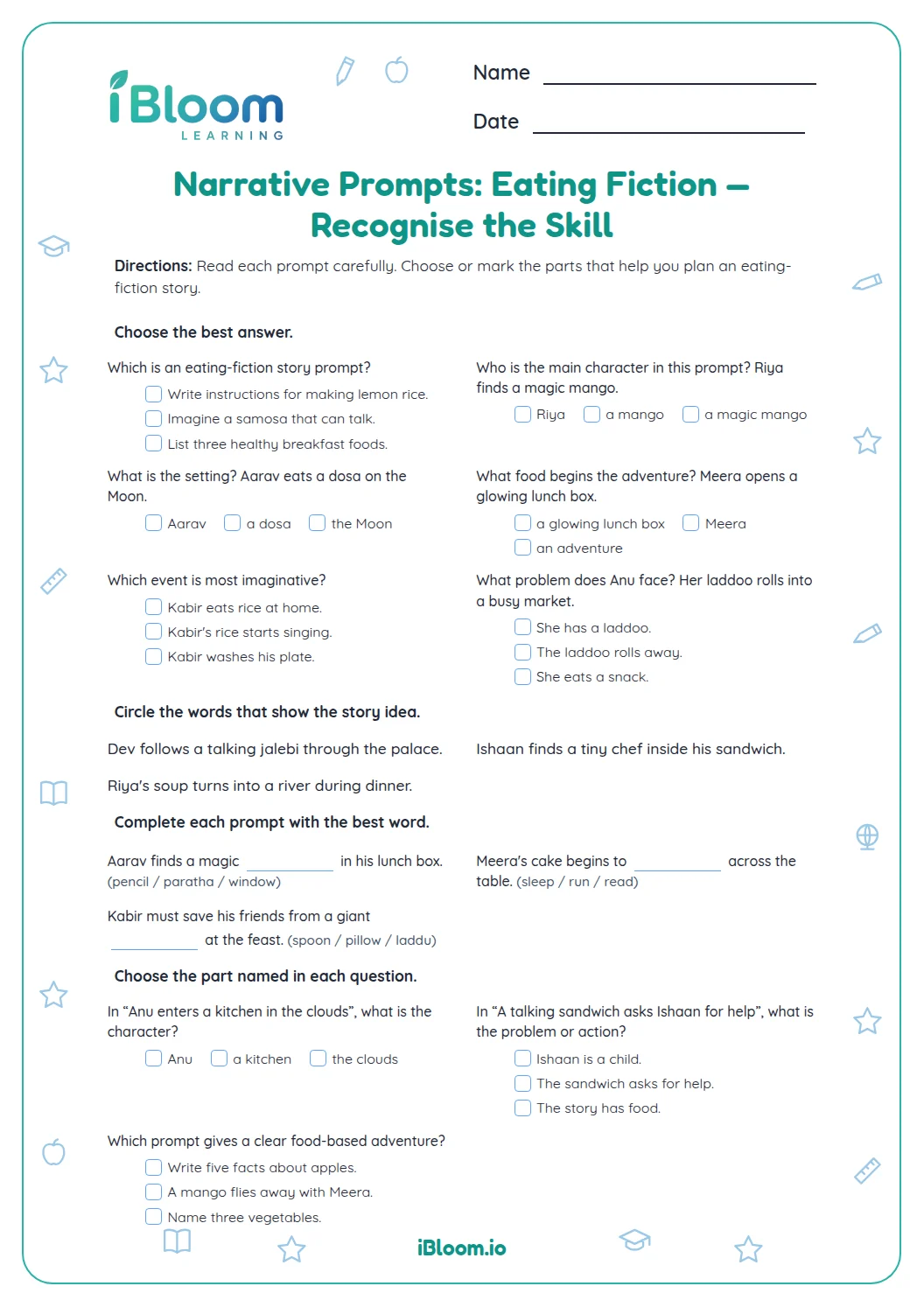 Narrative Prompts: Eating Fiction — Recognise the SkillRecognise the Skill for narrative prompts: eating fiction in Class 4. Choose and identify the parts of eating-fiction narrative prompts: characters, settings, problems and imaginative actions.Class 4Free PDF preview
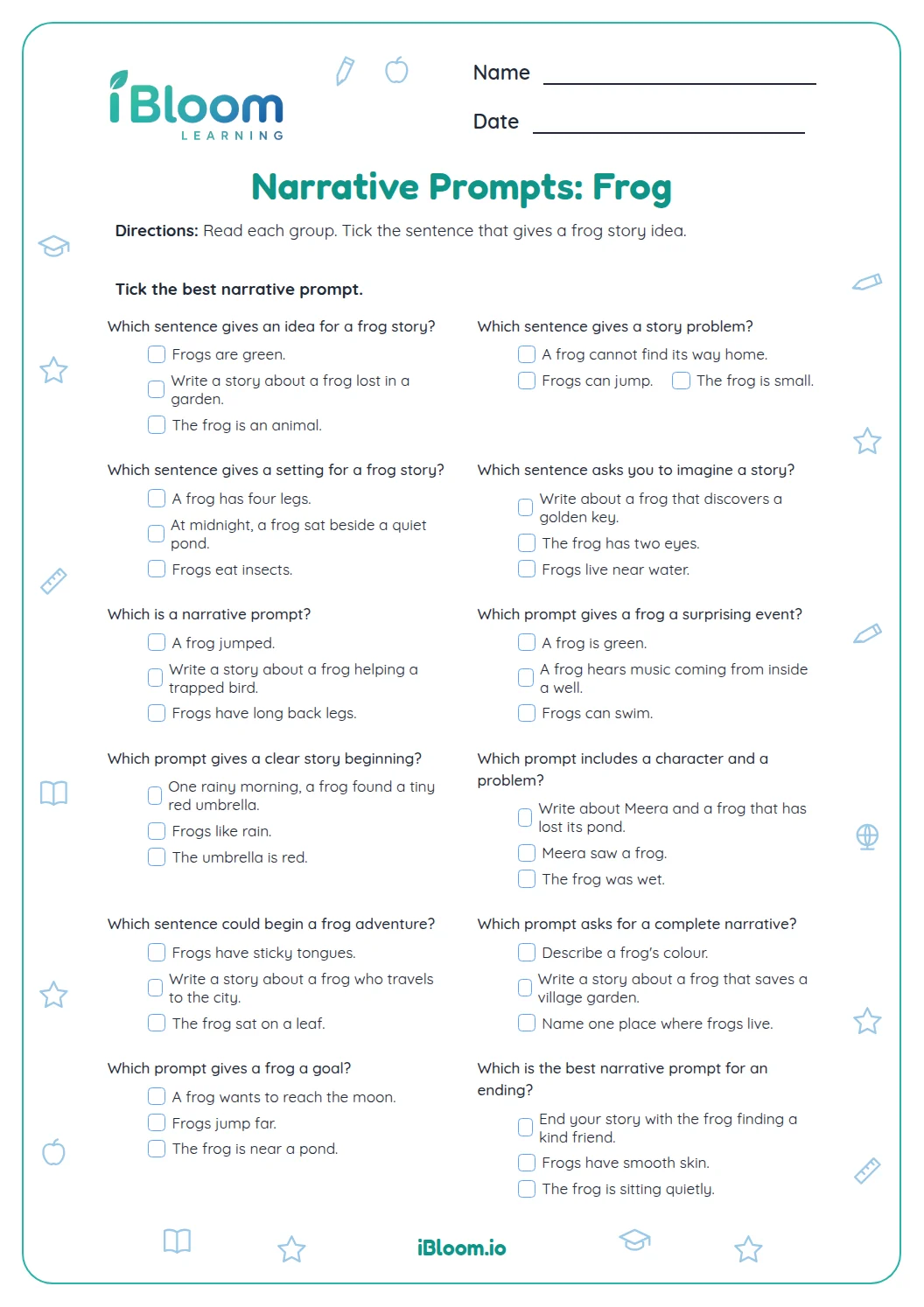 Narrative Prompts: Frog — Recognise the SkillRecognise the Skill for narrative prompts: frog in Class 4. Choose the sentences that are narrative prompts and recognise the story ideas they give about a frog.Class 4Free PDF preview
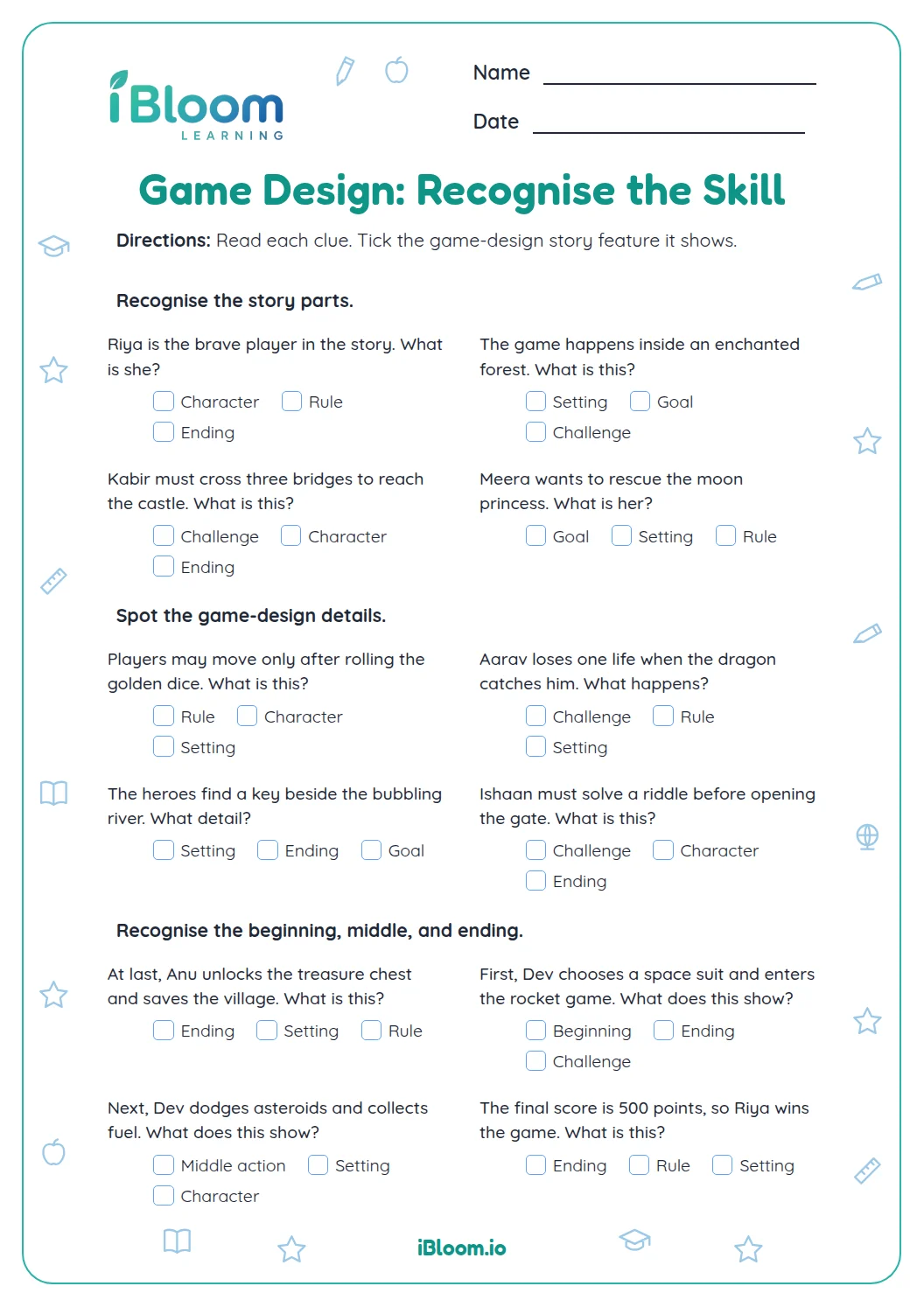 Narrative Prompts: Game Design — Recognise the SkillRecognise the Skill for narrative prompts: game design in Class 4. Read short game-design story clues and recognise the character, setting, rules, challenge, goal, and ending.Class 4Free PDF preview
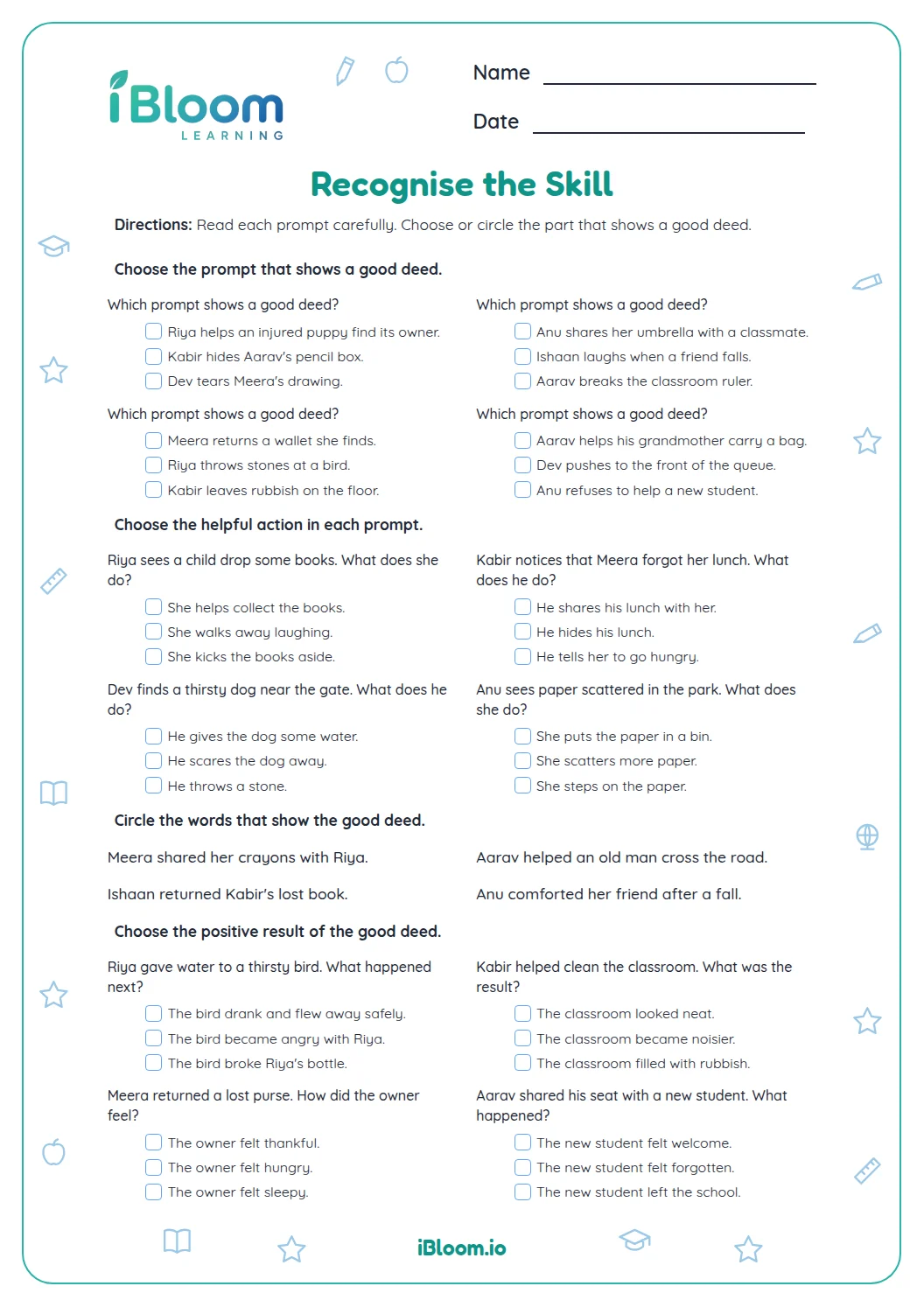 Narrative Prompts: Good Deeds — Recognise the SkillRecognise the Skill for narrative prompts: good deeds in Class 4. Read each prompt, recognise the good deed, and identify the helpful action or result.Class 4Free PDF preview
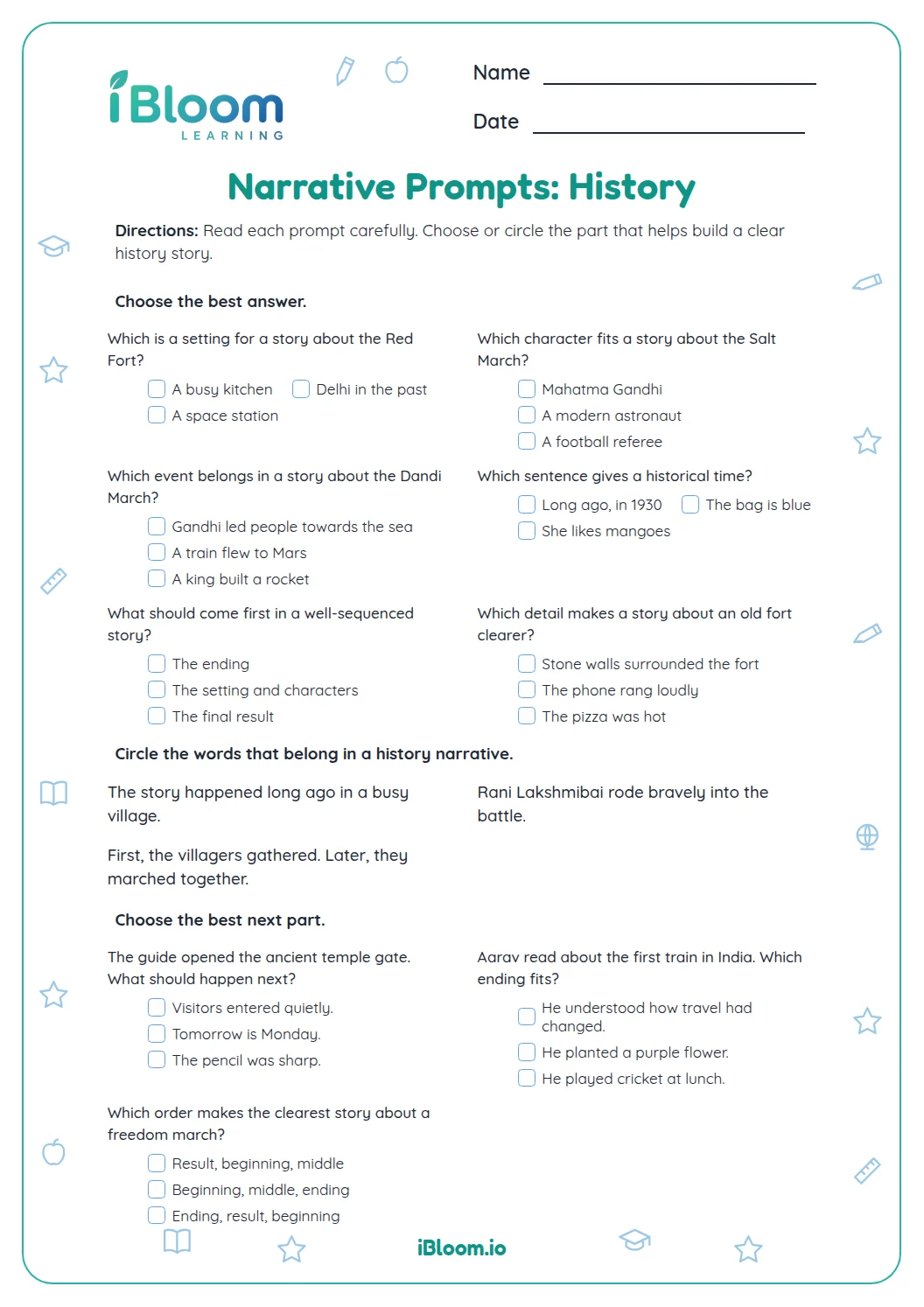 Narrative Prompts: History — Recognise the SkillRecognise the Skill for narrative prompts: history in Class 4. Recognise the setting, characters, events, sequence, and details in history-themed narrative prompts.Class 4Free PDF preview
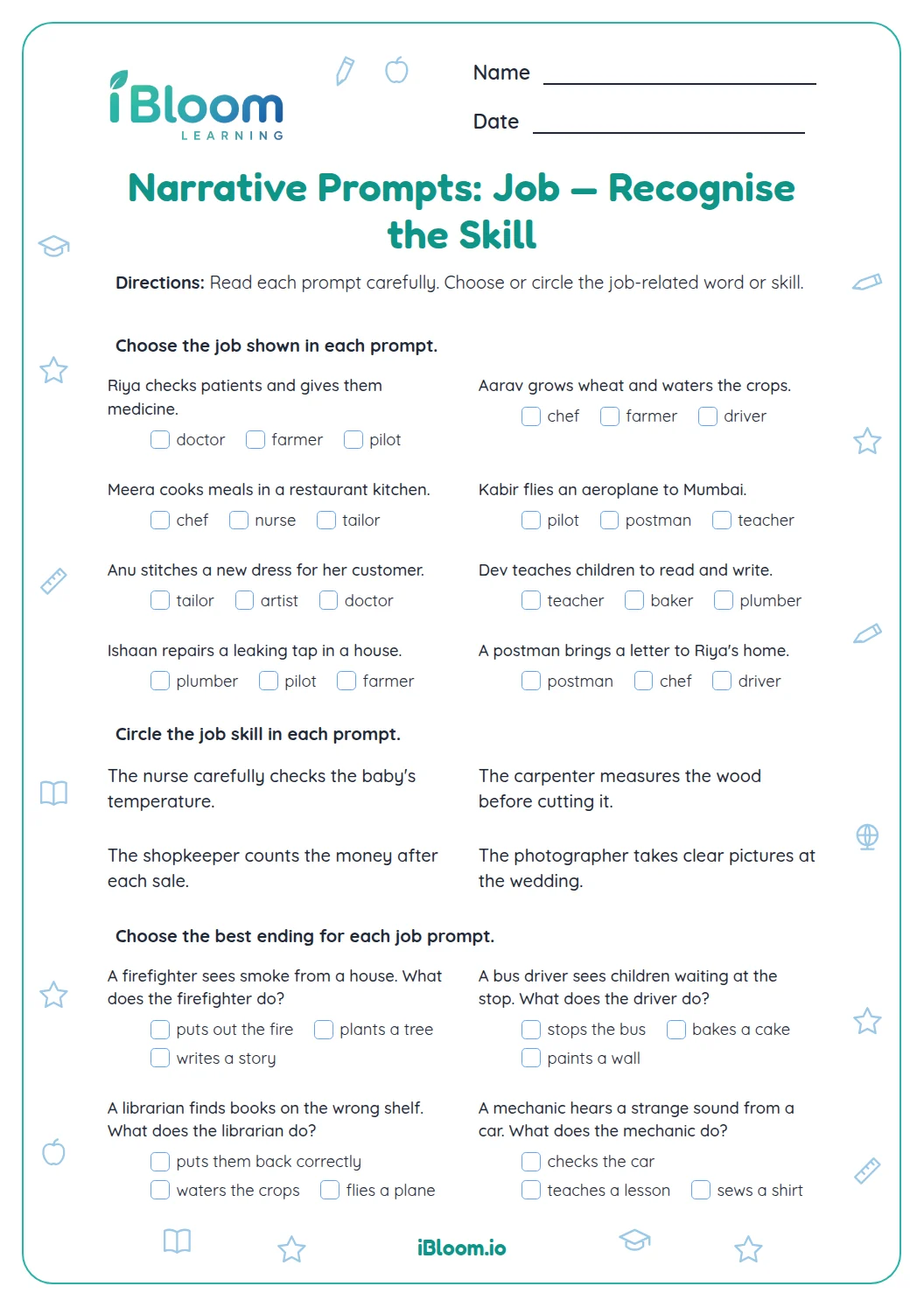 Narrative Prompts: Job — Recognise the SkillRecognise the Skill for narrative prompts: job in Class 4. Read short narrative prompts about work, then identify the job or job-related skill in each one.Class 4Free PDF preview
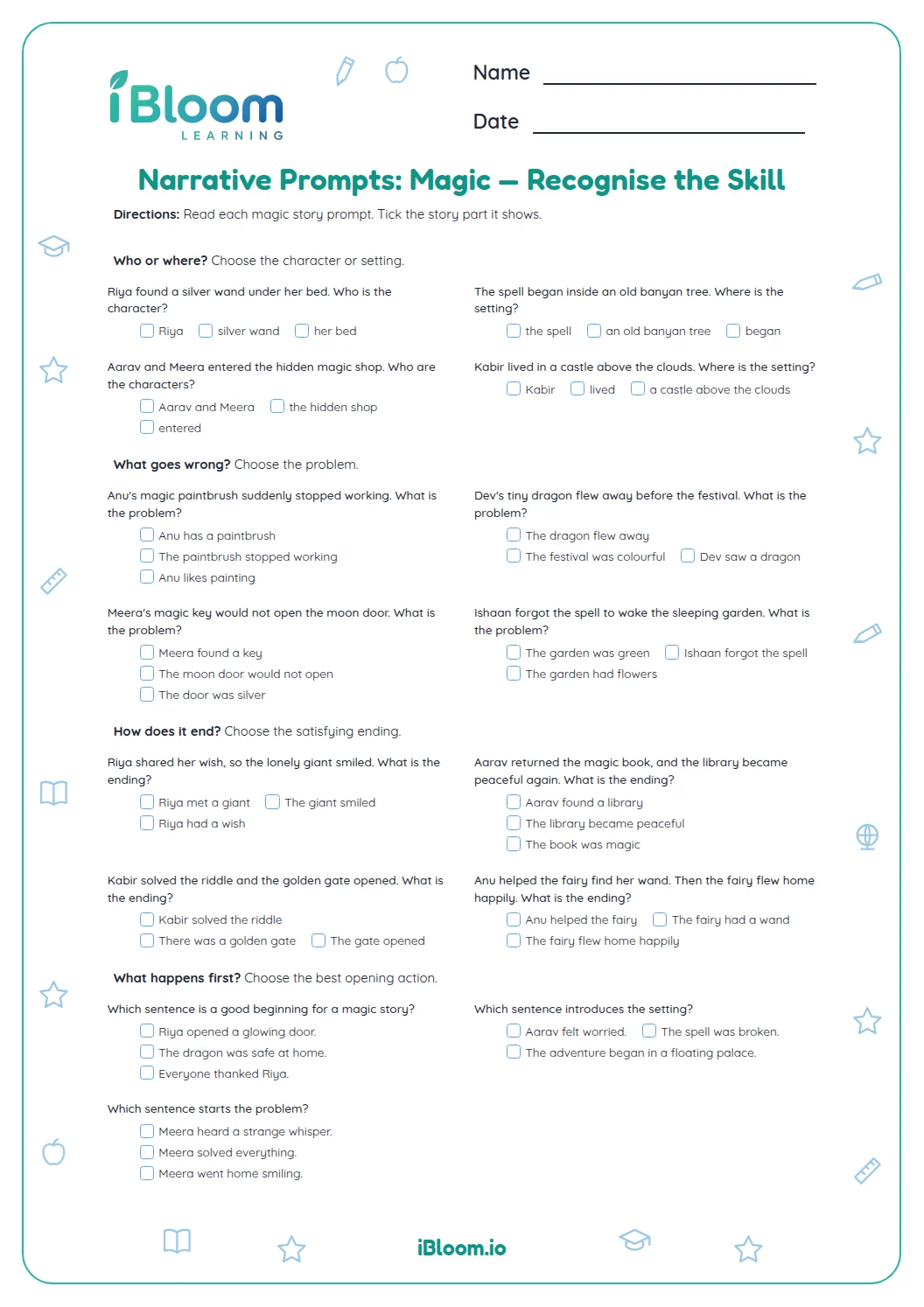 Narrative Prompts: Magic — Recognise the SkillRecognise the Skill for narrative prompts: magic in Class 4. Read each magic story prompt and recognise its character, setting, problem, action, or ending.Class 4Free PDF preview
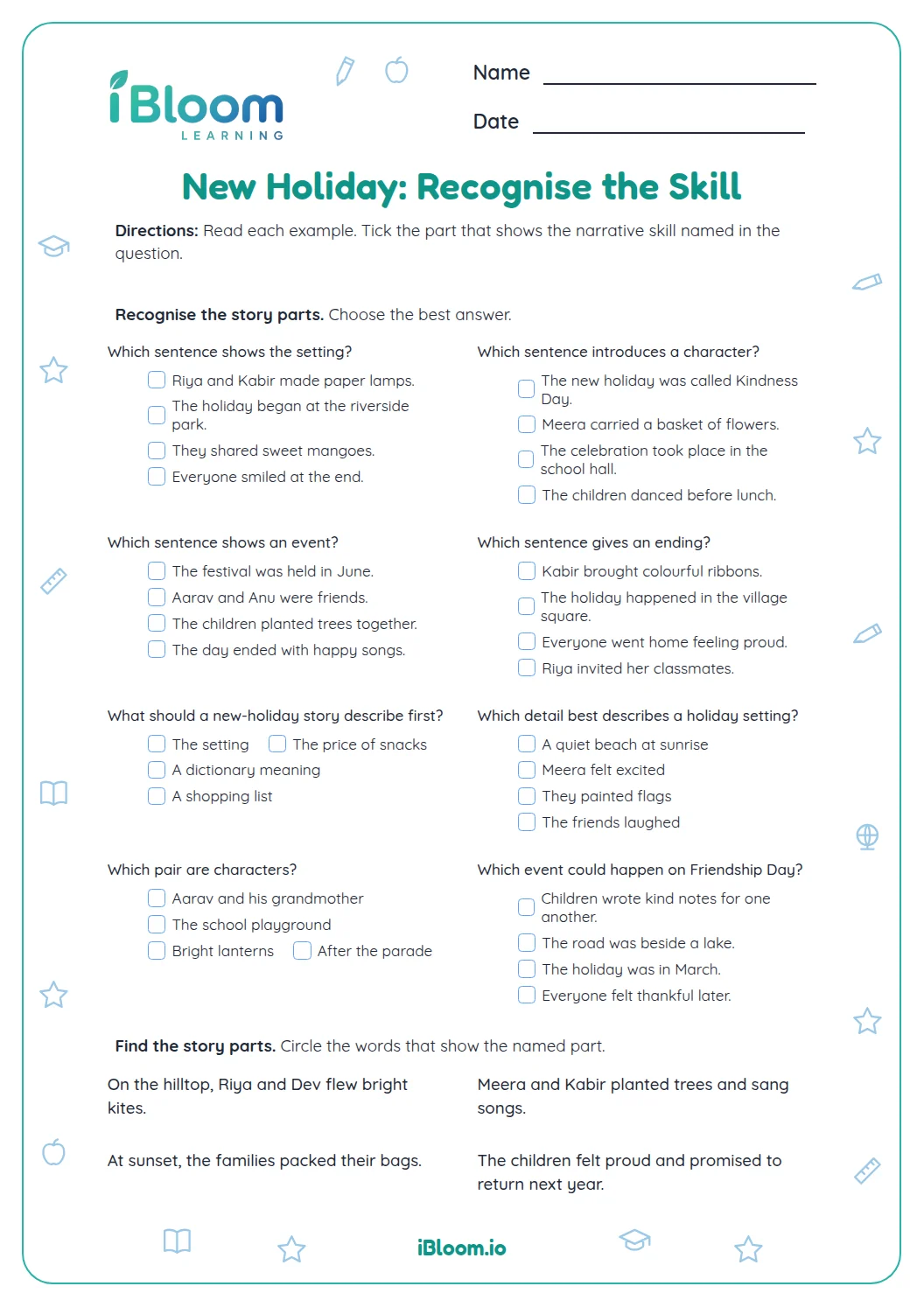 Narrative Prompts: New Holiday — Recognise the SkillRecognise the Skill for narrative prompts: new holiday in Class 4. Read short new-holiday examples and identify the setting, characters, events, and ending of a narrative.Class 4Free PDF preview
 Narrative Prompts: New Sport — Recognise the SkillRecognise the Skill for narrative prompts: new sport in Class 4. Choose the story element shown in each new-sport prompt, then recognise useful narrative details.Class 4Free PDF preview
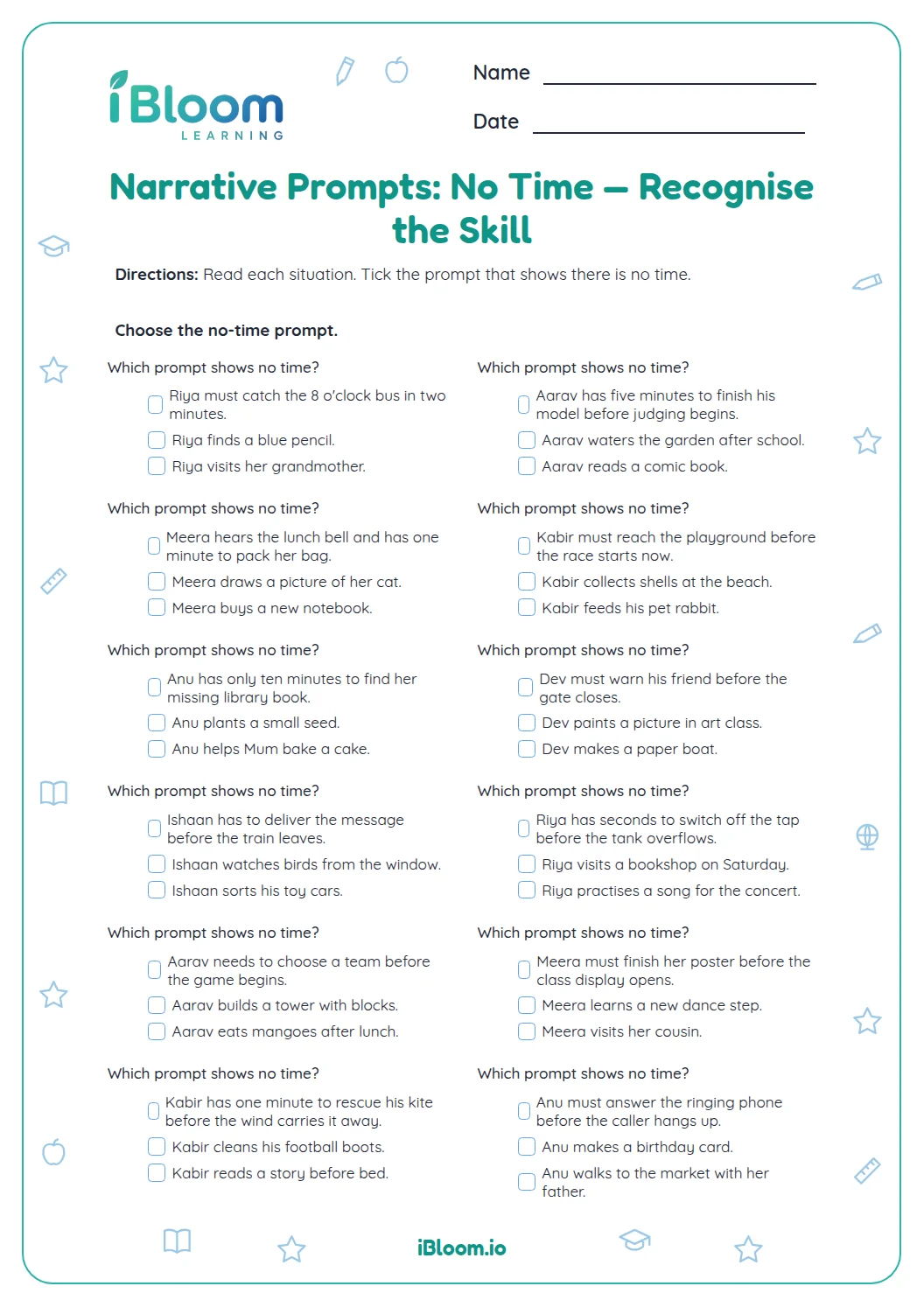 Narrative Prompts: No Time — Recognise the SkillRecognise the Skill for narrative prompts: no time in Class 4. Read each short situation and choose the narrative prompt that shows a character has no time.Class 4Free PDF preview
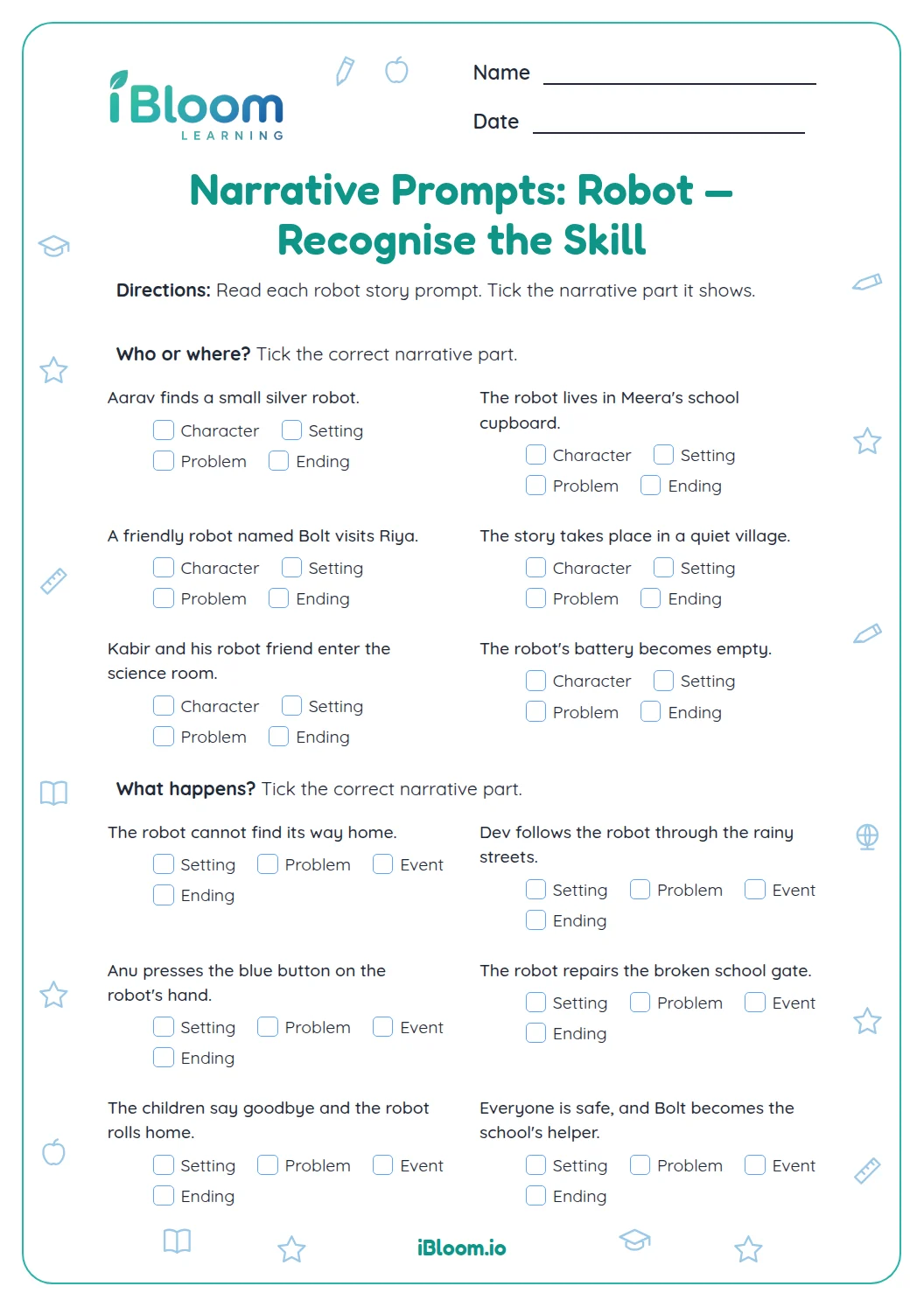 Narrative Prompts: Robot — Recognise the SkillRecognise the Skill for narrative prompts: robot in Class 4. Choose the narrative part shown in each robot story prompt: character, setting, problem, event, or ending.Class 4Free PDF preview
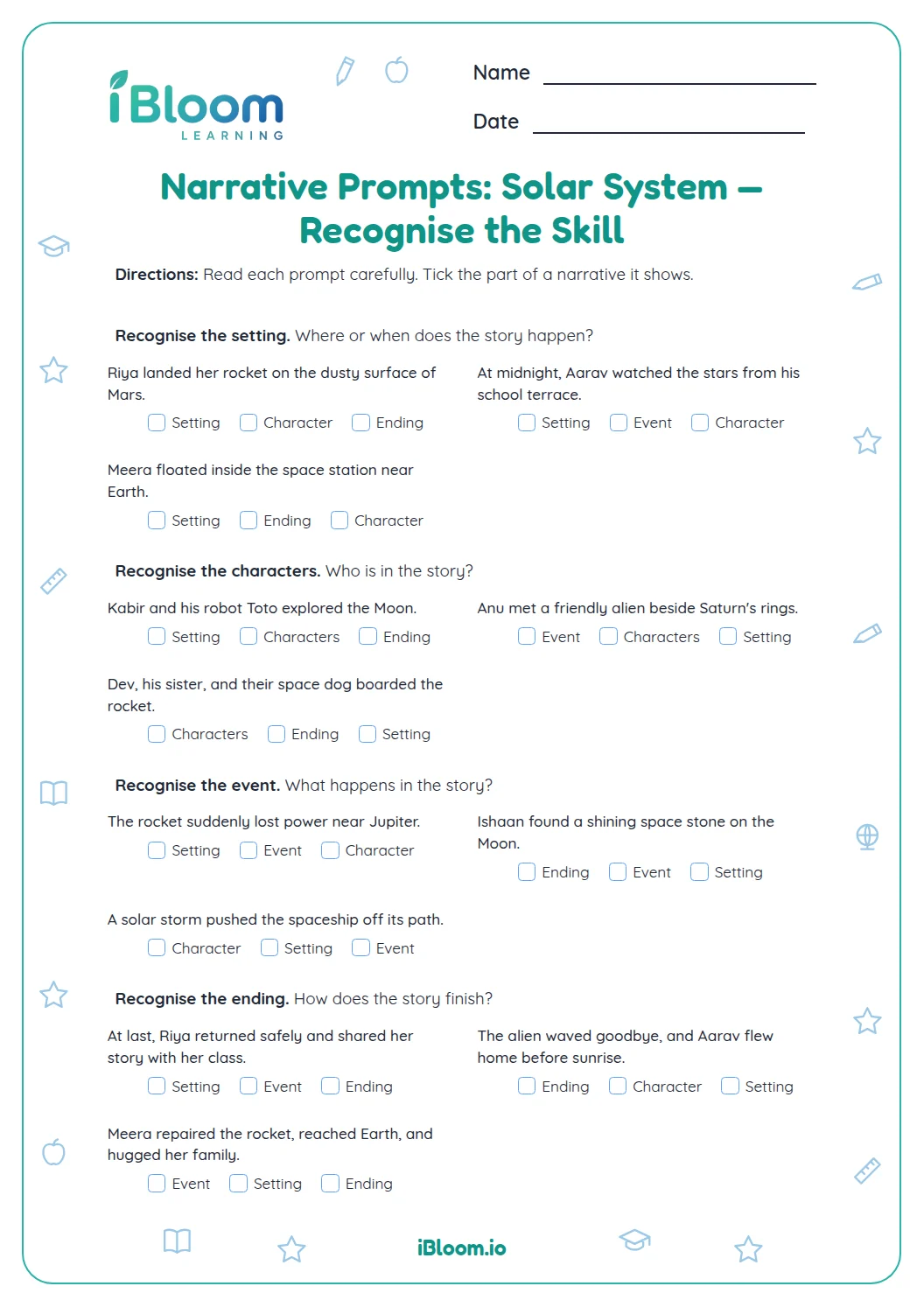 Narrative Prompts: Solar System — Recognise the SkillRecognise the Skill for narrative prompts: solar system in Class 4. Read each solar-system narrative prompt and recognise its setting, characters, events, or ending.Class 4Free PDF preview
 Narrative Prompts: Superjumps — Recognise the SkillRecognise the Skill for narrative prompts: superjumps in Class 4. Read each superjump prompt and recognise the narrative skill it practises.Class 4Free PDF preview
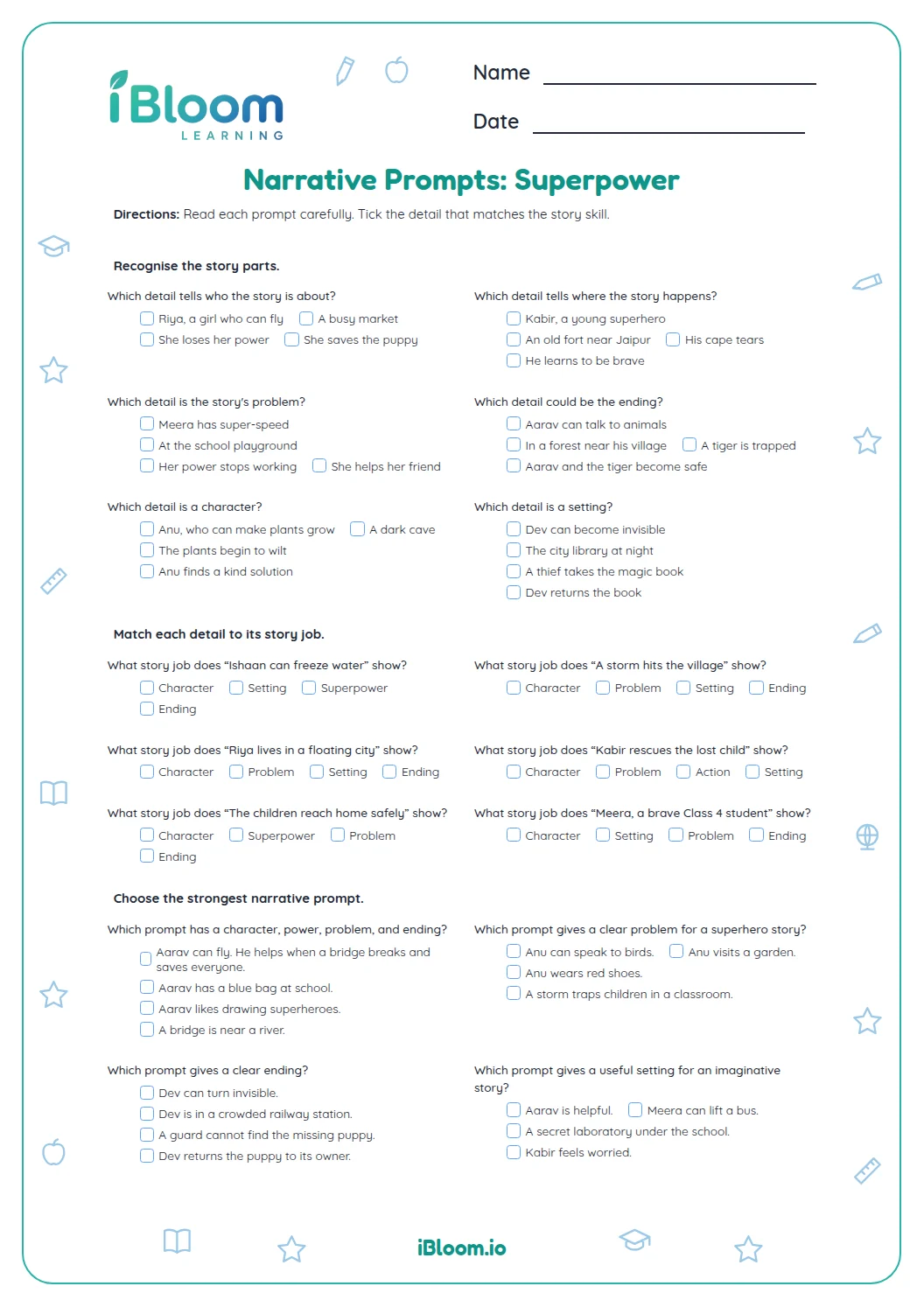 Narrative Prompts: Superpower — Recognise the SkillRecognise the Skill for narrative prompts: superpower in Class 4. Choose the narrative prompt detail that best identifies the character, setting, problem, action, or ending.Class 4Free PDF preview
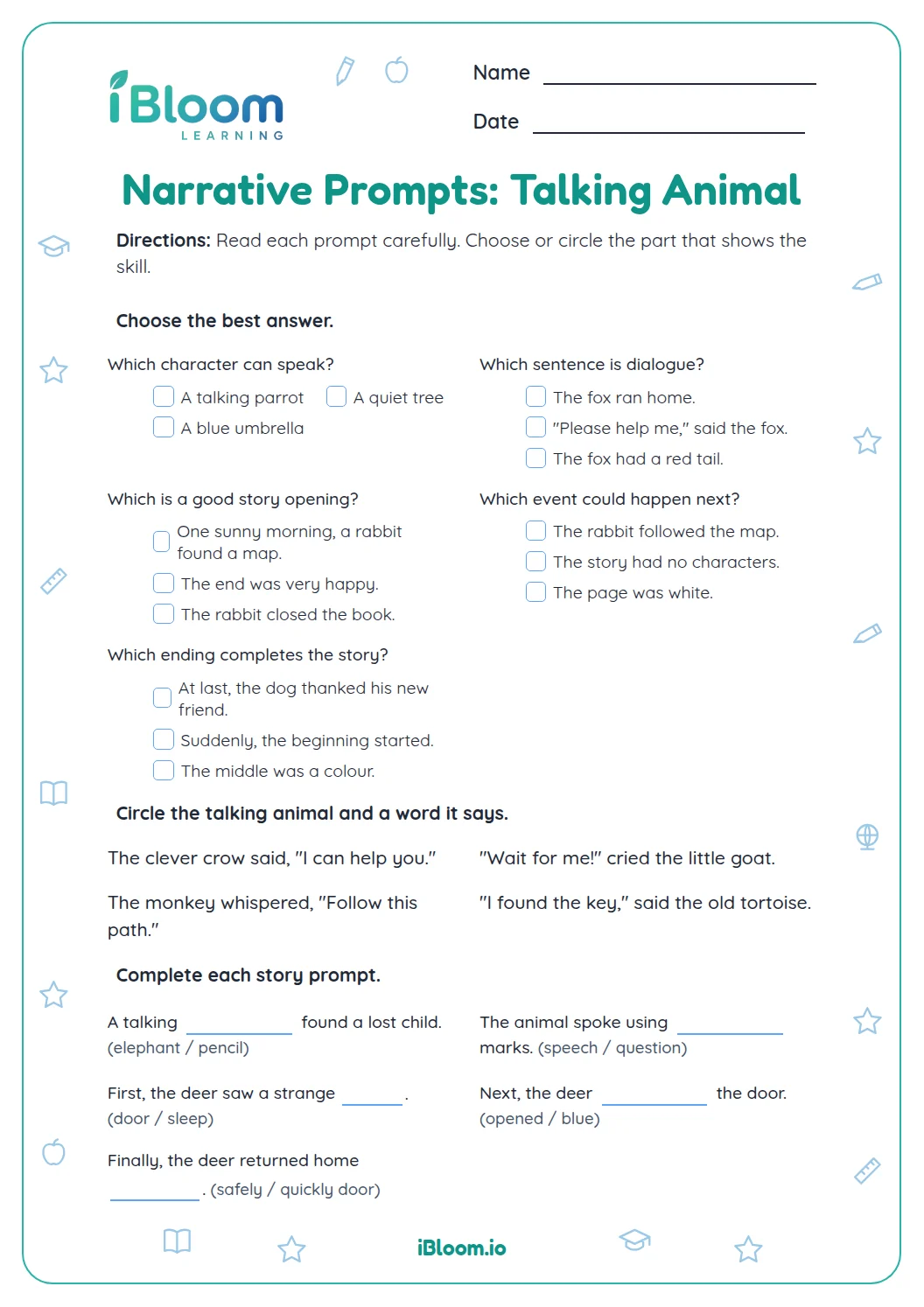 Narrative Prompts: Talking Animal — Recognise the SkillRecognise the Skill for narrative prompts: talking animal in Class 4. Read short story prompts, then identify the talking animal, dialogue, events, and ending.Class 4Free PDF preview
Practice that builds confidence
What children build
These Class 4 narrative prompts help children turn an idea into a complete story with characters, setting, problem, events and an ending. The activities encourage imagination while keeping attention on clear sentences, sequence and descriptive detail.
The printable worksheets include varied prompts such as Robot, Superpower, Trip, Game Design, New Holiday, Solar System, Good Deeds, Detective, Teleporting, Aliens, Magic, Time Travel, Animal Interview, Talking Animal and more, so children can practise many story situations.
Narrative writing in Class 4 moves beyond “what happened next” into purposeful storytelling. Children practise choosing a main character, describing where the story takes place, creating a problem, and arranging events in a sensible order. Prompts such as Camping, Treehouse, Job, Frog, History and No Time give them a starting point without writing the story for them.

From idea to story plan
A child may begin with a prompt like Detective or Celebrity and first answer: Who is in the story? Where are they? What goes wrong? What changes at the end? This planning step helps avoid random events. For imaginative topics such as Aliens, Magic, Teleporting, Superjumps or Eating Fiction, children can still use a realistic story shape: beginning, build-up, problem, solution and ending.
Parent practice routine
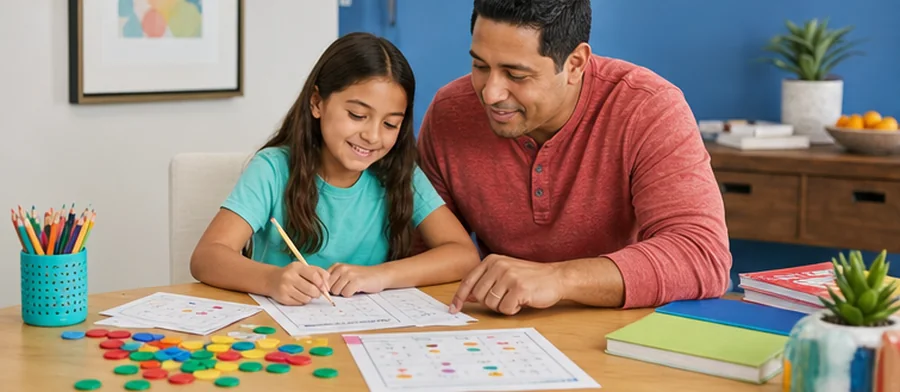
At home, ask your child to pick one prompt and speak the story aloud before writing. Help them note three key events, then encourage one strong opening sentence and one satisfying final sentence. After writing, read the story together and check for capital letters, punctuation, paragraph breaks, and words that show time, such as first, later, meanwhile and finally.
Classroom uses for teachers
Teachers can use these worksheets for writing centres, morning work, creative writing notebooks, independent practice or small-group support. Prompts like Game Design, New Sport and New Holiday work well for peer sharing because each child’s idea will be different. Good Deeds and Animal Interview can also lead to discussion about point of view, motive and dialogue.
Common errors to watch for
Many Class 4 writers rush into action without introducing the setting or character. Others list events without a clear problem, change tense midway, or use repeated words such as then and nice. Some children add fantasy details but forget to explain why they matter. Encourage them to include a reason, a feeling and a consequence in each important scene.
Free printable PDF download
Use this class 4 narrative prompts worksheet page to preview the activity, print it, or download it as a PDF for quick practice. It works well for homework, homeschool lessons, tutoring, morning work, revision, and classroom centers.
Answers and answer key support
After the child completes the worksheet independently, parents and teachers can use the answer support or answer key information to check the work, review mistakes, and choose the next practice step.
Why iBloom worksheets help
The collection offers a wide spread of familiar, adventurous and funny prompts, so children are not limited to one kind of story. A simple child-friendly strategy is: “Pick, plan, picture, polish.” Pick the prompt, plan the events, picture the scene with describing words, and polish the ending so the reader feels the story is complete.
Helpful answers
Frequently asked questions
What narrative skills do these Class 4 prompts practise?
They help children practise creating characters, choosing a setting, building a problem, sequencing events and writing an ending that completes the story.
Are the prompts only fantasy topics?
No. The collection includes fantasy ideas like Magic, Aliens and Time Travel, but also everyday or realistic ideas such as Trip, Camping, Good Deeds, Job and New Holiday.
How can I help my child start if they feel stuck?
Ask three quick questions: Who is the main character? What problem do they face? How will the story end? Speaking the story aloud before writing often makes the first sentence easier.
Can these worksheets be used for paragraph practice?
Yes. Children can write one paragraph for a short response or expand the same prompt into multiple paragraphs with a beginning, middle and ending.
Which prompts are good for practising dialogue?
Animal Interview, Talking Animal, Detective, Celebrity and Robot are especially useful because they naturally invite conversations between characters.
What should teachers look for when checking the stories?
Look for a clear story sequence, relevant details, correct punctuation, consistent tense, and an ending that connects back to the main problem or adventure.
Is this class 4 narrative prompts worksheet free?
Yes. You can preview it for free and use the printable worksheet for home or classroom practice.
Can I download this class 4 narrative prompts worksheet as a PDF?
Yes. Use the worksheet download option to save a printable PDF, or print the worksheet directly from the page.