Free printable practice
Relative Pronouns Practice Activities
Class 4 children practise using who, which, that, whose and whom to join ideas and add clear details about people, animals and things.
Free printable worksheet PDFs
Preview every available page, then download the free worksheet PDF for home, homeschool, tutoring, or classroom practice.
Preview the exact activity before downloading it.
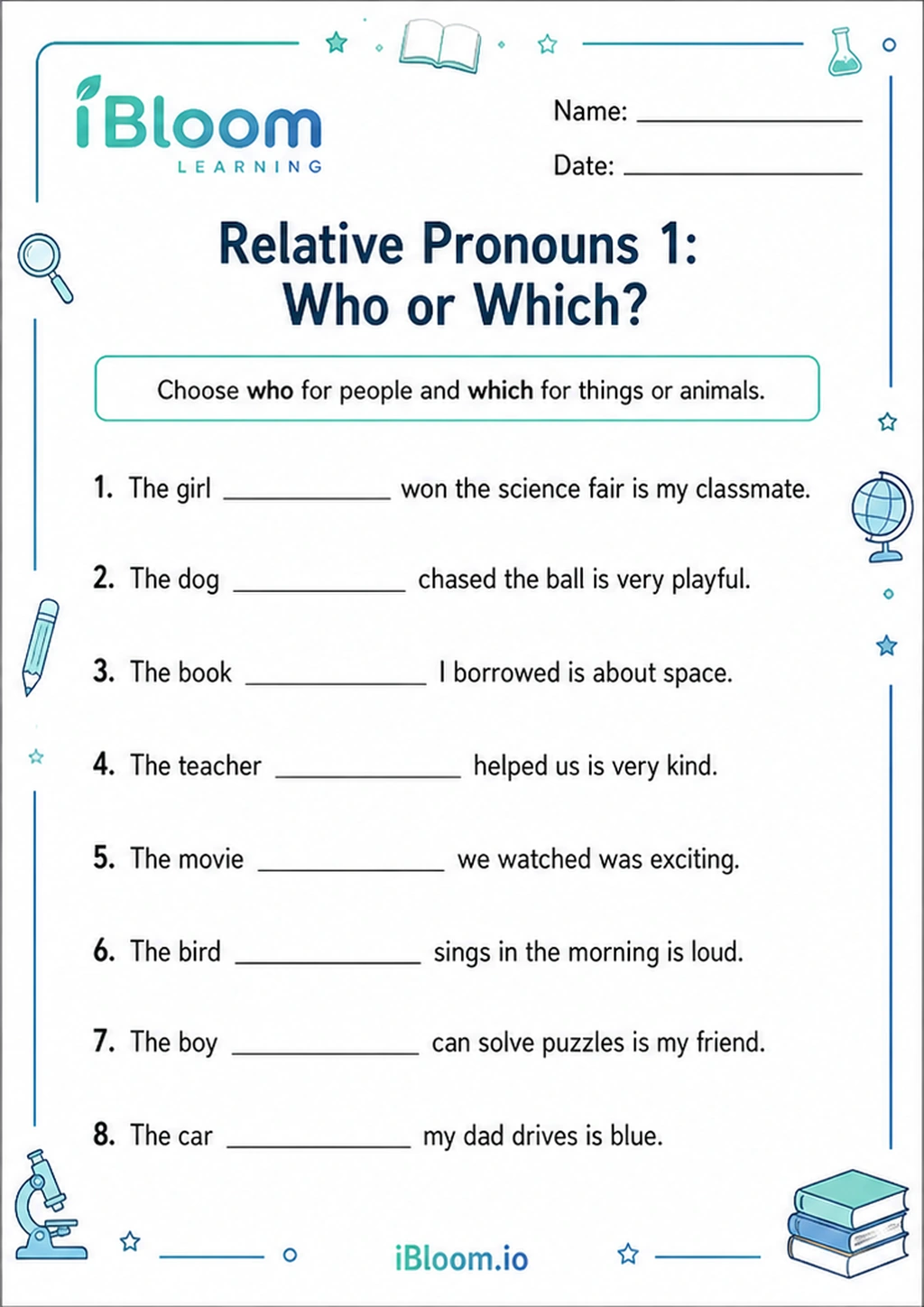 Relative Pronouns 1: Who or Which?Class 4 printable practice for Relative Pronouns.Class 4Free PDF preview
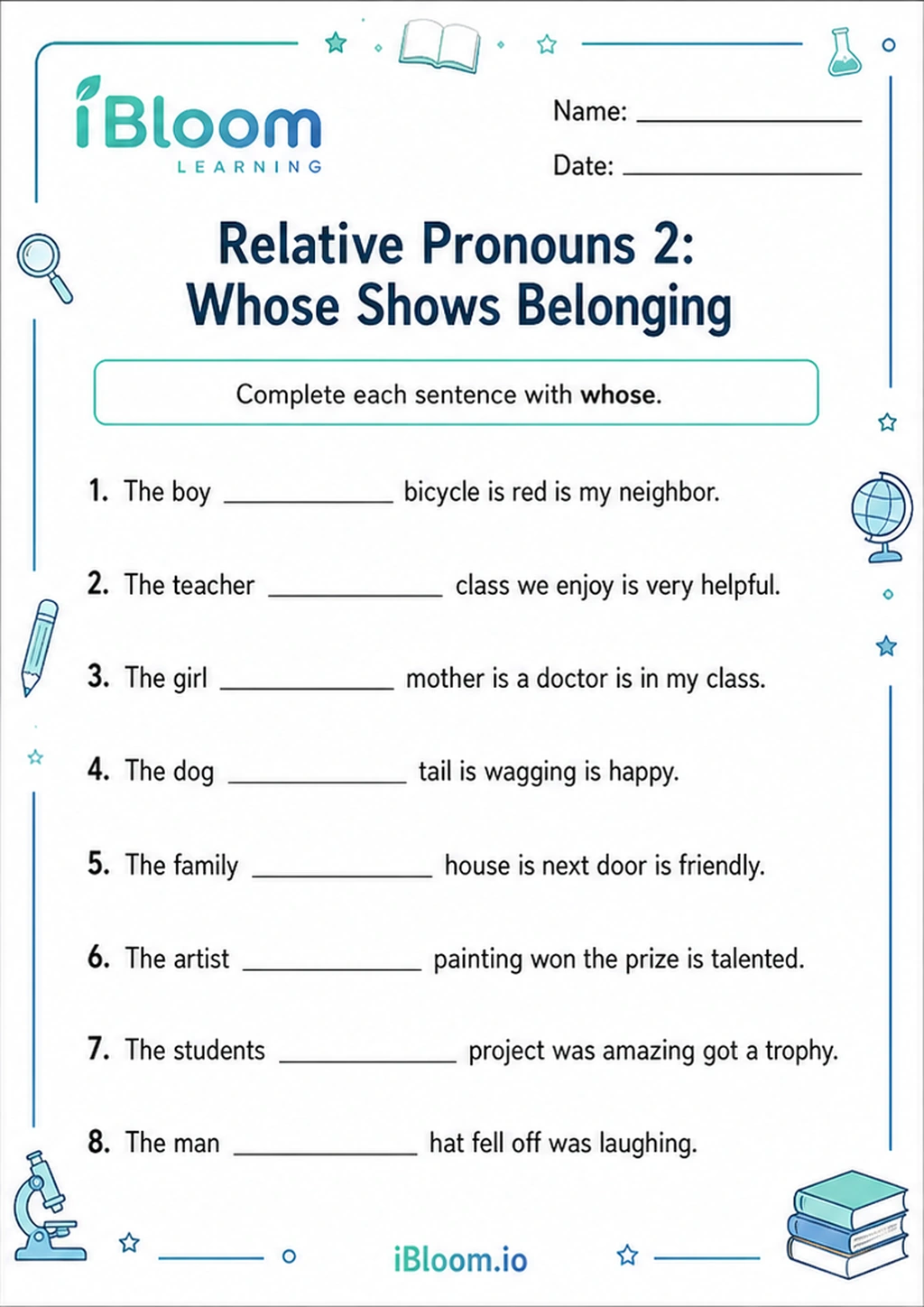 Relative Pronouns 2: Whose Shows BelongingClass 4 printable practice for Relative Pronouns.Class 4Free PDF preview
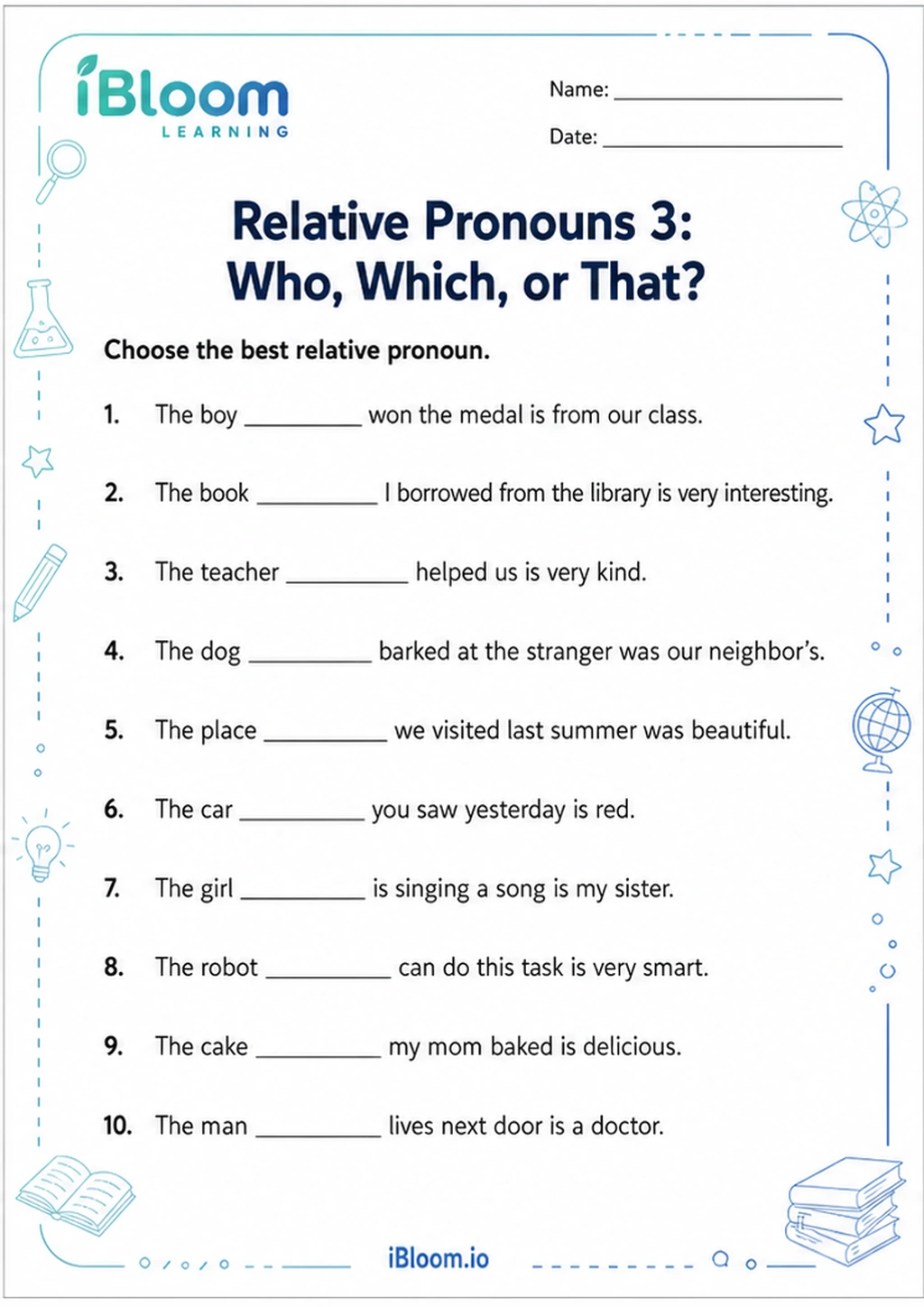 Relative Pronouns 3: Who, Which, or That?Class 4 printable practice for Relative Pronouns.Class 4Free PDF preview
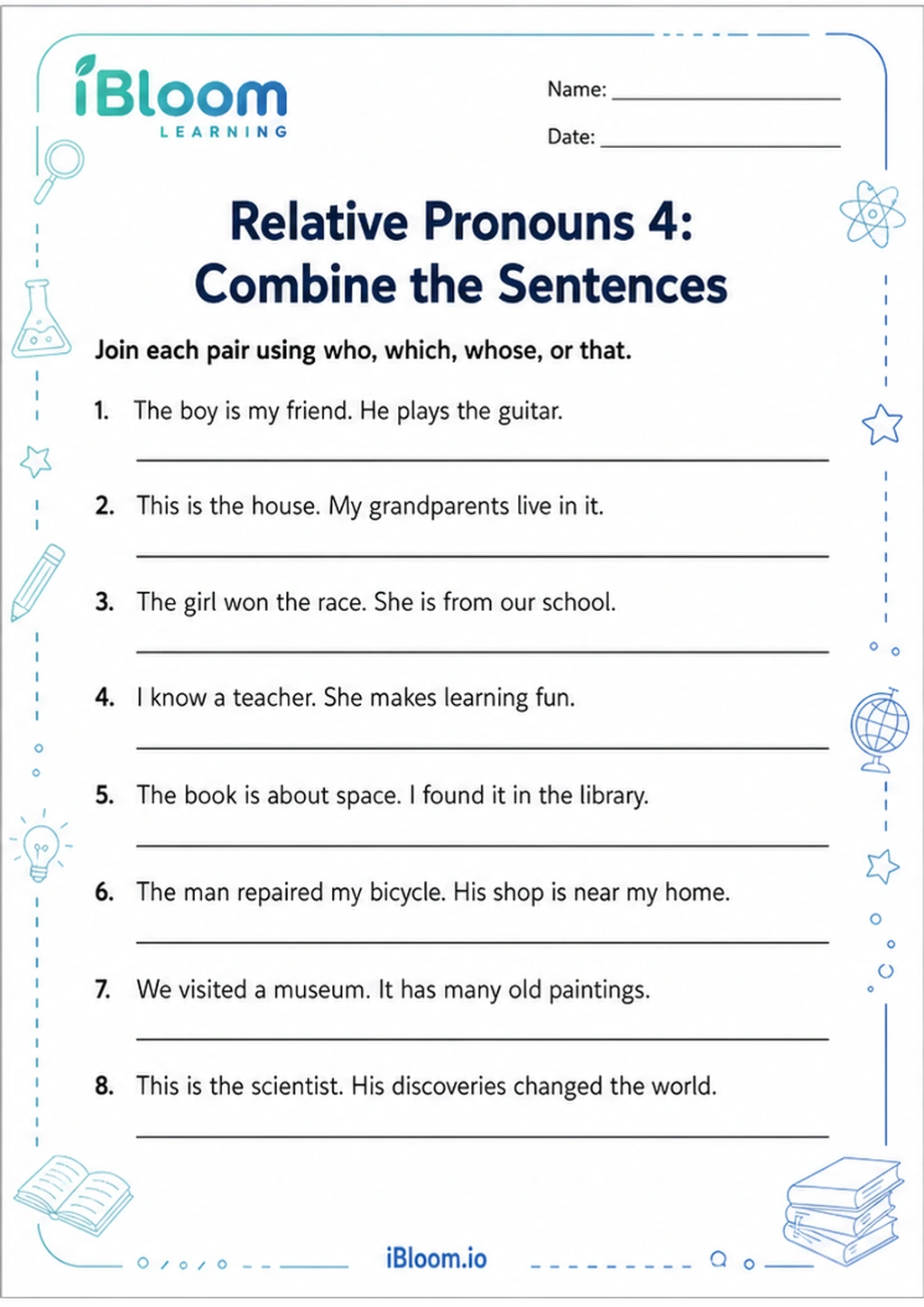 Relative Pronouns 4: Combine the SentencesClass 4 printable practice for Relative Pronouns.Class 4Free PDF preview
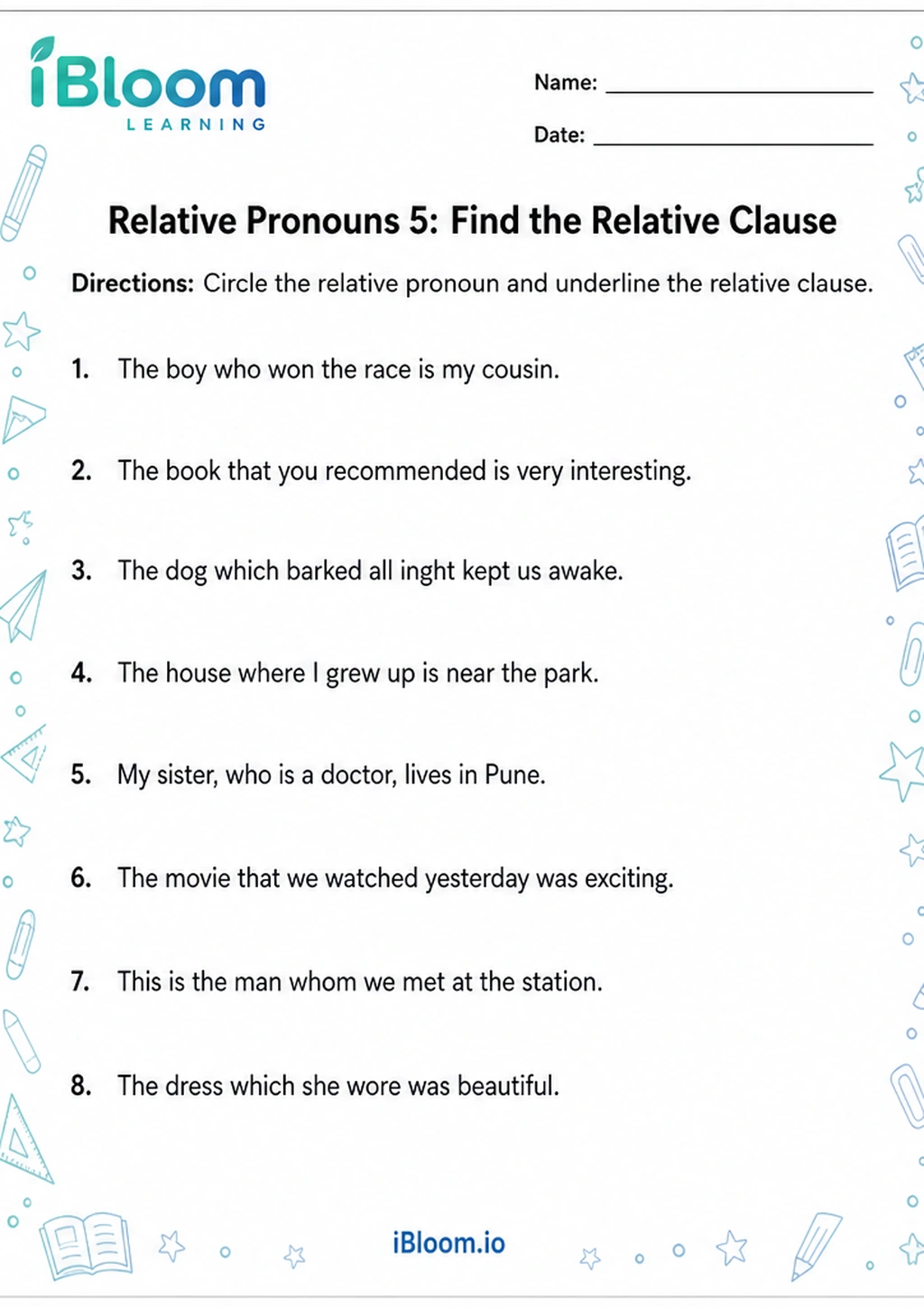 Relative Pronouns 5: Find the Relative ClauseClass 4 printable practice for Relative Pronouns.Class 4Free PDF preview
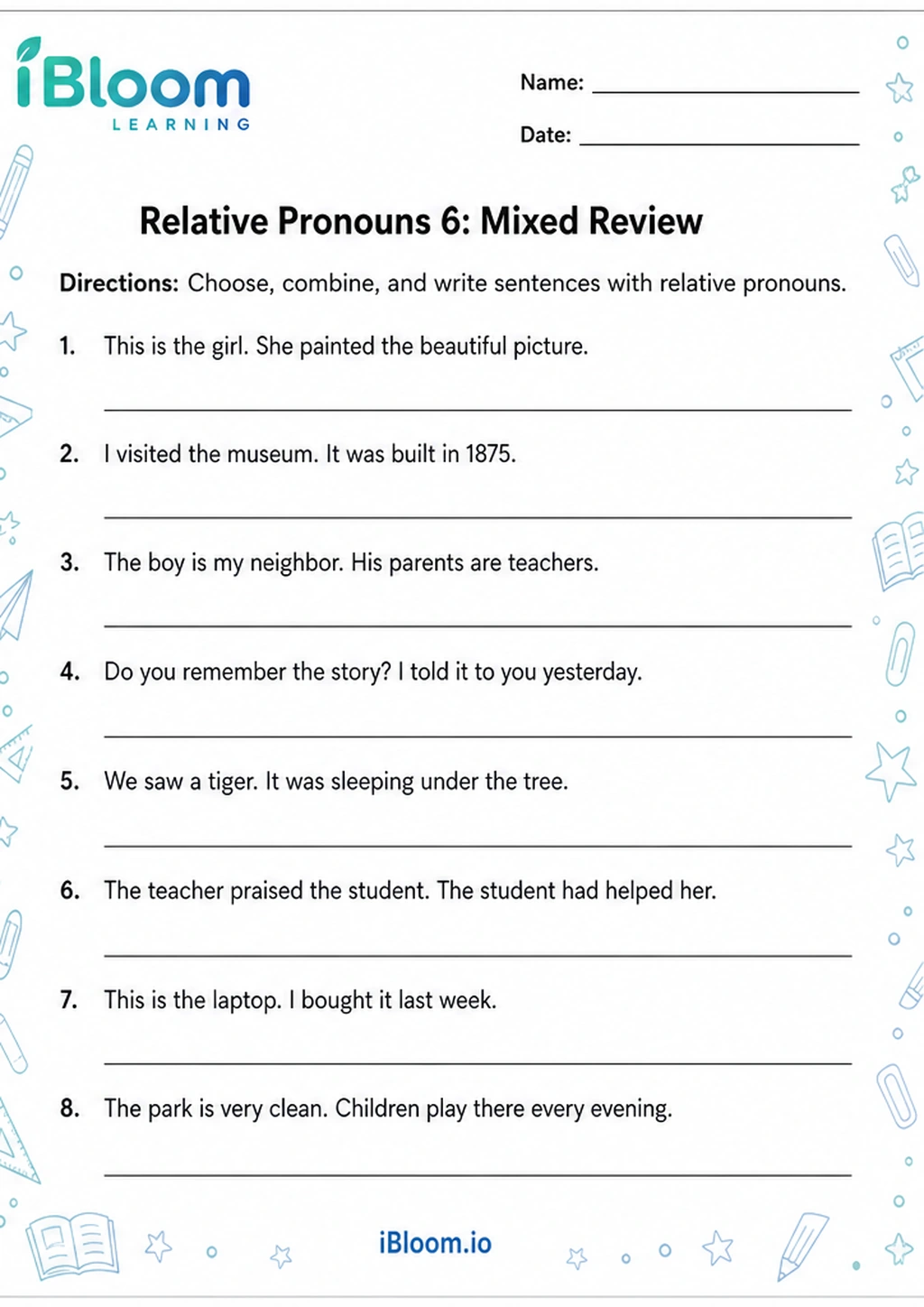 Relative Pronouns 6: Mixed ReviewClass 4 printable practice for Relative Pronouns.Class 4Free PDF preview
Practice that builds confidence
Understanding relative pronouns
These Class 4 relative pronouns worksheets help children understand how words such as who, which, that, whose and whom connect a noun to extra information. Learners practise identifying the noun being described and choosing the pronoun that fits the sentence.
The printable activities include fill-in-the-blank sentences, matching tasks, sentence joining, correction practice and short writing prompts. Each worksheet supports clearer grammar, better sentence variety and more confident use of relative clauses in everyday writing.
Relative pronouns introduce a group of words that tells us more about a person, animal, place or thing. In Class 4 grammar, children usually begin with who for people, which for animals or things, that for people or things in many sentences, and whose for possession. They also meet whom in simple object-based examples.

From choosing words to building sentences
The practice moves from recognition to use. A child may first underline the noun in “The girl who won the race is my friend,” then choose a pronoun for “This is the book ___ I borrowed.” Later tasks ask children to join two short sentences, such as “I saw a dog. It had a red collar,” into “I saw a dog that had a red collar.”
A simple parent routine
At home, read one sentence aloud and ask, “Who or what are we talking about?” Let your child point to the noun first. Next, ask whether the extra information is about a person, thing or ownership. After completing a few items, invite your child to make one sentence about a family member, toy, book or place using a relative pronoun.

Classroom use for grammar and writing
Teachers can use these worksheets during pronoun practice, writing lessons or language centres. They work well for a quick mini-lesson on relative clauses, partner checking, notebook correction, or as follow-up after children write descriptive paragraphs. The tasks also help pupils vary their sentences instead of writing many short, repeated statements.

Common errors to watch for
Children may use which for a person, forget the noun being described, or create sentence fragments after the relative pronoun. Another common mistake is adding unnecessary repeated words, as in “The boy who he is singing is my brother.” Encourage pupils to read the full sentence aloud and remove the extra pronoun.
Free printable PDF download
Use this class 4 relative pronouns worksheet page to preview the activity, print it, or download it as a PDF for quick practice. It works well for homework, homeschool lessons, tutoring, morning work, revision, and classroom centers.
Answers and answer key support
After the child completes the worksheet independently, parents and teachers can use the answer support or answer key information to check the work, review mistakes, and choose the next practice step.
Why iBloom worksheets help
The activities are focused on one grammar skill, so children can notice patterns without distraction. Visual spacing, clear sentence contexts and gradual difficulty help them move from selecting the correct relative pronoun to writing their own connected sentences. A child-friendly strategy is: find the noun, ask what extra information is added, choose the pronoun, then reread the whole sentence.
Helpful answers
Frequently asked questions
Which relative pronouns are practised in these Class 4 worksheets?
The worksheets mainly practise who, which, that and whose, with simple exposure to whom where appropriate. Children learn which pronoun fits people, animals, things and possession.
How do these activities help with writing?
They show children how to combine short ideas into one clearer sentence. This helps them add details about a noun and avoid writing many repeated simple sentences.
What is the most common mistake children make with relative pronouns?
A common error is repeating the subject after the relative pronoun, such as “The girl who she sings.” Children should reread the sentence and remove the extra pronoun.
Can these worksheets be used before teaching relative clauses in detail?
Yes. The activities begin with familiar sentence contexts and simple choices, so children can first understand how the pronoun connects a noun to extra information.
How can parents support this topic at home?
Ask your child to identify the noun first, decide whether it is a person, thing or ownership idea, choose the relative pronoun, and then read the complete sentence aloud.
Is this class 4 relative pronouns worksheet free?
Yes. You can preview it for free and use the printable worksheet for home or classroom practice.
Can I download this class 4 relative pronouns worksheet as a PDF?
Yes. Use the worksheet download option to save a printable PDF, or print the worksheet directly from the page.
Does this class 4 relative pronouns worksheet include answers or an answer key?
When the activity has fixed answers, iBloom includes answer support so parents and teachers can check the completed worksheet.