Free printable practice
Setting Practice Activities
Class 5 learners practise building vivid story settings that show place, time, mood, and atmosphere in narrative writing.
Free printable worksheet PDFs
Preview every available page, then download the free worksheet PDF for home, homeschool, tutoring, or classroom practice.
Preview the exact activity before downloading it.
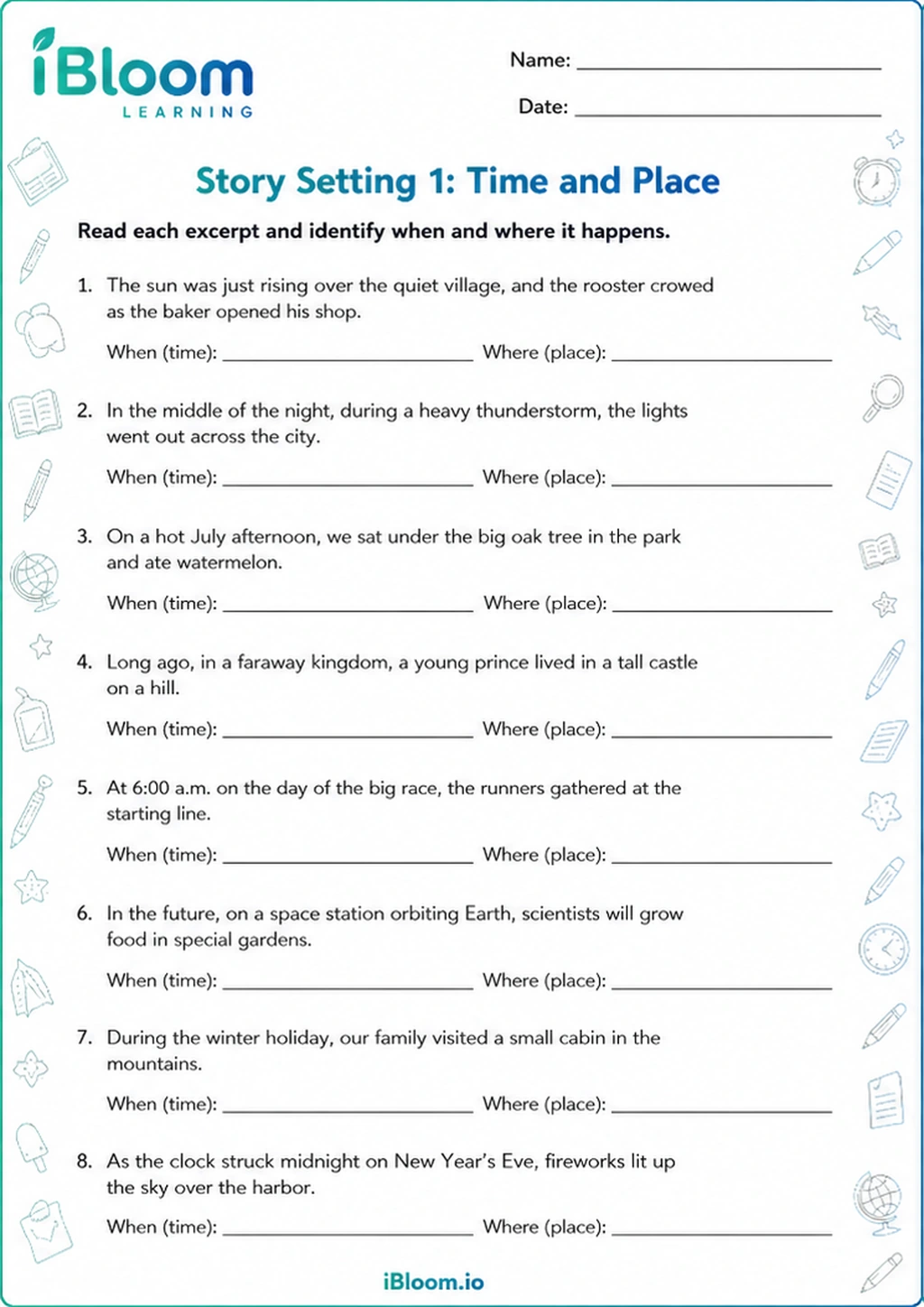 Story Setting 1: Time and PlaceClass 5 printable practice for Narrative Settings.Class 5Free PDF preview
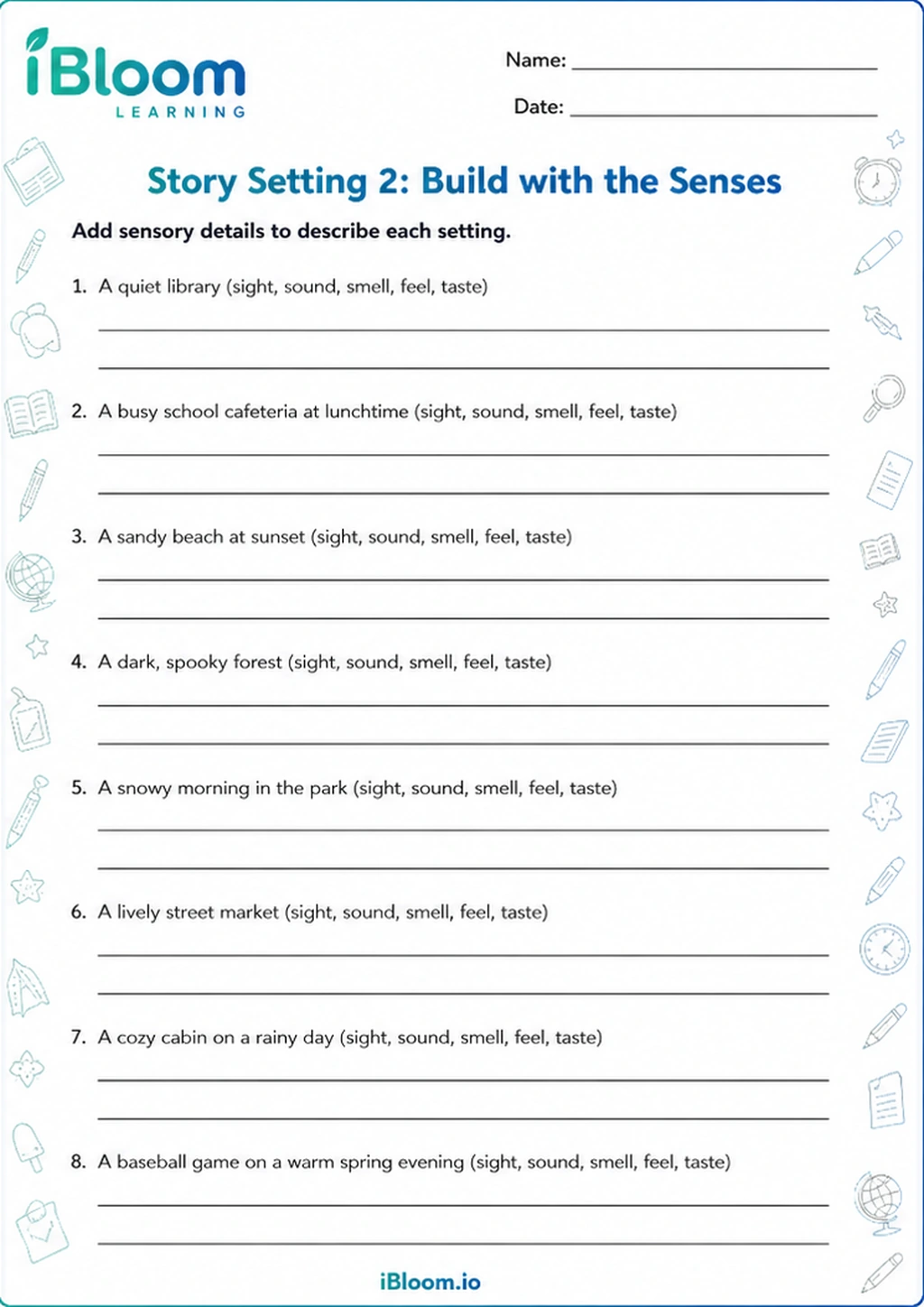 Story Setting 2: Build with the SensesClass 5 printable practice for Narrative Settings.Class 5Free PDF preview
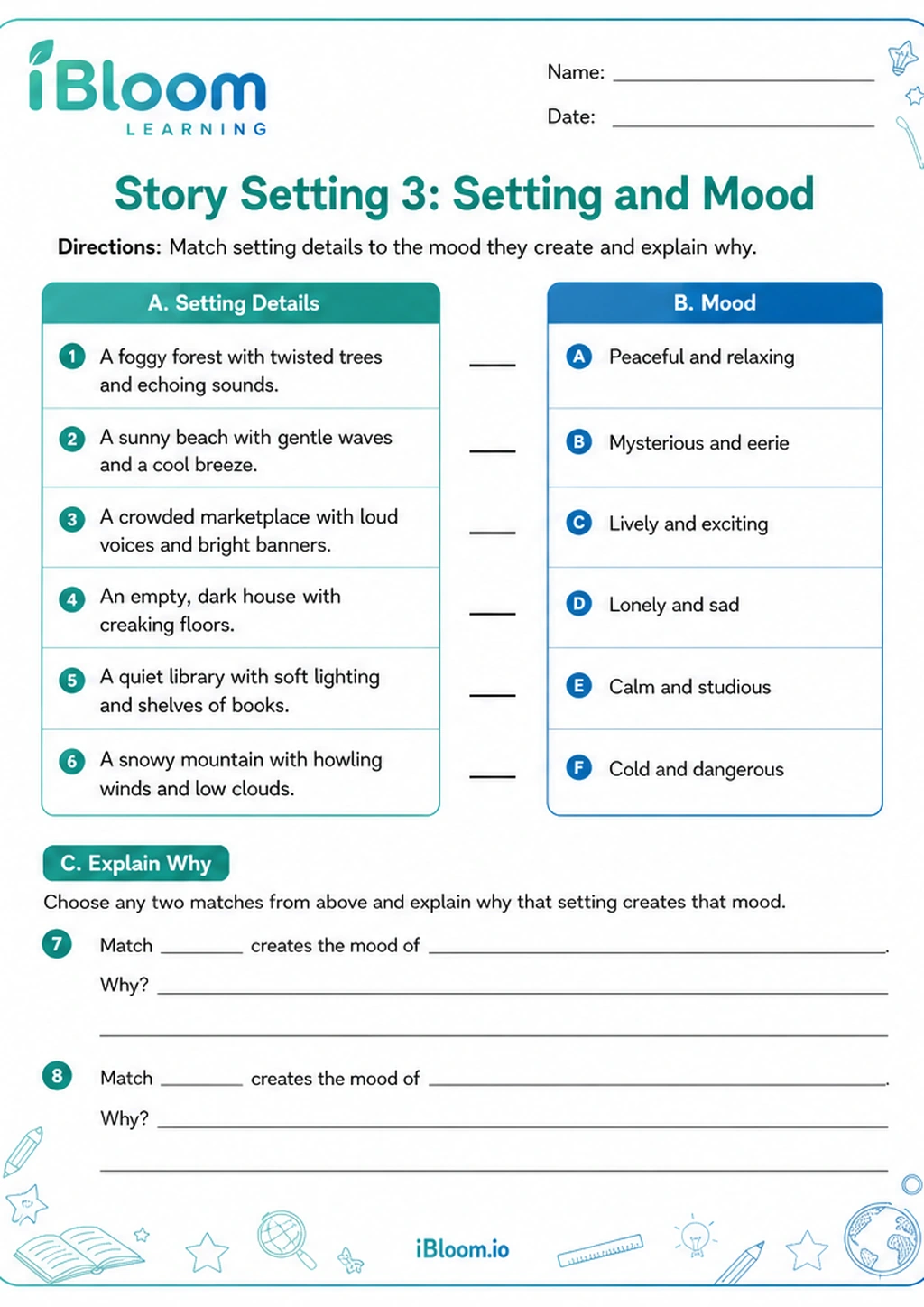 Story Setting 3: Setting and MoodClass 5 printable practice for Narrative Settings.Class 5Free PDF preview
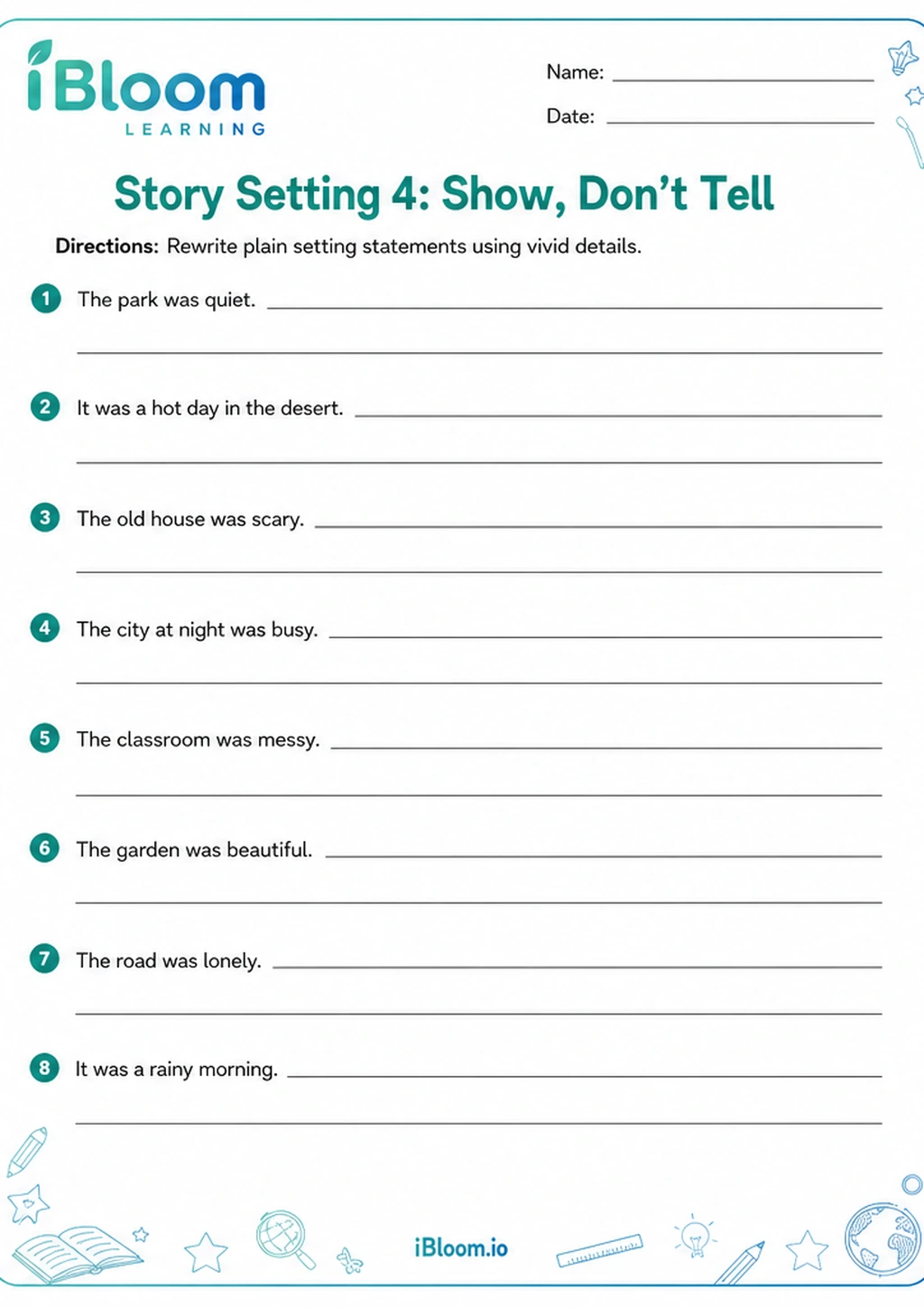 Story Setting 4: Show, Don’t TellClass 5 printable practice for Narrative Settings.Class 5Free PDF preview
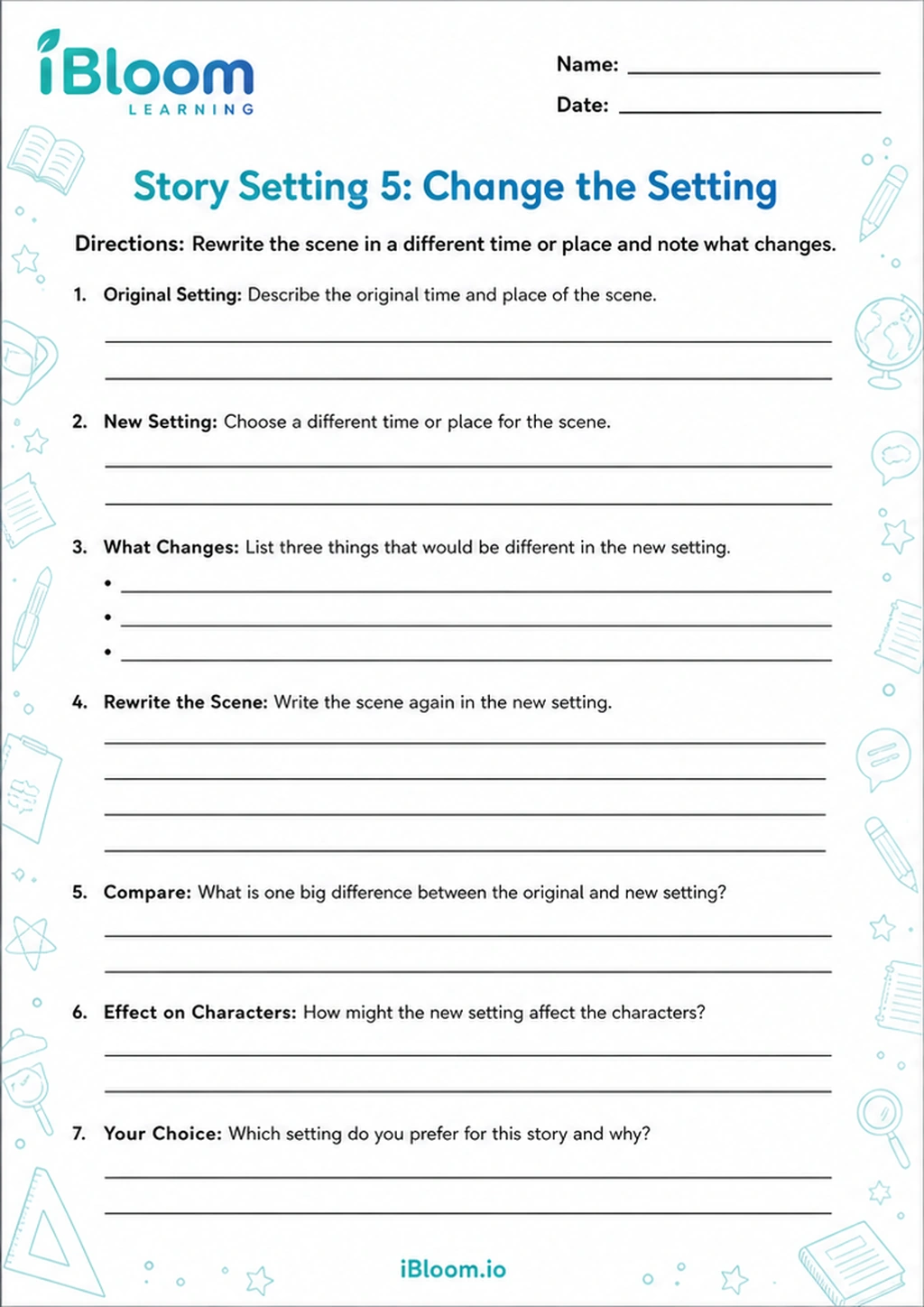 Story Setting 5: Change the SettingClass 5 printable practice for Narrative Settings.Class 5Free PDF preview
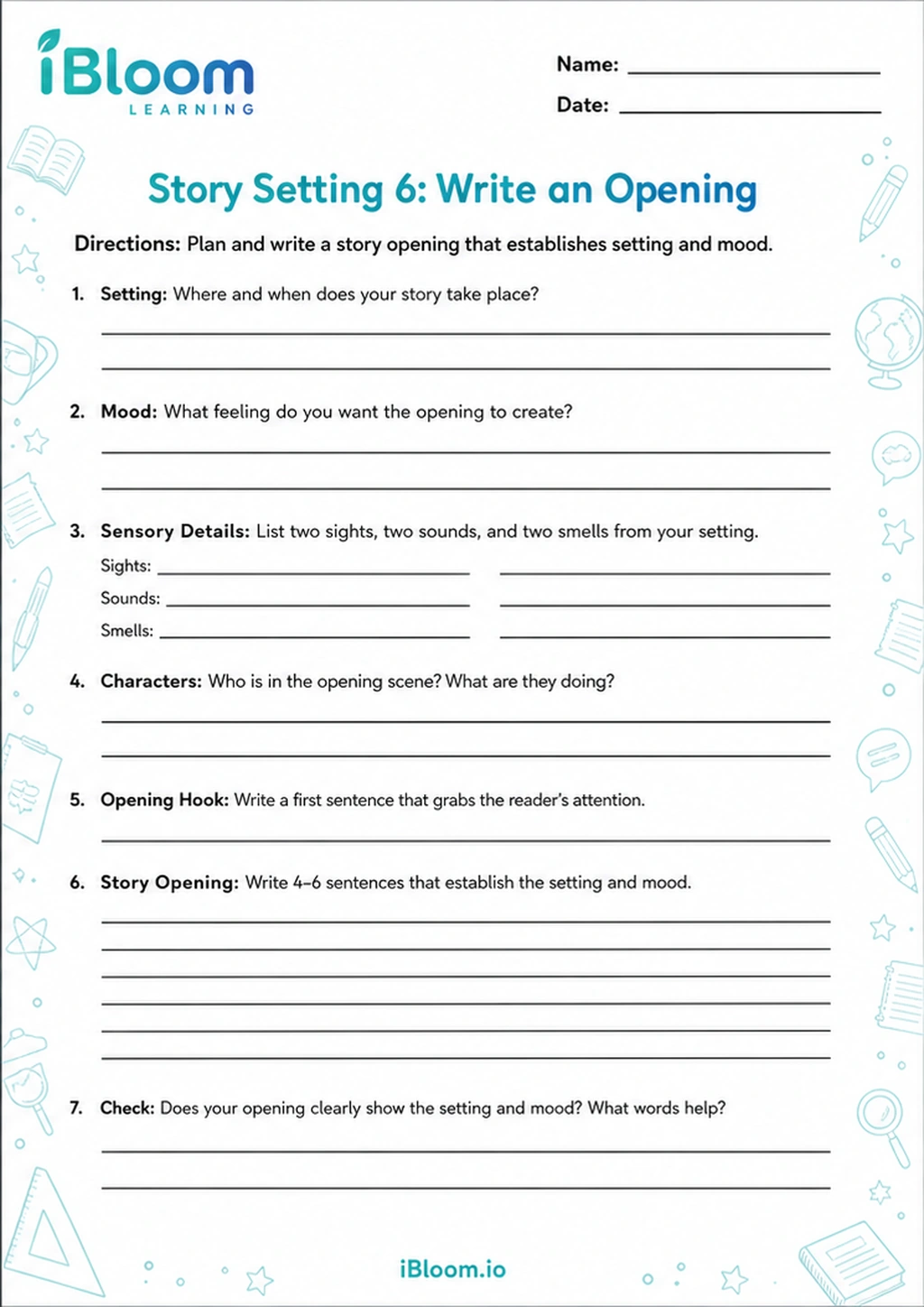 Story Setting 6: Write an OpeningClass 5 printable practice for Narrative Settings.Class 5Free PDF preview
Practice that builds confidence
What setting means in a story
These Class 5 narrative writing worksheets help children practise creating believable settings for stories. Learners move beyond naming a place and begin to show where and when a story happens through sensory detail, precise nouns, strong verbs, and mood.
The printable activities include setting description prompts, picture-based writing, planning frames, and revision tasks. Children learn to connect setting with character action, plot events, and the feeling of a scene.
A setting is the place, time, and situation in which a story happens. In Class 5, children should be able to describe more than a location such as "a forest" or "a school". They practise adding clues about weather, light, sound, season, time of day, and the objects around the character. A strong setting helps the reader picture the scene and understand the mood.

Building detail with purpose
These activities guide children to choose details that matter. A crowded railway platform creates a different feeling from an empty one at night. A classroom before an exam feels different from the same classroom during a celebration. Learners practise using sensory words, prepositions, adjectives, and figurative language carefully, without filling every sentence with decoration.
Progression from planning to writing
Children begin by identifying setting details in short passages, then sort details into place, time, weather, sound, and mood. They use planning boxes to collect ideas before writing a paragraph. Later tasks ask them to revise a plain sentence, such as "The boy went into the house," into a fuller scene that shows what the house looks, sounds, or feels like.
Parent routine at home
Ask your child to choose one familiar place, such as the kitchen, balcony, playground, or bus stop. Spend two minutes naming what can be seen, heard, smelt, and touched there. Then ask: "What kind of story could happen here?" Let the child write five sentences, ending with one action by a character. Read it aloud and underline the details that help you imagine the place.

Classroom uses for teachers
Teachers can use these printables during narrative writing lessons, writing centres, or revision practice. They work well before children draft a story, after a read-aloud to discuss author craft, or as a quick exercise for improving bland openings. Pair work is useful when pupils compare which details create suspense, comfort, excitement, or mystery.

Free printable PDF download
Use this Class 5 setting worksheet page to preview the activity, print it, or download it as a PDF for quick practice. It works well for homework, homeschool lessons, tutoring, morning work, revision, and classroom centers.
Answers and answer key support
After the child completes the worksheet independently, parents and teachers can use the answer support or answer key information to check the work, review mistakes, and choose the next practice step.
Why iBloom worksheets help
The worksheets break setting into manageable choices instead of asking children to "write a good description" all at once. Watch for common errors: listing details without a sentence flow, using too many adjectives, forgetting time, or describing a place that does not fit the story event. A child-friendly strategy is: name the place, add three sense details, show the mood, then make a character do something in that setting.
Helpful answers
Frequently asked questions
What should a Class 5 child include in a story setting?
A Class 5 child should include where the story happens, when it happens, and details that create mood, such as weather, light, sounds, objects, and sensory description.
How are these setting worksheets different from general story writing prompts?
These worksheets focus only on the setting skill. Children practise planning, describing, and revising the place and atmosphere of a scene before applying it to a full narrative.
Can these worksheets help children who write very short descriptions?
Yes. The activities use prompts and planning boxes to help children add specific details step by step instead of simply writing one sentence about a place.
What common mistake should parents watch for?
A common mistake is adding a long list of adjectives without showing how the setting affects the story. Encourage your child to connect the place with a character's action or feeling.
Are these worksheets suitable for classroom writing centres?
Yes. Teachers can use them for independent practice, partner revision, descriptive writing lessons, or preparation before pupils draft a narrative.
Is this Class 5 setting worksheet free?
Yes. You can preview it for free and use the printable worksheet for home or classroom practice.
Can I download this Class 5 setting worksheet as a PDF?
Yes. Use the worksheet download option to save a printable PDF, or print the worksheet directly from the page.
Does this Class 5 setting worksheet include answers or an answer key?
When the activity has fixed answers, iBloom includes answer support so parents and teachers can check the completed worksheet.