
About this worksheet
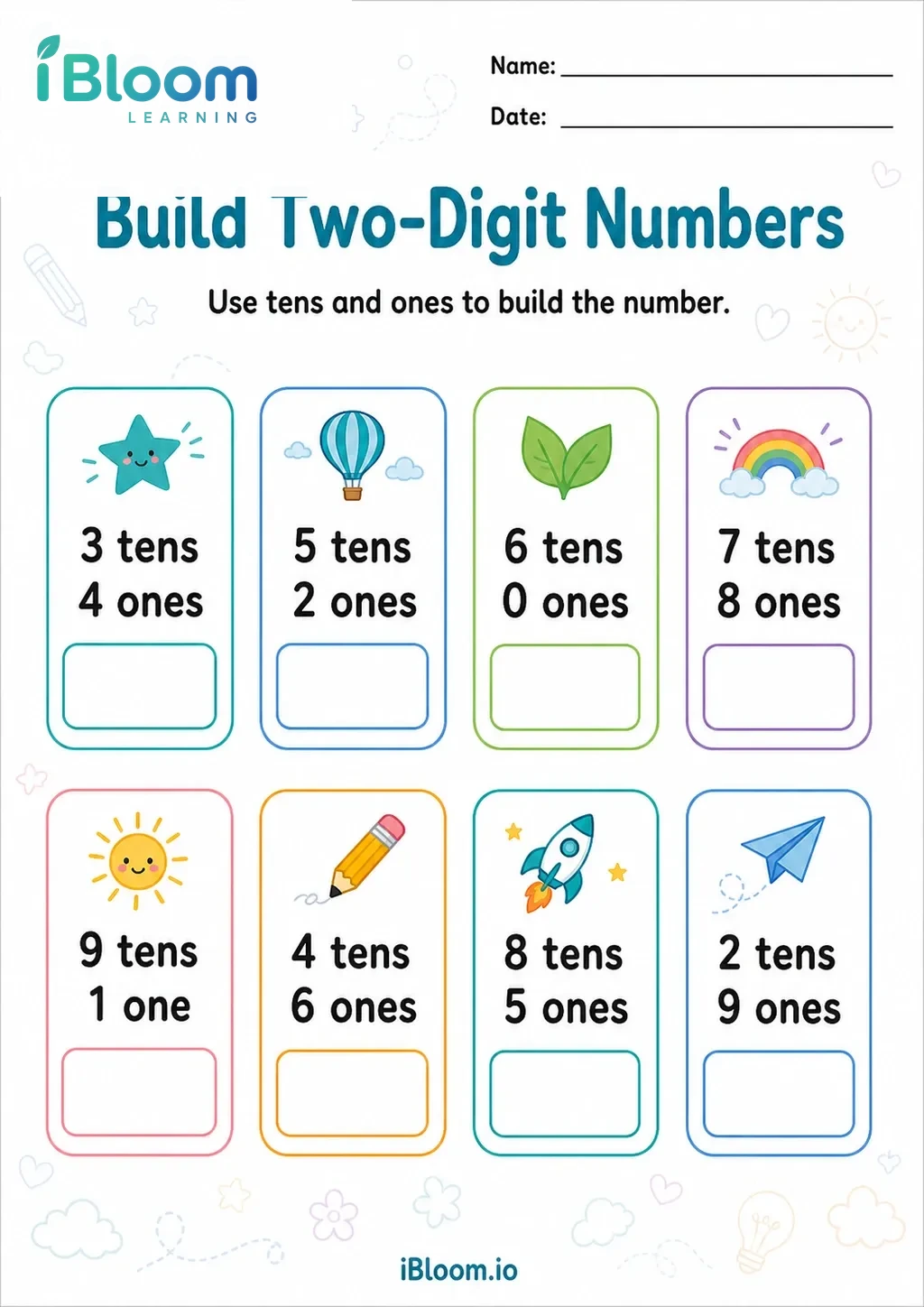
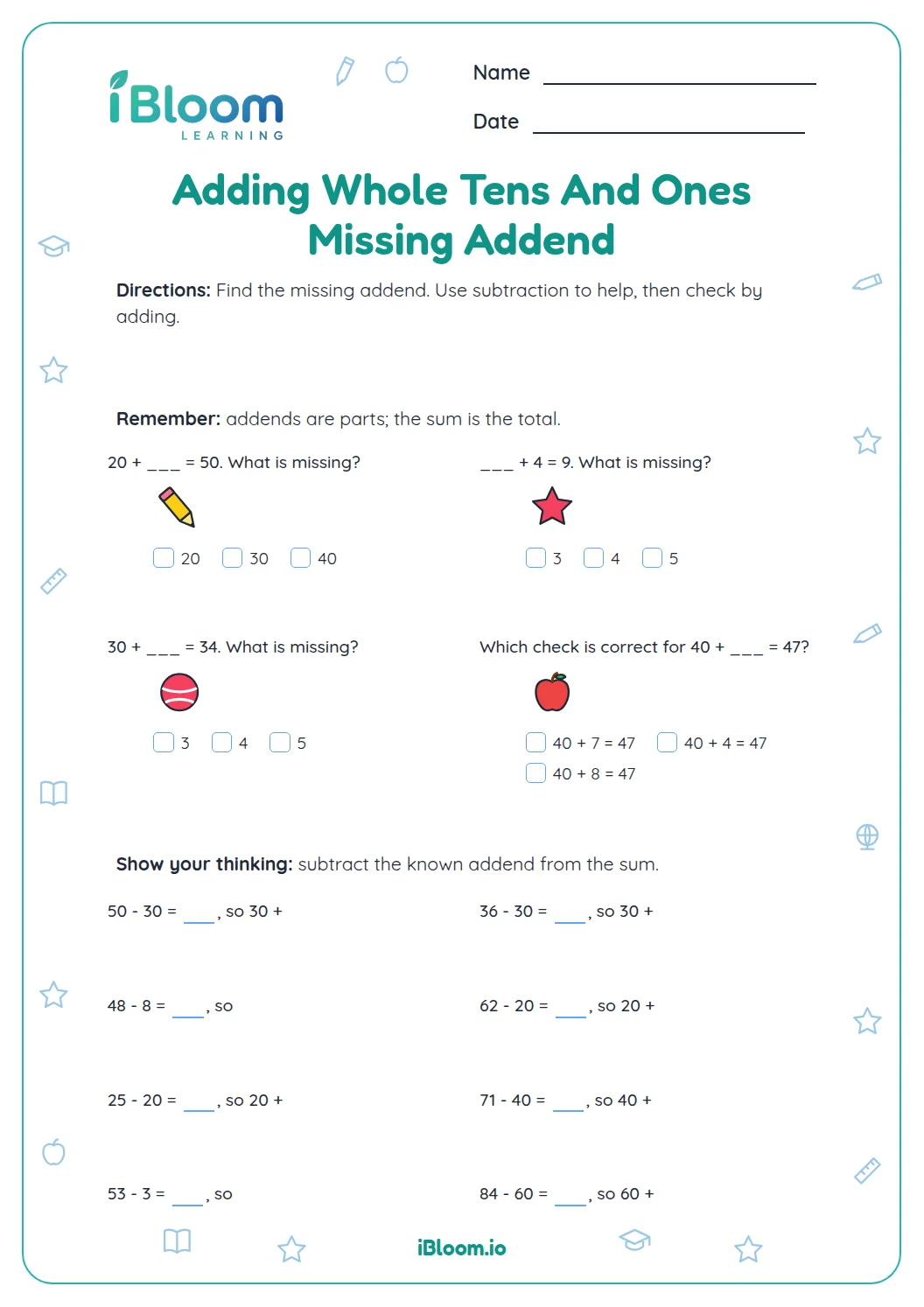
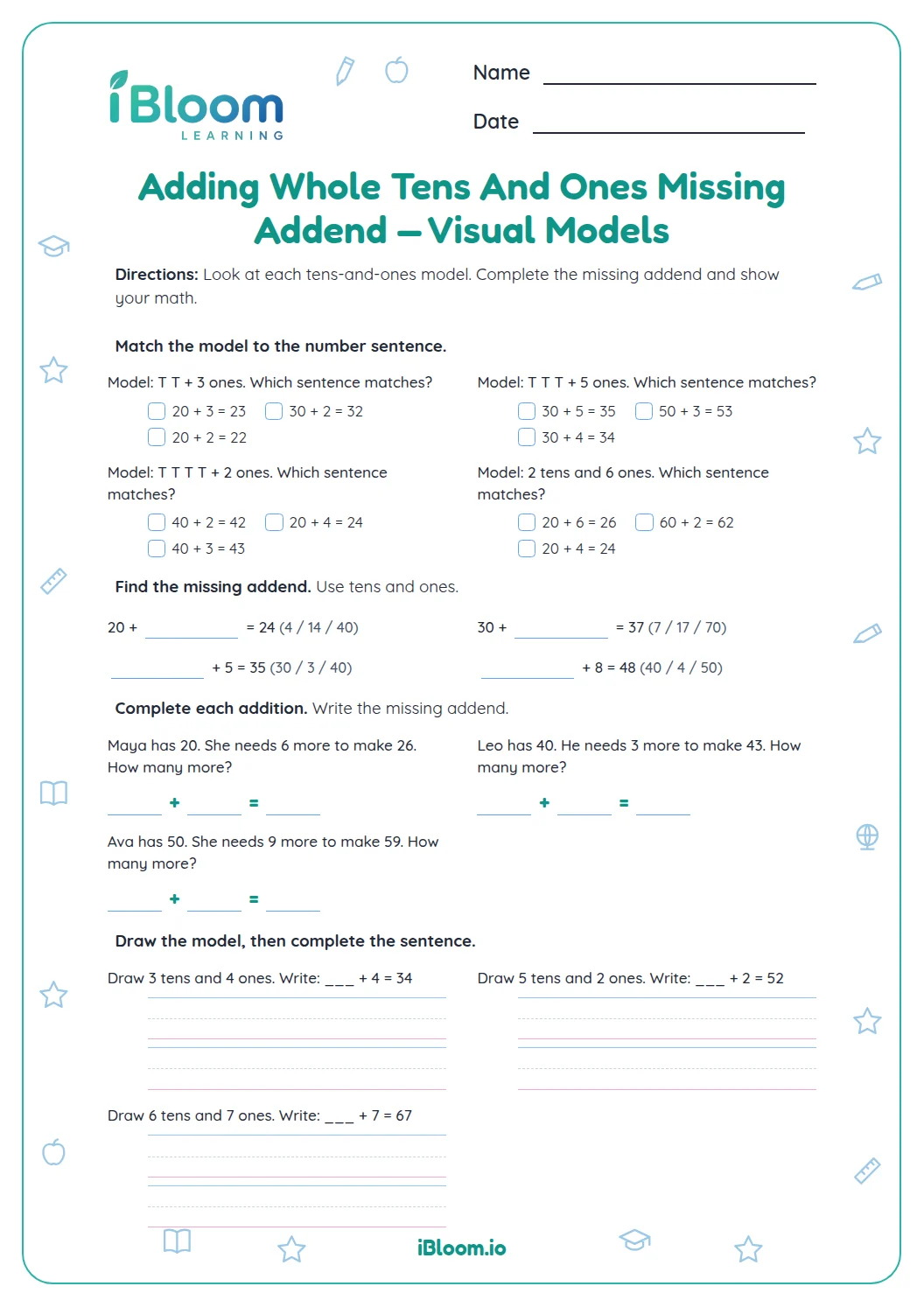
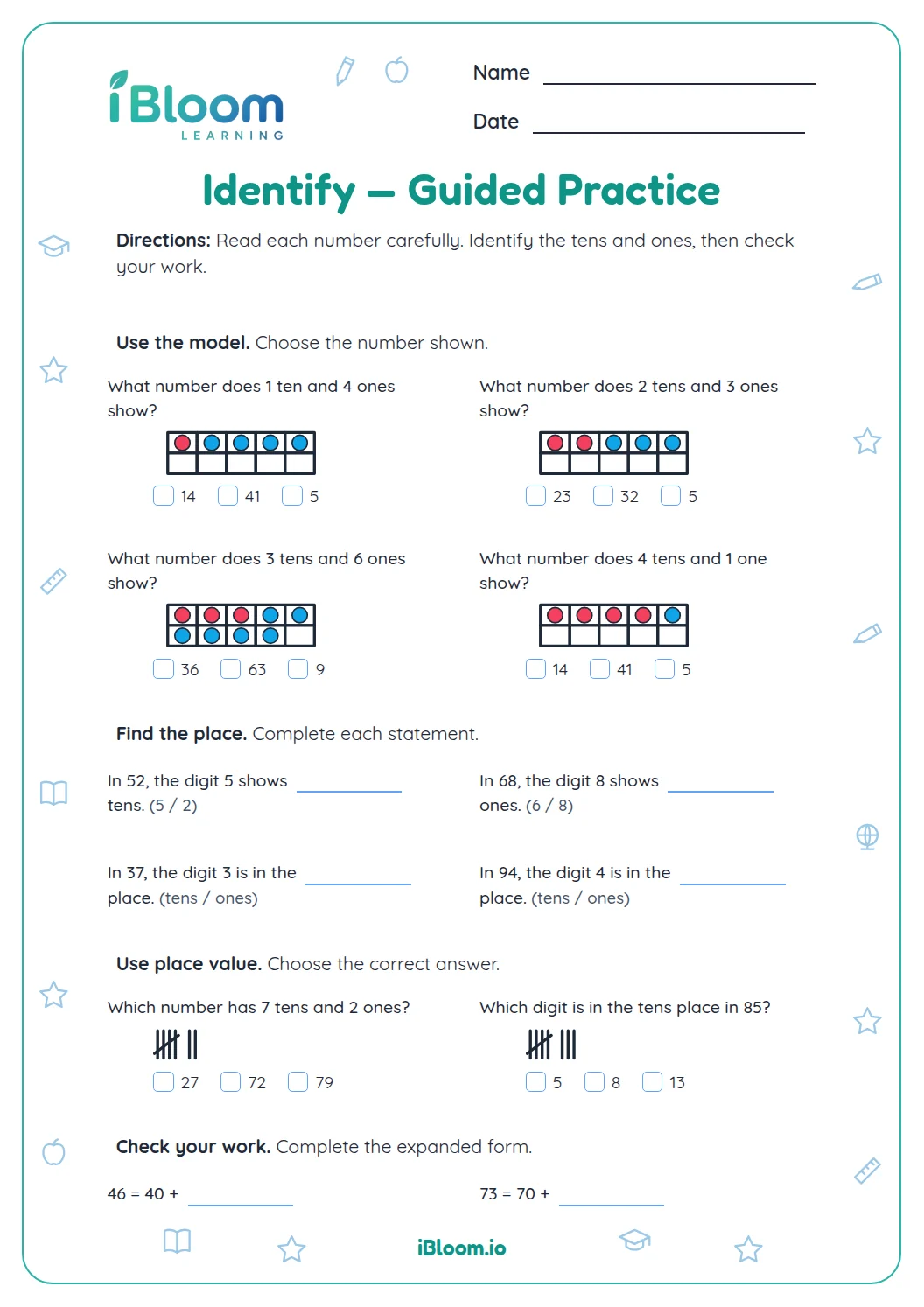
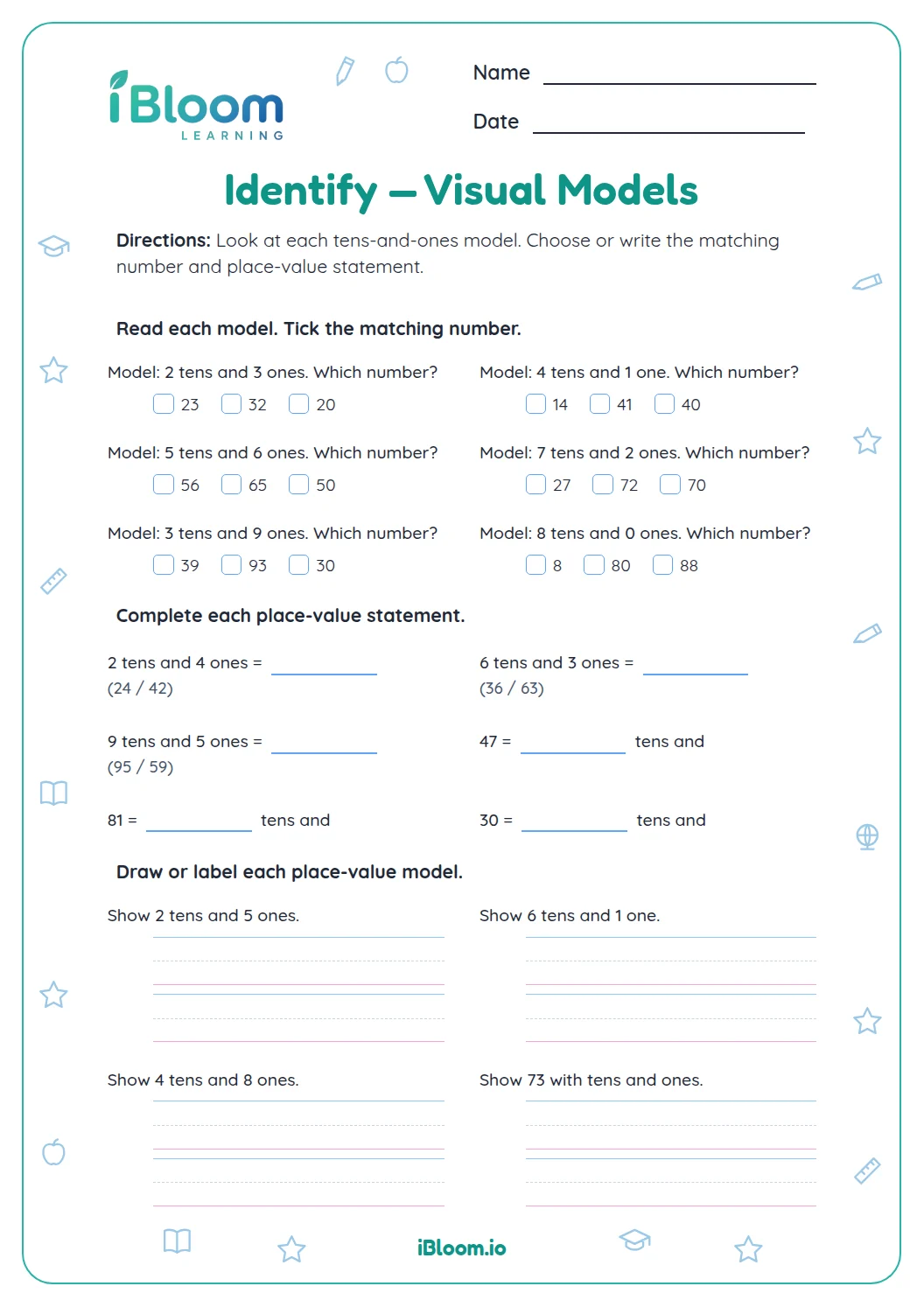
This Grade 1 worksheet practices composing two-digit numbers from tens and ones. Children read base-ten blocks, then use tens-and-ones clues to write numerals. It includes 16 questions across two activity styles and a separate answer key. The work aligns with CCSS 1.NBT.B.2, which describes the tens and ones represented by the two digits.
Aligned to 1.NBT.B.2
How do base-ten blocks show a number?
A long block stands for one ten. A small cube stands for one. Count the longs first, then the cubes. Four longs and six cubes make 46.
- 14 tens and 6 ones
- 240 + 6 = 46
How do I read a tens-and-ones clue?
In “5 tens and 2 ones,” the 5 names groups of ten and the 2 names single ones. Write 5 first and 2 next: 52. A zero in the ones place still holds a place, as in 6 tens and 0 ones = 60.
What will children practice?
Part A uses pictured base-ten blocks. Part B turns the same idea into short place-value clues. The numbers range from 14 to 91.
How to use this worksheet
- 1Count each ten rod as ten before counting single cubes.
- 2Say the number aloud, then write its tens digit followed by its ones digit.
- 3In Part B, build each clue with quick tens-and-ones sketches if helpful.
- 4Check that each written number has two digits.
Mistakes to watch for
The mistake
Writing 4 tens and 6 ones as 406.
The fix
Remember a ten rod is one group of ten, so the number is 46.
The mistake
Reversing the digits and writing 64.
The fix
Say “four tens, six ones”; the tens digit goes first.
The mistake
Dropping the zero in a number such as 60.
The fix
Keep the ones place even when it has zero ones.
Common Core alignment
This worksheet practices the following Common Core skills.
Read each two-digit number as tens and ones.
On this sheet: Children compose two-digit numbers from groups of ten and single ones.
Show the official wordingHide the official wording
Understand that the two digits of a two-digit number represent amounts of tens and ones.
What to practice next
Make more practice
Further reading
Questions parents and teachers ask
What does a ten rod mean?
A ten rod represents a group of ten ones. Count each rod as ten, then count the single cubes. Question 1 shows 1 ten and 4 ones, which makes 14. Children can sketch rods and cubes beside later clues if they want a hands-on check.
Why is 60 written with a zero?
The zero shows that there are no ones. Six tens make 60, so the tens digit is 6 and the ones digit is 0. Keeping the zero preserves the ones place and makes the numeral clear. The worked example shows how one ten rod stands for ten ones, so it is easy to check together.
What is the difference between tens and ones?
Tens are groups of ten; ones are single units. In 52, the 5 means five tens, or 50, and the 2 means two ones. The worksheet asks children to use that place-value meaning to build each number. Invite your child to say the number aloud and point to the digit that names the tens.
How many questions are included?
There are 16 questions: eight ask children to read a base-ten block model and eight give a tens-and-ones clue. The worksheet is arranged in two activity parts, with a separate key page for checking. A quick sketch of rods and cubes can make the place-value clue easier to see.
Does it include an answer key?
Yes. A separate answer-key page lists all 16 two-digit numerals. Use it after the child has completed both parts, or keep it nearby for quick checking during practice. The key also helps adults spot a reversed digit or a missing zero.