

About this worksheet
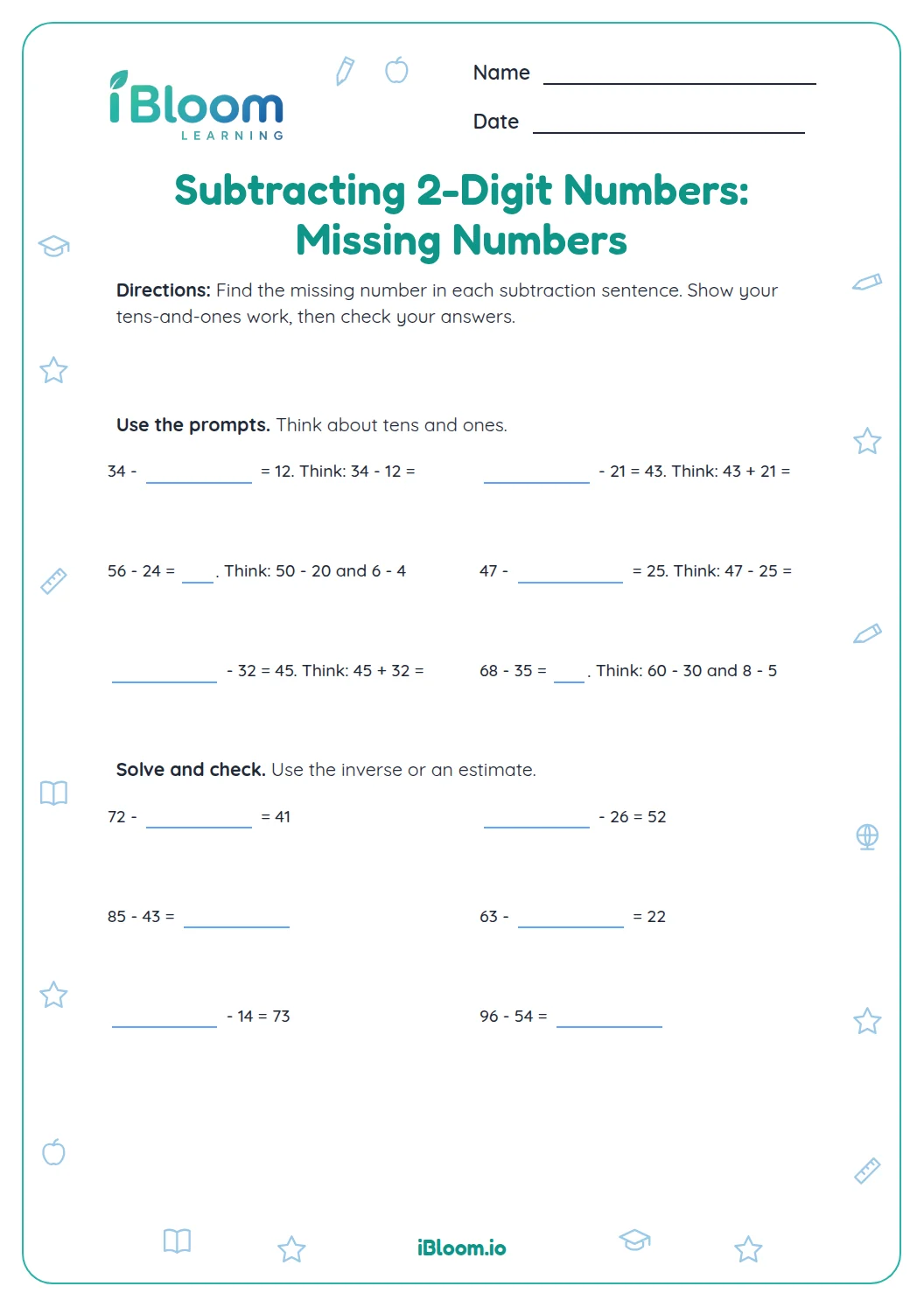
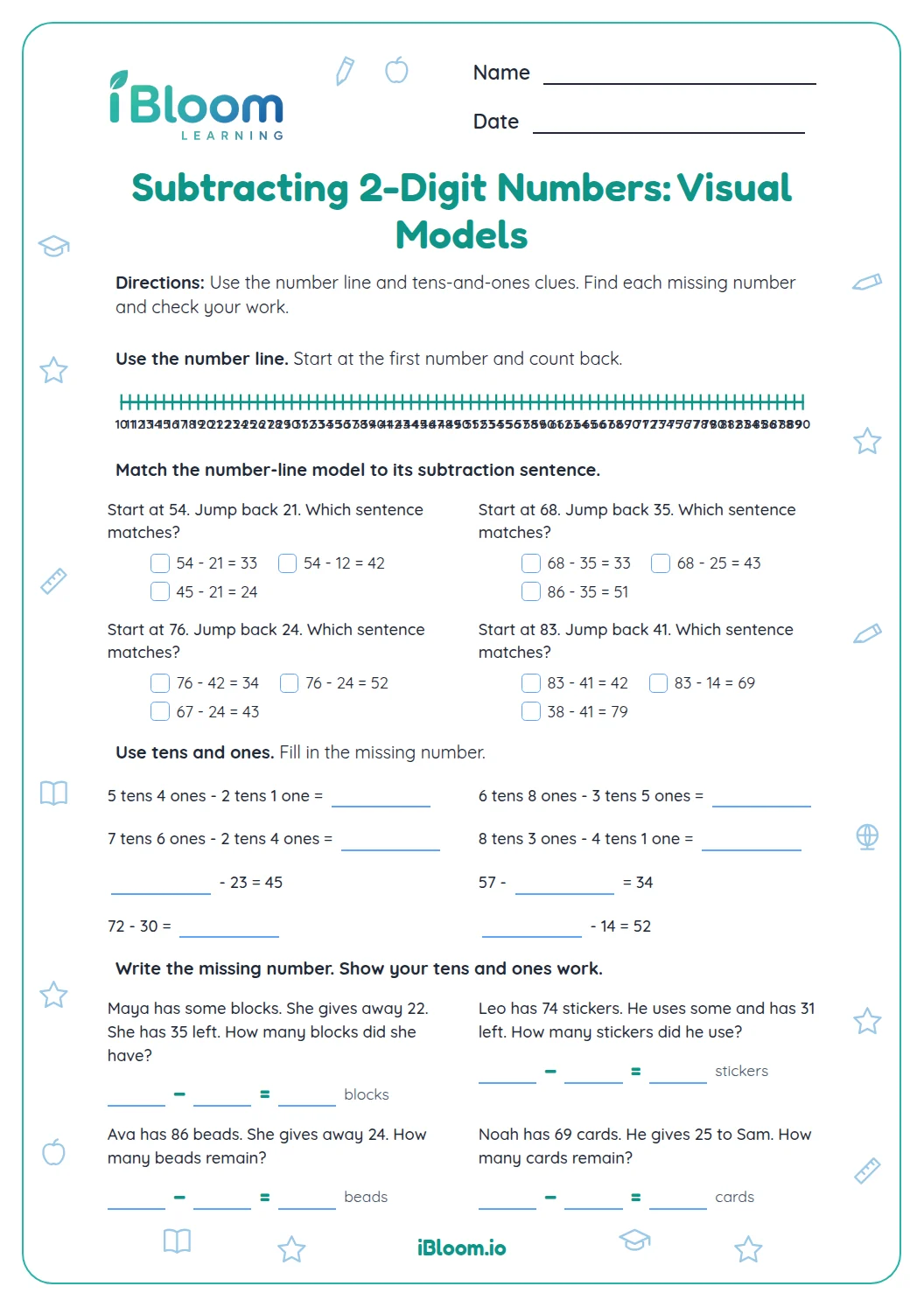
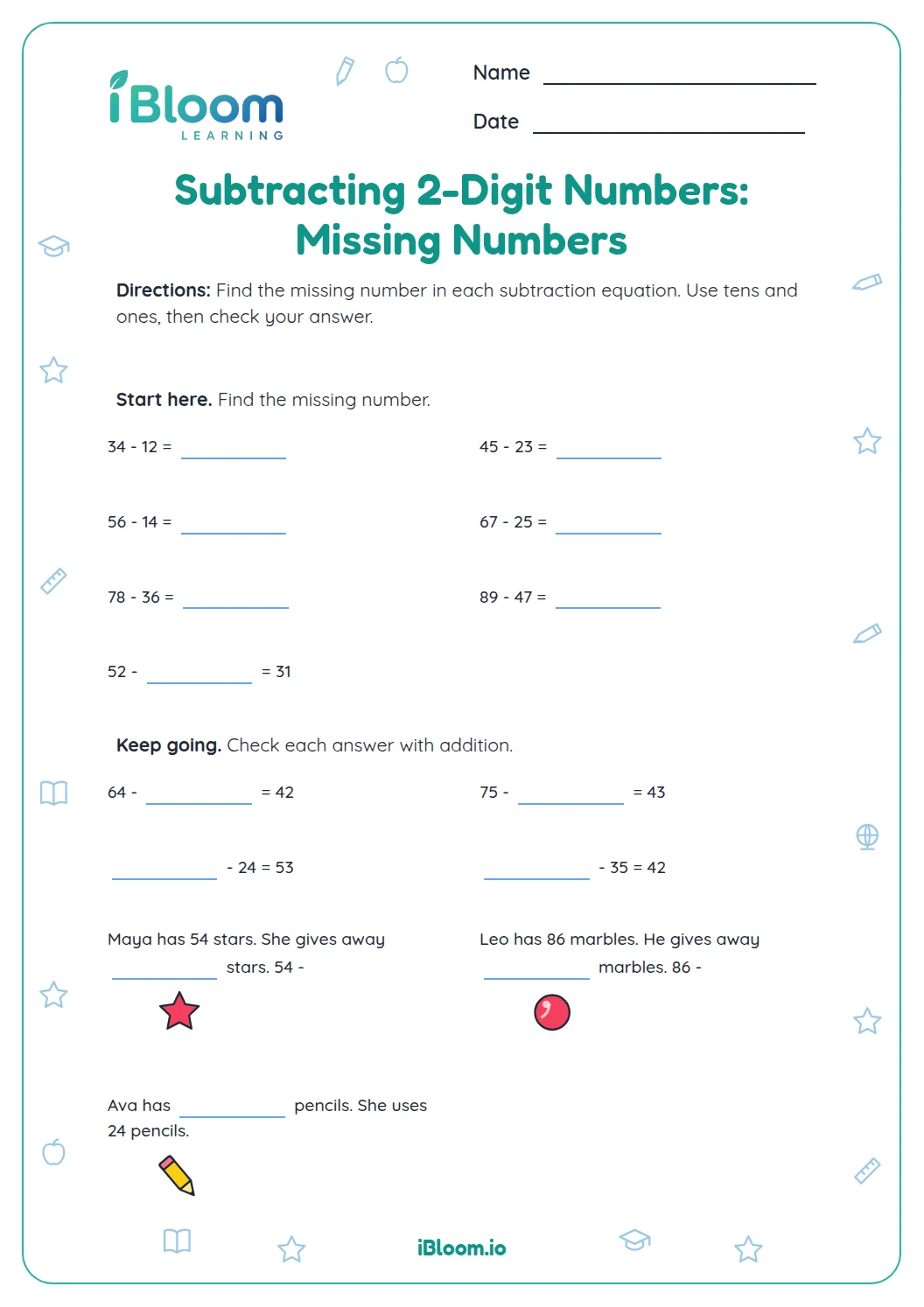
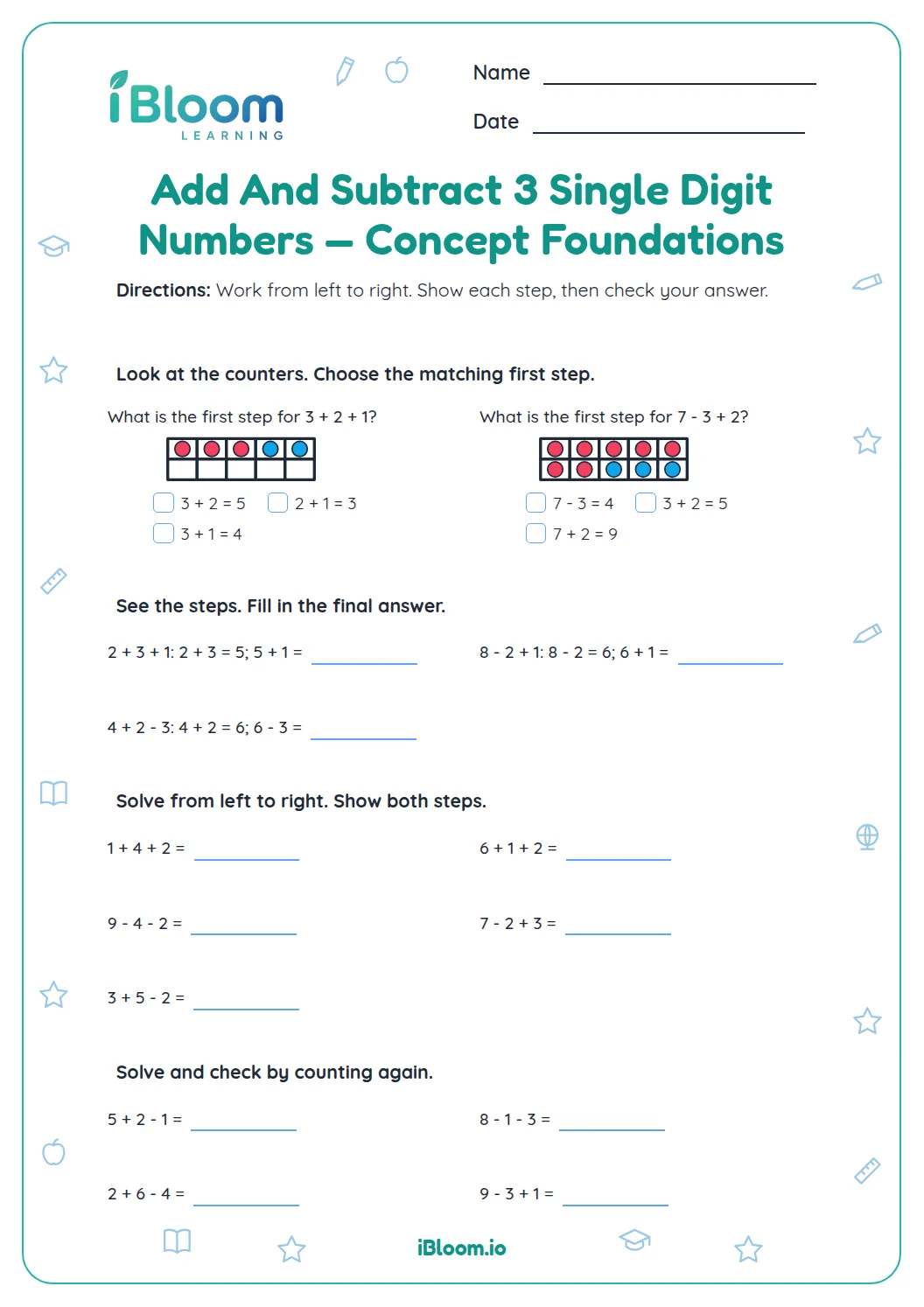
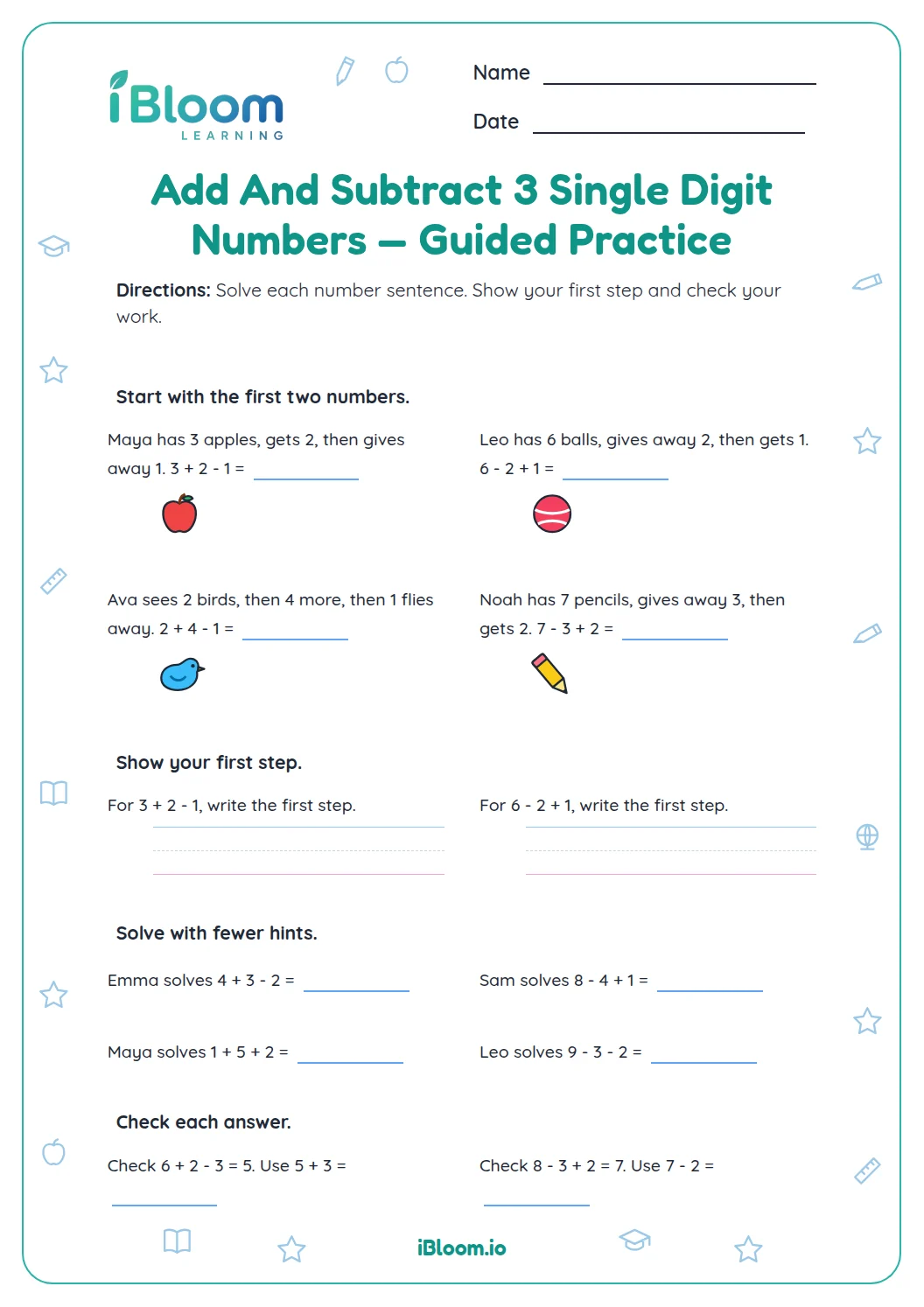
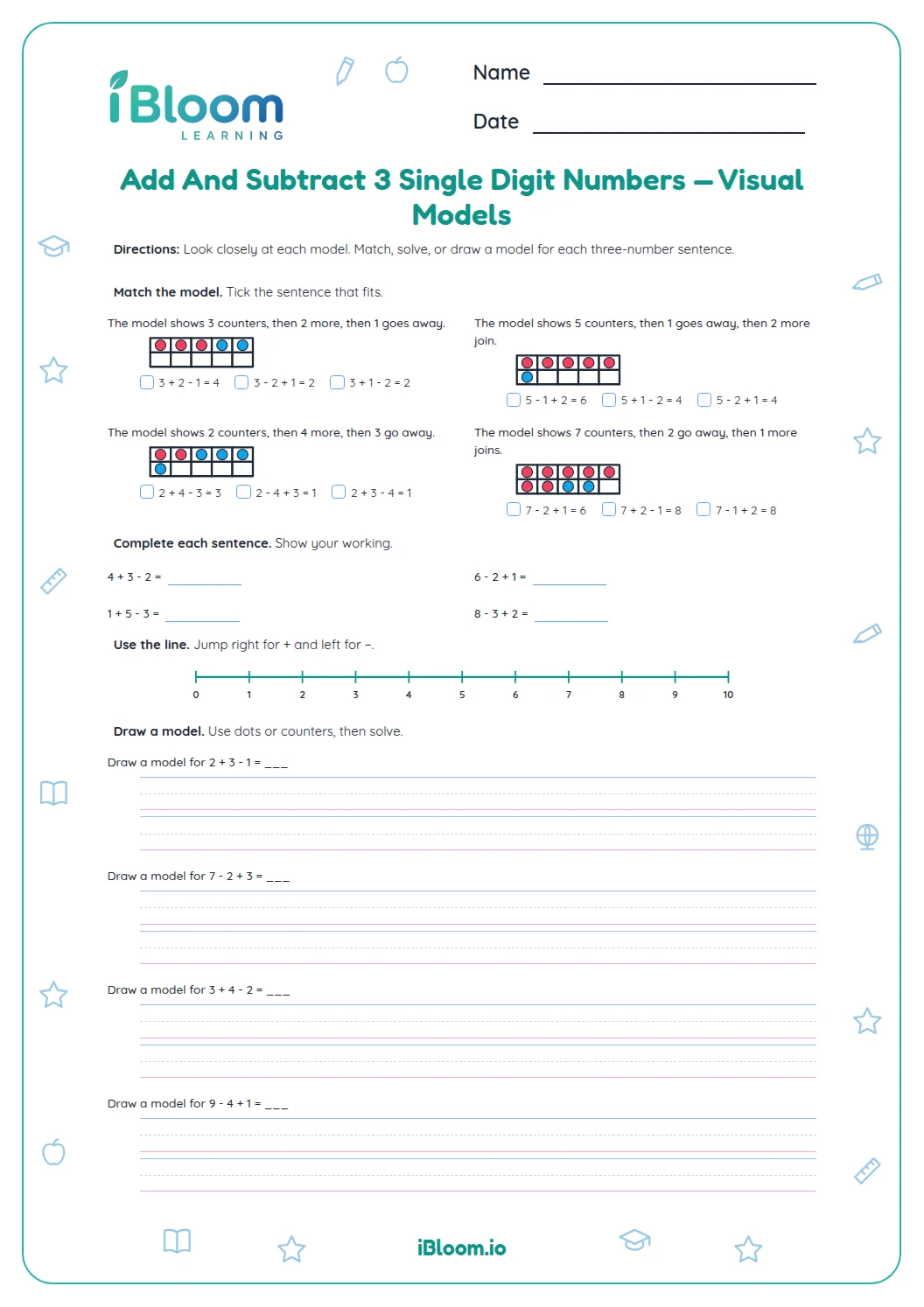
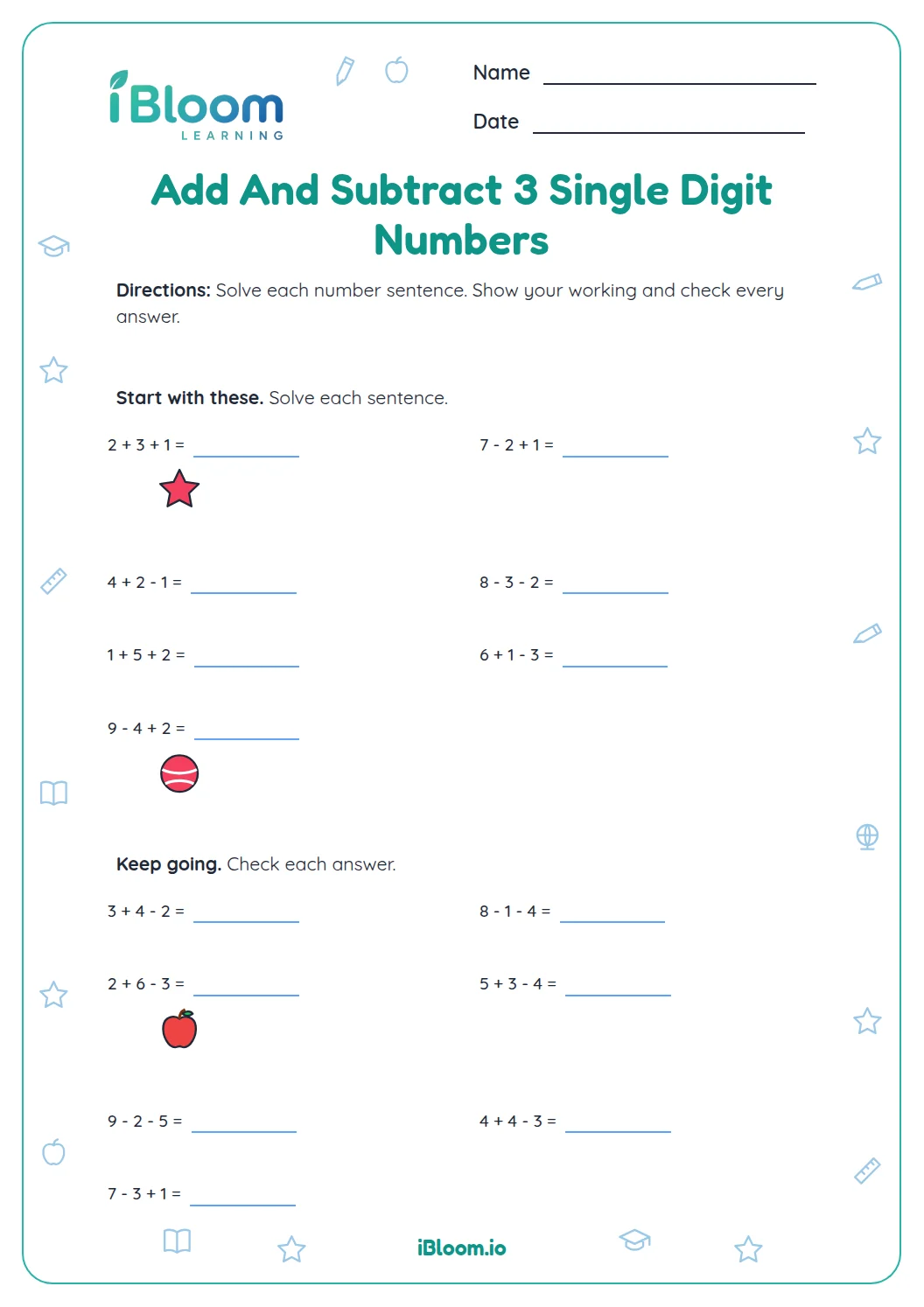
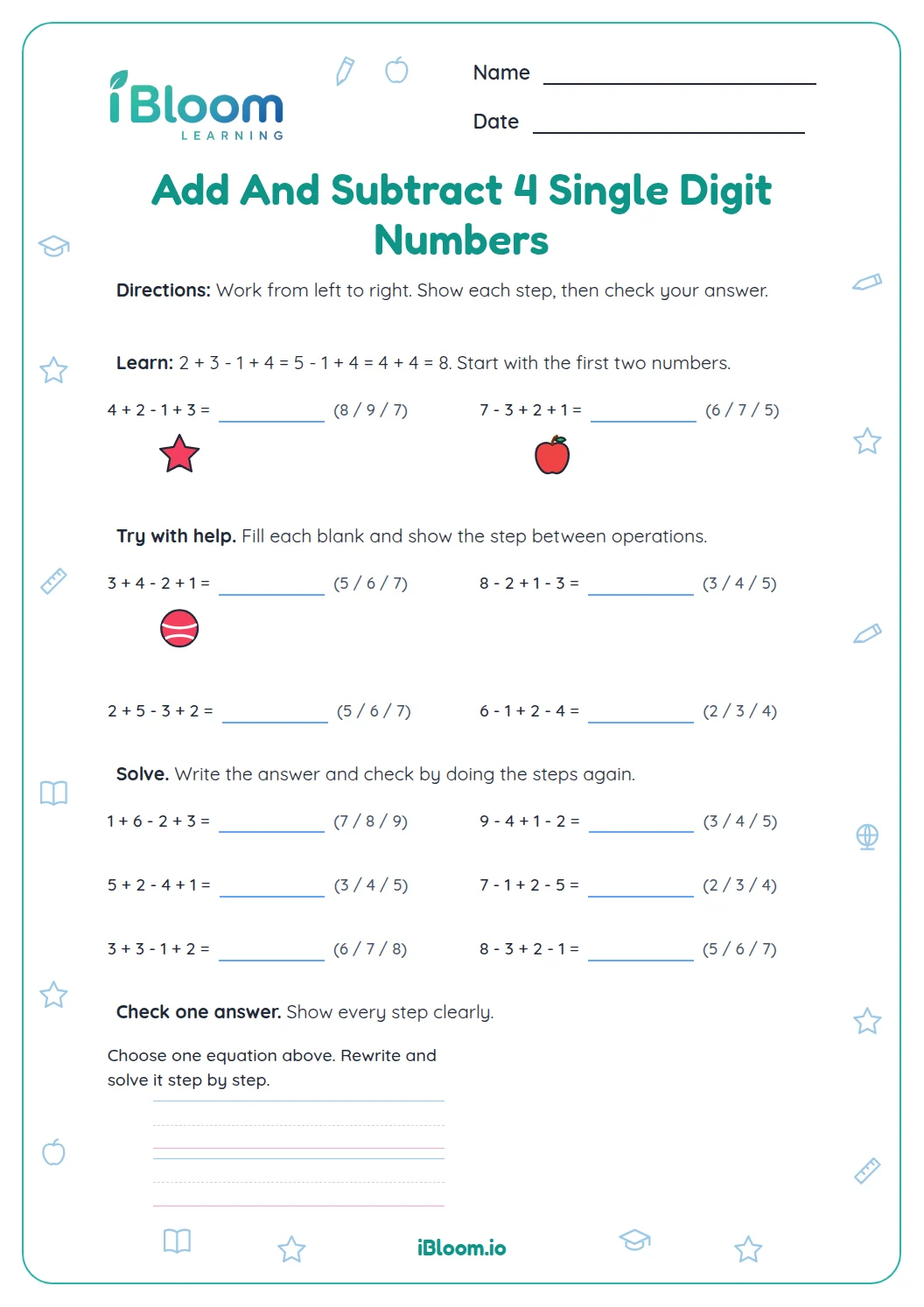
This free printable worksheet gives Grade 1 students 16 problems focused on missing values, place-value reasoning, and addition checks. The practice moves from guided questions to independent work, and the answer key shows the answer to each item. The questions use grade-appropriate numbers and clear equations so students can focus on the named skill.
What will students practice?
The worksheet has 8 parts, arranged from guided practice to independent problems. The questions vary the numbers and formats while staying with missing values, place-value reasoning, and addition checks.
The old page mixed in a regrouping count-up item and confusing multi-answer checks. The replacement uses correct no-regrouping equations and gives each blank exactly one value.
How can a student check an answer?
Use the equation in the question to check the missing value. For example, in 68 − ___ = 45, subtract 45 from 68: 68 − 45 = 23. | Check: 68 − 23 = 45.
- 1In 68 − ___ = 45, subtract 45 from 68: 68 − 45 = 23.
- 2Check: 68 − 23 = 45.
What should students notice?
Read the whole equation before choosing an operation. In subtraction, check the ones first; for a no-regrouping problem, the ones being taken away must fit within the ones shown. Then check the result with addition.
How to use this worksheet
- 1Read the whole equation and find the blank.
- 2Use addition when the first number is missing.
- 3Subtract tens and ones in their own places.
- 4Use a matching addition equation to check.
- 5Explain a mistake by naming the place that changed.
Common mistakes and quick fixes
The mistake
Count up across a regrouping example on a no-regrouping page.
The fix
Check the ones digits first and use a problem where the subtrahend ones fit.
The mistake
Put the full answer before another printed unit or value.
The fix
Write only the one missing number in the blank.
The mistake
Repeat the result in a check blank.
The fix
Write the missing addend in the check equation, so the equation reads correctly.
What to practice next
Make more practice
Further reading
Questions parents and teachers ask
What is a missing-number subtraction equation?
It is an equation with one number hidden by a blank. For example, in 68 − ___ = 45, the missing amount is 23 because 68 − 23 = 45. Ask the student to point to the numbers in the equation and explain what each one represents before calculating. This keeps the work connected to the question.
How does this challenge use no regrouping?
The two-digit subtractions are selected so the ones digit being taken away is no larger than the starting ones digit. The count-up item also uses 58 − 26, where the ones can be subtracted directly. Ask the student to point to the numbers in the equation and explain what each one represents before calculating. This keeps the work connected to the question.
Why is there an addition check?
Addition can undo subtraction. If 86 − 42 = 44, then adding 44 + 42 should return to 86. This gives students a second way to check the equation. Ask the student to point to the numbers in the equation and explain what each one represents before calculating. This keeps the work connected to the question.
What does the mistake question teach?
It asks students to notice a realistic place-value slip: subtracting the tens but leaving the starting ones unchanged. Naming the slip helps connect the answer to what happened in each place. Ask the student to point to the numbers in the equation and explain what each one represents before calculating. This keeps the work connected to the question.
How many questions are included?
There are 16 items: true equations, missing values, multiple-choice reasoning, and checks using addition. The range of formats keeps the focus on understanding subtraction rather than repeating one prompt. Ask the student to point to the numbers in the equation and explain what each one represents before calculating. This keeps the work connected to the question.
Is an answer key included?
Yes. The separate key gives the missing values and the correct choices. For check equations, it shows a complete true addition sentence so the student can see how the subtraction is verified. Ask the student to point to the numbers in the equation and explain what each one represents before calculating. This keeps the work connected to the question.