Free printable practice
Telling Time Practice Activities
Grade 1 telling time worksheets for reading, drawing, and describing clocks, days, months, time units, elapsed hours, and daily routines.
Explore Telling Time
Free printable worksheet PDFs
Preview every available page, then download the free worksheet PDF for home, homeschool, tutoring, or classroom practice.
Preview the exact activity before downloading it.
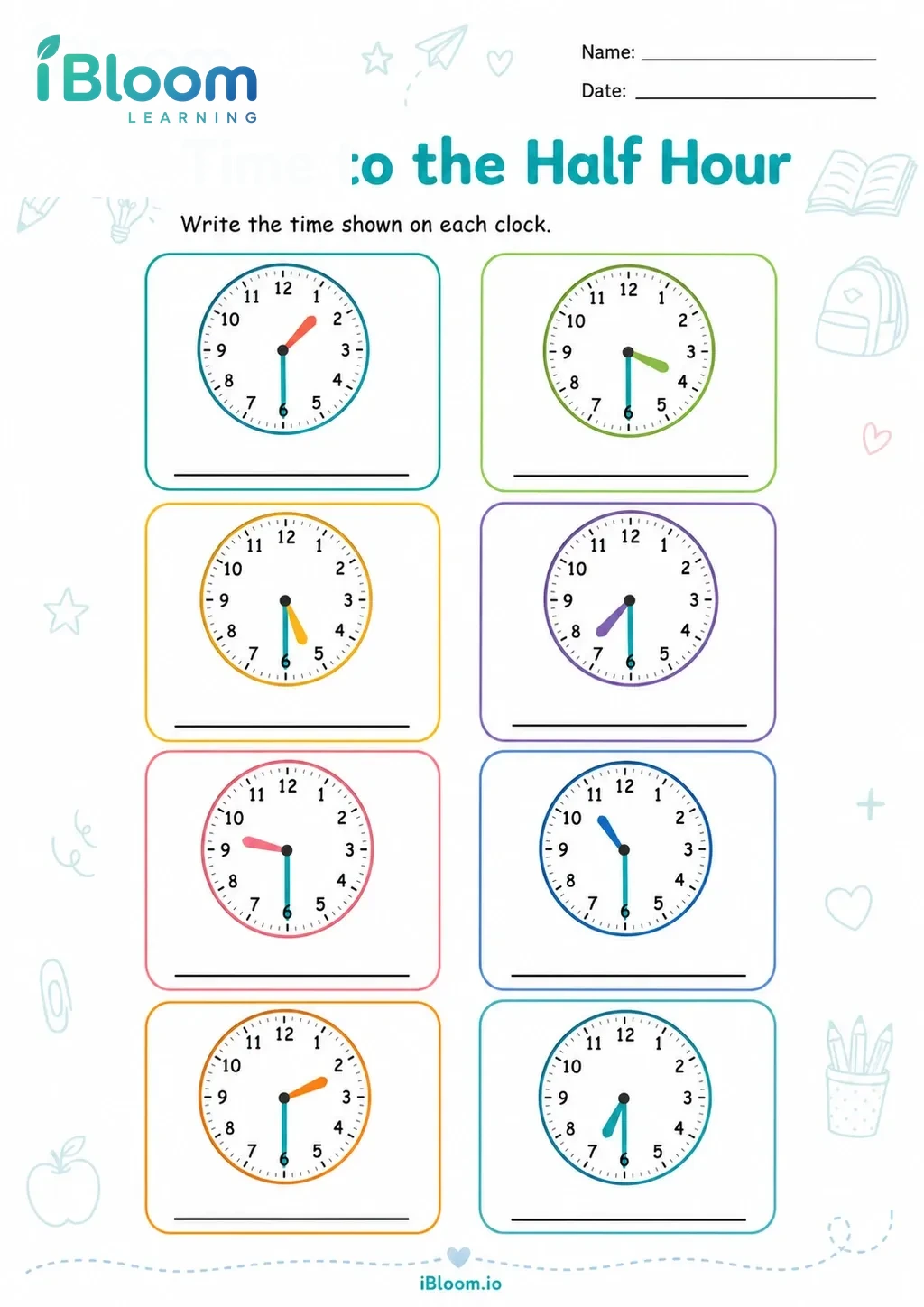
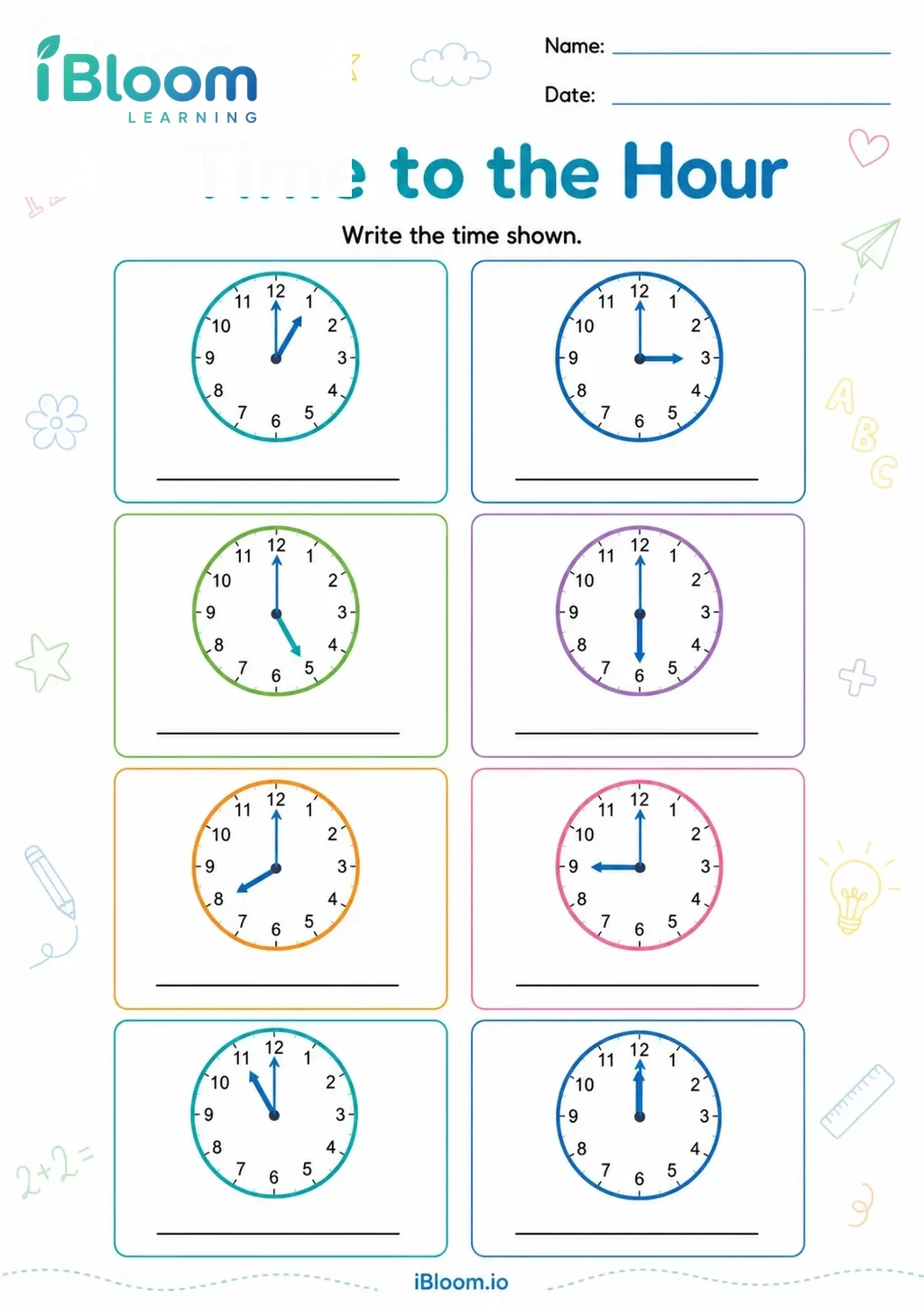
Practice that builds confidence
Building time sense
These Grade 1 telling time practice activities help children connect clocks, calendars, and everyday routines. Students practise whole hours, half hours, quarter hours, drawing hands on analog clocks, and reading time words such as morning, afternoon, and night.
The printable worksheets include clock faces, matching tasks, ordering activities, elapsed-time questions, days of the week, months of the year, and fast-or-slow comparisons. They are designed to build time vocabulary as well as careful observation of hour and minute hands.
Telling time in Grade 1 is more than naming a number on a clock. Children learn that time can be measured in different units, such as hours, days, weeks, and months. These worksheets move from familiar routines, like breakfast in the morning or bedtime at night, toward reading analog clocks and understanding calendar order.

Reading and drawing clocks
Activities cover whole hours, half hours, and quarter hours. Children see the hour hand and minute hand in different positions, then match the clock to a written time or draw the hands themselves. For example, they may show 3 o’clock, half past 6, or a quarter-hour time on a blank clock face. Drawing tasks are especially useful because they reveal whether a child understands which hand is longer and where each hand should point.
Elapsed time and daily order
Elapsed-time worksheets focus on simple jumps such as one hour or several whole hours. Students may decide what time it will be one hour after 2 o’clock or place events in a sensible order across the day. Days of the week and months of the year pages strengthen sequencing language: before, after, next, yesterday, tomorrow, last month, and next month.
A simple parent routine
At home, choose one real moment each day. Ask, “What time is it now?” then, “What will the clock show in one hour?” Use a wall clock when possible, and connect the answer to an activity: lunch, reading, playtime, or sleep. On another day, ask your child to name today, yesterday, and tomorrow, or to find their birthday month on a calendar.

Classroom uses and common errors
Teachers can use these printables for math centers, morning work, small-group reteaching, or quick checks after a clock lesson. Watch for common errors: swapping the hour and minute hands, placing the hour hand exactly on a number during half-hour times, confusing a week with a month, or reciting months without understanding their order. Fast and slow activities also help children describe duration with everyday examples.

Free printable PDF download
Use this grade 1 telling time worksheet page to preview the activity, print it, or download it as a PDF for quick practice. It works well for homework, homeschool lessons, tutoring, morning work, revision, and classroom centers.
Answers and answer key support
After the child completes the worksheet independently, parents and teachers can use the answer support or answer key information to check the work, review mistakes, and choose the next practice step.
Why iBloom worksheets help
The collection gives children repeated practice with varied representations: analog clocks, written times, calendars, routine pictures, and comparison words. A child-friendly strategy is: “Look at the short hand first, then the long hand.” This keeps attention on the hour before checking whether the time is o’clock, half past, or a quarter-hour time.
Helpful answers
Frequently asked questions
What time skills do these Grade 1 worksheets cover?
They cover reading and drawing analog clocks for whole hours, half hours, and quarter hours, plus days of the week, months of the year, time units, elapsed whole hours, and daily time words.
How can I help my child tell the difference between the hour hand and minute hand?
Use the phrase “short hand tells the hour, long hand tells the minutes.” Have your child point to each hand before saying the time, then check the clock face together.
Are elapsed-time questions included?
Yes. The elapsed-time practice uses simple Grade 1-friendly hour jumps, such as finding the time one hour later or several whole hours later.
Do the worksheets include calendar practice?
Yes. Children practise ordering and naming days of the week and months of the year, along with words such as before, after, yesterday, tomorrow, next, and last.
How should teachers use these telling time pages in class?
They work well for math centers, small-group review, independent practice, homework, or quick checks after lessons on clocks, calendars, or elapsed hours.
Is this grade 1 telling time worksheet free?
Yes. You can preview it for free and use the printable worksheet for home or classroom practice.
Can I download this grade 1 telling time worksheet as a PDF?
Yes. Use the worksheet download option to save a printable PDF, or print the worksheet directly from the page.
Does this grade 1 telling time worksheet include answers or an answer key?
When the activity has fixed answers, iBloom includes answer support so parents and teachers can check the completed worksheet.