




About this worksheet
What is a good way to add four single-digit numbers?
Aligned to 2.OA.B.2
How does a ten-frame support addition?
A ten-frame organizes counters in rows so children can see how close a group is to ten. The model is a check on the equation, not a substitute for reading every addend.
Question 1 uses 1 + 3 + 5 + 2. The four addends total 11: 1 + 3 = 4, 4 + 5 = 9, and 9 + 2 = 11.
- 11 + 3 + 5 + 2
- 21 + 3 = 4
- 34 + 5 = 9
- 49 + 2 = 11
Which numbers can be grouped first?
Look for pairs that make ten, such as 5 and 5, or pairs that make a nearby easy number. Add the remaining numbers after that pair.
What will students practice?
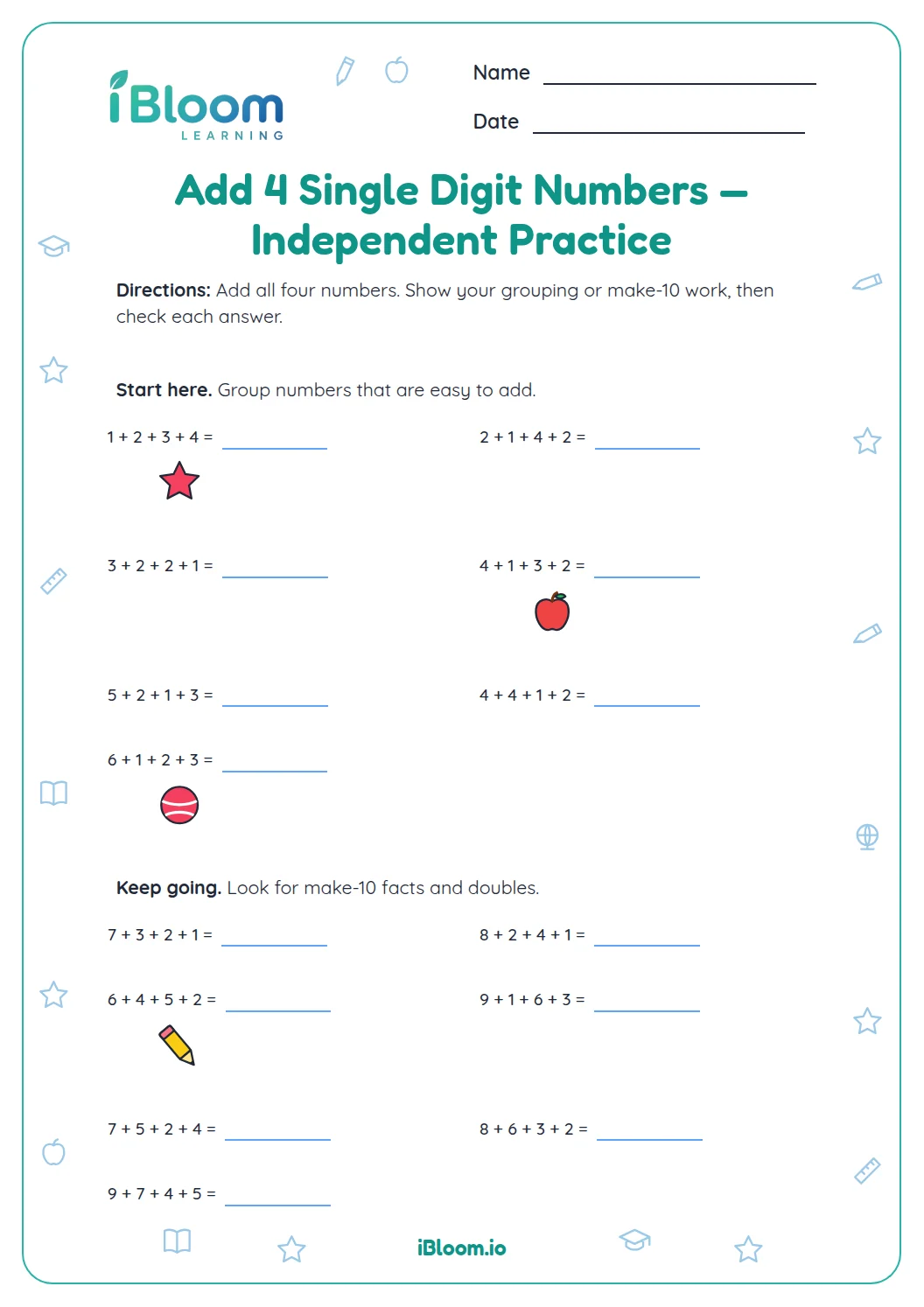
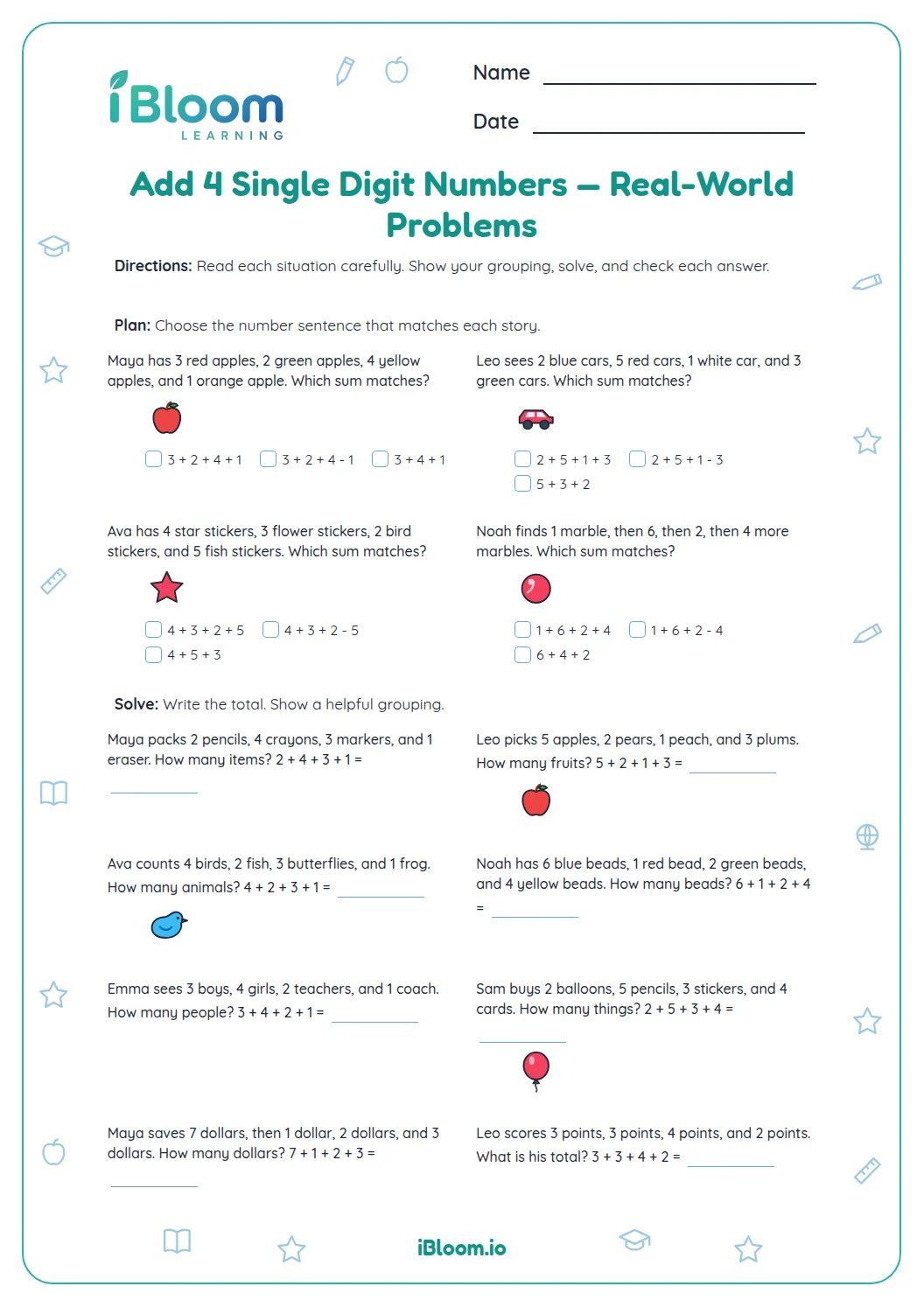
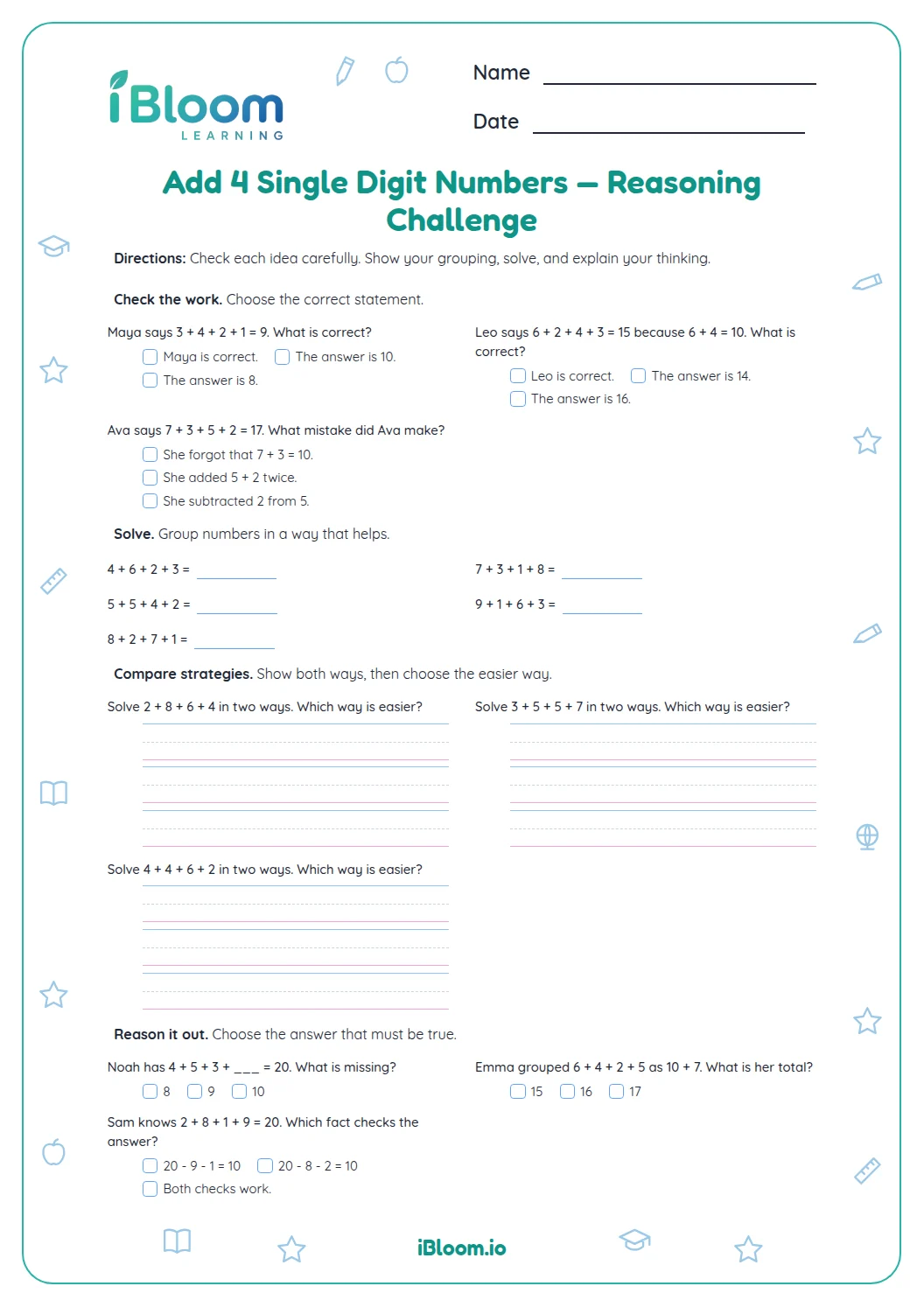
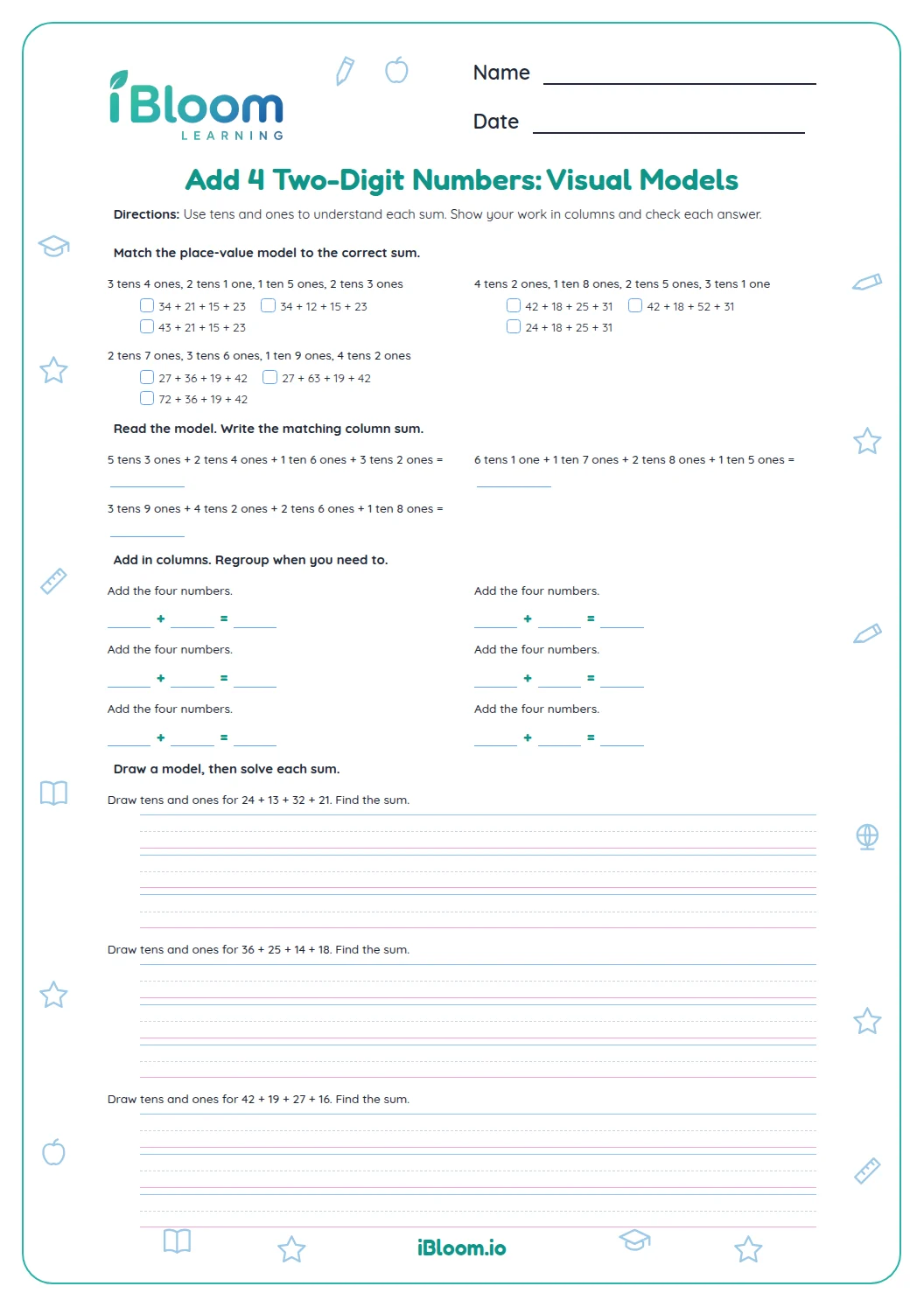
They match ten-frame pictures, complete modeled sums, and solve written problems. This gives practice reading a model and checking it against all four addends.
How can I use this worksheet?
- 1Count every counter in the frame.
- 2Read all four addends before choosing a sentence.
- 3Group an easy pair, then add what remains.
- 4Check the result with the model or a second grouping.
What addition slips should I watch for?
The mistake
Leaving out the fourth addend.
The fix
Point to each number and say it as it is added.
The mistake
Reading the frame as the sum itself.
The fix
Use the frame as a check, then calculate the four listed addends.
The mistake
Stopping after making ten.
The fix
Keep adding any addends that have not been used yet.
Common Core alignment
This page practices the following Common Core math standard.
Add several one-digit addends fluently within 20.
On this sheet: The four-addend questions ask children to add small numbers and use grouping strategies.
Show the official wordingHide the official wording
Fluently add and subtract within 20 using mental strategies. By end of Grade 2, know from memory all sums of two one-digit numbers.
What to practice next
Make more practice
Further reading
Questions parents and teachers ask
What does the ten-frame show?
Each filled space represents one counter. Count the filled spaces to see the model total, then compare it with all four addends in the equation. Ask the student to point to every group or addend as they explain the steps, then compare the result with the separate key.
What is 1 + 3 + 5 + 2?
The sum is 11. First combine 1 and 3 to make 4, then add 5 to make 9, and add the last 2 to reach 11. Ask the student to point to every group or addend as they explain the steps, then compare the result with the separate key.
How many questions are included?
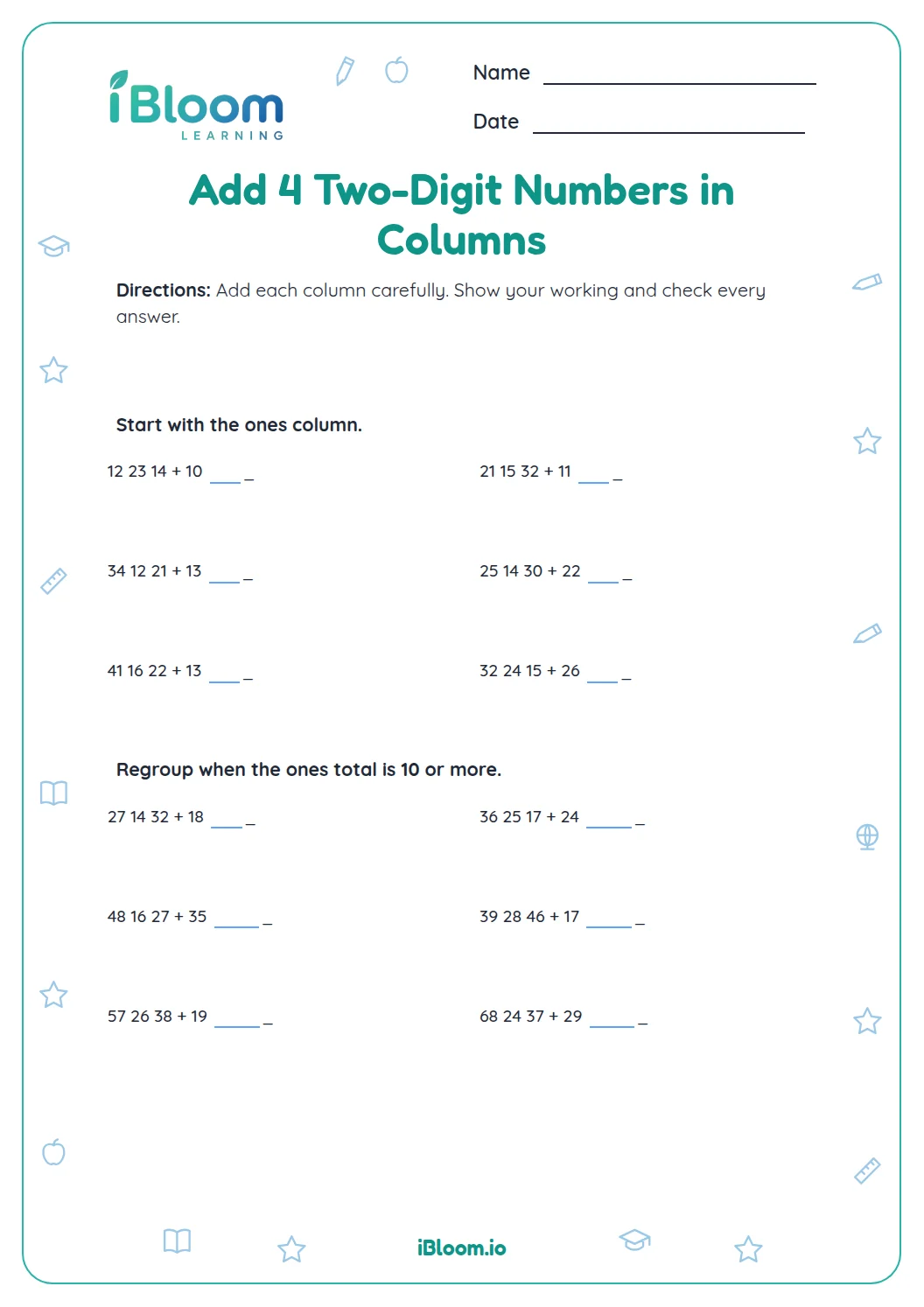
There are 16 questions: four model matches, four model totals, and eight addition problems with working space. A separate key includes the total for each question. Ask the student to point to every group or addend as they explain the steps, then compare the result with the separate key.
Should students add in the order shown?
They can, but they may also group two addends that make ten or another easy total. The order can change because the same four addends still have the same sum. Ask the student to point to every group or addend as they explain the steps, then compare the result with the separate key.
How can a child check a total?
Add the four numbers again in a different grouping, or count the counters in the model. Make sure no group was skipped and that the last addend was included. Ask the student to point to every group or addend as they explain the steps, then compare the result with the separate key.