

About this worksheet
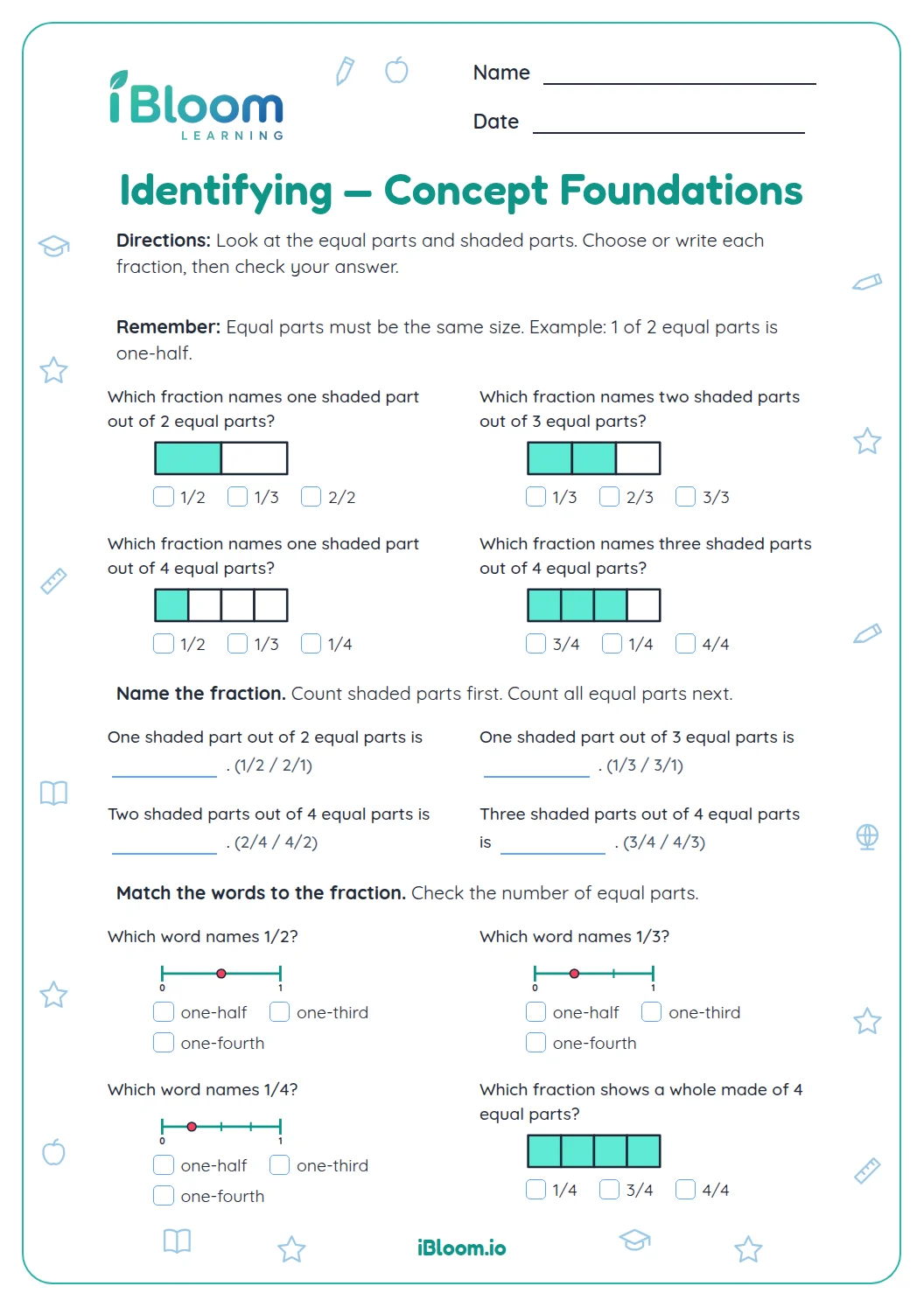
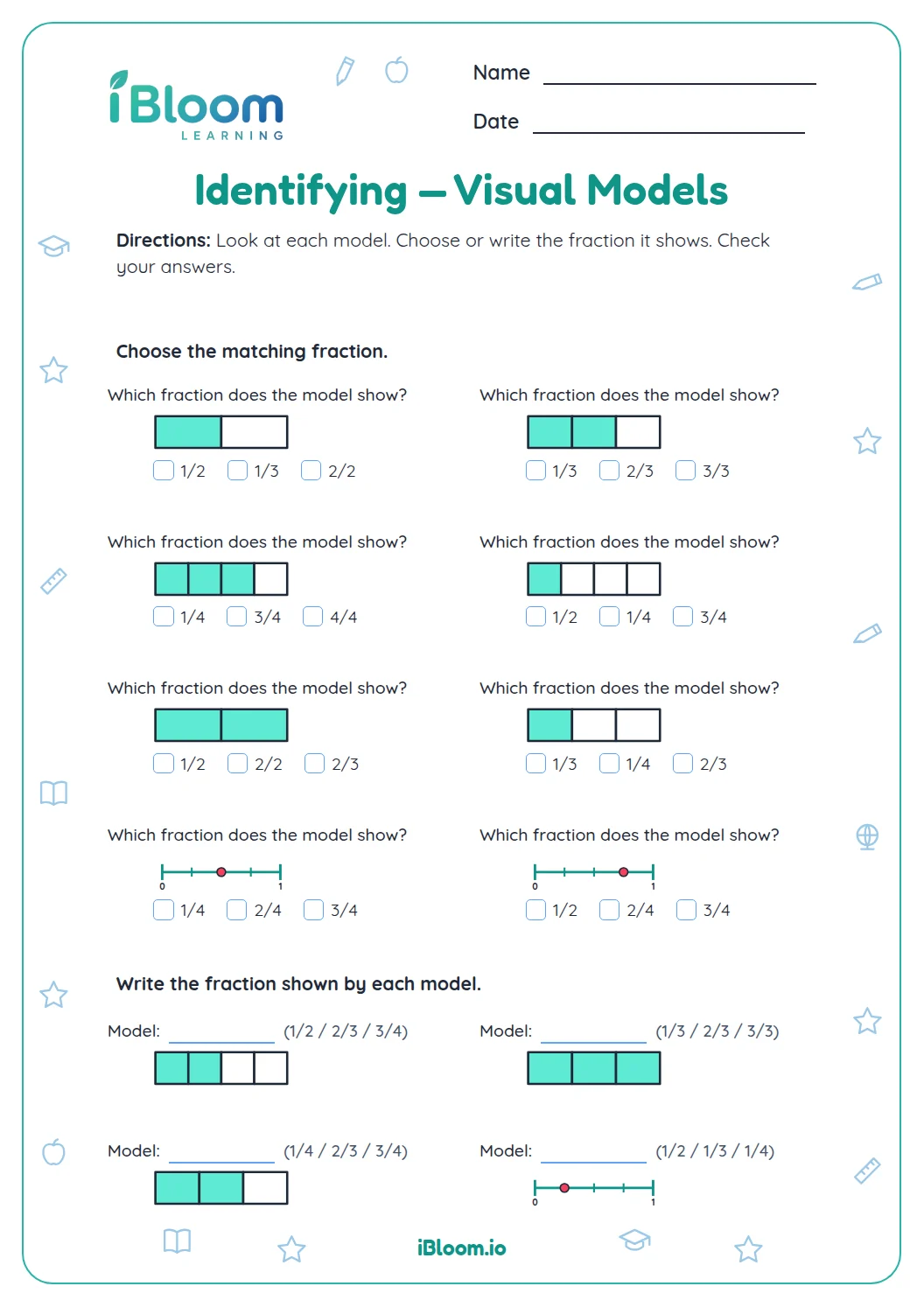
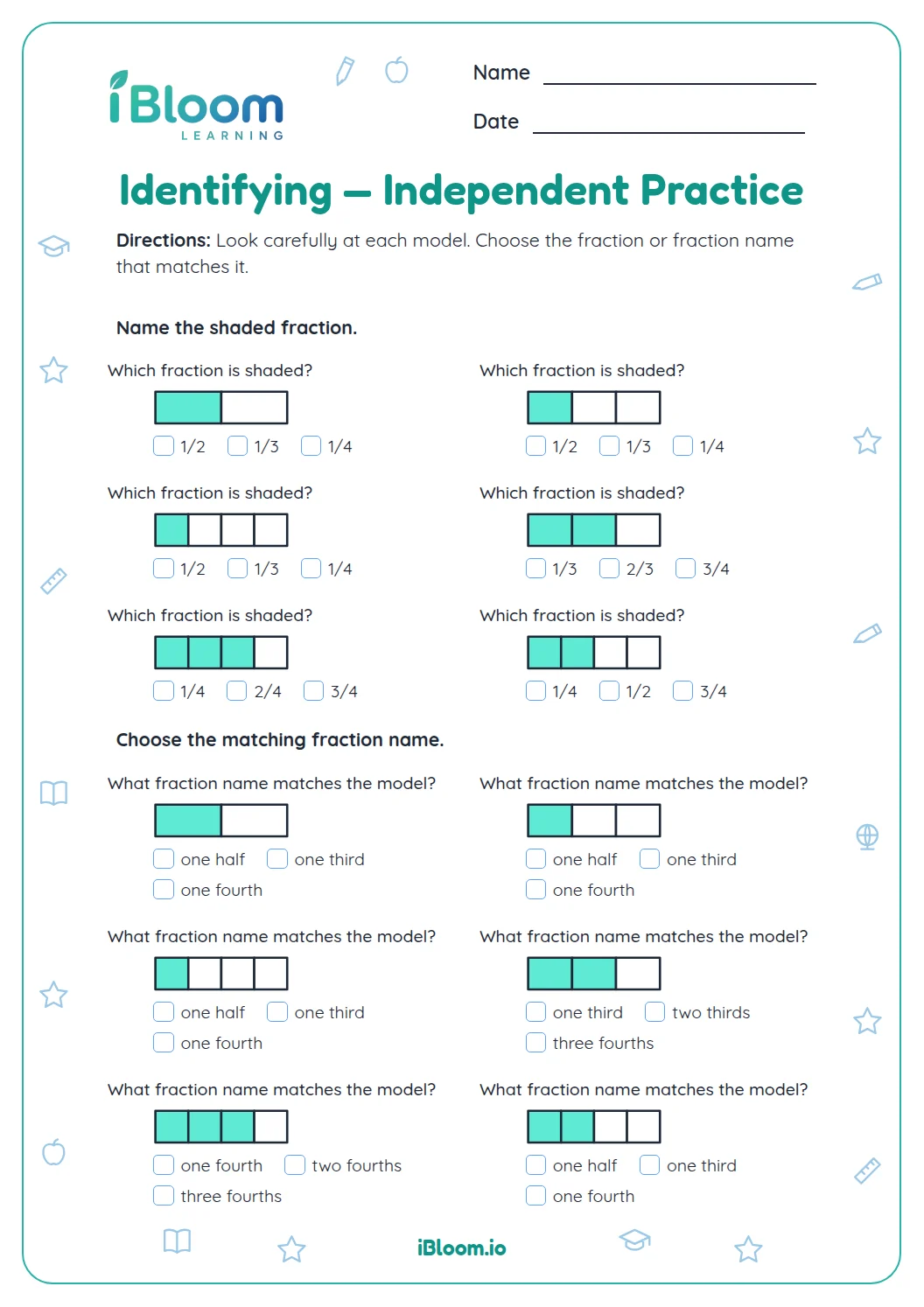
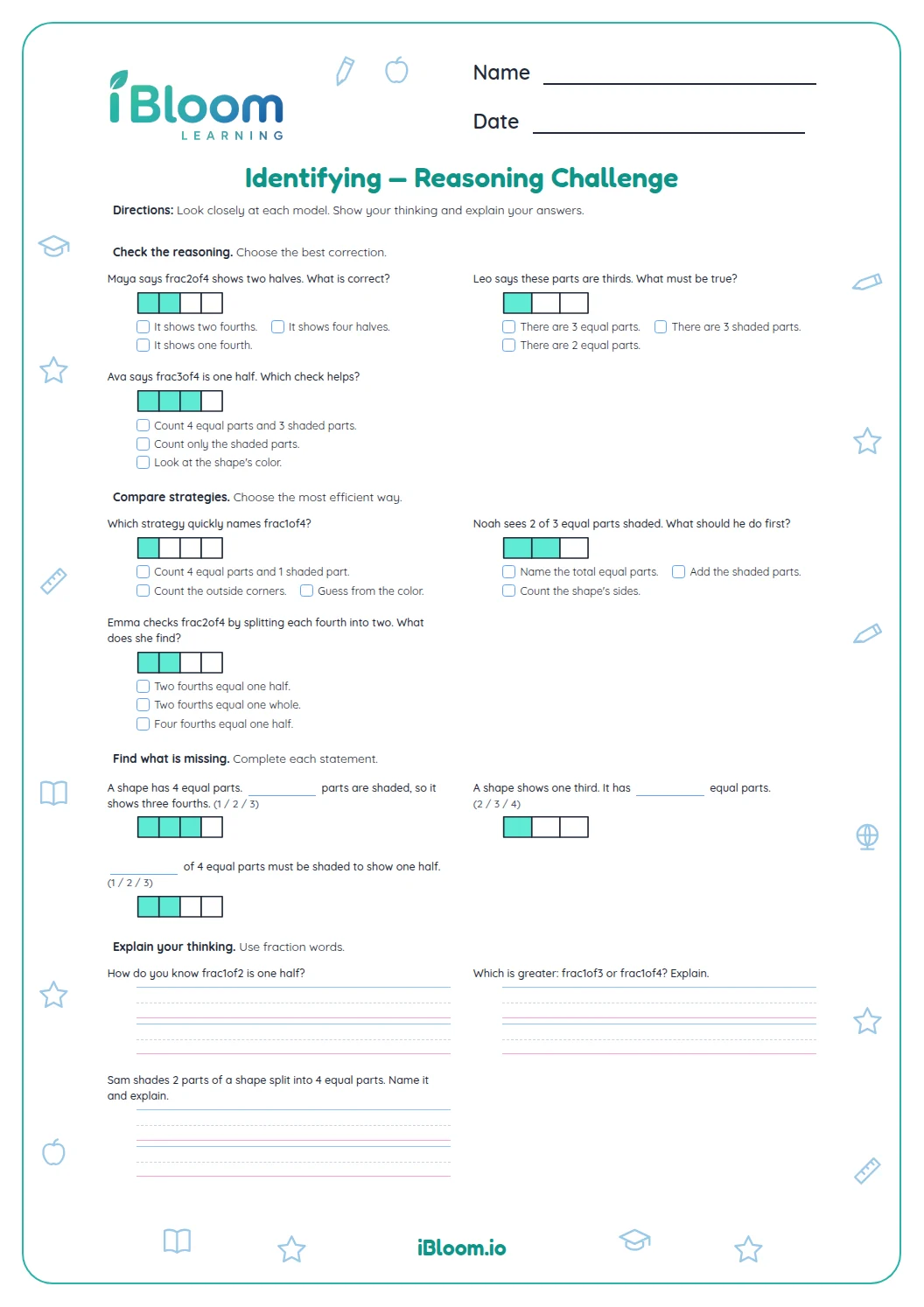
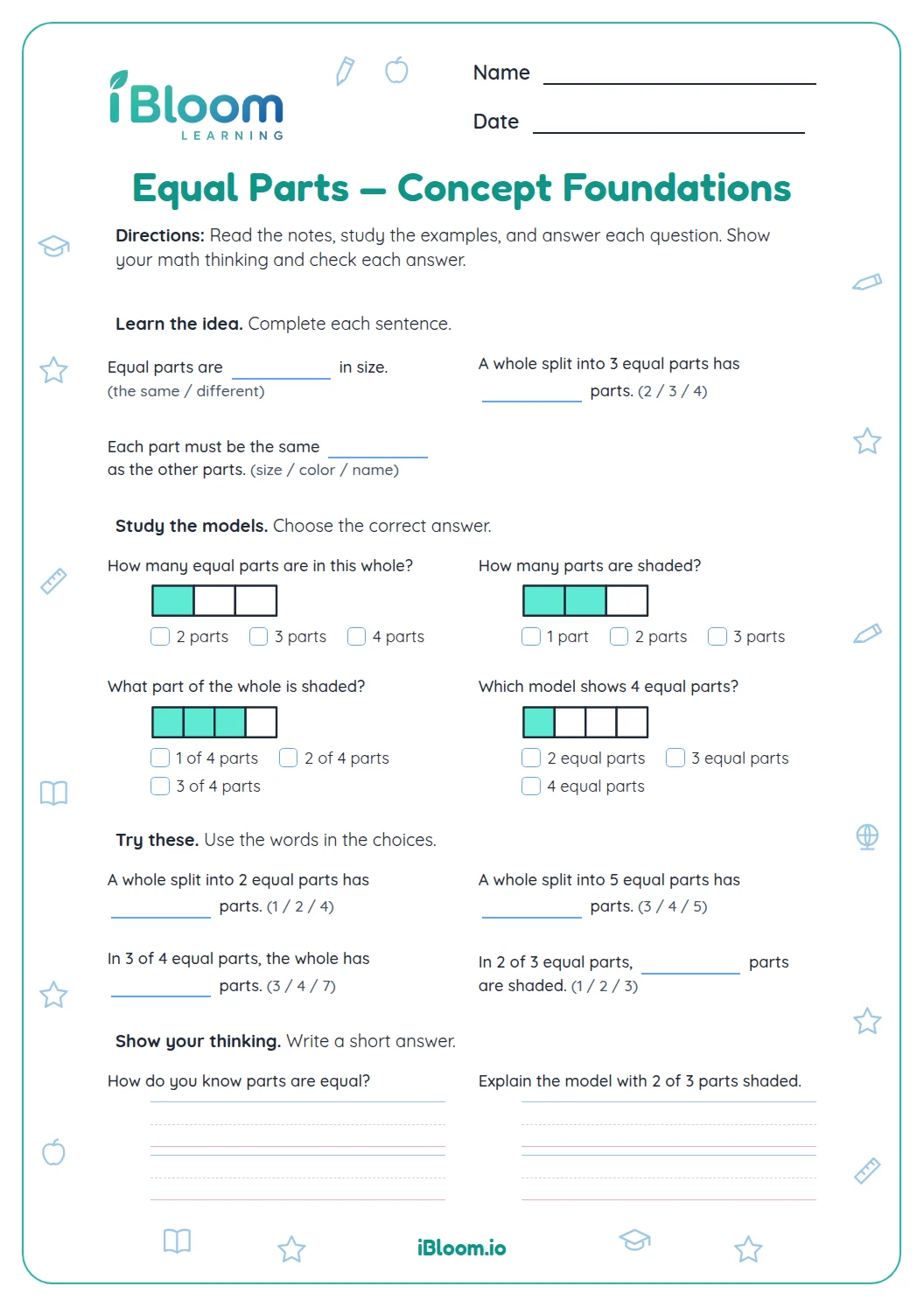
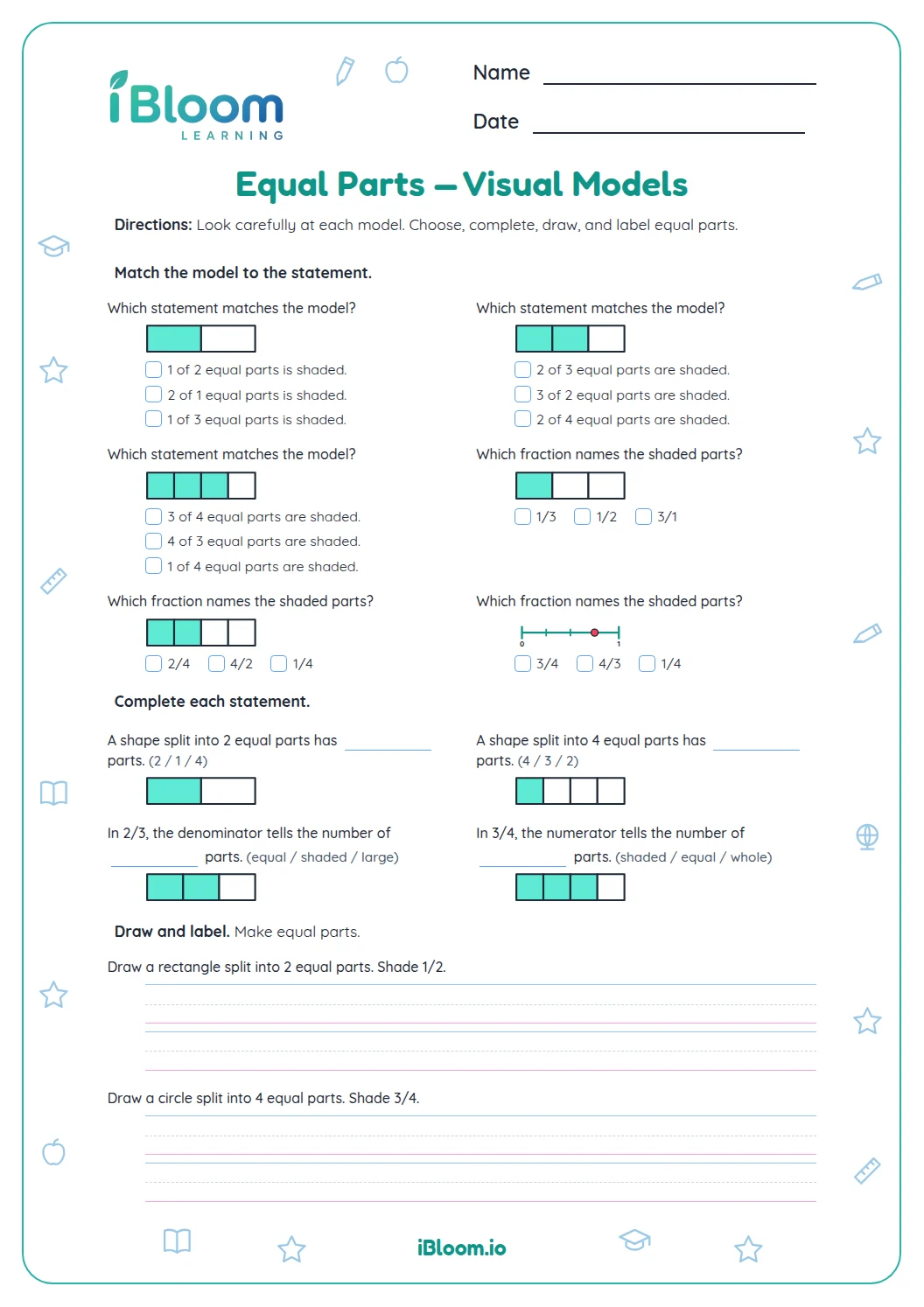
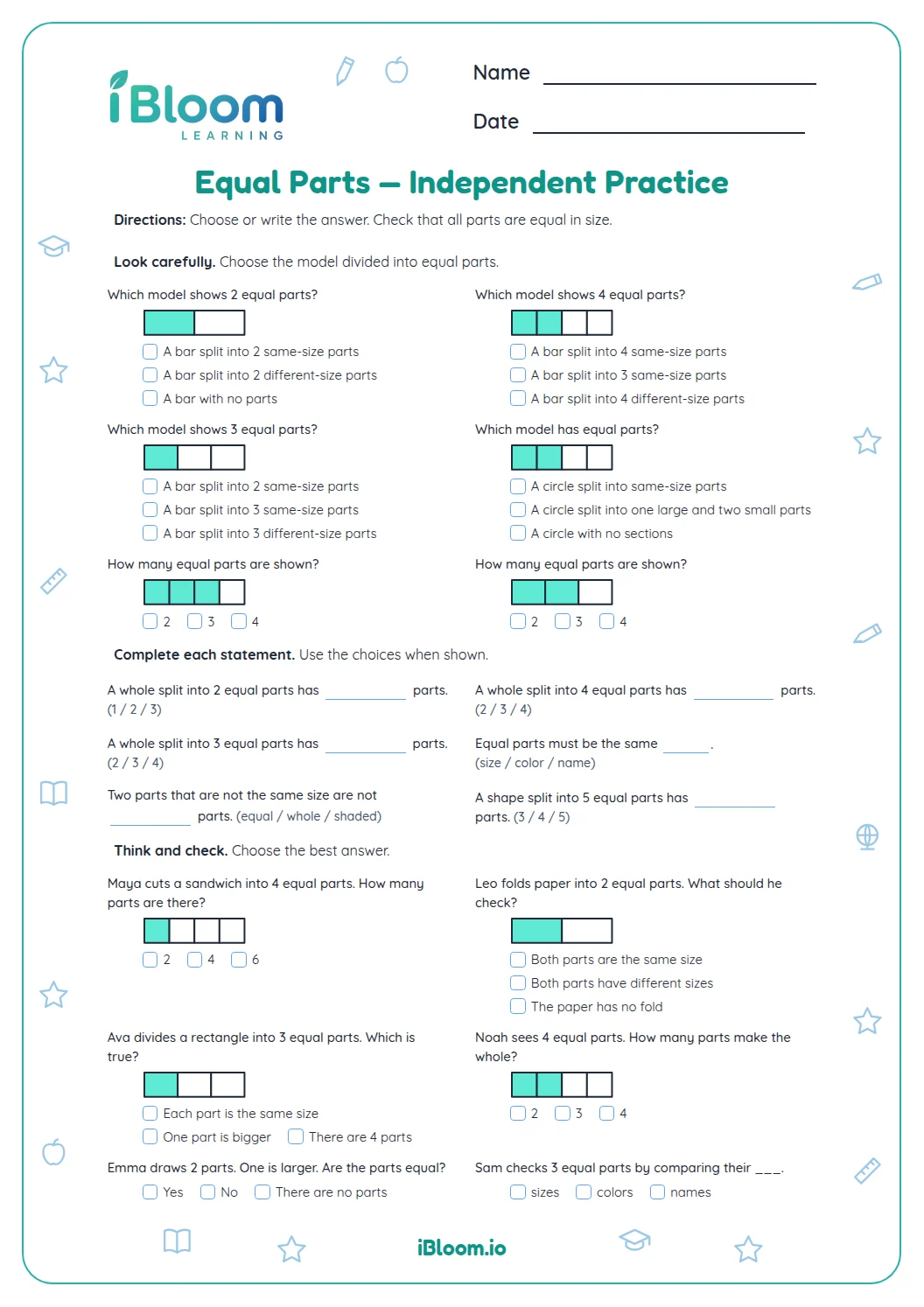
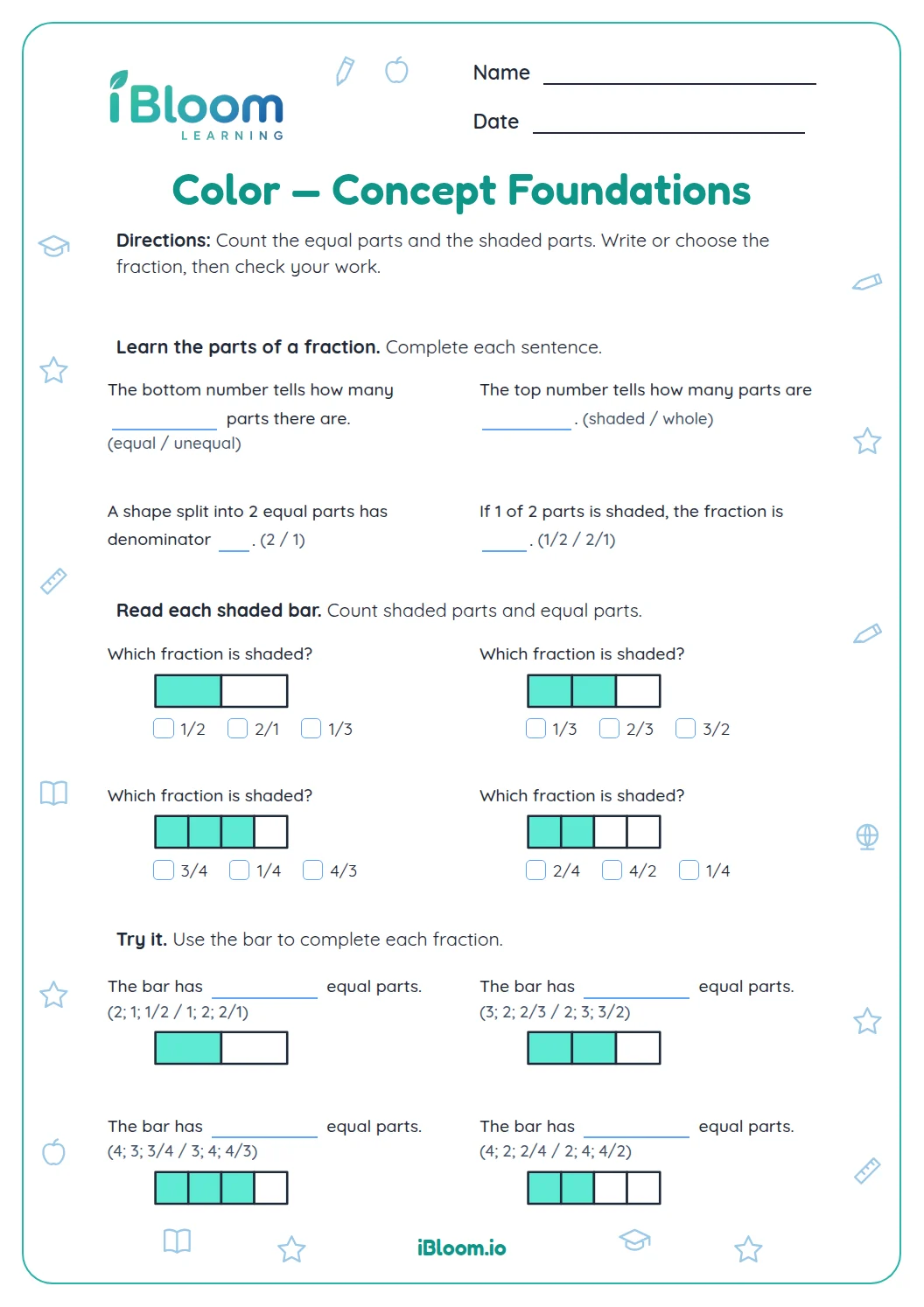
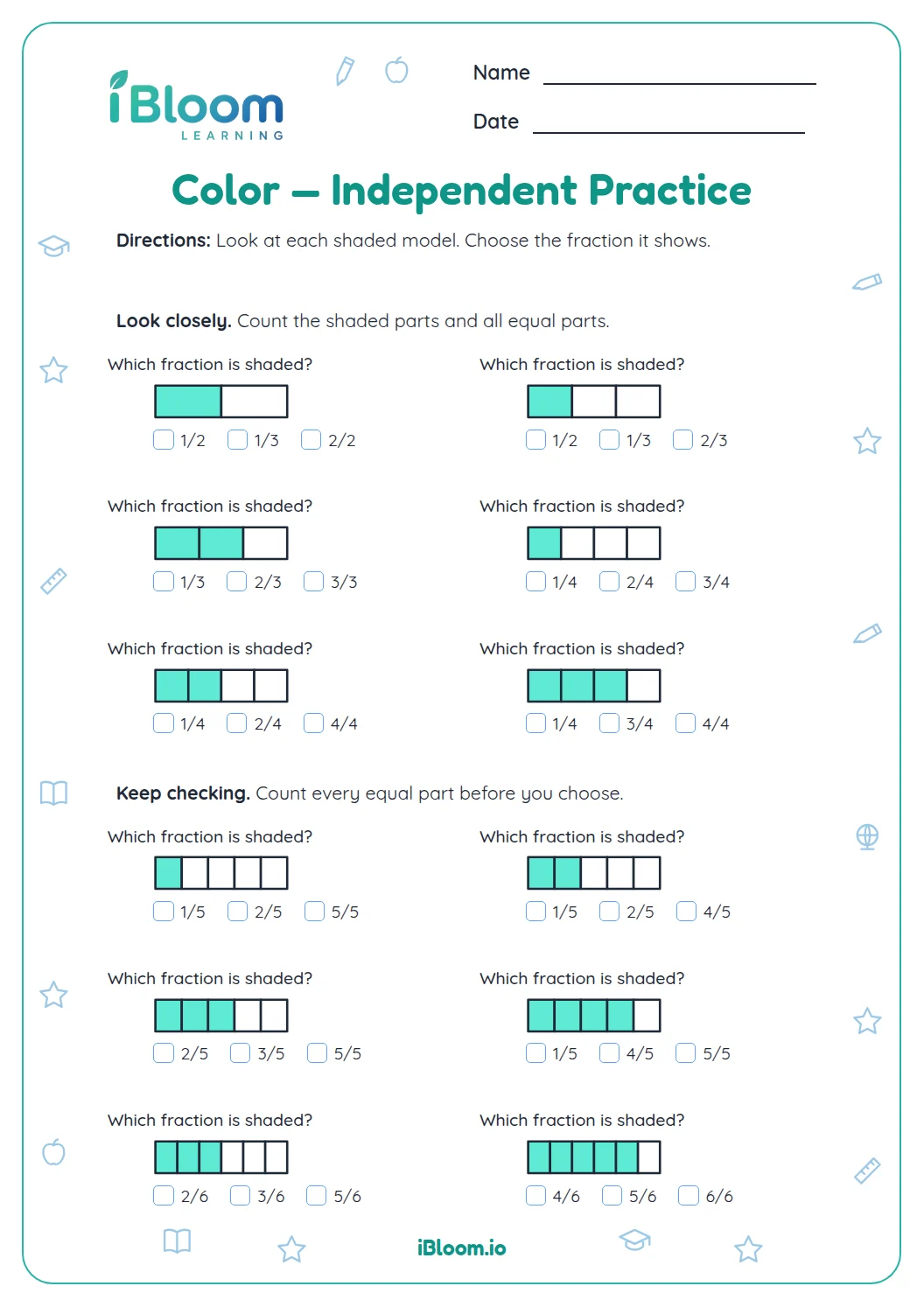
This Grade 2 worksheet gives children 15 questions about identify fractions. The two parts use readable prompts and printed models, with a complete answer key for checking work.
Aligned to CCSS 2.G.A.3
Read the shaded model
Question 5 shows two shaded parts out of four equal circle parts. The fraction is 2/4.
- 1Two shaded parts out of four equal parts is 2/4.
How to use this worksheet
- 1Find the whole shape or group.
- 2Count how many equal parts make the whole.
- 3Count the shaded parts.
- 4Match the shaded count and total count to the answer.
Common mistakes and quick fixes
The mistake
Counting only the shaded parts.
The fix
Count every equal part in the whole for the bottom number.
The mistake
Reversing the two counts.
The fix
Say shaded parts first, total equal parts second.
The mistake
Naming a fraction when parts are not equal.
The fix
Check that each part is the same size before naming it.
Common Core alignment
This introductory sheet builds fraction language and equal-part recognition with pictures and concrete sets.
Partition shapes into equal shares and describe those shares.
On this sheet: The questions practice identifying fractions guided practice with printed shaded models and counts.
Show the official wordingHide the official wording
Partition circles and rectangles into two, three, or four equal shares; describe the shares using the words halves, thirds, half of, a third of, etc., and describe the whole as two halves, three thirds, four fourths.
What to practice next
Make more practice
Questions parents and teachers ask
What does the bottom number tell you?
The bottom number tells how many equal parts make the whole. First point to the full shape, then count every section, including the unshaded ones. The top number names how many of those sections are shaded. Together, the two counts describe the shaded fraction.
Do the parts need to be equal?
Yes. Fraction parts must be equal shares of one whole. If the sections differ in size, they do not show equal fractional parts. Have the child compare the sections before counting shaded parts, then name the fraction only when the whole is split evenly.
How can a child read the shaded model?
Count the colored sections first, then count all sections in the shape. The first count names the shaded amount; the second names the total equal parts. Compare both counts with the answer choices or fraction words shown on this worksheet.
How should the answer key be used?
Let the child finish a question before checking it. The key marks the correct choice for each of the 15 questions, so an adult can compare answers and discuss a missed item by recounting the shaded and total equal parts.
How many questions are on the worksheet?
There are 15 questions arranged in two parts. The first part introduces the models or equal-part counts, and the second gives additional practice naming and interpreting the shares. After the student finishes, use the answer key to check each response and revisit any model that was counted differently.