



About this worksheet
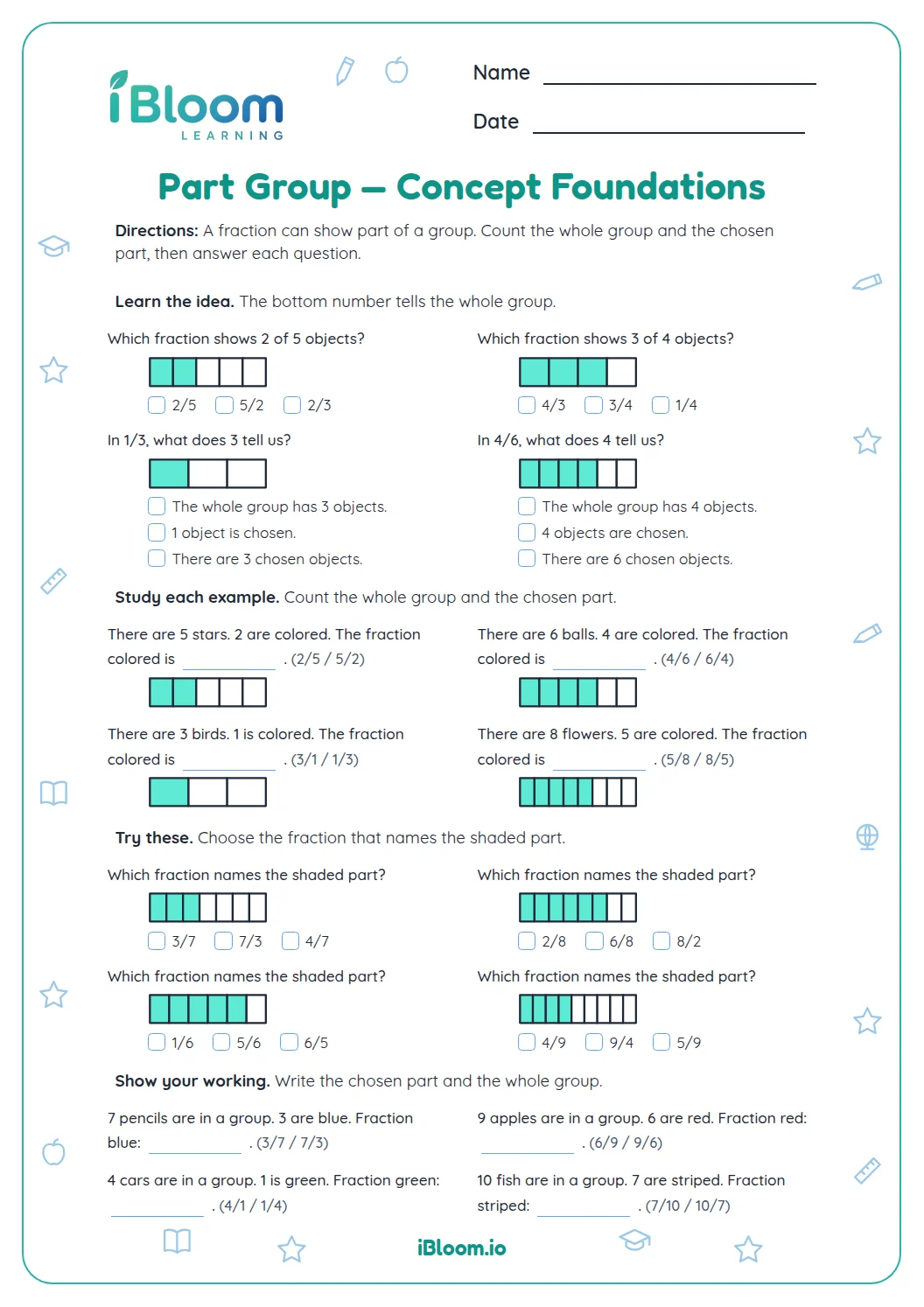
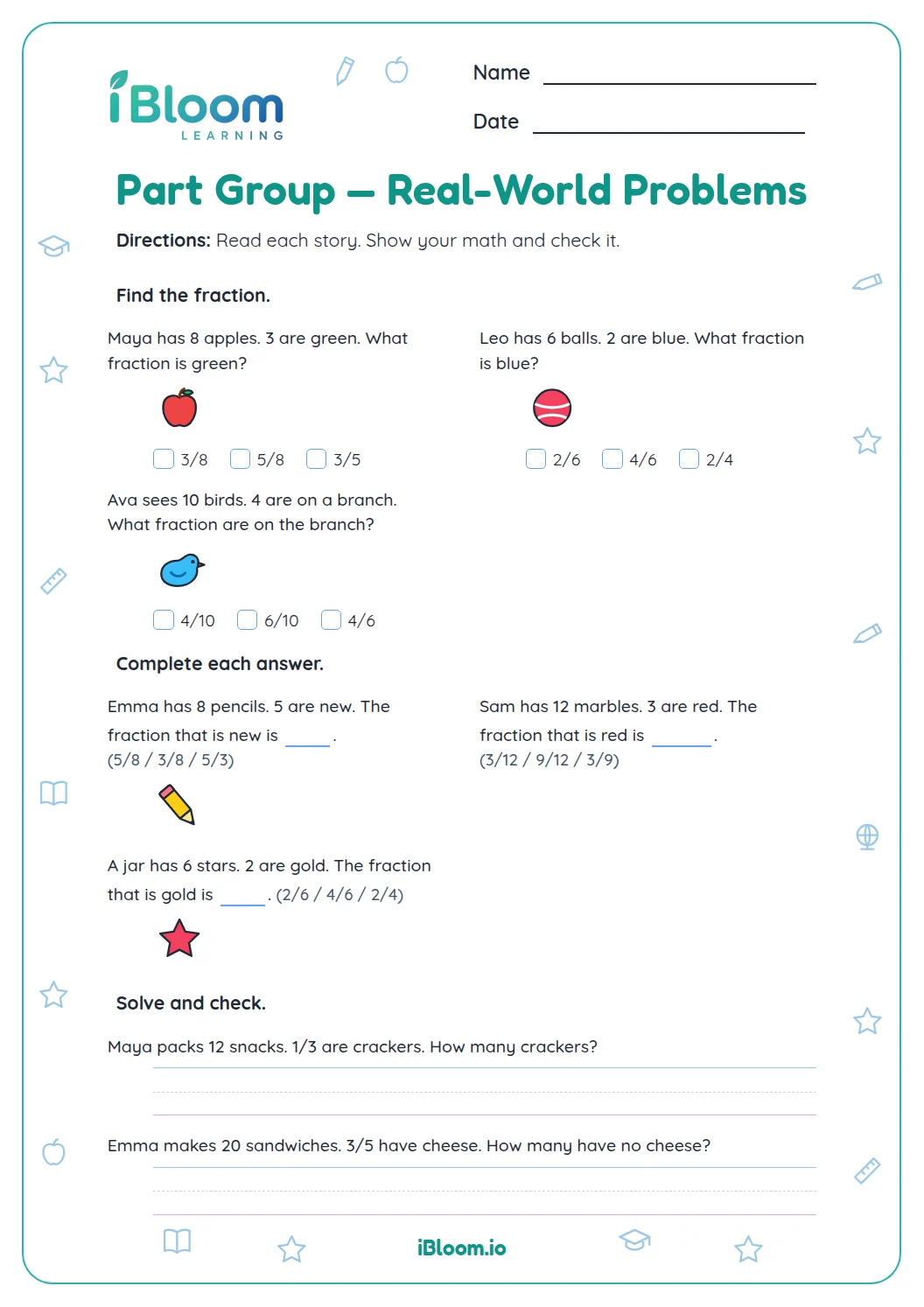
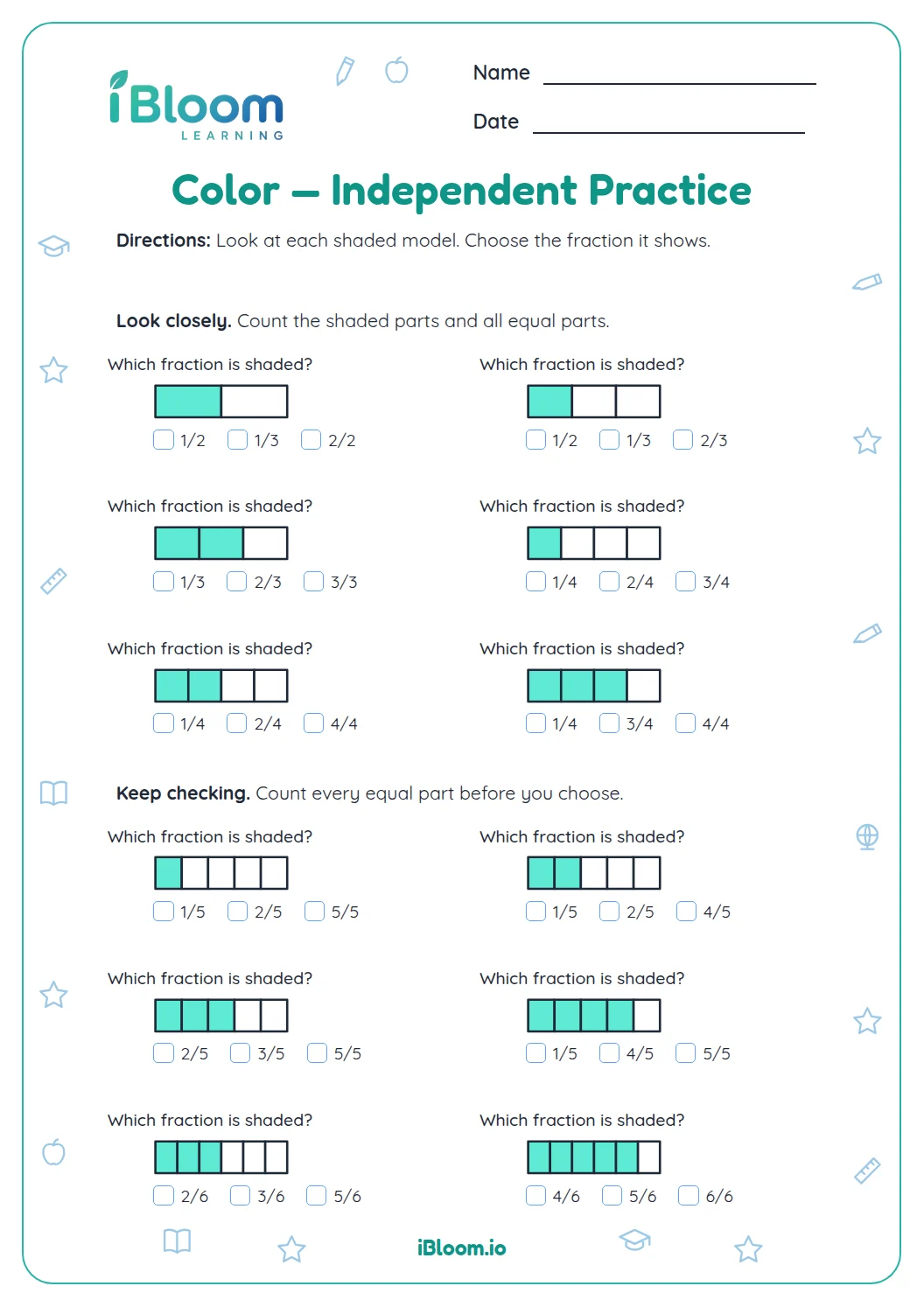
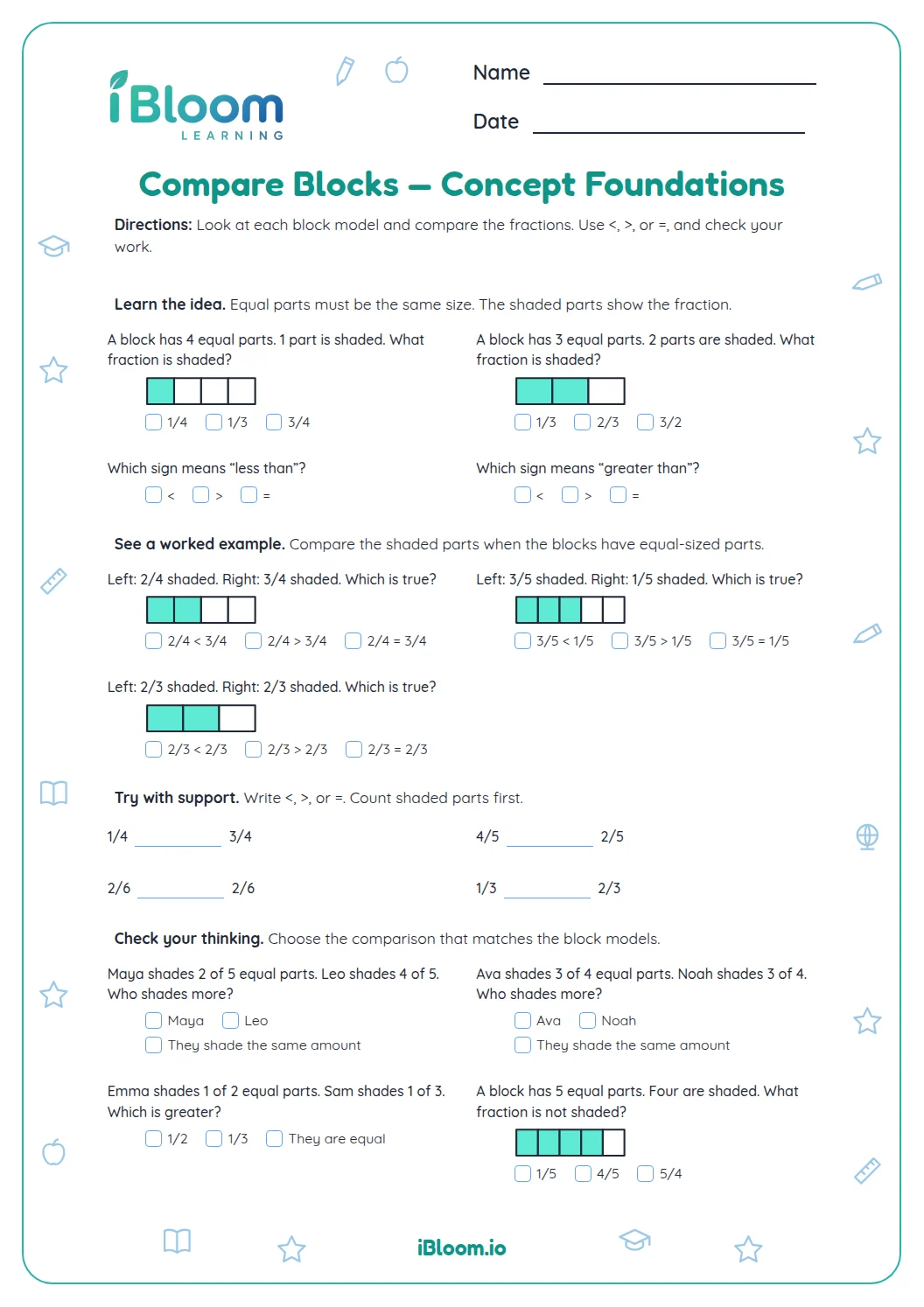
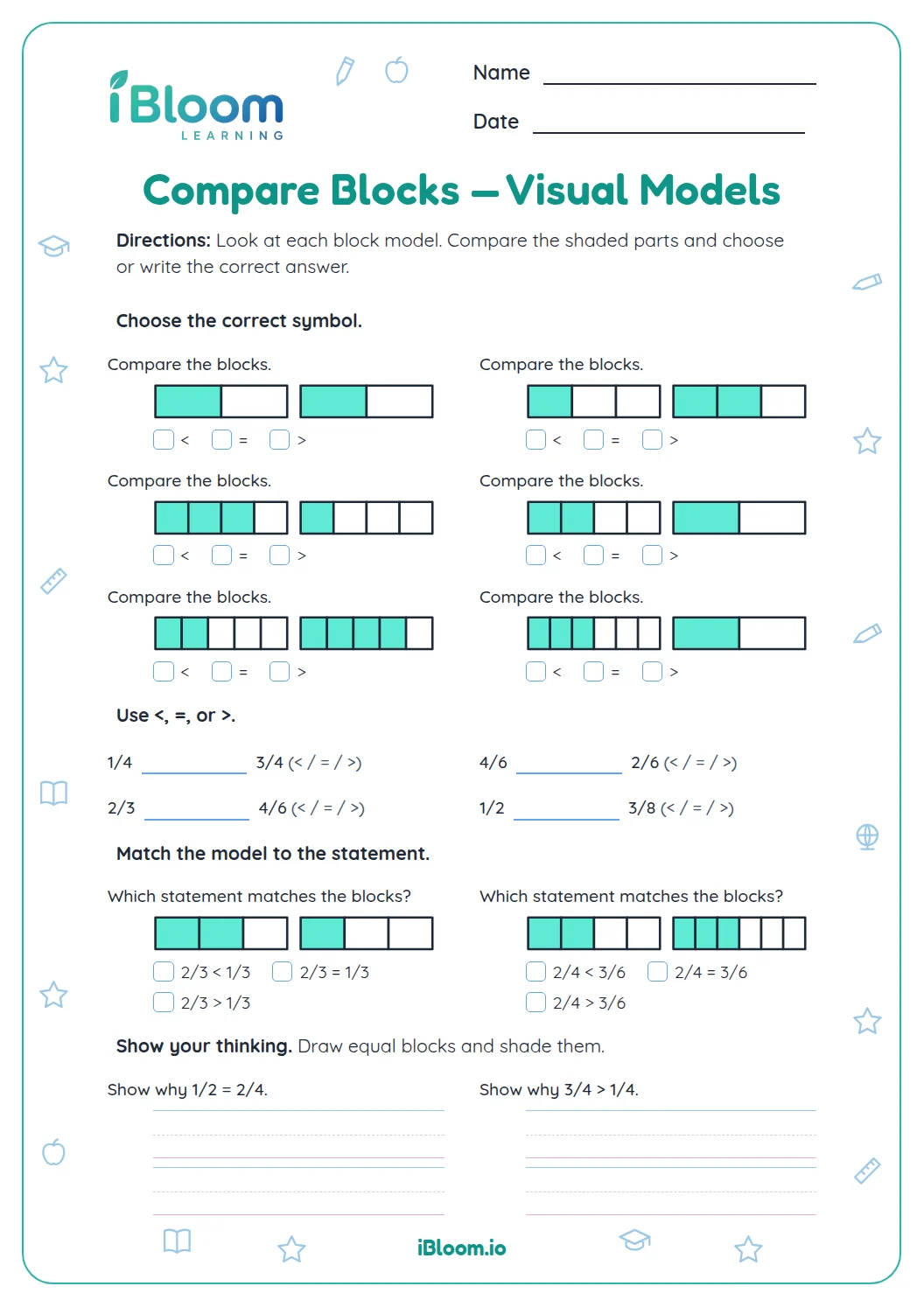
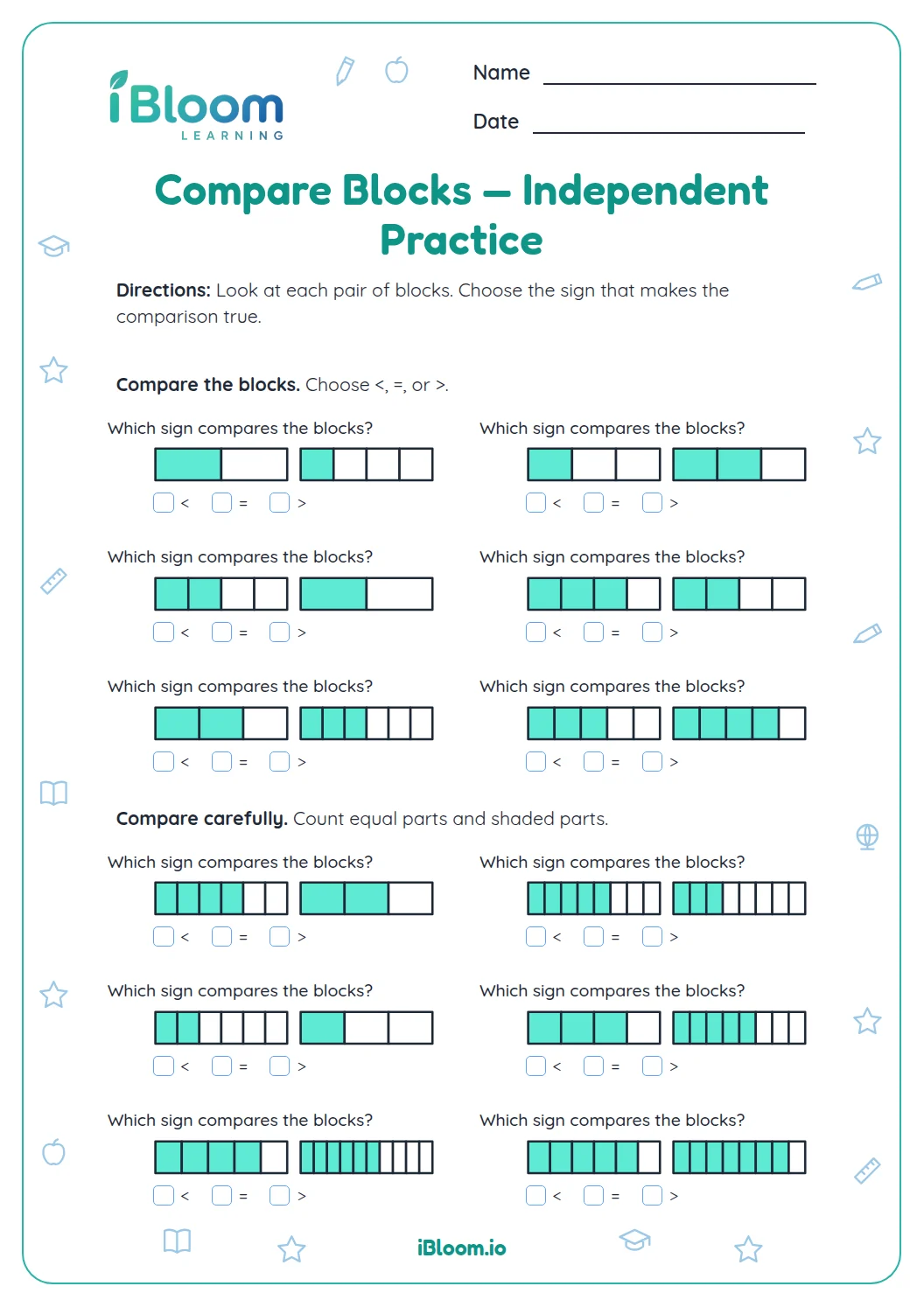
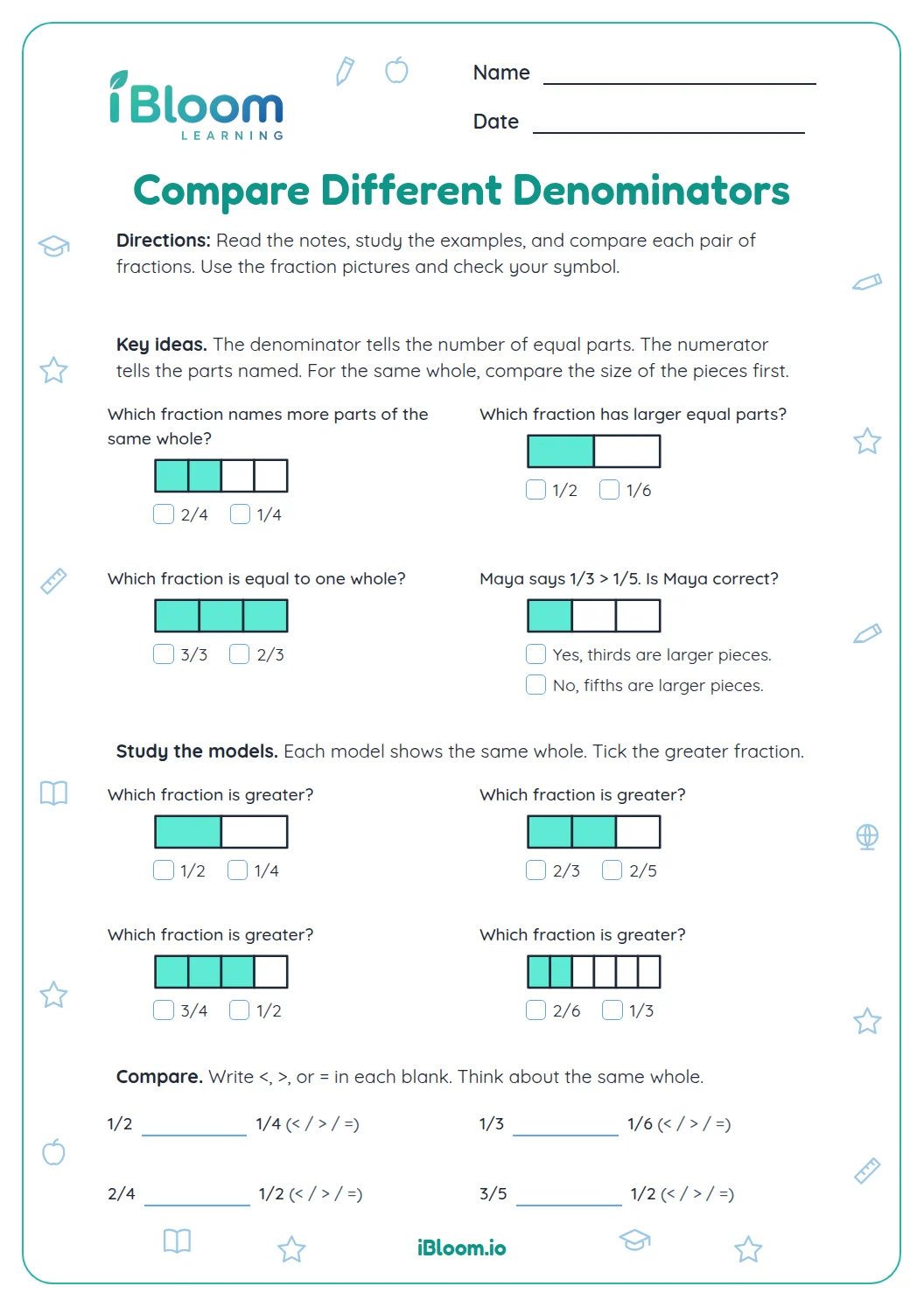
This Grade 2 fraction groups worksheet helps children read equal shares in shape models and find a fraction of a pictured set. It starts with shaded circles and bars, then uses familiar groups of apples, cookies, pencils, pears, cupcakes, and flowers. Children finish by matching fraction words and numbers. The worksheet has 14 questions in three parts and a separate answer key. It supports CCSS 2.G.A.3 through equal shares of wholes.
Aligned to 2.G.A.3
How does a model show a fraction?
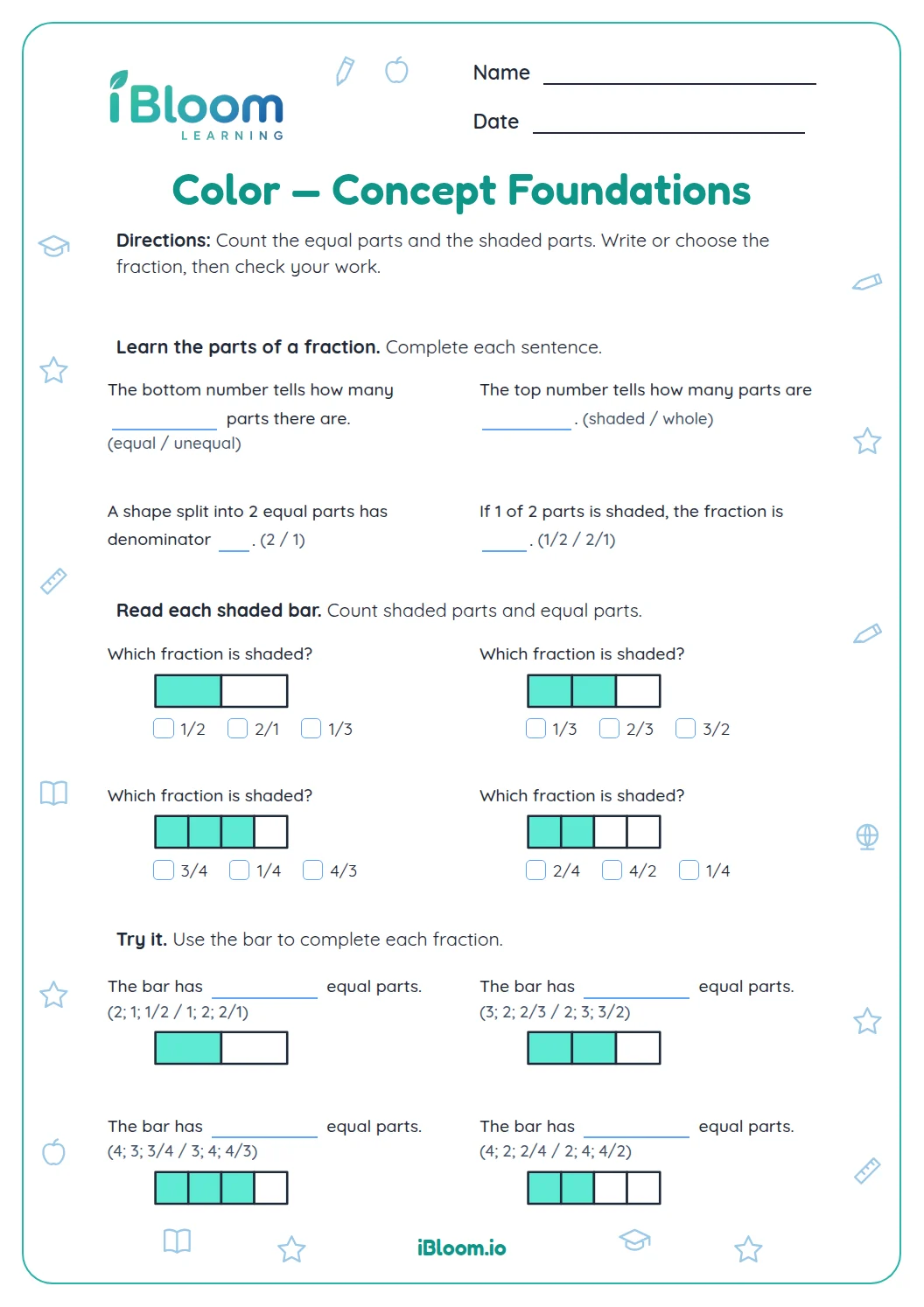
A fraction names equal shares of one whole. The bottom number tells how many equal parts make the whole; the top number tells how many of those parts are shaded.
Question 2 shows a bar split into four equal pieces, with three shaded. It represents 3/4. For a group, share the total into equal-sized groups before counting the requested share.
- 1Four equal parts make one whole.
- 2Three of the four parts are shaded.
- 3The shaded fraction is 3/4.
How do equal groups help find a fraction of a set?
Use the total number of objects and split them into the number of equal groups named by the fraction. For question 9, 12 pencils divided into four equal groups gives 3 pencils in each group, so one-fourth is 3.
What will children practice?
Fourteen questions move from shaded circle and bar models to equal-group stories and fraction words.
- Part A: read shaded fraction models
- Part B: find equal shares in pictured groups
- Part C: connect fraction words and numbers
How can an adult guide this practice?
- 1Name the whole before reading the fraction.
- 2For each shape, count the equal parts first, then count the shaded parts.
- 3For a set, circle or point to the total objects and split them into equal groups.
- 4Check that each group has the same number of objects.
- 5Use the answer key after finishing each part.
Common fraction mistakes and fixes
The mistake
Counting shaded parts but ignoring the total parts.
The fix
Say the total equal parts aloud first; in 3/4, the whole has four parts.
The mistake
Making groups of different sizes.
The fix
Share one object at a time among groups so each group stays equal.
The mistake
Finding one part when several are requested.
The fix
Read both numbers: the denominator sets the group count and the numerator counts how many groups to take.
Common Core alignment
This worksheet gives children focused practice with the ideas named in the standards below.
Name halves, thirds, and fourths in equal shares of circles and rectangles.
On this sheet: Children identify and describe equal shares in circle and rectangle models.
Show the official wordingHide the official wording
Partition circles and rectangles into two, three, or four equal shares, describe the shares using the words halves, thirds, half of, a third of, etc., and describe the whole as two halves, three thirds, four fourths. Recognize that equal shares of identical wholes need not have the same shape.
What to practice next
Make more practice
Further reading
Questions parents and teachers ask
What does the bottom number in a fraction tell a child?
It tells how many equal parts make one whole. In 3/4, the four means the whole is split into four equal pieces. The top number, three, counts the pieces being named or shaded. Ask the child to point to the related question and explain the clue before checking the answer key.
How can a child find one-fourth of 12 objects?
Split the 12 objects into four equal groups. Each group has 3 objects, so one-fourth of 12 is 3. The pictured pencils in question 9 make the total set visible. Ask the child to point to the related question and explain the clue before checking the answer key.
Does the worksheet include an answer key?
Yes. The printable includes a separate key with the correct fraction names and group answers. A child can try each question first, then use the key to check the result. Ask the child to point to the related question and explain the clue before checking the answer key.
What is the difference between a fraction model and a fraction of a group?
A shape model divides one whole into equal pieces, while a group model starts with separate objects. Both use equal shares: one names pieces of a shape, and the other counts objects in equal groups. Ask the child to point to the related question and explain the clue before checking the answer key.
Can I use this worksheet for a short lesson?
Yes. Start with questions 1–6 and ask the child to describe the equal parts aloud. Then work through the group problems by arranging counters or using the printed count drawings. Ask the child to point to the related question and explain the clue before checking the answer key.