

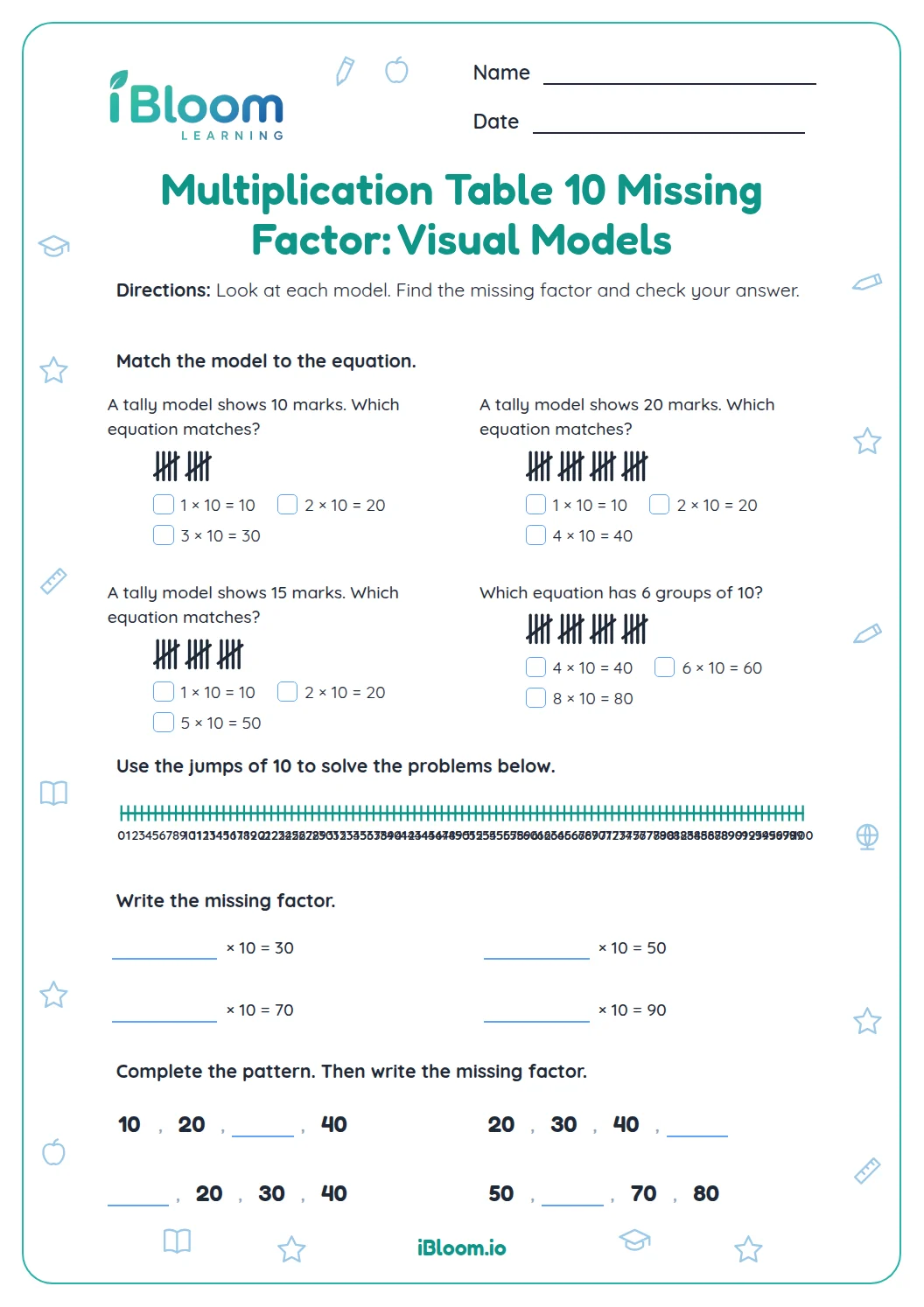
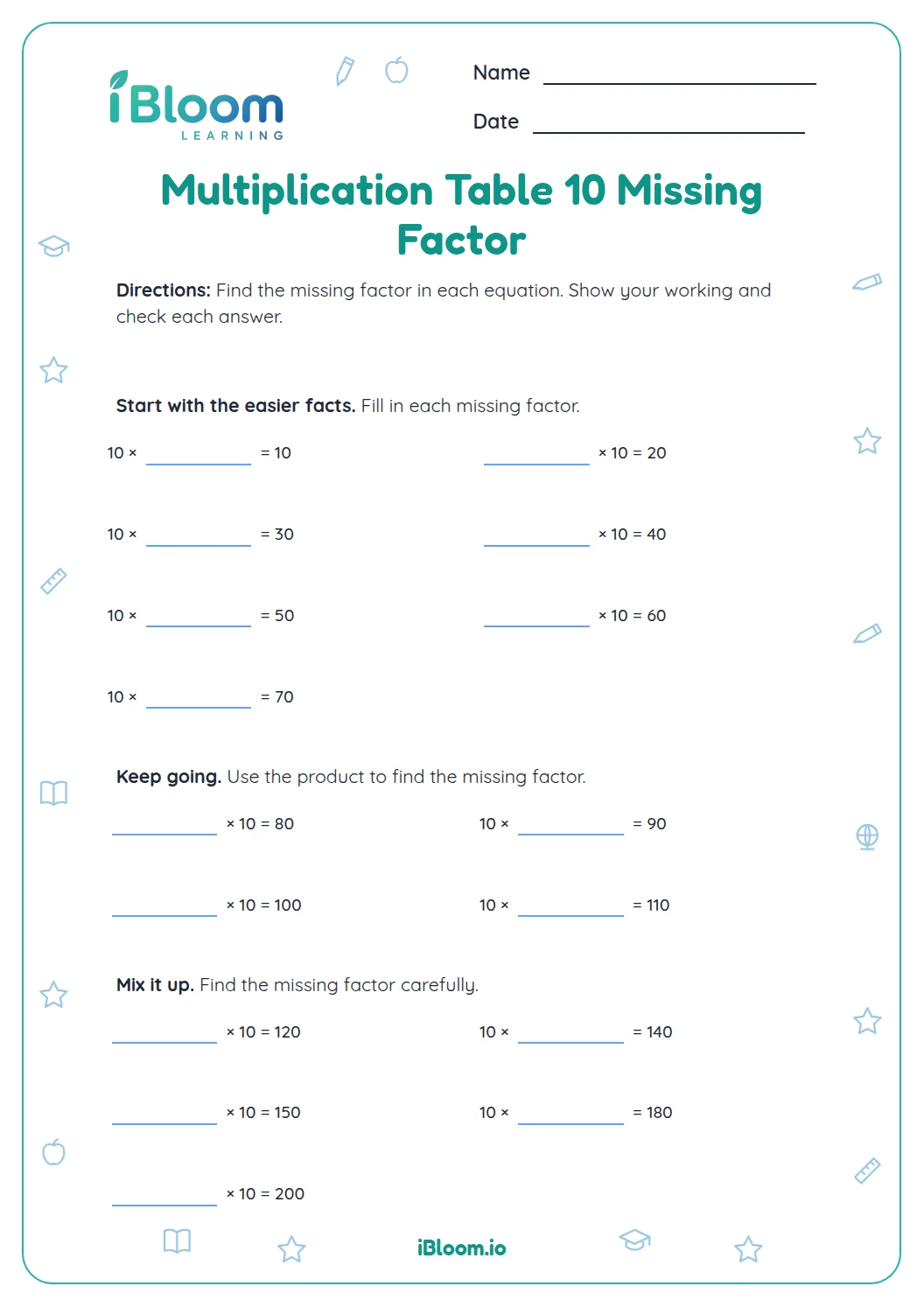
About this worksheet
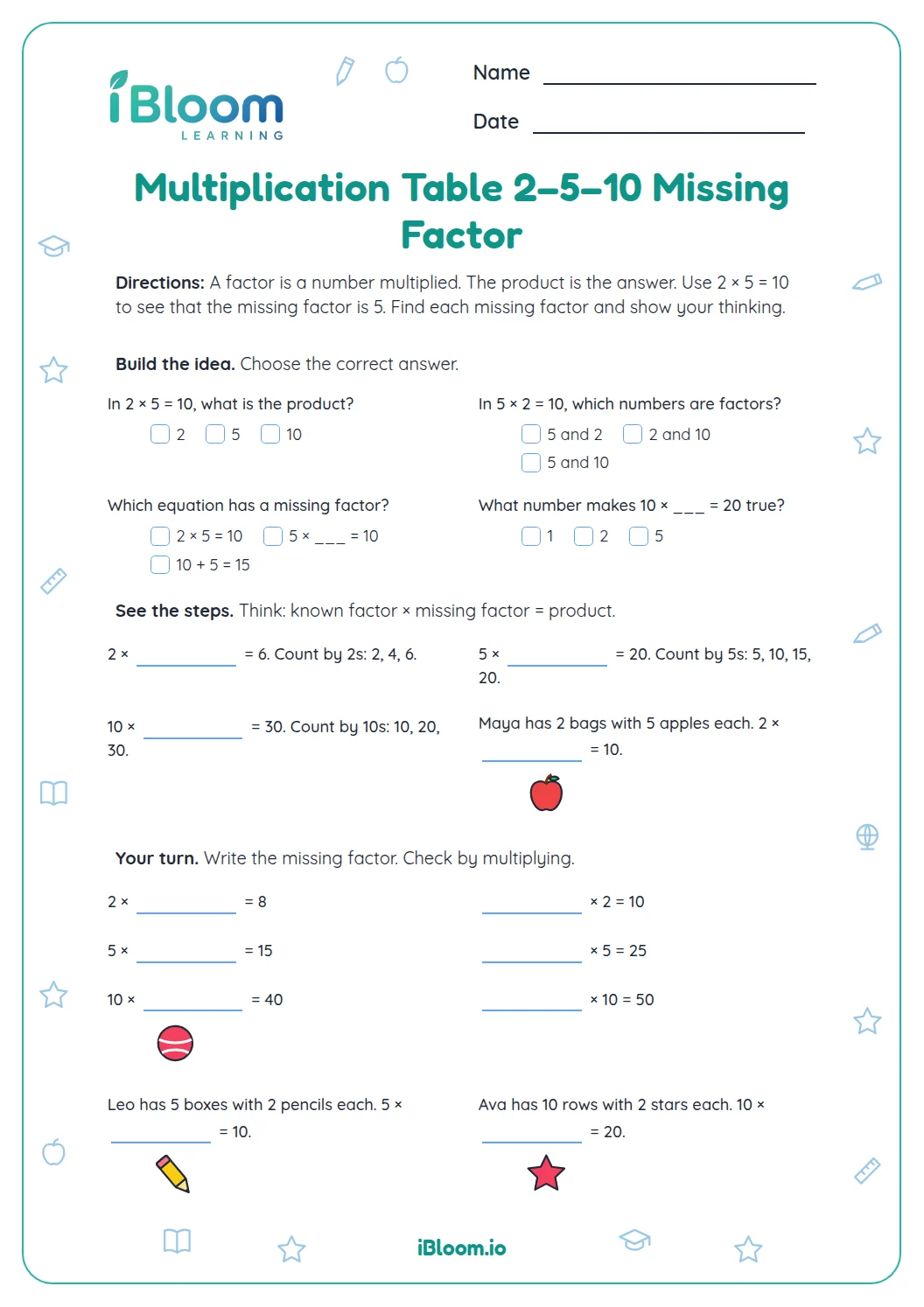
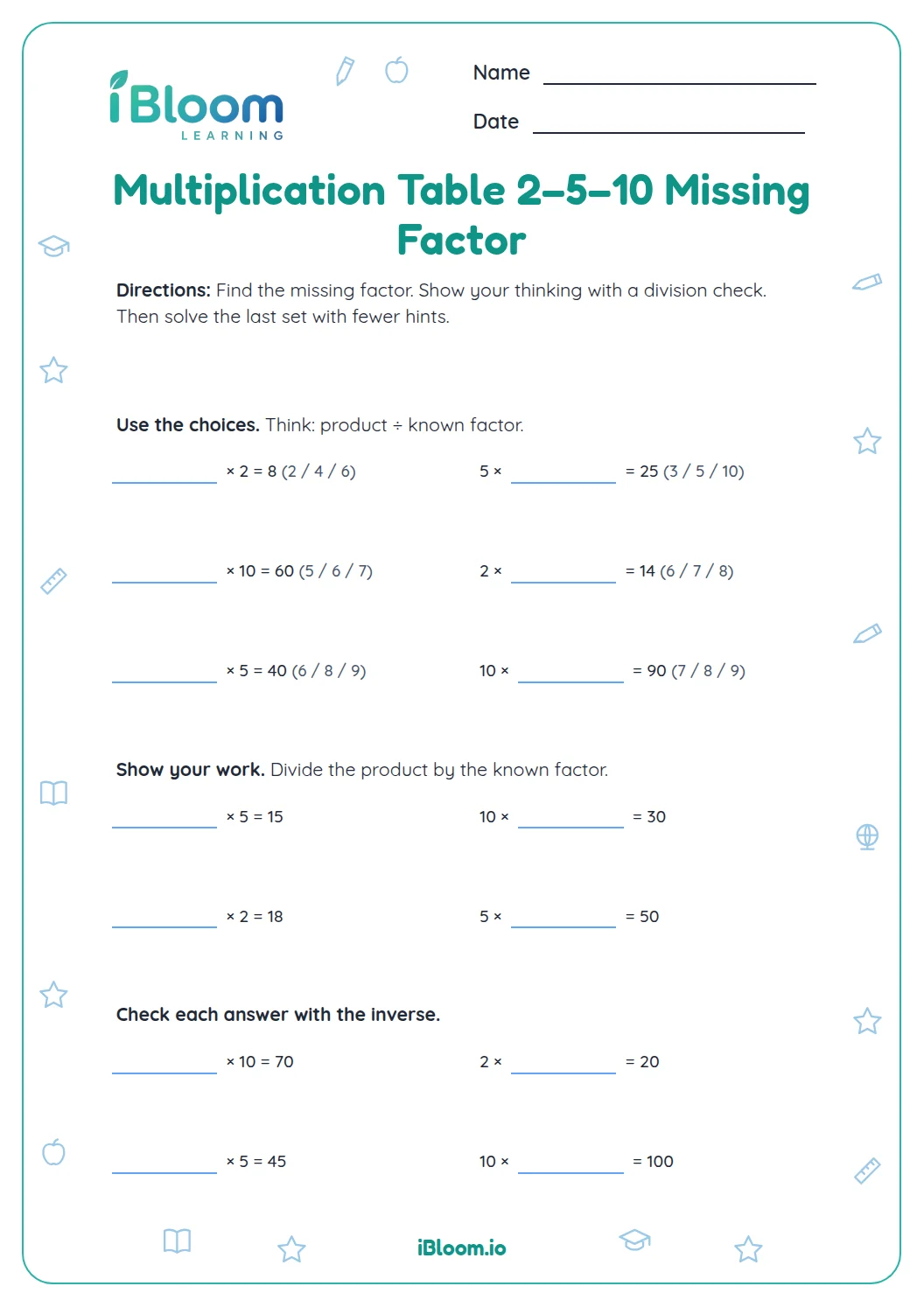
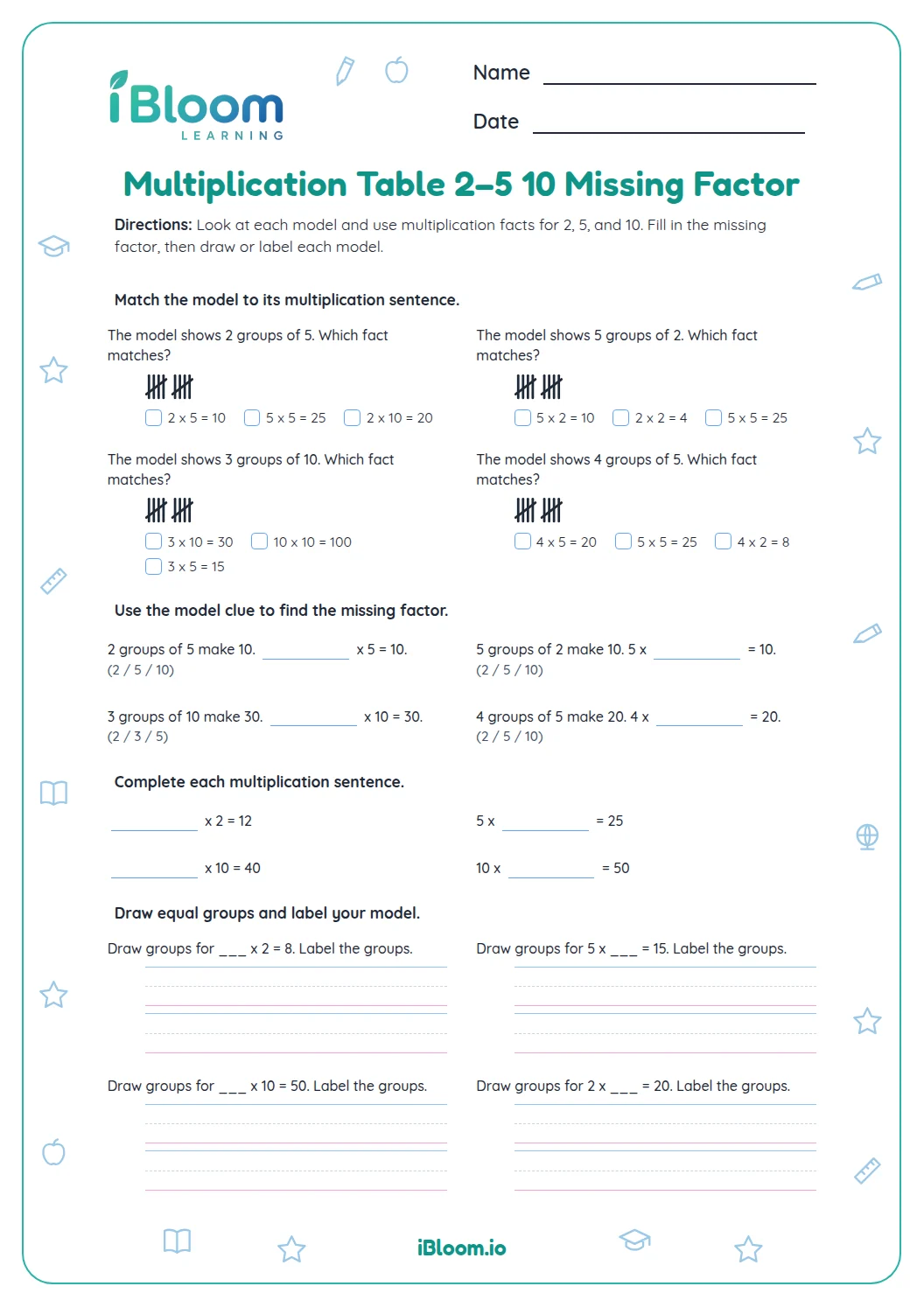
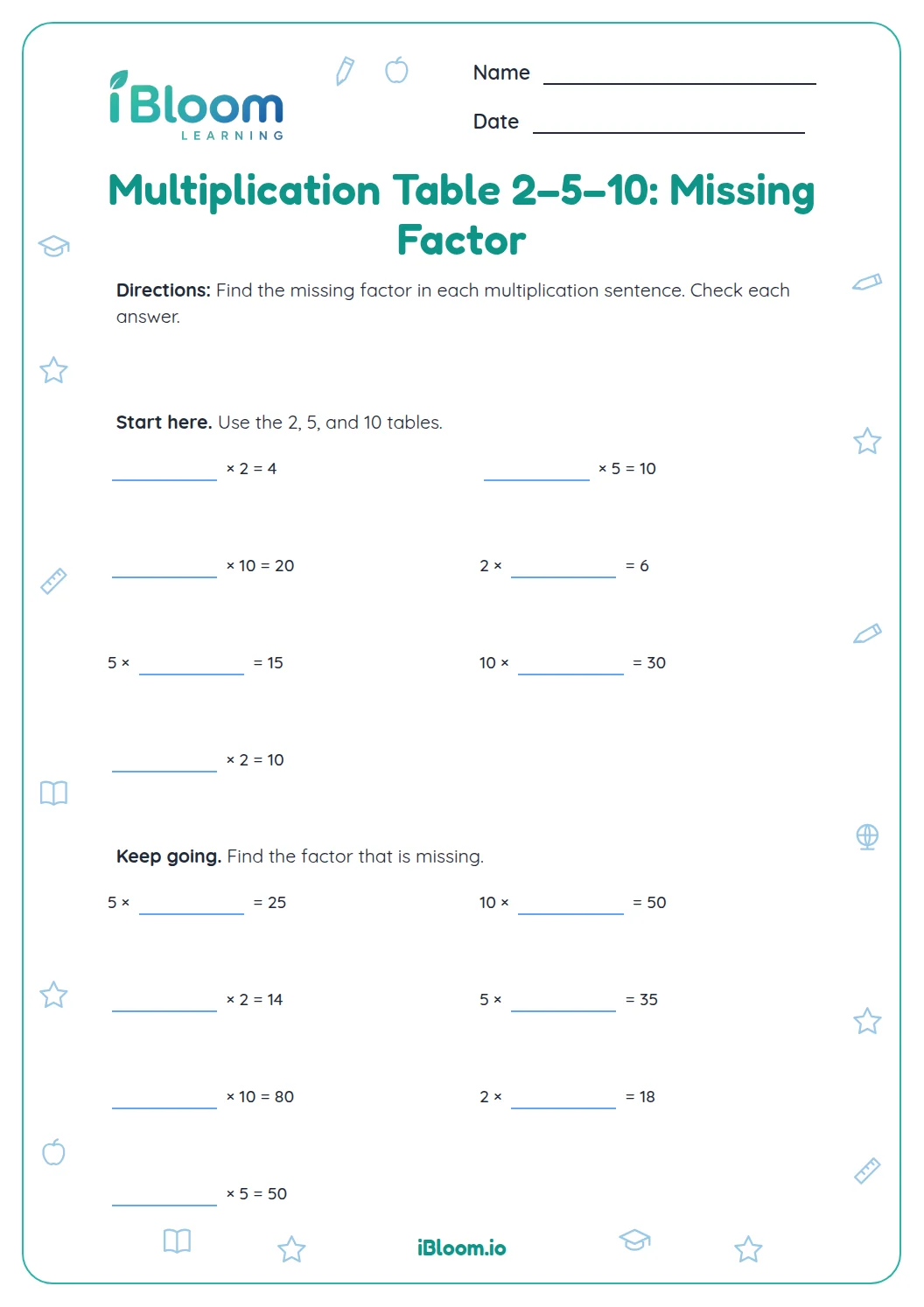
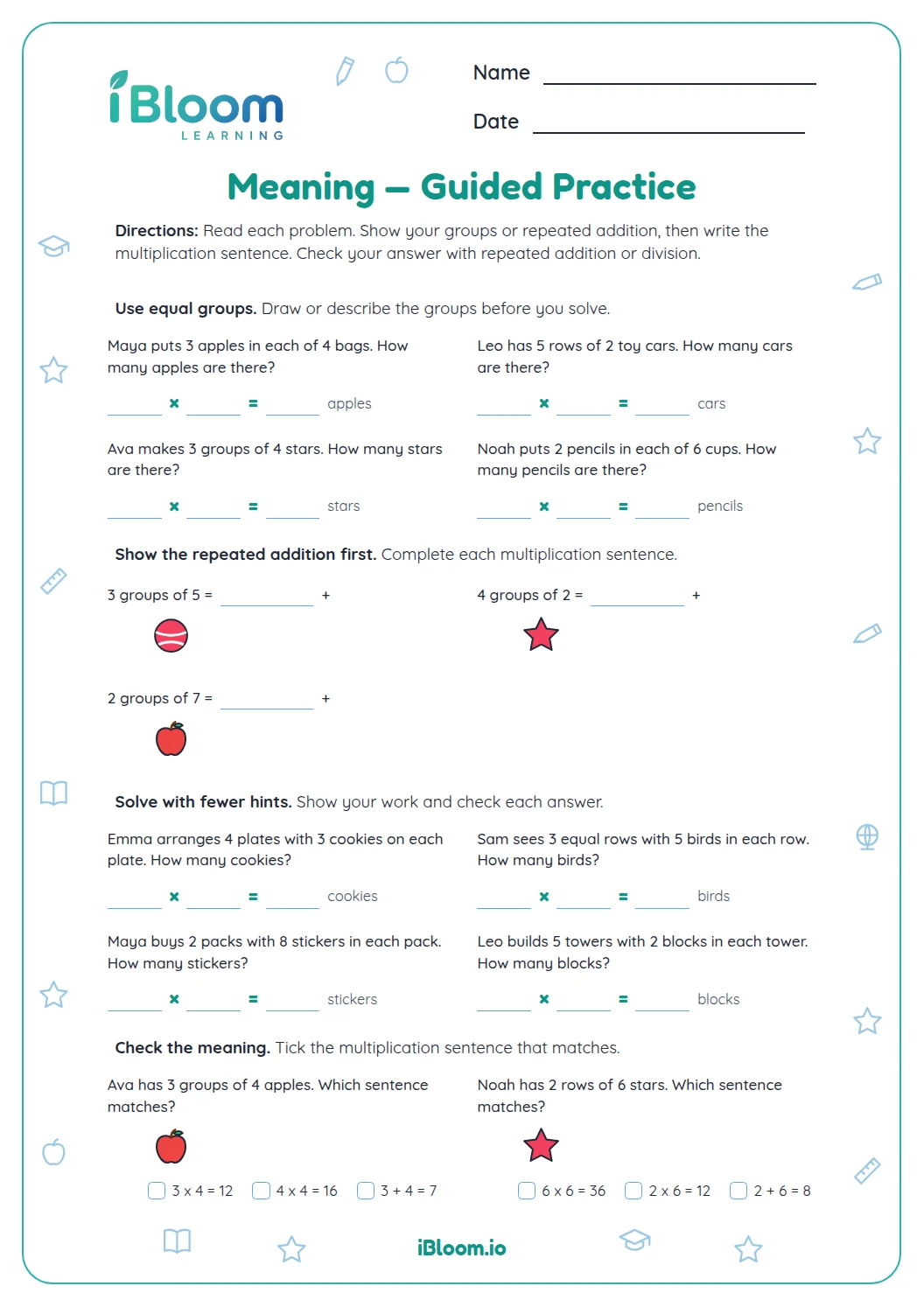
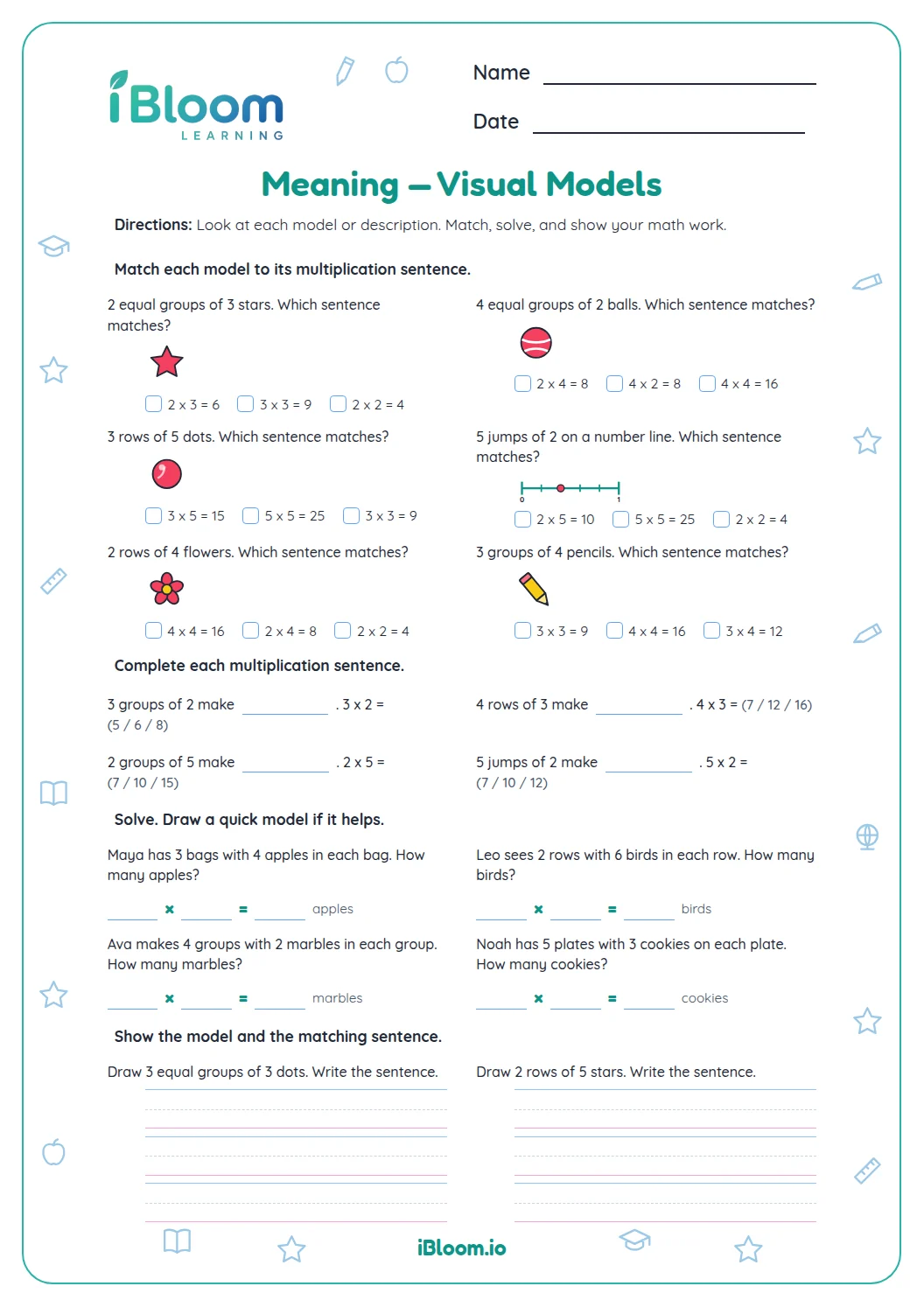
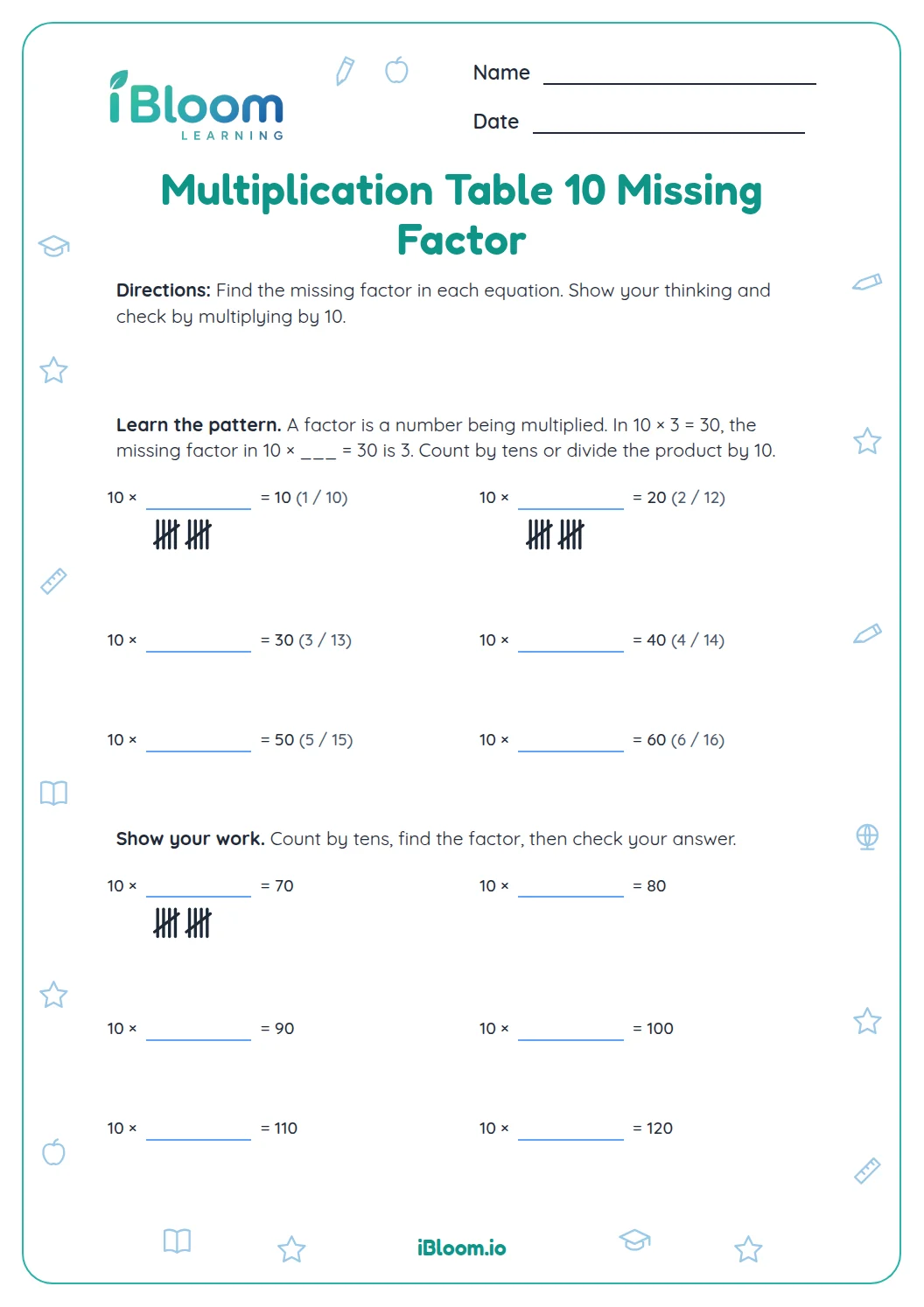
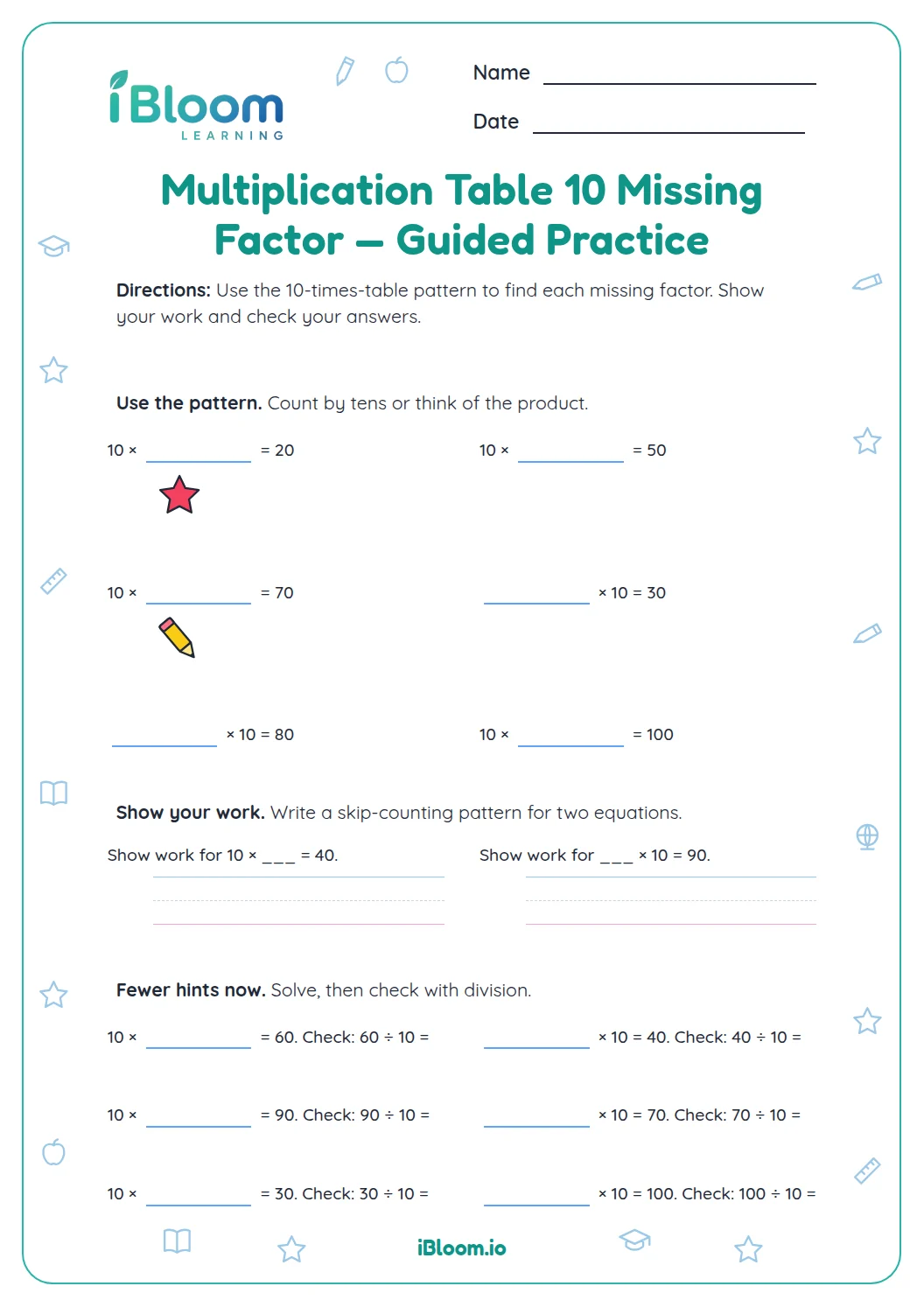
This Grade 2 worksheet uses equal-group stories to practice missing factors in the 2, 5 and 10 tables. Students find how many are in each group, calculate totals for known groups, and solve a final set of unknown-factor problems. Each prompt gives the full total and group count needed for its equation. The work introduces the unknown-number relationship described in CCSS 3.OA.A.4, using the named tables as an introductory skill. The printable includes a separate answer key.
Aligned to 3.OA.A.4
How do you find a missing factor?
A multiplication equation has two factors and a product. When a story gives the number of groups and the total, ask what equal group size makes the equation true. In 4 × 5 = 20, the missing factor is 5 because four groups of five make 20.
The worksheet keeps facts in the 2, 5 and 10 tables so students can focus on the relationship between the group count, group size and total.
What is on the worksheet?
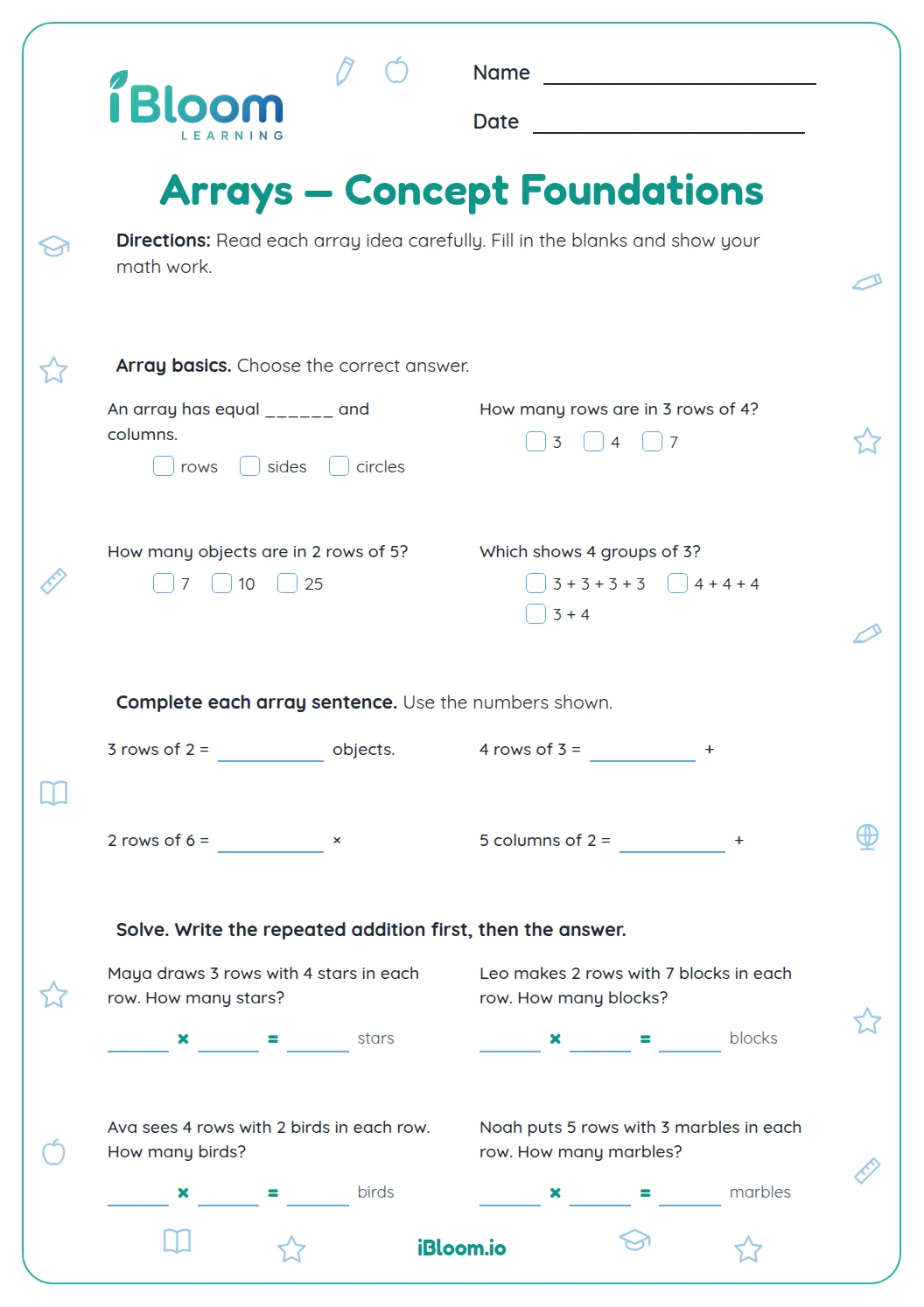
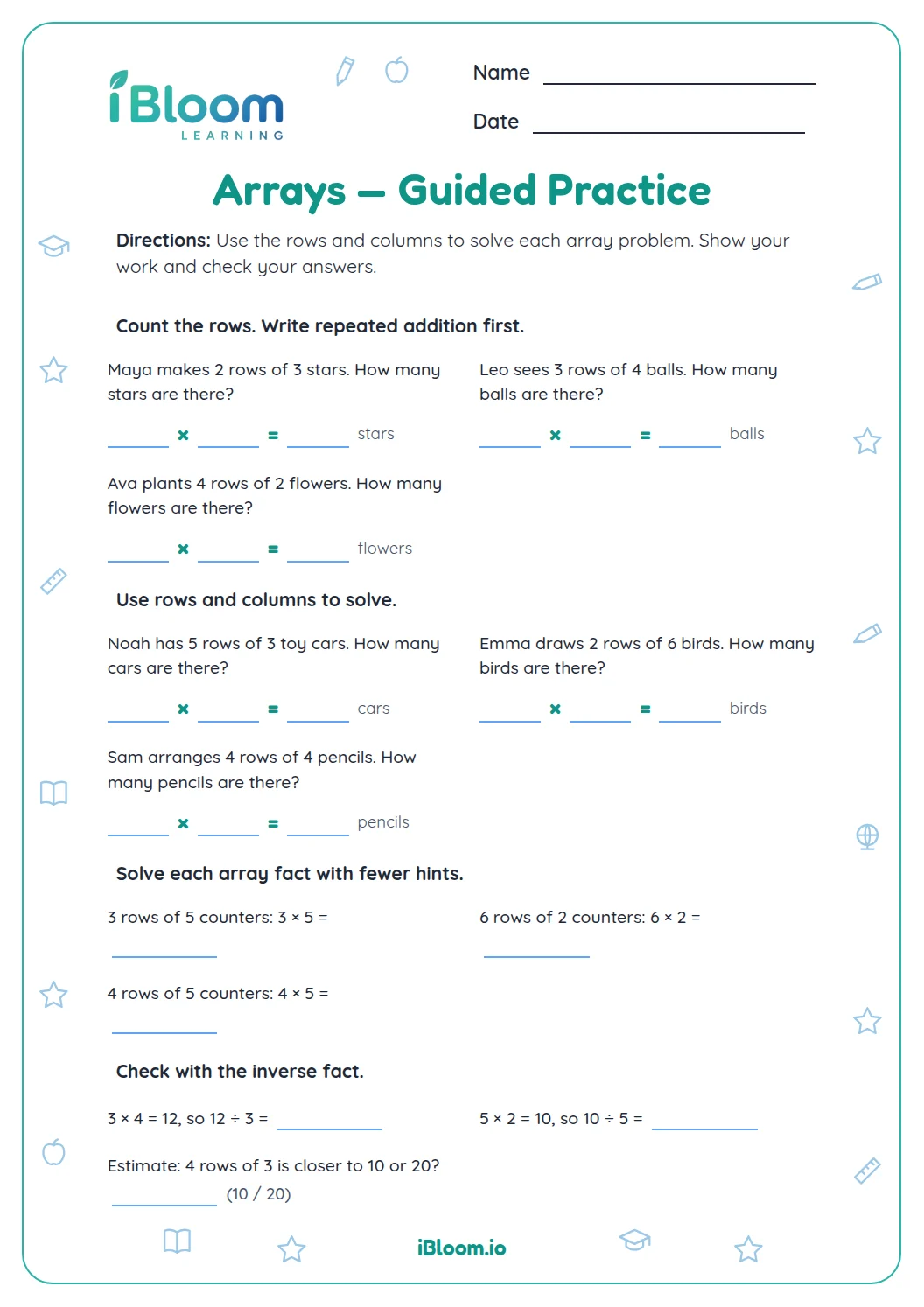
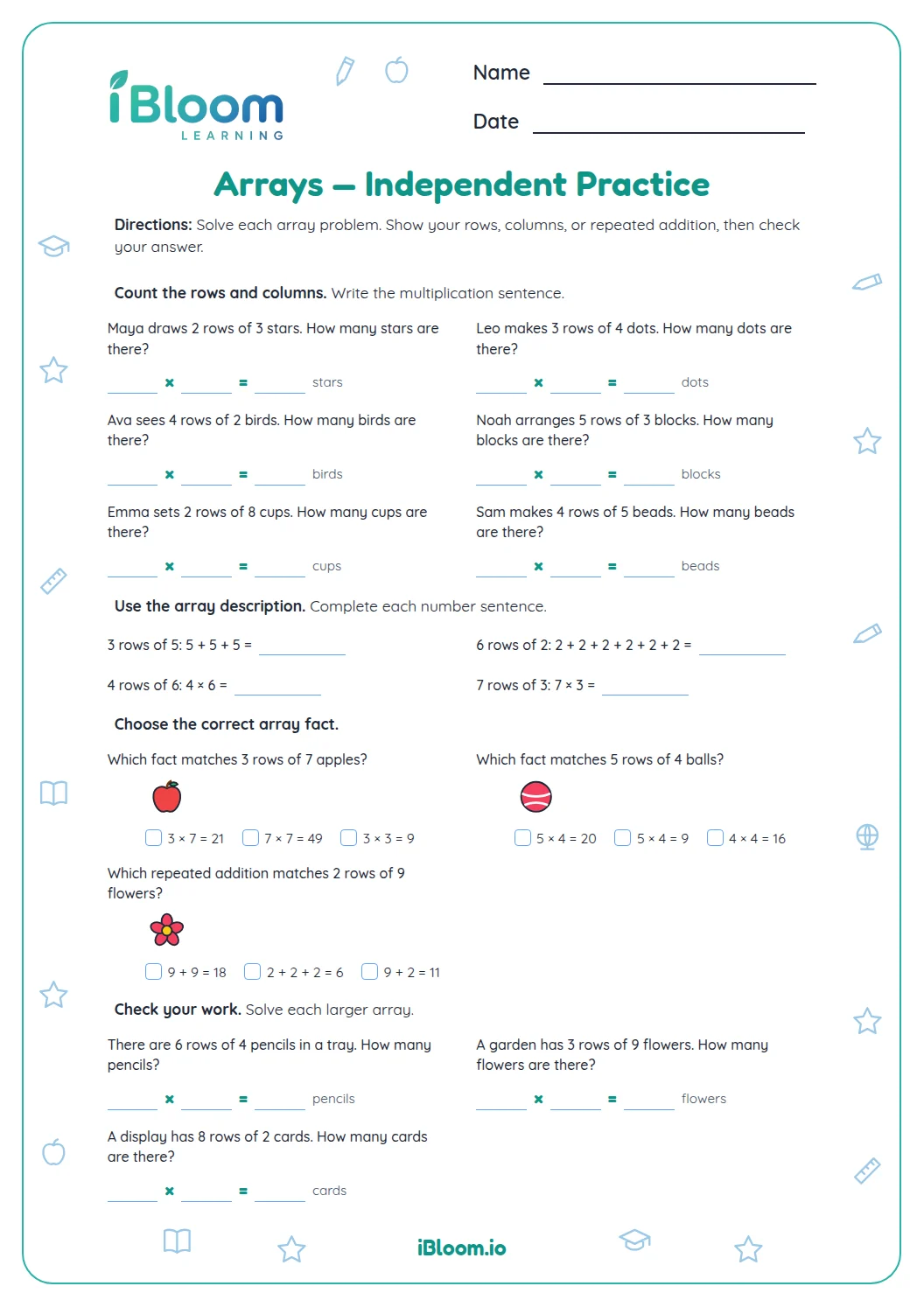
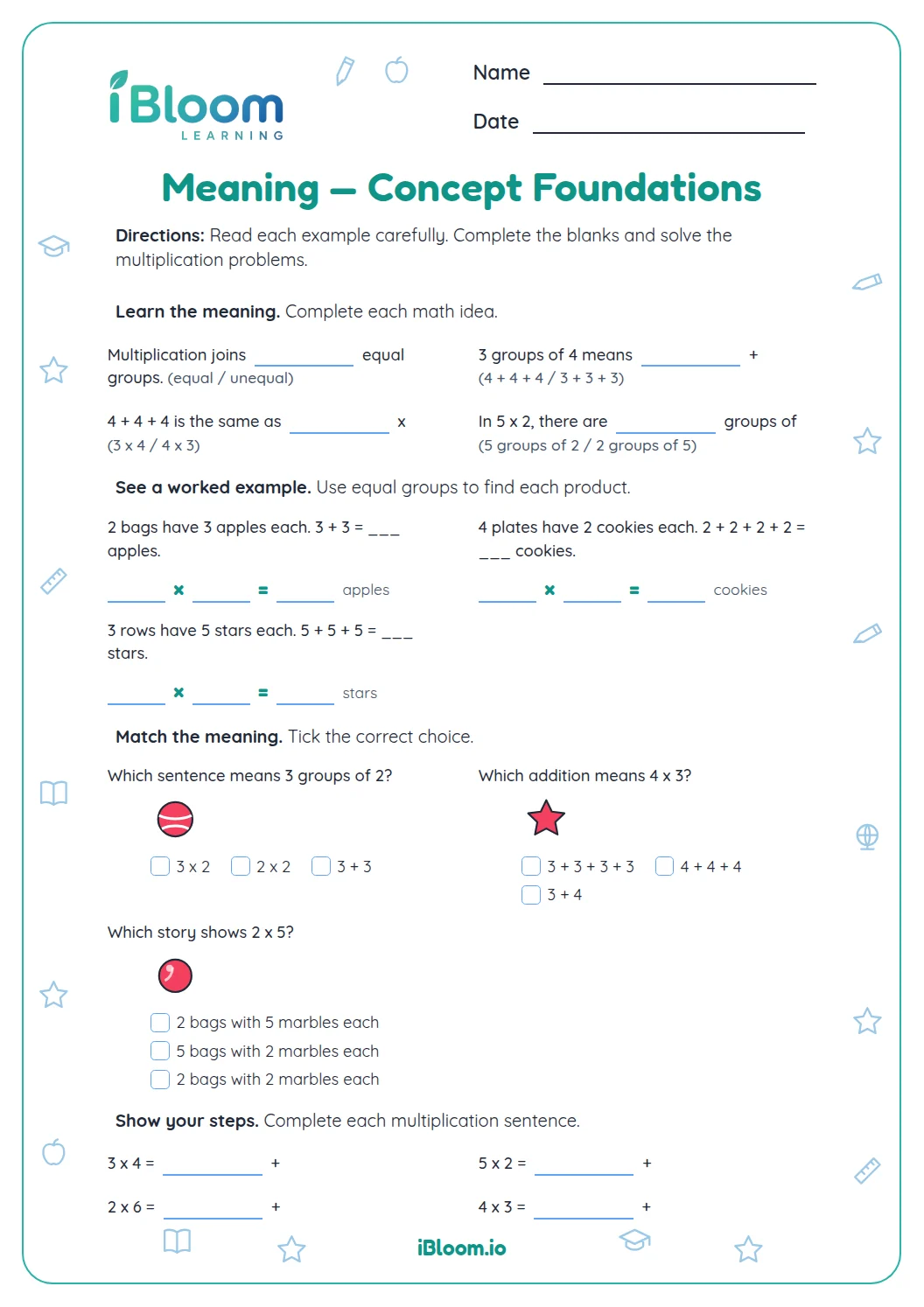
Part A finds the amount in one equal group. Part B finds a total when both factors are known. Part C returns to missing factors in different stories. Every problem names the total or asks for it explicitly.
How can you solve ___ × 2 = 14?
Seven groups of 2 make 14, so the missing factor is 7. Check: 7 × 2 = 14.
How to use this worksheet
- 1Read the part heading and note what each question asks you to find.
- 2Write or say an equation using the numbers and operation in the prompt.
- 3Solve carefully, keeping track of place value and what each blank represents.
- 4Use the answer key to check, then correct any equation that does not balance.
Common mistakes and quick fixes
The mistake
Writing the total as the missing factor.
The fix
Check that the two factors multiply to the stated total.
The mistake
Confusing the number of groups with the number in each group.
The fix
Underline the group count and label the unknown as the size of one group.
The mistake
Using a number without checking what the blank represents.
The fix
Read the words and labels beside the blank, then write the requested value or unit.
Common Core alignment
This worksheet practices 3.OA.A.4 through missing factors problems.
Find the unknown whole number in a multiplication equation with three whole numbers.
On this sheet: Students use familiar 2, 5 and 10 groups to find an unknown factor in a multiplication equation.
Show the official wordingHide the official wording
Determine the unknown whole number in a multiplication or division equation relating three whole numbers.
What to practice next
Make more practice
Further reading
Questions parents and teachers ask
How do you find a missing factor?
Use the known table fact to find the number that completes the equation. For example, ___ × 2 = 14 asks how many groups of 2 make 14; seven groups work because 7 × 2 = 14. Students can use the example and then try another item independently.
Which multiplication facts appear here?
Every equation uses a 2, 5, or 10 fact, paired with another factor from 1 through 10. Students find missing factors, calculate products, and use equal-group stories to connect the fact to a situation. Students can use the example and then try another item independently.
How can students check a missing factor?
Multiply the proposed factor by the known factor and compare the product with the total. For 5 × ___ = 35, the missing factor is 7 because 5 × 7 equals 35. Reversing the factors gives the same product. Students can use the example and then try another item independently.
What is an equal group in a story?
An equal-group story has the same number of items in every group. Identify the number of groups and the number in each group, then write a multiplication equation. If the total is known, solve for the factor that is missing. Students can use the example and then try another item independently.
What does the answer key show?
The separate key gives the missing factor or product for each of the 18 questions. It follows the worksheet pages, so students can complete a part first and then use the matching answer to check their equation. Students can use the example and then try another item independently.