


About this worksheet
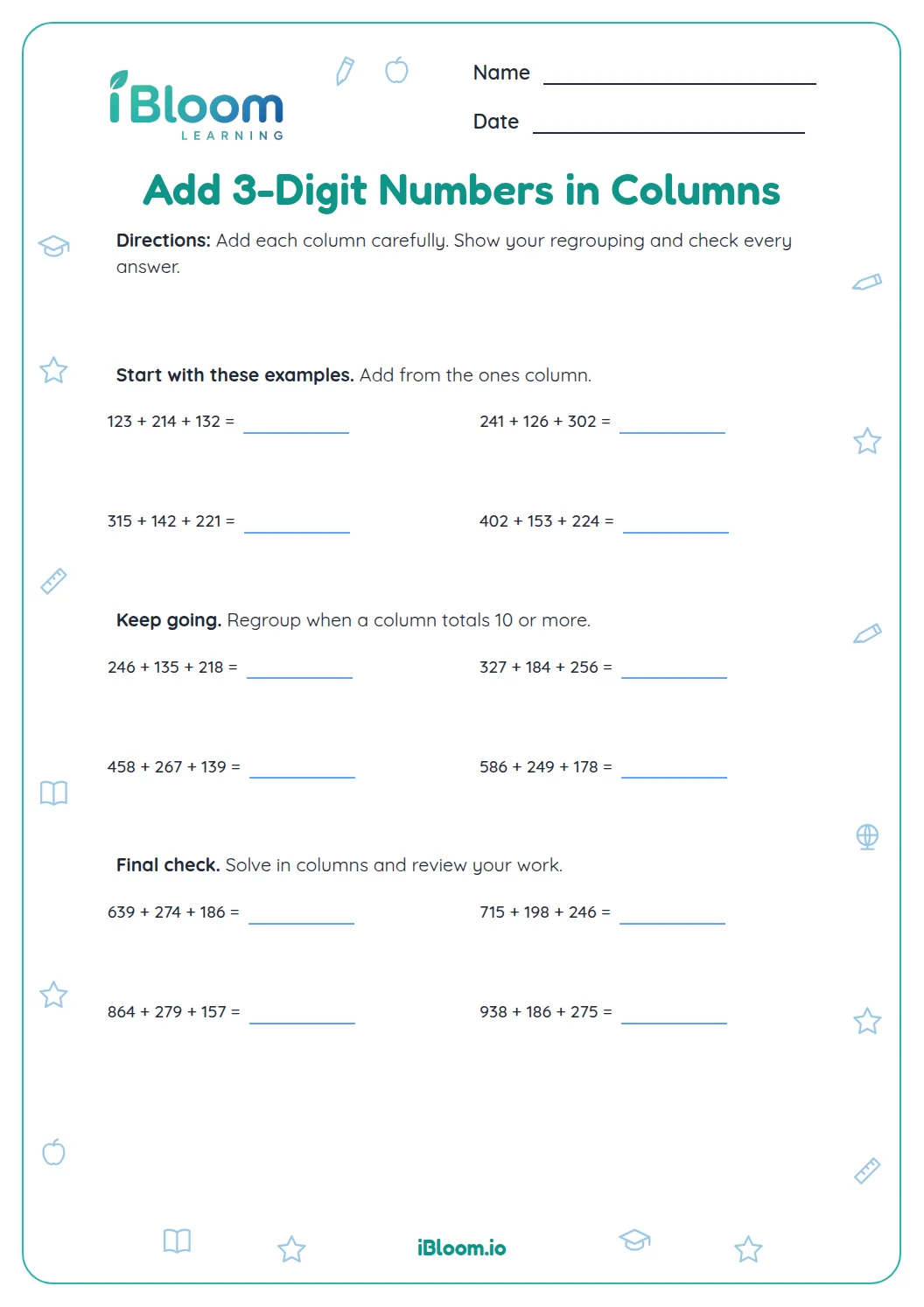
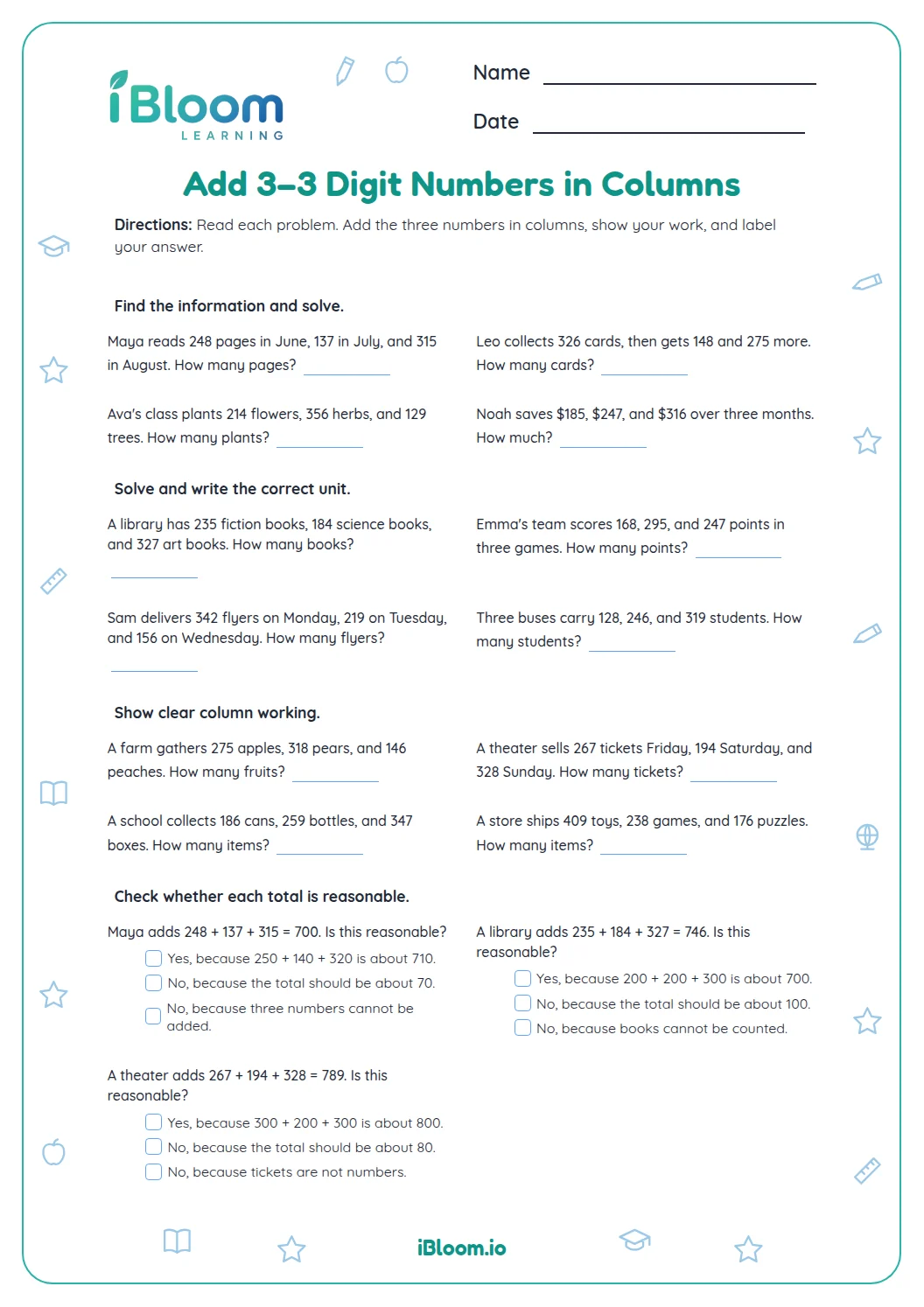
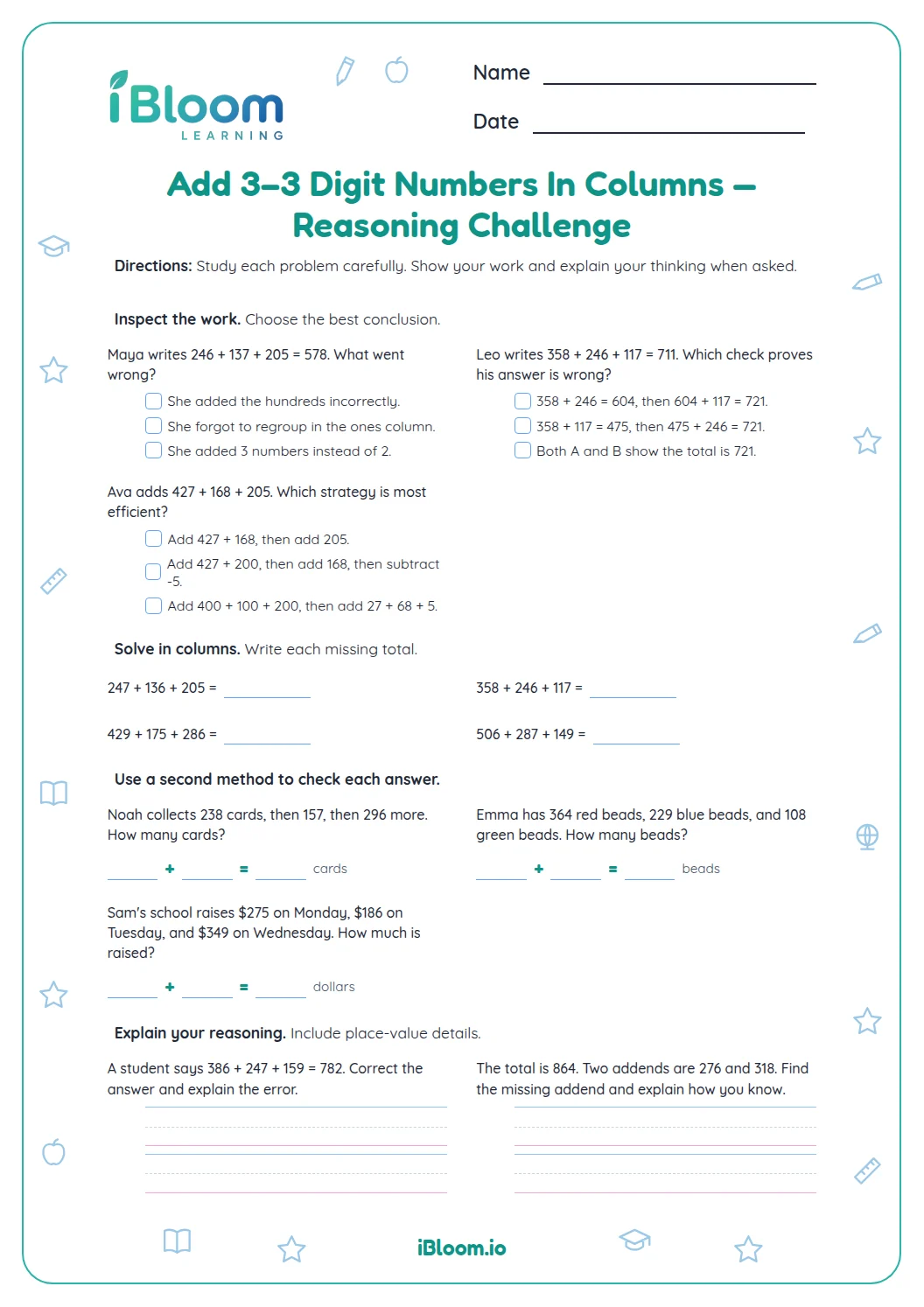
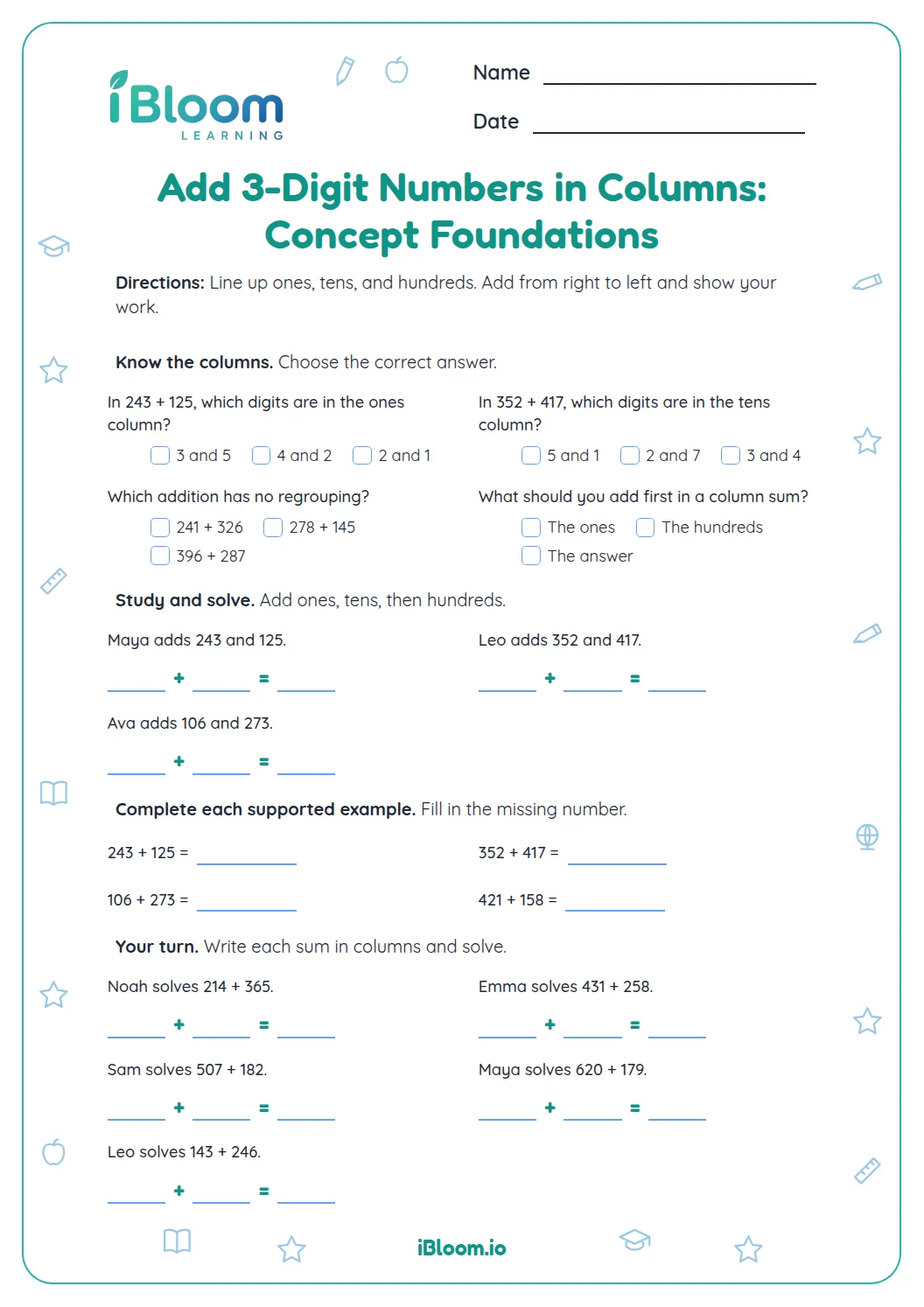
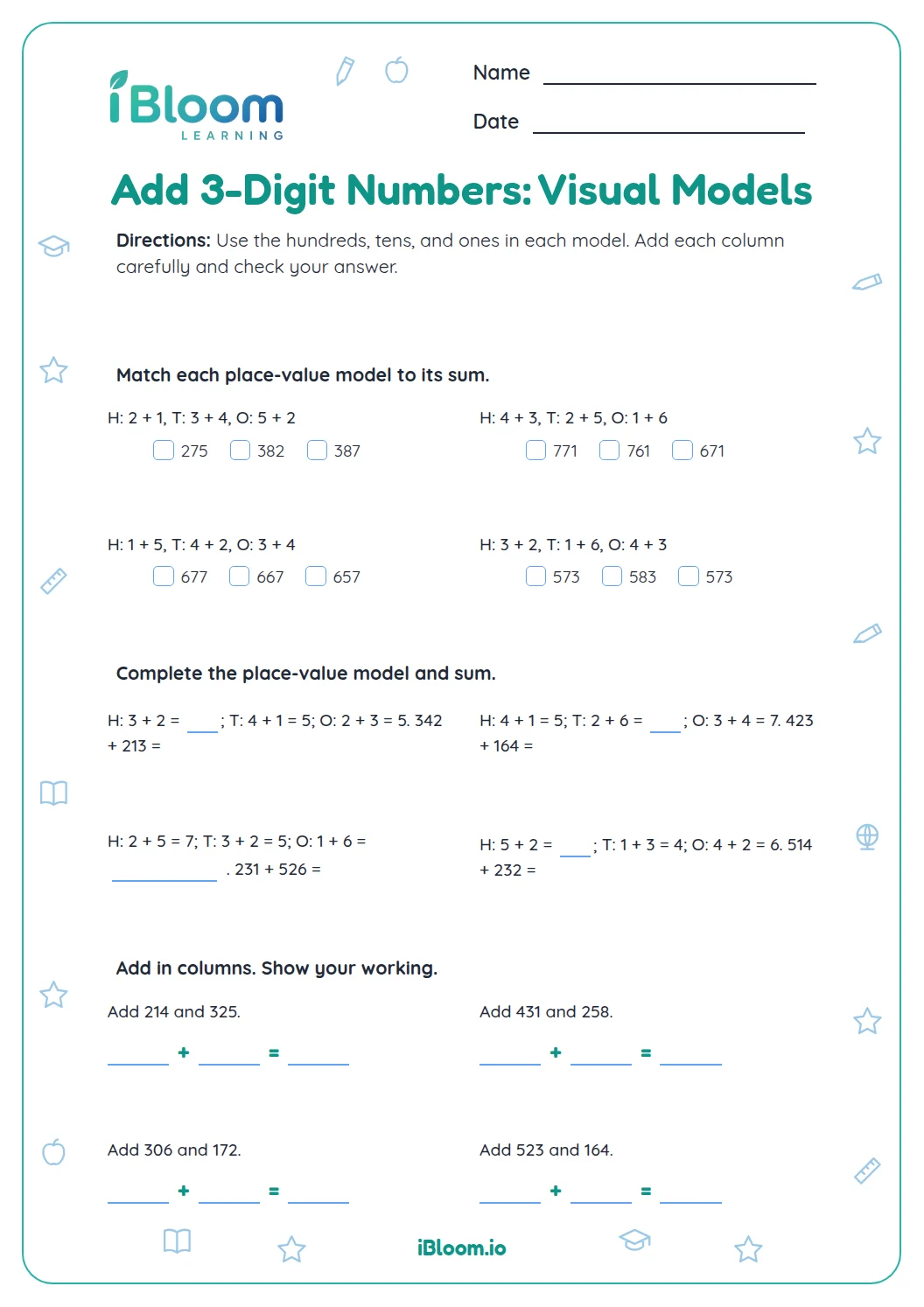
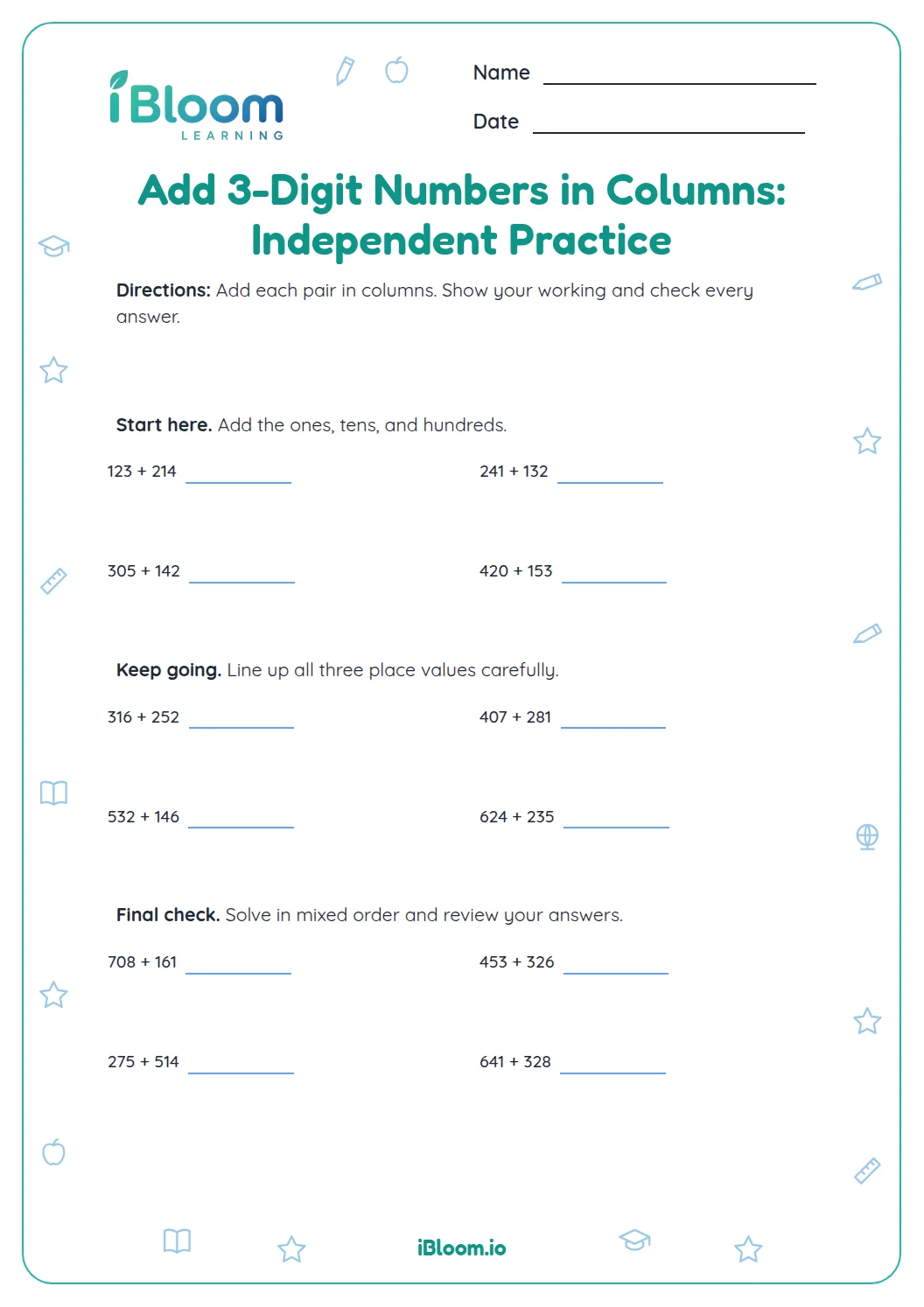
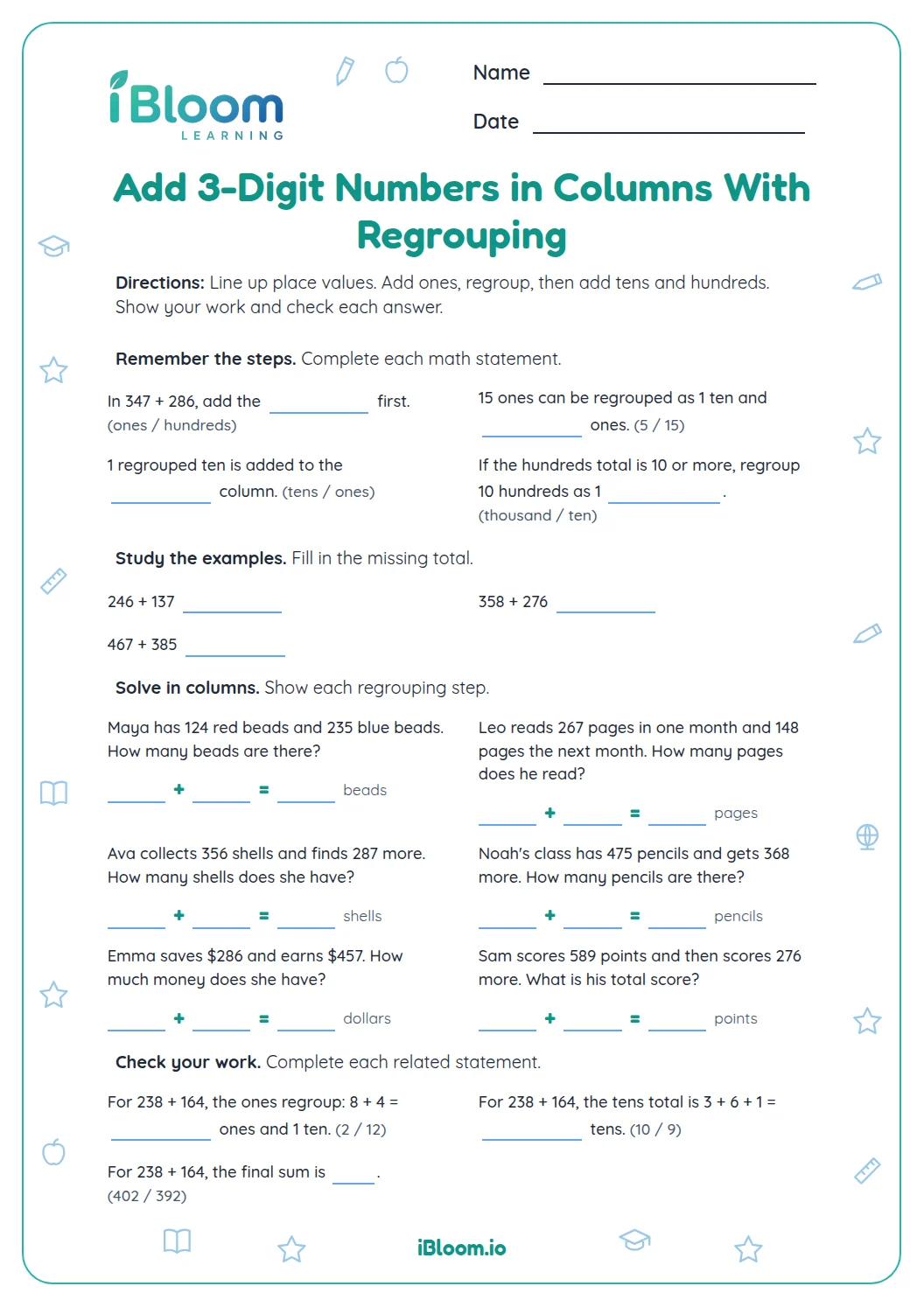
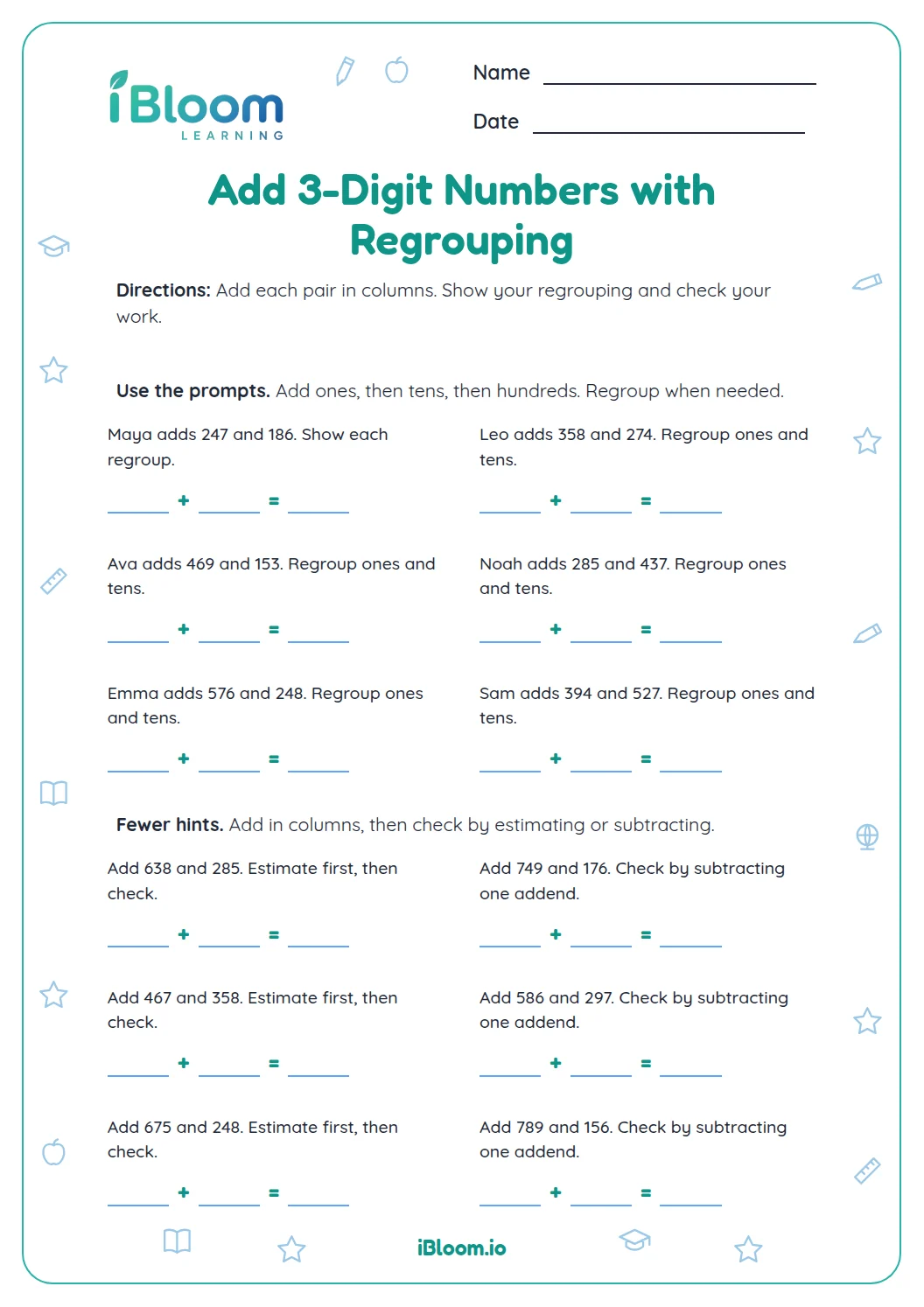
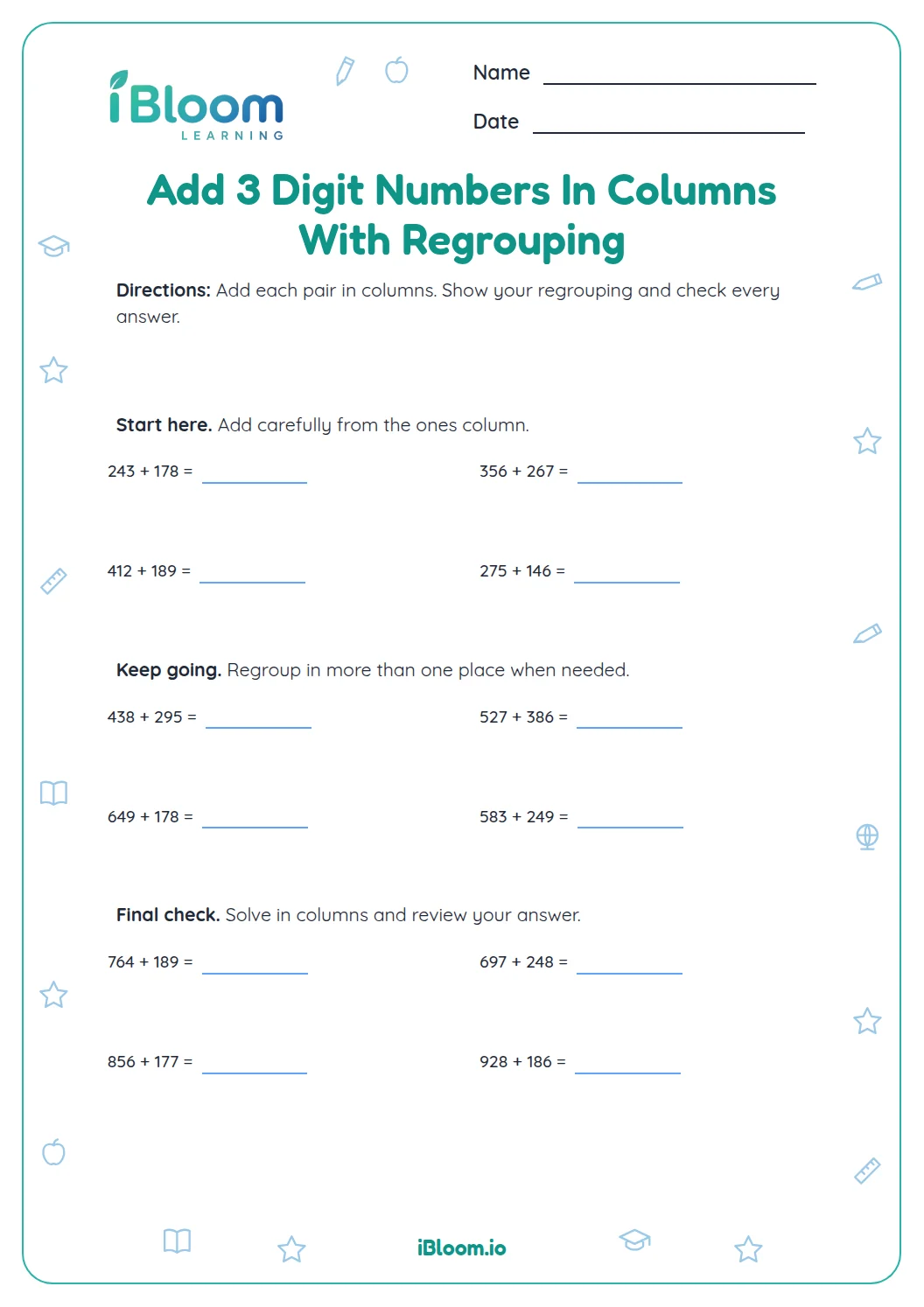
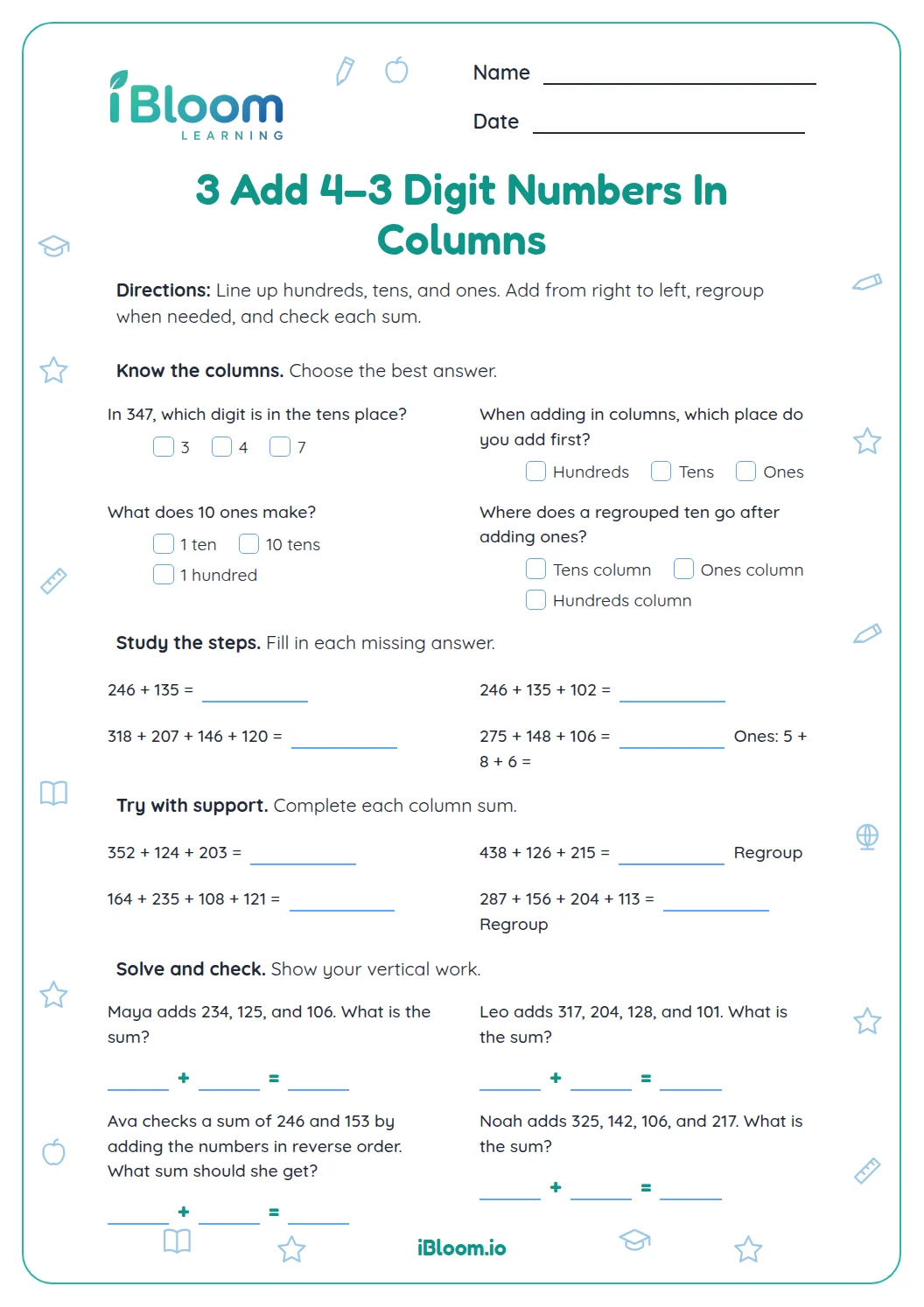
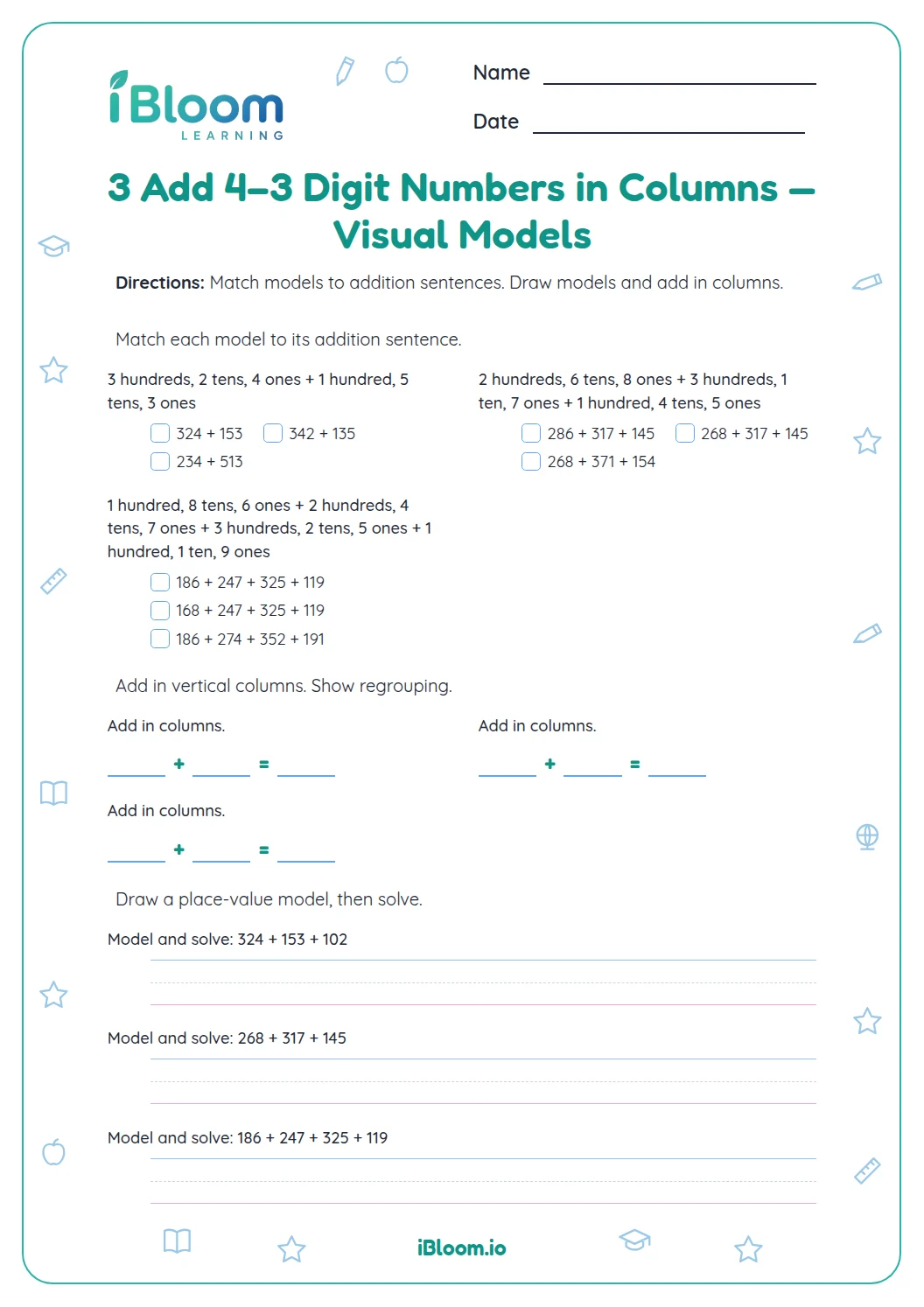
This two-page printable helps Grade 3 students add three three-digit numbers in columns. Four opening questions check digit value, the ones-first method, regrouping and lining up place values; eight sums then provide space to apply that method, followed by two quick total checks. Every addend is separated by a plus sign. The sheet practices Common Core 3.NBT.A.2, and a separate key gives every answer.
Aligned to 3.NBT.A.2
What do the digits mean in a three-digit addend?
A digit’s value depends on its place. In 381, the 8 represents 8 tens, or 80. Keeping hundreds, tens and ones aligned lets students add matching values in each column.
Which column is added first?
Start with the ones, then move to tens and hundreds. If a column total is 10 or more, record its ones digit and regroup the extra ten into the next column.
- 1Ones total: 17
- 2Write 7 ones and regroup 1 ten.
How does the worksheet build practice?
Four questions check place-value ideas before eight sums ask students to apply them in columns. Two quick totals give a final check, and the answer key lists all 14 responses.
How to use this worksheet
- 1Name the value of the digits in each place.
- 2Line up hundreds, tens and ones.
- 3Add the ones column and regroup if needed.
- 4Continue through tens and hundreds.
- 5Use the key to check the eight column sums, two quick totals and four place-value checks.
Common three-digit addition mistakes
The mistake
Adding digits from different places together.
The fix
Keep hundreds, tens and ones in separate columns.
The mistake
Forgetting to regroup a ten from the ones column.
The fix
Record the ones digit, then add the regrouped ten to the tens column.
The mistake
Dropping one of the three addends.
The fix
Check that all three numbers appear in the vertical setup.
Common Core alignment
Students add three three-digit addends within 1,000 using place value and column algorithms.
Fluently add and subtract within 1,000 using place-value strategies and algorithms.
On this sheet: Students add three three-digit addends within 1,000 using place value and column algorithms.
Show the official wordingHide the official wording
Fluently add and subtract within 1000 using strategies and algorithms based on place value, properties of operations, and/or the relationship between addition and subtraction.
What to practice next
Make more practice
Further reading
Questions parents and teachers ask
What does the 8 mean in 381?
The 8 is in the tens place, so its value is 80. Question 1 checks this place-value idea before students add three-digit numbers. The same rule applies in every addend: read a digit by its position, then line up digits with the same value.
Why do students add the ones column first?
Adding from right to left starts with the smallest place value and makes regrouping visible. If the ones add to 17, write 7 in the ones place and regroup 1 ten. Then include that ten while adding the tens column.
How many addition problems are on the sheet?
There are eight three-addend column sums, two quick totals and four short place-value checks. The checks review digit value, column order, regrouping and lining up numbers. The answer key includes all 14 responses, so students can review the setup ideas and totals.
Do all the sums stay within 1,000?
Yes. The three-digit addends are chosen so each total is less than 1,000. Students practice composing tens and hundreds in eight column-work problems, then answer two quick totals while keeping the work within the Grade 3 number range. Check every addend before finishing.
Does the answer key show every result?
Yes. A separate key lists the answer for each place-value check and each sum. Students can compare their totals after completing the written column work, then trace a mismatch back to the column where regrouping or place alignment changed the result.