



About this worksheet
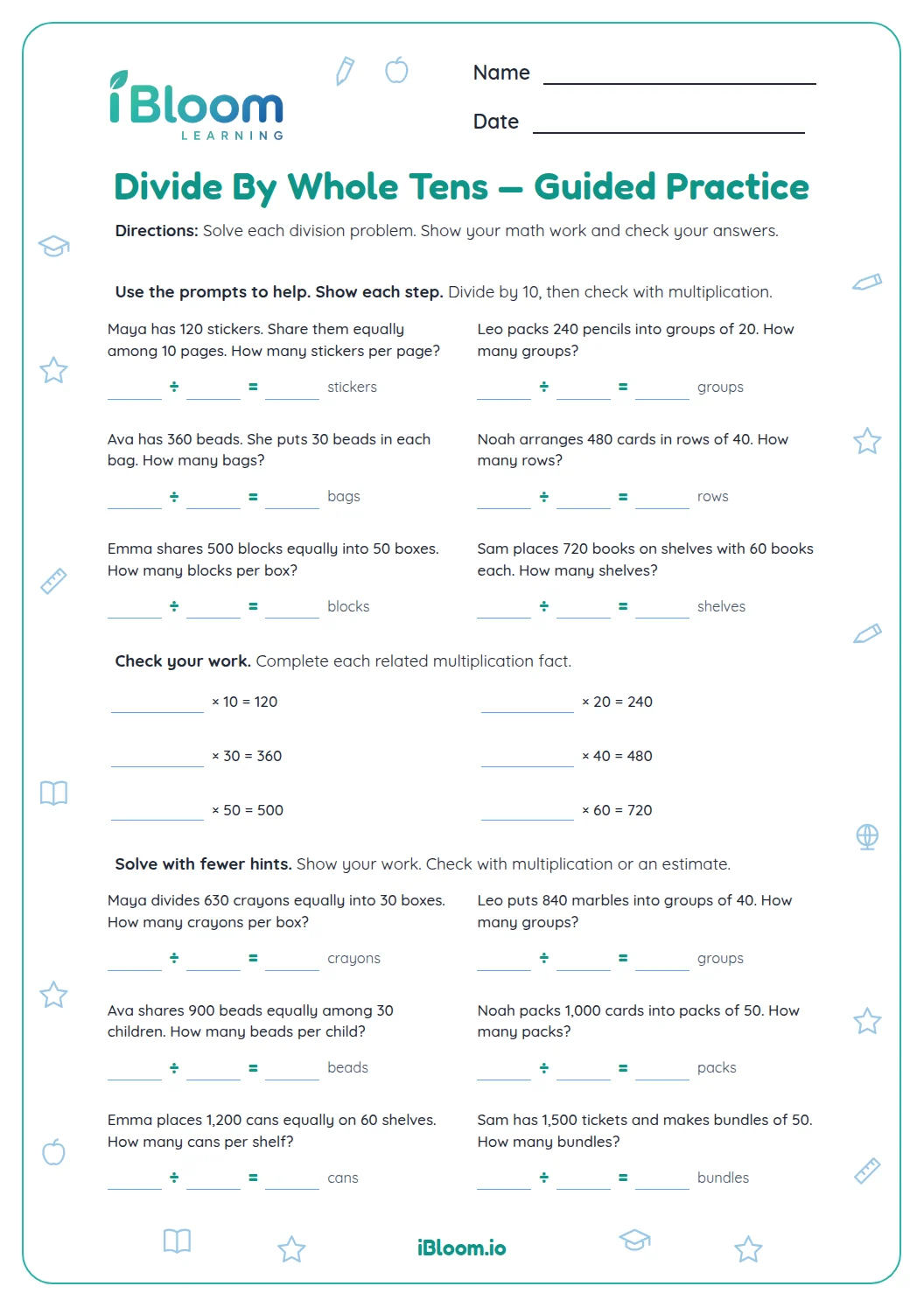
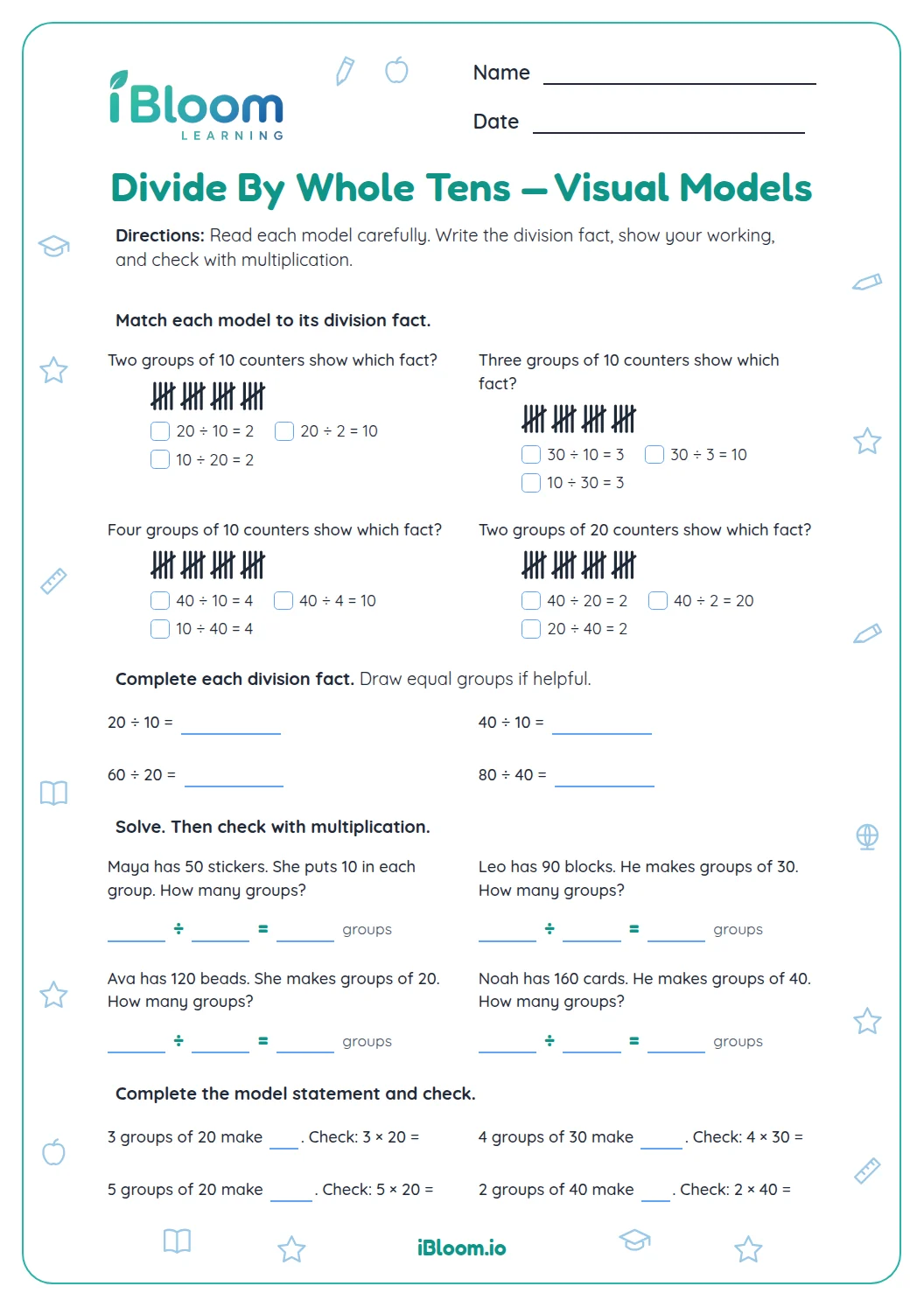
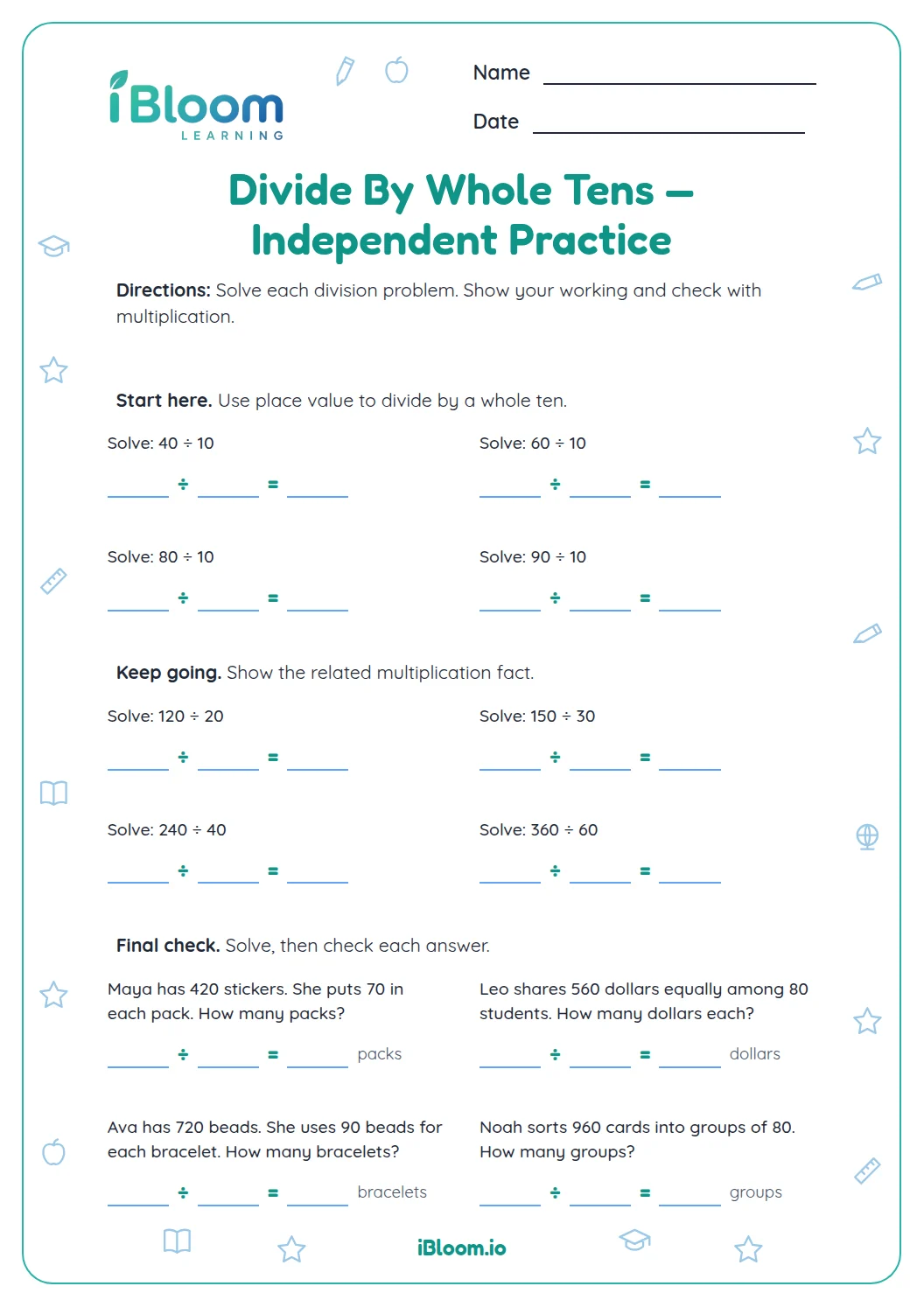
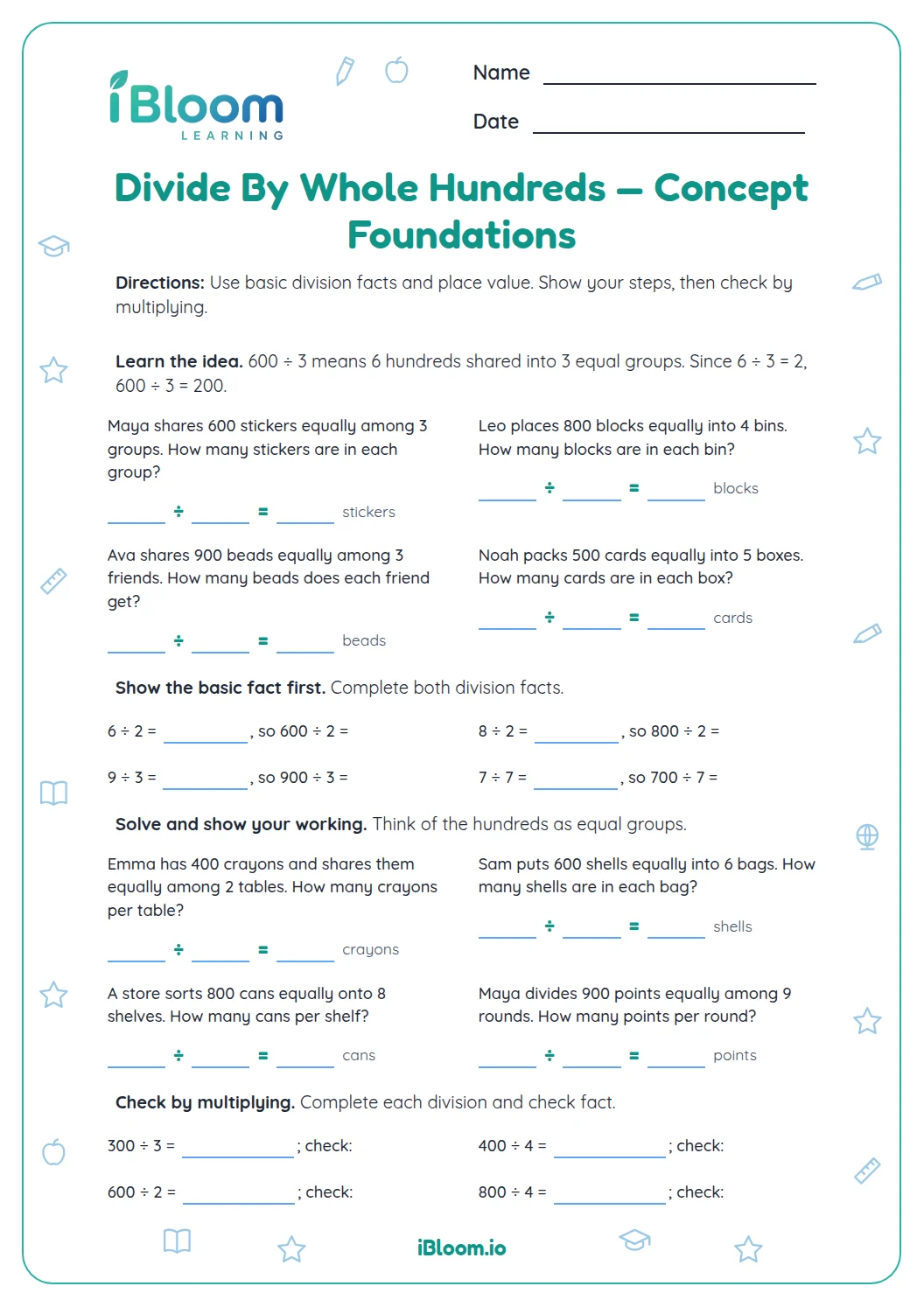
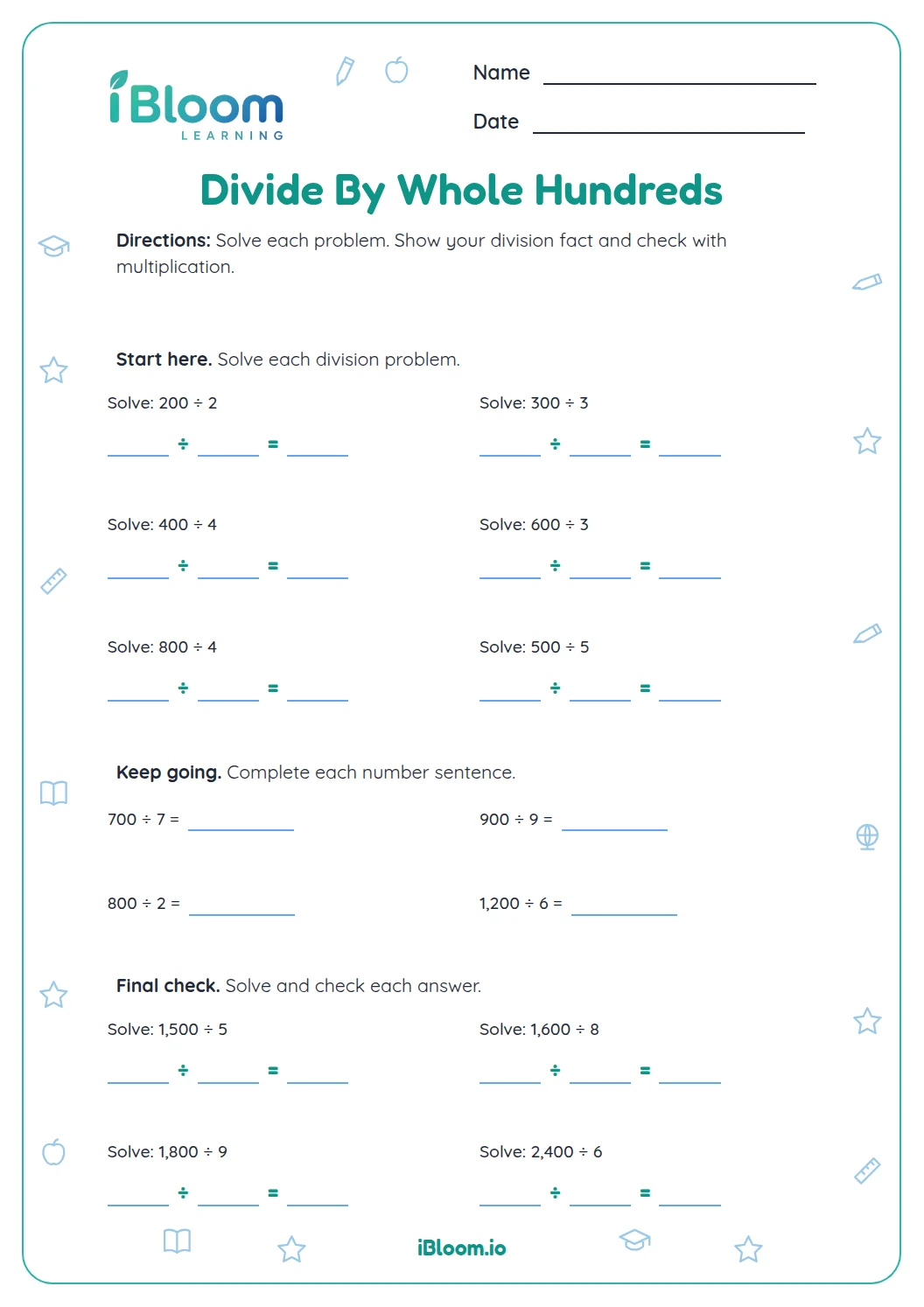
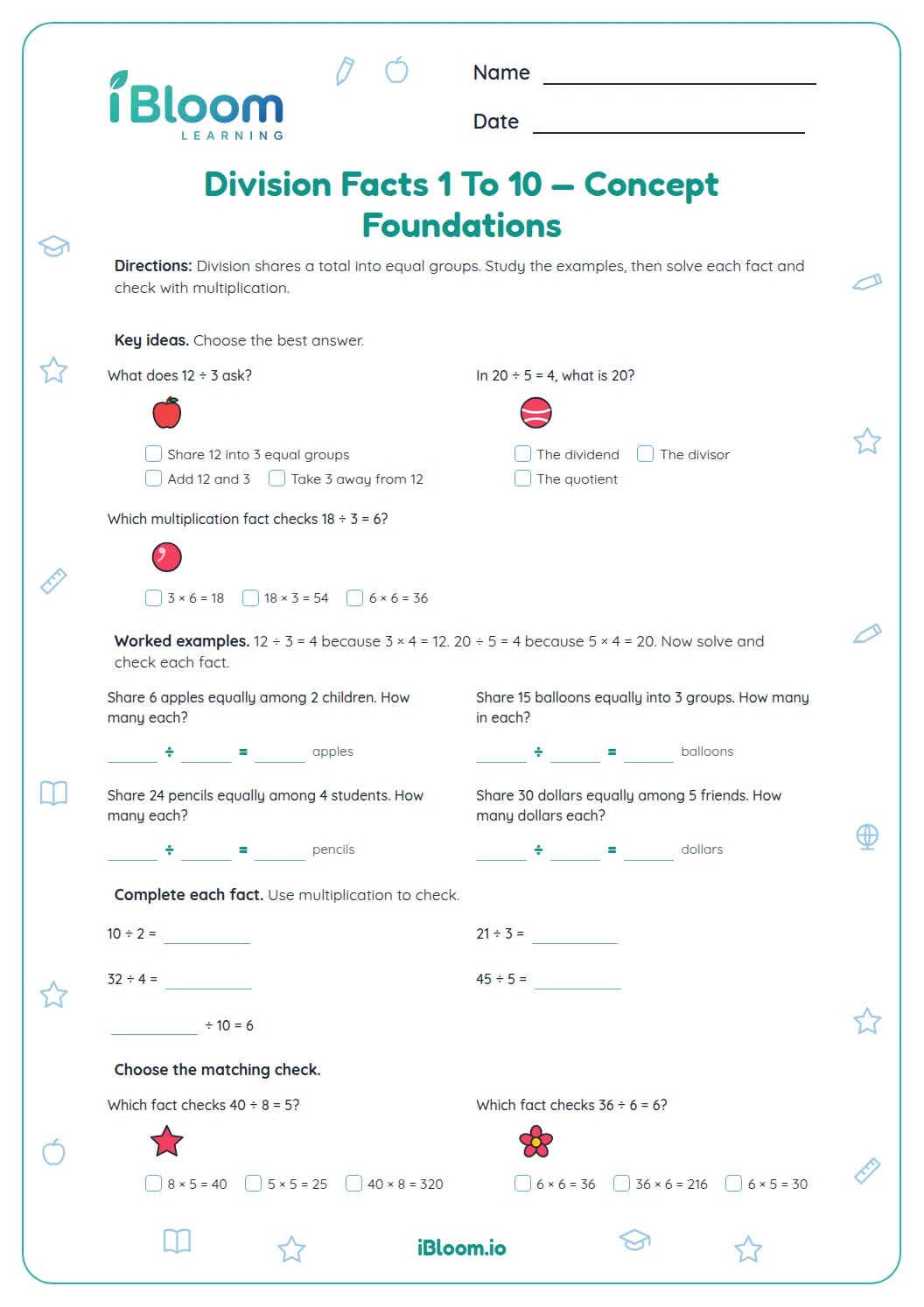
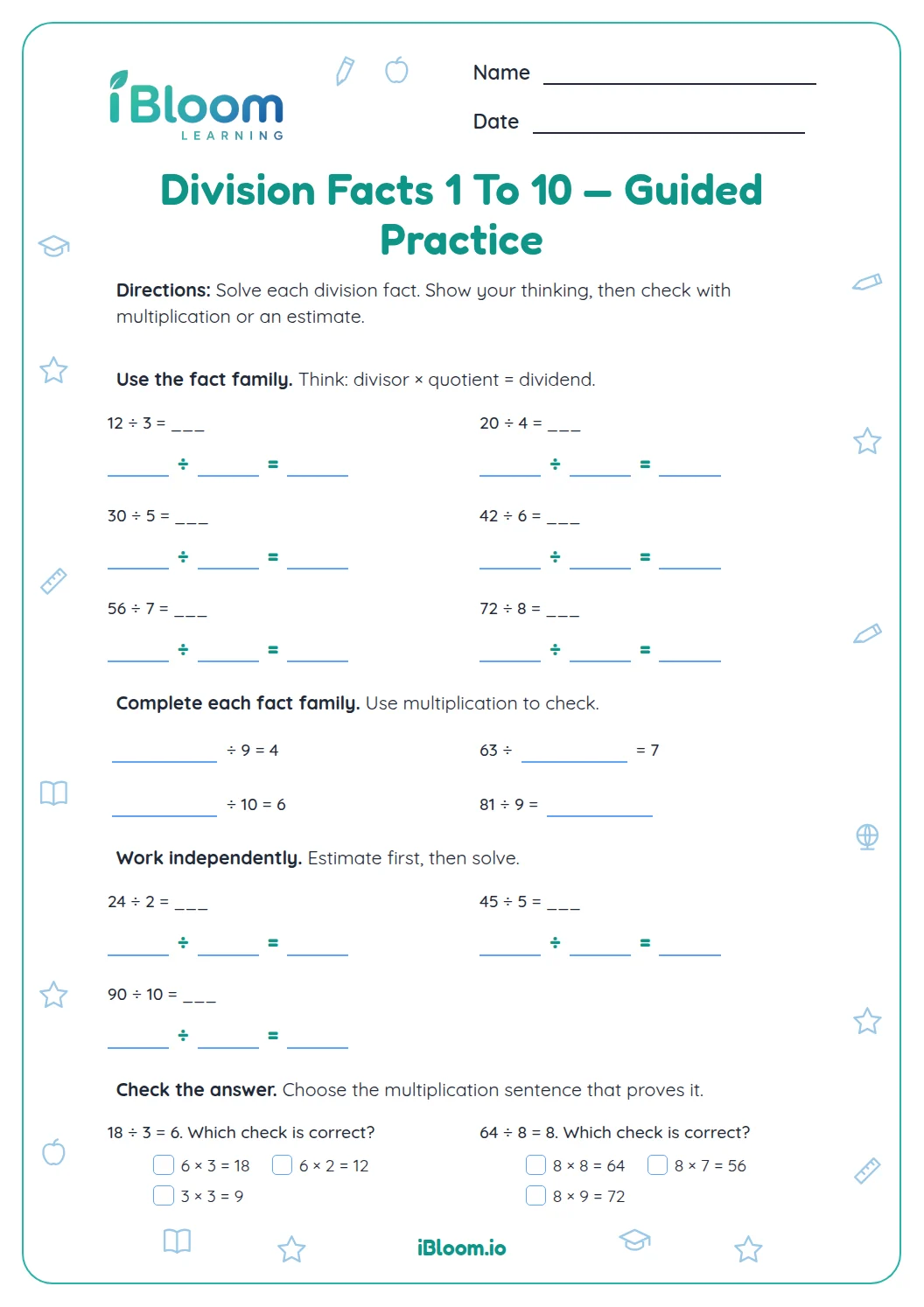
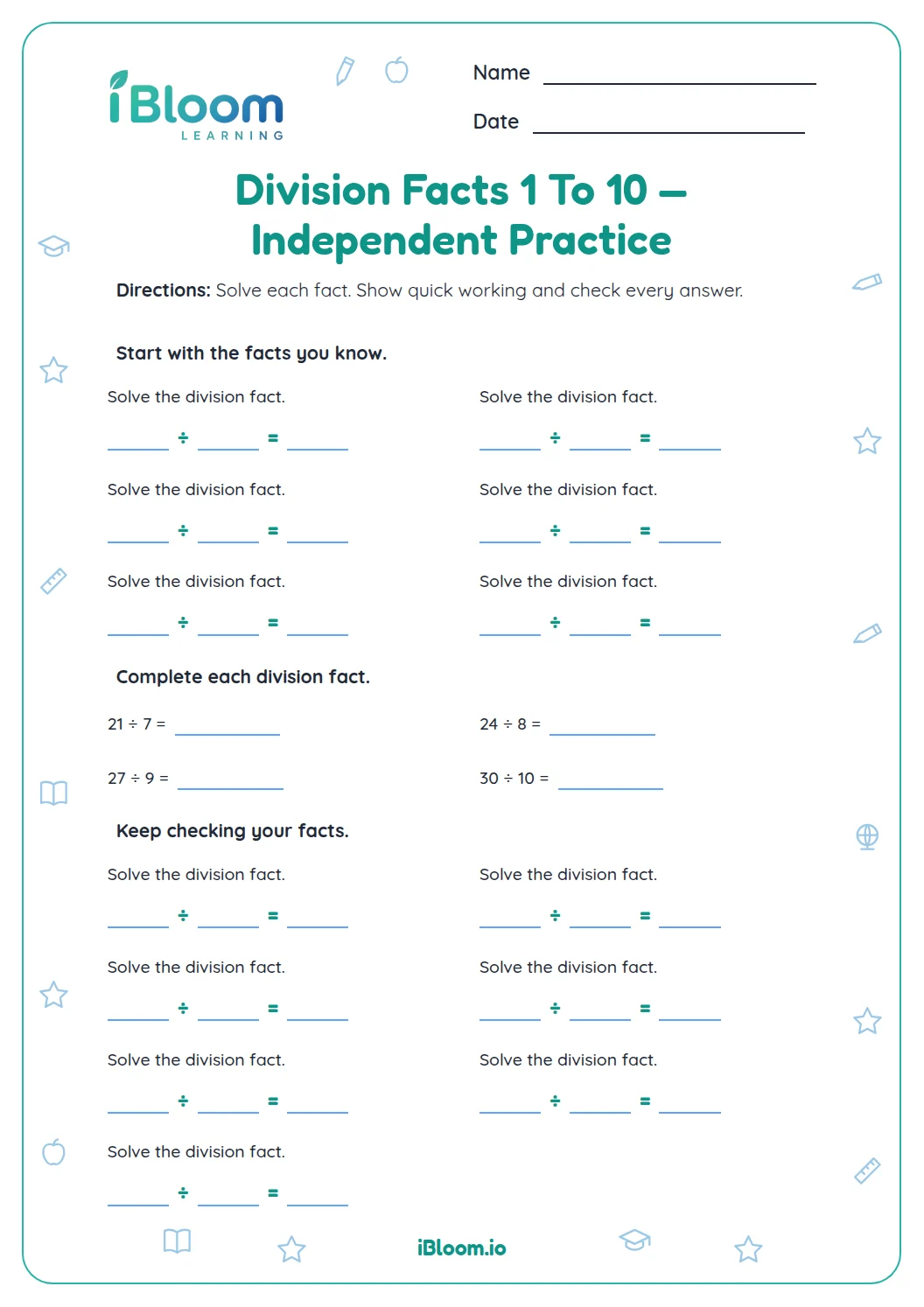
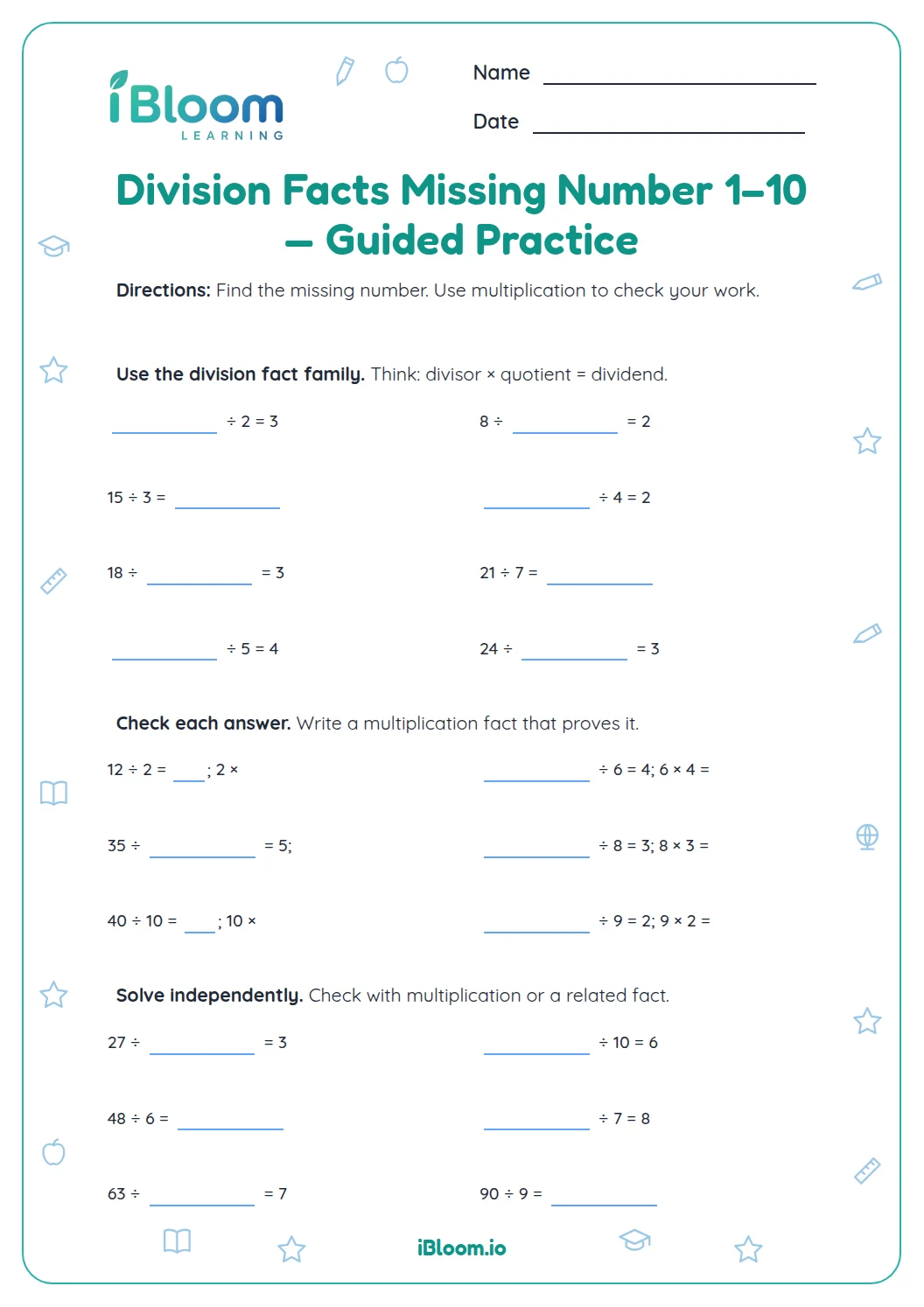
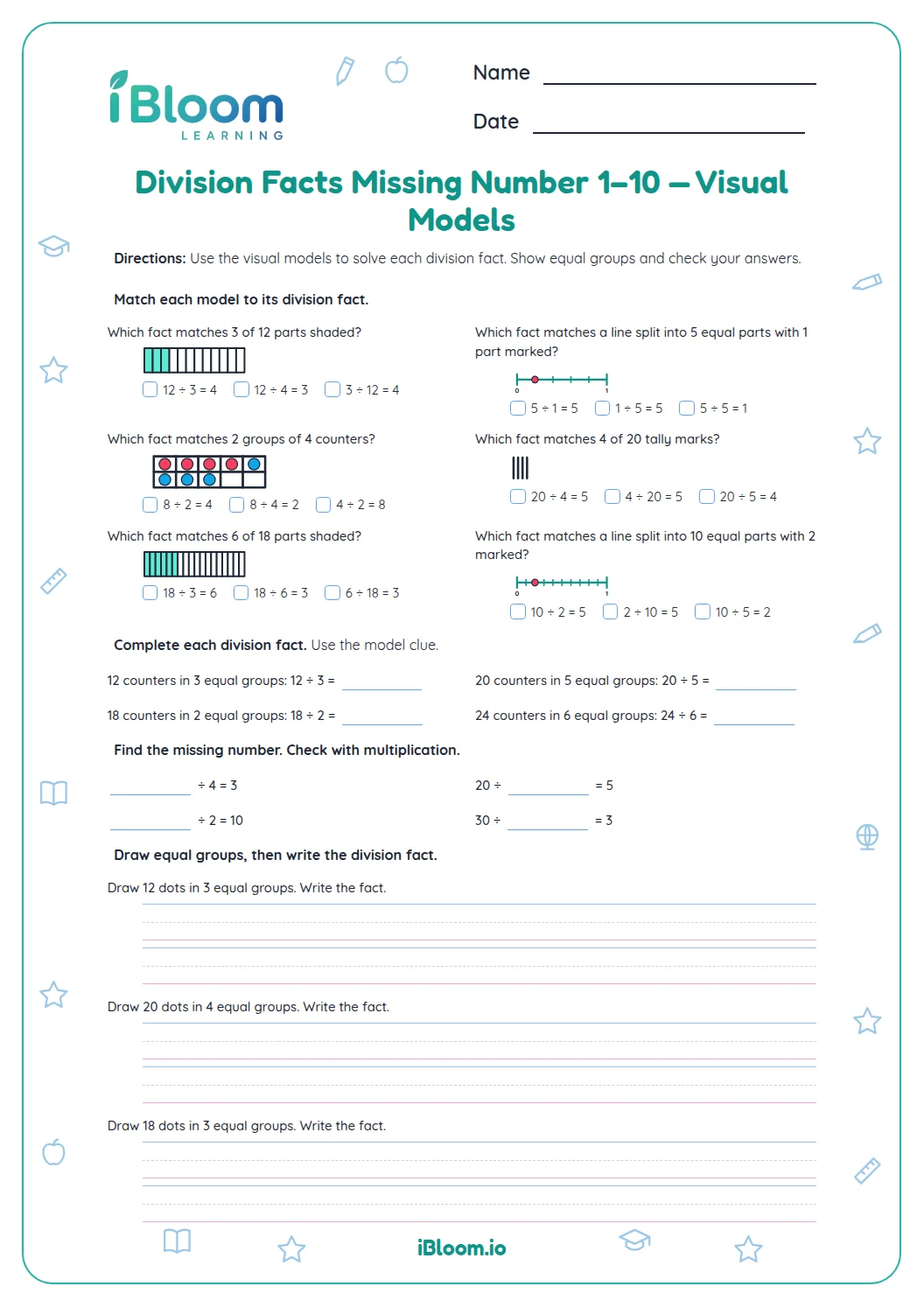
This printable builds whole-tens division reasoning with 16 problems. Students solve quotients, find missing dividends and divisors, use multiplication to check, and choose an efficient place-value strategy. The answer key gives a single clear response for every item.
Aligned to 5.NBT.B.6
How can place value make division easier?
For 360 ÷ 40, remove one zero from both numbers to make 36 ÷ 4. The quotient is still 9 because both dividend and divisor were divided by 10. Multiplication can check the result: 9 × 40 = 360.
How do I find a missing dividend or divisor?
Use the related multiplication fact. If a number divided by 40 equals 7, multiply 7 by 40 to find the dividend. If 540 divided by a number equals 9, divide 540 into 9 equal groups to find the divisor.
What does the worksheet include?
The printable has 16 questions in 4 parts, followed by a separate answer key.
How to solve whole-tens division
- 1Read the tens in the divisor and dividend.
- 2When both numbers end in zero, remove one zero from each.
- 3Solve the simpler fact, such as 36 ÷ 4.
- 4For a missing number, use multiplication to reverse the division.
- 5Multiply the quotient by the divisor to check.
Division checks
The mistake
Removing a zero from only one number.
The fix
Scale both dividend and divisor by the same factor.
The mistake
Treating 40 as 4 without changing 360.
The fix
Change 360 to 36 at the same time, then solve 36 ÷ 4.
The mistake
Using the divisor as the quotient.
The fix
Check with divisor × quotient = dividend.
Common Core alignment
This worksheet practices the following Common Core skill.
Find whole-number quotients with two-digit divisors using place value and multiplication.
On this sheet: Students use place-value reasoning, equations, and multiplication facts to divide whole tens.
Show the official wordingHide the official wording
Find whole-number quotients of whole numbers with up to four-digit dividends and two-digit divisors, using strategies based on place value, the properties of operations, and/or the relationship between multiplication and division. Illustrate and explain the calculation by using equations, rectangular arrays, and/or area models.
What to practice next
Make more practice
Further reading
Questions parents and teachers ask
Why can I remove a zero from both numbers?
Dividing both the dividend and divisor by 10 keeps the number of equal groups the same. For example, 360 ÷ 40 becomes 36 ÷ 4, and both expressions equal 9. This is a place-value shortcut. These steps work for every whole-tens quotient on the page.
How do I find a missing dividend?
Use the quotient and divisor in a multiplication fact. If the missing number divided by 40 equals 7, multiply 7 by 40 to find 280. Check it by dividing 280 by 40. That confirms the number that was divided.
How do I find a missing divisor?
Use the dividend and quotient. If 540 divided by a missing number equals 9, ask what number times 9 equals 540. The divisor is 60, since 60 groups of 9 make 540. The multiplication sentence also makes the roles clear.
What fact checks a division answer?
Multiply the quotient by the divisor. For 630 ÷ 70 = 9, check 9 × 70 = 630. A correct product returns the dividend and confirms the quotient. Students can use this same check for each problem on the worksheet.
Is an answer key included?
Yes. The answer key gives one answer for each of the 16 problems, including missing values, a practical grouping story, and strategy questions. It also shows concise multiplication checks for the division facts. The key also shows the quotient checks.