

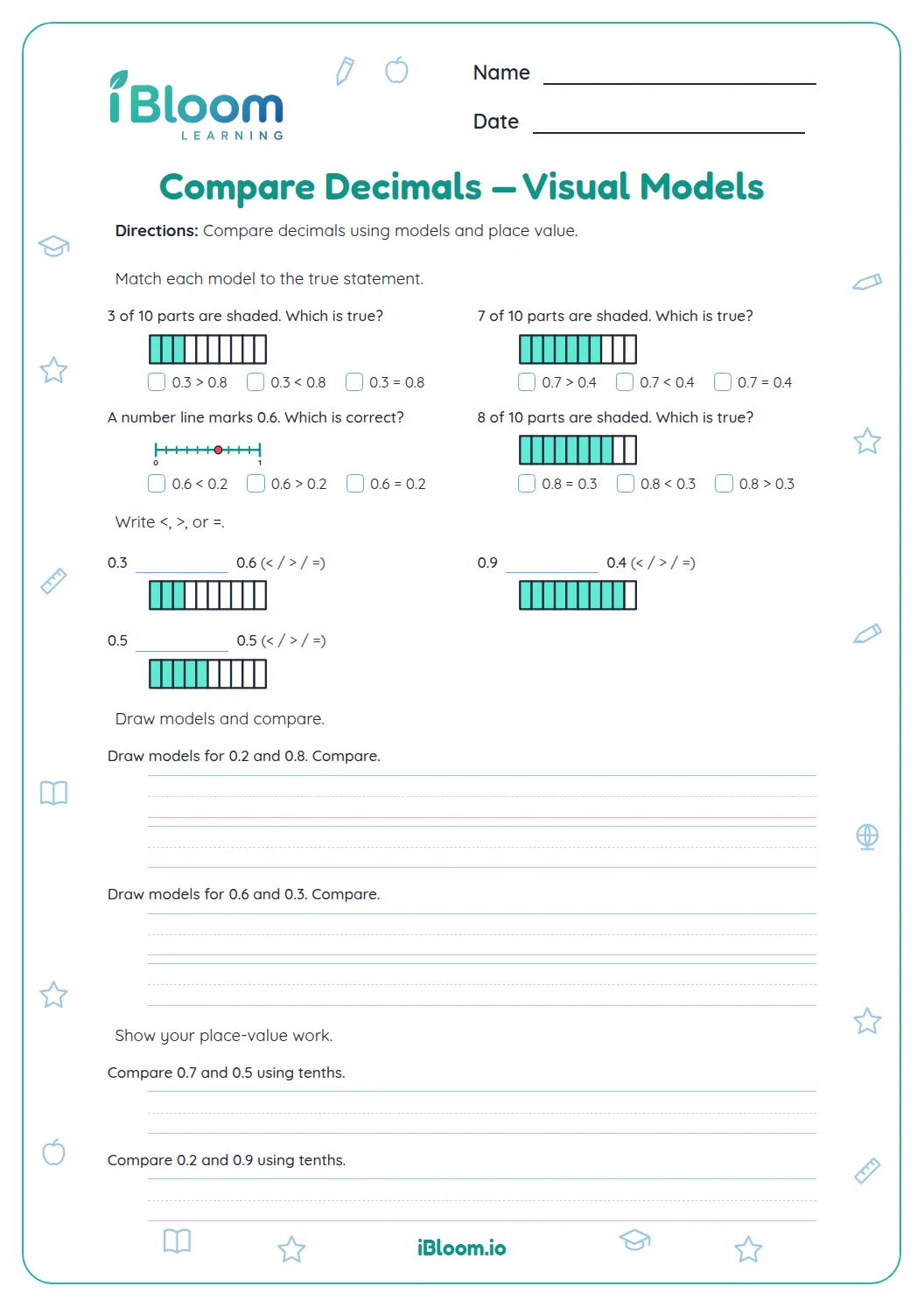
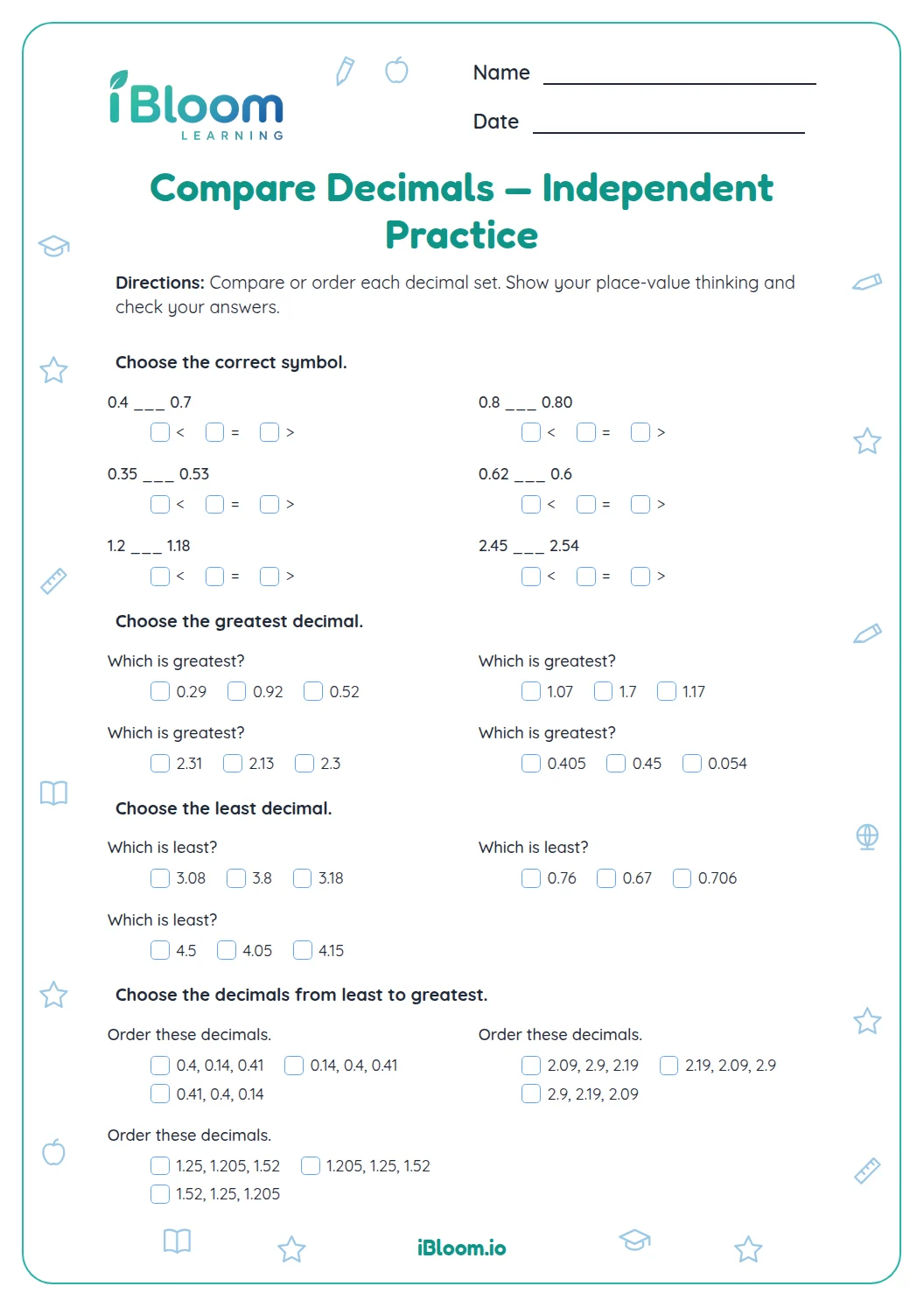
About this worksheet
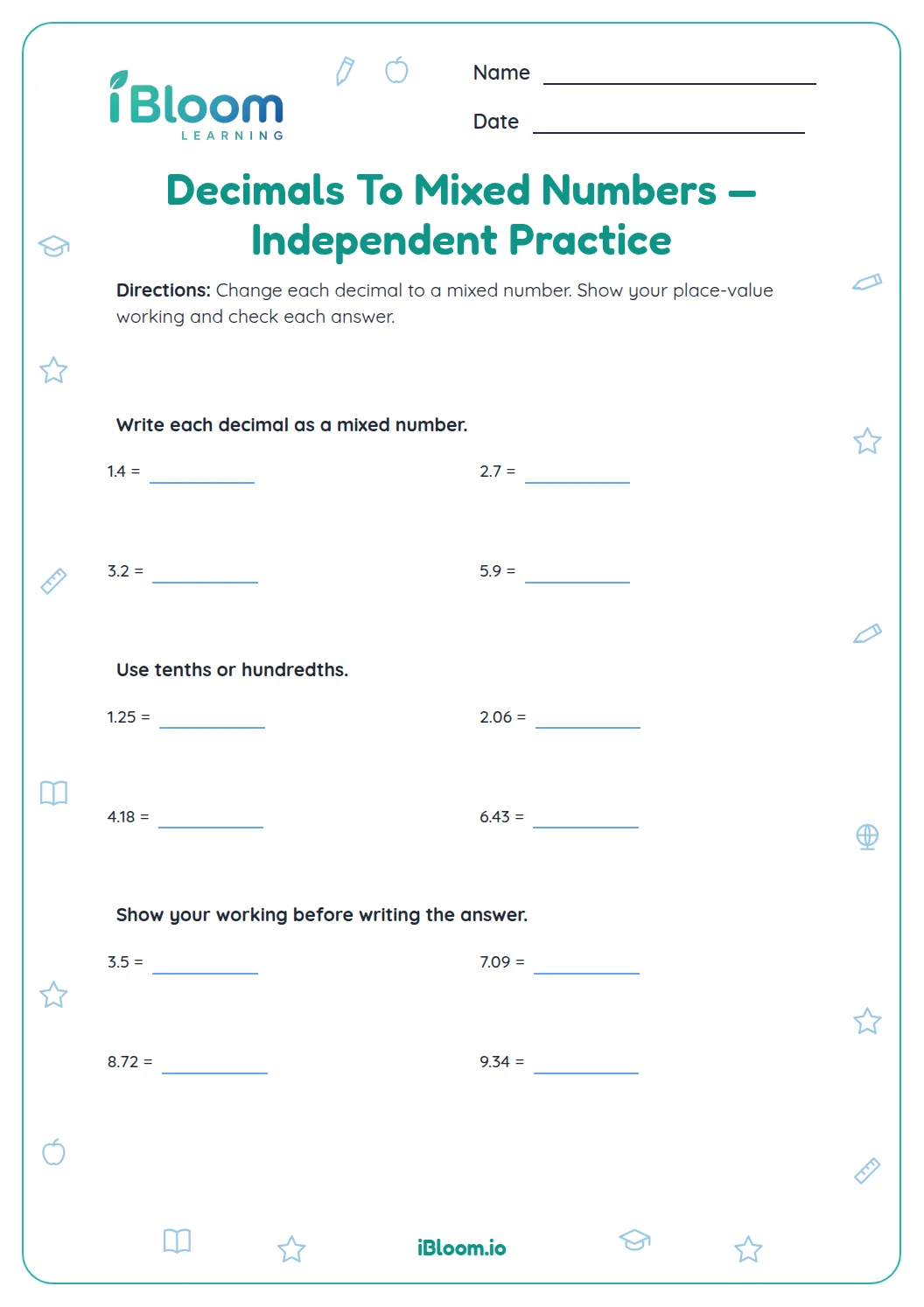
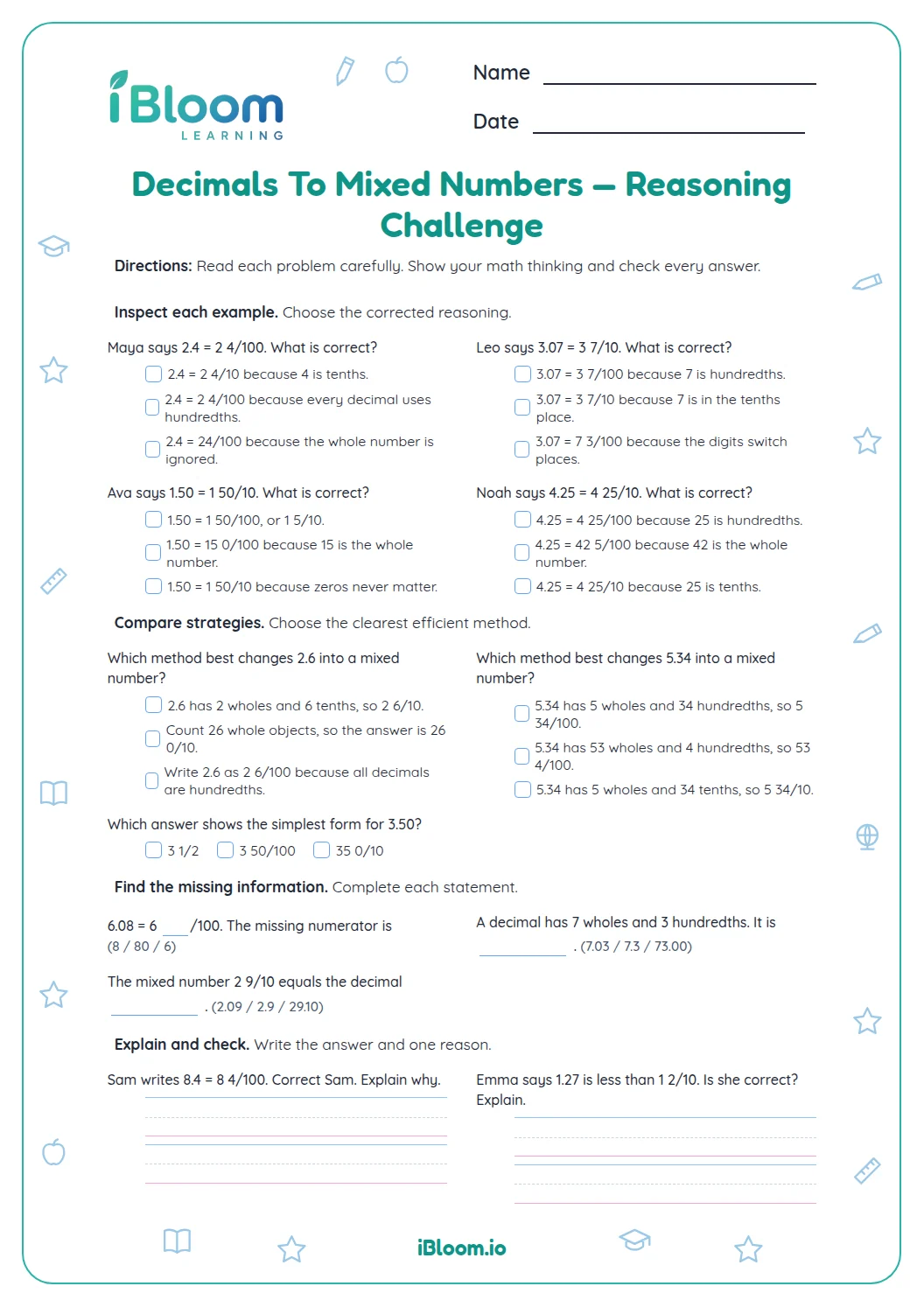
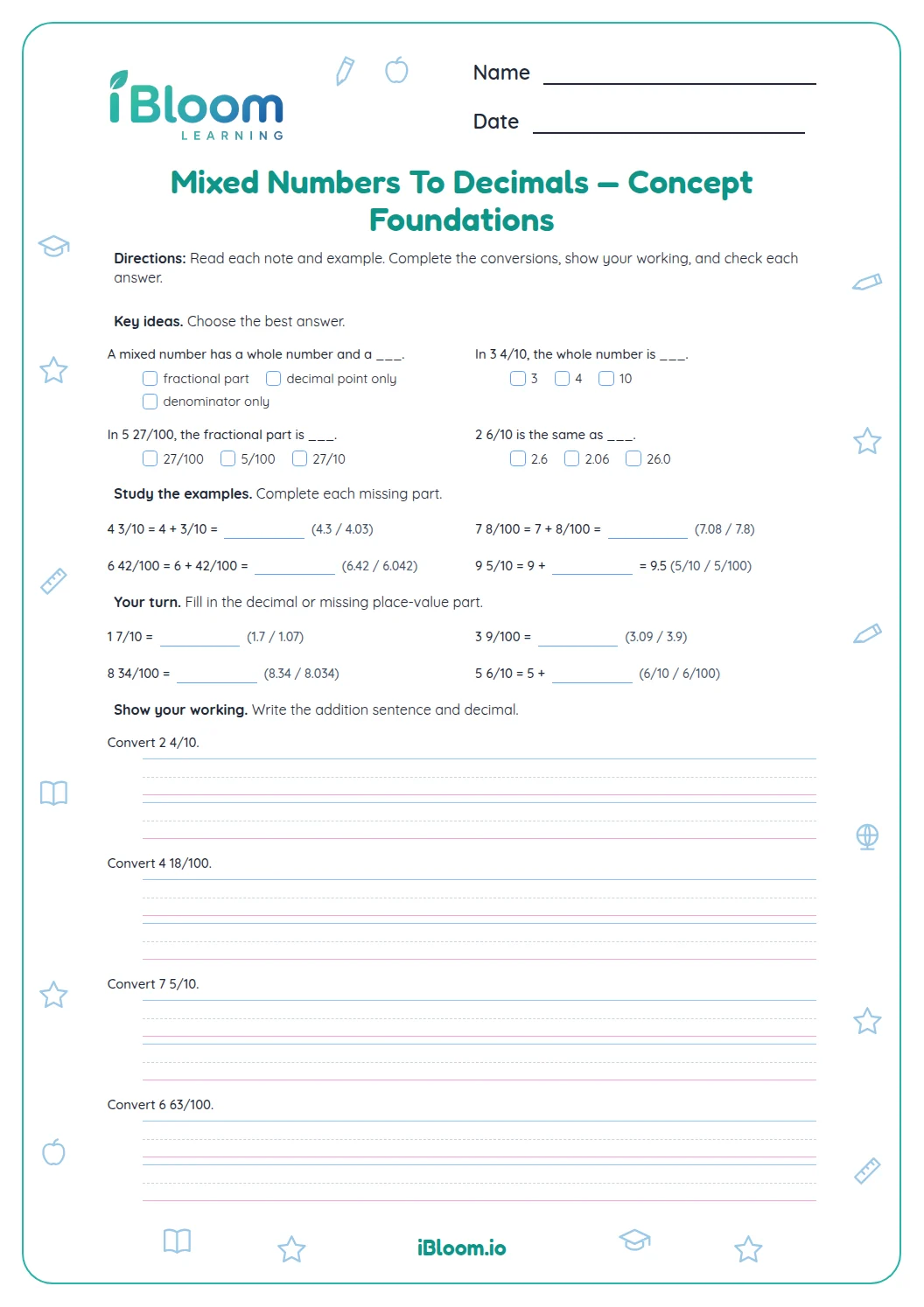
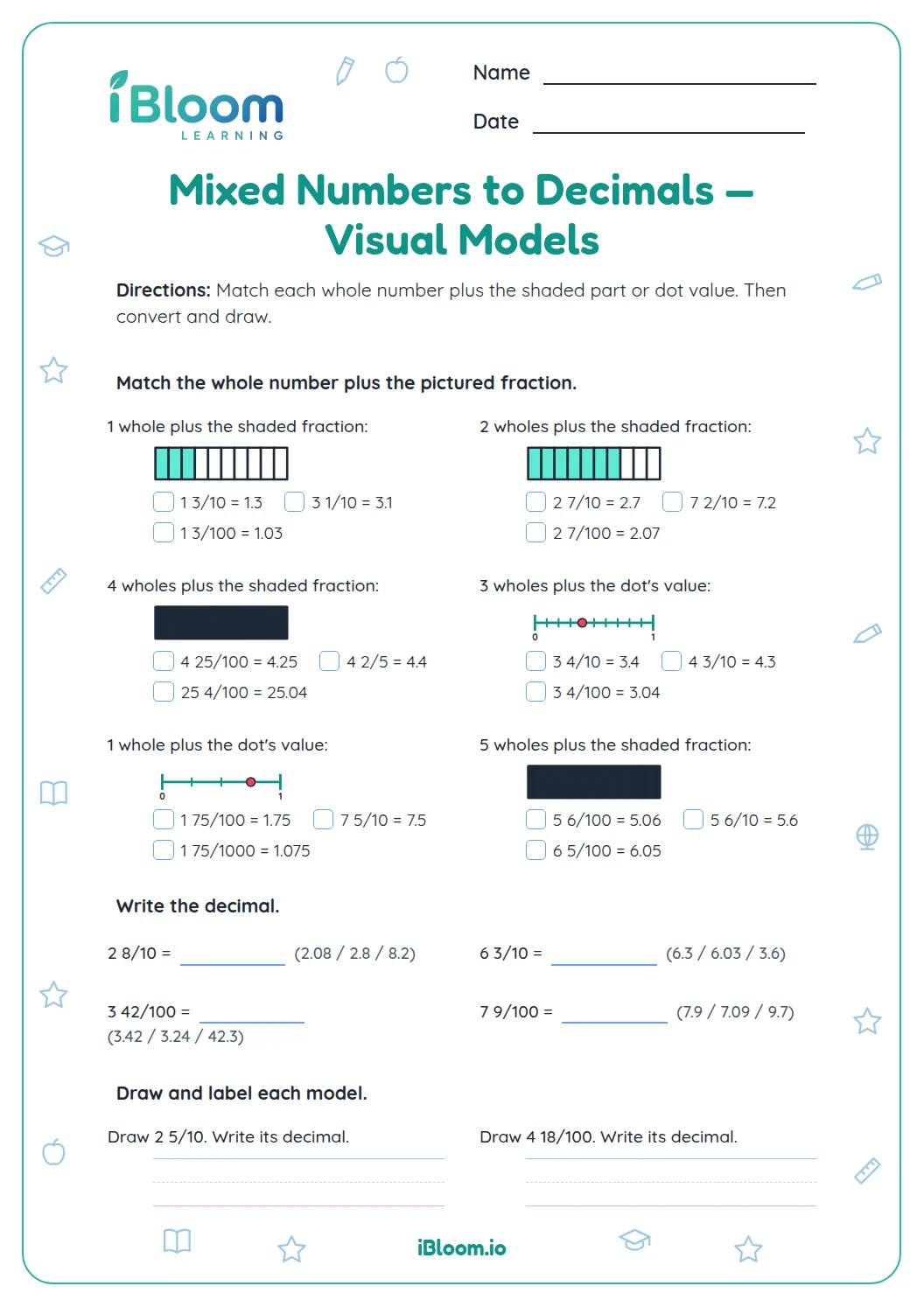
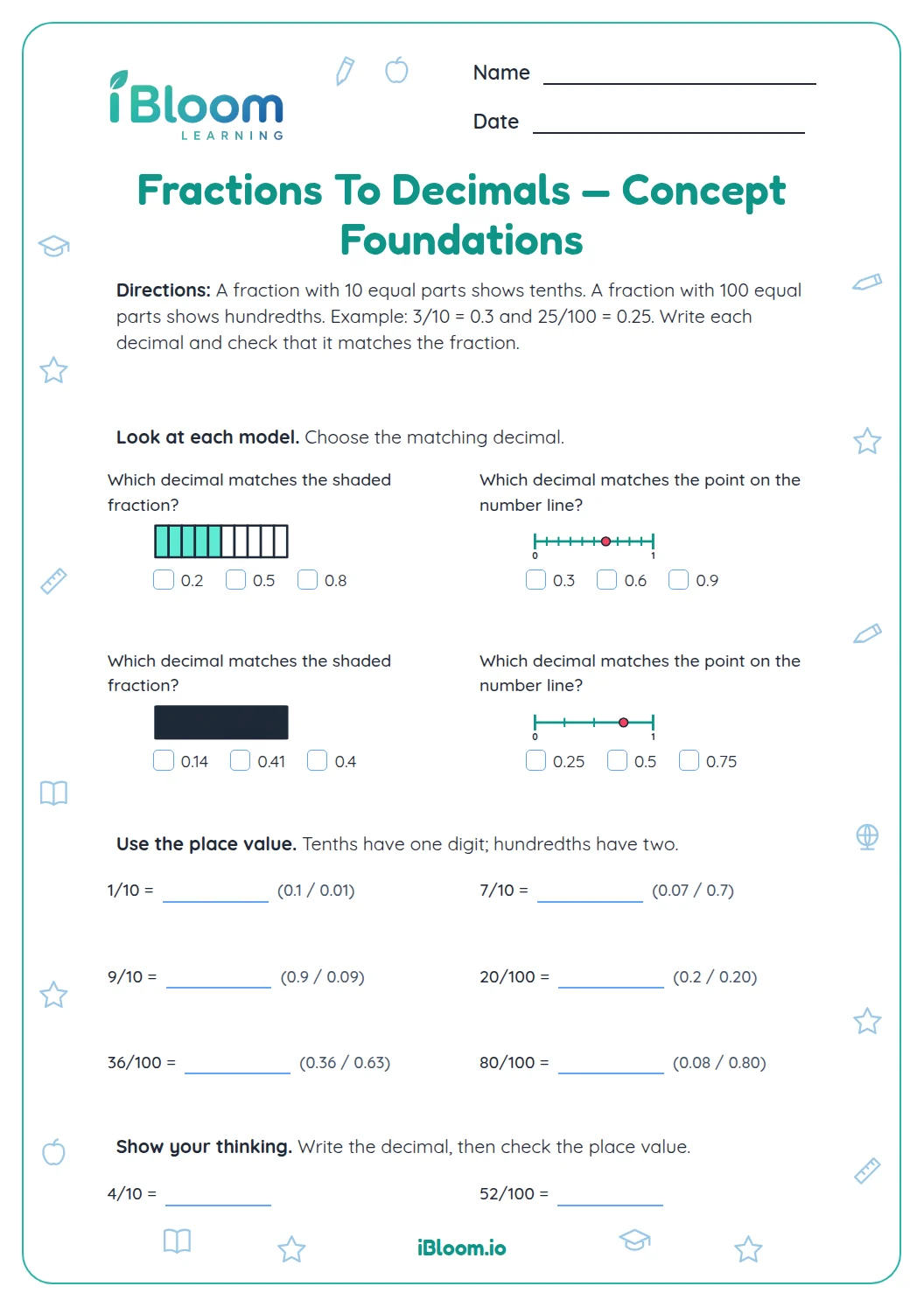
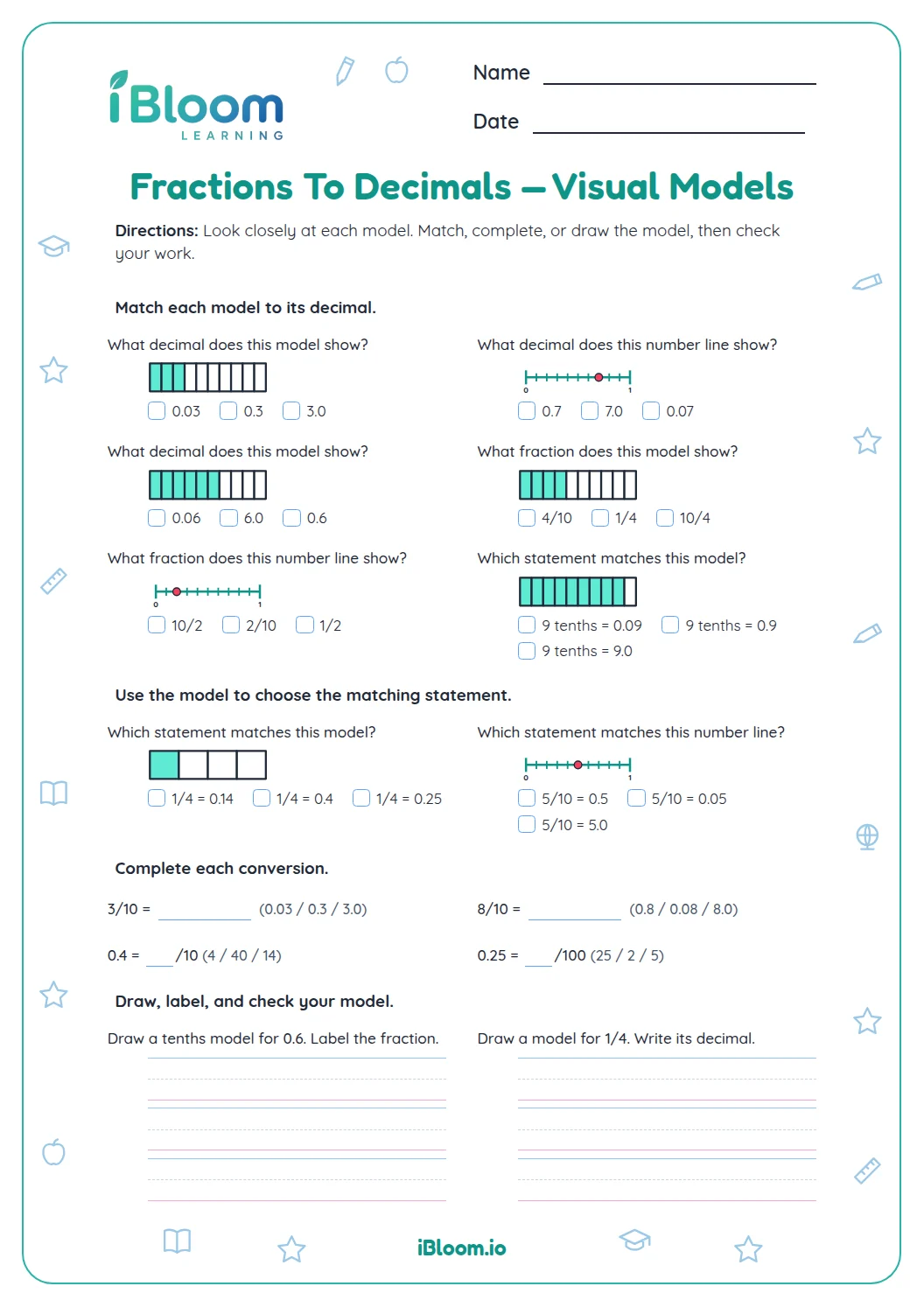
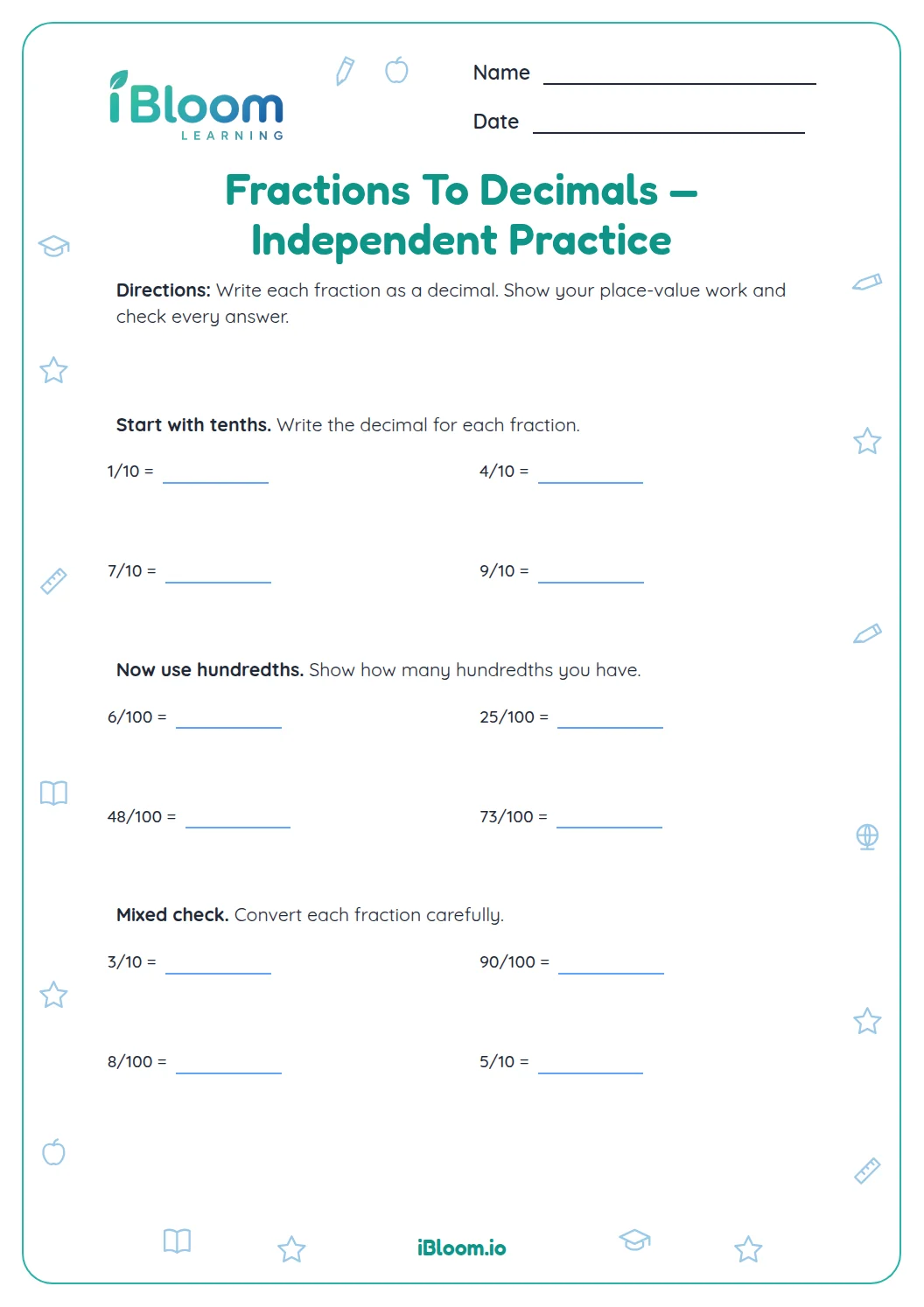
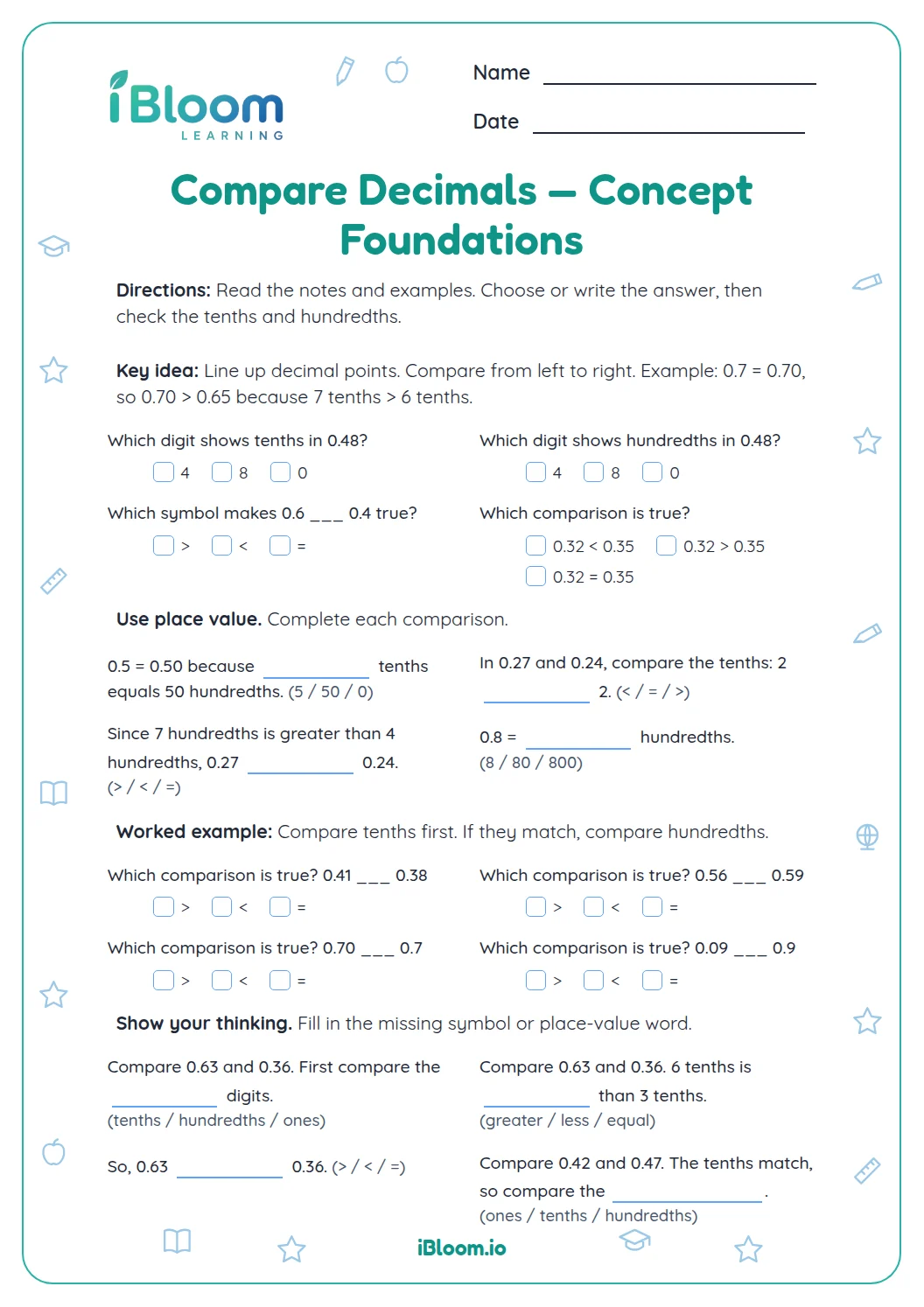
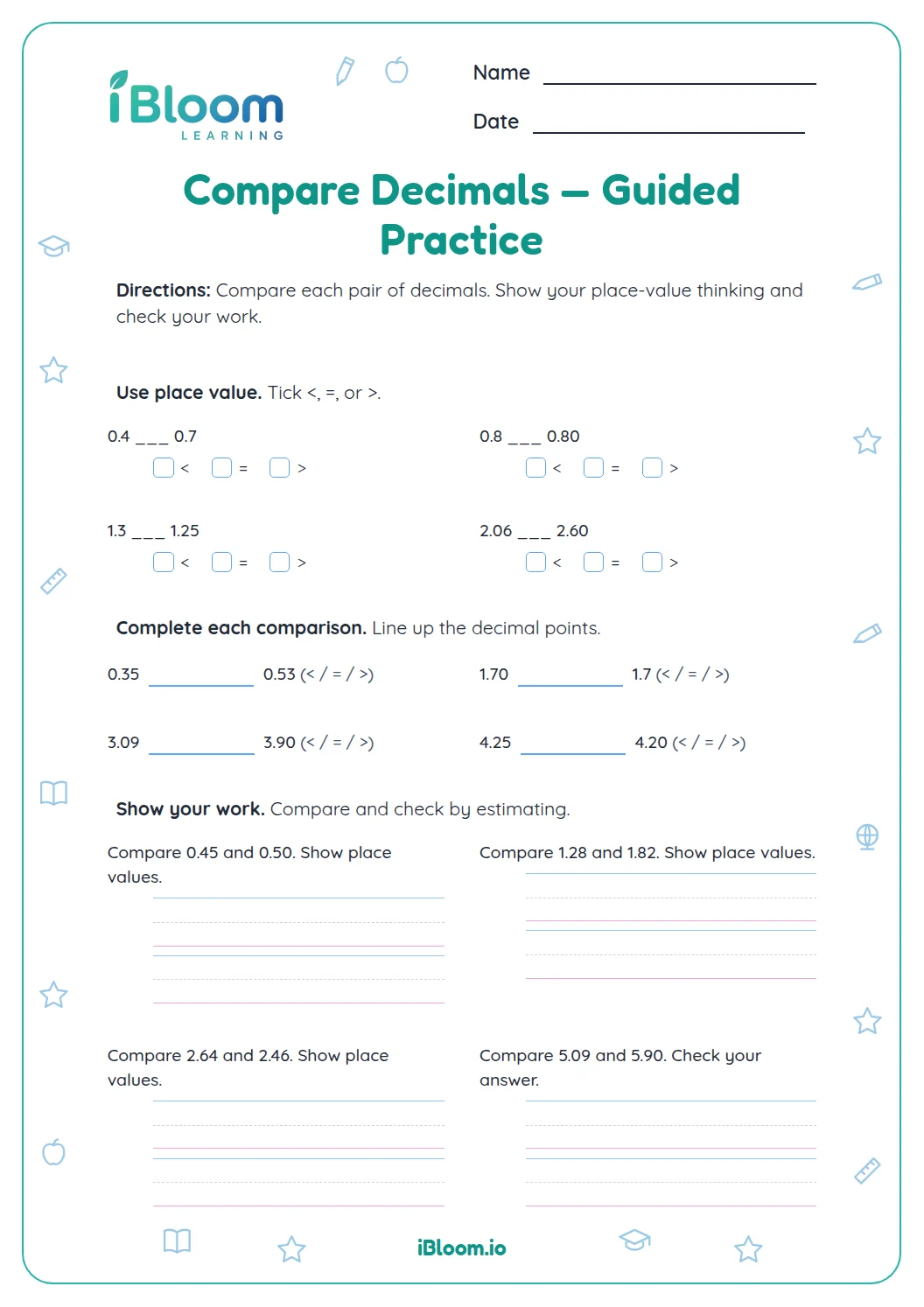
This printable helps Grade 3 students connect decimal place value with mixed-number notation through real-world measurements. It includes 16 problems using tenths and hundredths, short conversion items, and applications with feet, liters, yards, miles, cups, and pounds. Students name the whole-number part, then write the decimal part as tenths or hundredths. The answer key is separate and retains measurement units where a sentence asks for a complete amount.
How does a decimal show tenths?
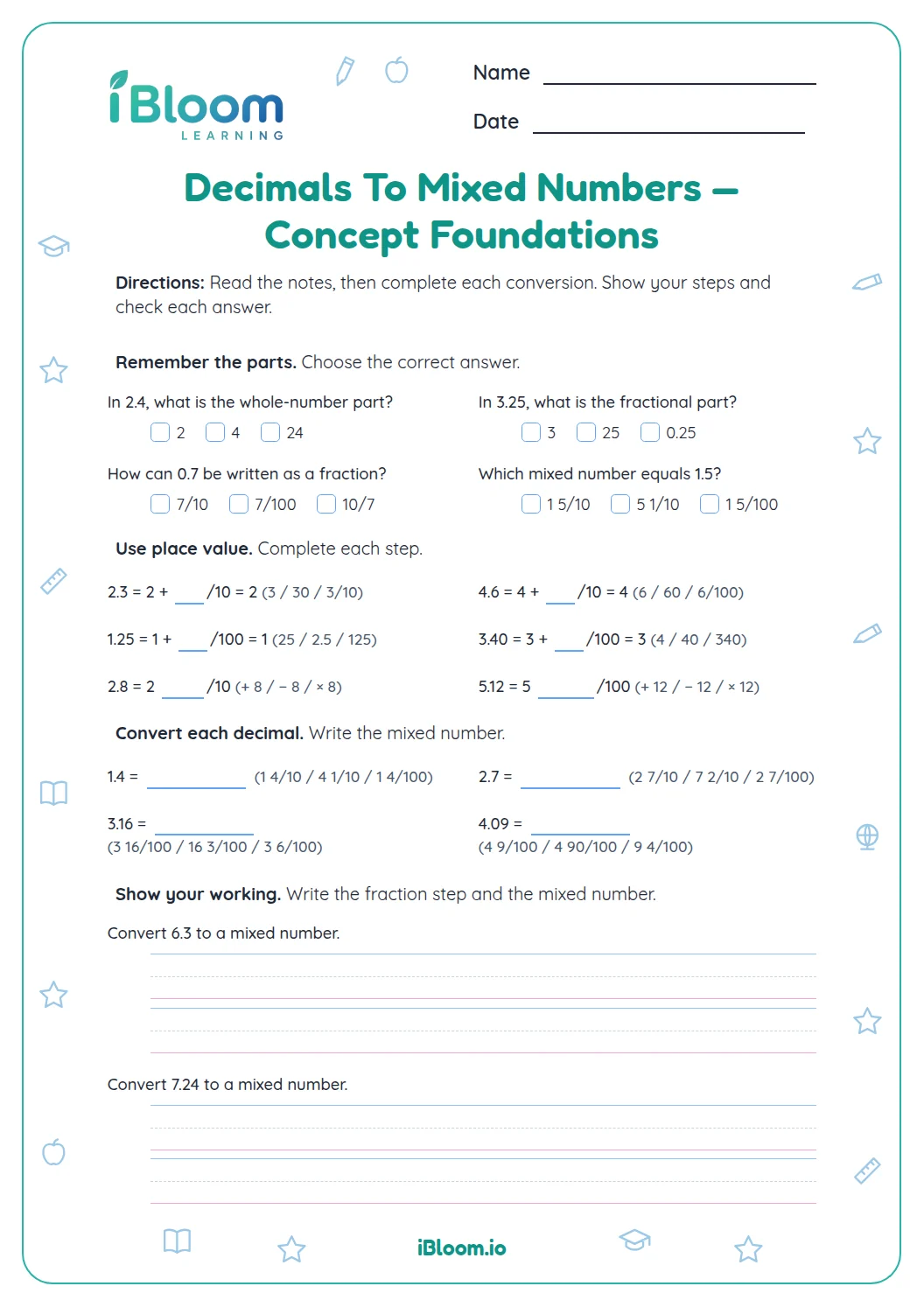
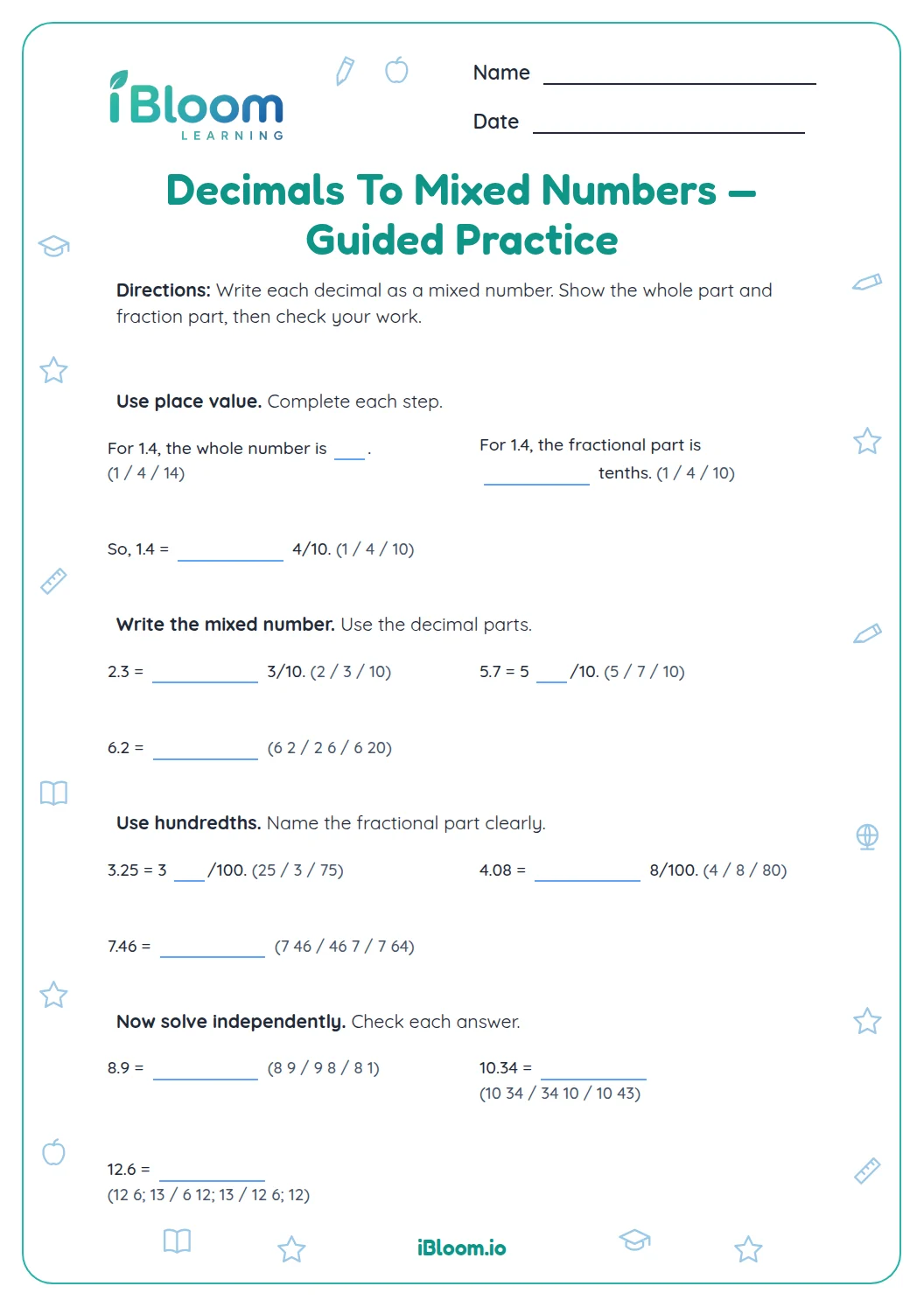
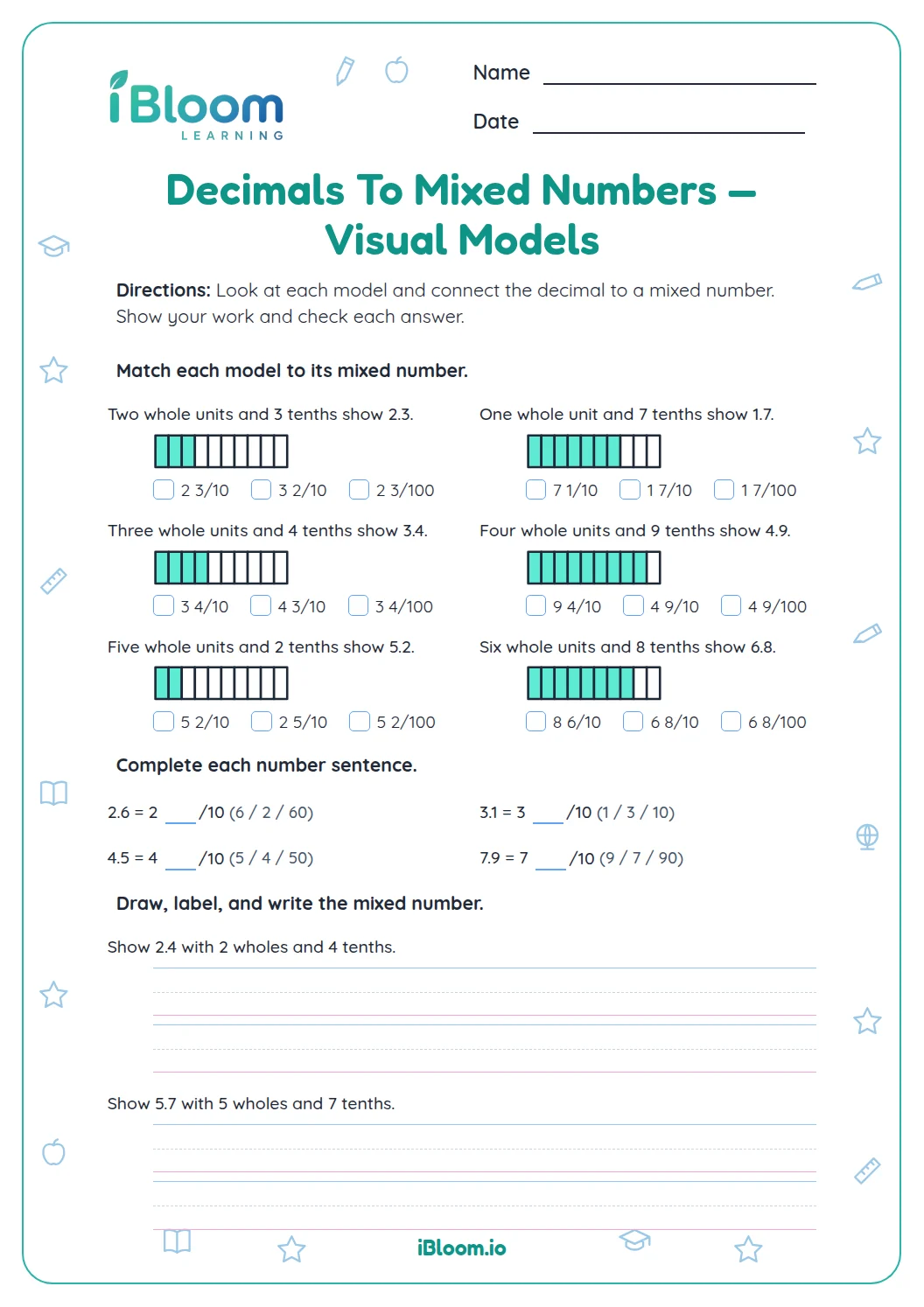
The digit just to the right of the decimal point counts tenths. In question 1, 2.4 feet means 2 whole feet and 4 tenths of a foot, or 2 4/10 feet. Keep the unit attached when describing the measurement.
- 12.4 feet
- 22 whole feet and 4 tenths of a foot
- 32 4/10 feet
How do hundredths become a fraction?
A second digit after the decimal point counts hundredths. For 3.25, there are 3 whole units and 25 hundredths, so the mixed number is 3 25/100. The fractional denominator follows the last decimal place.
What will children practice?
The first questions use tenths in familiar measures. The next set uses hundredths, then students apply place value to amounts and check a decimal-to-fraction choice. Each answer keeps the same unit as the story.
How to use this worksheet
- 1Read the decimal point by place: tenths has one digit; hundredths has two.
- 2Say the whole-number part first.
- 3Use the decimal digits as the numerator.
- 4Write 10 for tenths or 100 for hundredths as the denominator.
- 5Keep the measurement unit in a word answer.
- 6Check that the fraction part is less than one whole.
Common mistakes and quick fixes
The mistake
Using 100 as the denominator for a tenths digit.
The fix
Count decimal places: one place means tenths, so 1.6 has 6/10.
The mistake
Dropping a zero in a hundredths numerator, as in 1.04 becoming 1 4/10.
The fix
Read both digits after the decimal: 04 means four hundredths, or 4/100.
The mistake
Writing the decimal digits as the whole number.
The fix
The digits before the decimal are the whole; the digits after it name the fractional part.
What to practice next
Make more practice
Further reading
Questions parents and teachers ask
How does 2.4 become a mixed number?
The 2 is the whole number, and the 4 is in the tenths place. So 2.4 is 2 and 4/10, written 2 4/10. Question 1 uses feet to show the unit. A tenths fraction always has denominator 10, even when measuring a length.
Why does 3.25 use hundredths?
There are two digits after the decimal point, so the last place is hundredths. The digits 25 represent 25 hundredths, making 3.25 equal to 3 25/100. The mixed number names the same amount as the decimal. A tenths fraction always has denominator 10, even when the measurement is expressed in feet or another unit.
Should fractions be simplified?
This worksheet writes each fractional part directly from the decimal places, so tenths stay over 10 and hundredths stay over 100. That makes the place-value relationship visible. If a teacher asks for a simplified equivalent fraction, it can be reduced afterward. The decimal form and the mixed-number form still name the same quantity.
What does the separate answer key include?
The key lists every mixed number and the units for the real-world measurements. For the question with two distances, it gives both values in order. Use it after the student has tried the conversions. A number-only blank is keyed with only its missing number; the story answers include units when needed.
What should a student check before finishing?
Check that the whole-number part matches the digits before the decimal and that the denominator matches the decimal places. Then reread the story to keep the correct unit, such as feet, liters, or cups. Reading the measurement again helps catch a unit mix-up after the place-value work is complete.