

About this worksheet
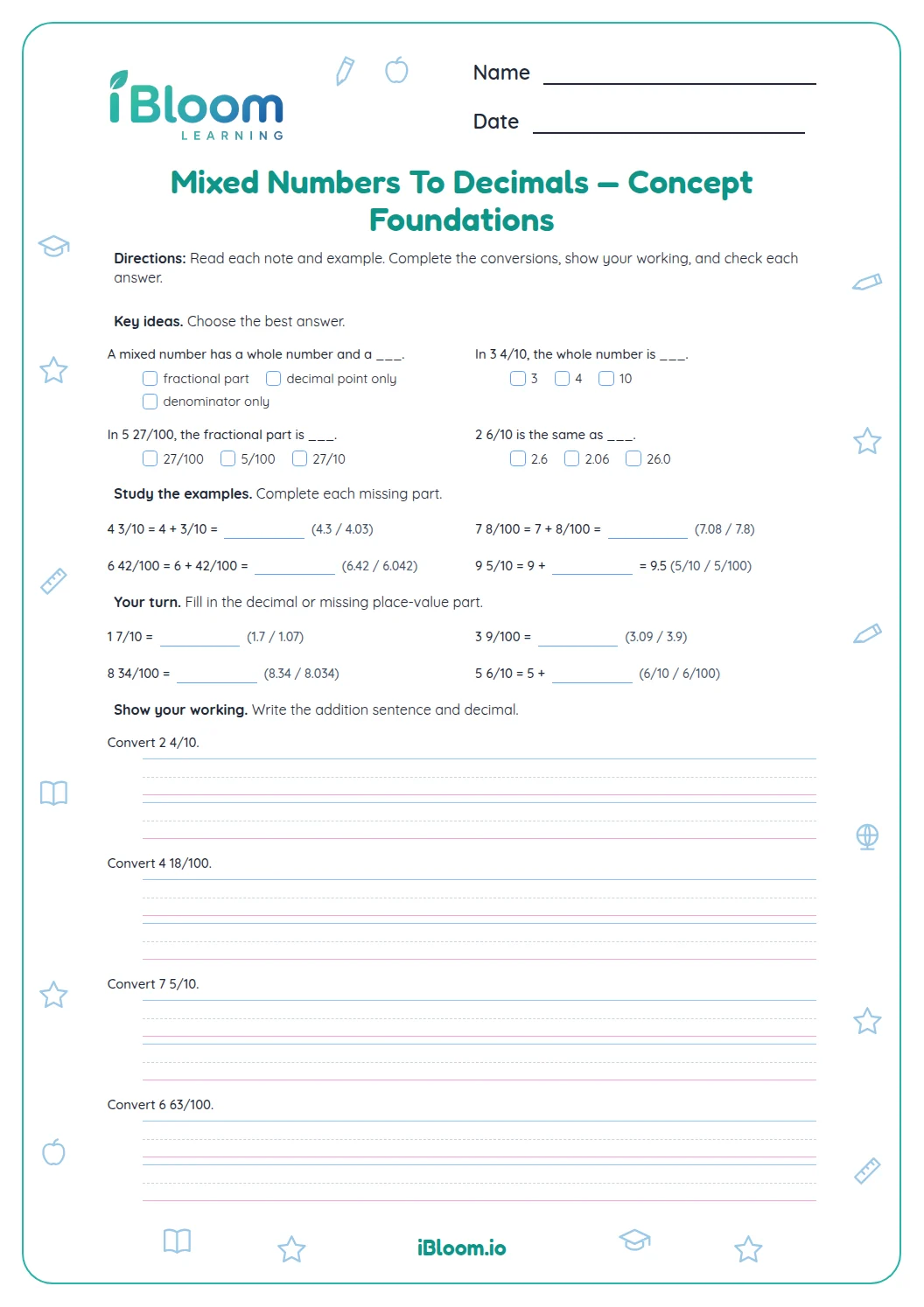
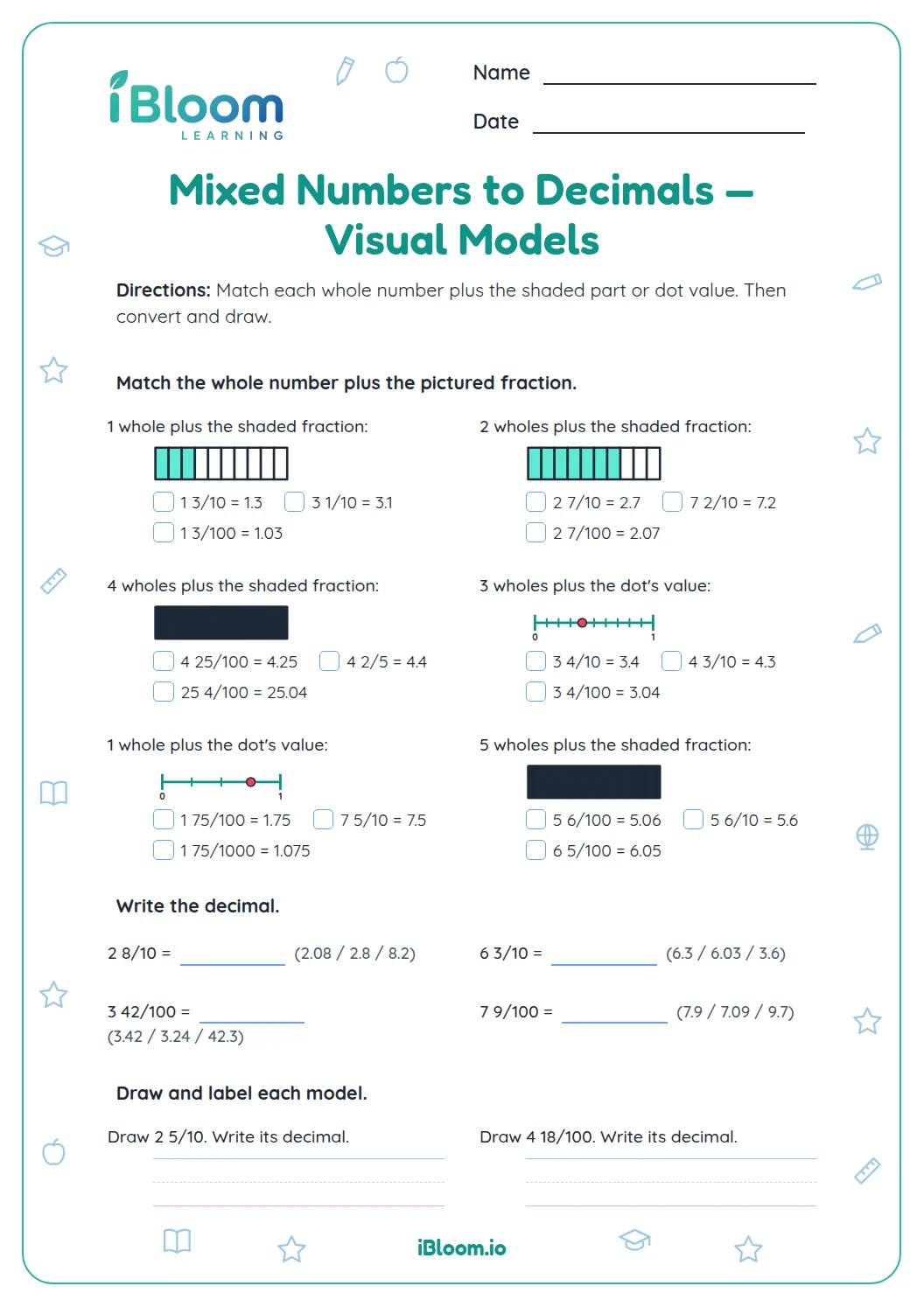
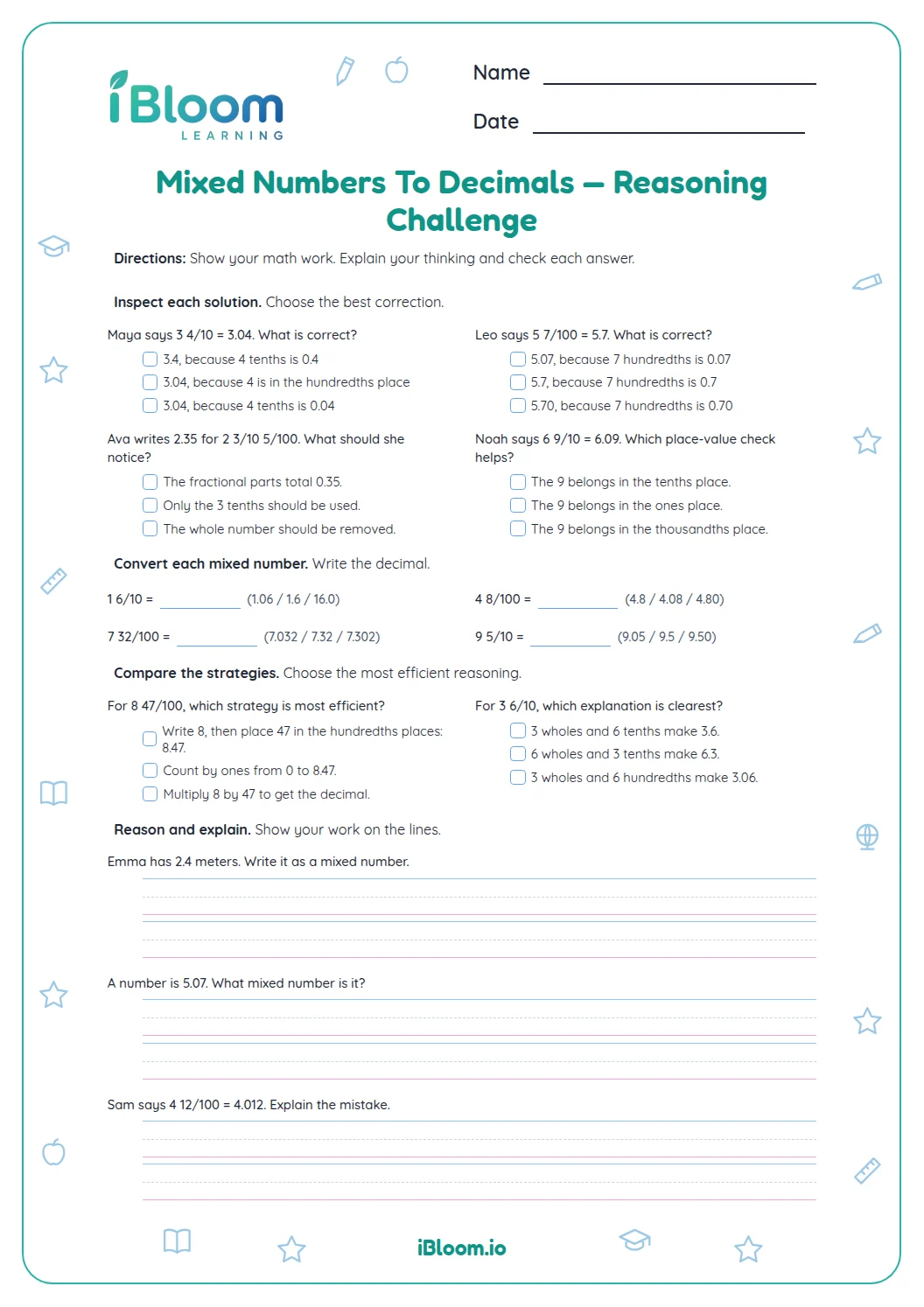
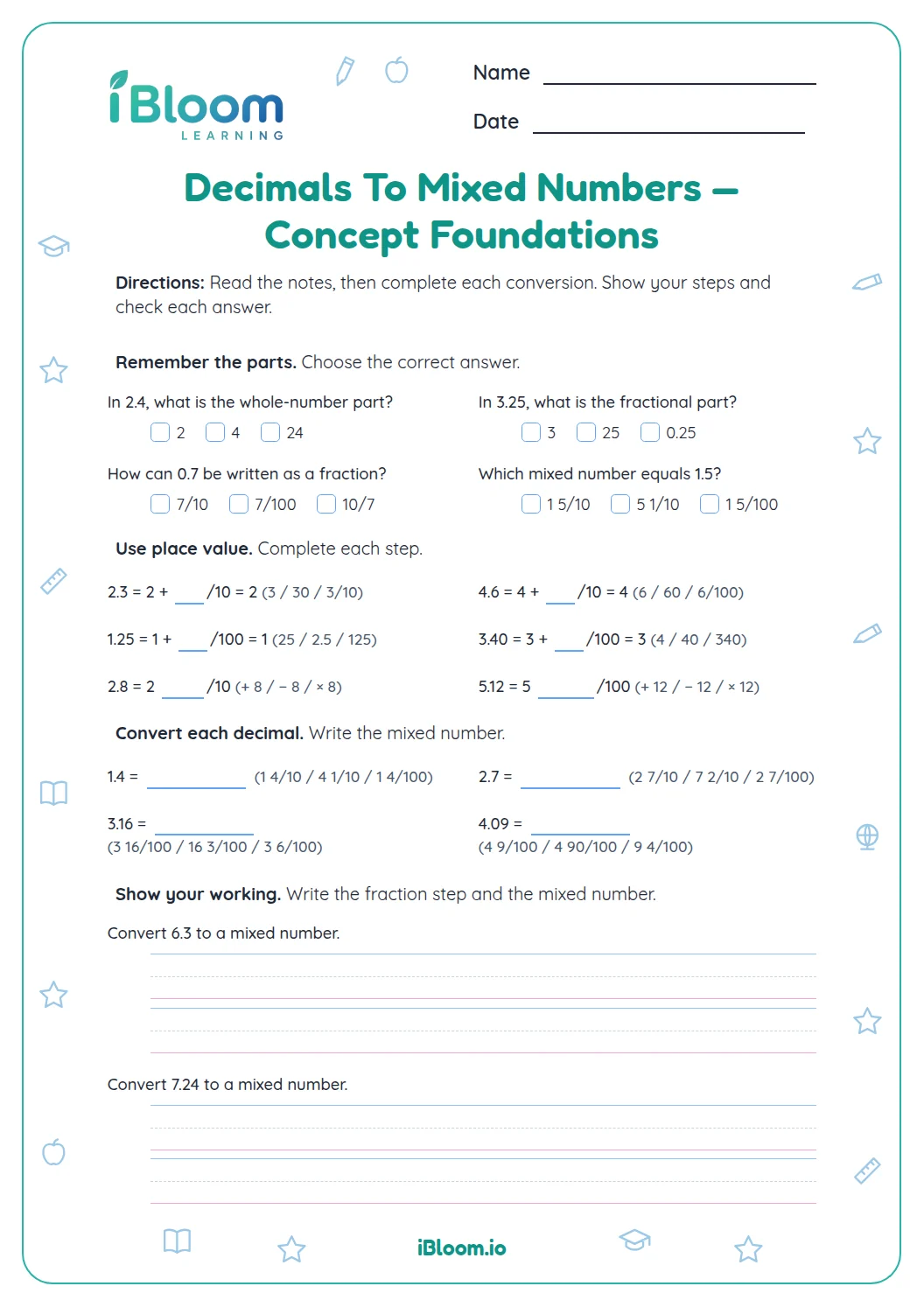
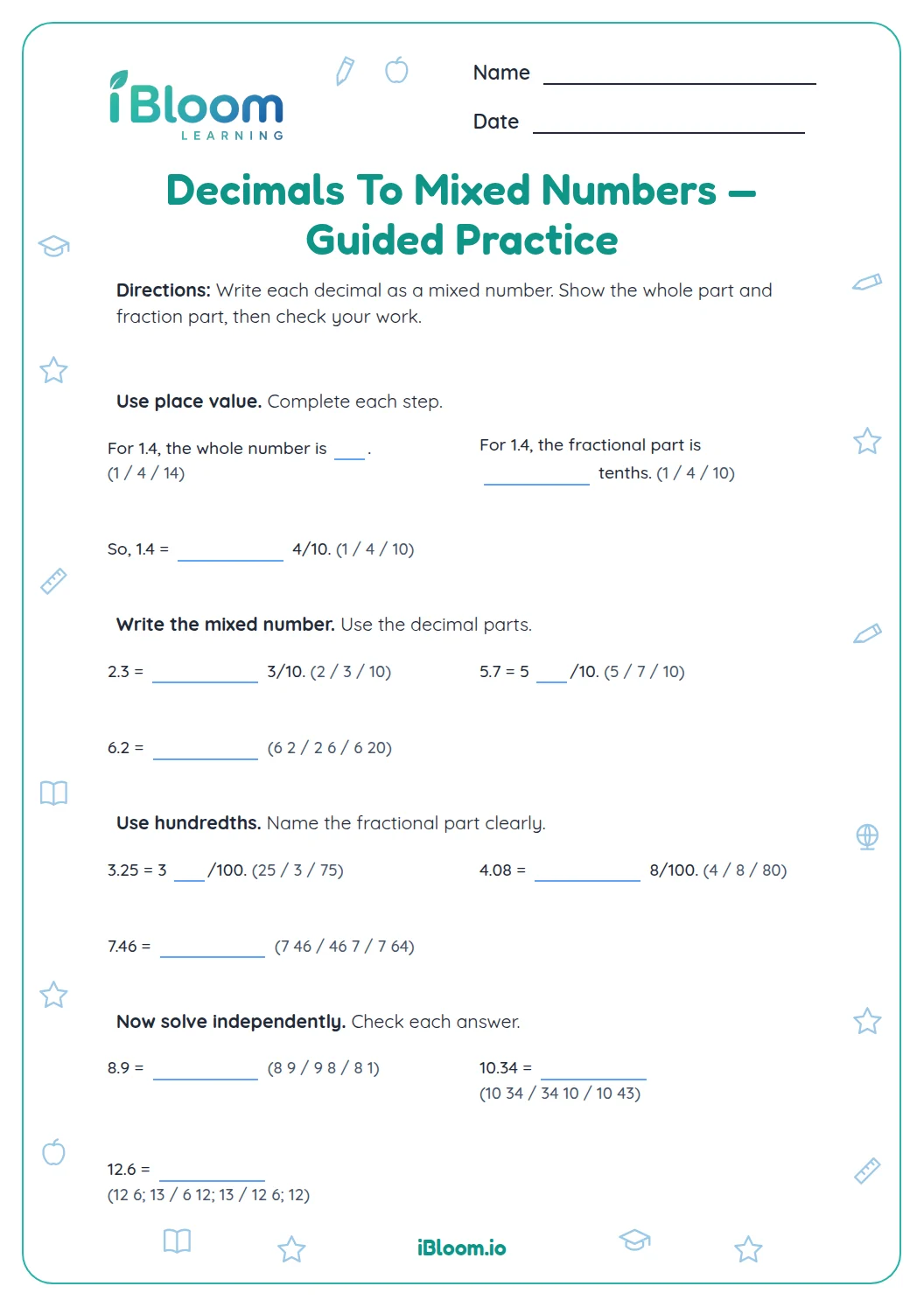
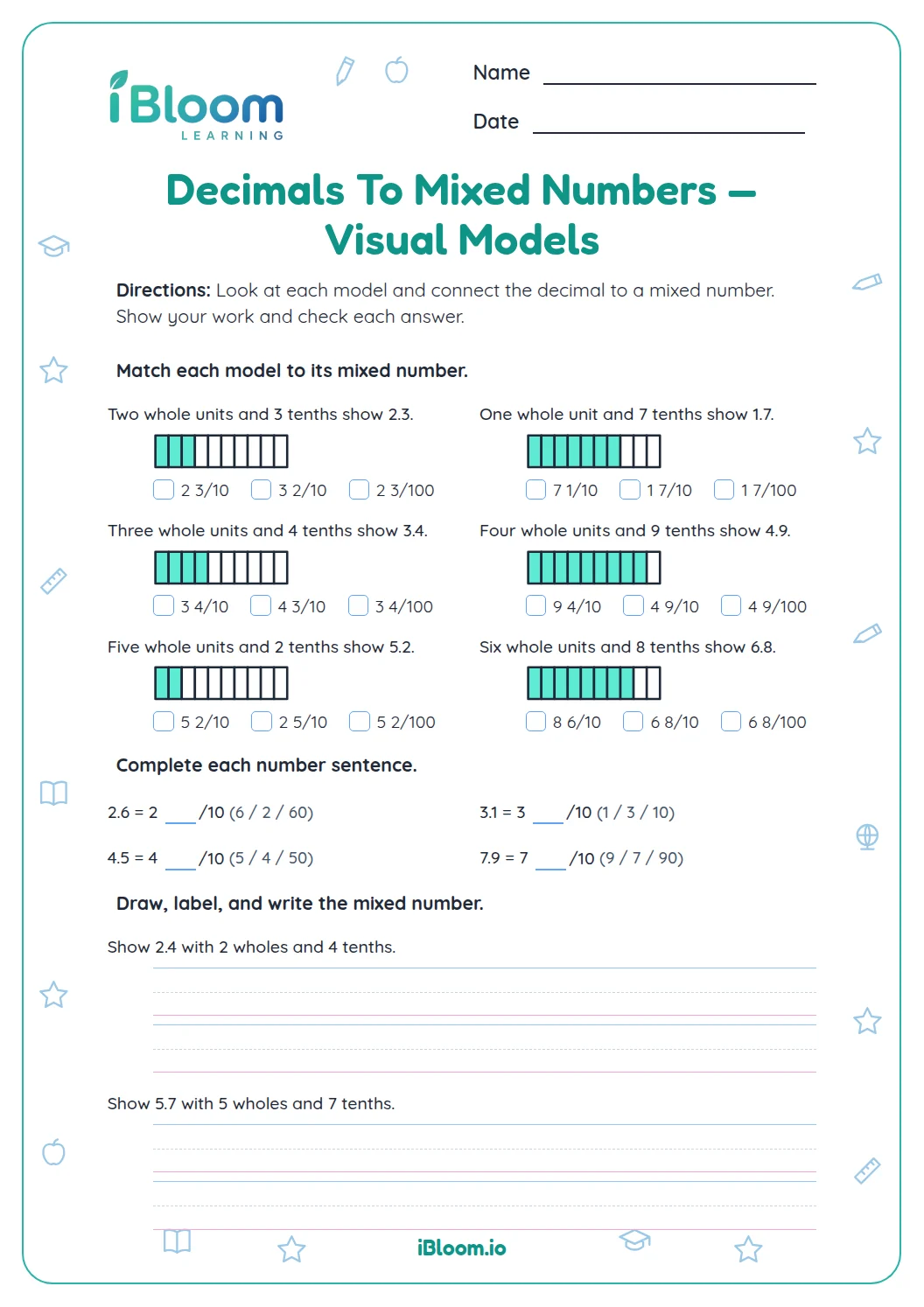
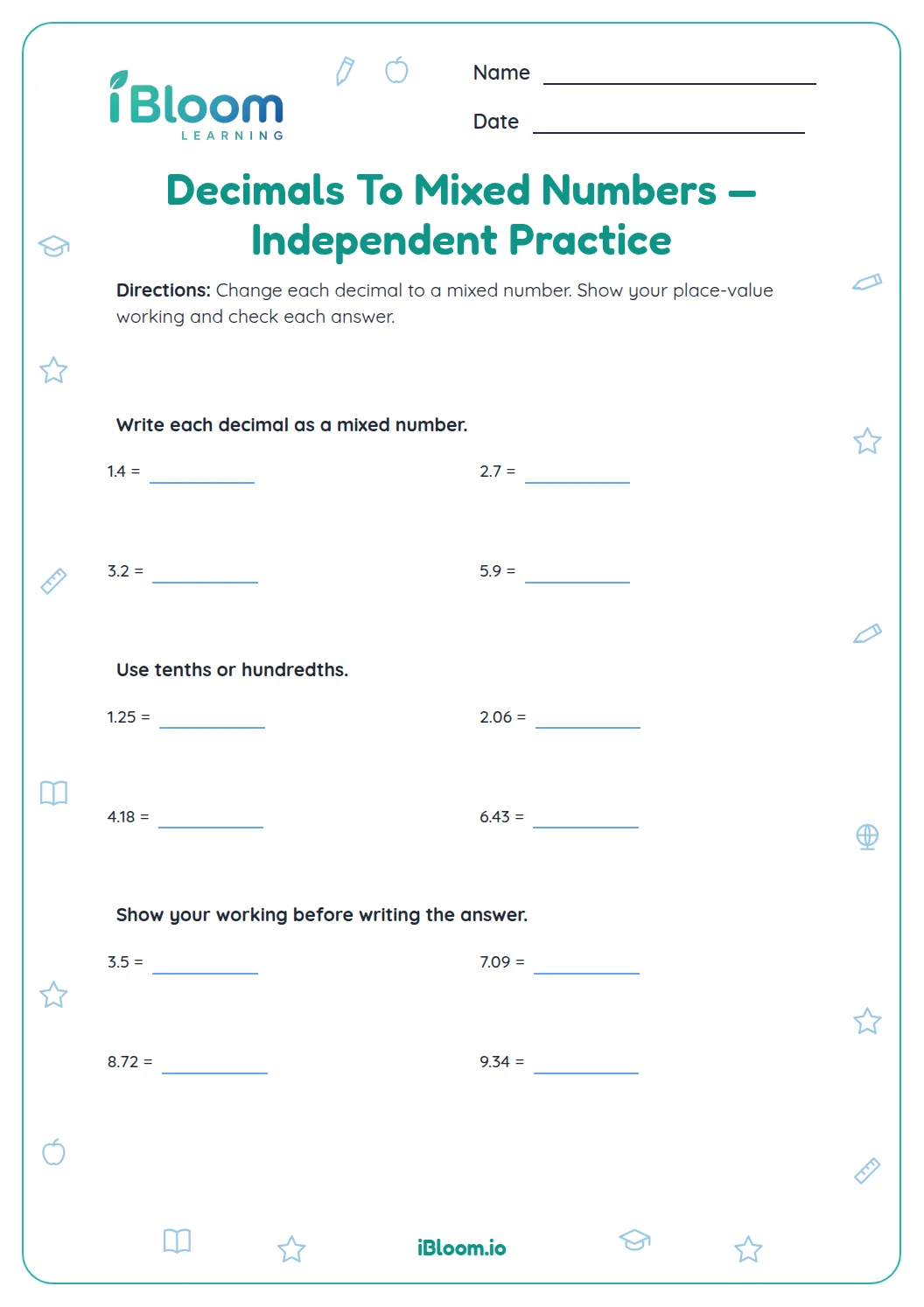
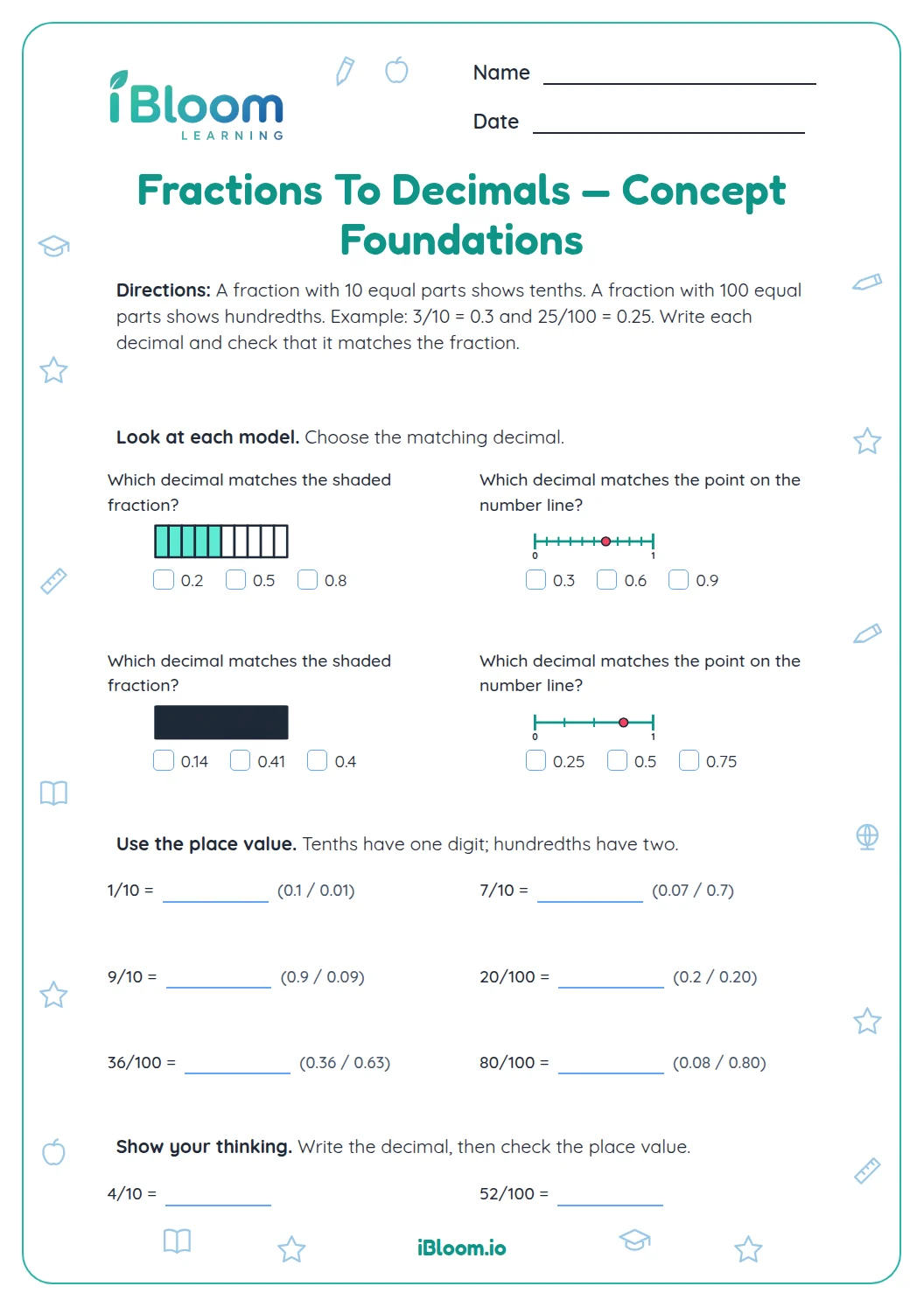
This printable gives Grade 3 students 16 short real-world problems converting mixed-number measurements to decimals. Tenths and hundredths appear in lengths, capacity, distances, and weights, with a separate answer key for checking each response. Students use the denominator to place digits after the decimal point and keep a leading zero when a hundredths numerator has one digit.
Where does the tenths digit go?
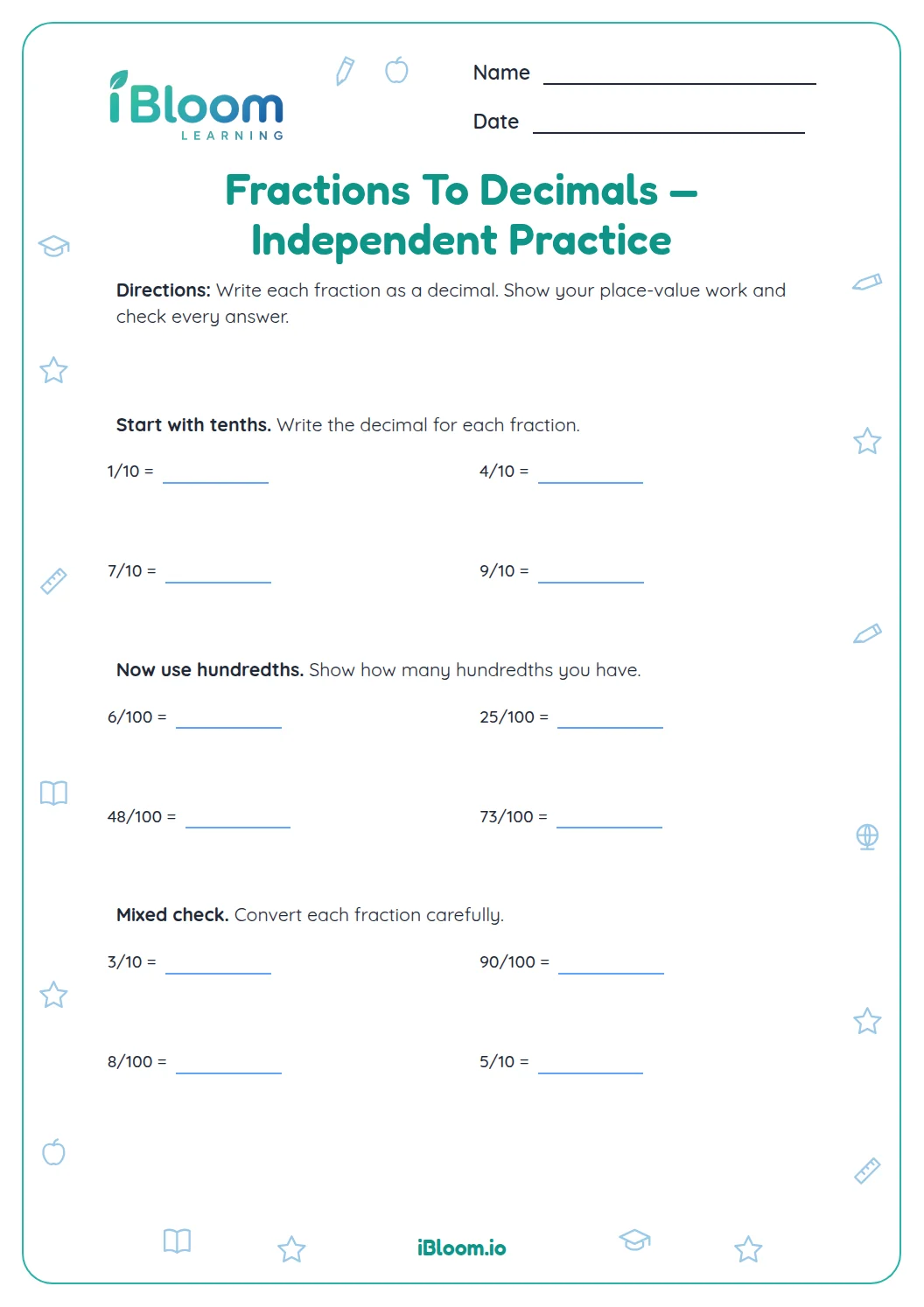
A denominator of 10 means tenths, so the numerator becomes the first digit after the decimal point. Question 1 gives 2 3/10 meters; that is 2.3 meters.
- 12 3/10 meters
- 23 tenths = 0.3
- 32 3/10 = 2.3 meters
How do hundredths appear in a decimal?
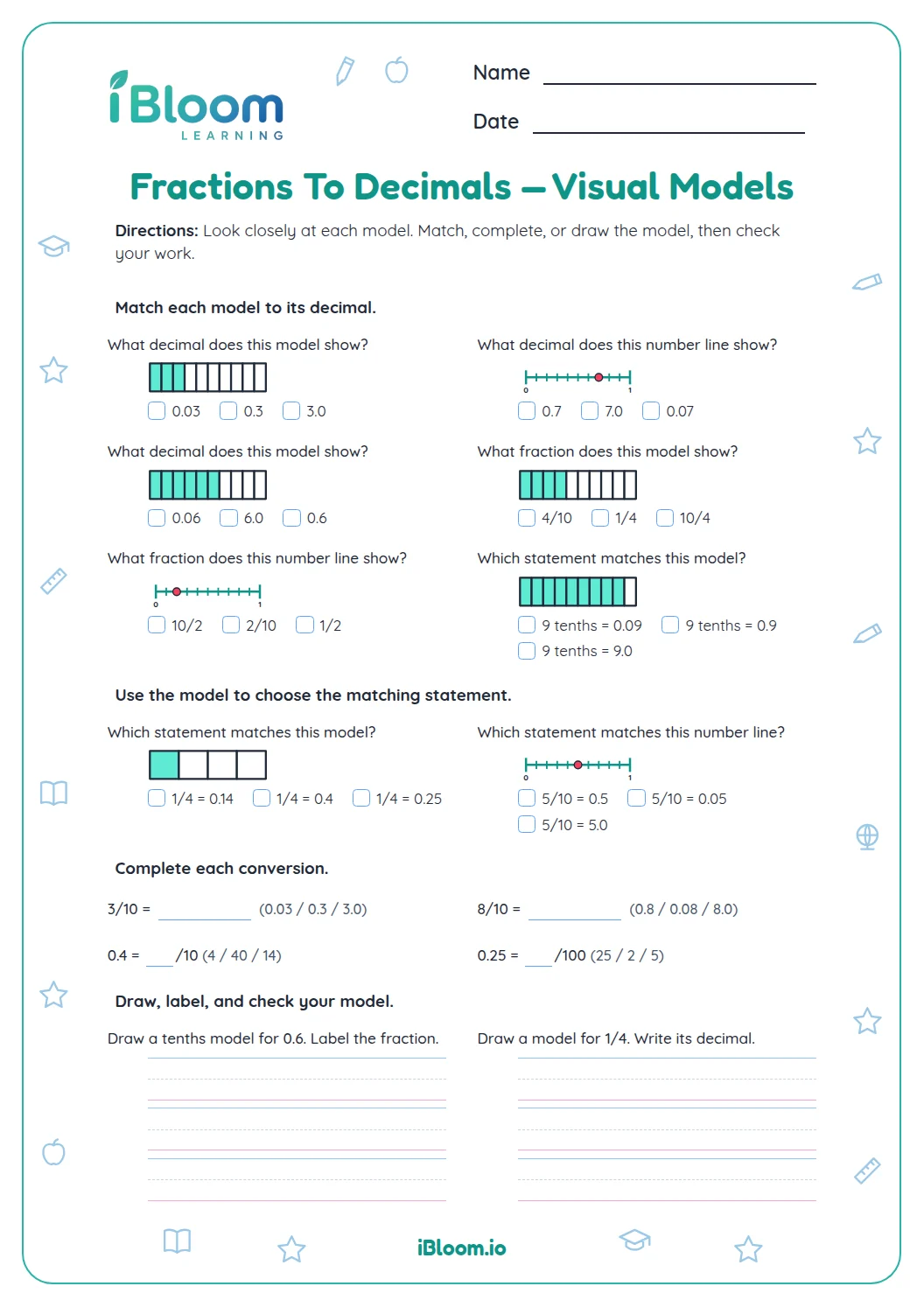
A denominator of 100 means hundredths, so the numerator fills two decimal places. For 2 7/100, write 07 in the hundredths places: 2.07. A zero keeps the 7 in the hundredths position.
What kinds of amounts are included?
Students convert tenths and hundredths from lengths, capacity, distance, and weight. One item asks for two conversions in order, and the final items check whether place value was kept correctly.
How to use this worksheet
- 1Read the denominator to identify tenths or hundredths.
- 2Keep the whole-number part before the decimal point.
- 3Write tenths with one digit after the point.
- 4Write hundredths with two digits, adding a zero when needed.
- 5Keep the unit when the prompt asks for a complete measurement.
- 6Check the decimal digits against the numerator.
Common mistakes and quick fixes
The mistake
Writing 7/100 as .7.
The fix
Hundredths need two places: 7/100 is 0.07.
The mistake
Dropping a zero in 2 7/100.
The fix
Use two decimal places for hundredths, so the answer is 2.07.
The mistake
Putting the numerator before the decimal point.
The fix
The whole number stays on the left; the fraction becomes the decimal part.
What to practice next
Make more practice
Further reading
Questions parents and teachers ask
How do you change 2 3/10 into a decimal?
The 2 stays as the whole-number part. Since 3/10 is three tenths, write 3 in the tenths place: 2.3. Question 1 uses meters, but the same place-value idea works for any unit. The unit tells what is being measured; the decimal digit still tells how many tenths of that unit there are.
Why is 2 7/100 written 2.07?
The denominator 100 means hundredths, which use two places after the decimal point. The numerator 7 needs a zero in the tenths place before it, so the decimal is 2.07. The zero is a placeholder that holds the tenths place open; it does not change the amount of hundredths.
What if the numerator has two digits, like 40/100?
Write both digits in the hundredths places, so 40/100 is 0.40. The zero at the end may be omitted when writing an equivalent decimal, but this sheet keeps both places visible to show the hundredths. A trailing zero does not change the value, so 0.4 and 0.40 are equal even though one displays the hundredths place.
Does the answer key include measurement units?
The key gives units for full measurement answers and plain decimal numerals for prompts that ask only to write the amount as a decimal. This keeps the format aligned with each question. It also makes it easy to check the decimal conversion without wondering whether a measurement unit was part of the requested response.
How can a student check a conversion?
Read the decimal aloud by place value. For 5.40, say five and forty hundredths. Then compare that with the mixed number 5 40/100 to make sure the whole and fractional parts match. Saying the number aloud by place value is a quick check for a misplaced digit or missing zero.