



About this worksheet
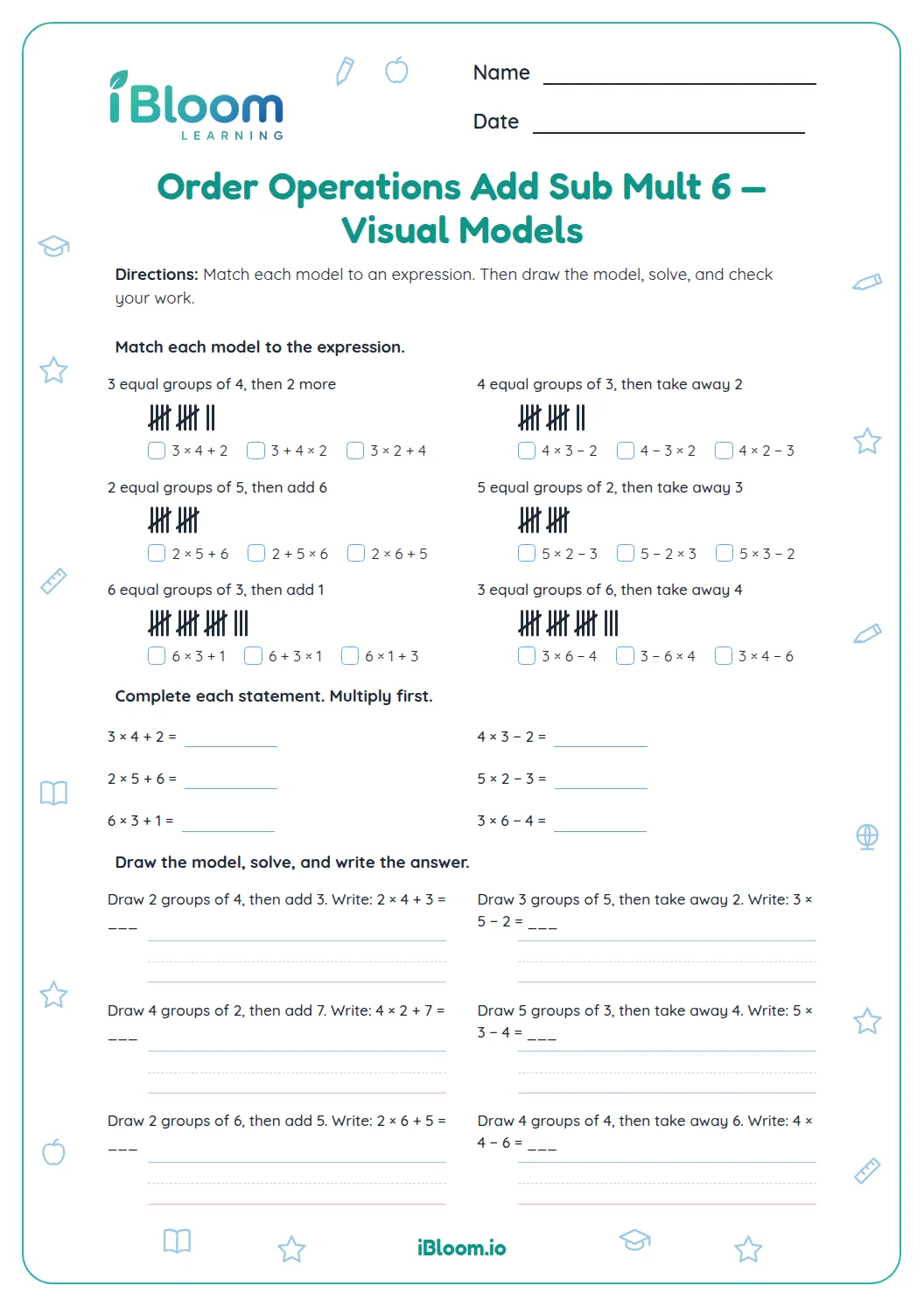
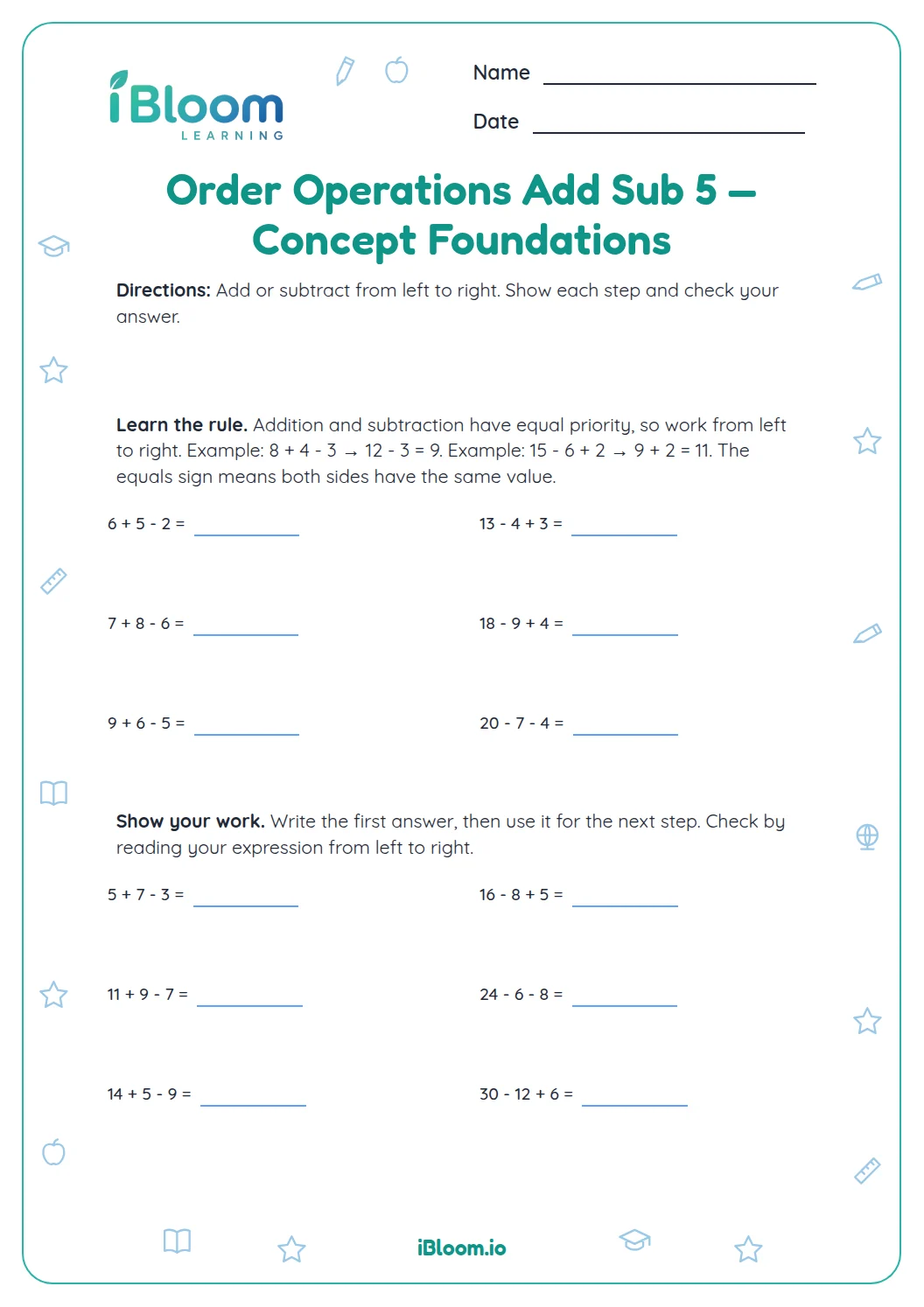
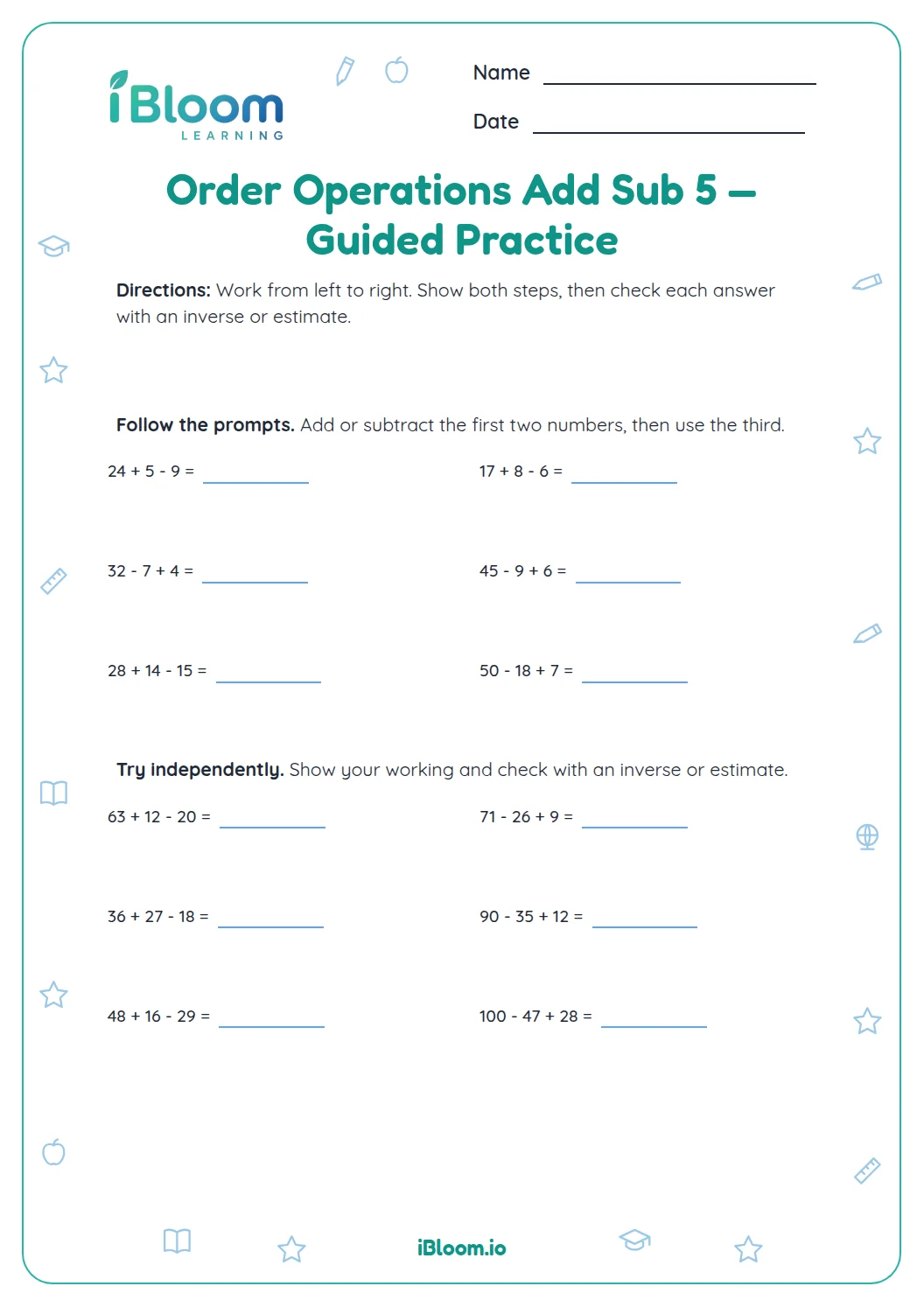
This Grade 3 worksheet guides students through addition and subtraction expressions that include multiplication. Students first find a product, then complete the remaining step. It includes 20 questions in three parts and a separate answer key.
How should students solve these problems?
Read the whole expression or story before calculating. Match each number and operation to the quantities and actions, then evaluate multiplication before addition or subtraction. Parentheses keep an intended group together.
- 14 + 3 × 2. First calculate: ___; then finish: ___
- 23 × 2 = 6, 10
What will students practice?
The worksheet has 18 questions in three parts. It begins with guided practice, then moves to independent calculations or stories; the key lists a result for every item.
How can students check their work?
Compare the written expression with the story one quantity at a time. Recalculate the multiplication, finish addition and subtraction in order, and check that the result makes sense for the objects or amounts in the question.
A routine for each problem
- 1Read the part direction before starting.
- 2Mark the multiplication and any parentheses.
- 3Write the story quantities and actions in order.
- 4Calculate multiplication before addition or subtraction.
- 5Compare the final amount with the story, then check the key.
Common mistakes and fixes
The mistake
Adding before multiplying.
The fix
Find the product first, then complete the addition or subtraction.
The mistake
Leaving a story action out of the expression.
The fix
Point to each number in the story as you write its operation.
The mistake
Using the right operations with the wrong order or grouping.
The fix
Use parentheses for a group the story treats as one amount, then check the product.
What to practice next
Make more practice
Further reading
Questions parents and teachers ask
What does “multiply first” mean?
When an expression has multiplication and addition or subtraction, find the product before finishing the other operation. For example, in 7 + 3 × 4, multiply 3 × 4 to get 12, then add 7 to get 19. Parentheses tell students when a different group must be handled first.
How do parentheses help with these stories?
Parentheses show which quantities belong together as one group in the story. In a situation with several equal groups, students can write the number of groups times the amount in each group inside parentheses before combining that total with another amount. The key keeps the story actions in view.
Should students write an expression before solving?
Yes. Writing the expression first helps connect each number to an action such as making equal groups, adding more, or taking some away. Students can then calculate in the correct order and compare the result with the question to see whether the total is reasonable.
What is included in the answer key?
The answer key gives a result for every worksheet question. For the story problems, it also shows a matching expression so an adult or student can check whether the quantities and operations reflect the events described, not just whether the final arithmetic is correct.
Can this worksheet be used for independent practice?
Yes. Students can read the direction for each part, complete the problems, and use the answer key to check their work. For a first attempt, ask them to explain what each number represents in one story; after that, they can solve the remaining questions on their own.
How can I help when an answer is incorrect?
Ask the student to point to each number in the story and name the matching part of the expression. Check that equal groups were multiplied, that added or removed amounts use the right sign, and that multiplication was completed before the final addition or subtraction.