


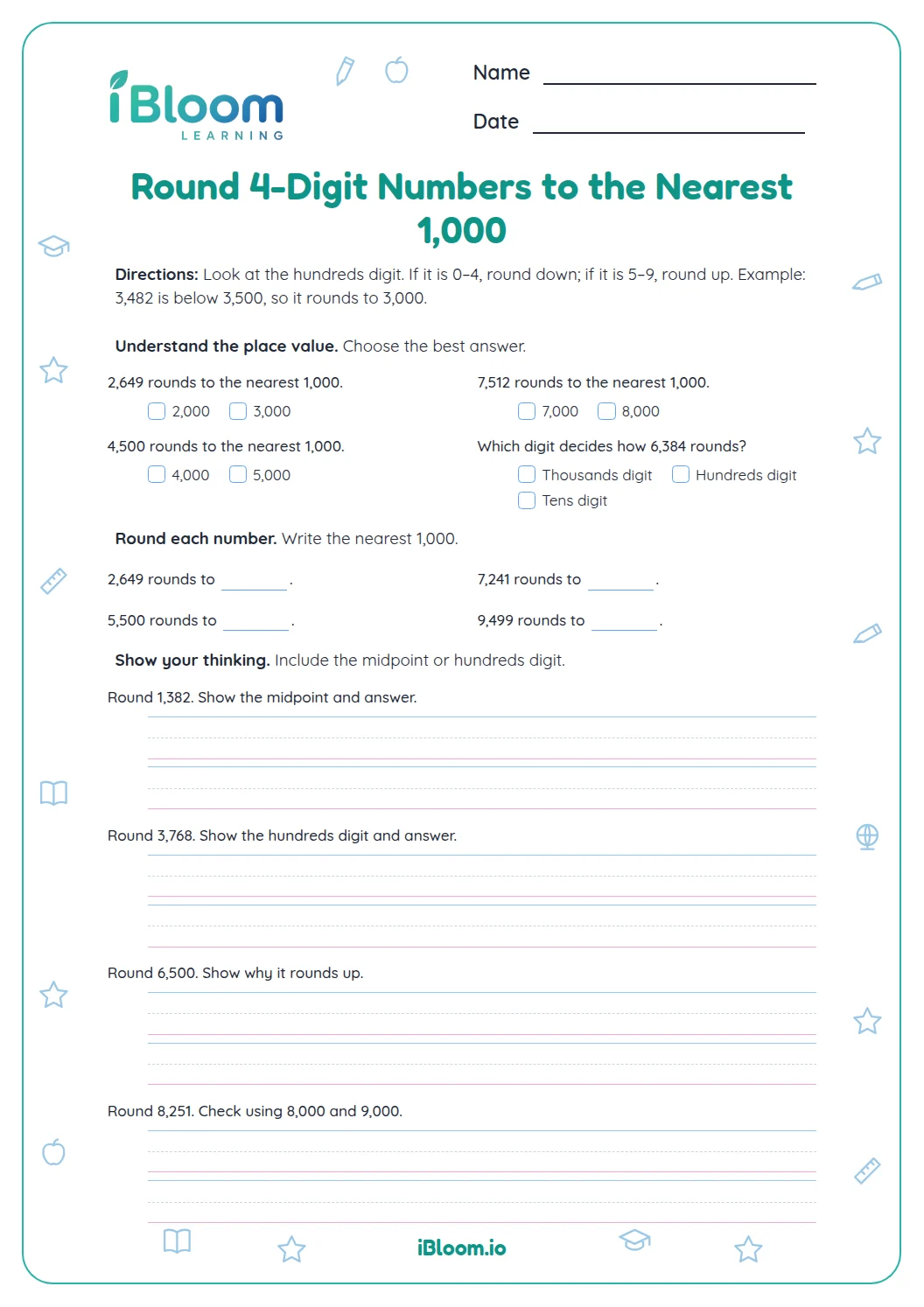
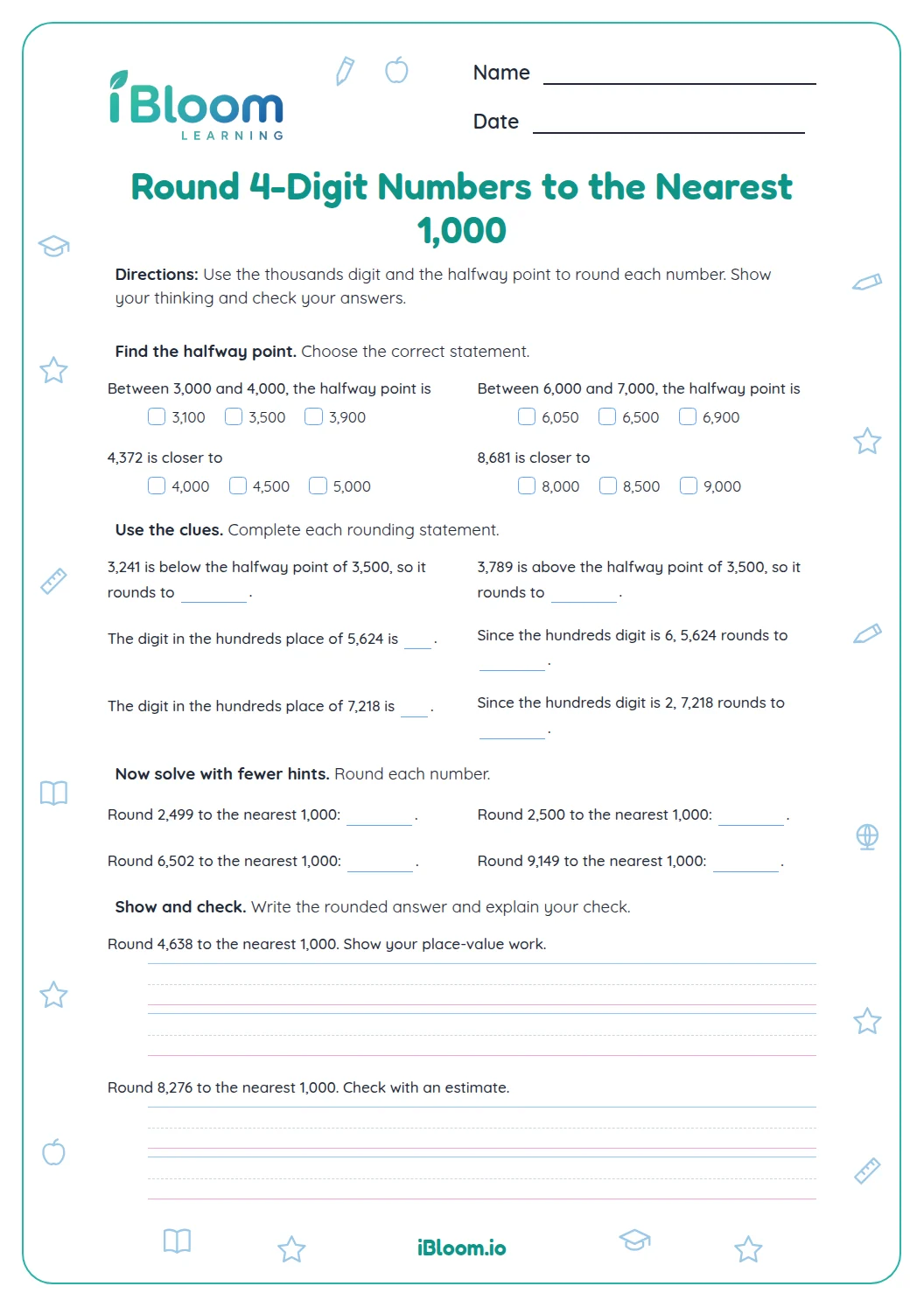

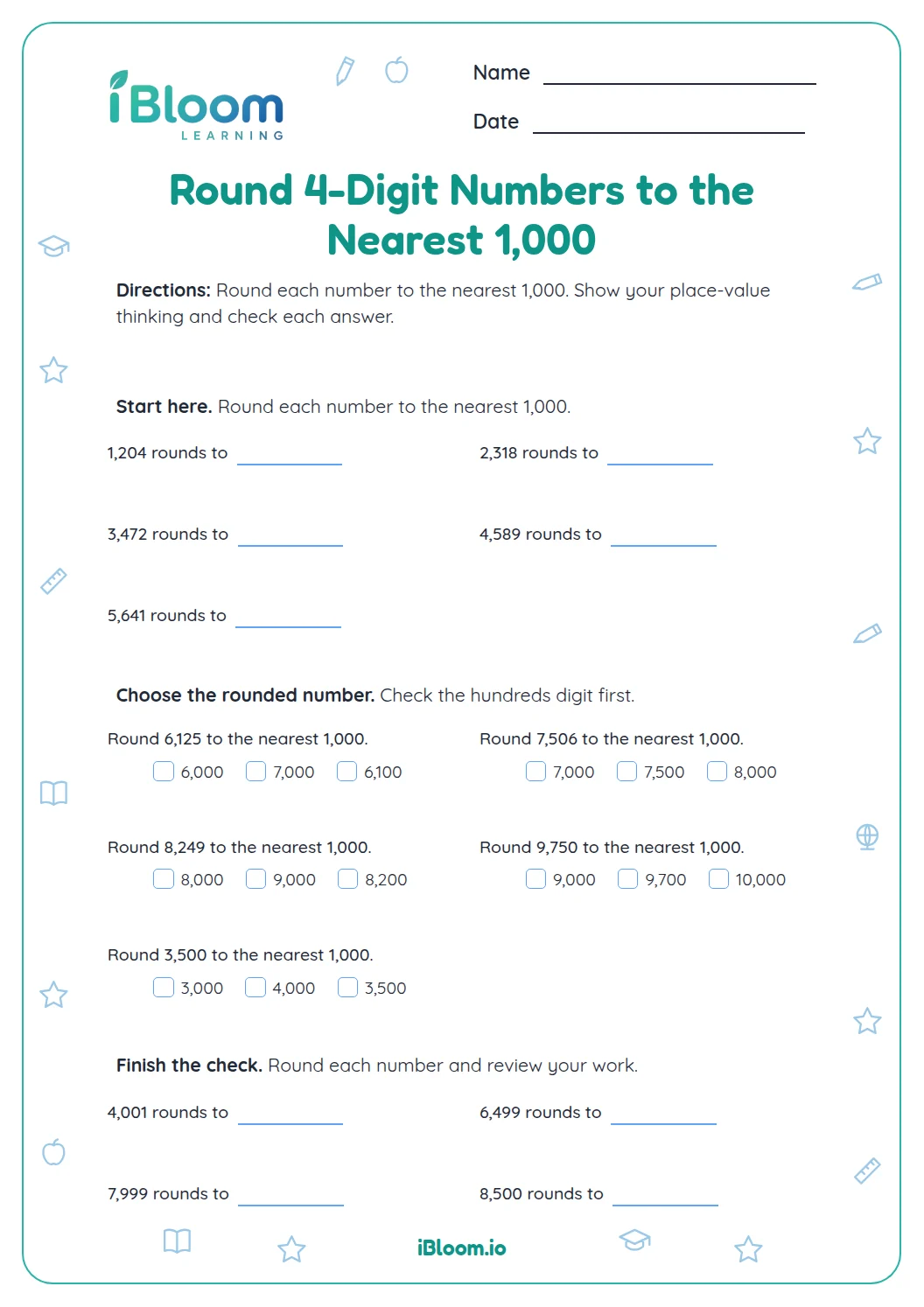
About this worksheet
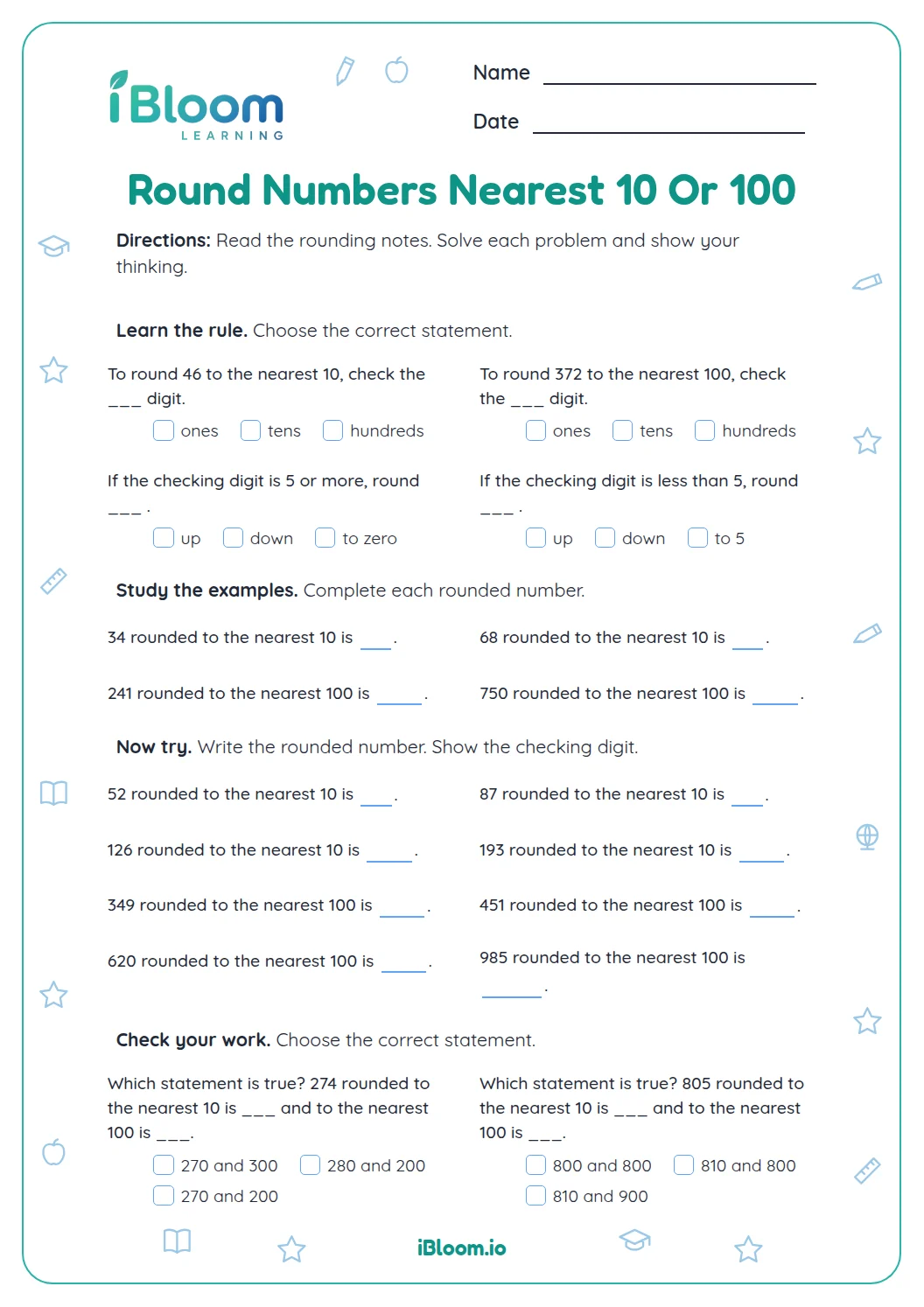
This printable Grade 3 worksheet has 16 short real-world rounding problems. Students round counts, distances, and other whole numbers to the nearest ten or hundred, using the digit immediately to the right of the named place. Midpoint cases ending in 5 appear in both types of rounding. The separate answer key lists all rounded values and the page practices CCSS 3.NBT.A.1.
Aligned to 3.NBT.A.1
How do you round to the nearest ten?
Look at the ones digit. A 0, 1, 2, 3, or 4 keeps the tens digit; a 5, 6, 7, 8, or 9 increases it. Change the ones digit to zero.
Question 1 has 347 cans. Since the ones digit is 7, it rounds up to 350.
- 1347
- 2Ones digit is 7, so round up
- 3347 ≈ 350 cans
How do you round to the nearest hundred?
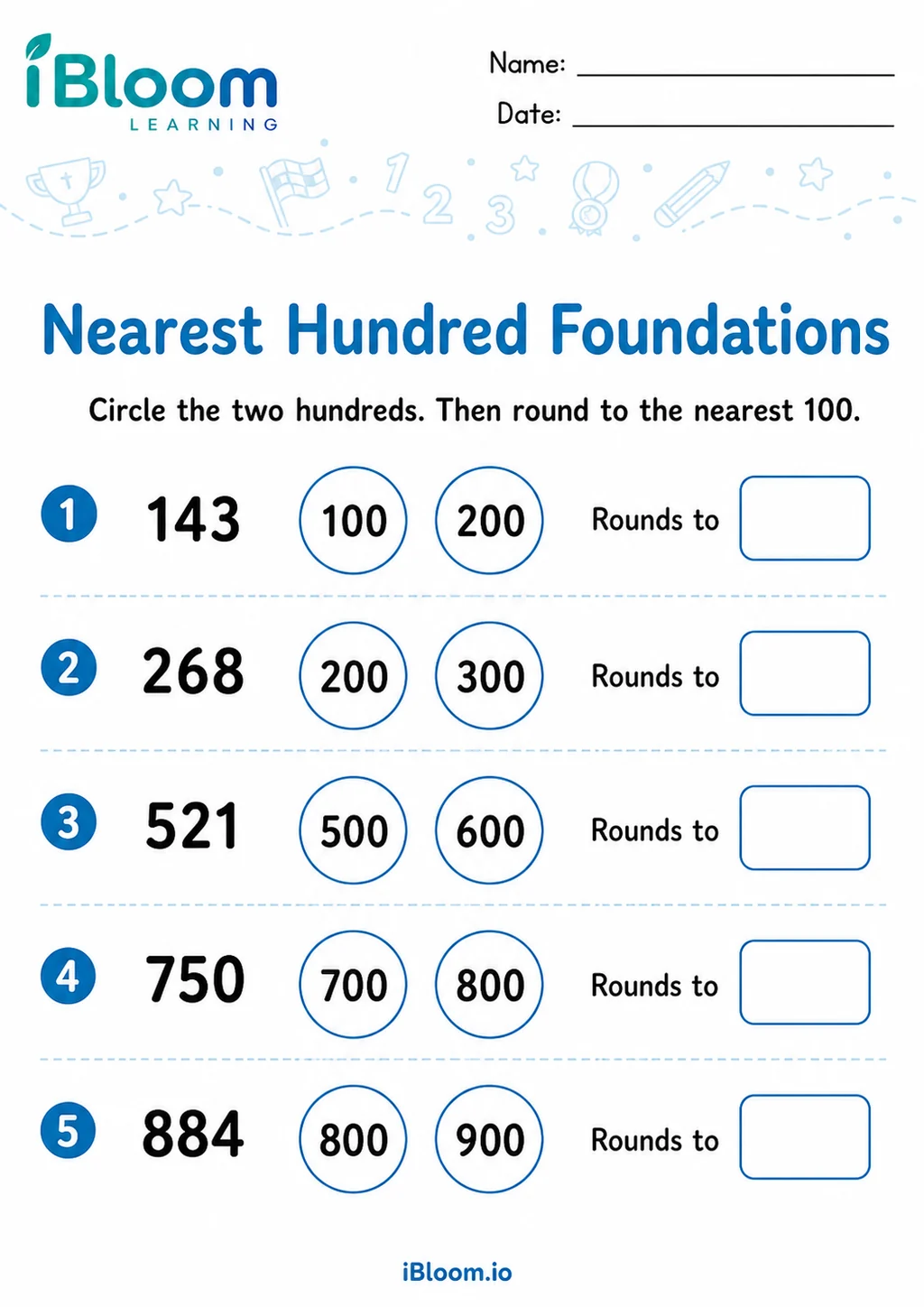
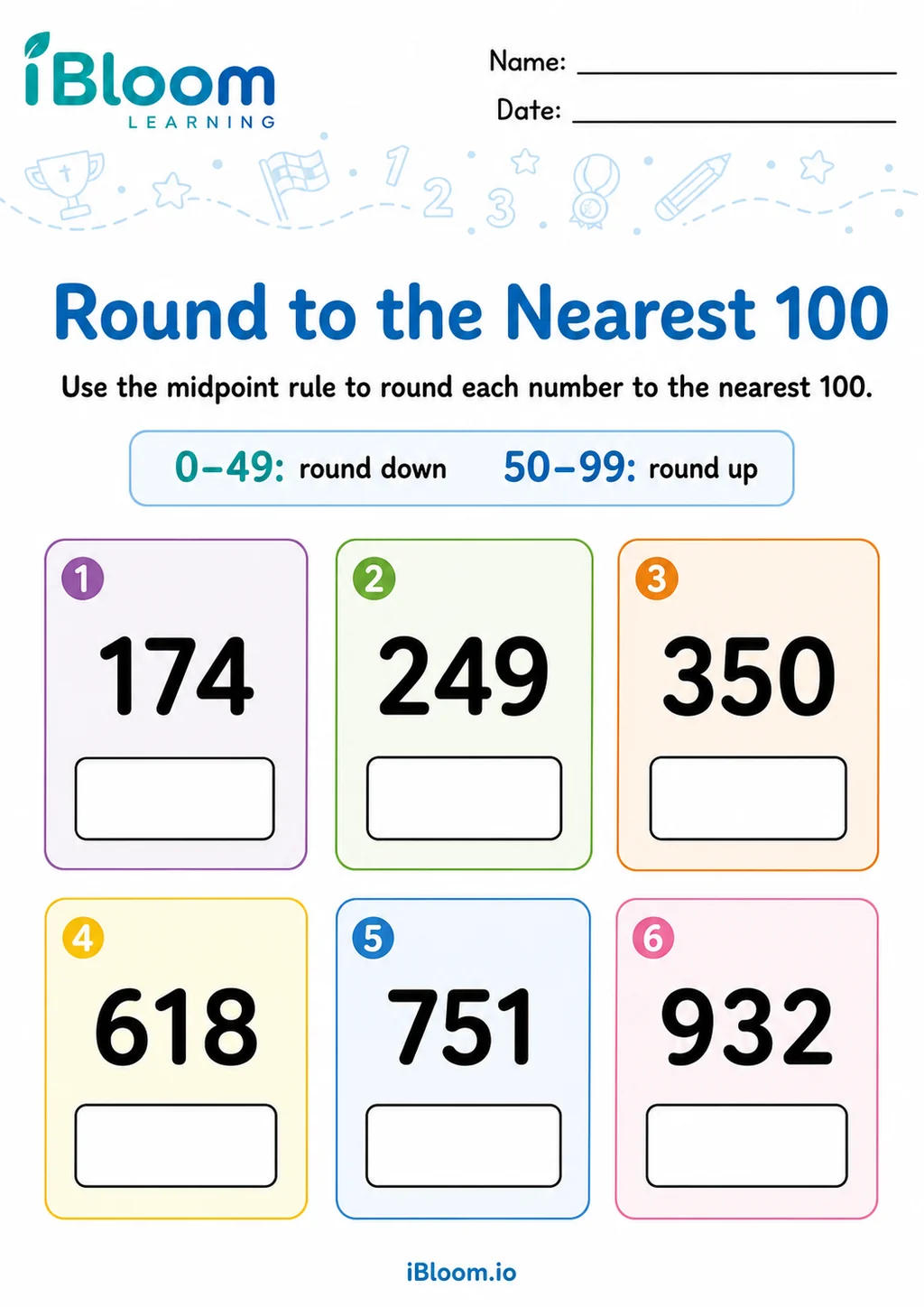
Check the tens digit. If it is 0 through 4, keep the hundreds digit; if it is 5 through 9, increase it. Change tens and ones to zeros.
Question 2 rounds 1,246 visitors to 1,200 because the tens digit is 4.
How do you use the estimate in context?
Keep the unit or object from the story in mind after rounding. The number 350 represents an estimate of cans in question 1, while 1,200 represents visitors in question 2.
Reread the prompt to confirm you rounded to the requested place.
How to use this worksheet
- 1Circle whether the prompt says nearest 10 or nearest 100.
- 2Find the digit immediately to the right of that place.
- 3Keep the named digit for 0–4; increase it for 5–9.
- 4Replace all digits to the right with zeros.
- 5Read the story again and keep its unit or object in mind.
Common mistakes and quick fixes
The mistake
Checking the ones digit for nearest hundred
The fix
For hundreds, check the tens digit.
The mistake
Changing digits left of the requested place
The fix
Only the named digit and places to its right may change.
The mistake
Rounding to a different place than requested
The fix
Circle nearest 10 or nearest 100 before calculating.
Common Core alignment
This worksheet practices the math standard below.
Round whole numbers to the nearest ten or hundred using place value.
On this sheet: Every story asks students to round a whole number to the nearest ten or hundred.
Show the official wordingHide the official wording
Use place value understanding to round whole numbers to the nearest 10 or 100.
What to practice next
Make more practice
Further reading
Questions parents and teachers ask
Which digit do I check when rounding to the nearest ten?
Check the ones digit. If it is 0 through 4, keep the tens digit; if it is 5 through 9, increase the tens digit by one. Then change the ones digit to zero. Question 1 rounds 347 to 350 because its ones digit is 7.
Which digit do I check when rounding to the nearest hundred?
Check the tens digit. Keep the hundreds digit when the tens digit is 0 through 4; increase it when the tens digit is 5 through 9. Replace the tens and ones with zeros. For example, 1,246 rounds to 1,200 because its tens digit is 4.
What happens when the next digit is exactly 5?
Round up when the digit immediately to the right of the requested place is 5. For example, 1,575 rounds to 1,580 to the nearest ten. The worksheet also includes midpoint cases for hundreds, so students can apply the same rule there.
Why round a number from a real situation?
A rounded number is a nearby estimate that can be easier to communicate or use for planning. The stories give a context such as tickets, visitors, books, or distance, then name whether to round to tens or hundreds. The estimate should keep the same general unit.
Does the key include units?
The answer key lists each rounded value in the same question order. Where the story asks for a count, the context supplies the object; where it asks about a length or money amount, the answer remains a rounded number with the context unit understood.