Visual Models for Grade 4 Place Value Rounding
Round Nearest 10000 — Visual Models
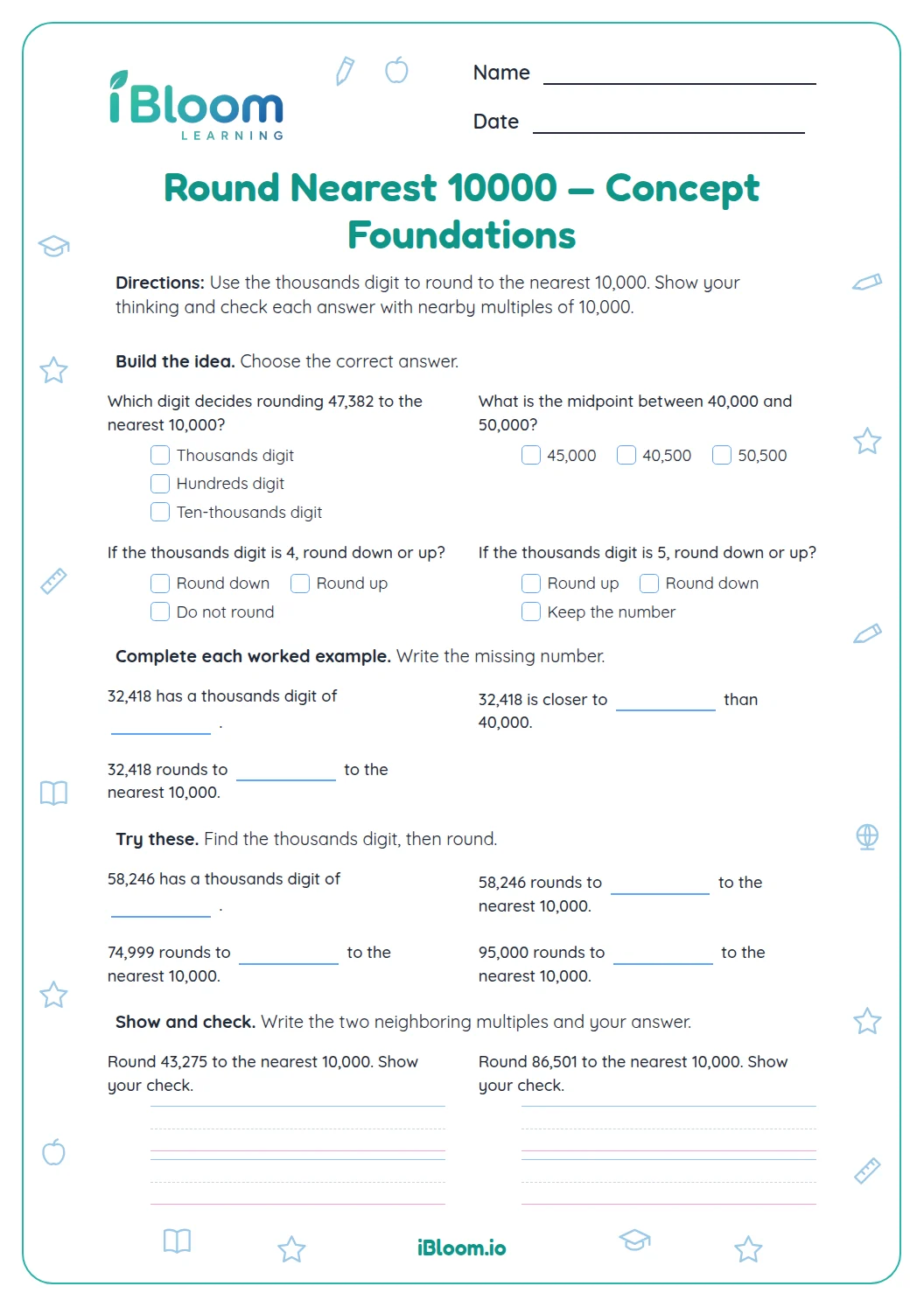
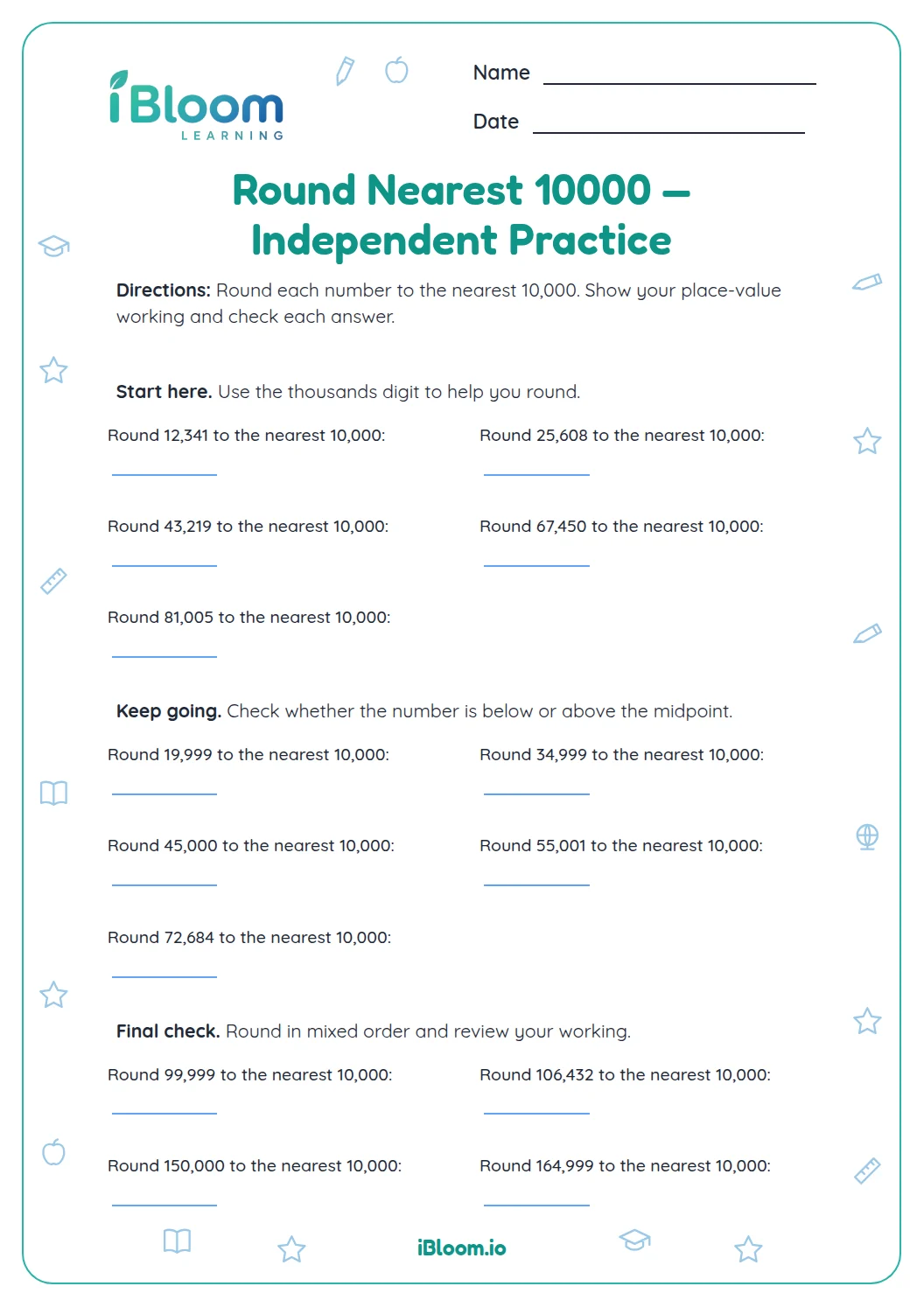
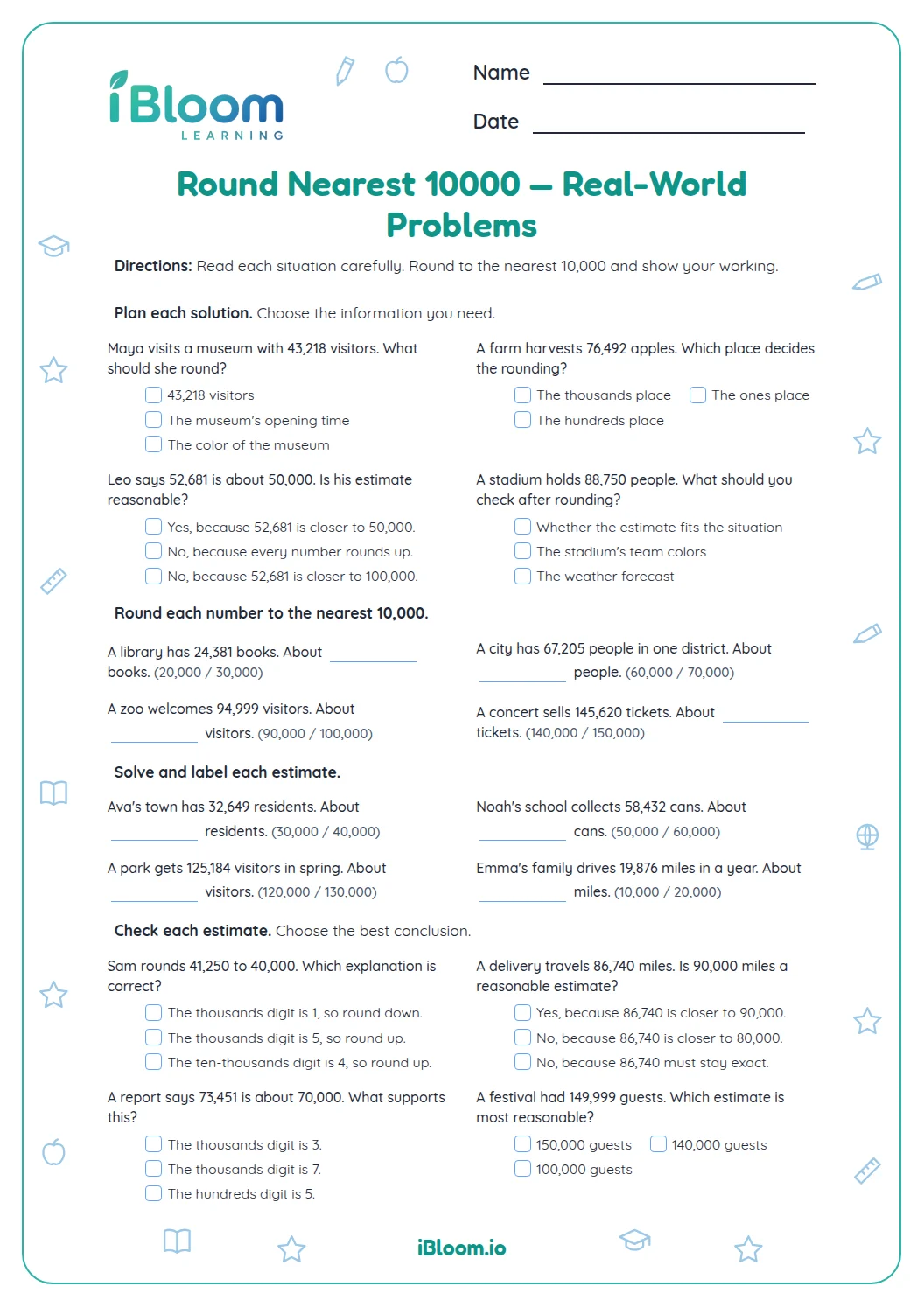
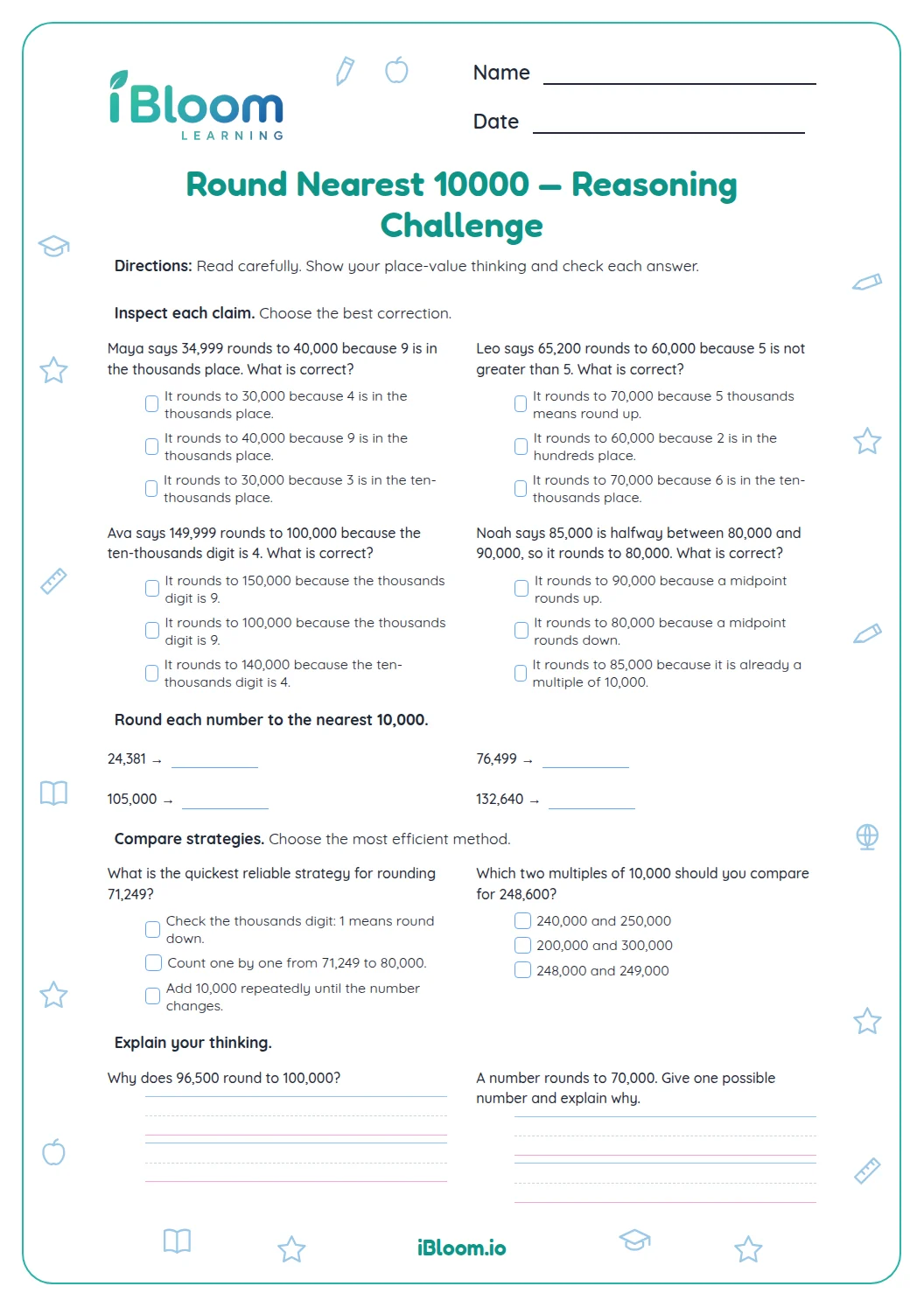
Grade 4 printable activities for rounding whole numbers to the nearest 10,000 using place value, midpoints, and number-line thinking. This Grade 4 visual-model worksheet connects suitable diagrams, tables, number lines, or place-value models to mathematical notation.
More worksheets on this skill5
Each one practices the same skill a different way, with its own answer key.

How to use these worksheets well
A printable worksheet is most useful when it follows a clear explanation and gives a child a manageable chance to apply one skill.
Begin by previewing the page yourself.
Check the directions, vocabulary, number range, amount of writing, and expected level of independence.
Tell the child the purpose in simple language, such as, “Today we are practicing how to compare two groups,” rather than presenting the page as a test.

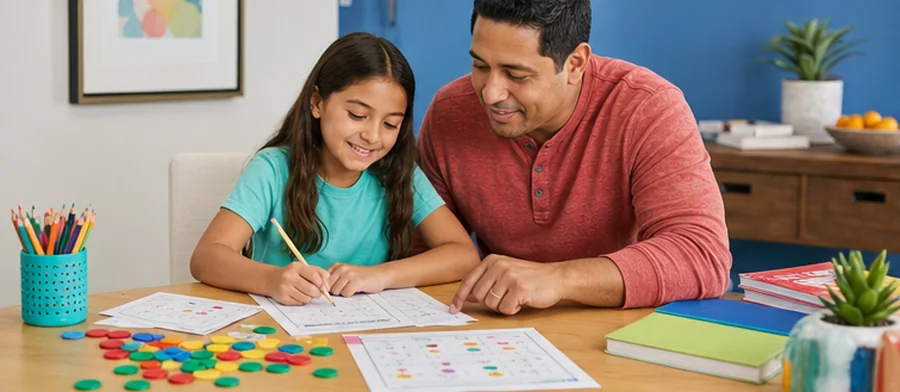
A simple routine for parents
- Connect the topic to something familiar. Use toys, food, a storybook, a calendar, signs, or a recent school lesson to make the idea concrete.
- Complete one example together. Read the direction aloud and model your thinking without solving the whole page for the child.
- Let the child try a short section. Watch the method, not only the final response. Ask, “How did you figure that out?” or “What clue helped you?”
- Respond to errors calmly. A wrong answer shows where understanding changed course. Return to an object, drawing, sound, word, or example before asking the child to try again.
- Finish with a success. Review one thing the child can now explain and stop before practice becomes tiring.
Short, regular sessions are usually more effective than completing several pages at once. Younger children may work for five to ten minutes; older elementary learners may stay engaged for fifteen to twenty minutes when the task is appropriate. Break a page into sections when handwriting, attention, language, or working memory makes the full activity feel heavy.
Practical classroom uses for teachers
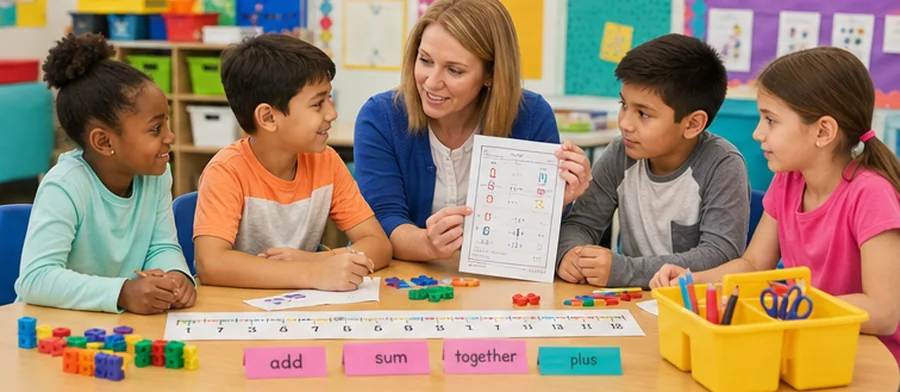
Use a worksheet after explicit instruction as guided practice, a learning center, partner work, independent application, intervention, homework, or a quick formative check. Model the first item and clarify unfamiliar language before students begin. During work time, notice the strategies students choose, the errors that repeat, and the prompts that help them restart. These observations are often more useful than a total score.
Differentiate without changing the learning goal. Offer counters, a number line, an alphabet strip, a word bank, sentence starters, read-aloud support, or fewer questions when a learner needs access. For additional challenge, ask students to explain a second method, create an example, justify a choice, write a related problem, or teach the idea to a partner.
After the activity, group students by the next instructional need rather than by a permanent label. One group may need another concrete model, another may need vocabulary support, and another may be ready to apply the same skill in a less familiar context. Keep completed pages as one small piece of evidence alongside conversation, observation, reading, writing, and hands-on work.
Why iBloom Learning worksheets
iBloom Learning organizes printable practice by subject, grade, and specific skill so families and educators can choose a focused activity instead of searching through a mixed packet. Each library page explains what children are practicing, what adults should notice, and how the activity can fit into a real lesson or home routine. Clear previews help you check the full page before printing, including its directions, visual density, and expected writing.
The worksheets are designed to support teaching, not replace it. Children still need conversation, books, manipulatives, demonstrations, play, investigation, and feedback. iBloom pages work as the practice step within that larger learning experience. A focused layout reduces unnecessary switching between unrelated skills and gives adults a clearer view of how a child approaches the target idea.
For parents, this means less time guessing what to print and more time listening to a child's thinking. For teachers, it means flexible material that can support whole-class modeling, small groups, centers, intervention, review, and independent application. Regional grade labels and examples help the library feel familiar to the learners using it, while topic pages make it easier to move from foundational practice toward greater independence.
Use the worksheet that fits today's need, adapt the amount of work, and revisit the topic through another format when necessary. Progress is not the number of pages completed; it is the child's growing ability to explain, apply, and use the skill with confidence.
Helpful answers
Frequently asked questions
How often should children use printable worksheets?
Use them when they reinforce a current learning goal. A few short, focused sessions each week are generally more useful than completing many unrelated pages at once.
Should parents correct every mistake immediately?
Pause first and ask the child to explain the method. Then use an object, drawing, example, or clue to help the child notice and revise the response.
How can teachers differentiate the same worksheet?
Adjust the number of questions and provide supports such as counters, number lines, word banks, sentence starters, read-aloud help, or partner discussion. Extend learning through explanation, creation, and comparison tasks.
What should I do when a worksheet is too difficult?
Stop before frustration grows, identify the prerequisite skill, model a simpler example, and return to the page later. Choosing an earlier related topic is productive support, not a setback.
How can I tell whether a child understands the topic?
Ask the child to explain an answer, show the idea with another representation, create an example, or apply the skill in a new context. Use the completed page together with observation and conversation.
Are iBloom worksheets a complete curriculum?
No. They are focused practice resources designed to work alongside instruction, discussion, reading, manipulatives, investigation, feedback, and other learning experiences.