



About this worksheet
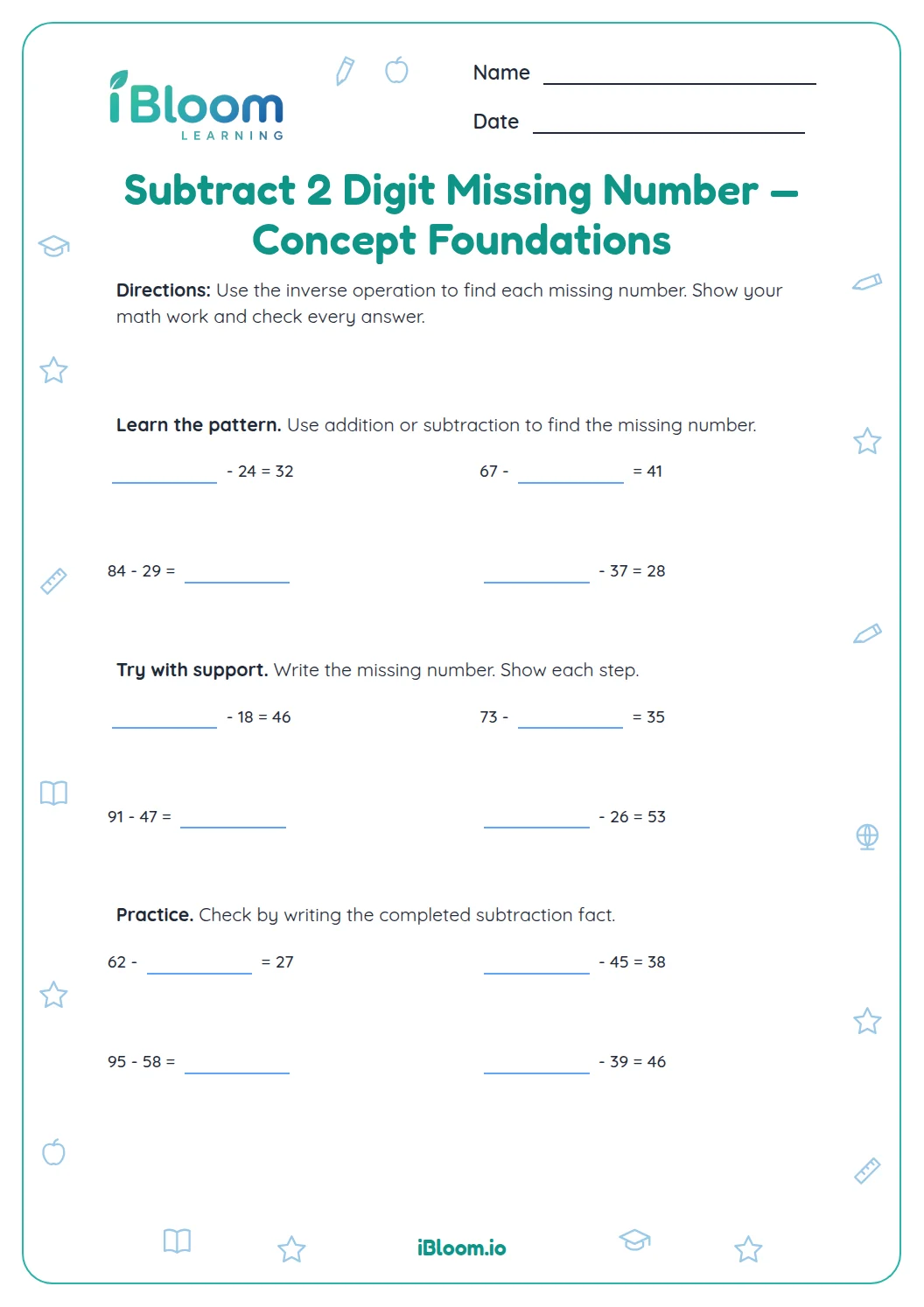
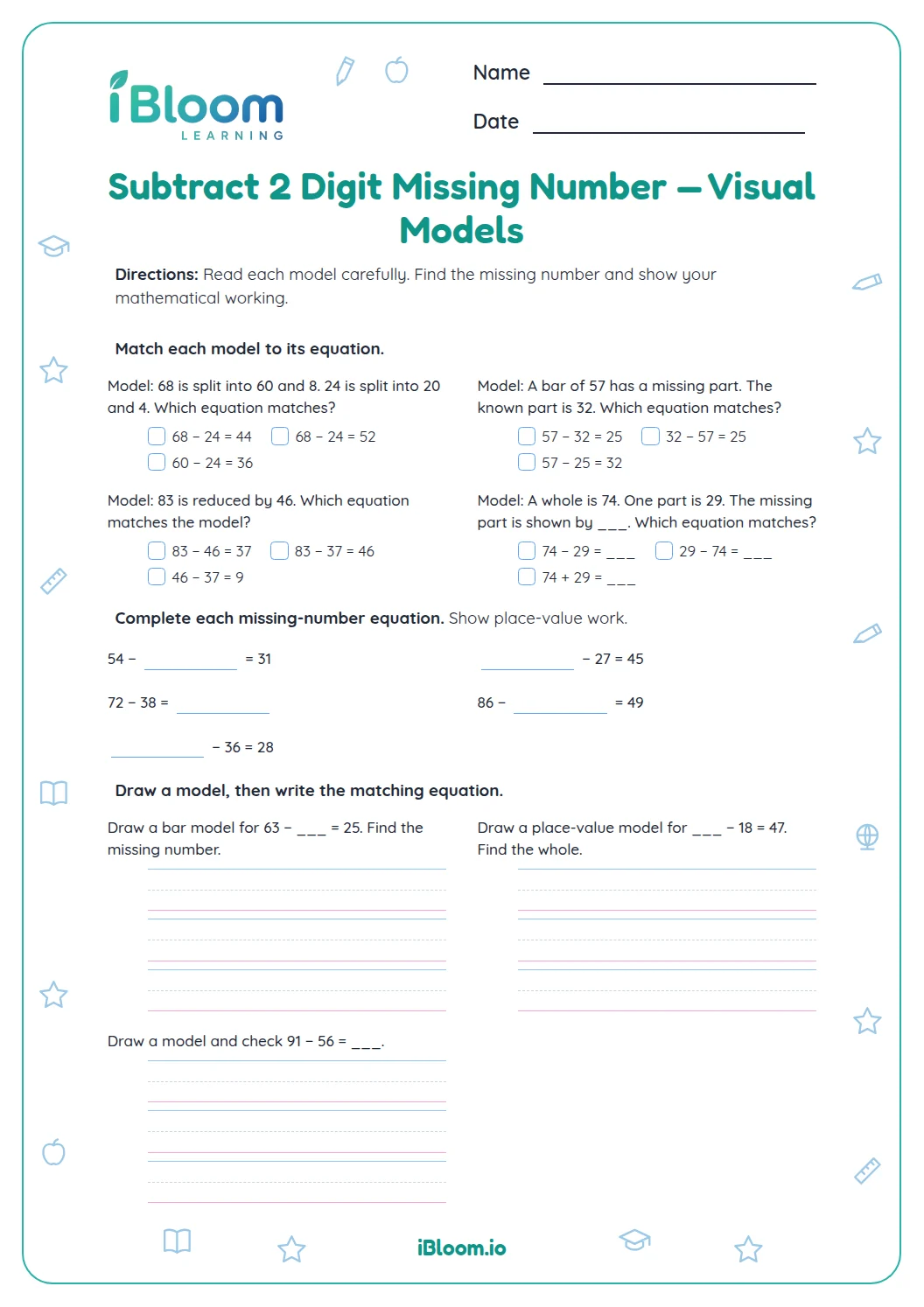
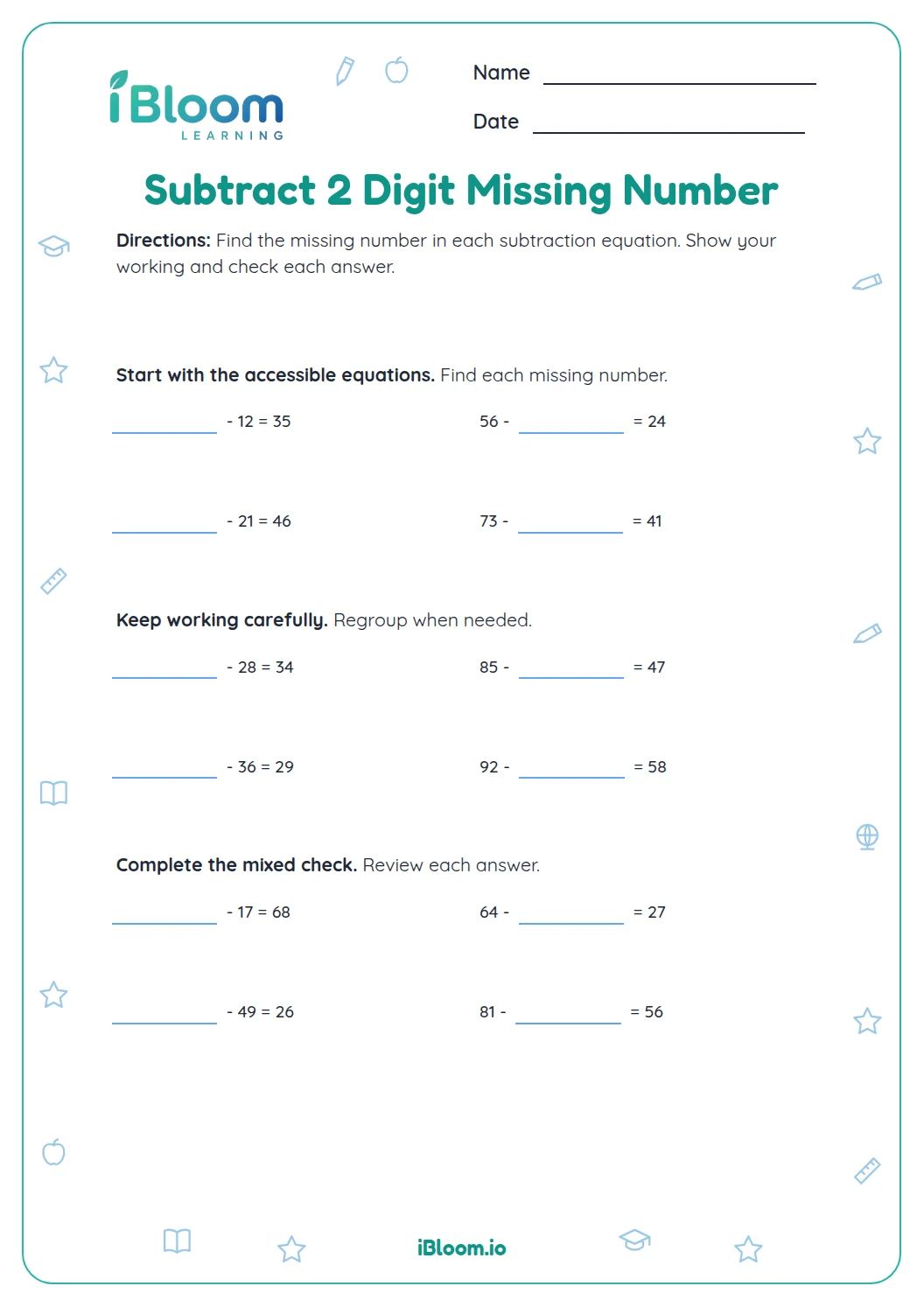
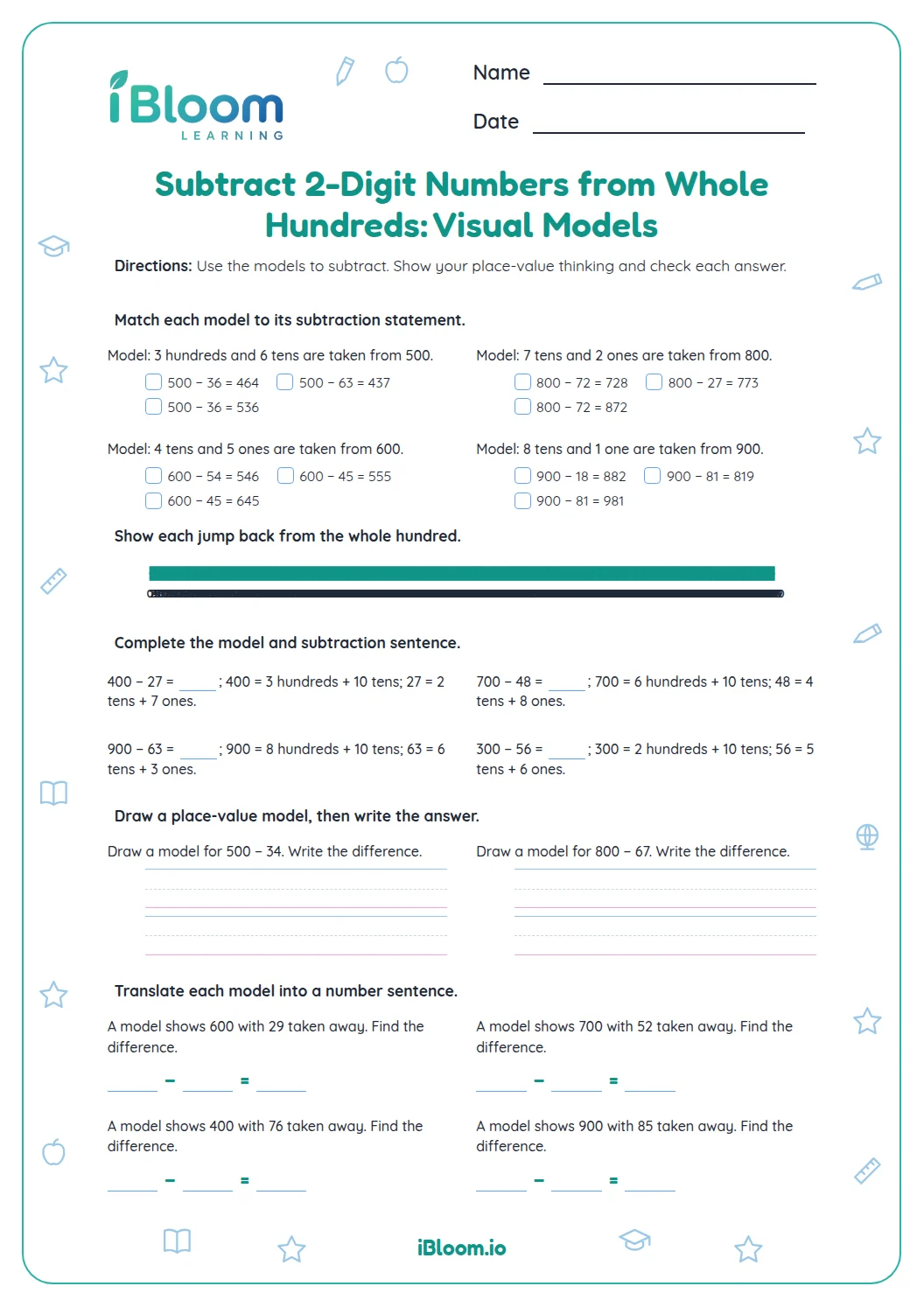
This free Grade 4 worksheet gives students focused practice with subtracting multi-digit numbers. They work through decomposed numbers, missing place-value amounts, and exact subtraction checks. The sheet builds accuracy with clear steps, followed by a separate answer key for checking each response. It practices Common Core 4.NBT.B.4 through grade-level work with whole numbers and place value.
Aligned to 4.NBT.B.4
How do students work through subtracting multi-digit numbers?
In 63,204 = 6 ten-thousands + 2 thousands + ___ hundreds + 0 tens + 4 ones, regroup one ten-thousand and one thousand: 10 hundreds + 2 hundreds = 12 hundreds.
The opening questions match decomposed values to subtraction statements. Students then complete a decomposition, subtract five- or six-digit numbers, and check selected differences with addition.
What is included on the worksheet?
The 12 questions use five- and six-digit whole numbers across two worksheet pages, followed by a two-page key.
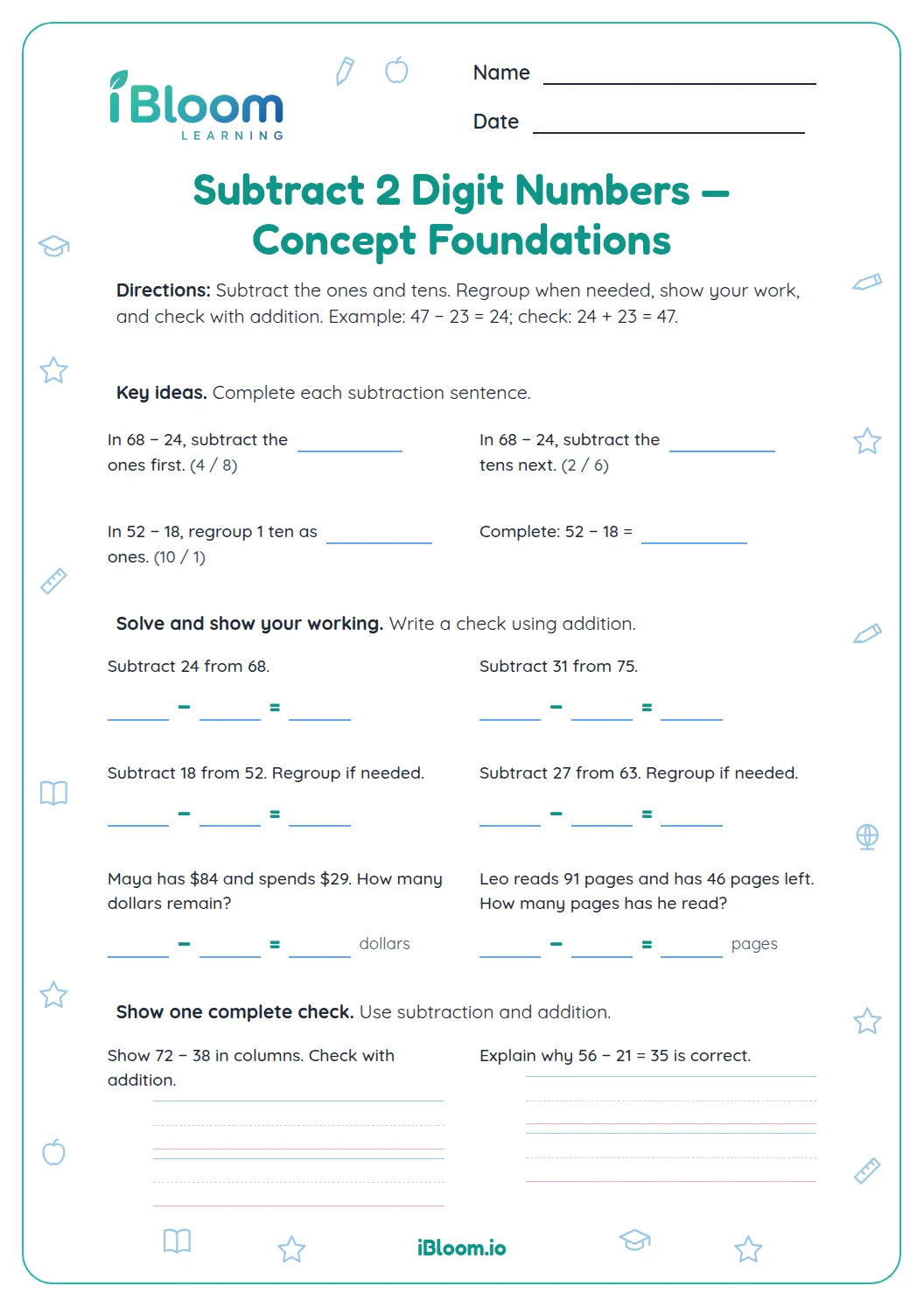
- Part A: review the setup and first examples
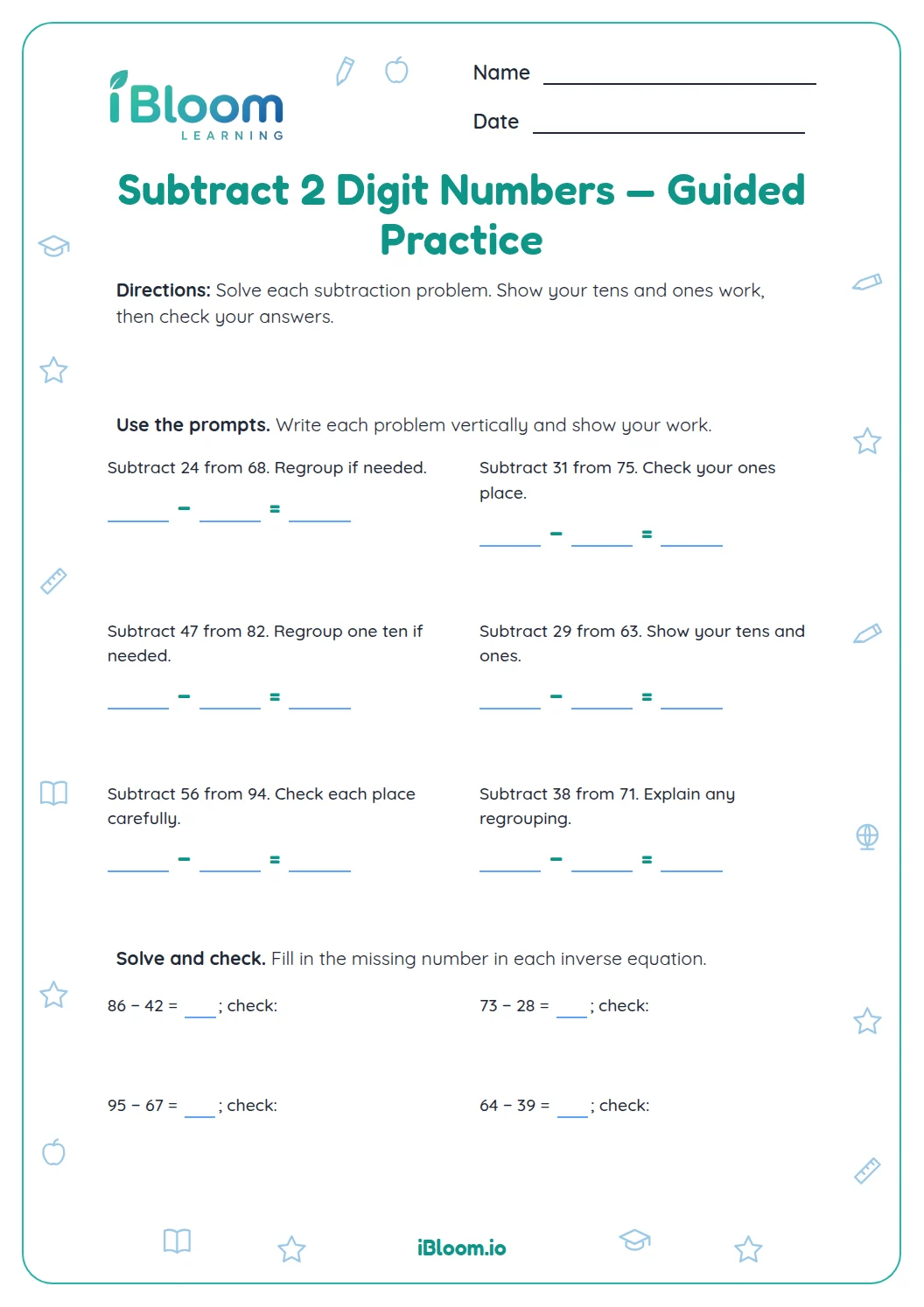
- Part B: practice subtracting multi-digit numbers with guided prompts
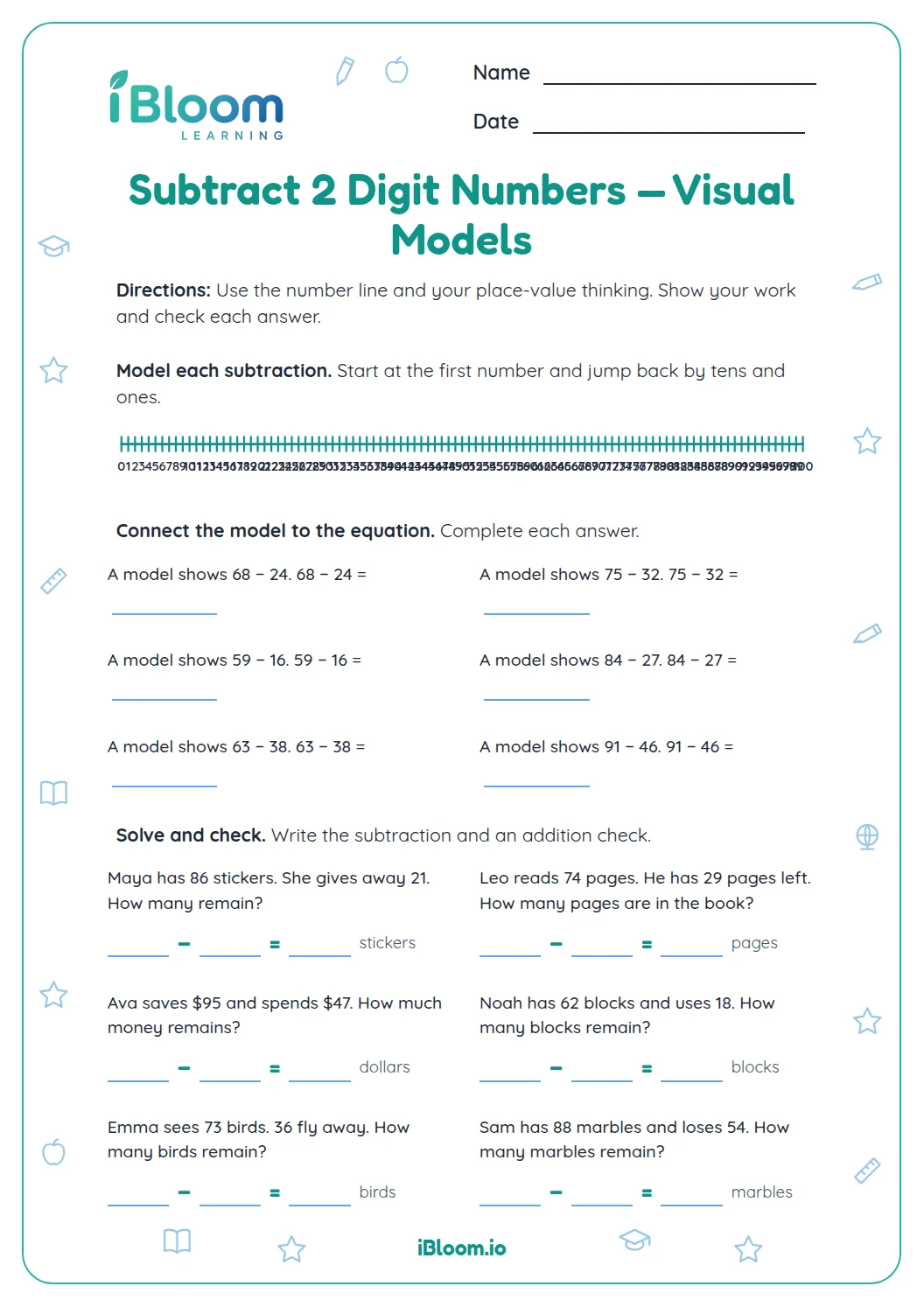
- Part C: solve and check independently
How can an adult support practice?
Ask the student to name the place value being worked on before calculating. A quick estimate or inverse operation can help catch a misaligned digit or missed regrouping.
How to use this worksheet
- 1Read the rounding place or place-value model named in the part directions.
- 2Keep each digit in its place-value column as you regroup or calculate.
- 3For an estimate, round each number first and then perform the operation.
- 4For a subtraction check, add the difference to the number subtracted.
- 5Compare completed work with the answer key and revisit any changed place value.
Common mistakes and quick fixes
The mistake
Reading 12 hundreds as 12.
The fix
Keep the unit attached: 12 hundreds equals 1,200.
The mistake
Subtracting digits without regrouping across a zero.
The fix
Exchange from the next nonzero place and record the changed place values.
The mistake
Checking with the wrong addend.
The fix
Add the difference to the subtrahend; the sum should equal the starting number.
Common Core alignment
Students regroup whole-number places and subtract multi-digit numbers.
Subtract multi-digit whole numbers with place value and the standard algorithm.
On this sheet: Students regroup whole-number places and subtract multi-digit numbers.
Show the official wordingHide the official wording
Fluently add and subtract multi-digit whole numbers using the standard algorithm.
What to practice next
Make more practice
Further reading
Questions parents and teachers ask
What skill does this worksheet practice?
This worksheet practices subtracting multi-digit numbers with whole numbers. Its 12 questions move from the core setup into independent practice, and a separate answer key gives a response for every item. Students should write the intermediate steps so place value and regrouping remain clear.
How many questions are included?
There are 12 questions arranged across three parts. Students begin with a short setup or model, continue with structured practice, and finish by solving or checking independently. The sections are designed to make the same place-value idea visible in several useful forms.
How should students show their work?
Students can show work by writing each rounded value or regrouped place value before computing. Keeping those intermediate values visible makes it easier to catch an error and explain why the final result is reasonable. For column work, line up every digit by its place.
When should students use the answer key?
Use the answer key after completing a section or the full worksheet. If a result differs, compare the setup first, then redo the column or rounding step where the work changed. The key includes exact values so students can check both computation and reasoning.
Can this worksheet be used for independent practice?
Yes. The directions apply to the whole sheet, and the parts progress from a reminder to independent computation. An adult can review one example before students continue alone, then use the key to discuss any answer that does not match.