





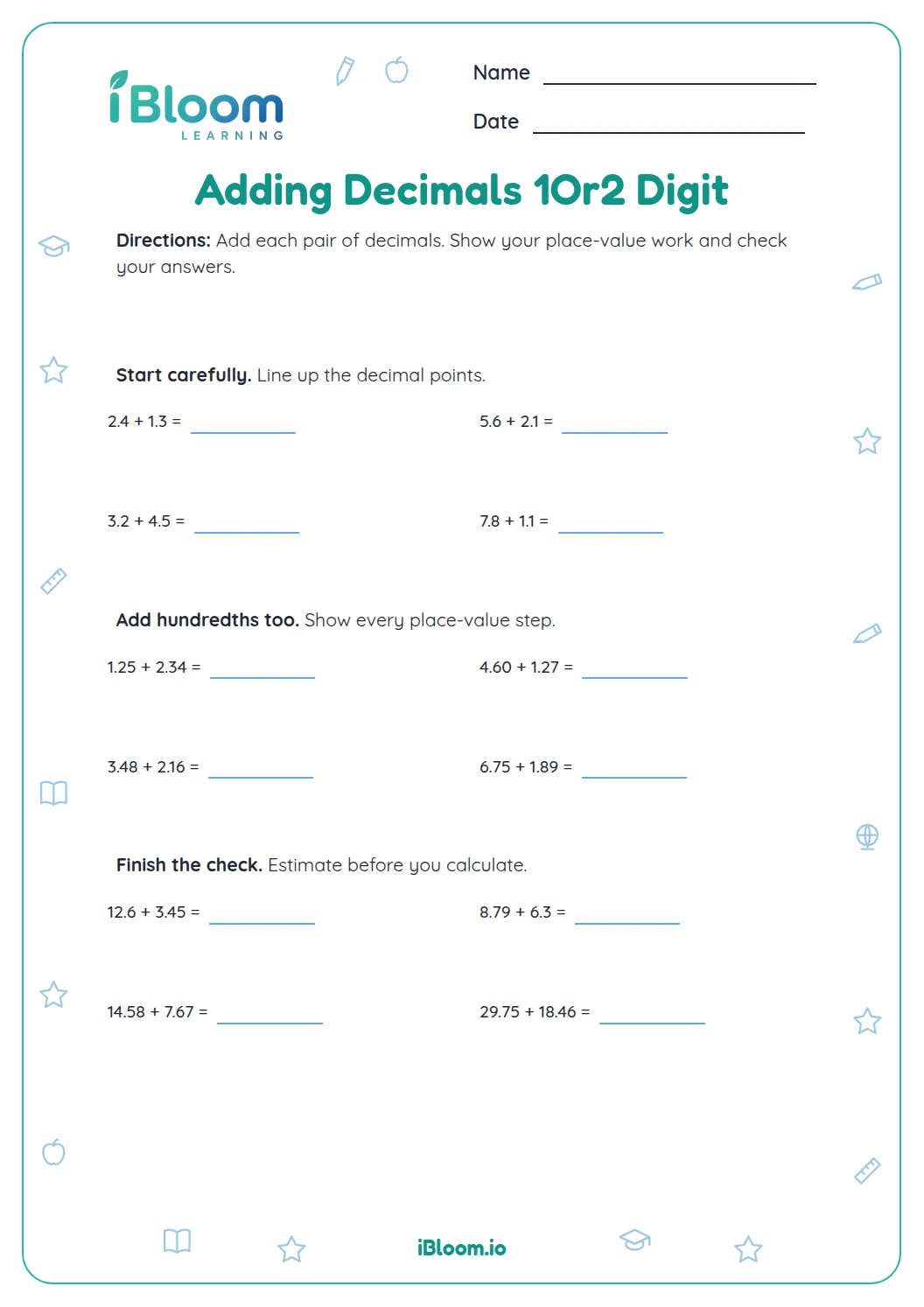

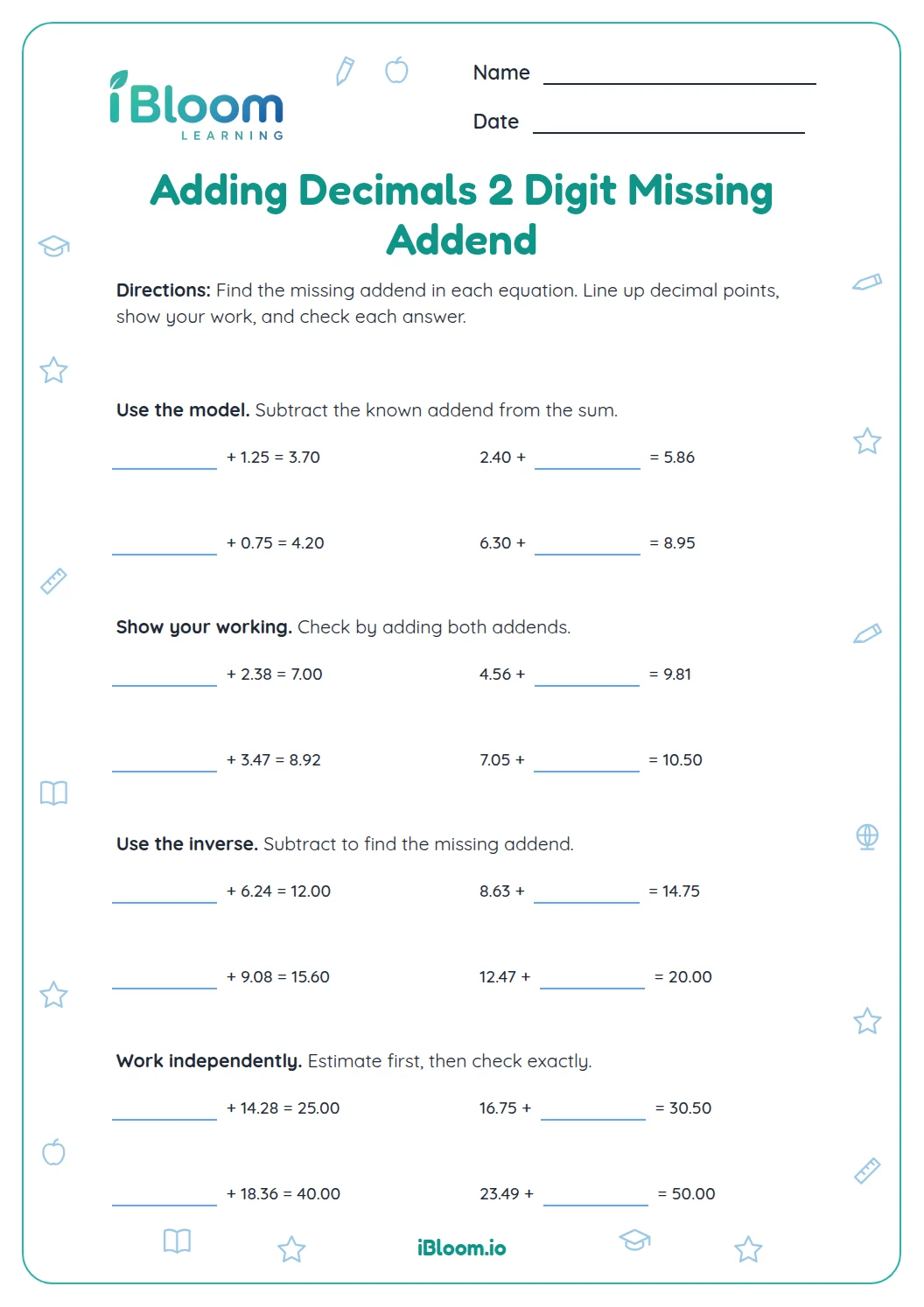
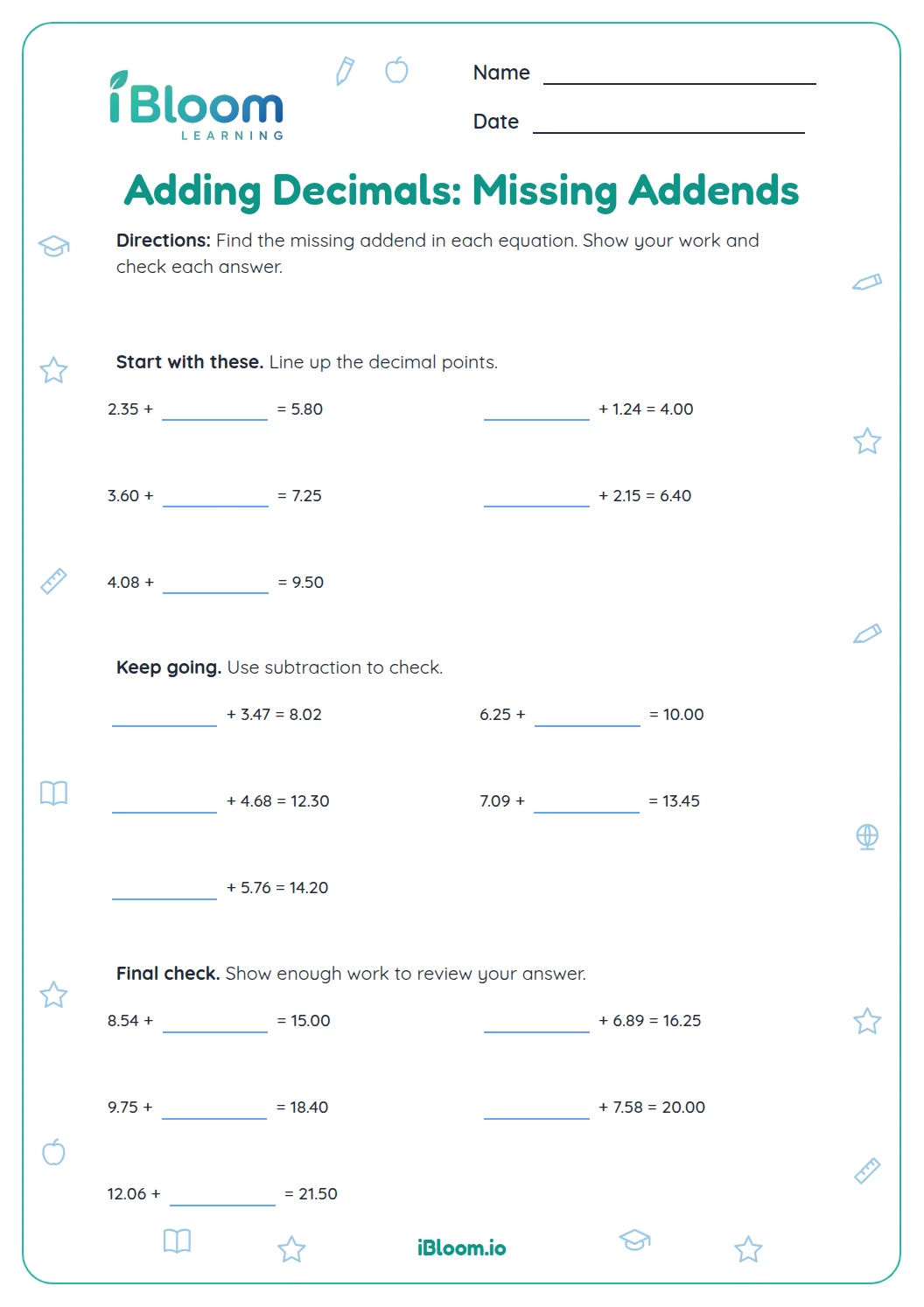
About this worksheet
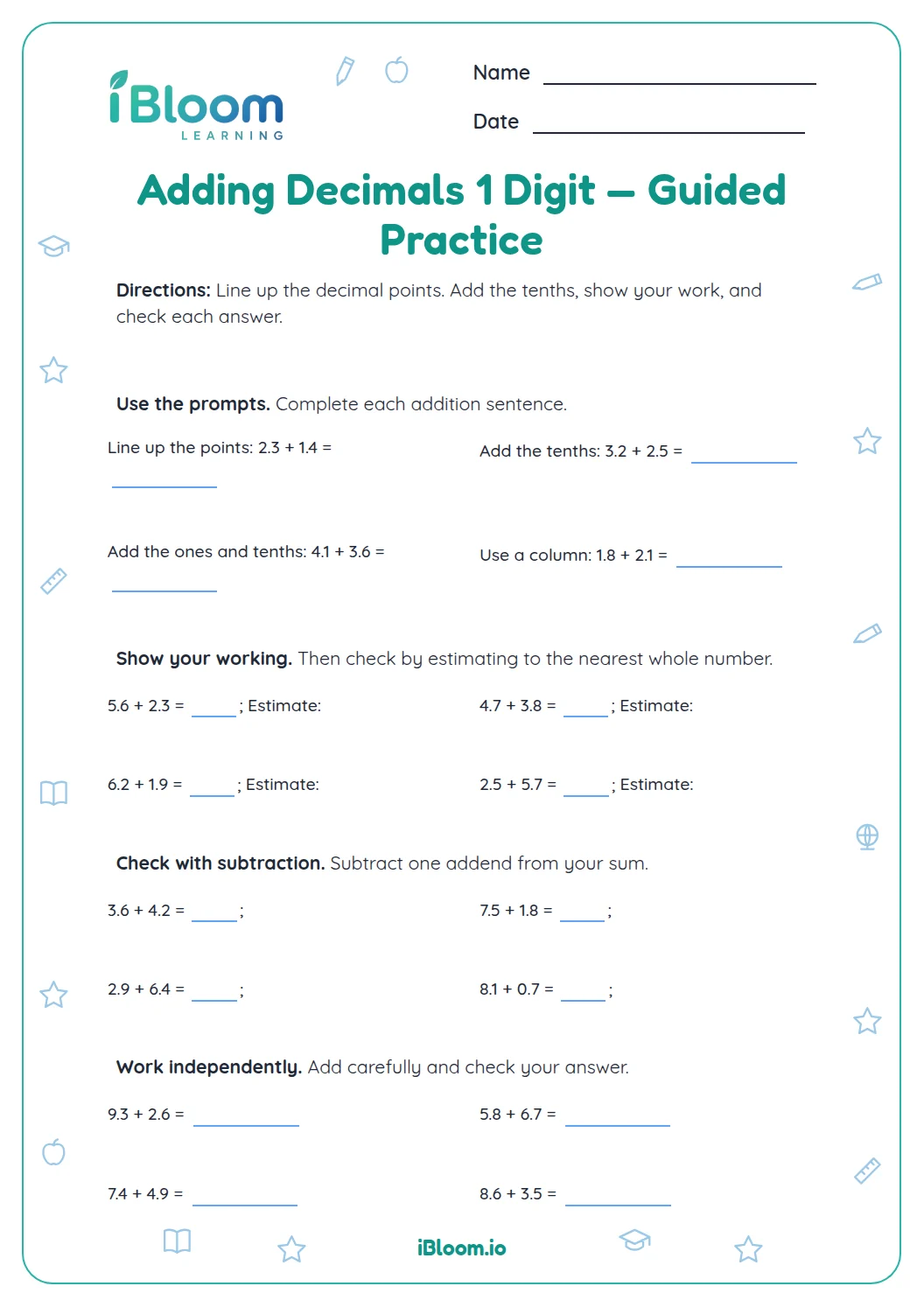
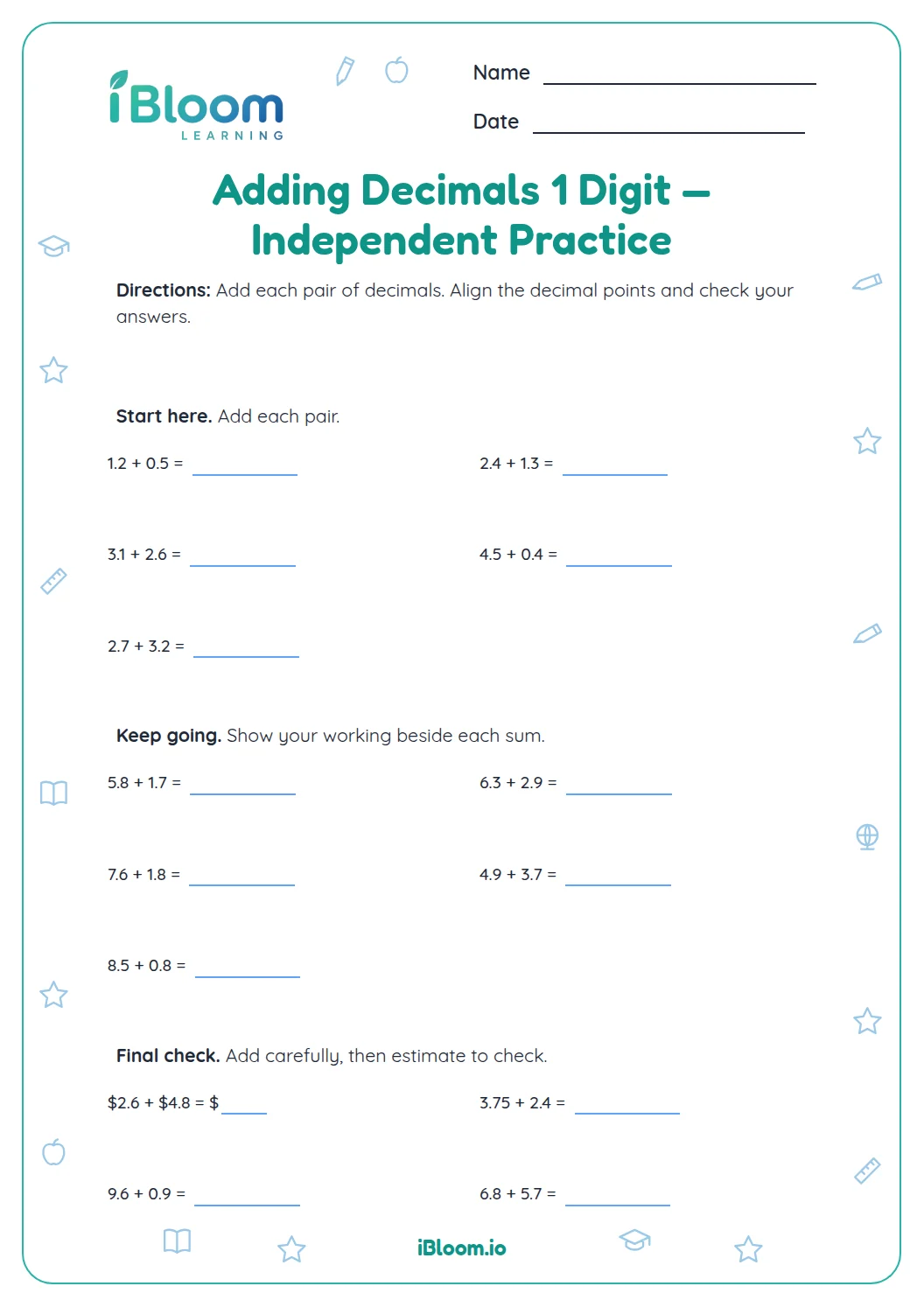
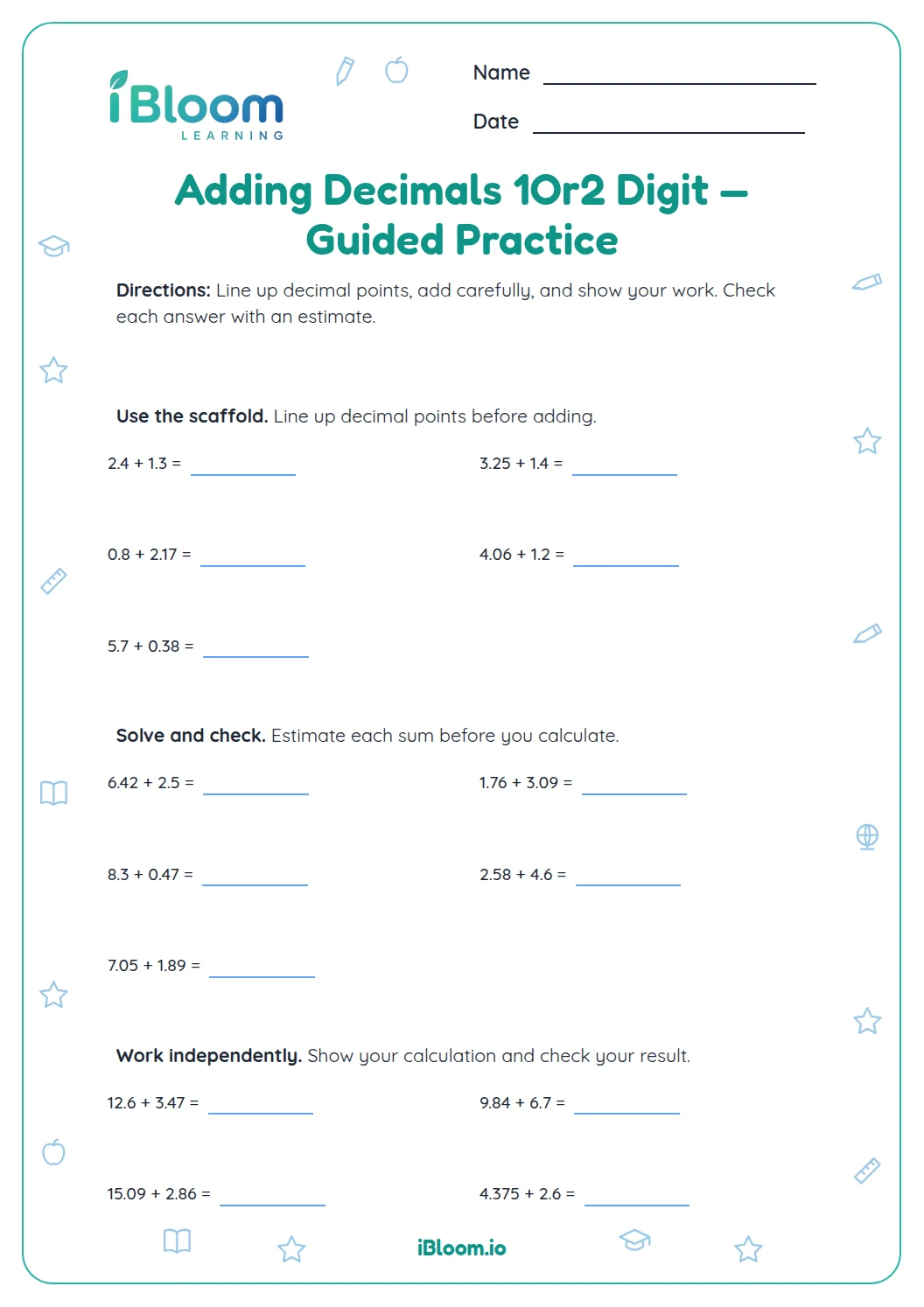
This Grade 5 worksheet gives students 12 problems adding decimals with three places, including column sums, regrouping errors, and short applications. Students align decimal points and regroup across thousandths, hundredths, tenths, and ones. A separate key supports checking each calculation. The work practices CCSS 5.NBT.B.7 by using written methods and place-value reasoning for decimal addition.
Aligned to 5.NBT.B.7
How does regrouping work in column addition?
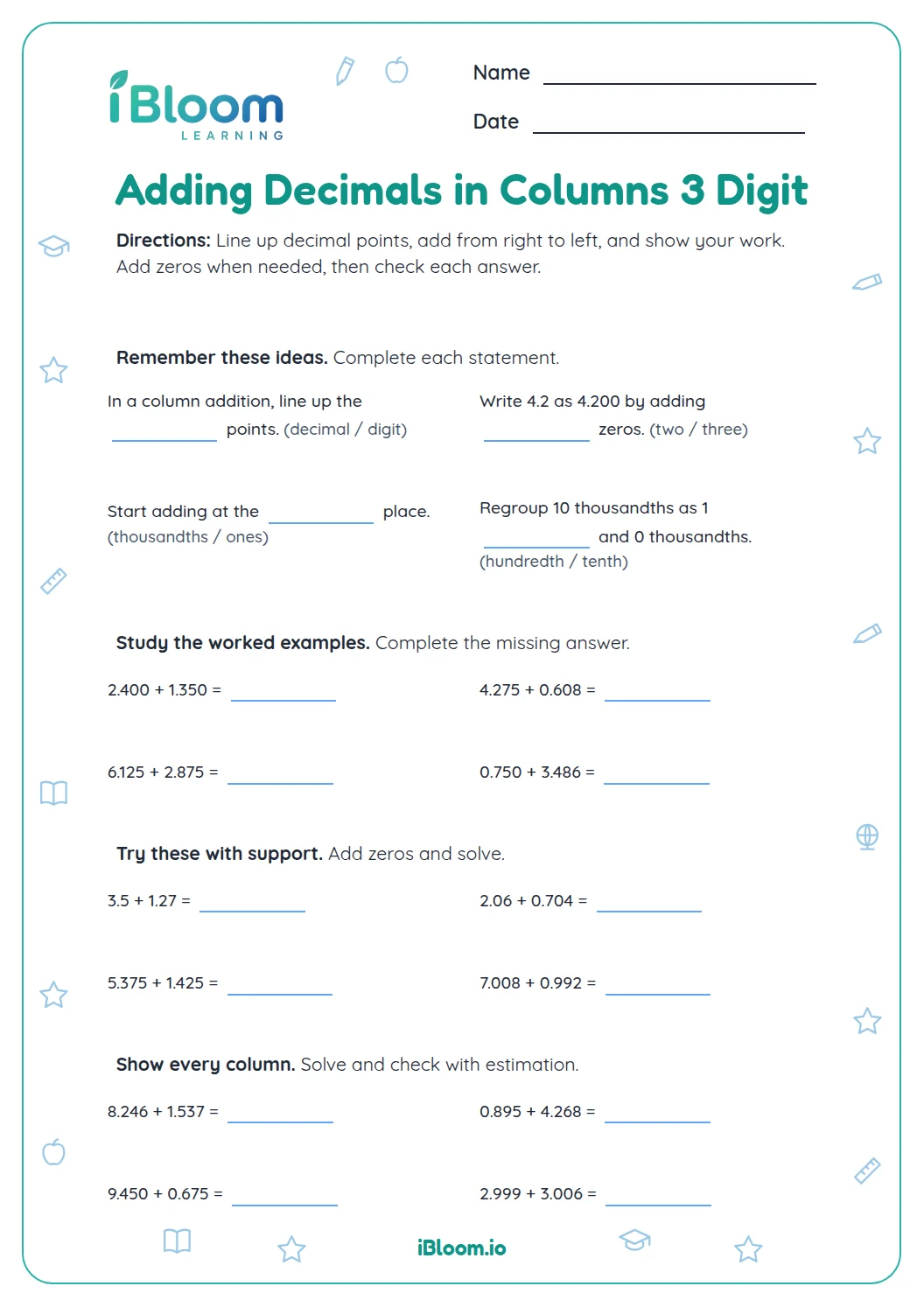
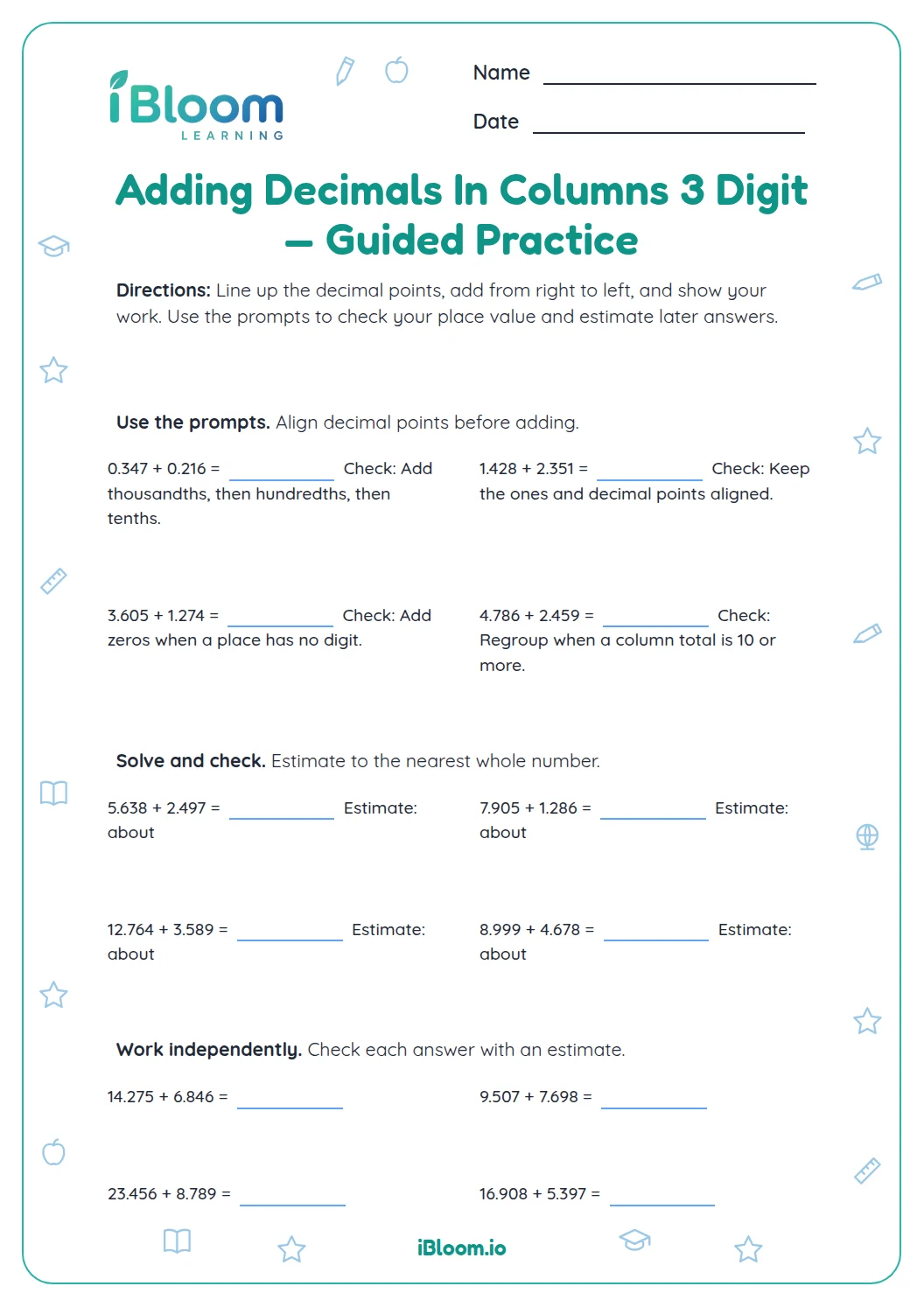
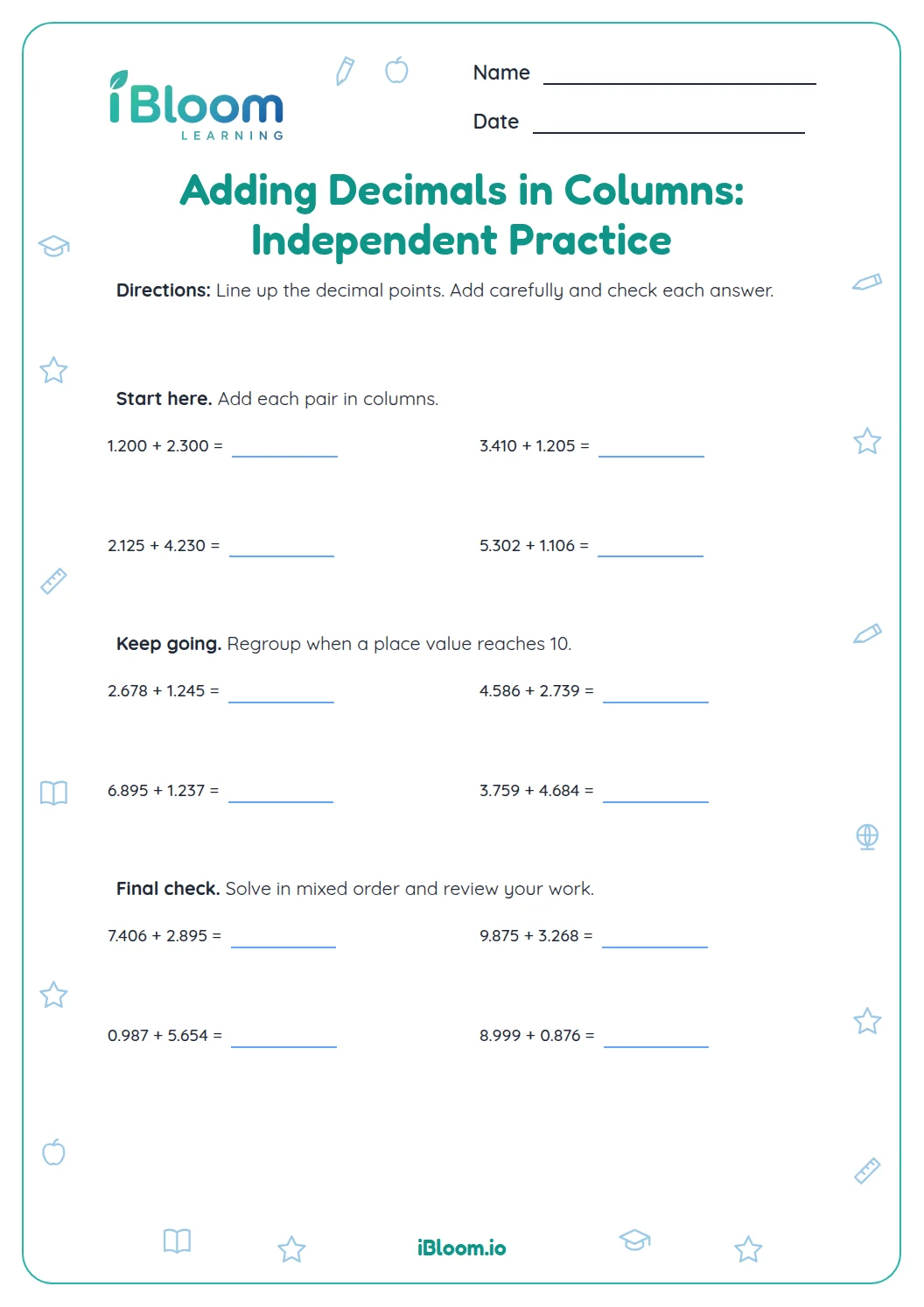
Line up the decimal points before adding. When a place totals ten or more, regroup one unit into the next column; keep the carry attached to that place value.
The page contains 10 questions and a separate answer key.
- 14.286 + 3.579 = ___
- 2Answer: 7.865
- 3Check the sum by subtraction.
What will students practice on the page?
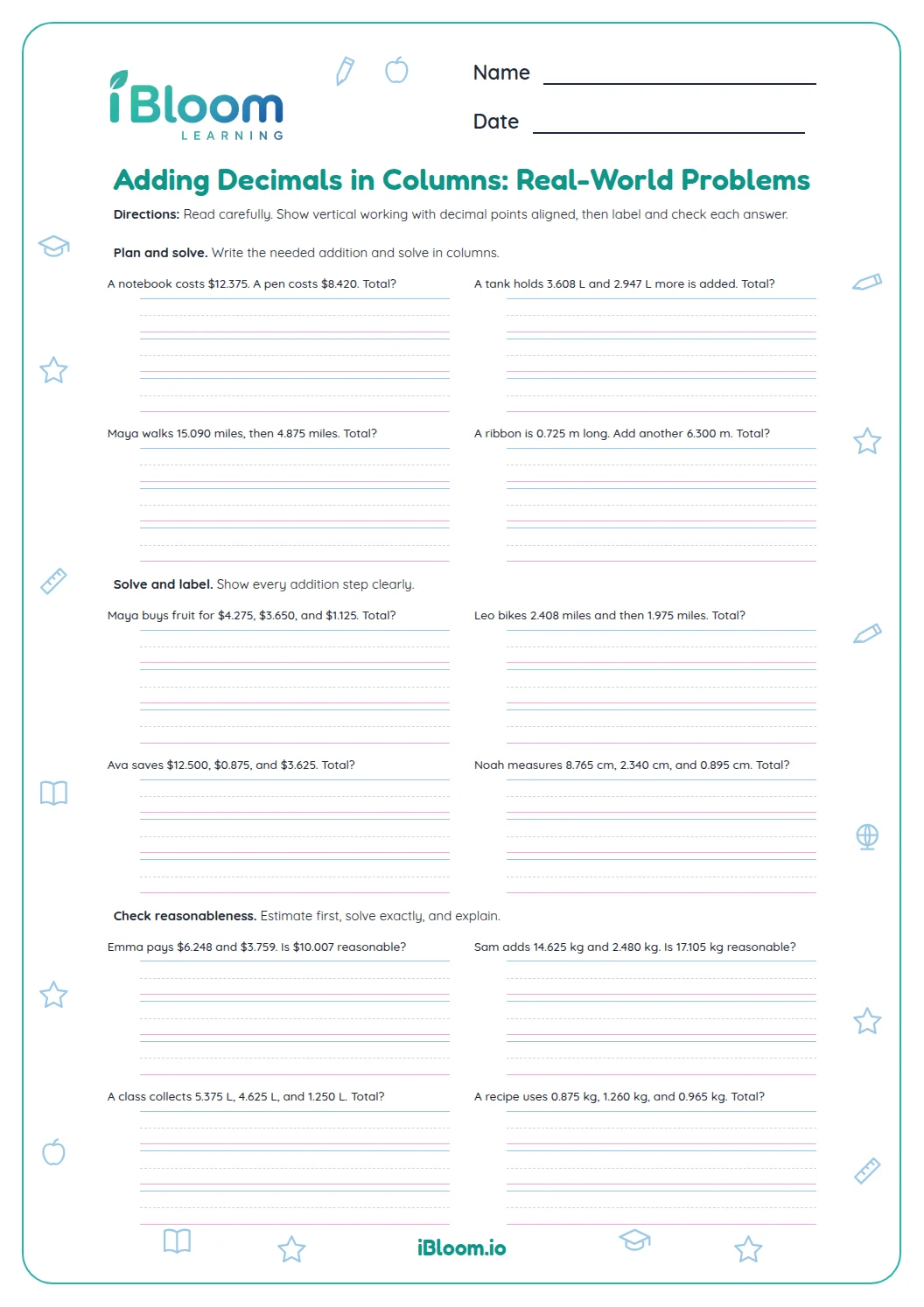
The questions progress from exact column sums to regrouping analysis, then use decimal addition in measurements and a missing-addend problem.
- 10 questions across focused parts
- Place-value reasoning with a checked answer key
How can students check the work?
Estimate the sum, then use subtraction as an inverse check. For each claim, verify the reported total with a fresh column addition.
How to work through this sheet
- 1Read the direction for the current part.
- 2Align matching decimal place values.
- 3Estimate when the question asks for a reasonableness check.
- 4Calculate carefully and keep units with measured answers.
- 5Check sums by subtraction or products and quotients with an estimate or inverse operation.
- 6Use the separate key after completing the work.
Decimal slips to watch for
The mistake
Putting digits in the wrong columns.
The fix
Align decimal points and label the place values.
The mistake
Forgetting a carry after a column totals ten or more.
The fix
Record the regrouped unit in the next place.
The mistake
Regrouping into the wrong place.
The fix
Ten units in a place make one unit of the place immediately to its left.
Common Core alignment
This worksheet practices decimal computation using place-value reasoning.
Use place value and written methods to compute with decimals.
On this sheet: Students use column methods to add decimals and explain regrouping by place value.
Show the official wordingHide the official wording
Add, subtract, multiply, and divide decimals to hundredths, using concrete models or drawings and strategies based on place value, properties of operations, and/or the relationship between addition and subtraction; relate the strategy to a written method and explain the reasoning used.
What to practice next
Make more practice
Further reading
Questions parents and teachers ask
Why do decimal points line up in column addition?
The decimal point separates ones from tenths, hundredths, and thousandths. Aligning the points puts digits with equal value in the same column. Students may add a zero to make the columns easier to see; that placeholder does not change the addend.
Where does regrouping happen in these problems?
Several sums require regrouping from thousandths to hundredths, from hundredths to tenths, or from tenths to ones. The error-analysis questions ask students to name the place where a carry was missed, then compare that claim with the written sum. Students can compare each calculation with the answer key after finishing the worksheet.
What does the worksheet mean by a missing addend?
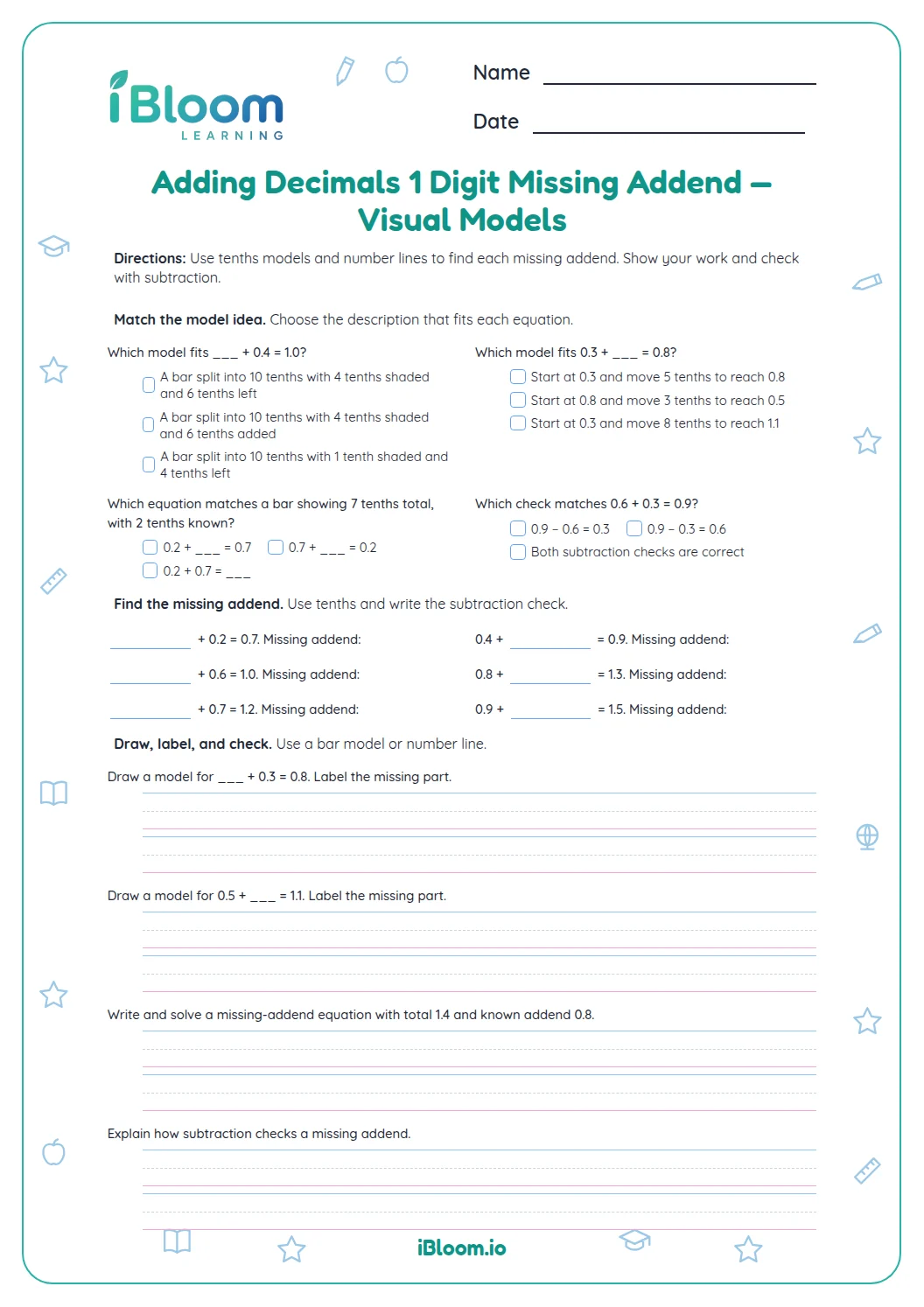
A missing addend is the unknown number that combines with a known addend to make the stated total. Subtract the known addend from the sum, then check by adding the two addends together. This page uses decimals to thousandths in the missing-addend equation.
How can students check a column sum?
Estimate the total, then subtract either addend from the computed sum. The difference should match the other addend. The worksheet’s key lists each exact sum and explains the claim-check items, so students can review both the answer and the place value.
Does this page include an answer key?
Yes. The separate answer key covers all 12 questions, including the correct regrouping explanation and missing addend. Students can use it after working to locate a place-value step to review and compare their own vertical addition with the exact results.