



About this worksheet
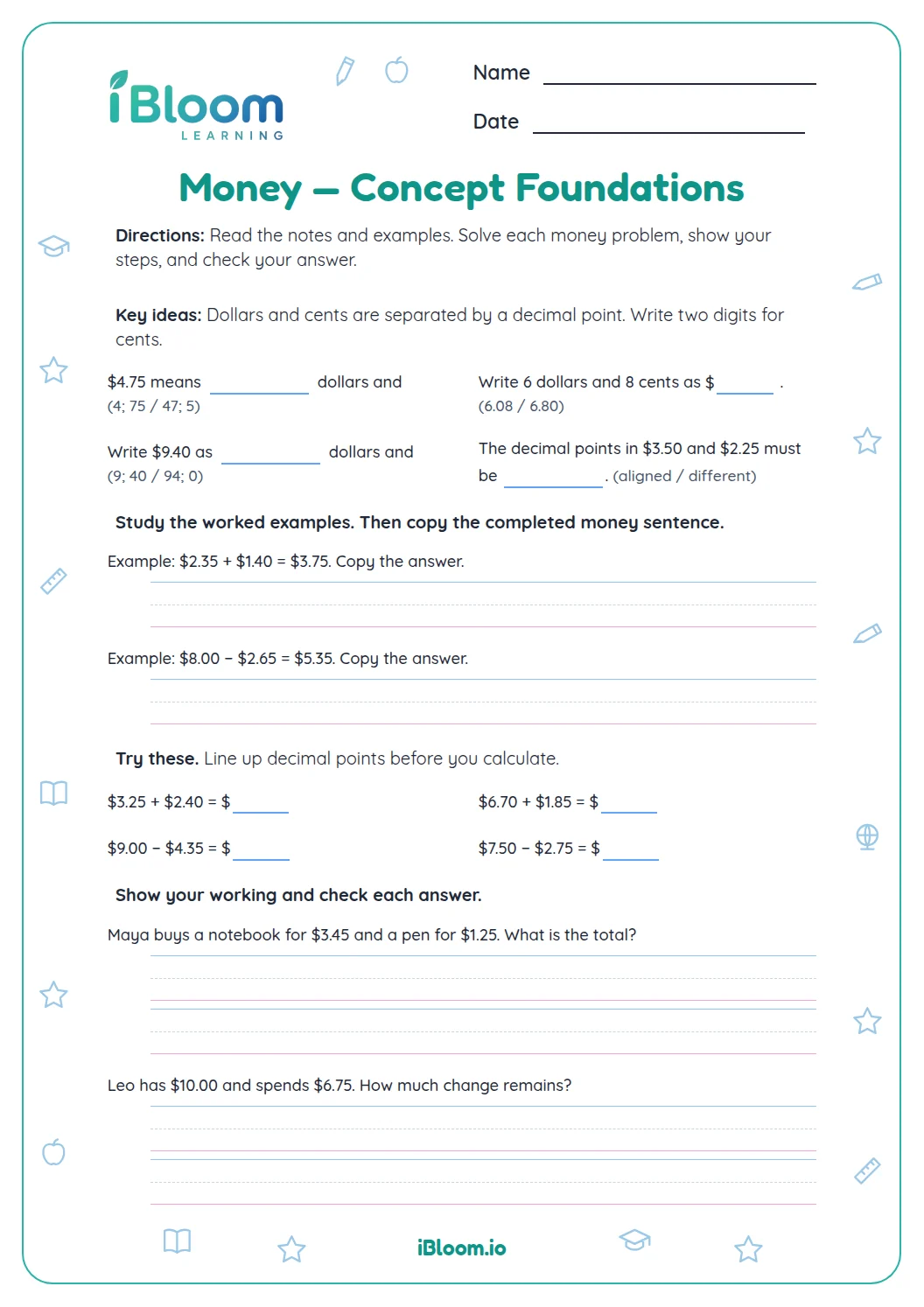
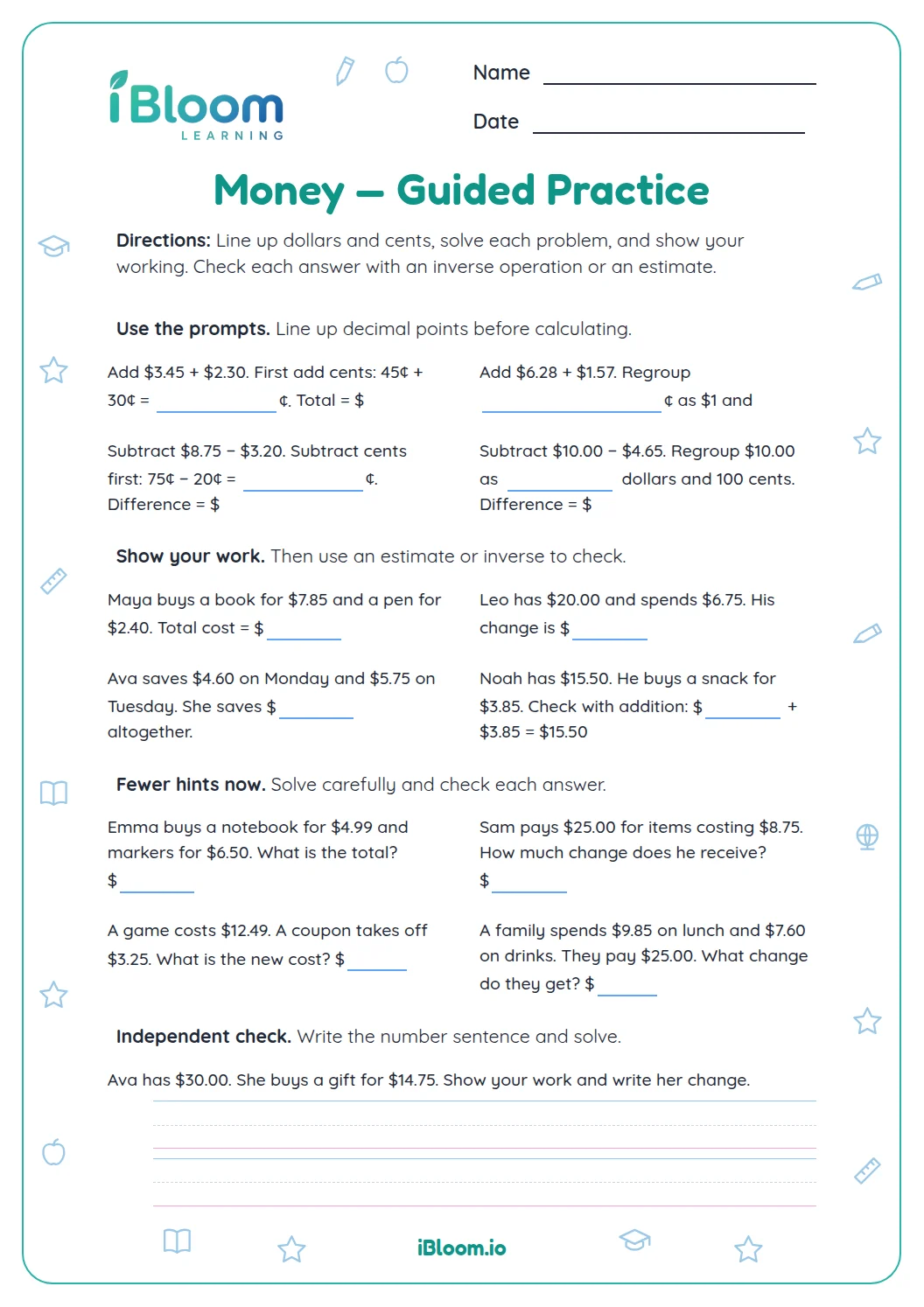
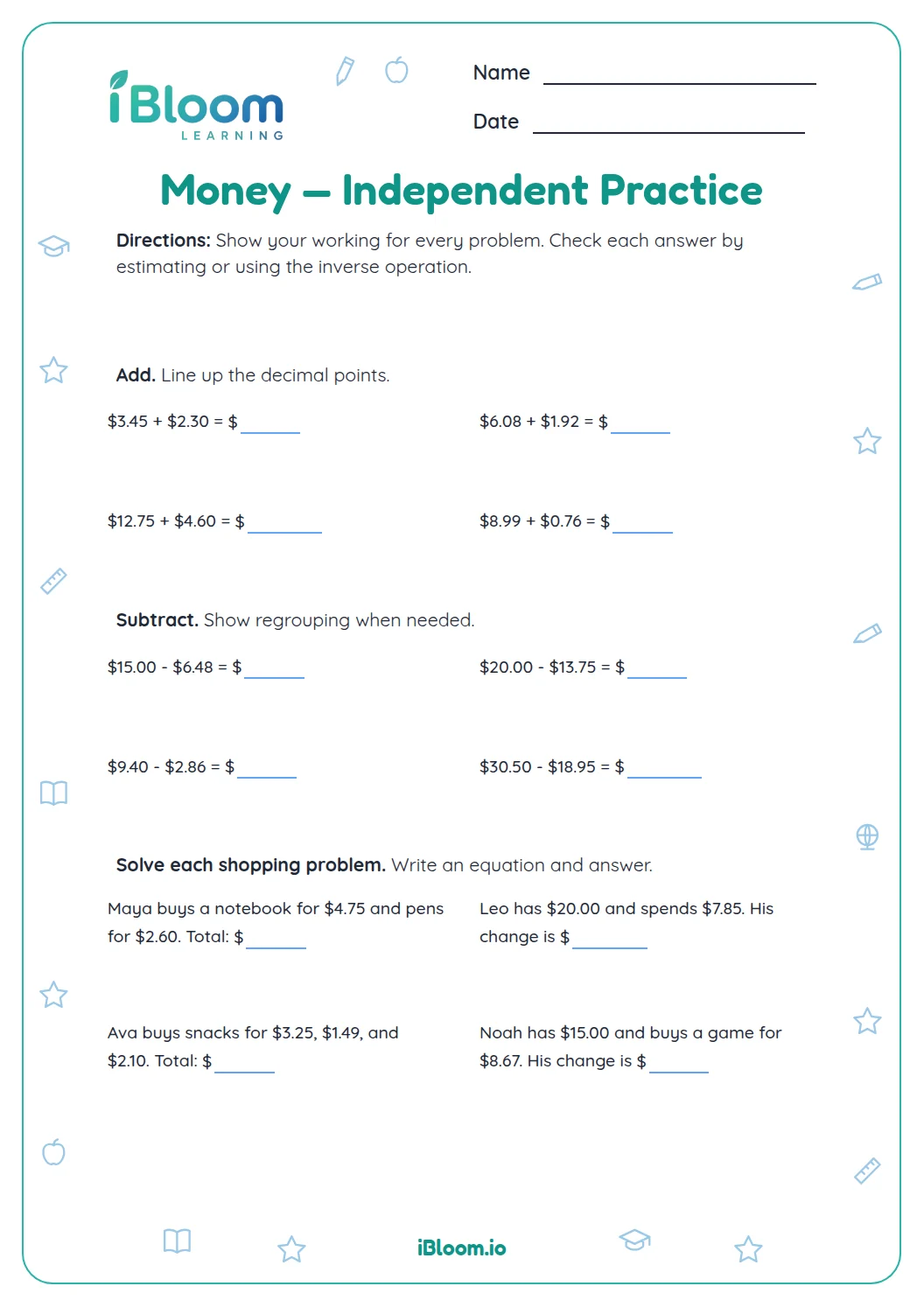
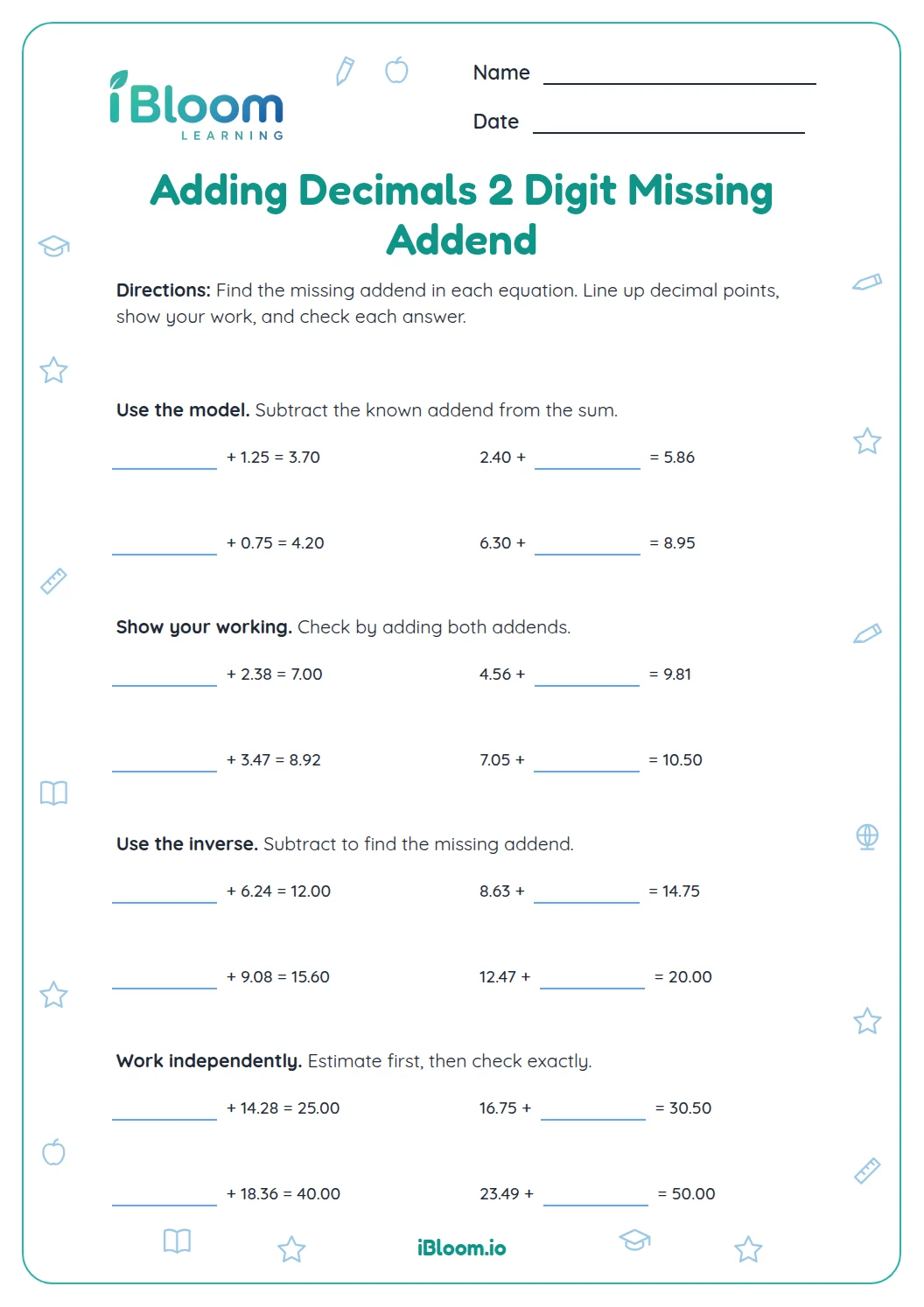
This Grade 5 worksheet uses 16 sets of U.S. coins as visual models for decimal money. Students write the first eight coin totals as dollars to the hundredths place, then find coin values and subtract a stated amount from each of the last eight sets. The answer key records dollar amounts with two decimal places. The work practices decimal addition and subtraction with concrete models under CCSS 5.NBT.B.7.
Aligned to 5.NBT.B.7
How do coins show decimal amounts?
For q1, add 25¢ + 10¢ + 5¢ + 1¢ to get 41¢, or $0.41. Two digits after the decimal point show hundredths of a dollar.
How can a coin total become a subtraction problem?
For q9, the quarter, dime, and nickel total $0.40. Subtract the $0.05 spent: $0.40 − $0.05 = $0.35.
How can you check a money answer?
For an addition item, recount the coin values. For a subtraction item, add the amount spent back to the remaining amount and check that it equals the coin total.
How to use this worksheet
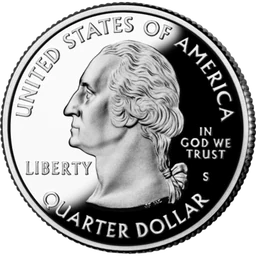
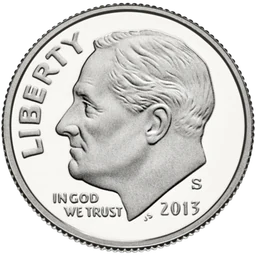
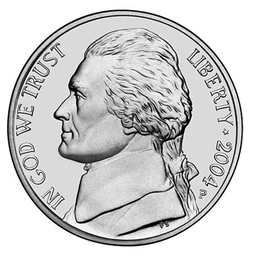
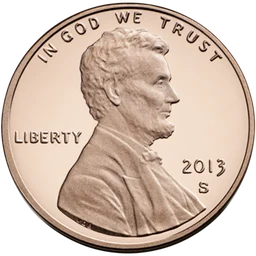
- 1Identify the value of each coin: penny 1¢, nickel 5¢, dime 10¢, quarter 25¢.
- 2Add the coin values to find the starting amount.
- 3For a spending story, subtract the stated amount from that starting value.
- 4Write the result as dollars with two digits after the decimal point.
- 5Check subtraction by adding the amount spent back.
Common mistakes and quick fixes
The mistake
Confusing a nickel with a dime.
The fix
Recall that a nickel is 5¢ and a dime is 10¢ before adding.
The mistake
Counting the number of coins instead of their values.
The fix
Add the value of each coin, not one for each coin.
The mistake
Subtracting the spent amount from the wrong total.
The fix
First add the coins to find the starting value, then subtract the spending amount.
Common Core alignment
The questions practice this standard through the specific calculations and models on the sheet.
Add and subtract decimals to hundredths using place value and visual models.
On this sheet: The worksheet models money decimals to hundredths and asks students to interpret and subtract values.
Show the official wordingHide the official wording
Add, subtract, multiply, and divide decimals to hundredths, using concrete models or drawings and strategies based on place value, properties of operations, and/or the relationship between addition and subtraction; relate the strategy to a written method and explain the reasoning used.
What to practice next
Make more practice
Further reading
Questions parents and teachers ask
How do coin models show decimal values?
A penny is $0.01, a nickel is $0.05, a dime is $0.10, and a quarter is $0.25. Add the coin values to find the starting amount. For q1, the set totals $0.41, which is 41 cents written in dollars. Use the coin drawings as your model.
Why do money answers use two decimal places?
One dollar equals 100 cents, so money to the nearest cent uses hundredths. Write 41 cents as $0.41 and 5 cents as $0.05. A zero keeps the hundredths place visible when an amount has no extra cents. Keep the decimal point between dollars and cents.
How do students solve the subtraction items?
Add the coins to find the starting value, then subtract the amount spent. In q9, the quarter, dime, and nickel total $0.40. After spending $0.05, $0.35 remains. Add $0.05 back to check the result. This check confirms the answer matches the pictured coins.
What is a good way to check a coin total?
Count each coin once and add its denomination. For a subtraction question, add the amount spent back to the remainder; the result should match the coin total. For q9, $0.35 plus $0.05 returns to $0.40. This inverse check works for each subtraction item.
Should students write cents or dollars?
Write dollars with a dollar sign and two decimal places, as the directions request. For example, 85 cents is $0.85. The answer key uses the same dollar format, so the decimal places are easy to compare with the student response.