


About this worksheet
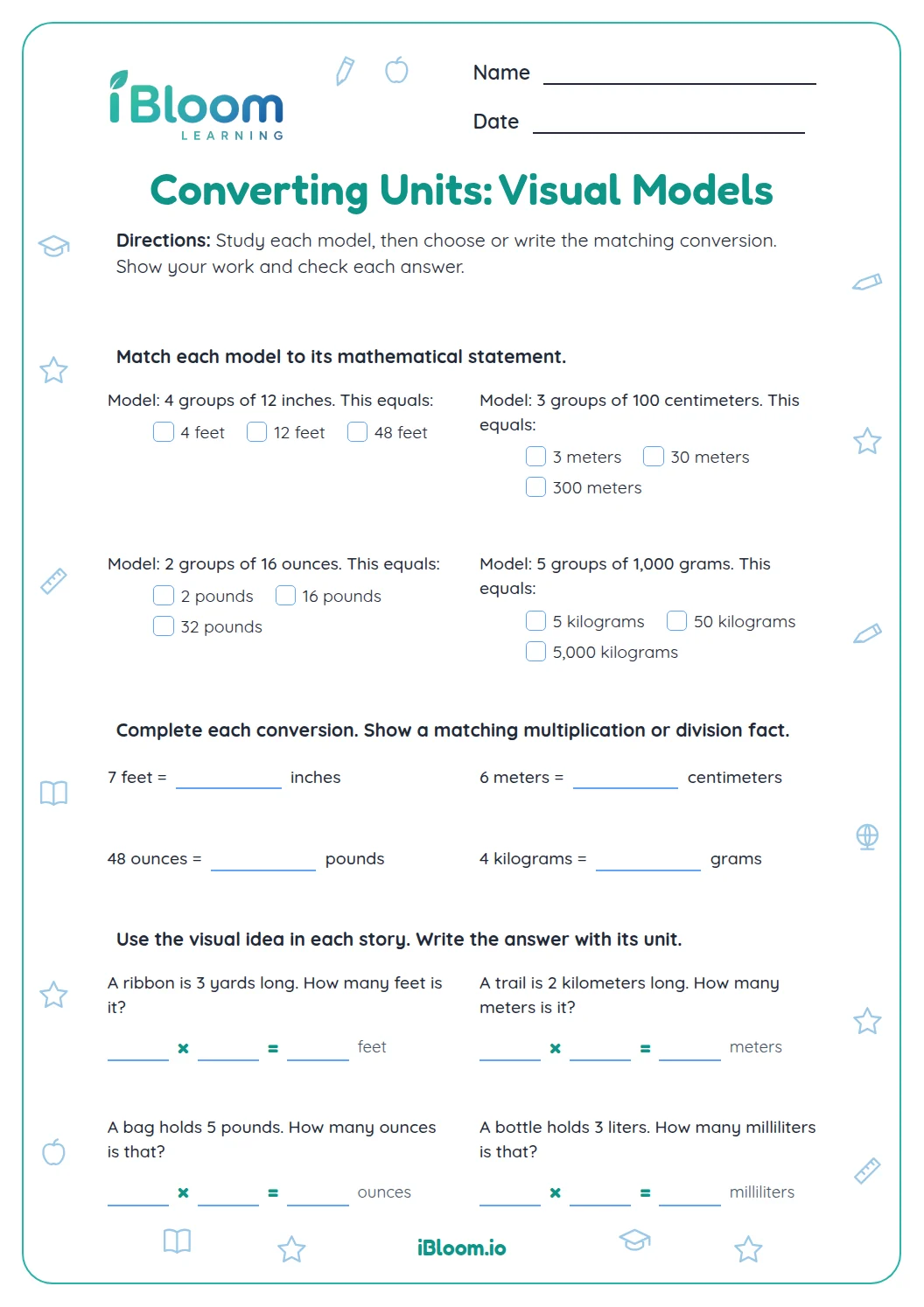
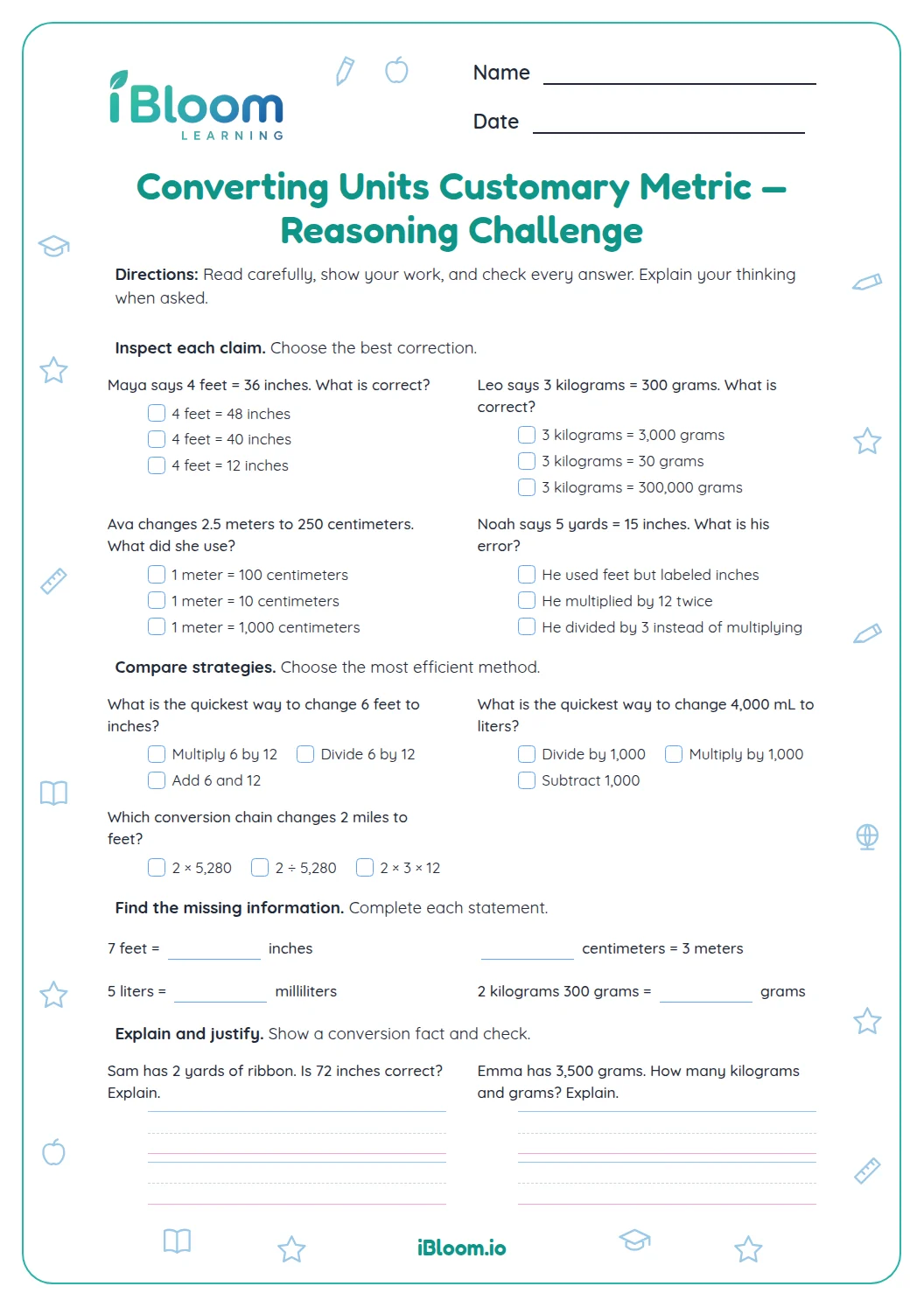
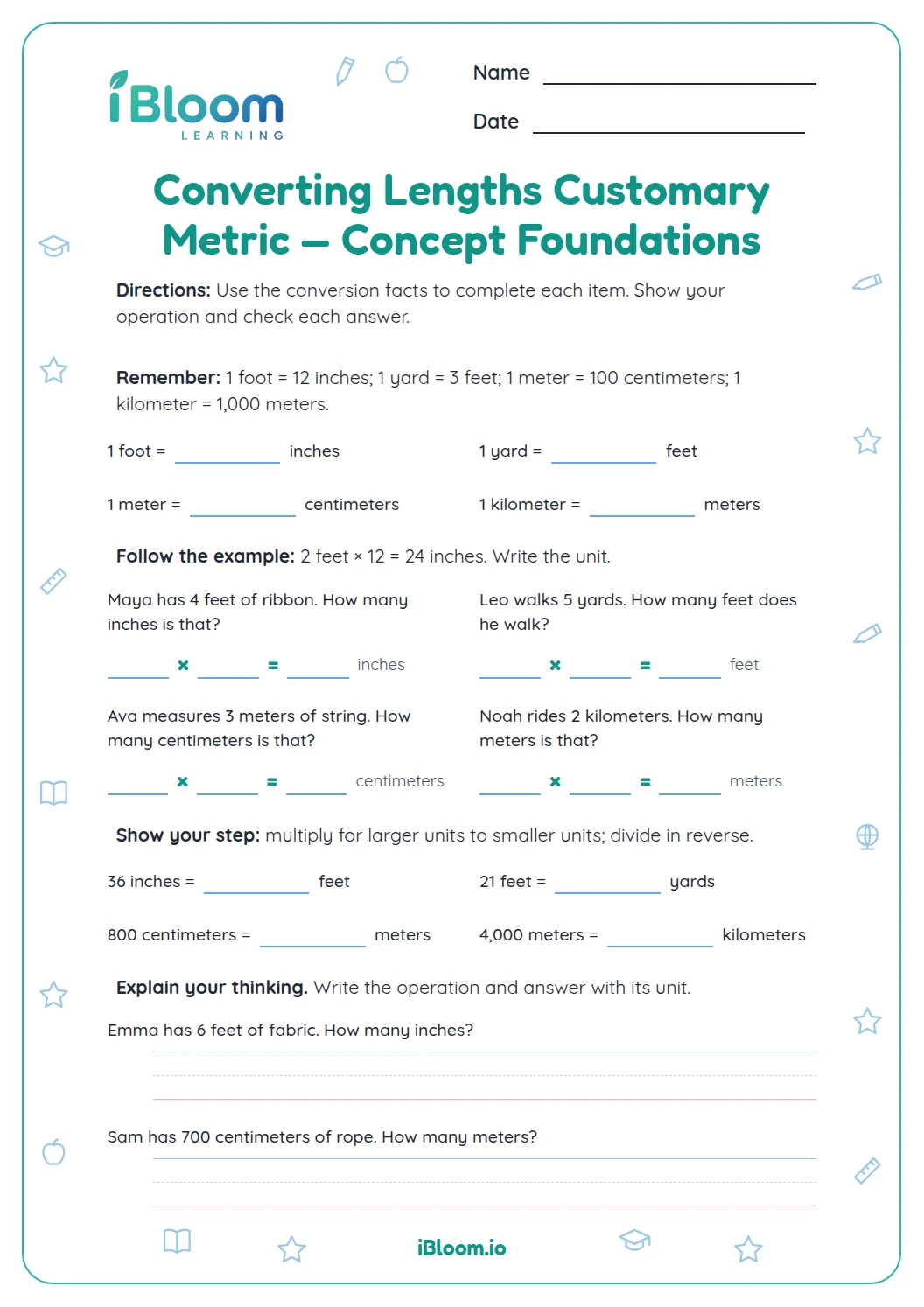
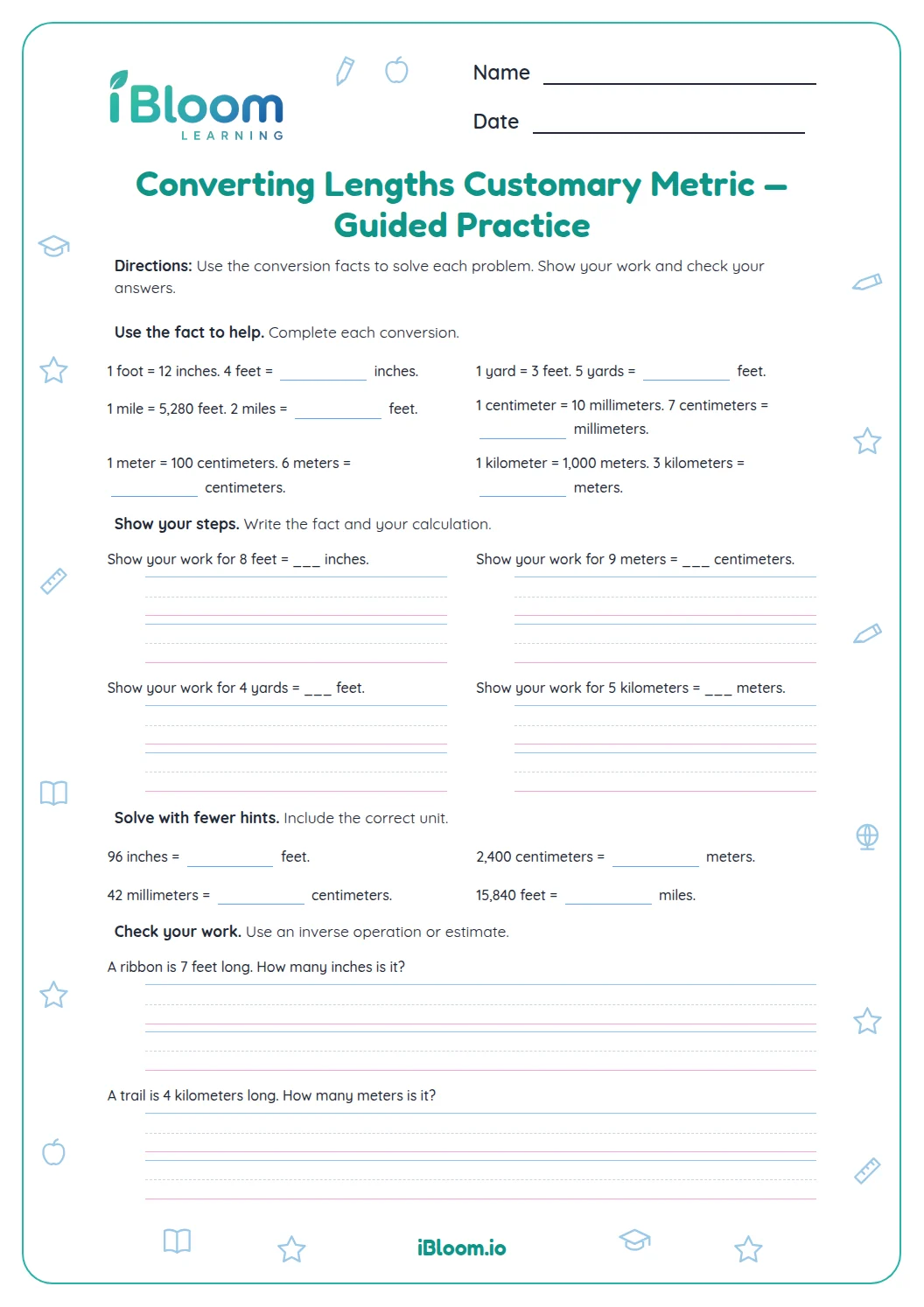
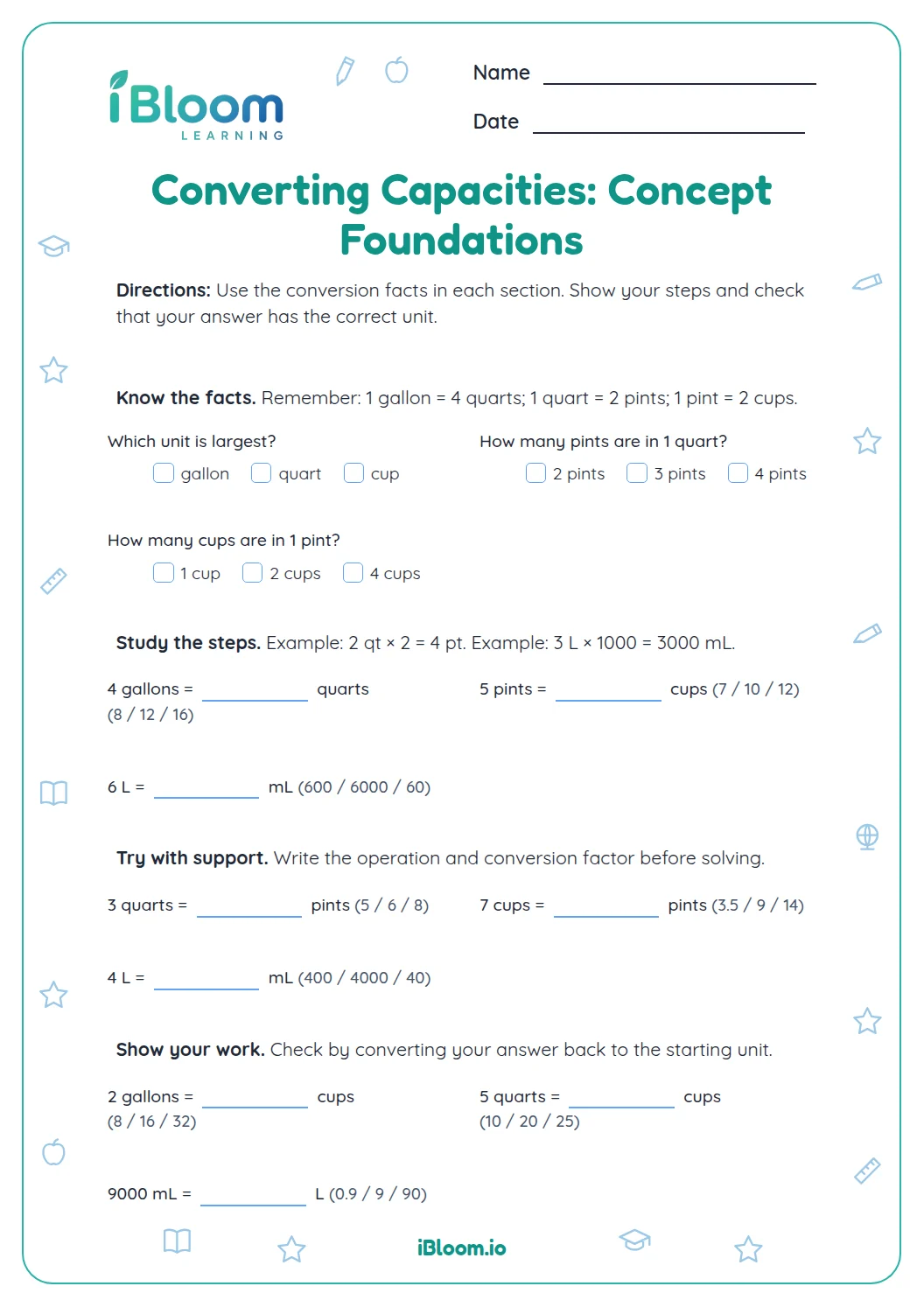
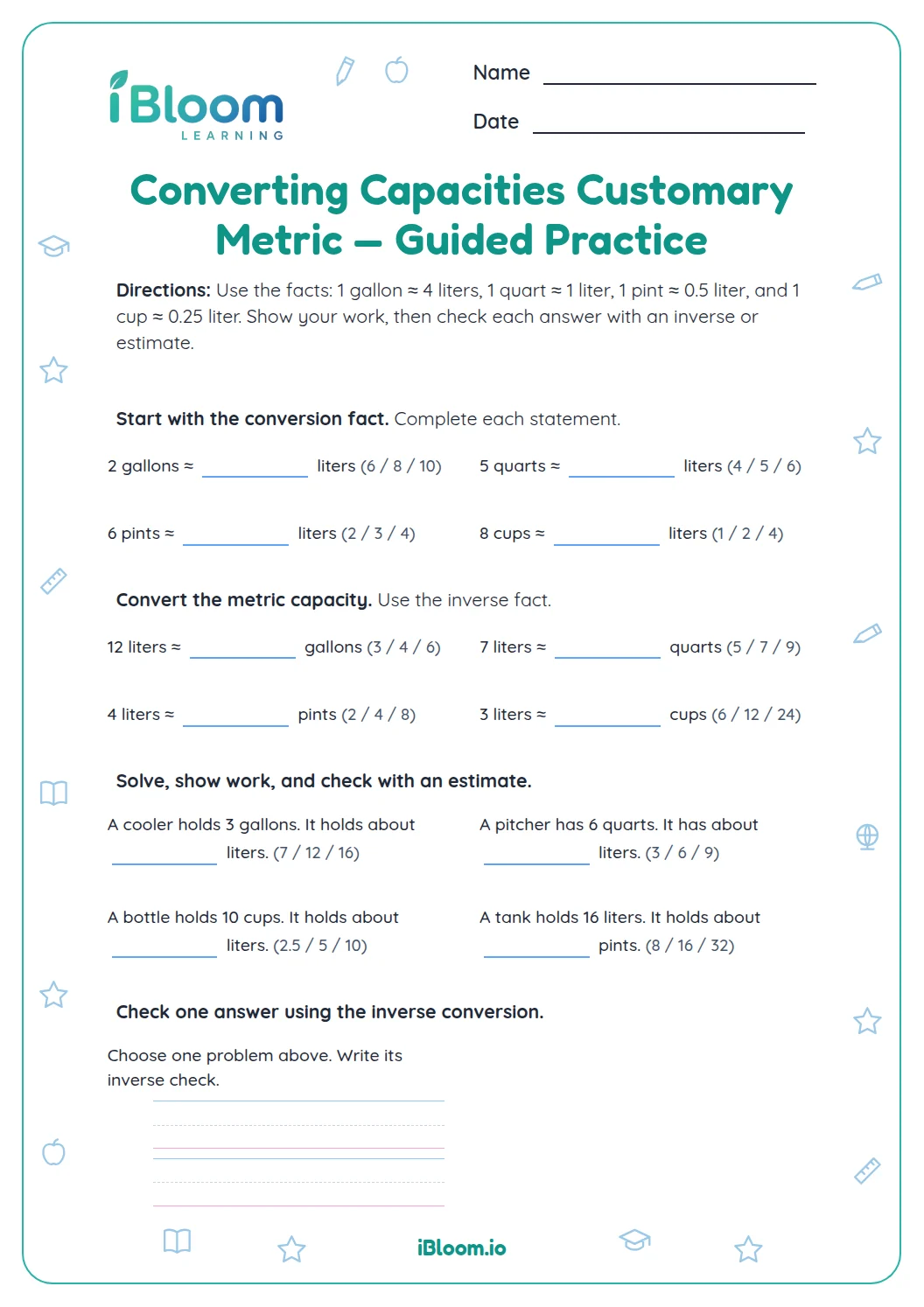
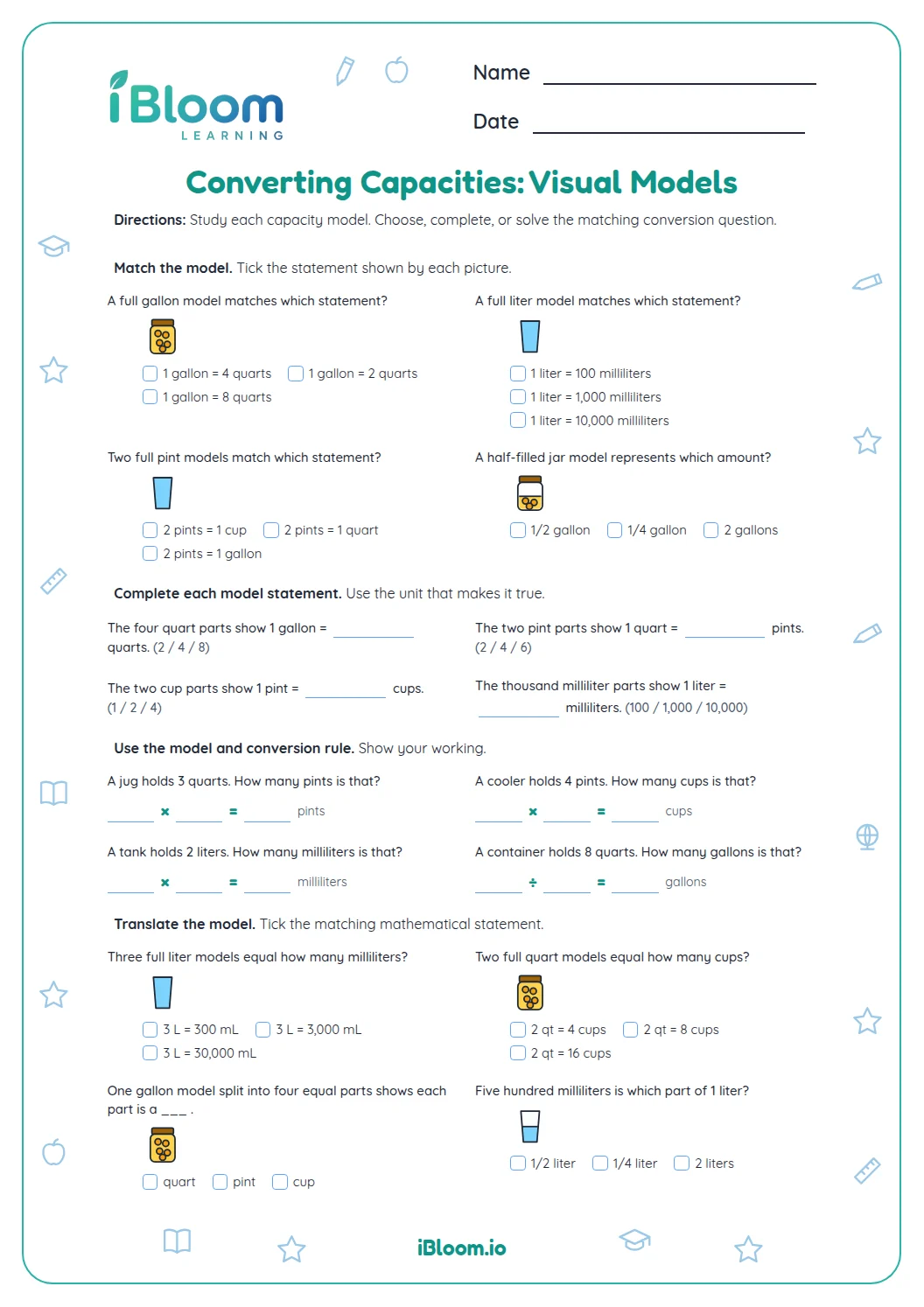
This Grade 5 worksheet contains 16 conversions across metric and customary units. Students practice length, mass, capacity, and weight, then use those relationships in short measurement situations. The answer key is included on a separate page. The work practices CCSS 5.MD.A.1 by converting among different-sized standard units within each measurement system.
Aligned to 5.MD.A.1
How do unit relationships guide the conversion?
Start with the relationship between the units. For example, 1 meter equals 100 centimeters, so 4 meters equals 4 × 100, or 400 centimeters.
When does the number grow or shrink?
A smaller unit takes more units to measure the same length or amount, so the number grows. A larger unit takes fewer units, so the number shrinks.
How can a conversion answer be checked?
Estimate which unit is larger, then check whether the number moved in the expected direction. Confirm the scale factor and attach the requested unit.
How to use this worksheet
- 1Name the starting and target units.
- 2Recall the relationship between one larger unit and smaller units.
- 3Multiply when changing to a smaller unit.
- 4Divide when changing to a larger unit.
- 5Attach the target unit and check the size.
Common mistakes and quick fixes
The mistake
Using the same operation in both directions.
The fix
Check whether the target unit is larger or smaller before choosing multiply or divide.
The mistake
Using the right factor with the wrong place-value shift.
The fix
Write the conversion relationship first, then multiply or divide by that factor.
The mistake
Leaving off the requested unit.
The fix
Read the final unit in the question and include it in the answer.
These problems connect measurement conversion to Grade 5 number and measurement work.
Students convert customary and metric measurements, select the correct scale factor, and solve everyday measur
On this sheet:
Show the official wordingHide the official wording
Convert among different-sized standard measurement units within a given measurement system (e.g., convert 5 cm to 0.05 m), and use these conversions in solving multi-step, real world problems.
What to practice next
Make more practice
Further reading
Questions parents and teachers ask
How many questions are included?
There are 16 questions in three parts. The first covers metric conversions, the second customary conversions, and the last applies both systems to measurement situations. The key lists each converted amount for checking. Students can compare the size of each result with its starting measurement.
Should the answer include a unit?
Include the requested unit when a question asks for a complete measurement. When a blank is followed by a printed unit, the key gives only the missing value so the unit is not repeated. Students can write the conversion fact beside the problem to make each step easy to follow and verify.
What conversion facts are used?
The practice uses common metric relationships for length, mass, and capacity, plus customary relationships for yards, feet, and inches. The relationship is stated where students need it. Students can write the conversion fact beside the problem to make each step easy to follow and verify.
How can a student decide whether to multiply or divide?
Moving to a smaller unit makes the number larger, so multiply by the number of smaller units in each larger unit. Moving to a larger unit makes the number smaller, so divide. Students can write the conversion fact beside the problem to make each step easy to follow and verify.
What standard does this page support?
The questions support 5.MD.A.1 by converting standard units within measurement systems and applying conversions to real-world situations. Students can write the conversion fact beside the problem to make each step easy to follow and verify. Students can note the unit relationship first, then calculate and compare the size of the result with the starting measurement.