



About this worksheet
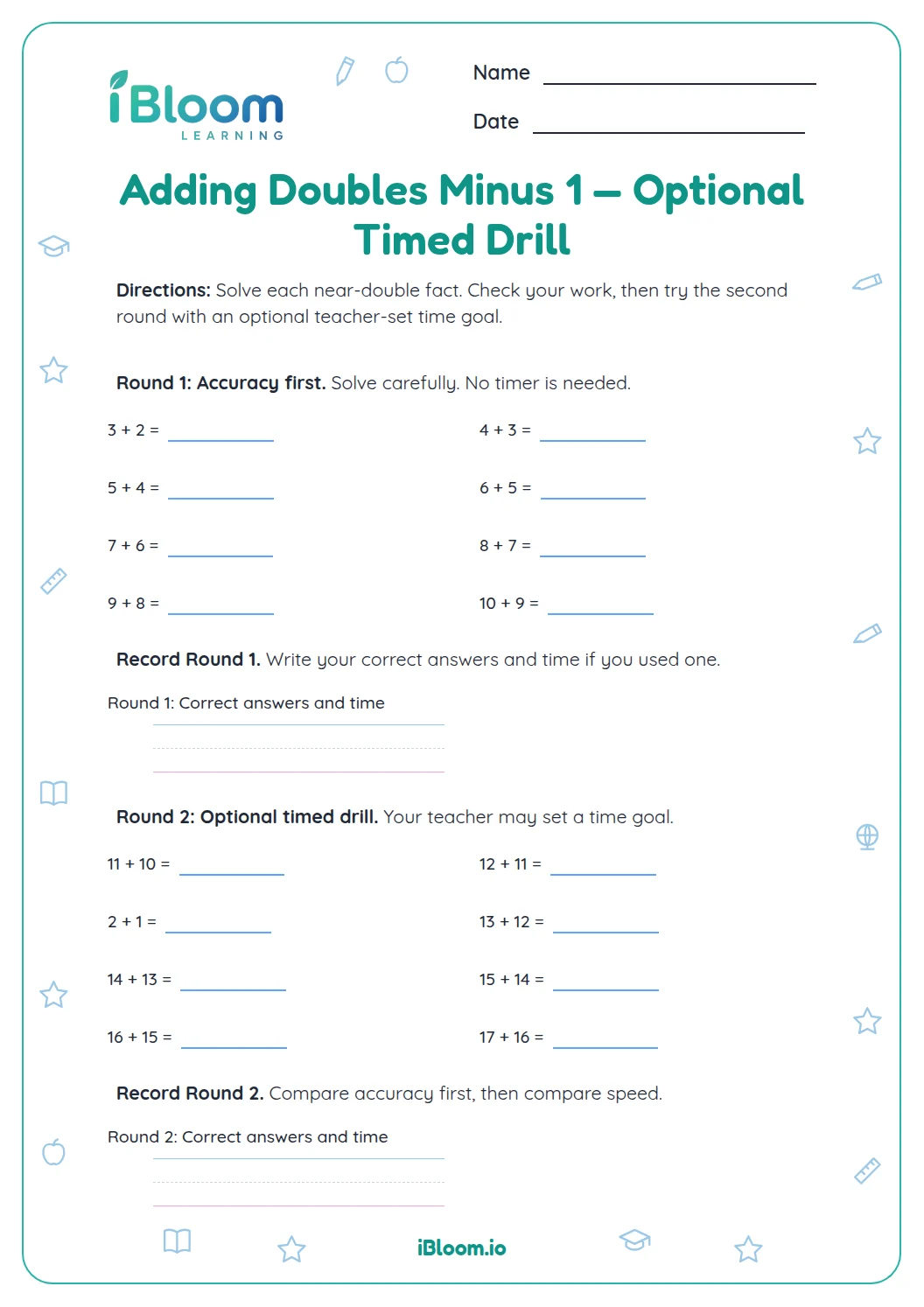
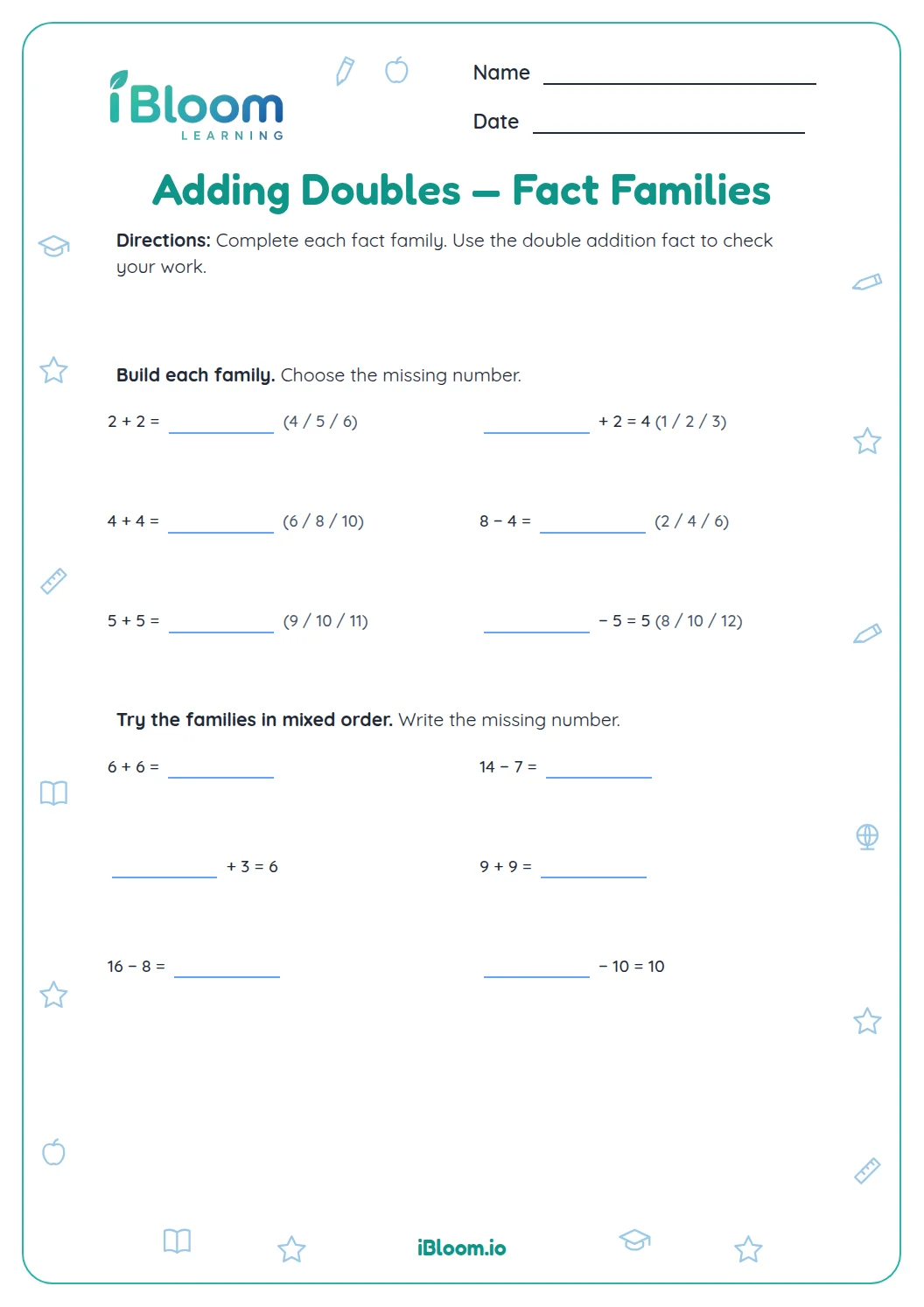
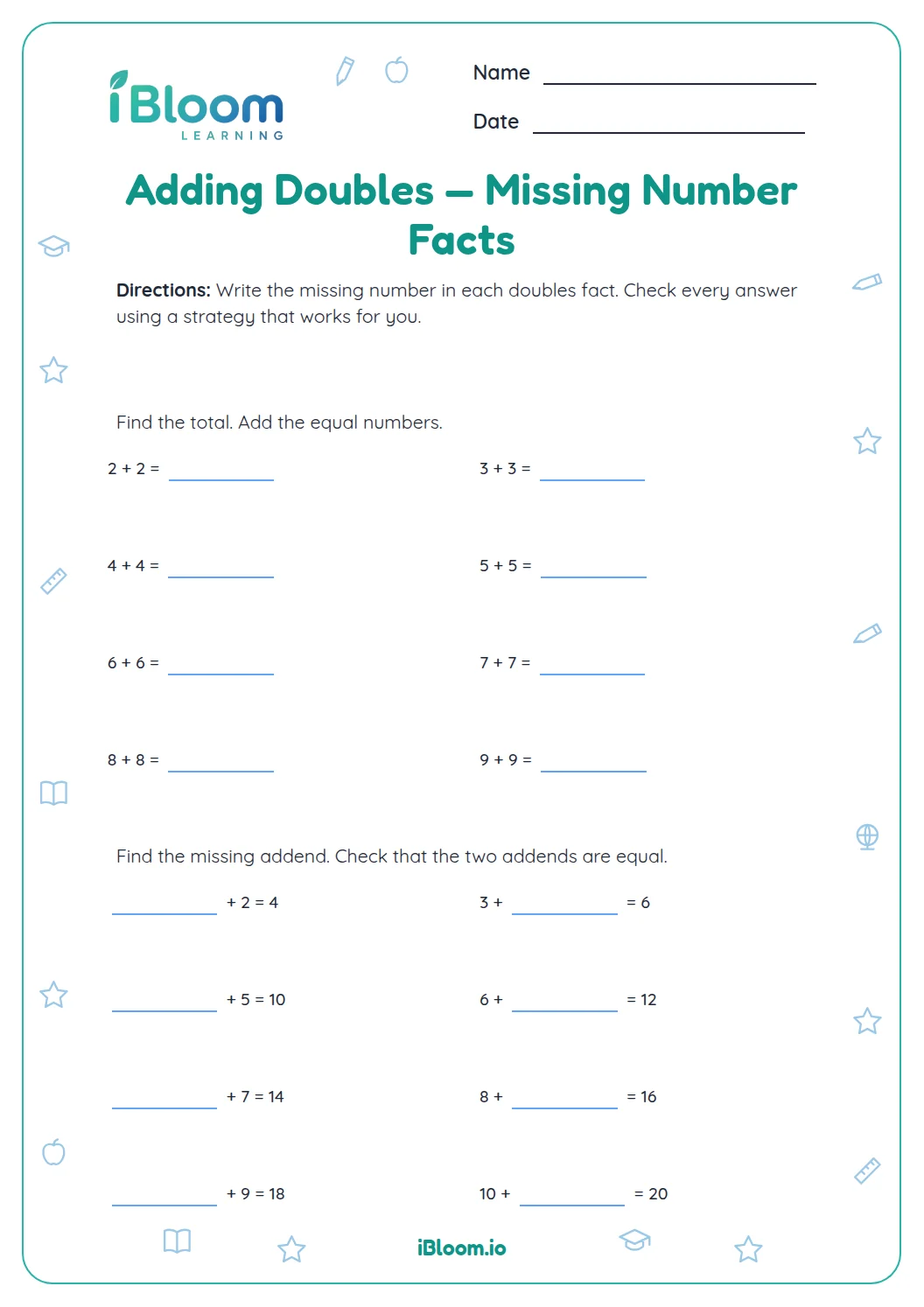
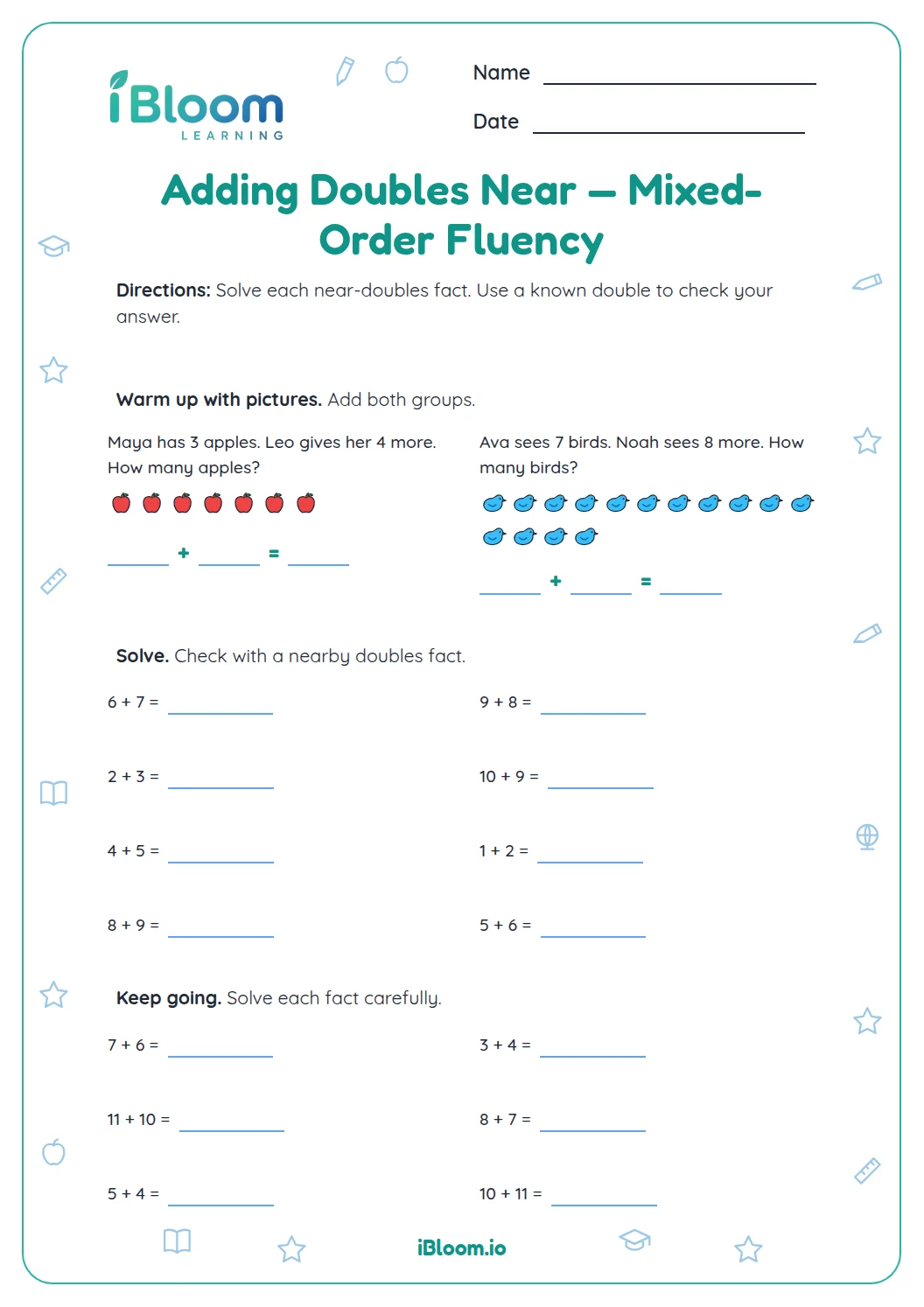
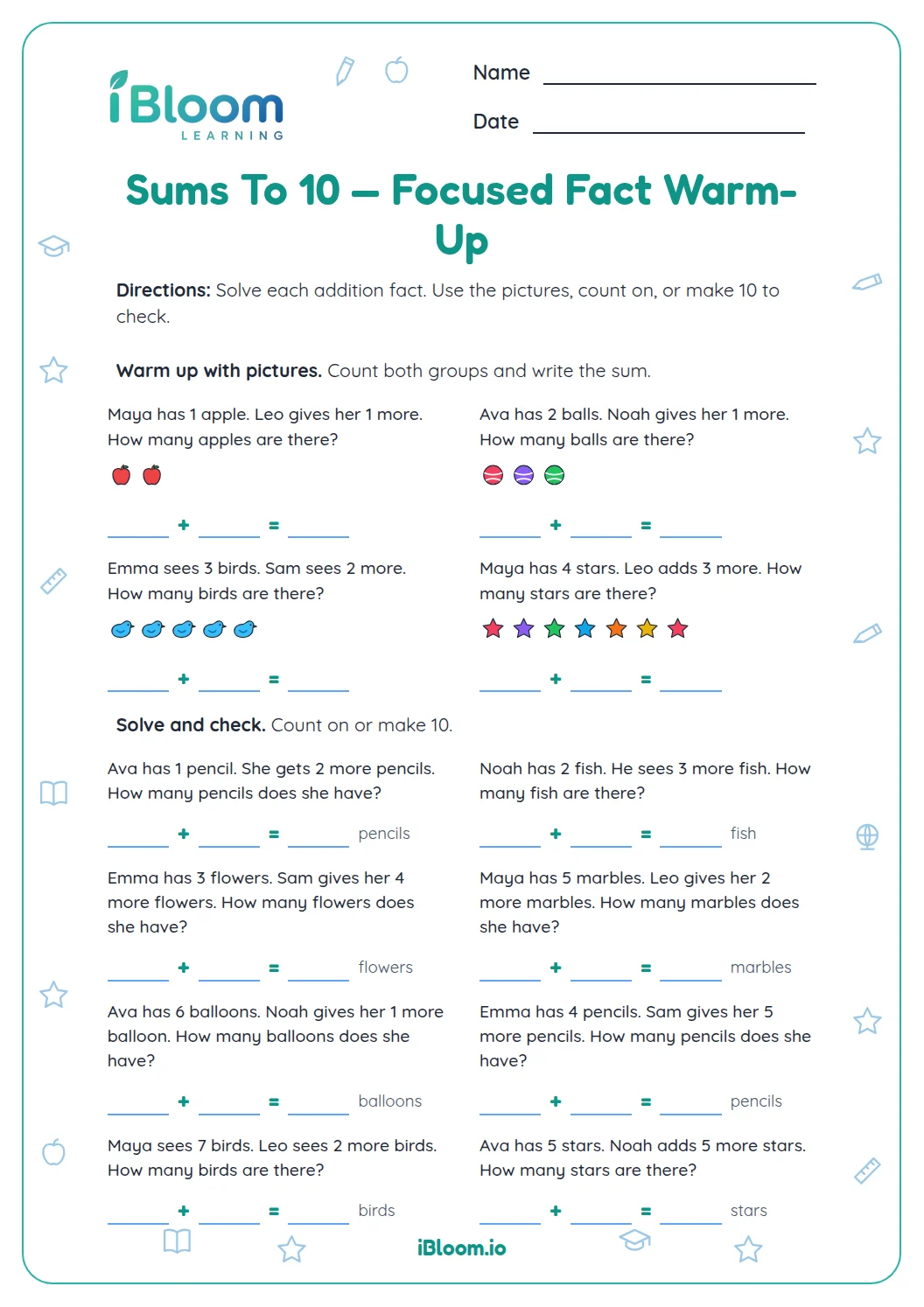
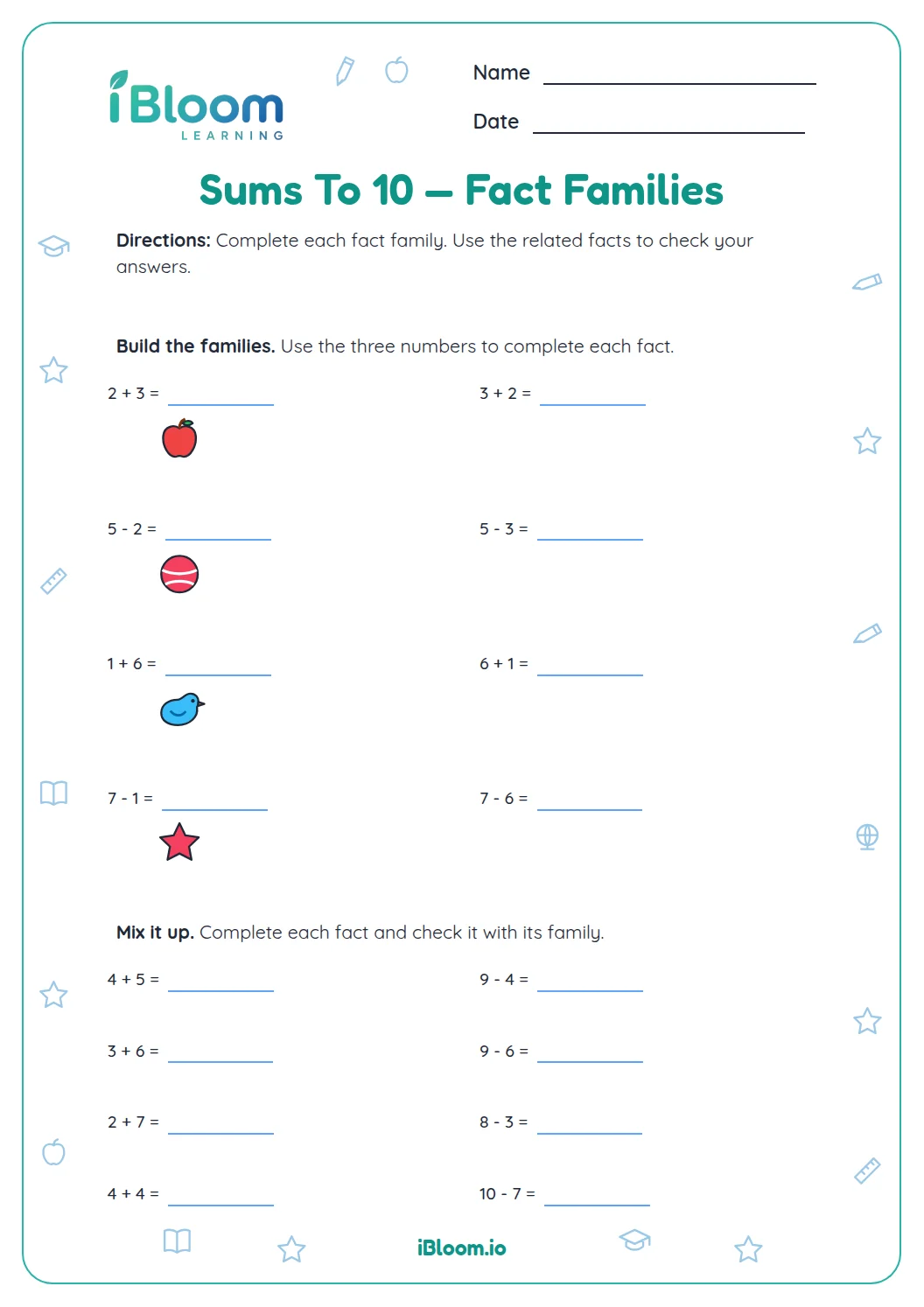
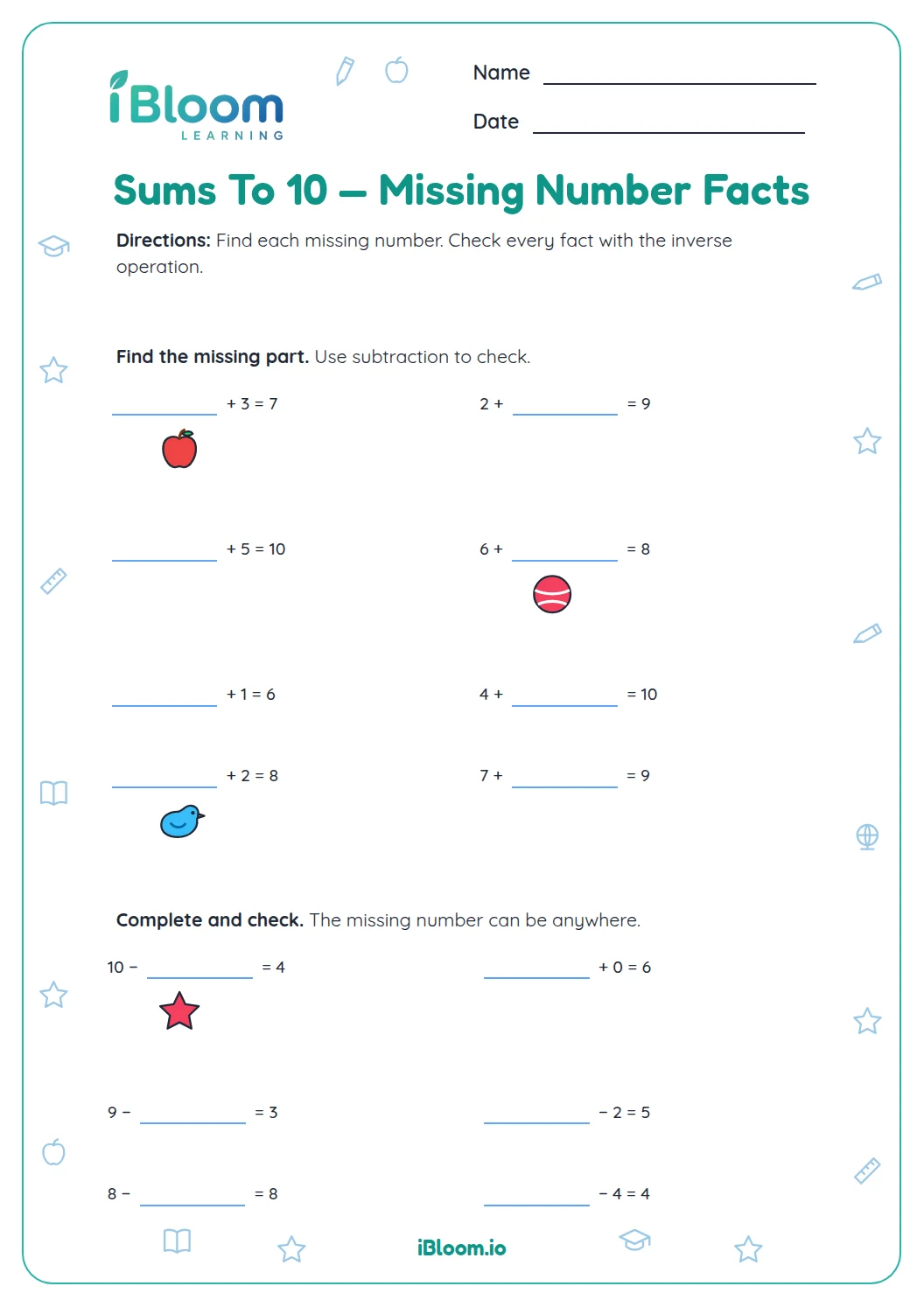
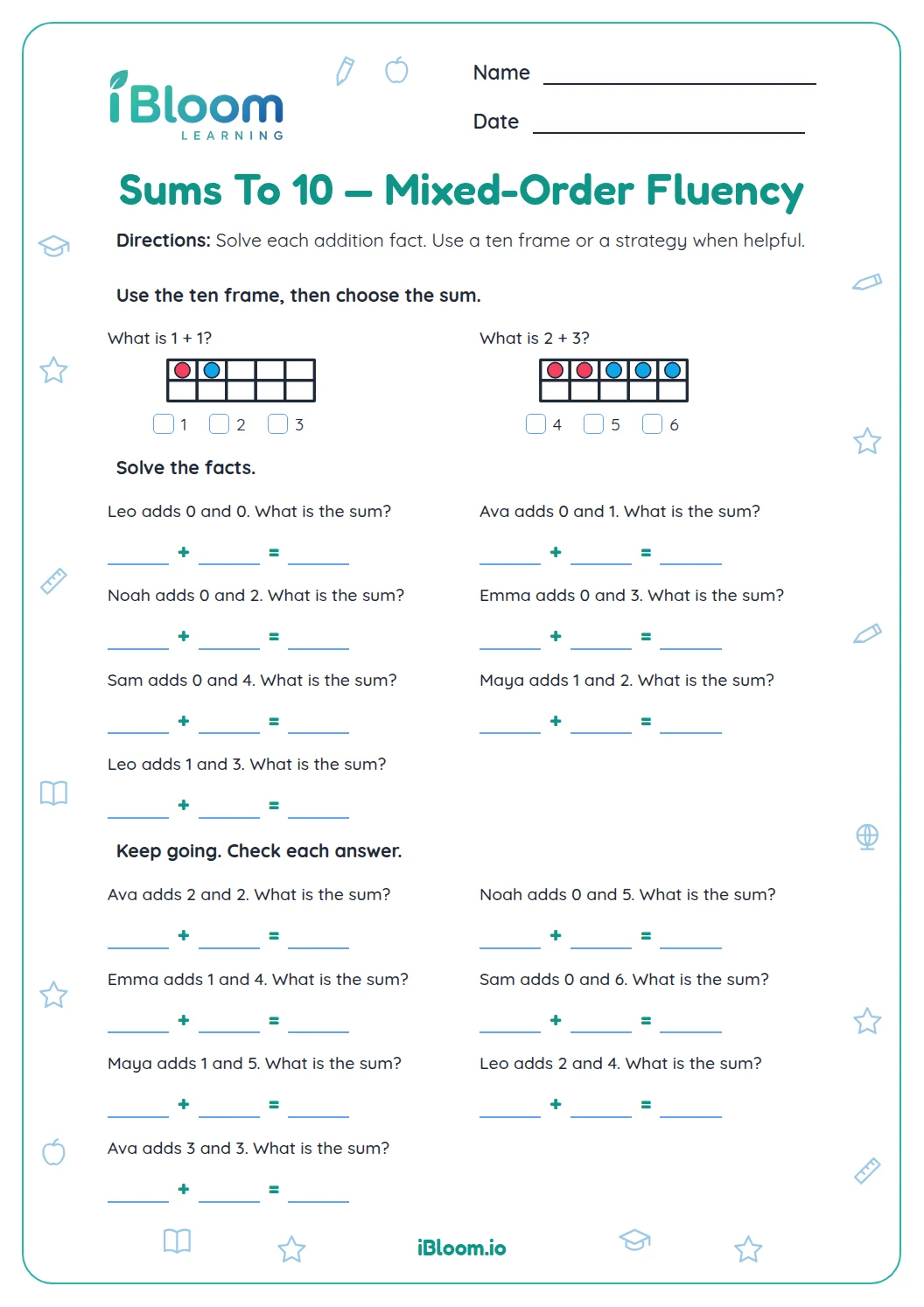
This Grade 1 sheet practices addition facts by pairing each near double with its matching double. Children solve direct facts, complete doubles-minus-one equations, and name a helpful double. The separate answer key shows each result. The work supports CCSS 1.OA.C.6, adding and subtracting within 20.
Aligned to 1.OA.C.6
How does a near double help?
A near double is one more or one less than a double. For 6 + 5, use 6 + 6 and subtract 1.
- 16 + 5 = 6 + 6 − 1
- 26 + 6 is 12, so 6 + 5 is 11.
What is in each part?
Part A warms up with sums. Part B completes facts using the matching double. Part C connects each near double to its helper fact.
How can a child check a sum?
Add the two numbers in the original fact, then compare the result with the completed equation. A near-double strategy should change the double by exactly one.
How to use this worksheet
- 1Read each addition fact carefully.
- 2For a near double, identify the repeated addend.
- 3Adjust the double by one.
- 4Write only the missing number in each blank.
- 5Check by adding the original two addends.
Common mistakes and quick fixes
The mistake
Adding one instead of subtracting one.
The fix
The smaller addend is one less than the double, so subtract one.
The mistake
Using a different double.
The fix
Repeat the larger addend to make the helper fact.
The mistake
Changing the original sum.
The fix
Check the result with the two addends in the printed fact.
Common Core alignment
This worksheet practices the following Common Core mathematics standard.
Use doubles and near doubles to add within 20.
On this sheet: Use doubles and near doubles to add within 20.
Show the official wordingHide the official wording
Add and subtract within 20, demonstrating fluency for addition and subtraction within 10.
What to practice next
Make more practice
Further reading
Questions parents and teachers ask
How many questions are on the worksheet?
The sheet has 16 questions in three parts, beginning with near doubles and moving to sums and strategy prompts. Each problem is printed on the student page, and the separate answer key lists the matching result. Ask the learner to explain one solution before checking the key together.
What grade is this worksheet for?
This worksheet is written for Grade 1 learners practicing doubles and near doubles to add within 20. The prompts keep the focus on familiar facts and show how a known double can help find a nearby sum. Children can use fingers, counters or mental math.
Is an answer key included?
Yes. The printable has a separate answer key page with the result for each of the 16 questions. Have the learner complete the student sheet first, then compare answers. If one differs, return to the matching equation and use the related double to check it.
How can a child check a sum or difference?
A child can build a double such as 6 + 6, then notice that 6 + 5 is one less. Counters or fingers can make the pair visible. The worksheet asks learners to use this relationship and to check that the total fits the original addition fact.
How long does the worksheet take?
Most children can complete the 16 short questions in about 15 minutes, though the pace will vary. Leave time to explain one strategy and check the answers. The three parts move from direct addition facts toward using a matching double as a mental math tool.