



About this worksheet
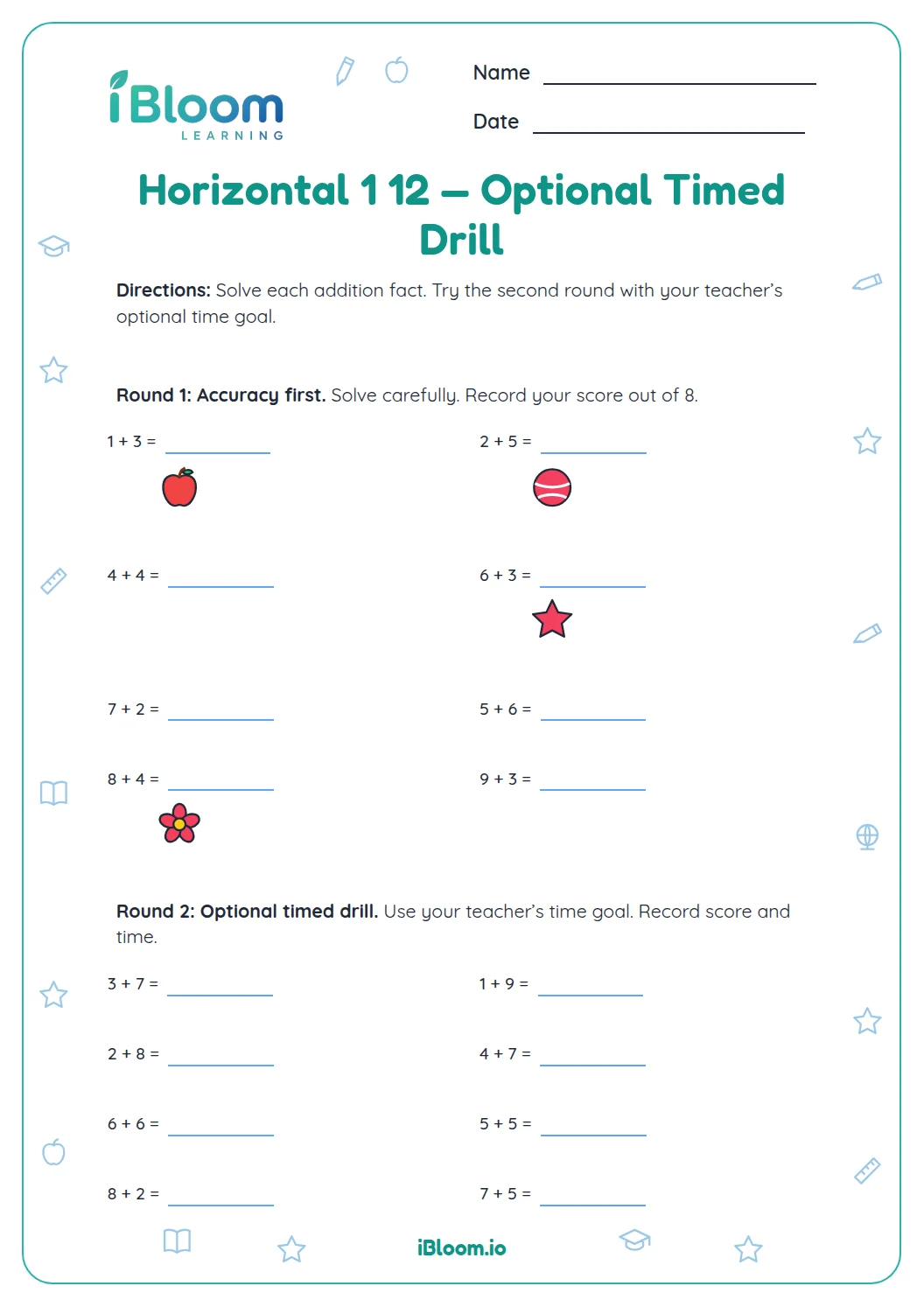
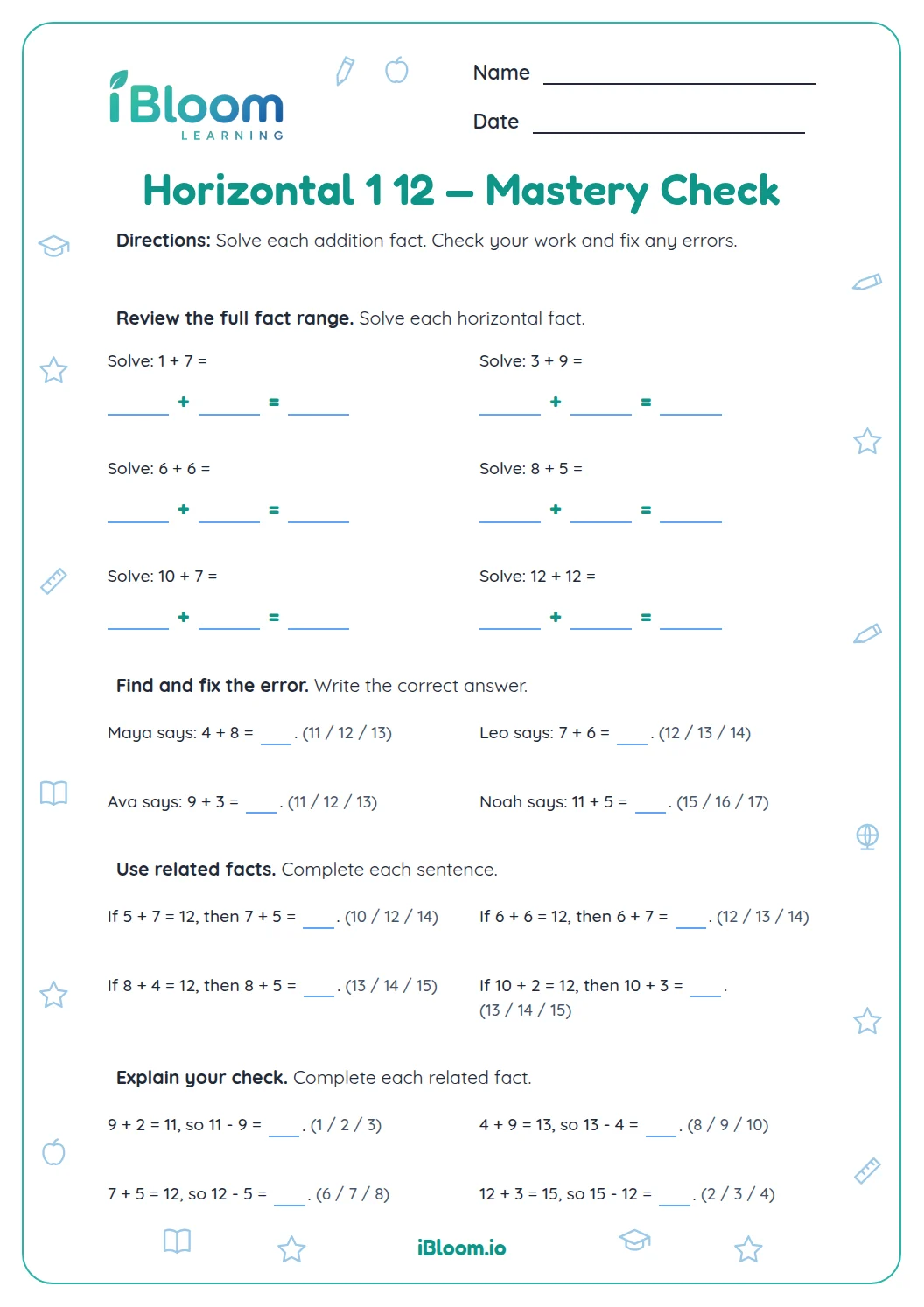
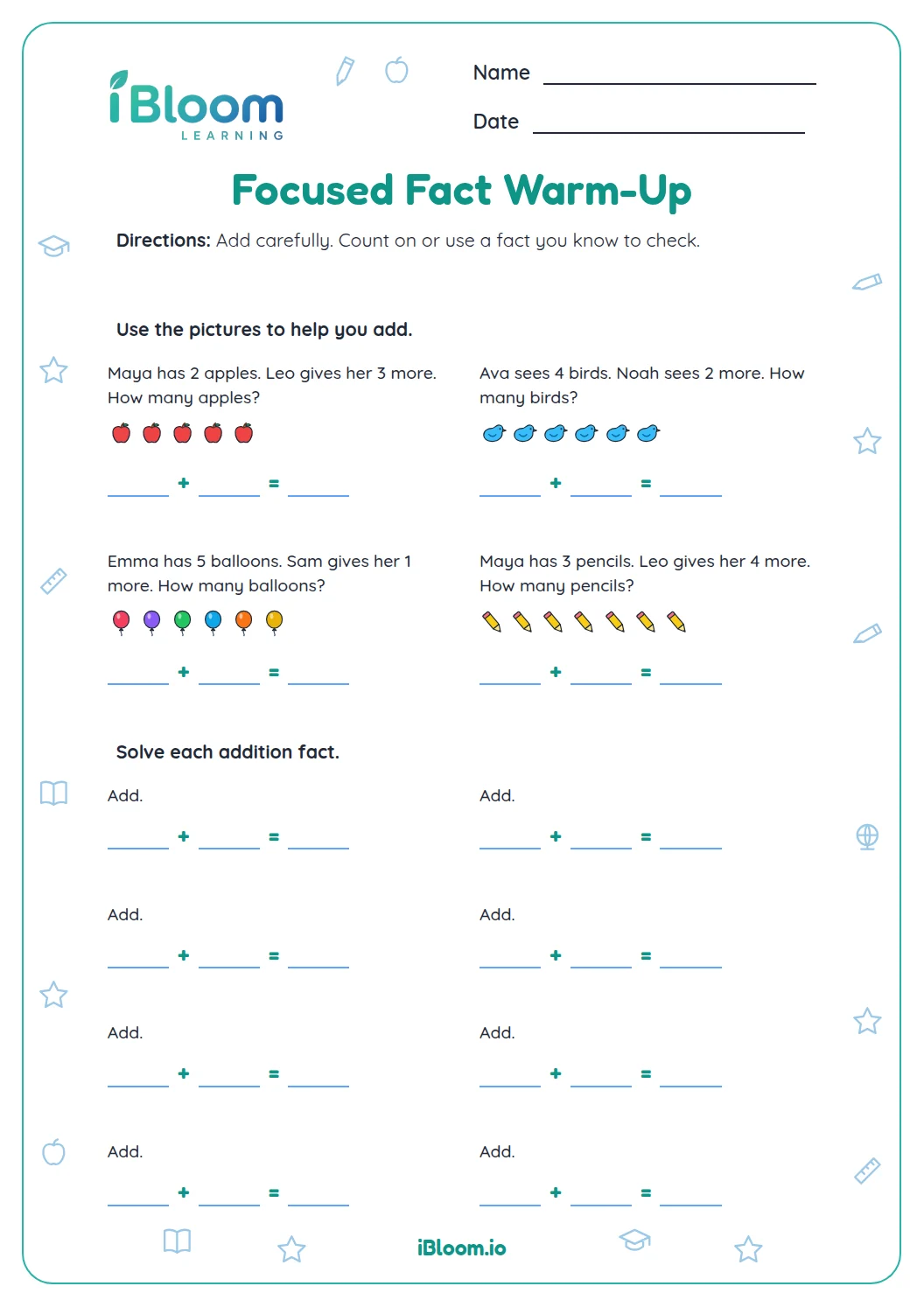
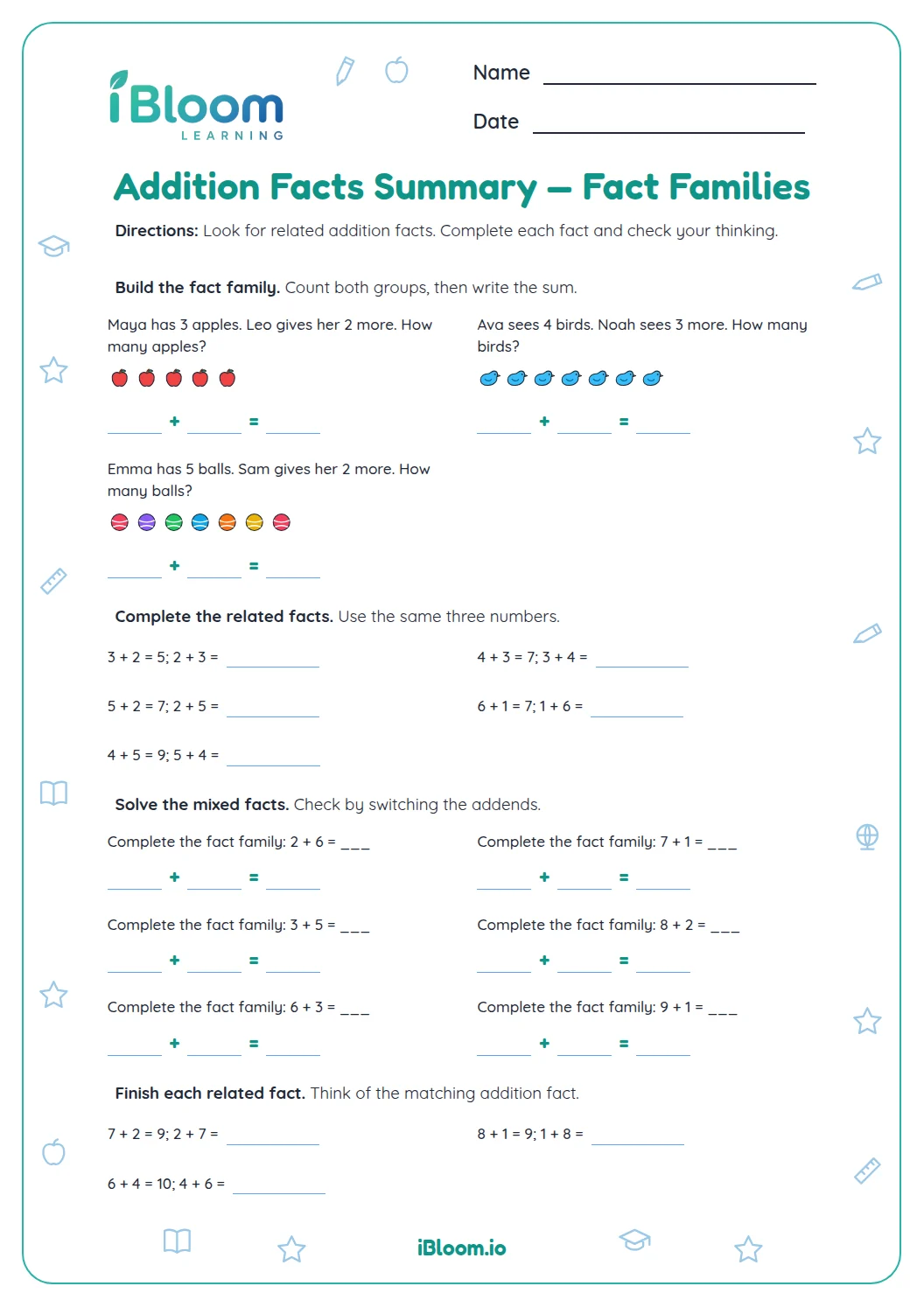
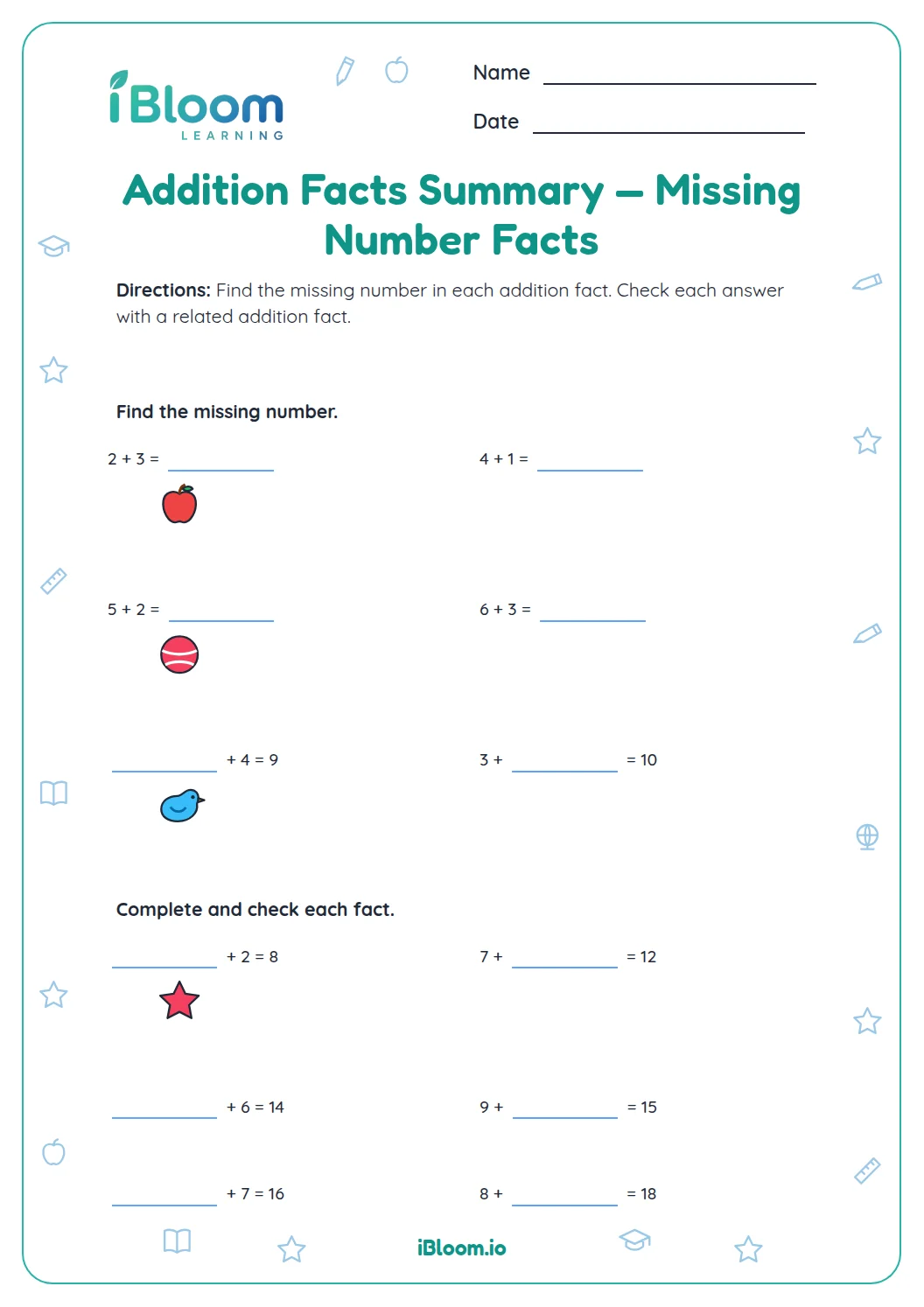
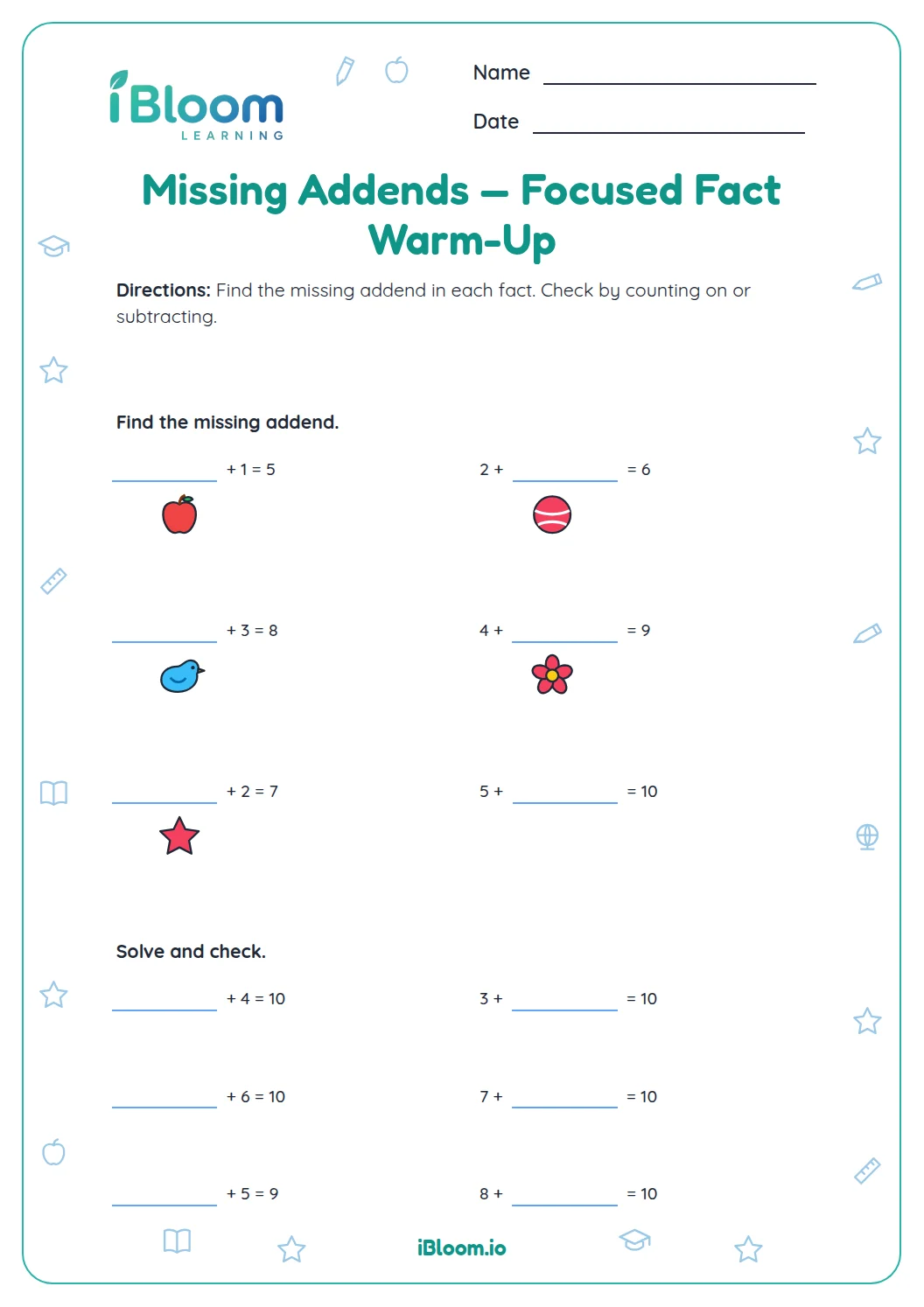
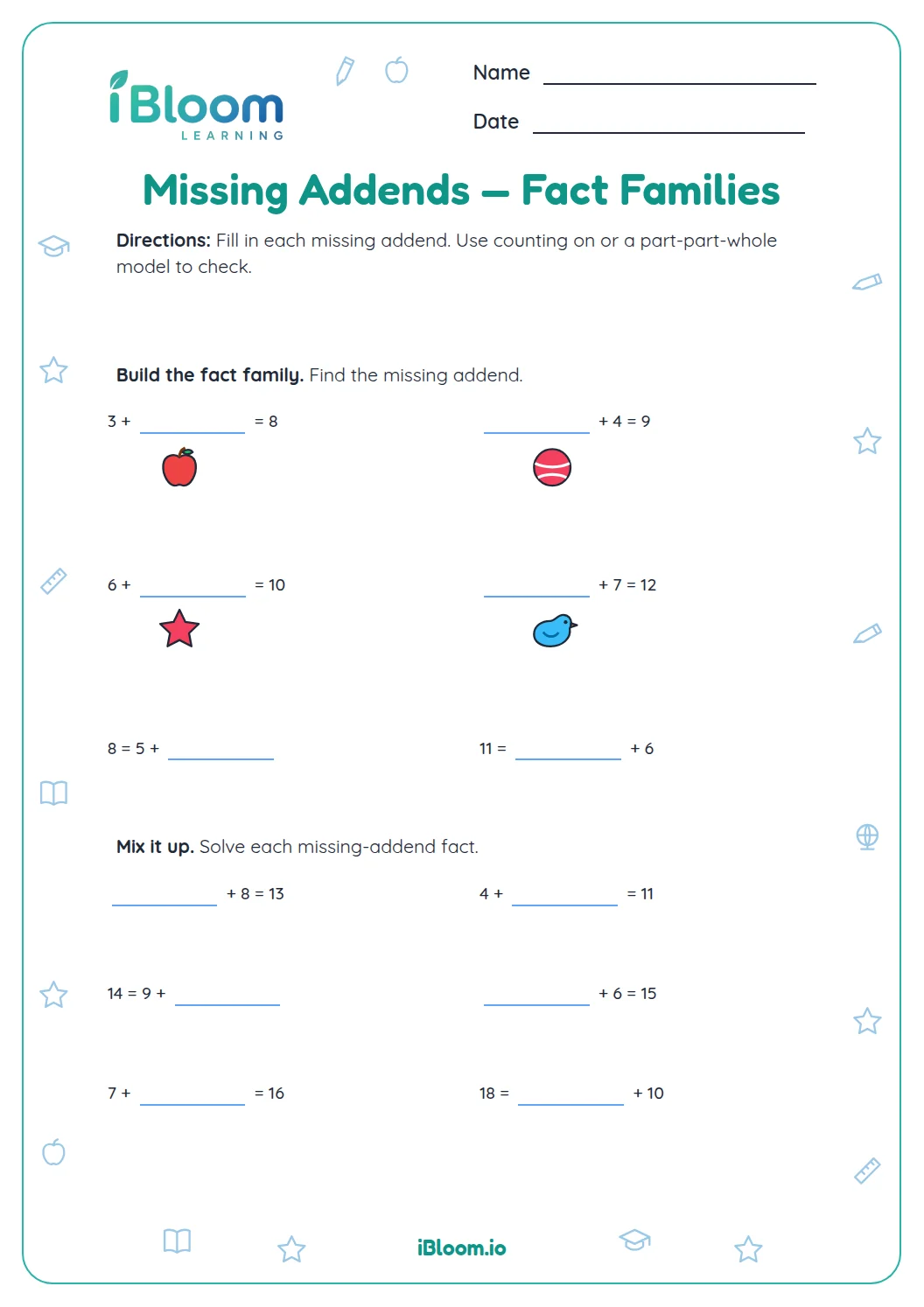
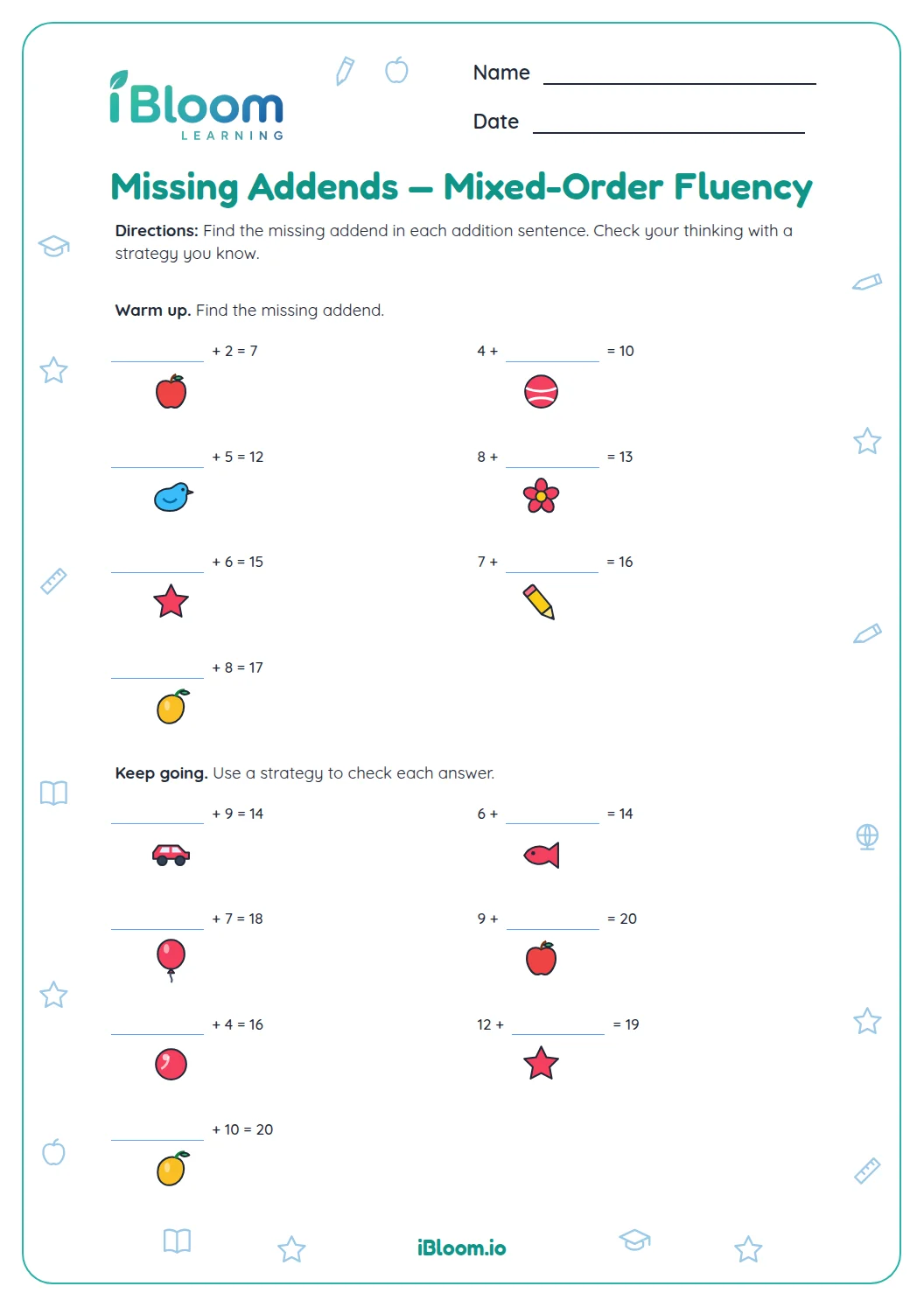
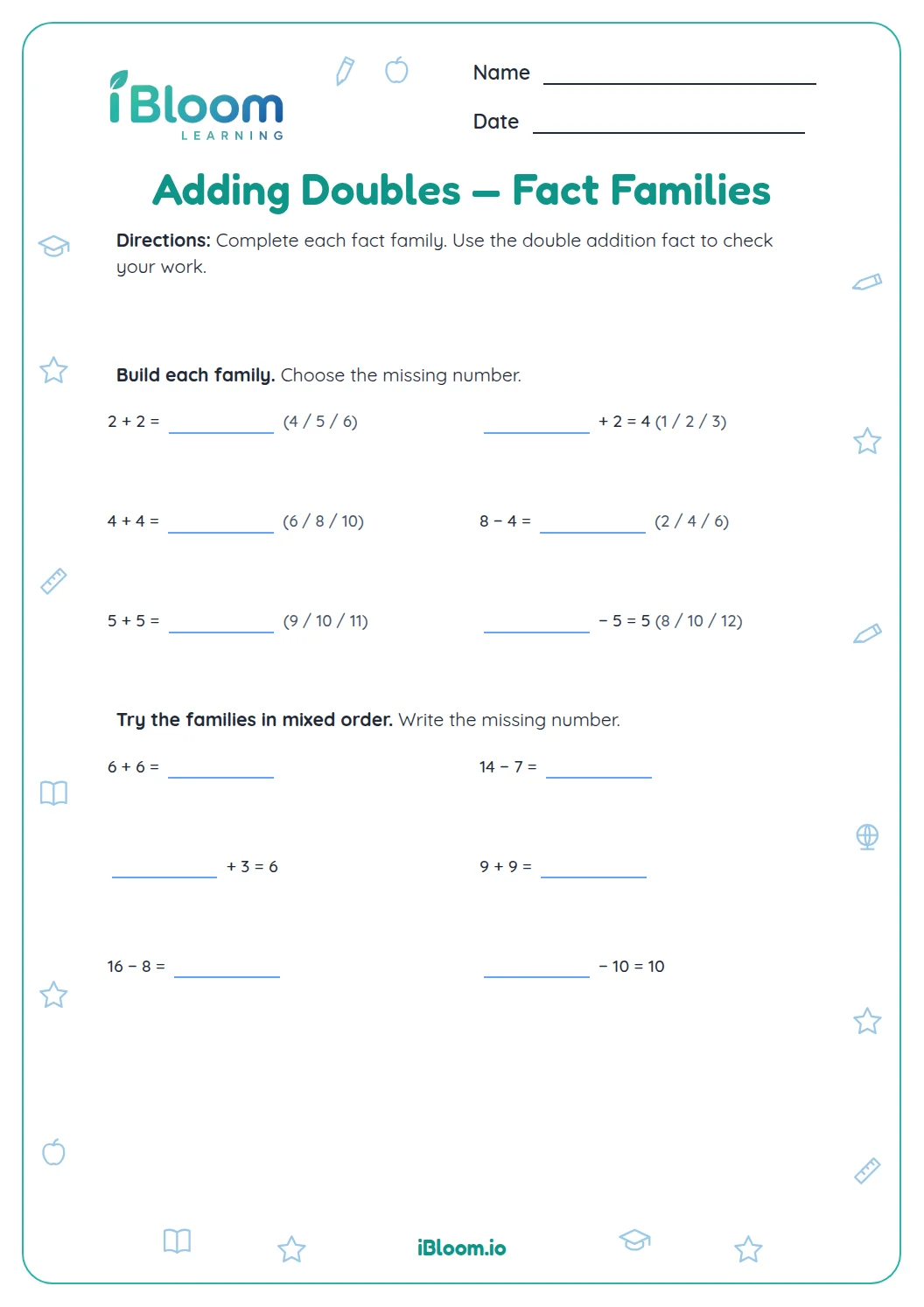
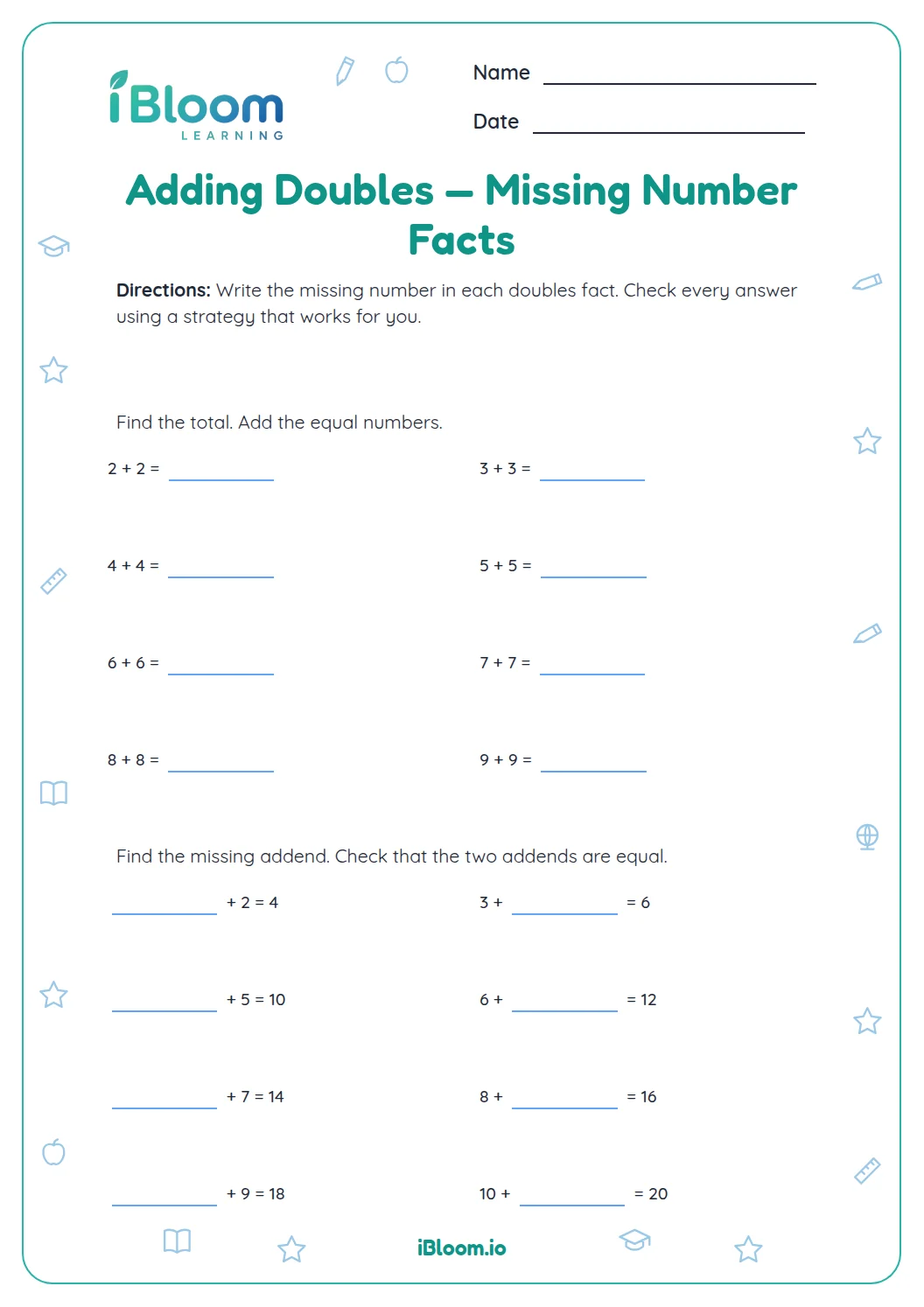
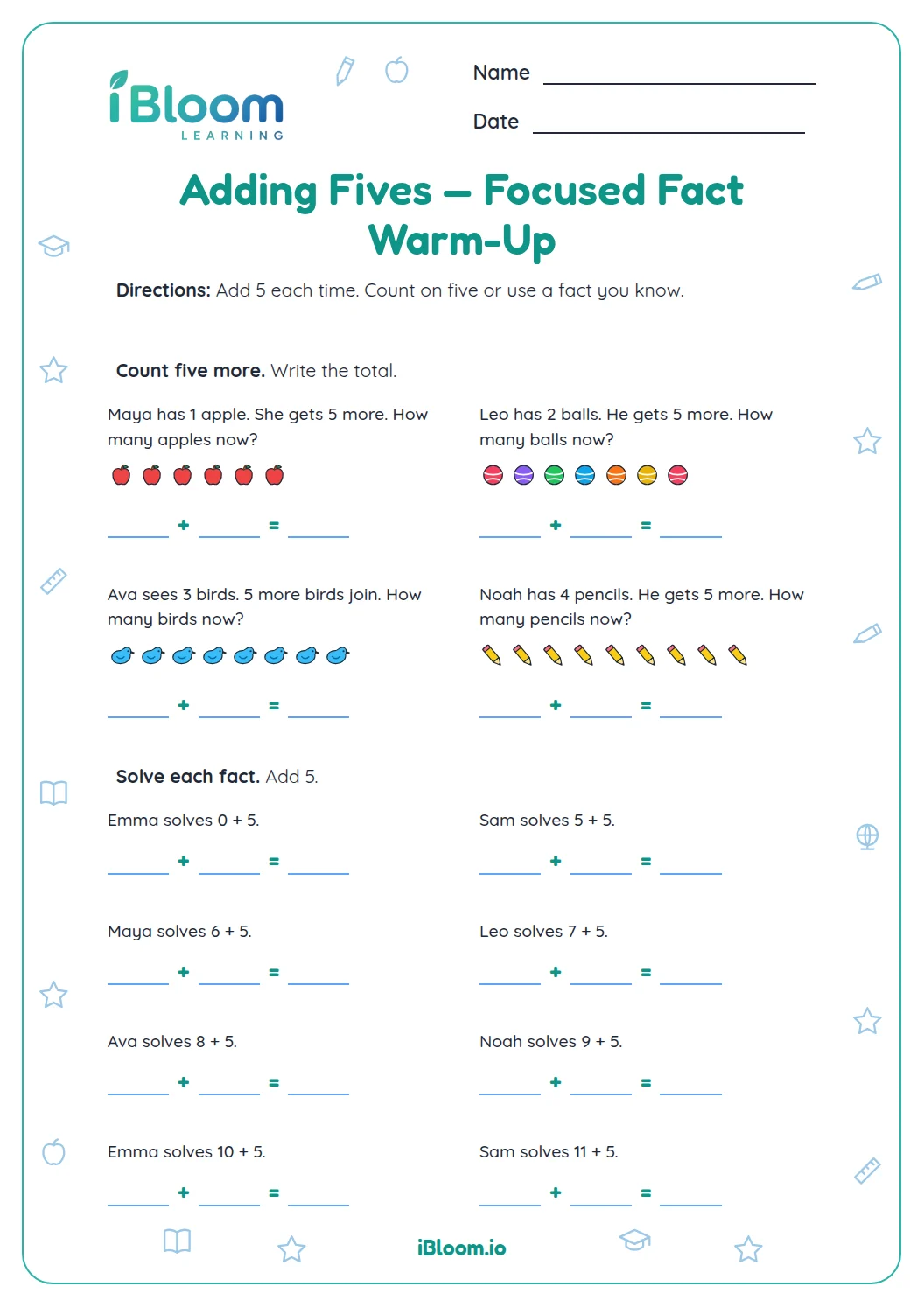
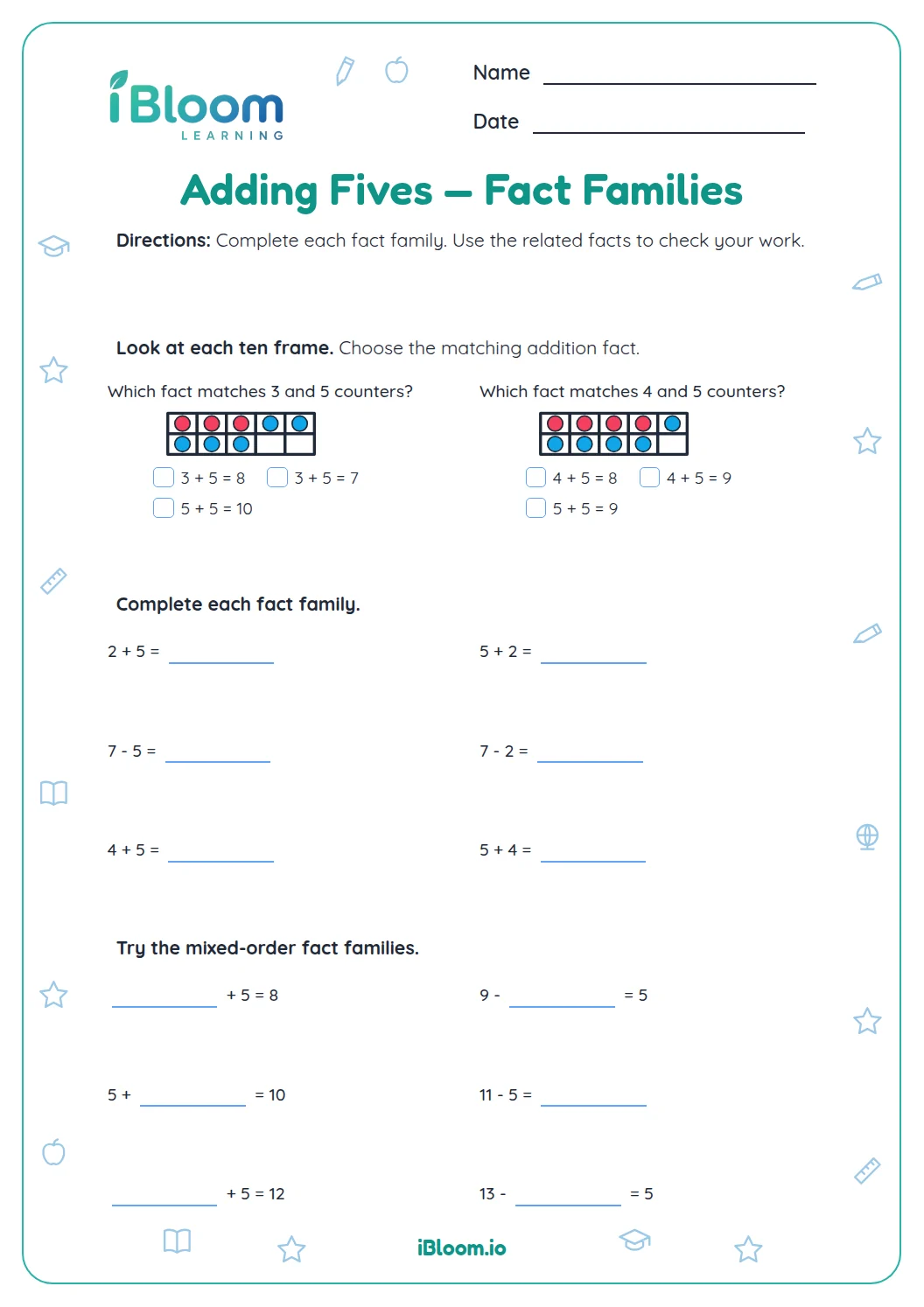
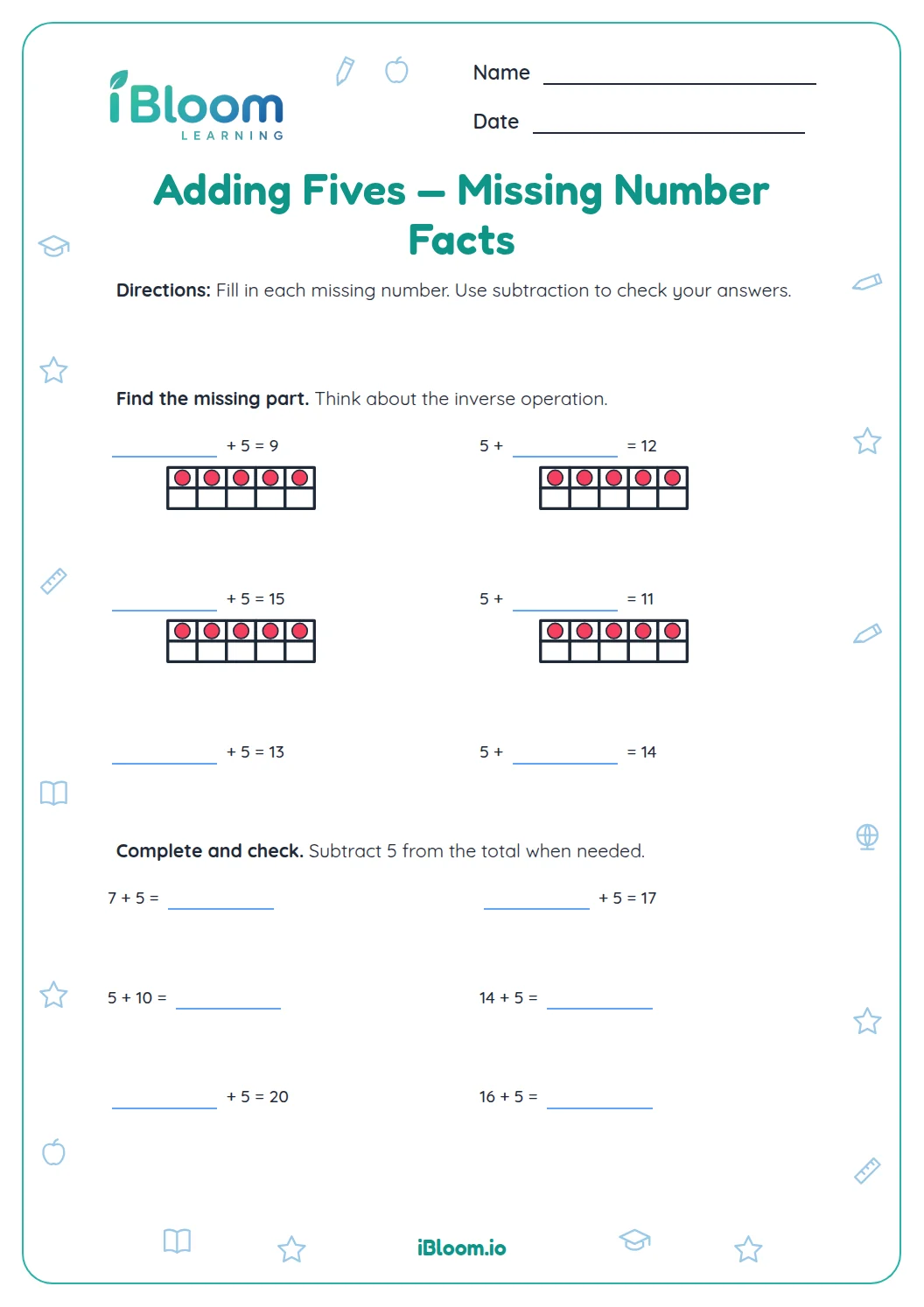
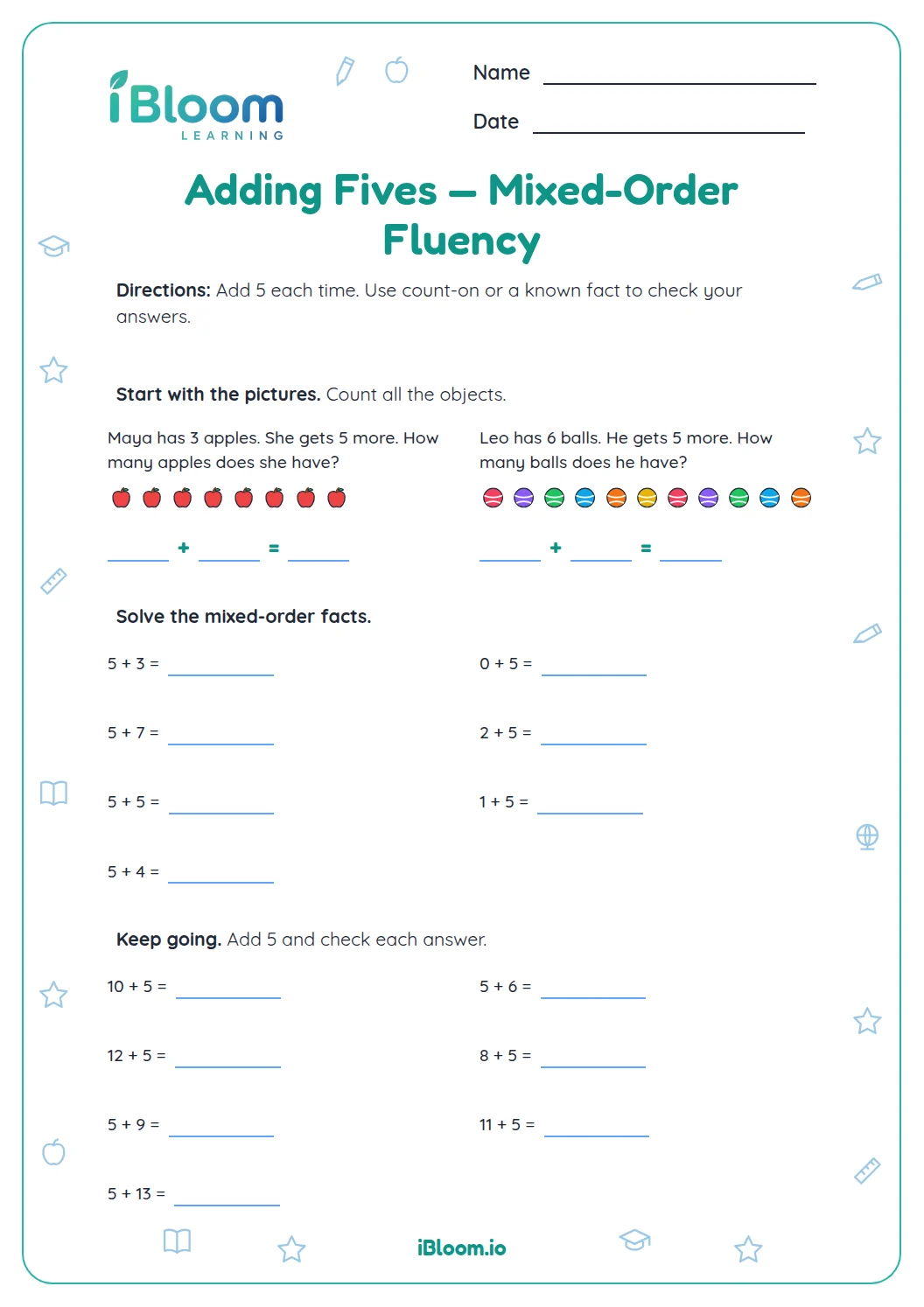
This free printable Grade 2 worksheet gives students 20 mixed addition facts using addends from 1 through 12. Every student item prints both addends in a horizontal number sentence, so the needed numbers are on the page; the separate answer key lists the checked sums. Students can solve by recalling a fact or using a mental strategy. The two-page practice keeps the focus on these facts and their sums. It supports Common Core 2.OA.B.2 through the addition skill practiced here.
Aligned to 2.OA.B.2
What facts will students solve?
The sheet has 20 printed addition facts in two parts: eight questions in Part A and twelve in Part B. It practices 20 mixed addition facts using addends from 1 through 12; each equation gives the student both addends and one blank for the sum.
The first question is 12 + 4 = ___. Its sum is 16. For 12 + 4, start at 12 and count on four: 13, 14, 15, 16. The key uses the same question numbers as the student page.
How can students find each sum?
Read both addends before writing. For this sheet, For 12 + 4, start at 12 and count on four: 13, 14, 15, 16. Students may also recall the fact directly, then check that the sum makes the printed equation true.
The mixed order means a student should read each new equation instead of carrying a previous sum into the next blank.
How can families use the page?
Work through the equations at a comfortable pace, then use the numbered key to find any facts to revisit. A student can explain one strategy aloud before trying another item.
The student pages show every equation, and the separate two-page key gives a sum for each numbered question.
How to use this worksheet
- 1Read both addends in the printed equation.
- 2Recall the fact or use a mental addition strategy.
- 3Write one sum in the blank for that question.
- 4Check that the sum makes the equation true.
- 5Use the numbered answer key to review missed facts.
Common mistakes and quick fixes
The mistake
Writing one addend again as the sum.
The fix
Count on by the other addend or use a known fact.
The mistake
Skipping an equation while moving quickly.
The fix
Point to each numbered fact as you solve it.
The mistake
Copying a previous sum into a new blank.
The fix
Read both addends in the new equation before answering.
This practice develops addition fact fluency and mental strategies.
Add facts using mental strategies, with sums through 20.
On this sheet:
Show the official wordingHide the official wording
Fluently add and subtract within 20 using mental strategies. By end of Grade 2, know from memory all sums of two one-digit numbers.
What to practice next
Make more practice
Further reading
Questions parents and teachers ask
What does the student write for each problem?
Each equation prints both addends and an equals sign on the student sheet. The student writes the sum in the single blank, then compares it with the matching question in the separate answer key. No numbers need to be copied from the key to make the problems solvable.
How many addition facts are included?
There are 20 questions in two parts: eight facts in Part A and twelve in Part B. Every question shows its addends, and the answer key follows the same numbering. Students can pause between parts, check completed work, and return to any facts that need another look.
Does this worksheet use a timer?
No timer is required for this worksheet. Students can solve each printed fact at a comfortable pace, then use the separate answer key to check their sums. A teacher or family may revisit selected facts later without changing the order of the questions.
What strategy can help with a fact?
A student can recall a known sum or count on from one addend. For example, 12 + 4 has a sum of 16. For 12 + 4, start at 12 and count on four: 13, 14, 15, 16. Once the student has a total, checking the equation confirms that the answer fits the printed addends.
Does the printable include an answer key?
Yes. The printable includes two student worksheet pages followed by two answer key pages. Each key answer is labeled with the same question number as its equation, so a parent or teacher can check the sums and find a missed fact without searching through an unlabeled list.