



About this worksheet
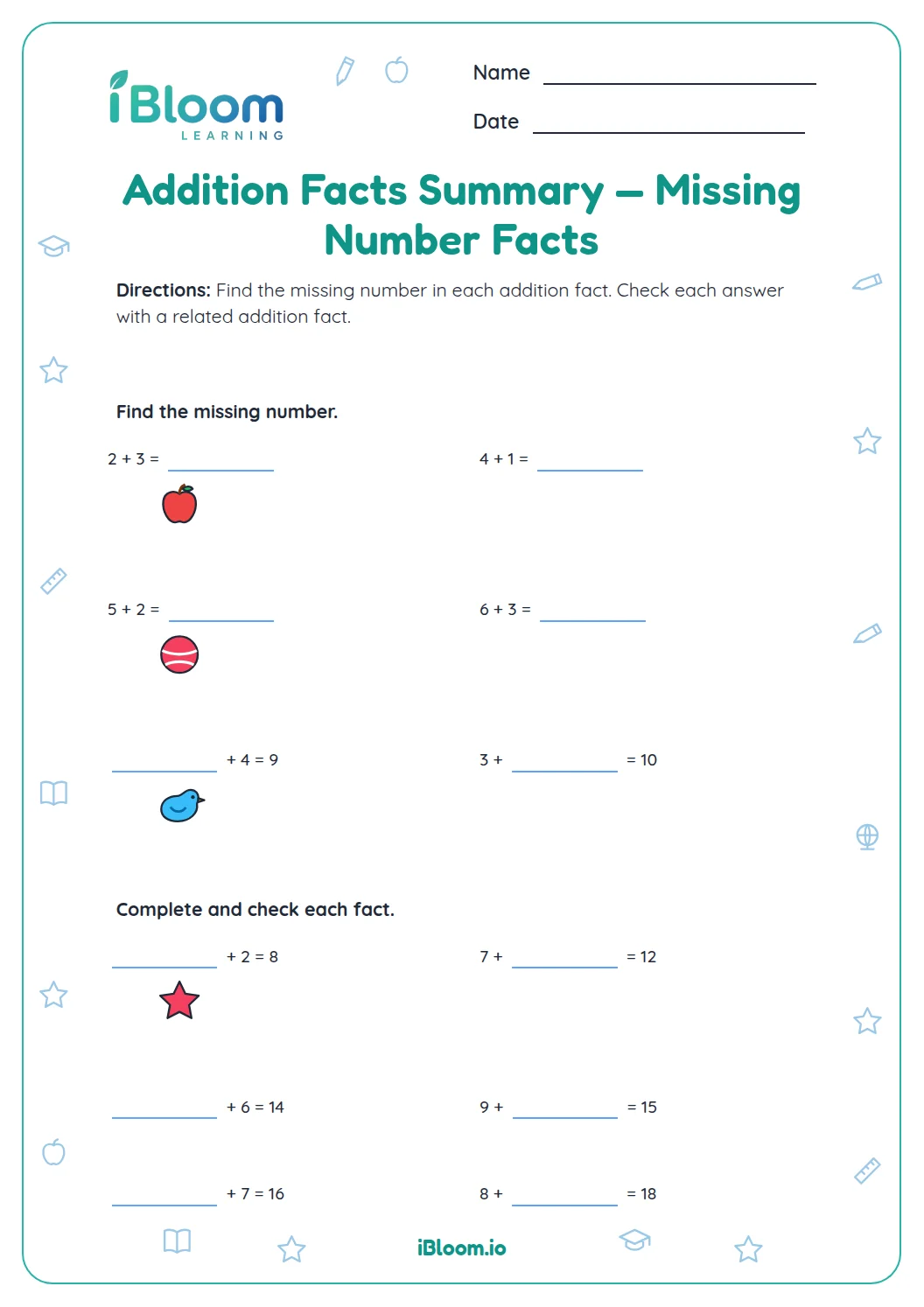
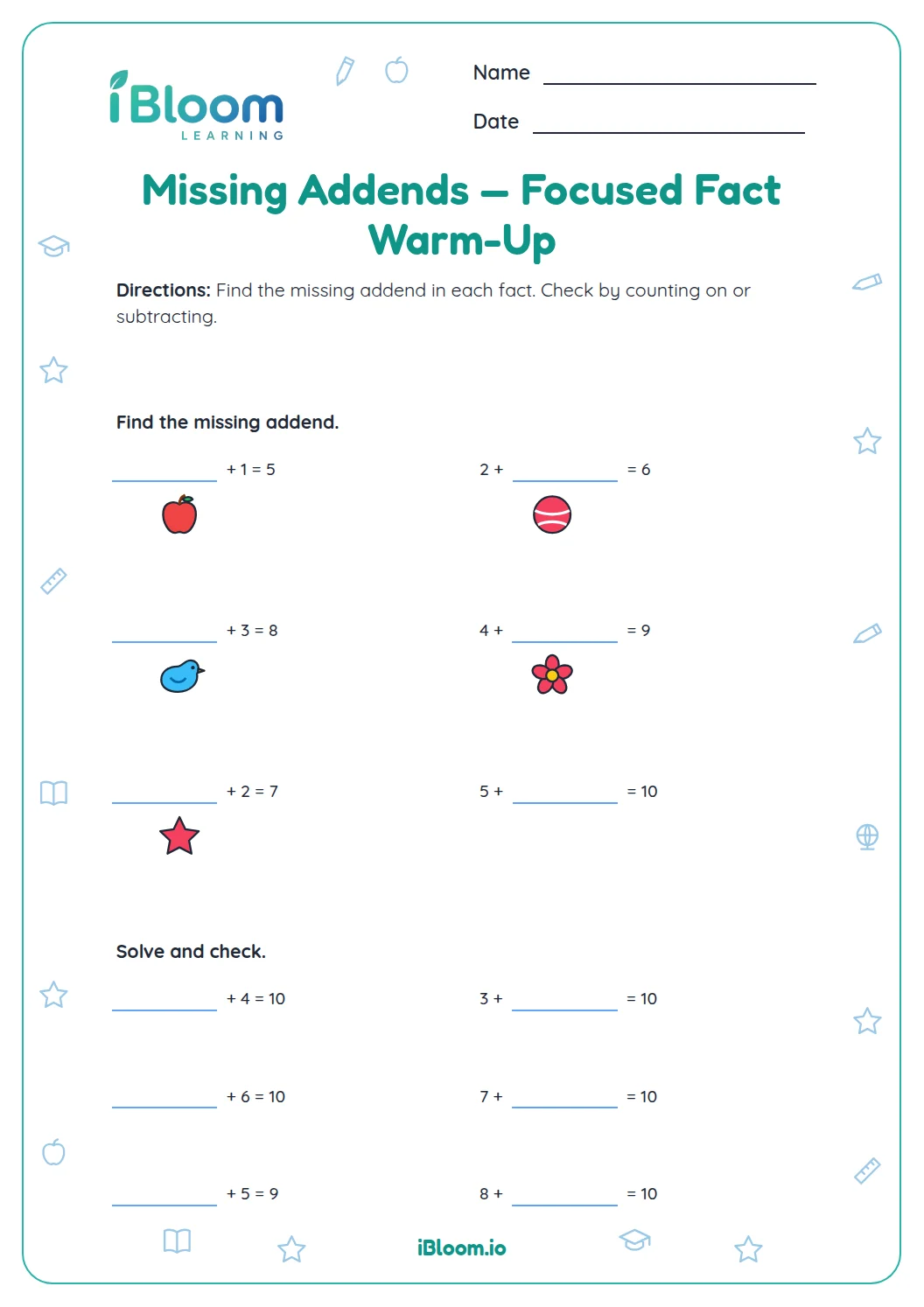
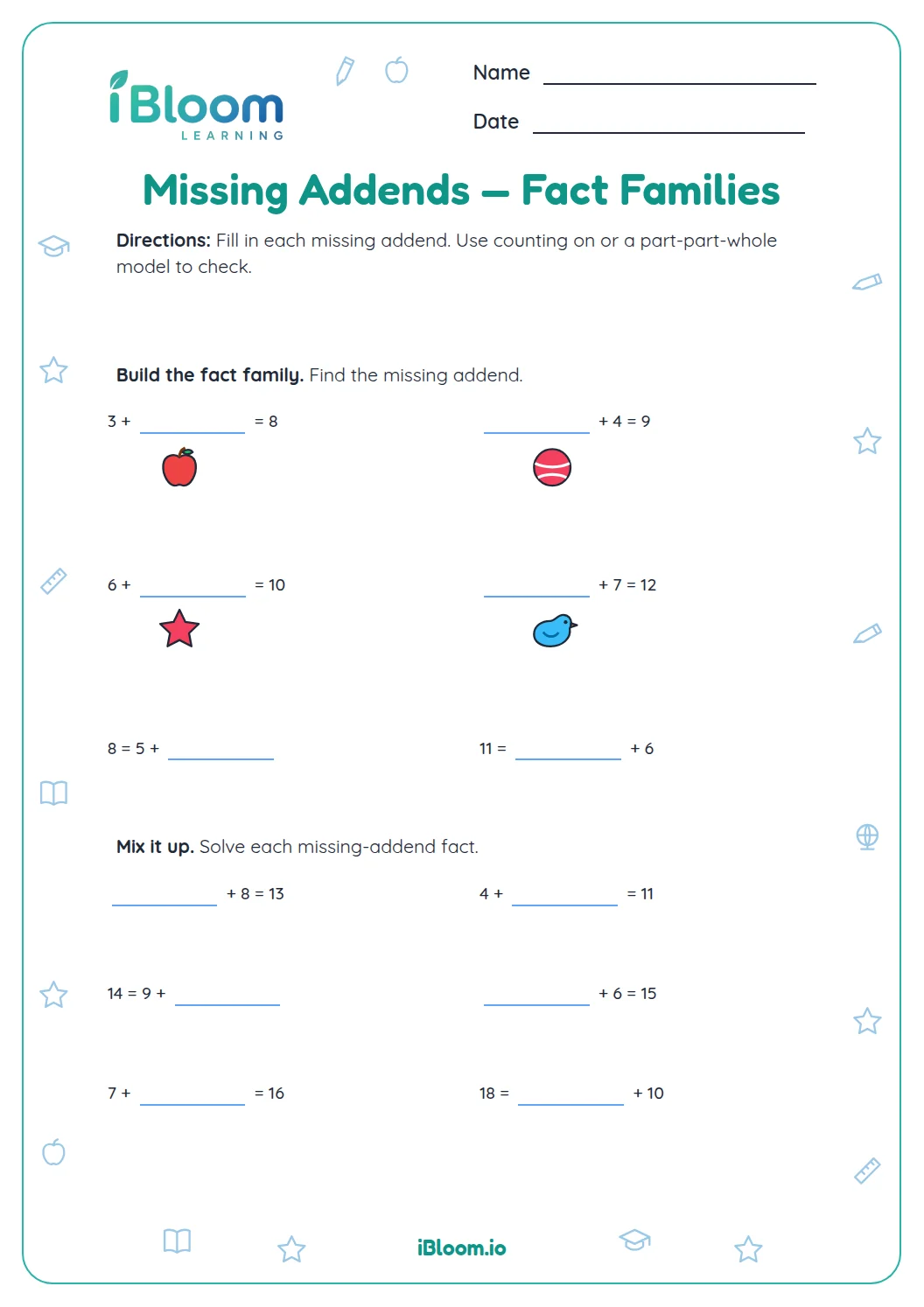
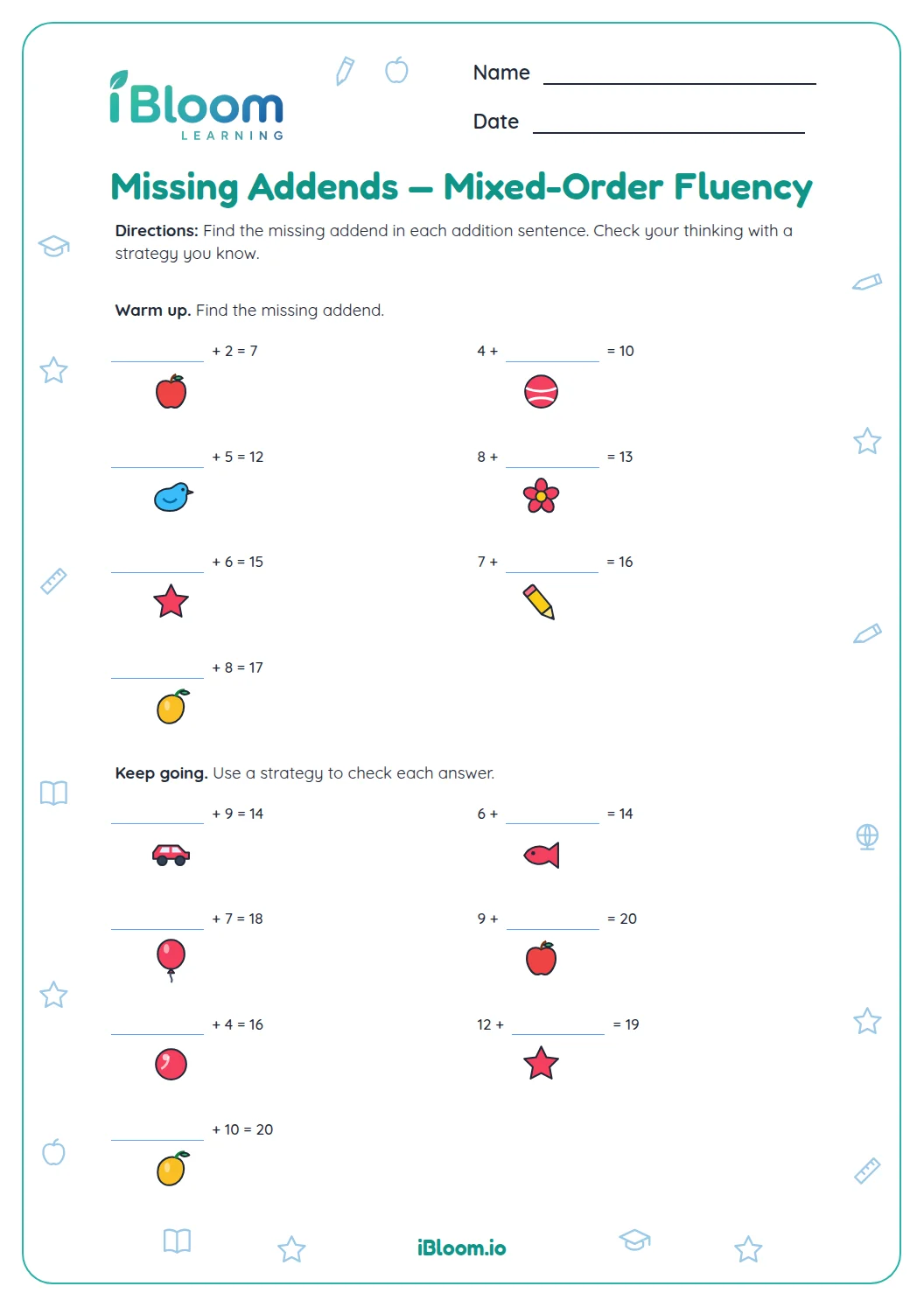
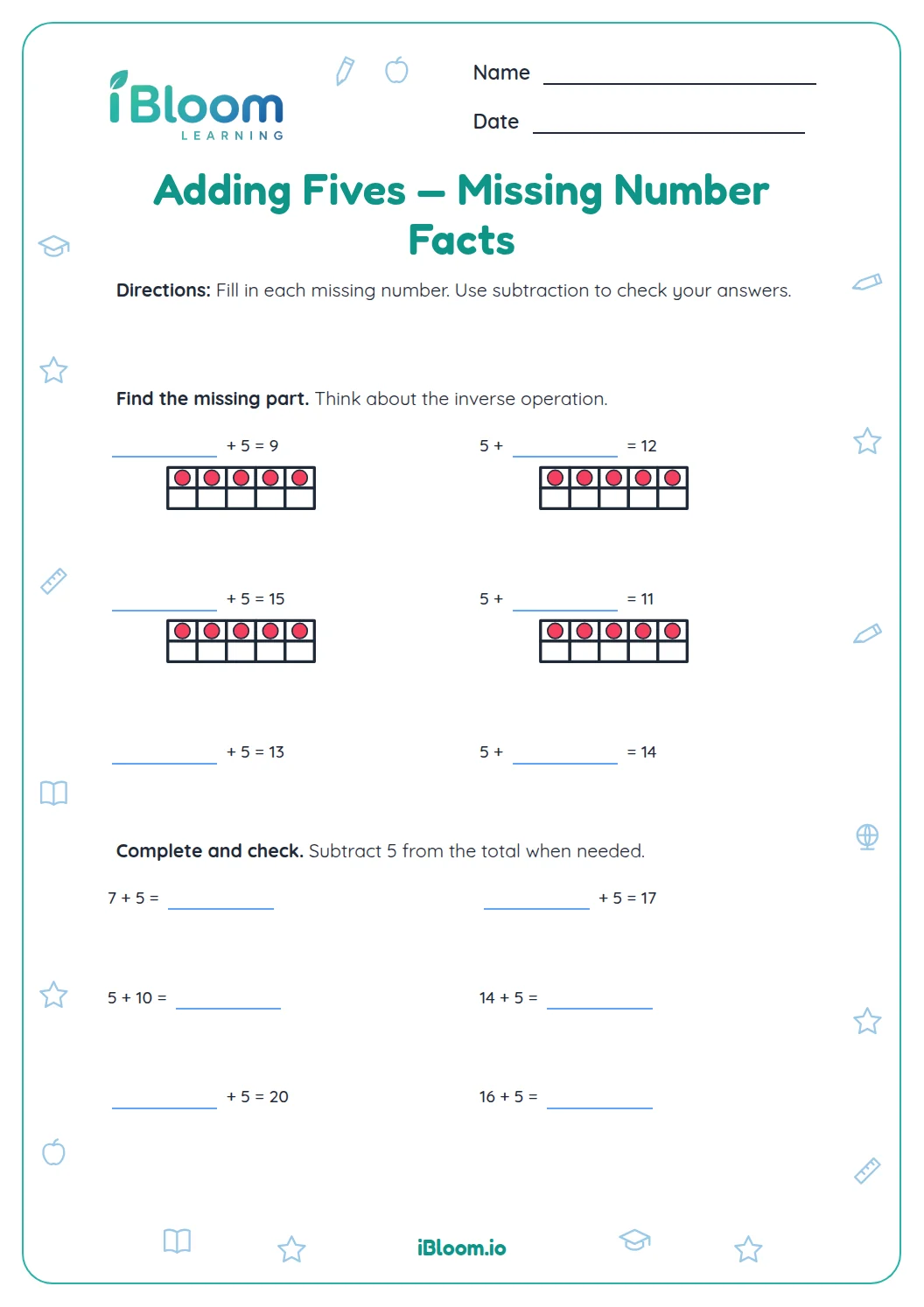
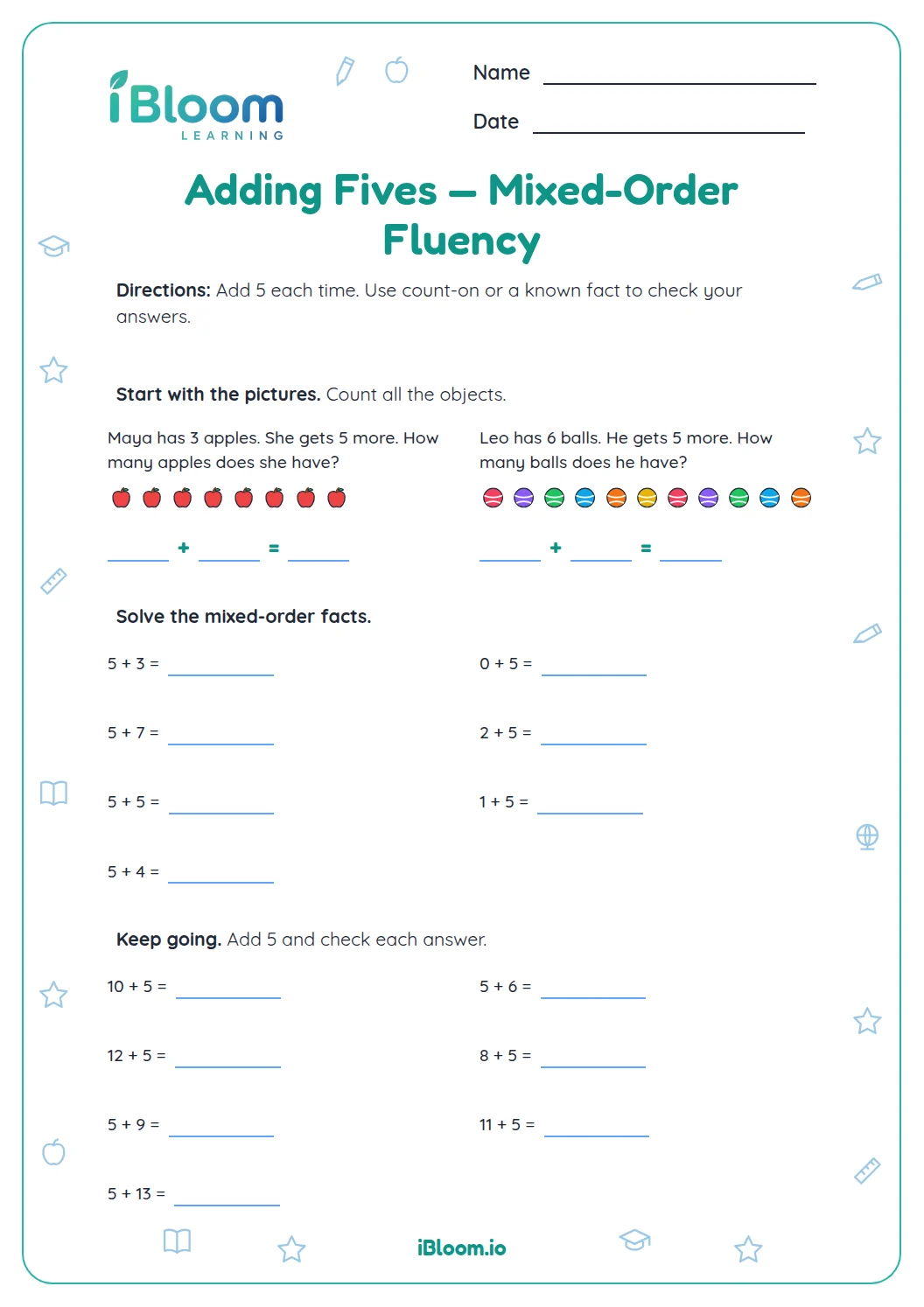
This free printable Grade 2 worksheet gives students 20 ordered facts adding 10 to numbers 0 through 19. Every student item prints both addends in a horizontal number sentence, so the needed numbers are on the page; the separate answer key lists the checked sums. Students can solve by recalling a fact or using a mental strategy. The two-page practice keeps the focus on these facts and their sums. It supports Common Core 2.NBT.B.5 through the addition skill practiced here.
Aligned to 2.NBT.B.5
What facts will students solve?
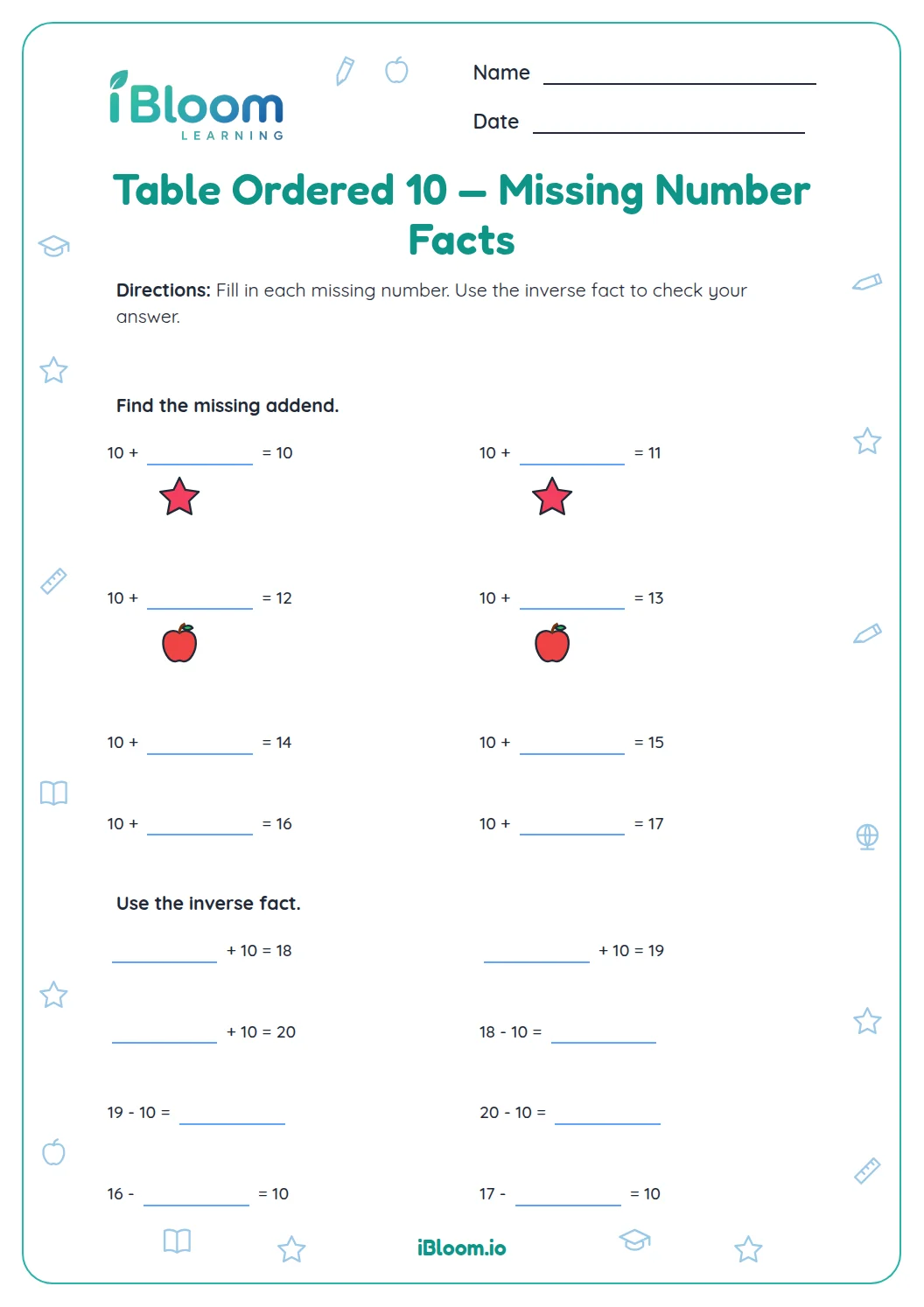
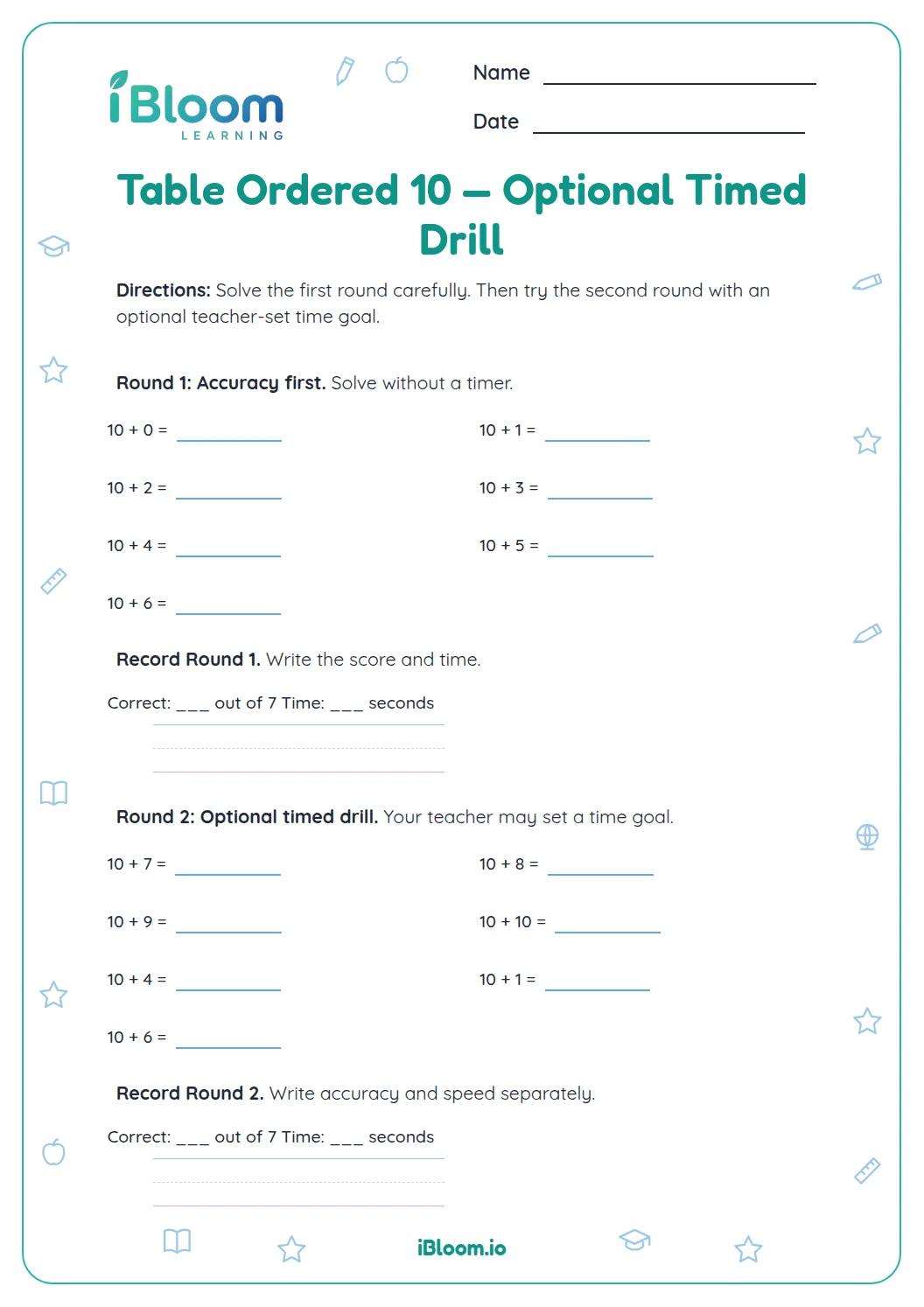
The sheet has 20 printed addition facts in two parts: eight questions in Part A and twelve in Part B. It practices 20 ordered facts adding 10 to numbers 0 through 19; each equation gives the student both addends and one blank for the sum.
The first question is 10 + 0 = ___. Its sum is 10. In 10 + 0, one ten plus zero ones makes 10; 10 + 1 makes 11. The key uses the same question numbers as the student page.
How can students find each sum?
Read both addends before writing. For this sheet, In 10 + 0, one ten plus zero ones makes 10; 10 + 1 makes 11. Students may also recall the fact directly, then check that the sum makes the printed equation true.
Adding 10 means adding one ten. In the ordered list, the ones value stays the same while the total increases by one ten for each new item.
How can families use the page?
Work through the equations at a comfortable pace, then use the numbered key to find any facts to revisit. A student can explain one strategy aloud before trying another item.
The student pages show every equation, and the separate two-page key gives a sum for each numbered question.
How to use this worksheet
- 1Read the number being added to 10.
- 2Add one ten to that number.
- 3Write the sum in the blank.
- 4Check that the ones value stays the same.
- 5Use the numbered key to review the sequence.
Common mistakes and quick fixes
The mistake
Adding one instead of ten.
The fix
Add a full ten to the number in each equation.
The mistake
Changing the ones value.
The fix
Adding 10 changes the tens value and keeps the ones value.
The mistake
Skipping a number in the ordered sequence.
The fix
Check that the second addend increases by one each row.
This practice develops addition fact fluency and mental strategies.
Adding 10 increases the tens value by one.
On this sheet:
Show the official wordingHide the official wording
Fluently add and subtract within 100 using strategies based on place value, properties of operations, and/or the relationship between addition and subtraction.
What to practice next
Make more practice
Further reading
Questions parents and teachers ask
What does the student write for each problem?
Each equation prints both addends and an equals sign on the student sheet. The student writes the sum in the single blank, then compares it with the matching question in the separate answer key. No numbers need to be copied from the key to make the problems solvable.
How many addition facts are included?
There are 20 questions in two parts: eight facts in Part A and twelve in Part B. Every question shows its addends, and the answer key follows the same numbering. Students can pause between parts, check completed work, and return to any facts that need another look.
Does this worksheet use a timer?
No timer is required for this worksheet. Students can solve each printed fact at a comfortable pace, then use the separate answer key to check their sums. A teacher or family may revisit selected facts later without changing the order of the questions.
What strategy can help with a fact?
A student can recall a known sum or count on from one addend. For example, 10 + 0 has a sum of 10. In 10 + 0, one ten plus zero ones makes 10; 10 + 1 makes 11. Once the student has a total, checking the equation confirms that the answer fits the printed addends.
Does the printable include an answer key?
Yes. The printable includes two student worksheet pages followed by two answer key pages. Each key answer is labeled with the same question number as its equation, so a parent or teacher can check the sums and find a missed fact without searching through an unlabeled list.