


About this worksheet
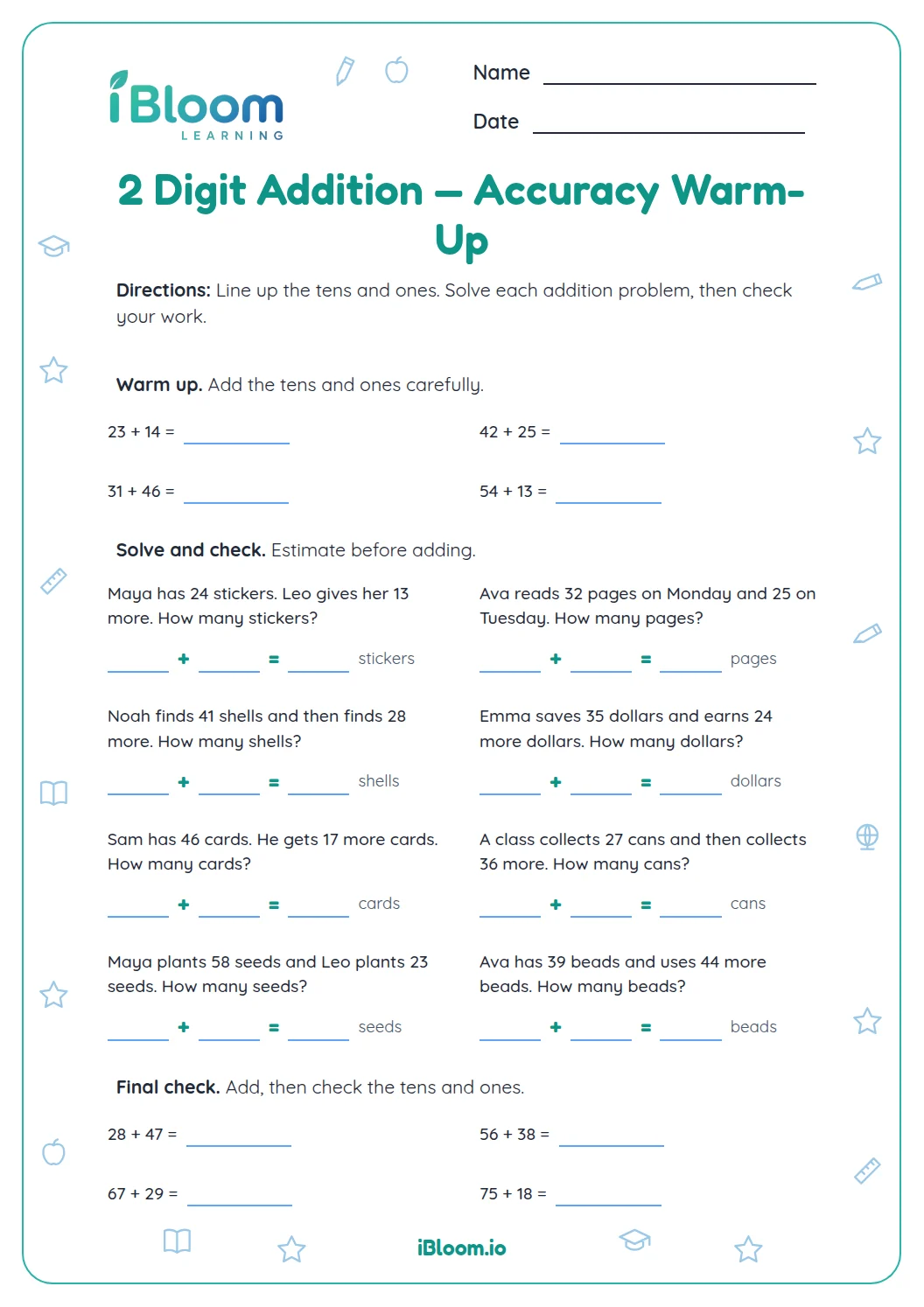
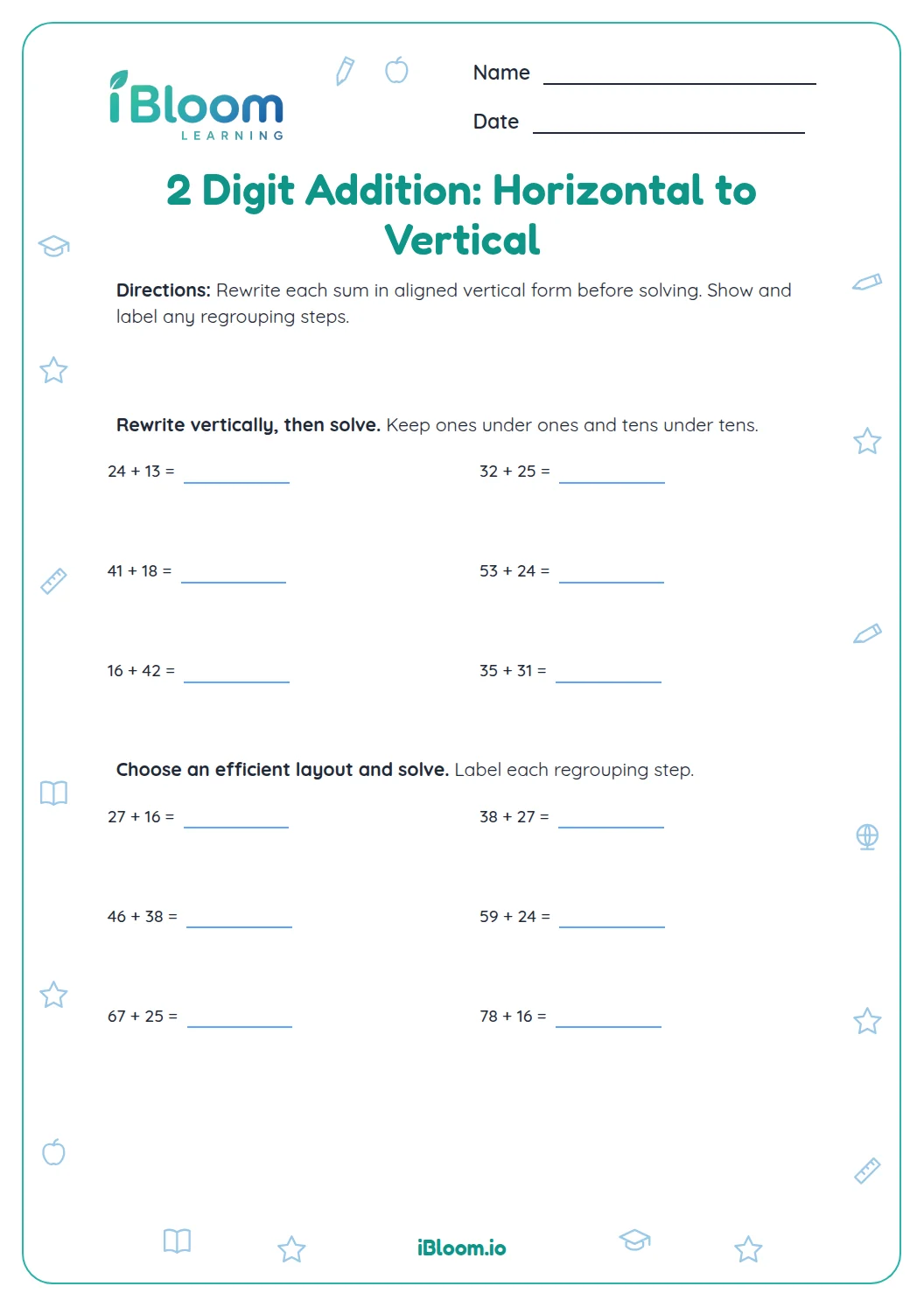
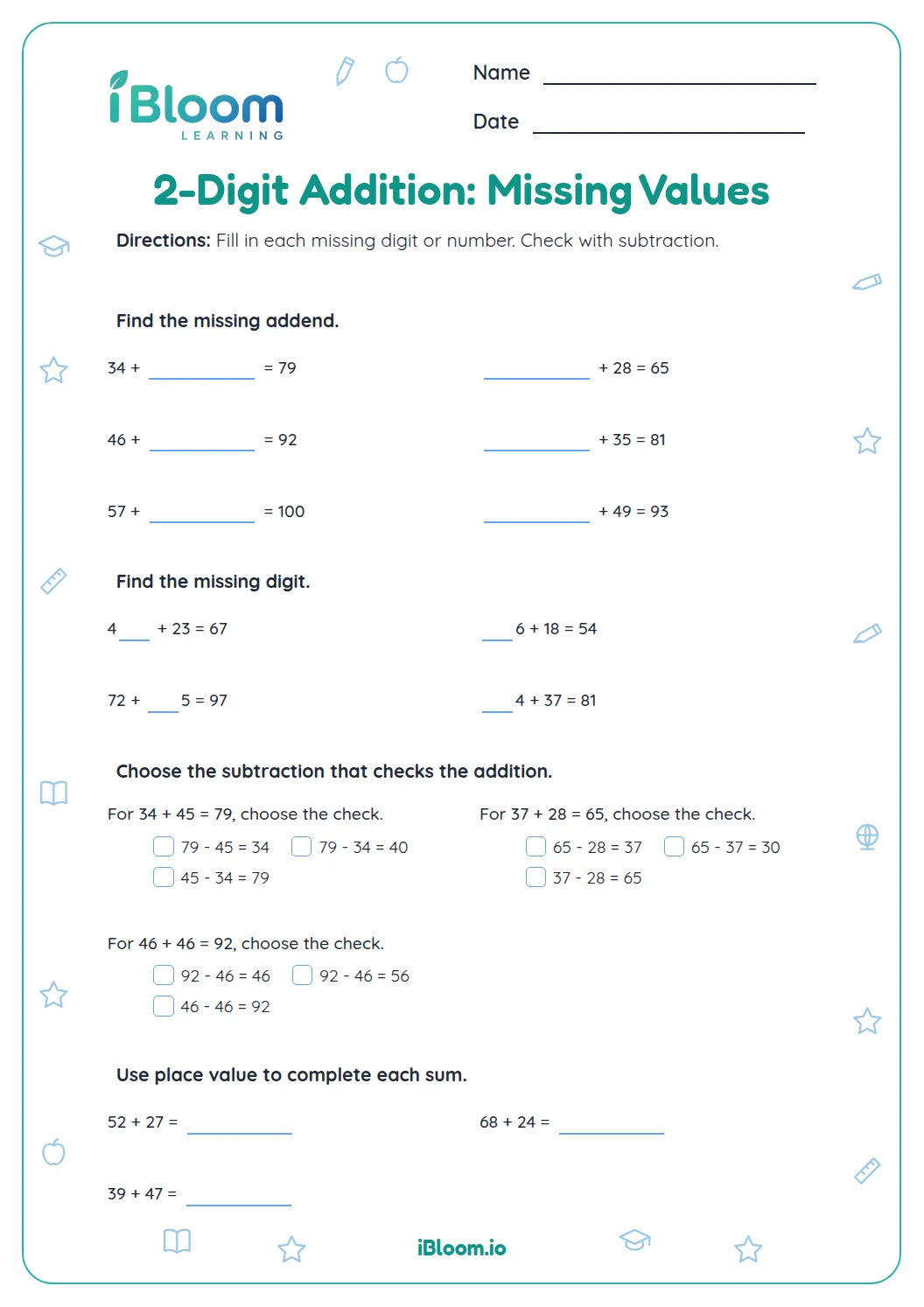
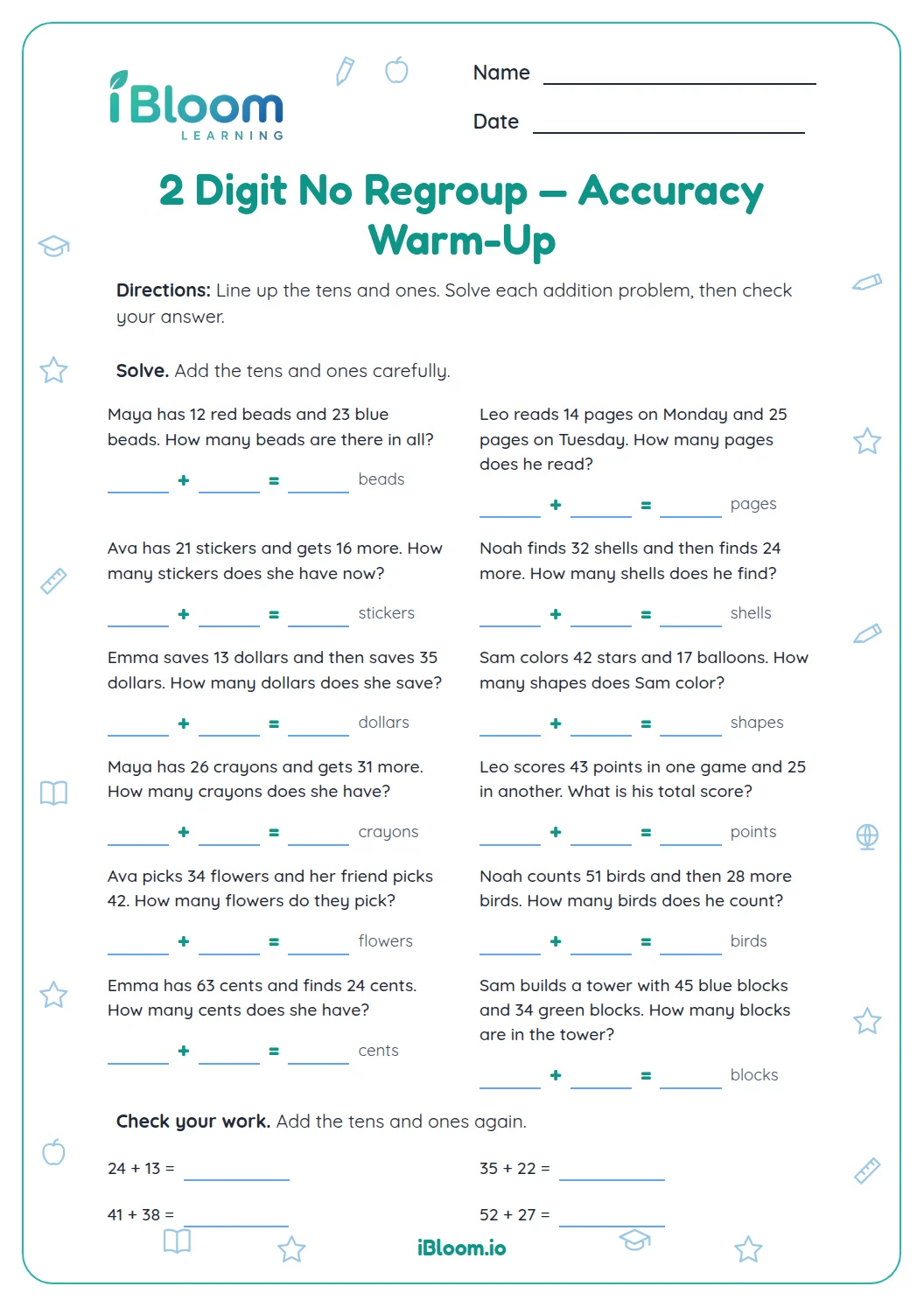
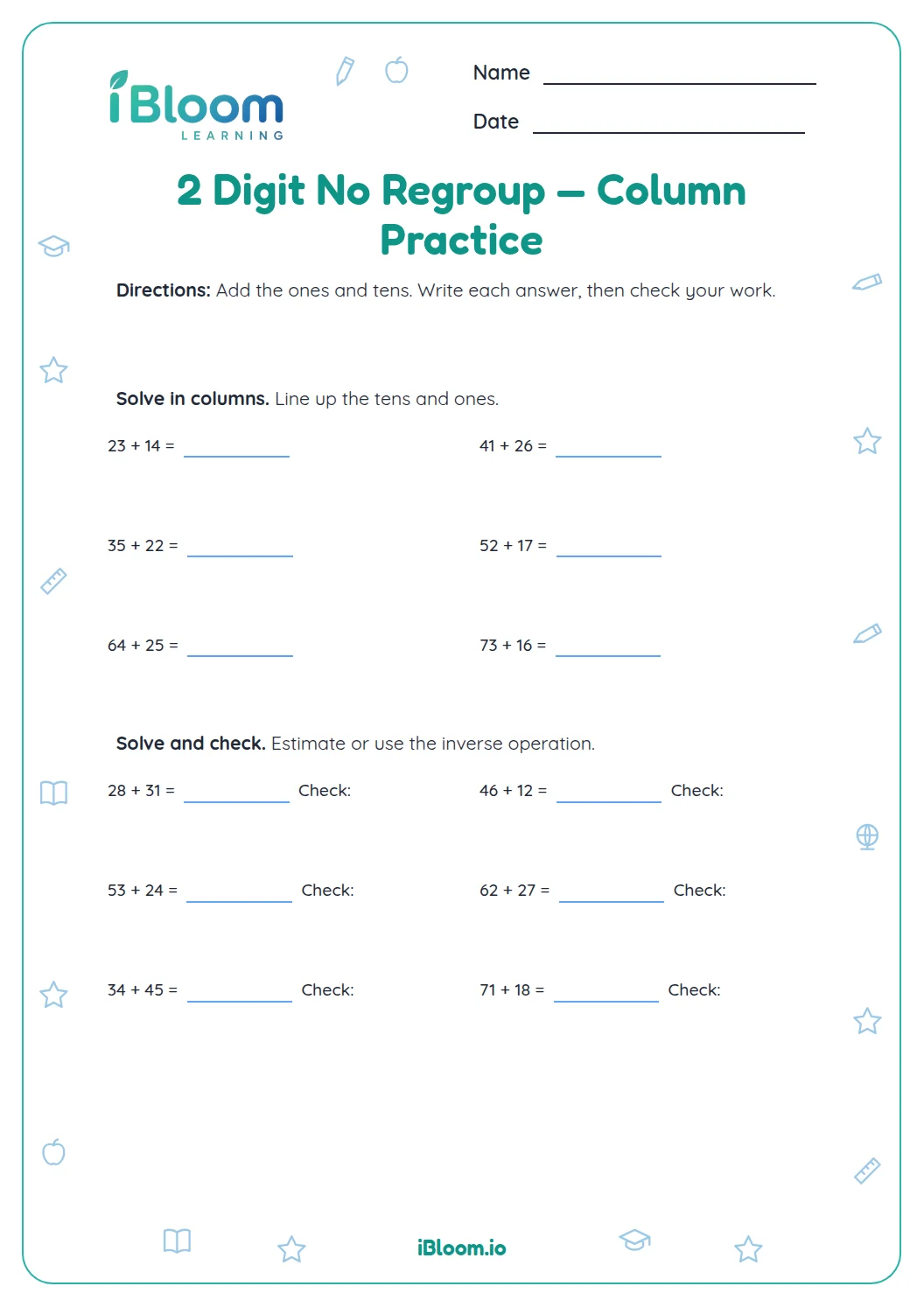
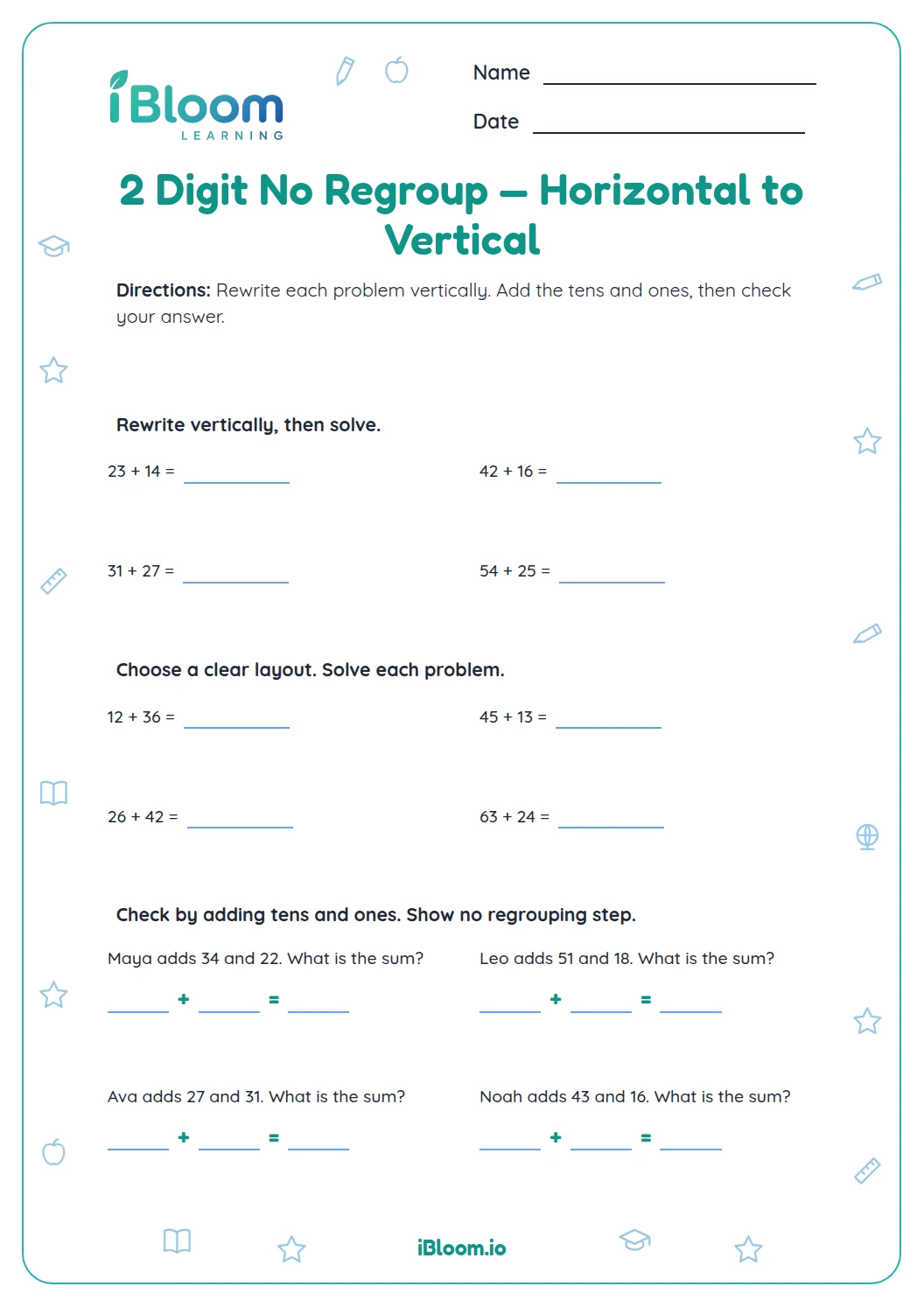
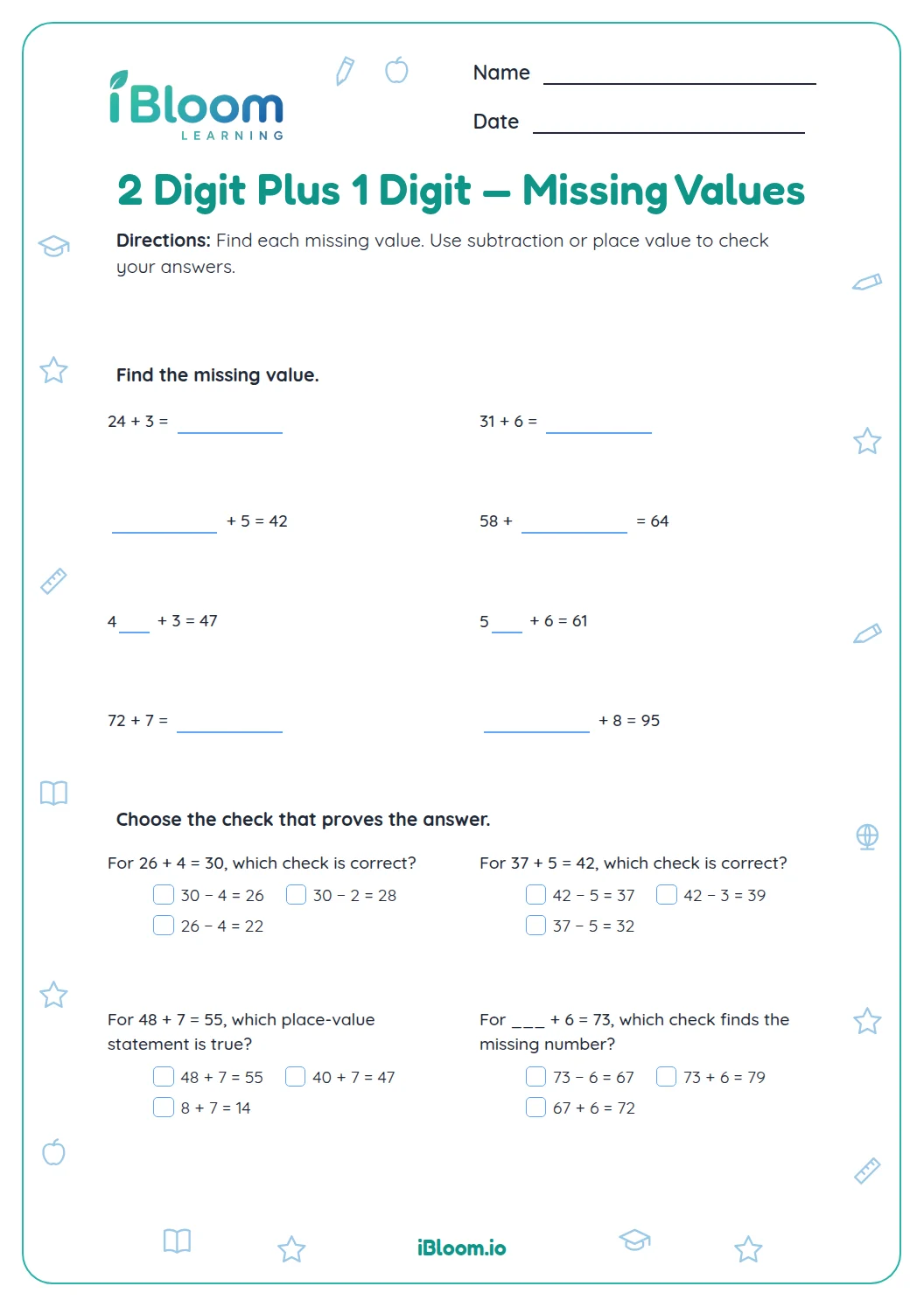
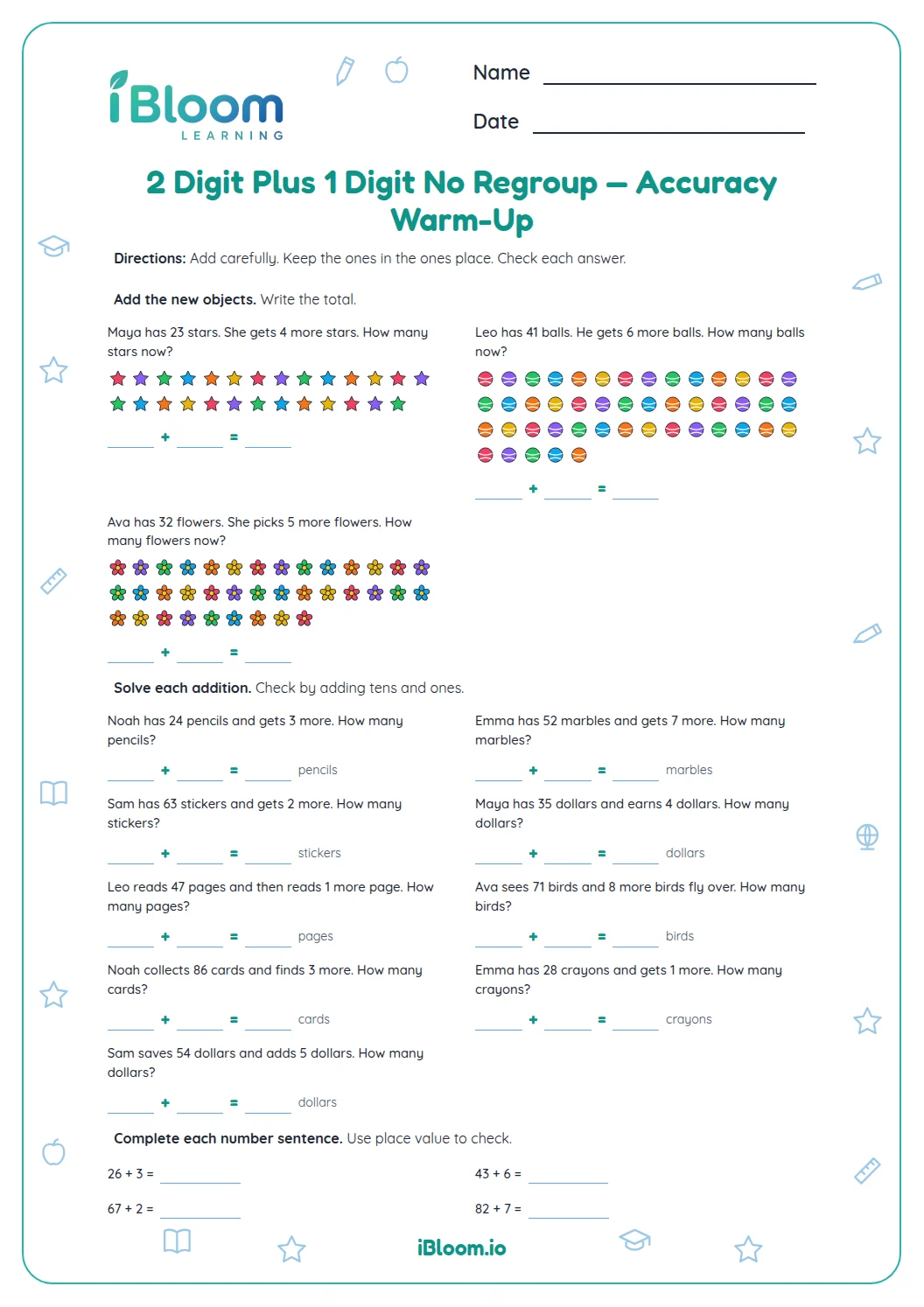
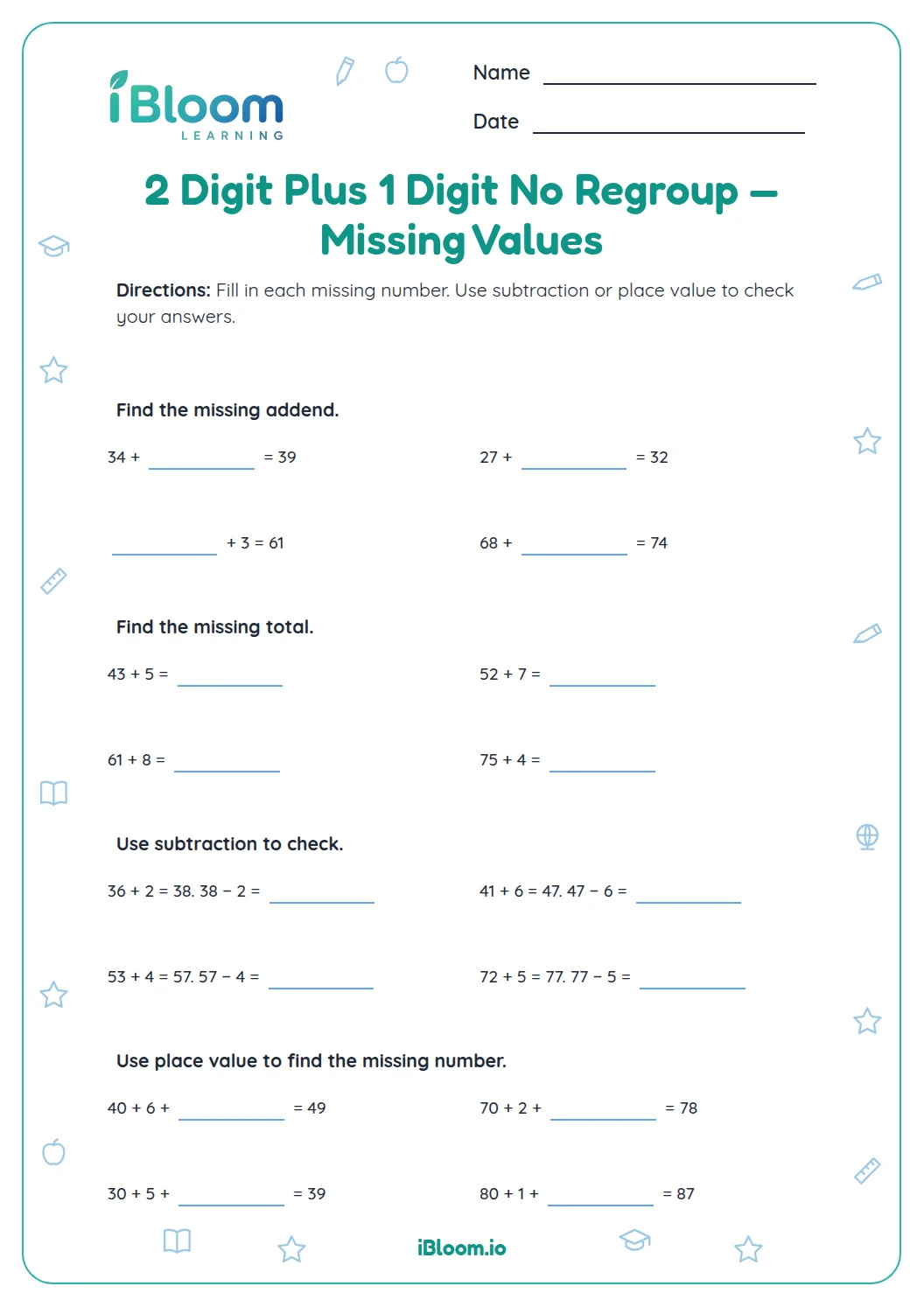
This Grade 2 column-practice sheet gives 20 two-digit addition problems with sums below 100. Students begin without regrouping, then regroup ones into tens; every printed problem includes both addends.
Aligned to 2.NBT.B.5
What will I practice?
Students first add two-digit numbers with no regrouping, then solve sums that cross a ten. Every addend is printed in the student problem, and each plus sign is explicit.
What is on this worksheet?
20 two-digit addition problems build from sums without regrouping to sums that require regrouping. All sums are under 100.
- Part A: 6 sums without regrouping
- Part B: 14 sums with regrouping
How to use this worksheet
- 1Read each plus sign, then line up the digits by place value.
- 2Add the ones first; regroup ten ones as one ten when needed.
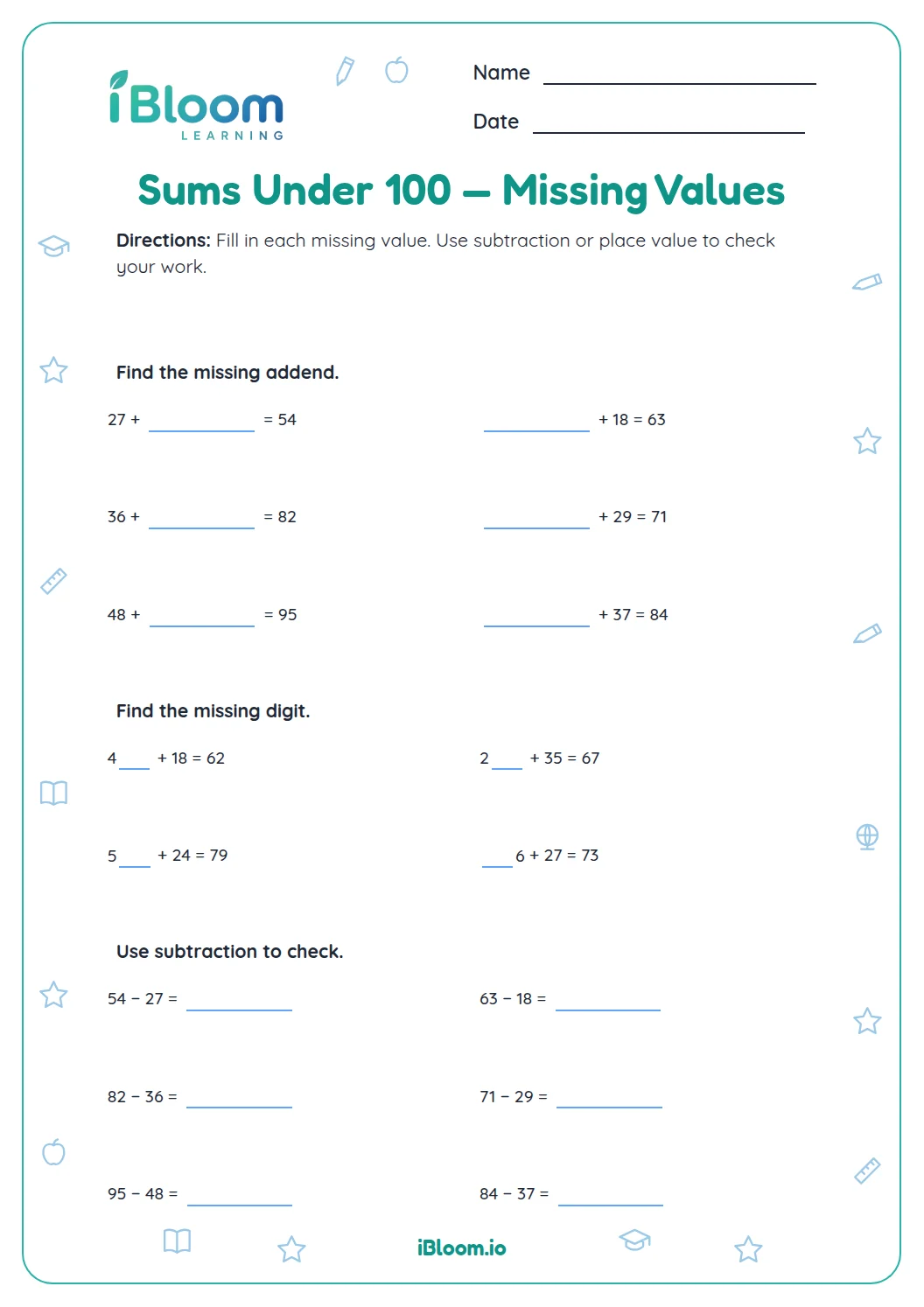
- 3Check each sum by subtracting one addend from it.
Check for these common slips
The mistake
Adding digits from different place-value columns.
The fix
Line up the ones and tens before adding.
The mistake
Forgetting to regroup when the ones total is 10 or more.
The fix
Trade ten ones for one ten, then add the tens.
The mistake
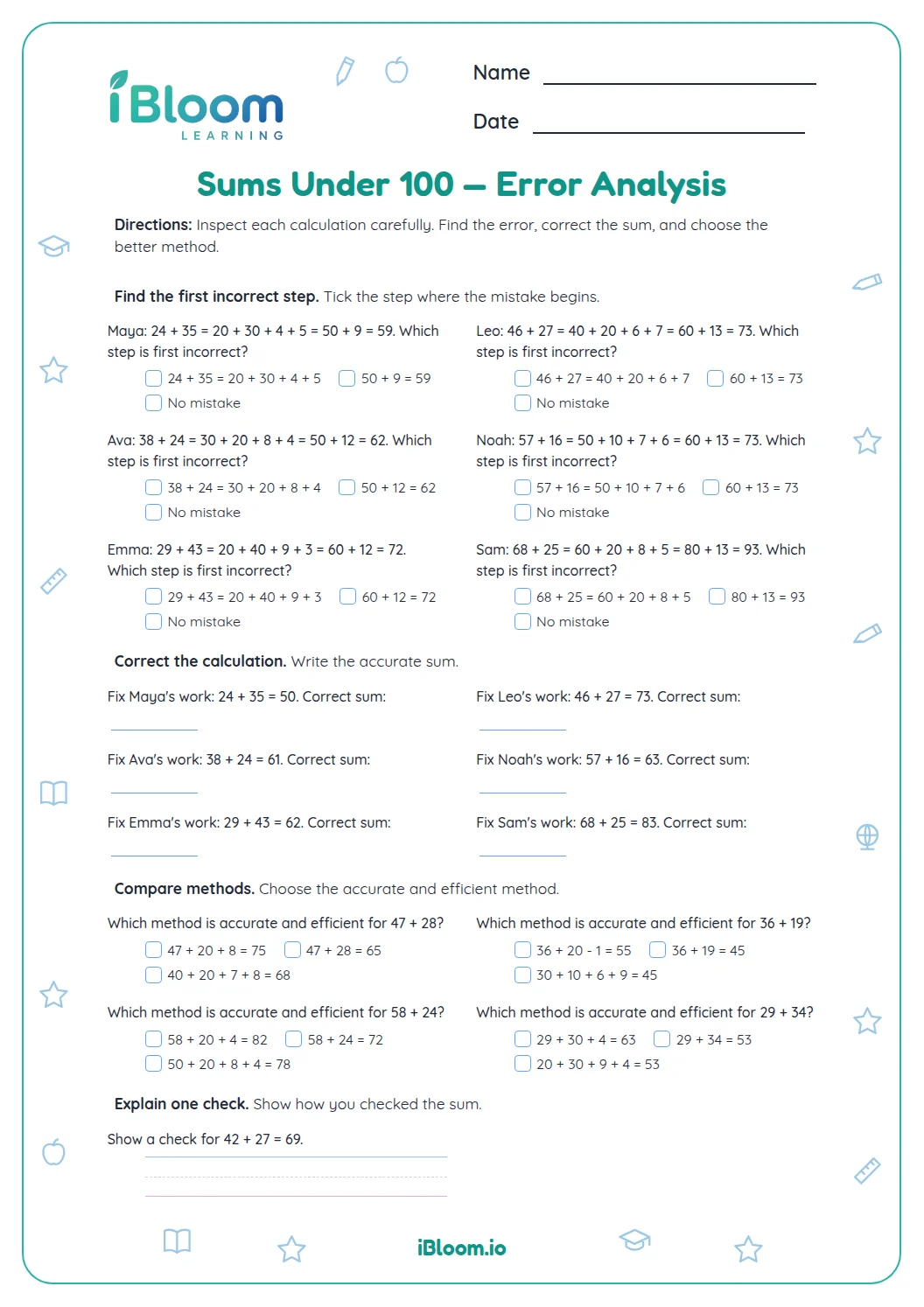
Copying a digit incorrectly into the sum.
The fix
Check by subtracting one addend from the answer.
Common Core alignment
This worksheet practices the Common Core math standard below.
Add within 100 using place-value strategies.
On this sheet: Every sum is within 100 and practices place-value addition.
Show the official wordingHide the official wording
Fluently add and subtract within 100 using strategies based on place value, properties of operations, and/or the relationship between addition and subtraction.
What to practice next
Make more practice
Further reading
Questions parents and teachers ask
How should students check addition?
Line up the ones and tens, add each column, and regroup ten ones as one ten when necessary. After finding a sum, subtract one addend as a check. The key lists the result for each printed problem, so students can compare their work after finishing.
How can students check a sum?
Subtract either addend from the sum. For example, 38 + 27 = 65 can be checked with 65 − 27 = 38. If the subtraction returns the other addend, the addition is consistent. The worksheet key gives the final sums for all 20 printed problems.
When does a problem need regrouping?
Regroup when the digits in one place total ten or more. For example, 38 + 27 gives 8 + 7 = 15 ones, so write 5 ones and carry 1 ten. The first six worksheet sums do not regroup; the remaining 14 do.
What is included with the printable?
The printable has student practice and a separate answer key. All 20 problems show both addends and the plus sign, so students can work directly from the sheet. Six sums come before the regrouping section, followed by 14 sums that require regrouping.