
About this worksheet
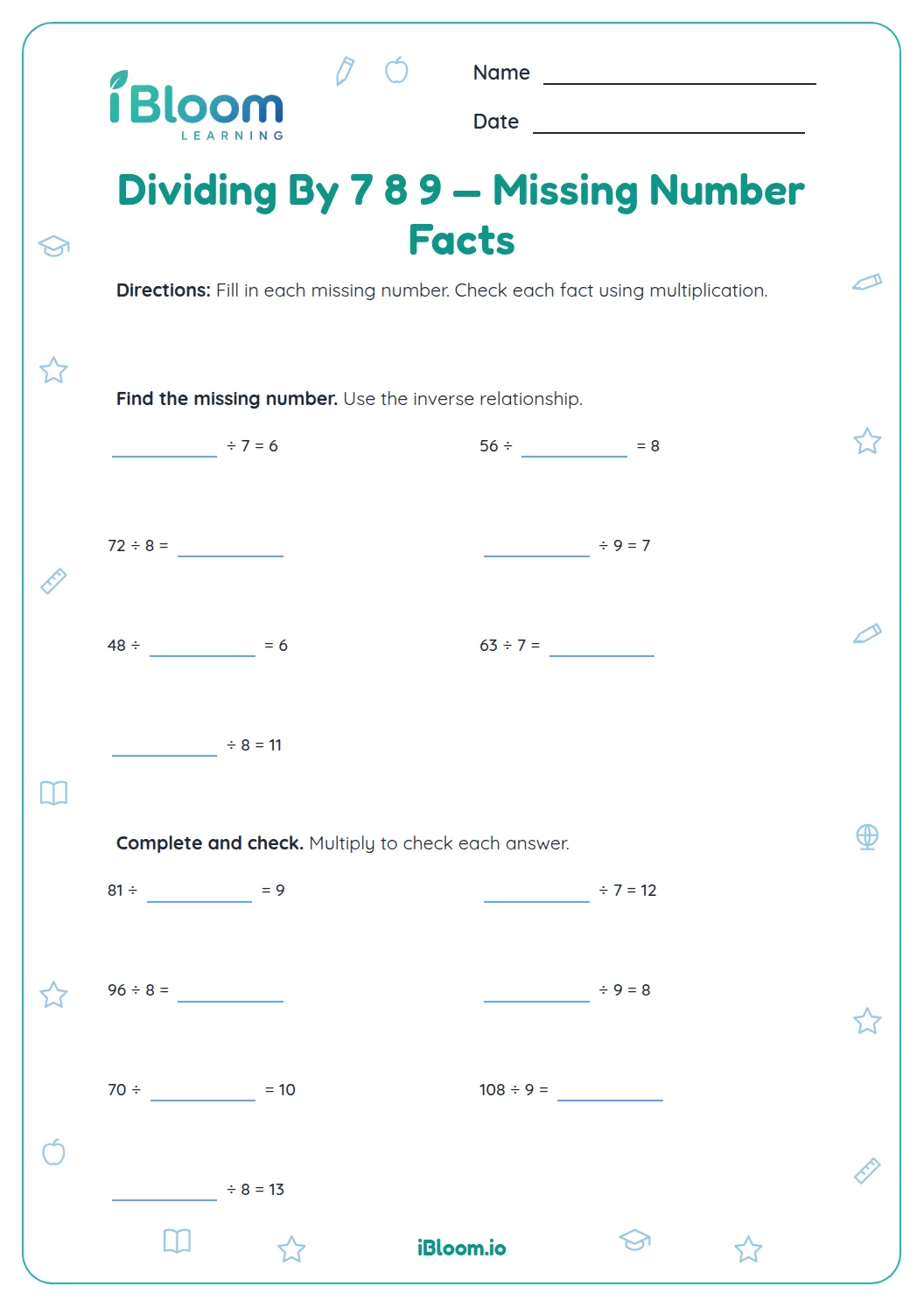
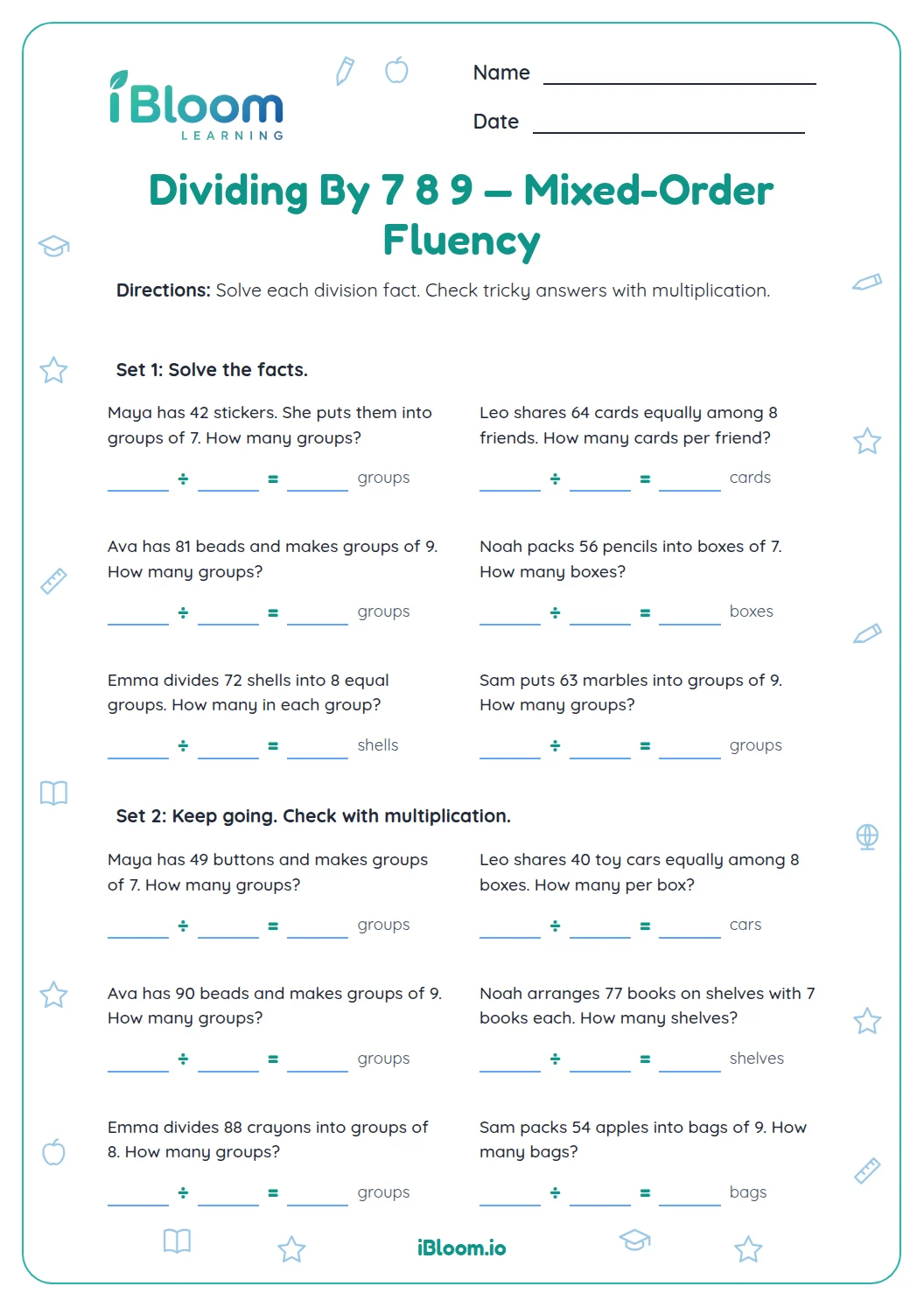
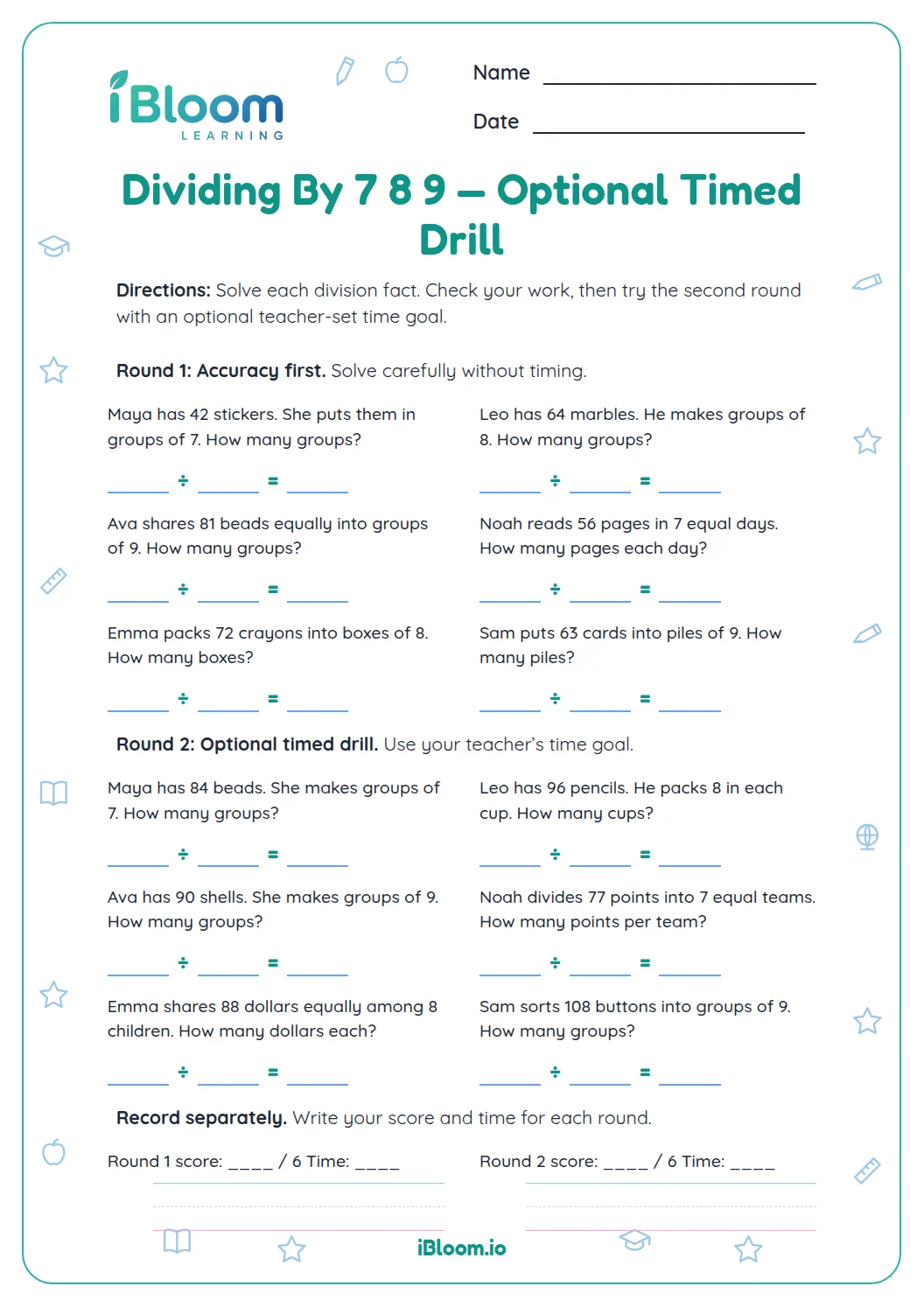
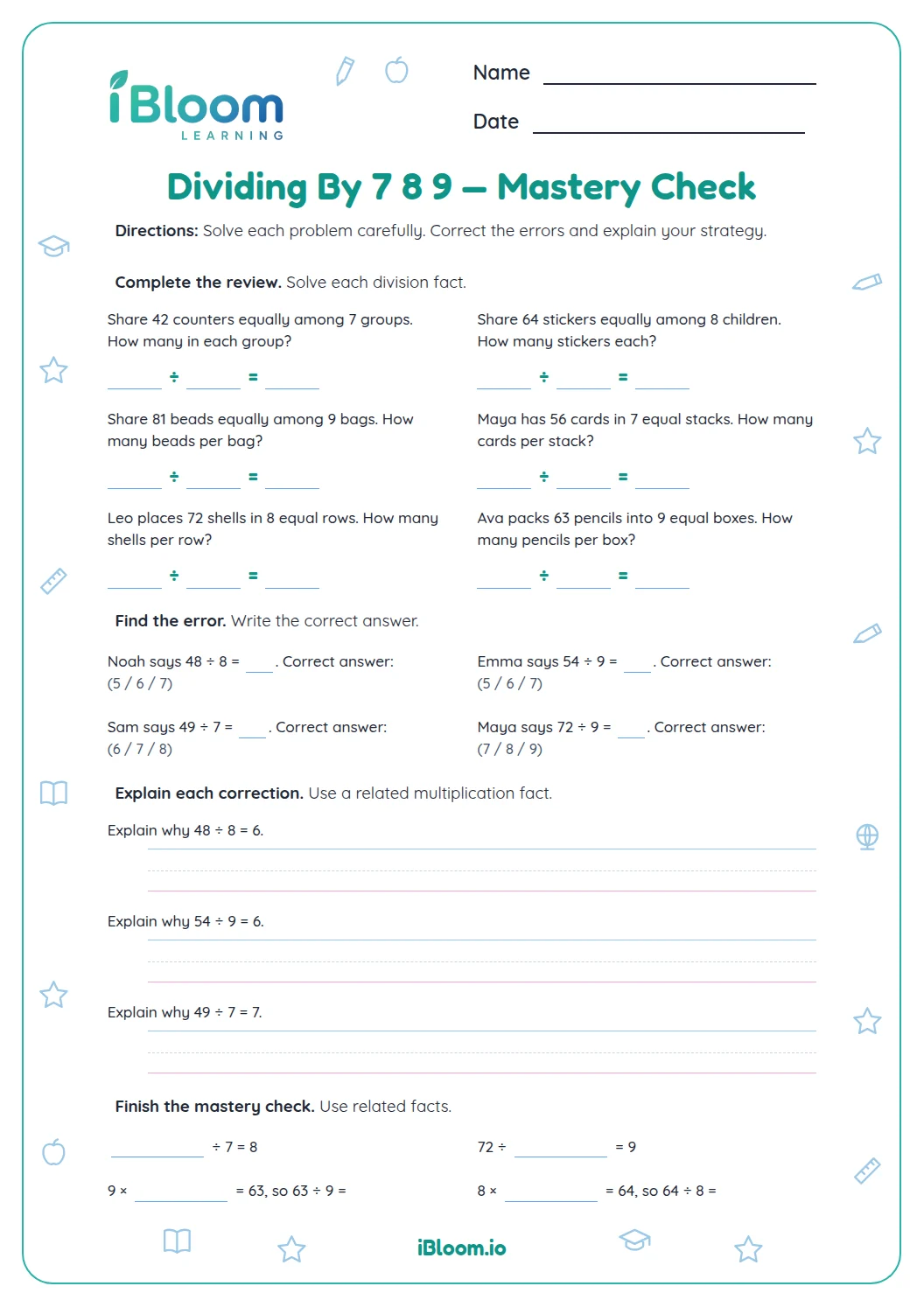
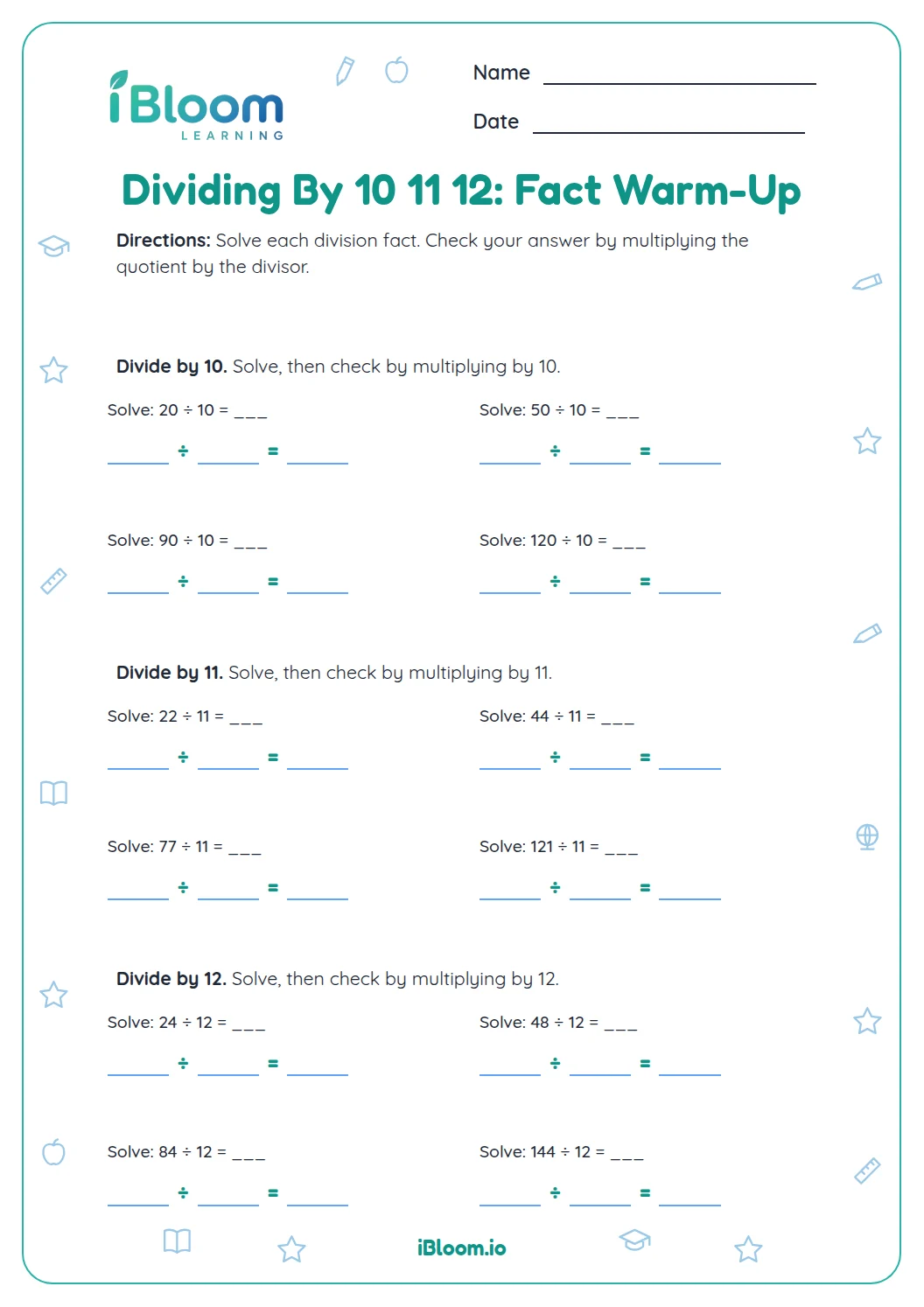
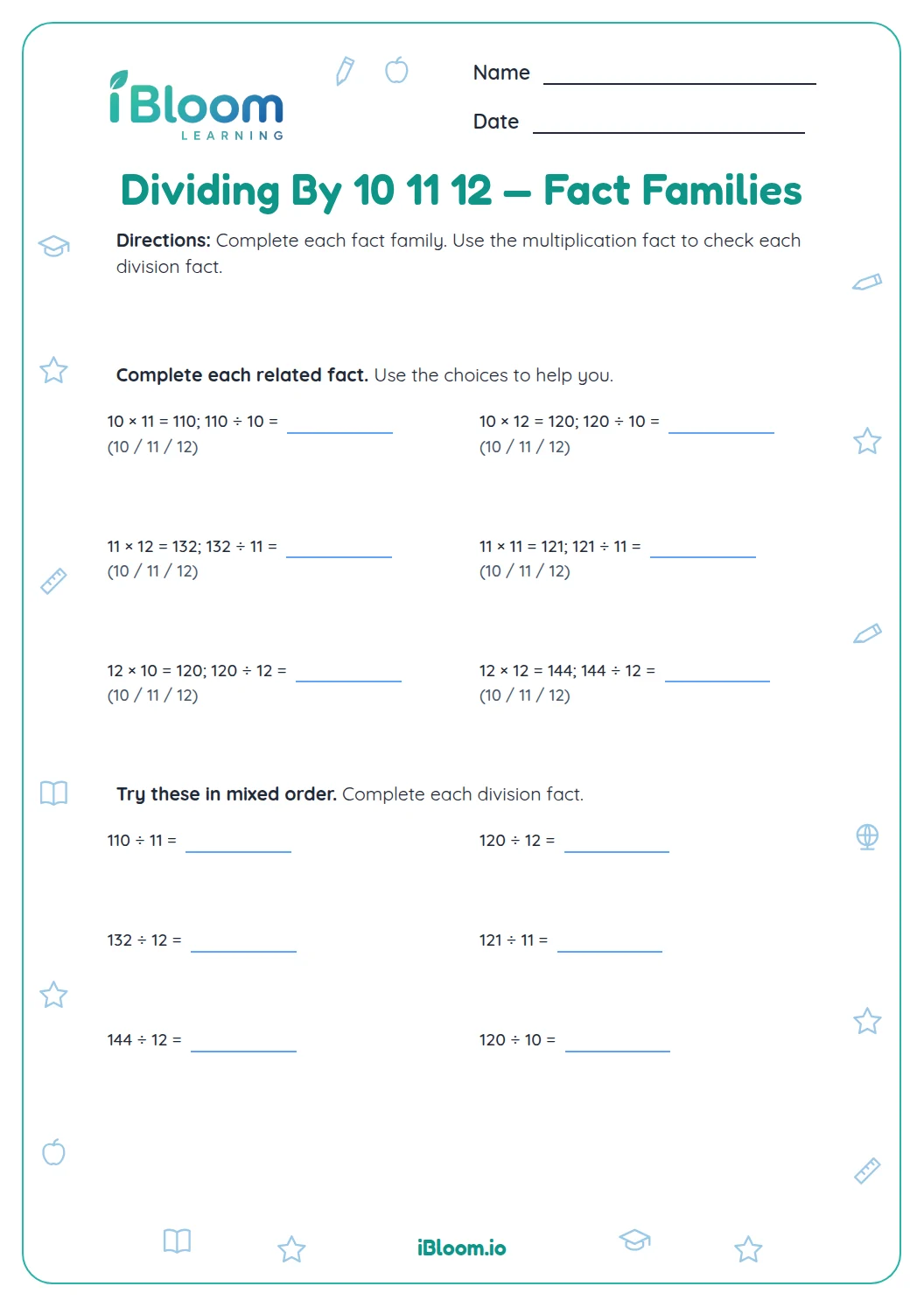
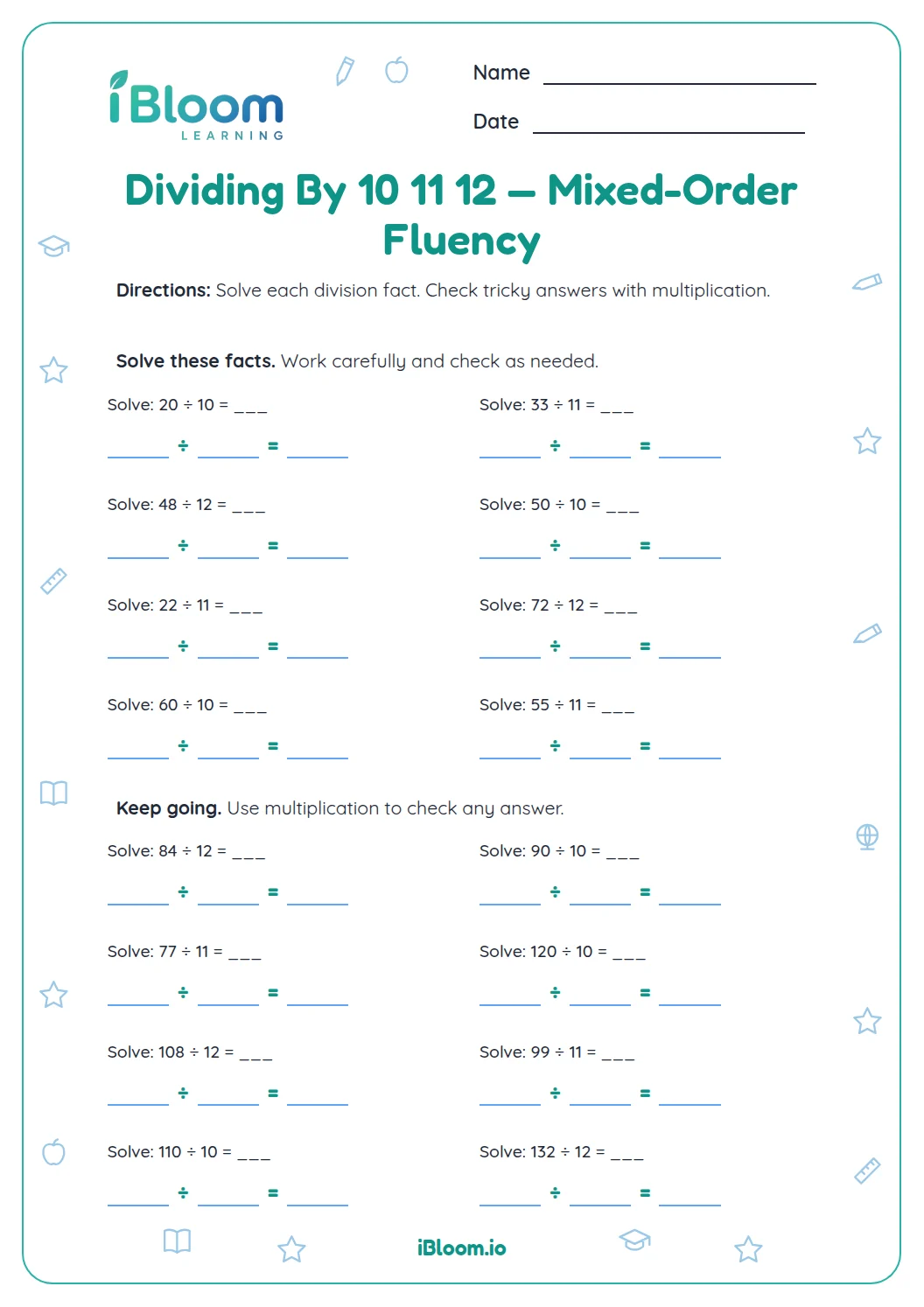
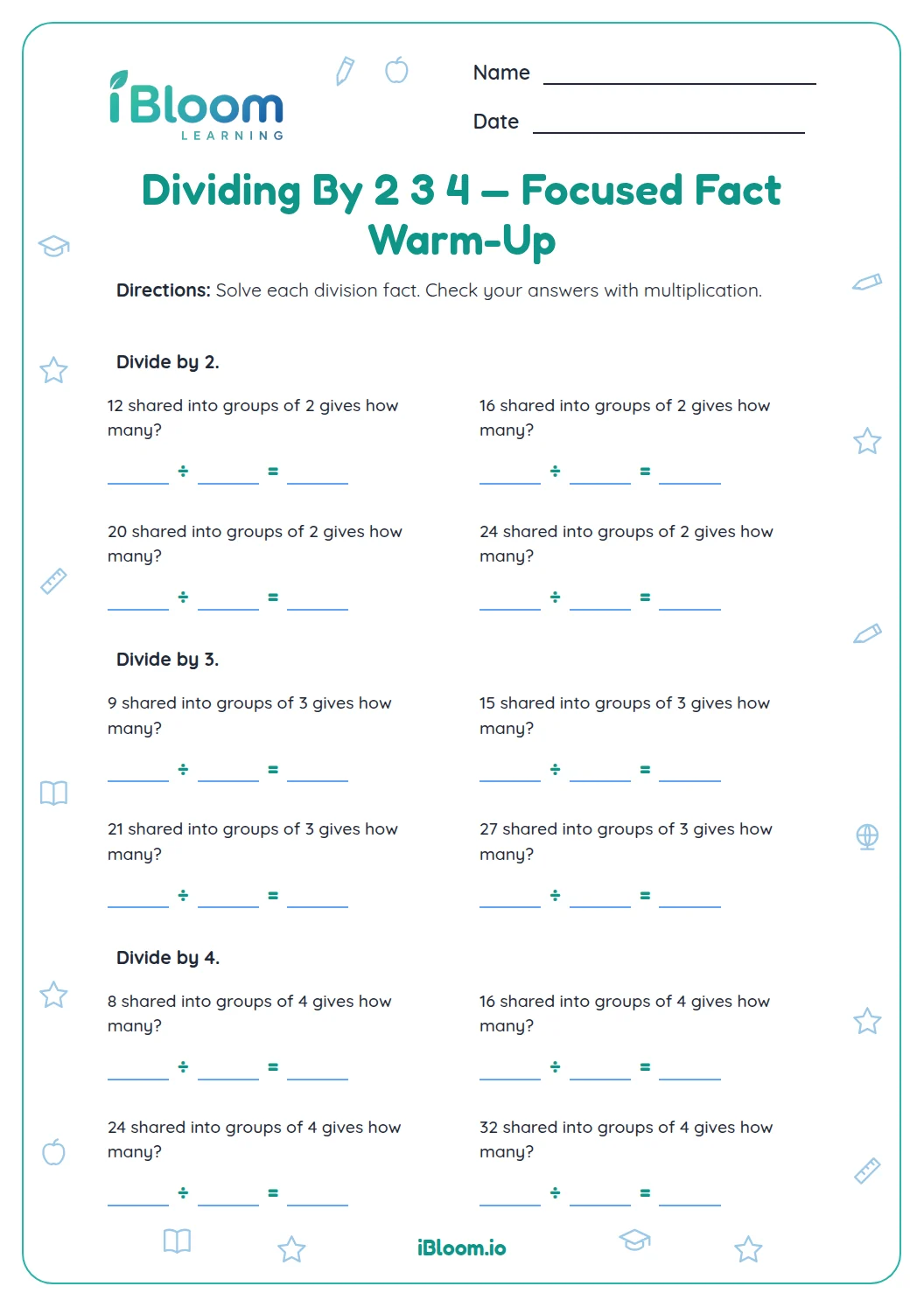
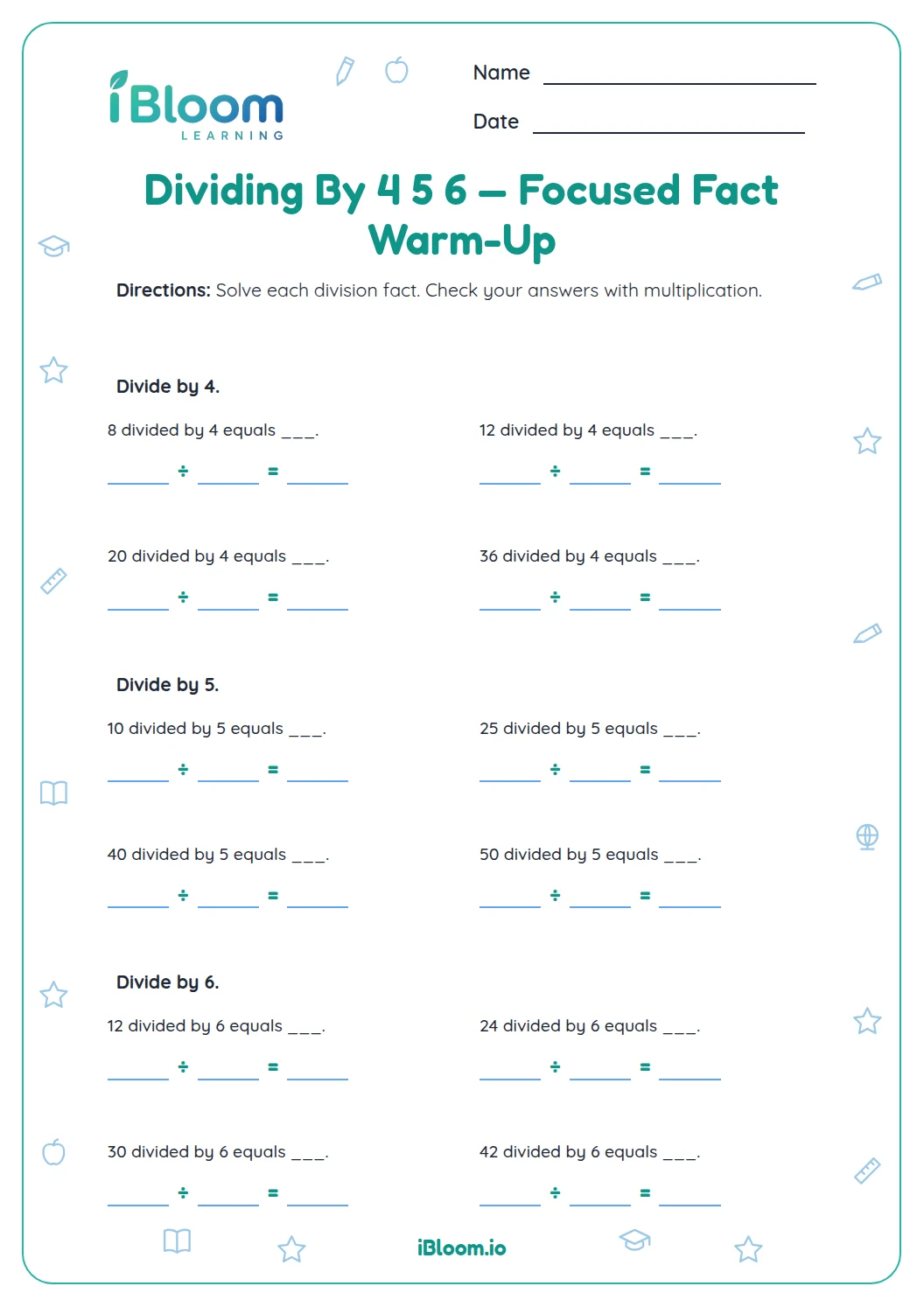
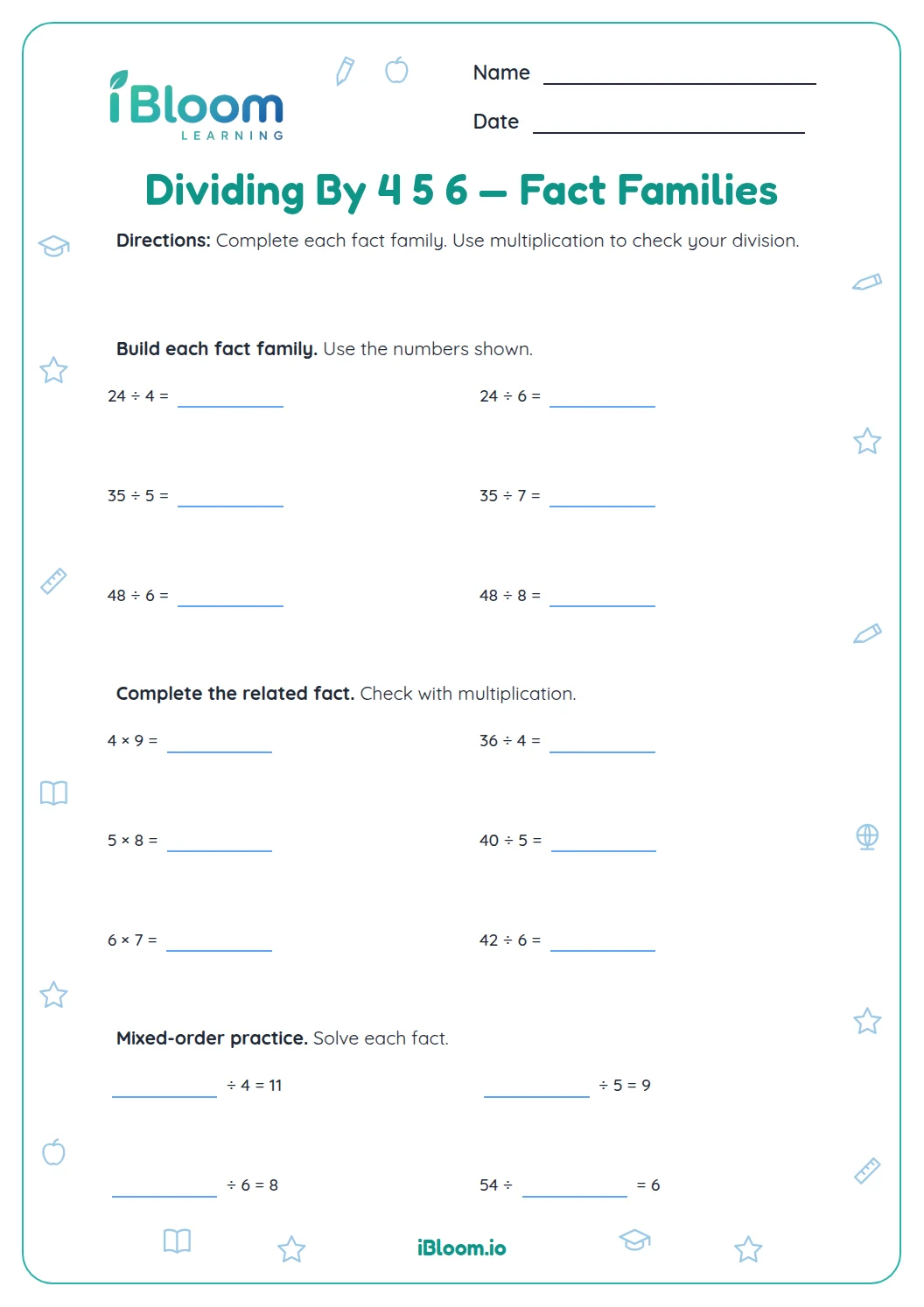
This Grade 3 warm-up gives 18 division facts for 7, 8, and 9 plus four related multiplication checks. Dividends stay within 100, and students can check each quotient by multiplying.
Aligned to 3.OA.C.7
What will I practice?
This focused warm-up gives students repeated practice dividing by 7, 8, and 9. Each number sentence is fully printed on the student page; students can check every quotient by multiplying it by the divisor.
What is on this worksheet?
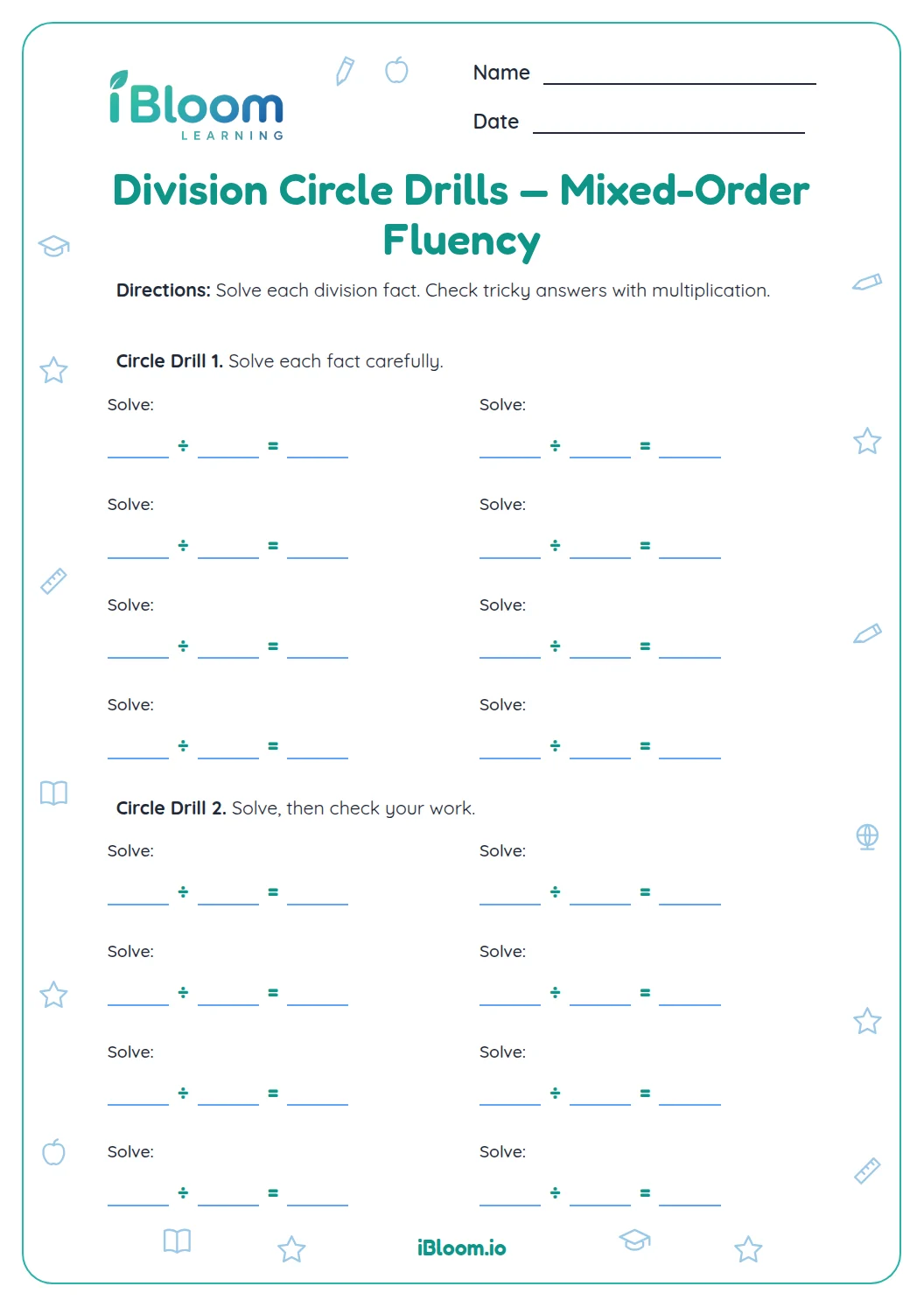
Twenty-two problems practice division facts for 7, 8, and 9, followed by four related multiplication checks.
- Part A: solve the division facts
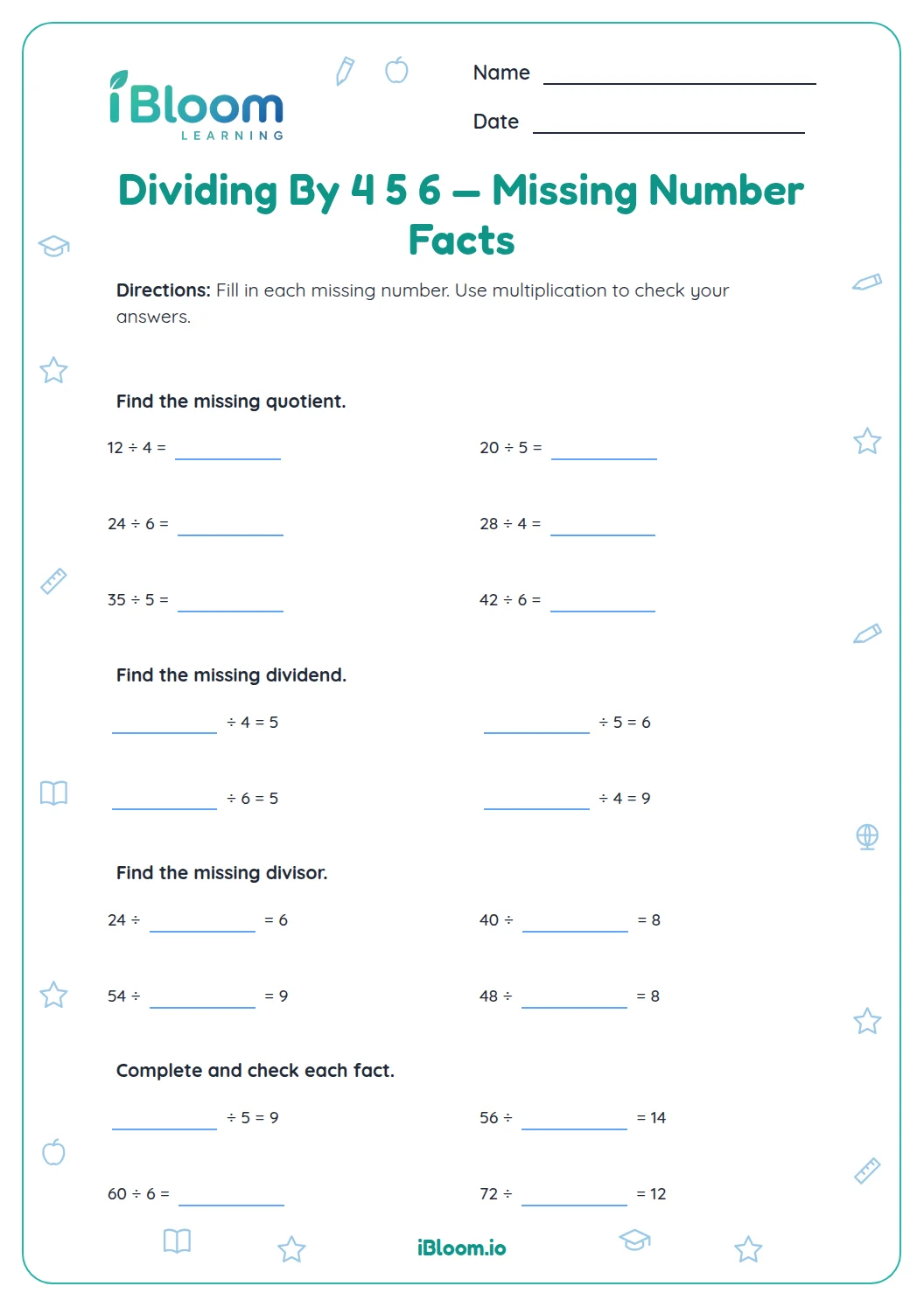
- Part B: find missing dividends and check with related multiplication
How to use this worksheet
- 1Read the dividend and divisor in each printed fact.
- 2Find the quotient, or use the given quotient to find a missing dividend.
- 3Check a quotient by multiplying it by the divisor.
Check for these common slips
The mistake
Mixing up the divisor and the quotient.
The fix
Use dividend ÷ divisor = quotient, then check with divisor × quotient.
The mistake
Using a multiplication fact with a different divisor.
The fix
Keep the printed divisor the same when checking.
The mistake
For a missing dividend, dividing instead of multiplying.
The fix
Multiply the divisor by the given quotient to recover the dividend.
Common Core alignment
This worksheet practices the Common Core math standard below.
Use related multiplication facts to solve division facts within 100.
On this sheet: Each printed fact divides within 100 and can be checked with the related multiplication fact.
Show the official wordingHide the official wording
Fluently multiply and divide within 100, using strategies such as the relationship between multiplication and division (e.g., knowing that 8 × 5 = 40, one knows 40 ÷ 5 = 8) or properties of operations. By the end of Grade 3, know from memory all products of two one-digit numbers.
What to practice next
Make more practice
Further reading
Questions parents and teachers ask
How can students check a division fact?
Multiply the quotient by the divisor. For example, if 56 ÷ 7 = 8, then 8 × 7 = 56, which checks the fact. For a missing-dividend problem, multiply the divisor by the given quotient to find the missing number. The key lists all worksheet answers.
How can a division answer be checked?
Use the related multiplication fact: divisor × quotient = dividend. For example, 63 ÷ 9 = 7 because 9 × 7 = 63. This check works for both a missing quotient and a missing dividend, provided you keep the divisor and quotient in their correct roles.
How can students check a division fact?
Multiply the quotient by the divisor. For example, if 56 ÷ 7 = 8, then 8 × 7 = 56, which checks the fact. For a missing-dividend problem, multiply the divisor by the given quotient to find the missing number. The key lists all worksheet answers.
What is included with the printable?
The printable contains 22 division and related multiplication problems on two student pages, followed by a separate answer key. Each item prints the known numbers and operation. The key lists the quotient, missing dividend, or product for every question.