






About this worksheet
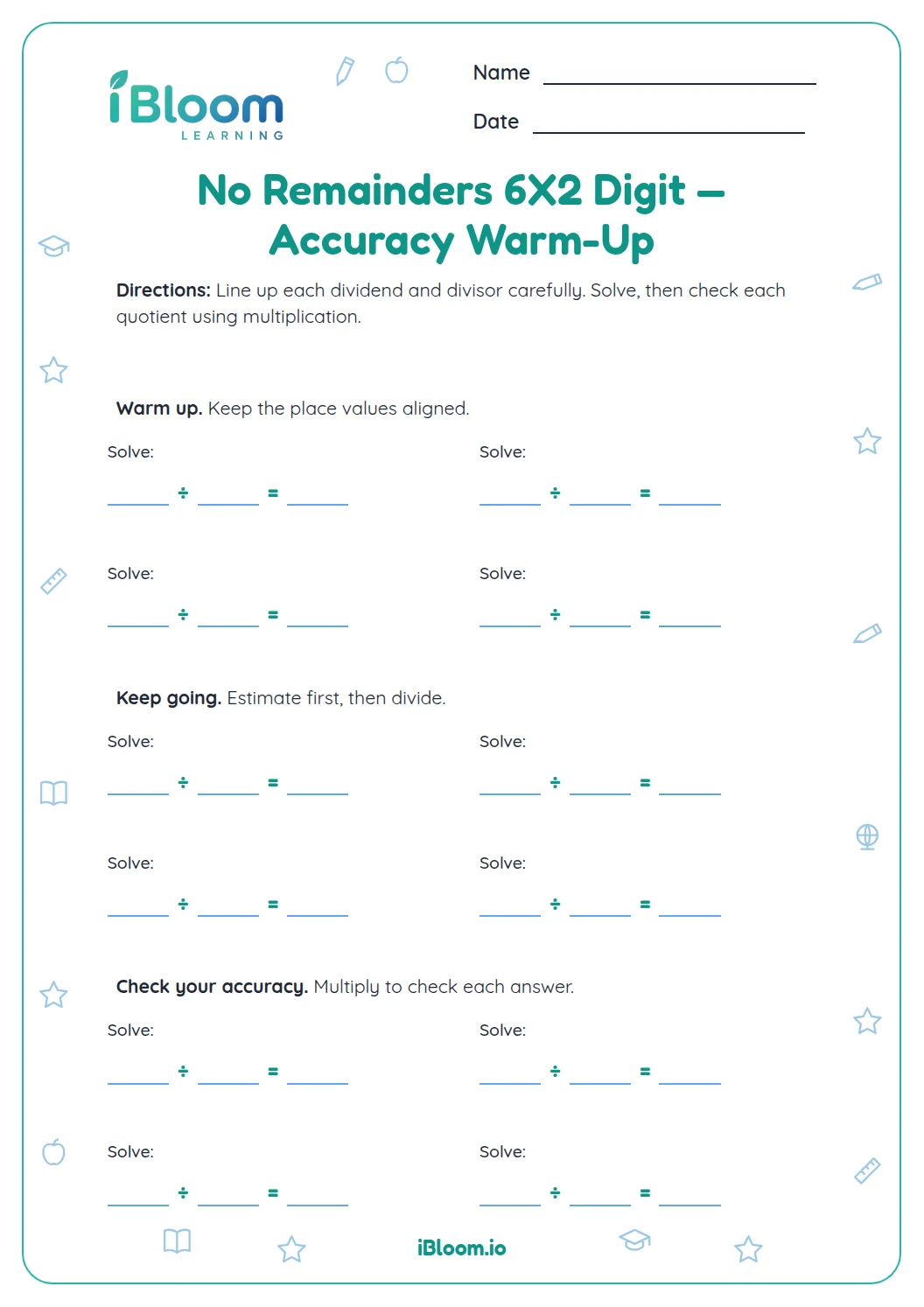
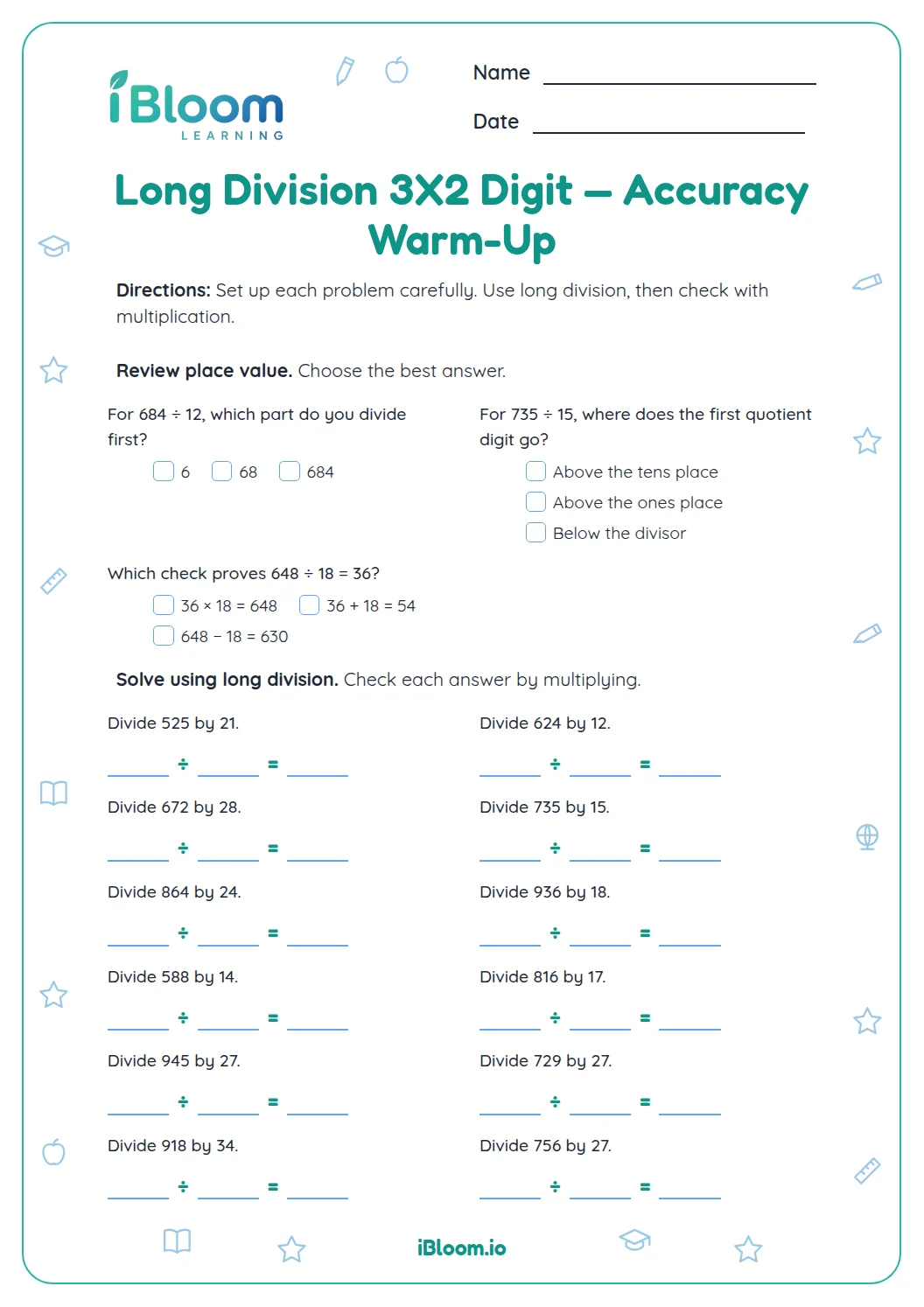
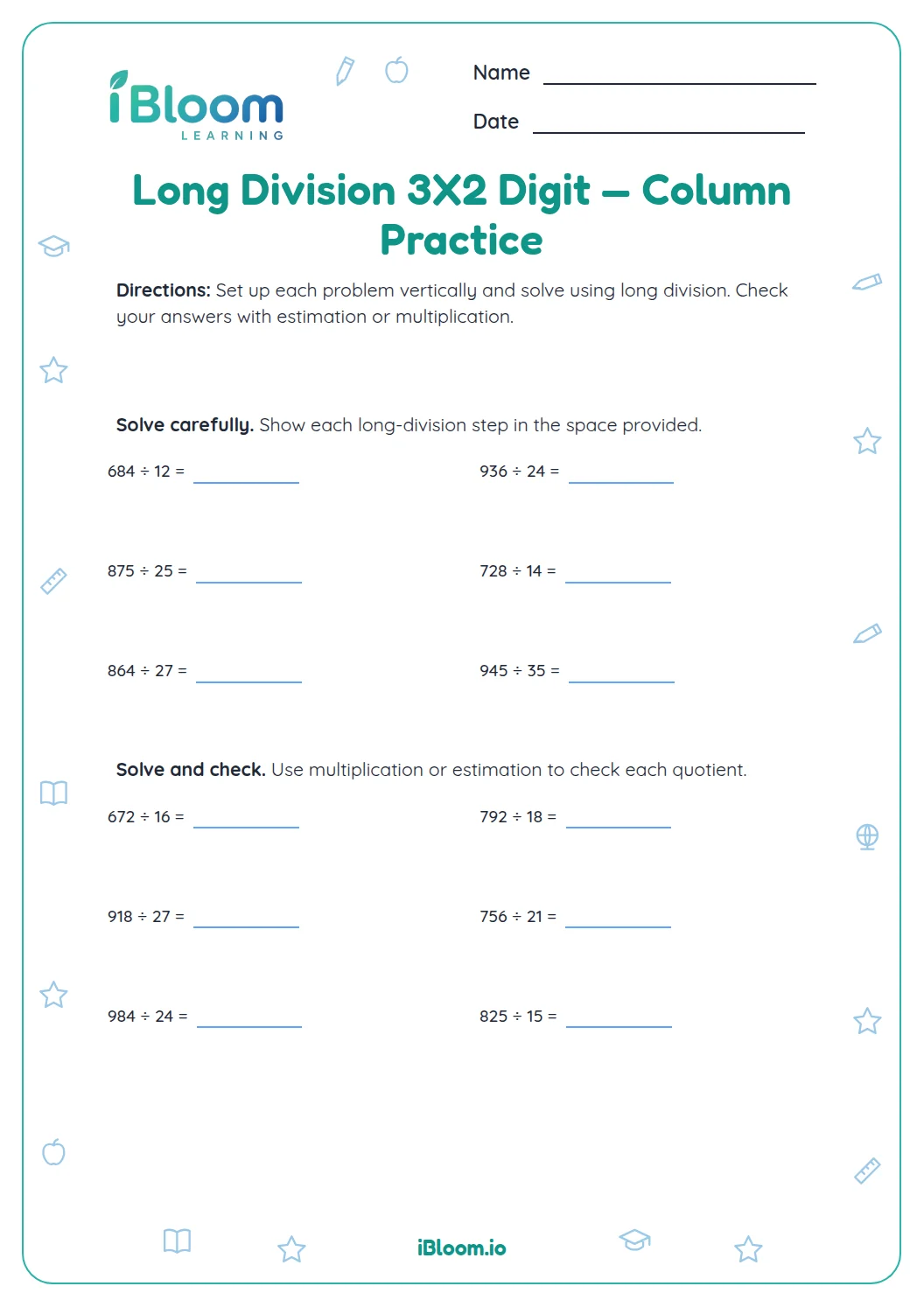
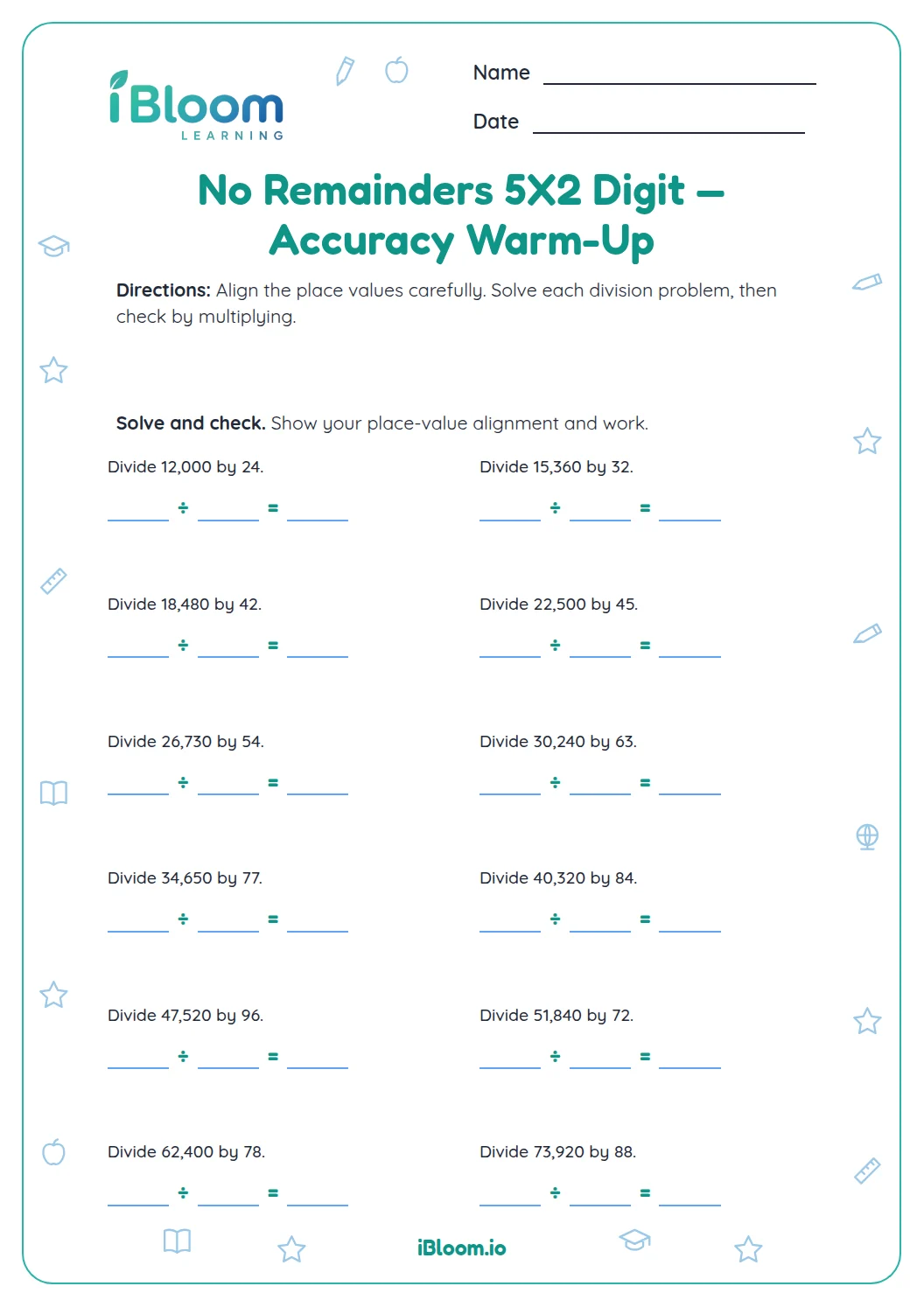
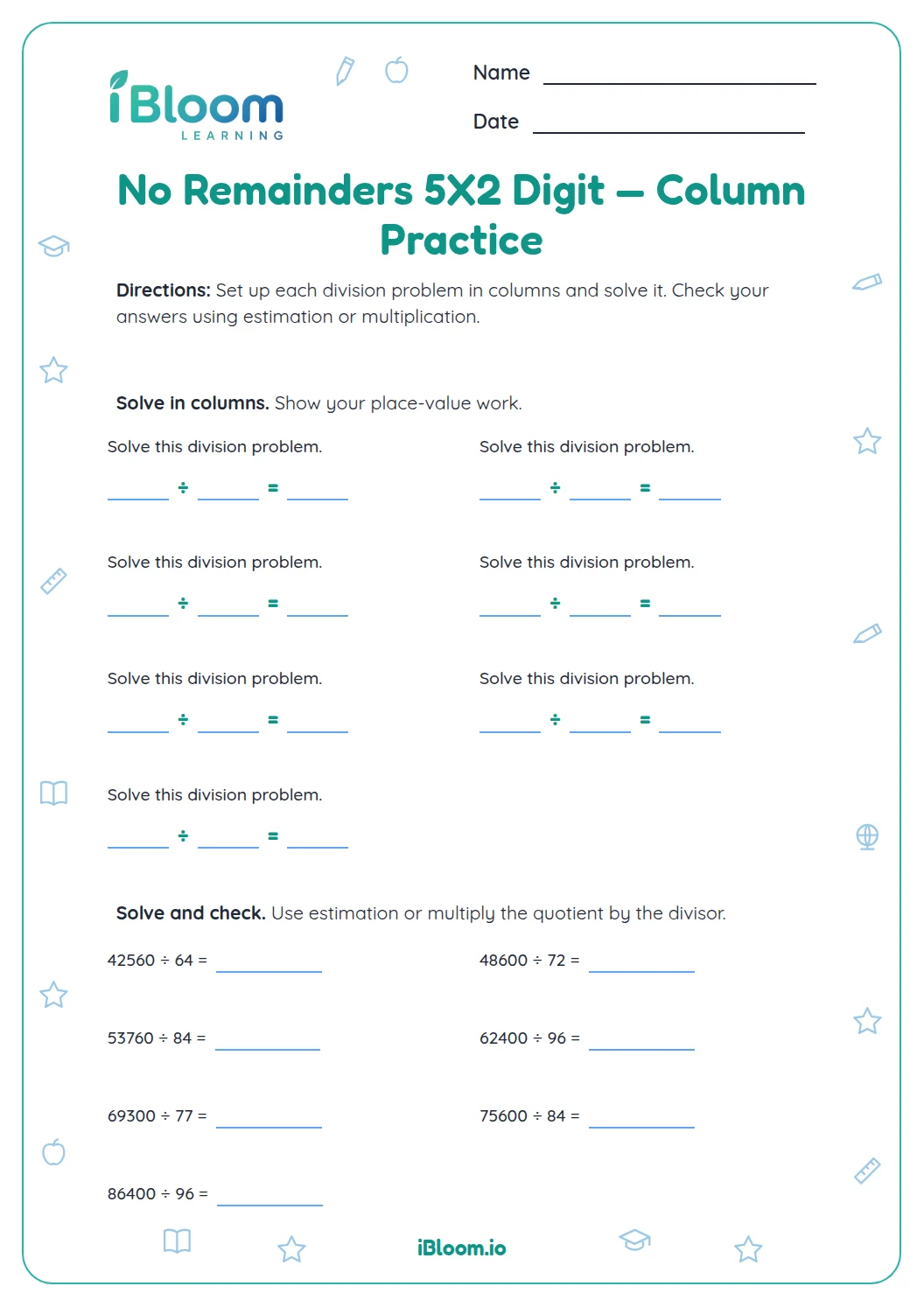
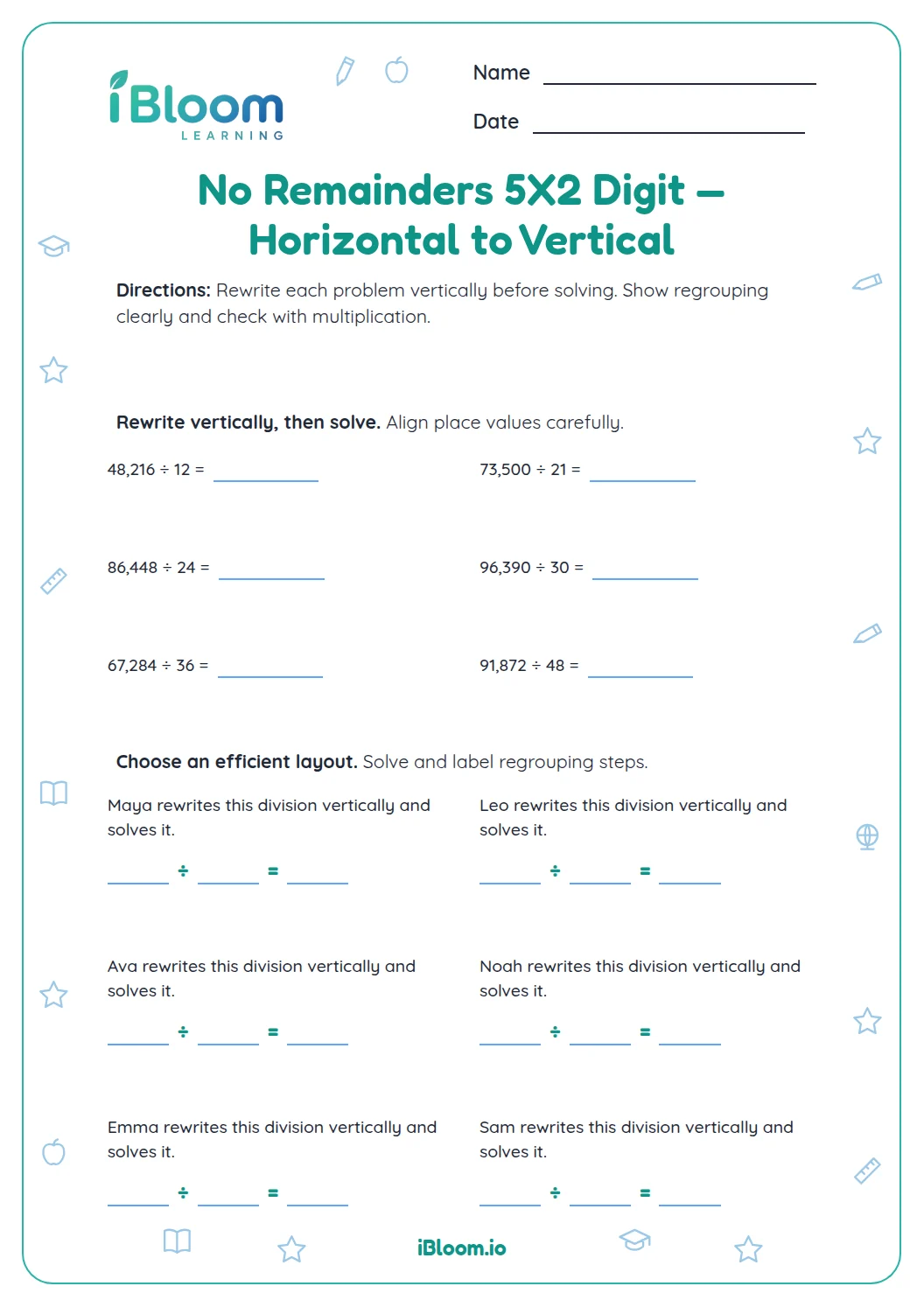
This Grade 6 exact-division worksheet gives students 14 problems with six-digit dividends and two-digit divisors. Students calculate quotients, use multiplication to check, and solve equal-sharing situations. Each division has a whole-number quotient. The questions practice Common Core 6.NS.B.2, fluently dividing multi-digit numbers with the standard algorithm.
Aligned to 6.NS.B.2
How do you solve two-digit divisors problems?
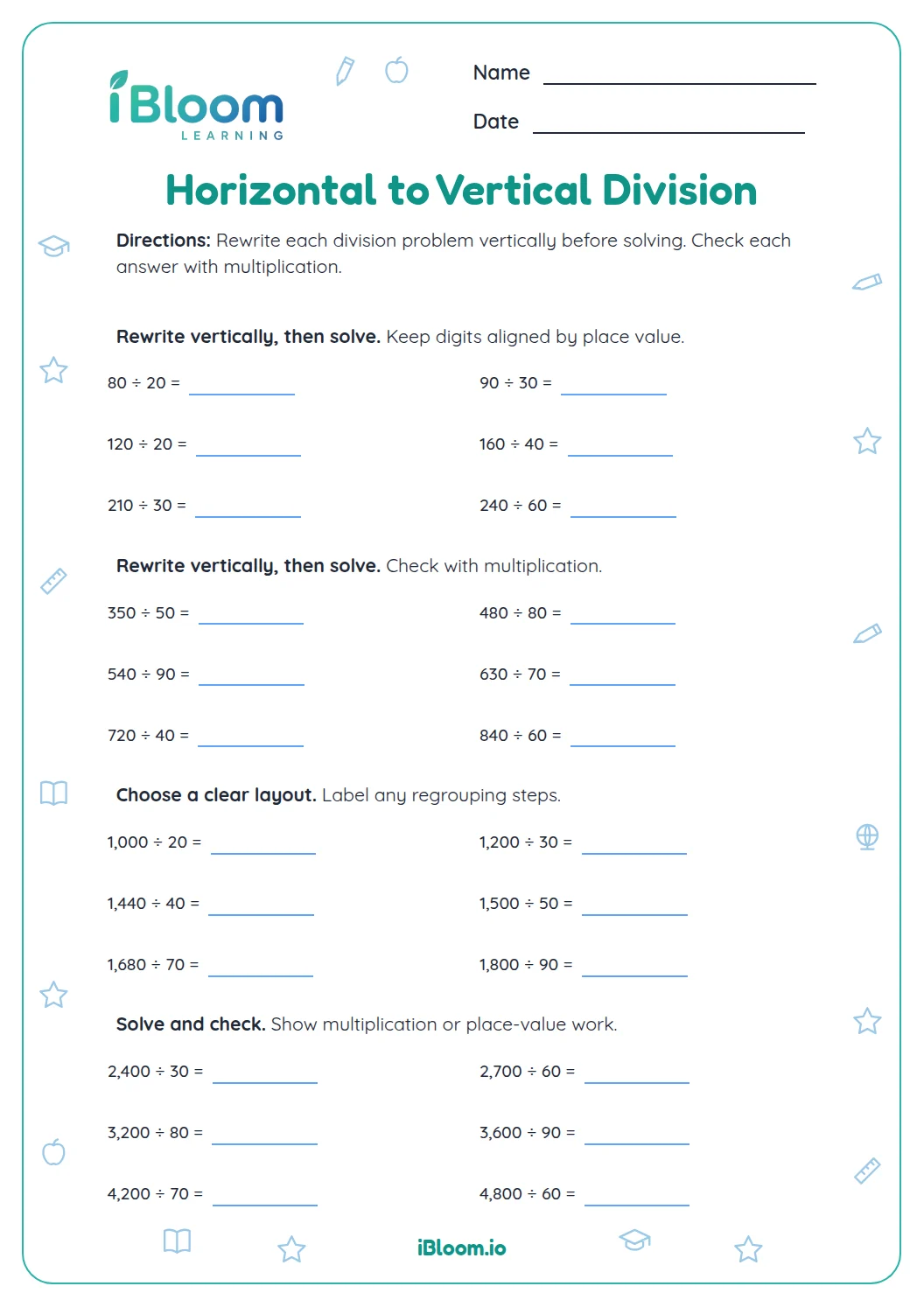
This Grade 6 division worksheet gives students 14 exact-division problems with six-digit dividends and two-digit divisors. Work one place-value step at a time, keep the operation sign visible, and check the result with an inverse operation or estimate.
- 1126,720 ÷ 24: 24 × 5,000 = 120,000, leaving 6,720; 24 × 280 = 6,720; quotient 5,280.
- 2Check: 5,280 × 24 = 126,720.
What will students practice on the page?
The 14 numbered questions move from direct calculations to checking and applying the skill. Every problem appears on the student sheet with its values and operation signs. The separate key gives concise answers.
How can an adult use the answer key?
Have the student show work for multi-digit problems, then compare both the answer and the method. If an answer differs, check place value and recompute with the inverse operation.
How to use this worksheet
- 1Read the operation and all numbers before calculating.
- 2Write intermediate steps in the open work area.
- 3Keep digits aligned by place value when using a written method.
- 4Estimate first when the problem asks for a reasonable result.
- 5Check division with multiplication or multiplication with a related fact.
- 6Use the answer key after the student has completed the page.
Common mistakes and quick fixes
The mistake
Losing track of a zero or place value.
The fix
Estimate the size first, then check each digit in the written work.
The mistake
Using a different operation from the printed sign or story.
The fix
Circle the operation clue and say the matching number sentence aloud.
The mistake
Stopping without checking a quotient or product.
The fix
Use the inverse operation to see whether the original numbers are recovered.
Common Core alignment
The questions practice fluently divide multi-digit whole numbers with a standard written method.
Fluently divide multi-digit whole numbers with a standard written method.
On this sheet: Fluently divide multi-digit whole numbers with a standard written method.
Show the official wordingHide the official wording
Fluently divide multi-digit numbers using the standard algorithm.
What to practice next
Make more practice
Further reading
Questions parents and teachers ask
How can students check that a division has no remainder?
Multiply the quotient by the divisor. For example, 5,280 × 24 = 126,720, the dividend in question 1, so the division has no remainder. Use this same check after solving each of the other exact-division items. This also helps students notice whether their answer makes sense in the original problem.
How many problems are on this sheet?
There are 14 questions in three parts: eight exact divisions, three missing-factor checks, and three equal-sharing situations with whole-number answers. The printed values let students work independently and compare each result with the separate key. This also helps students notice whether their answer makes sense in the original problem.
What does column practice mean here?
The student page prints each division horizontally and provides room to work out the standard written method. Keep quotient digits aligned with their place values. Then use multiplication to check that the result recovers the dividend. This also helps students notice whether their answer makes sense in the original problem.
Why do some questions use multiplication?
Questions 9–11 use the inverse operation. Find the missing factor so the product equals the number shown, then compare it with the matching division quotient. This reinforces the relationship between multiplication and division. This also helps students notice whether their answer makes sense in the original problem.
Are the sharing questions exact?
Yes. The totals divide evenly among the stated crates, classrooms, or bins, so the answers are whole numbers per group with nothing left over. The units in each question name what its quotient counts. This also helps students notice whether their answer makes sense in the original problem.