





About this worksheet
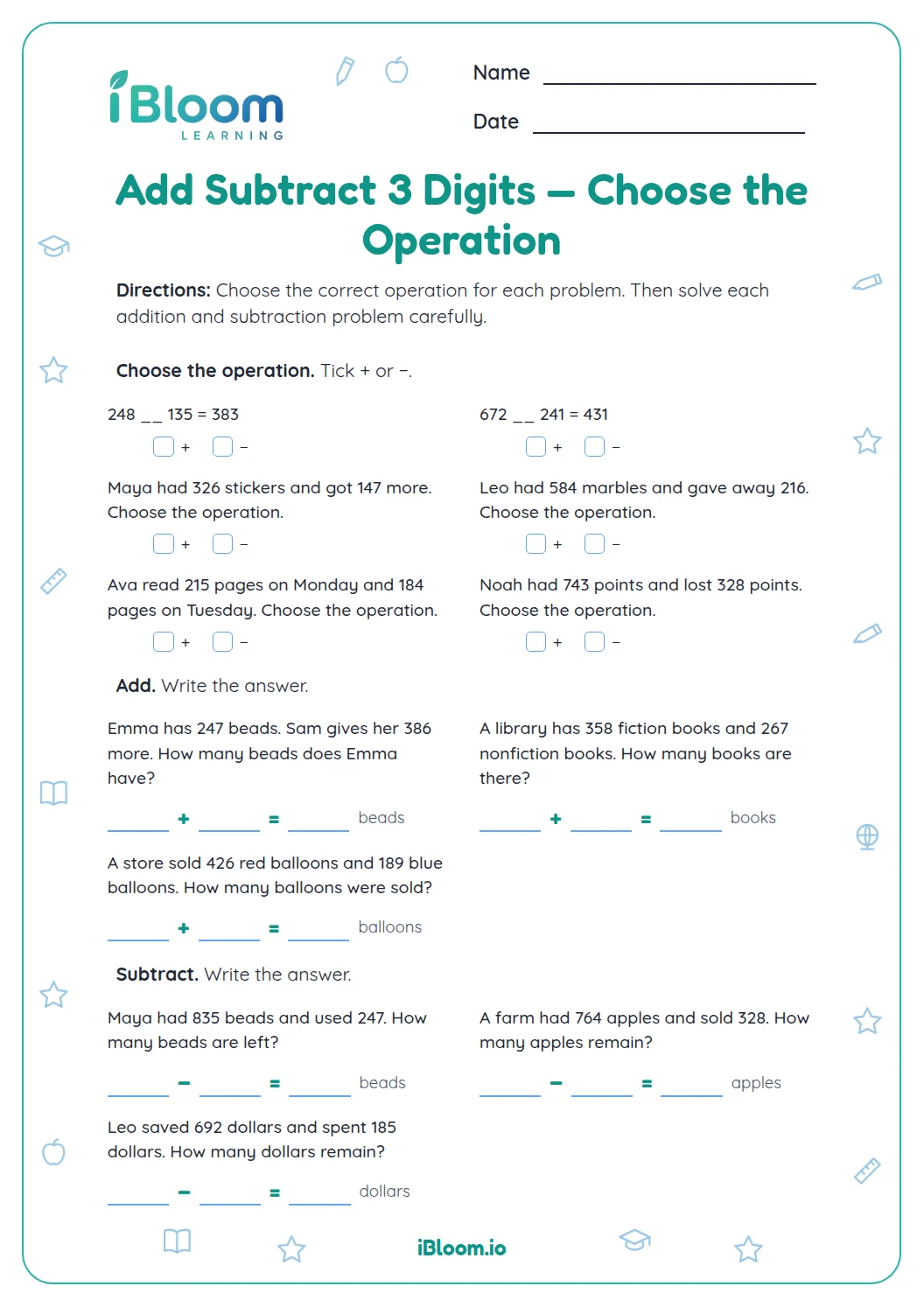
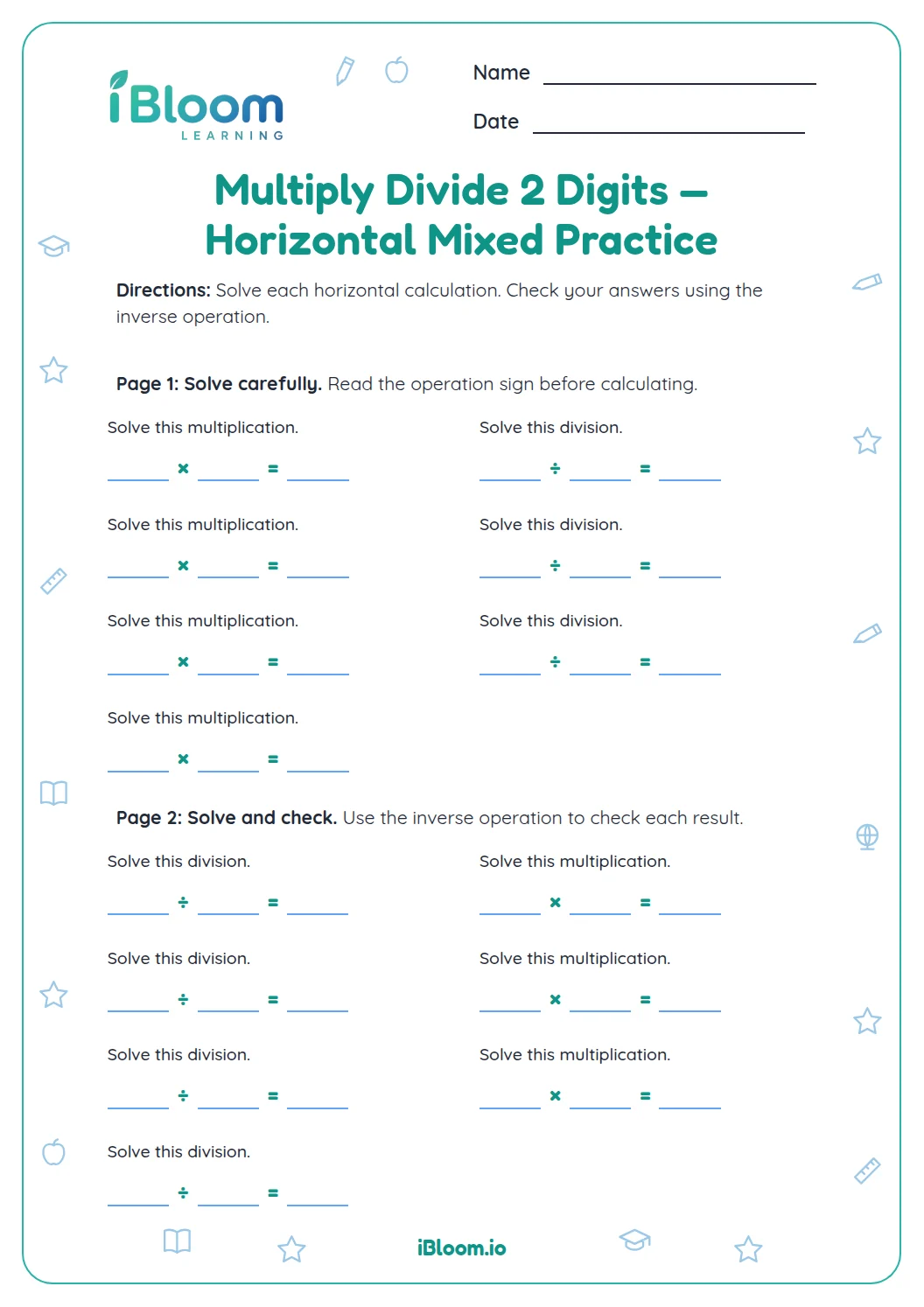
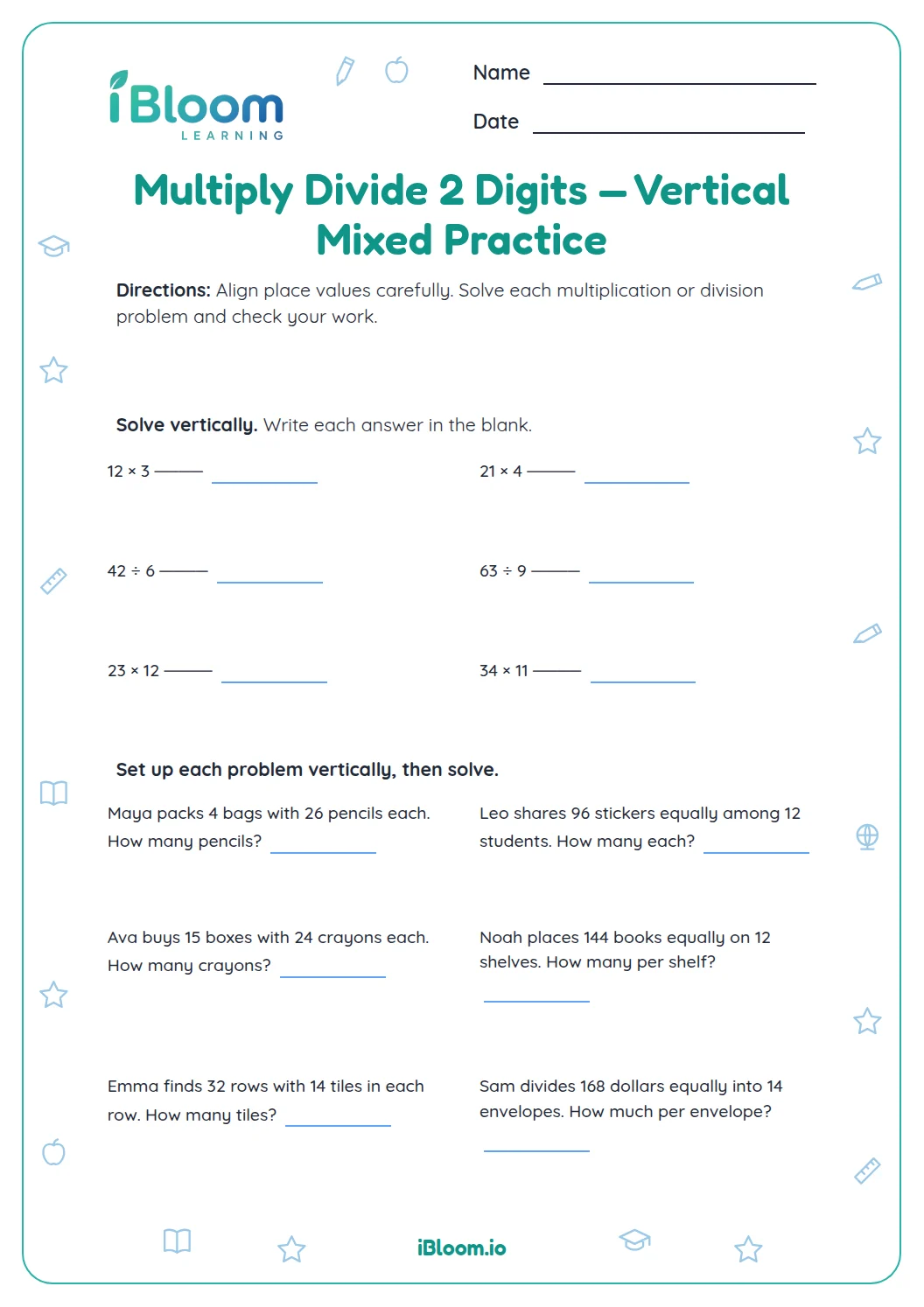
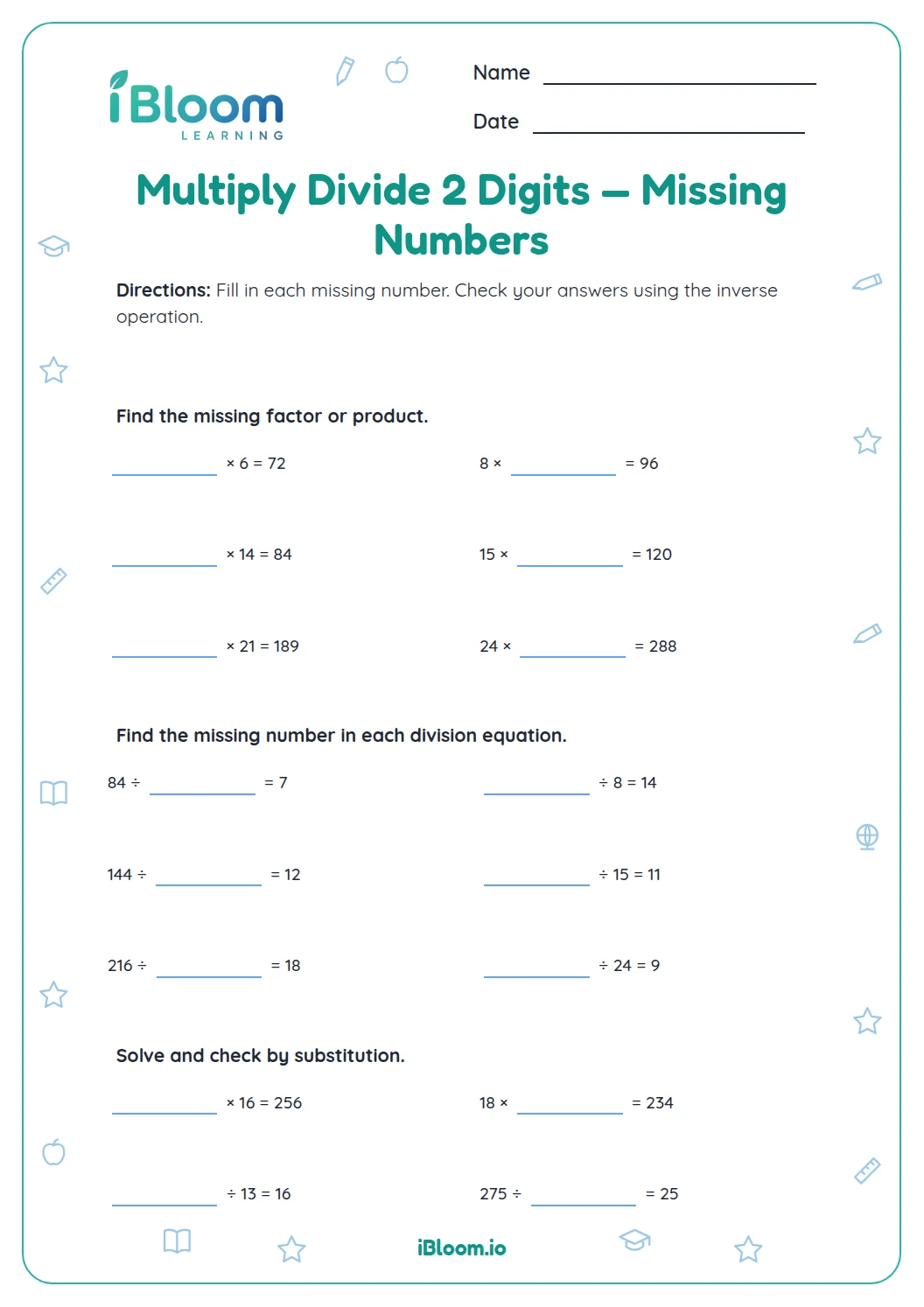
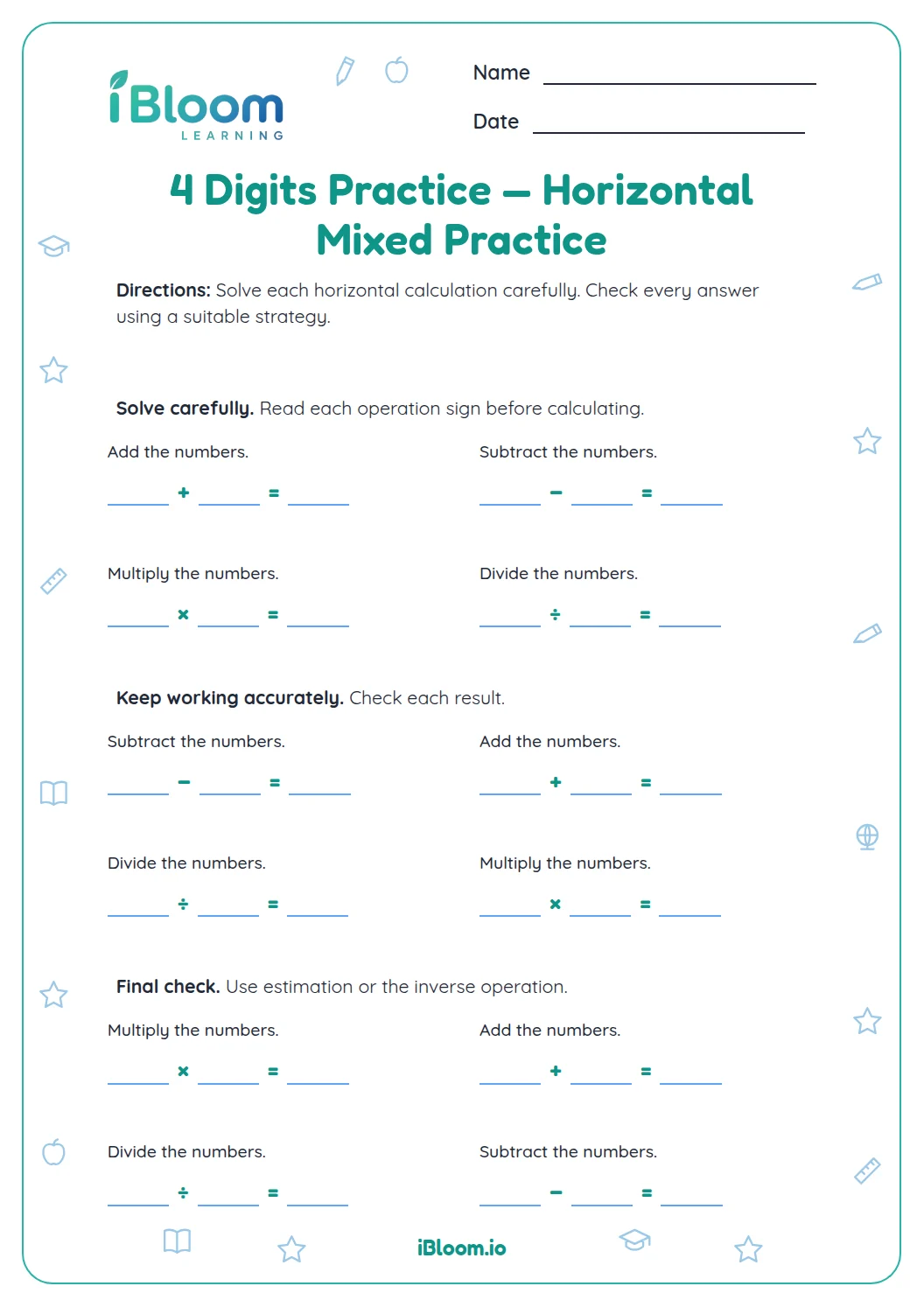
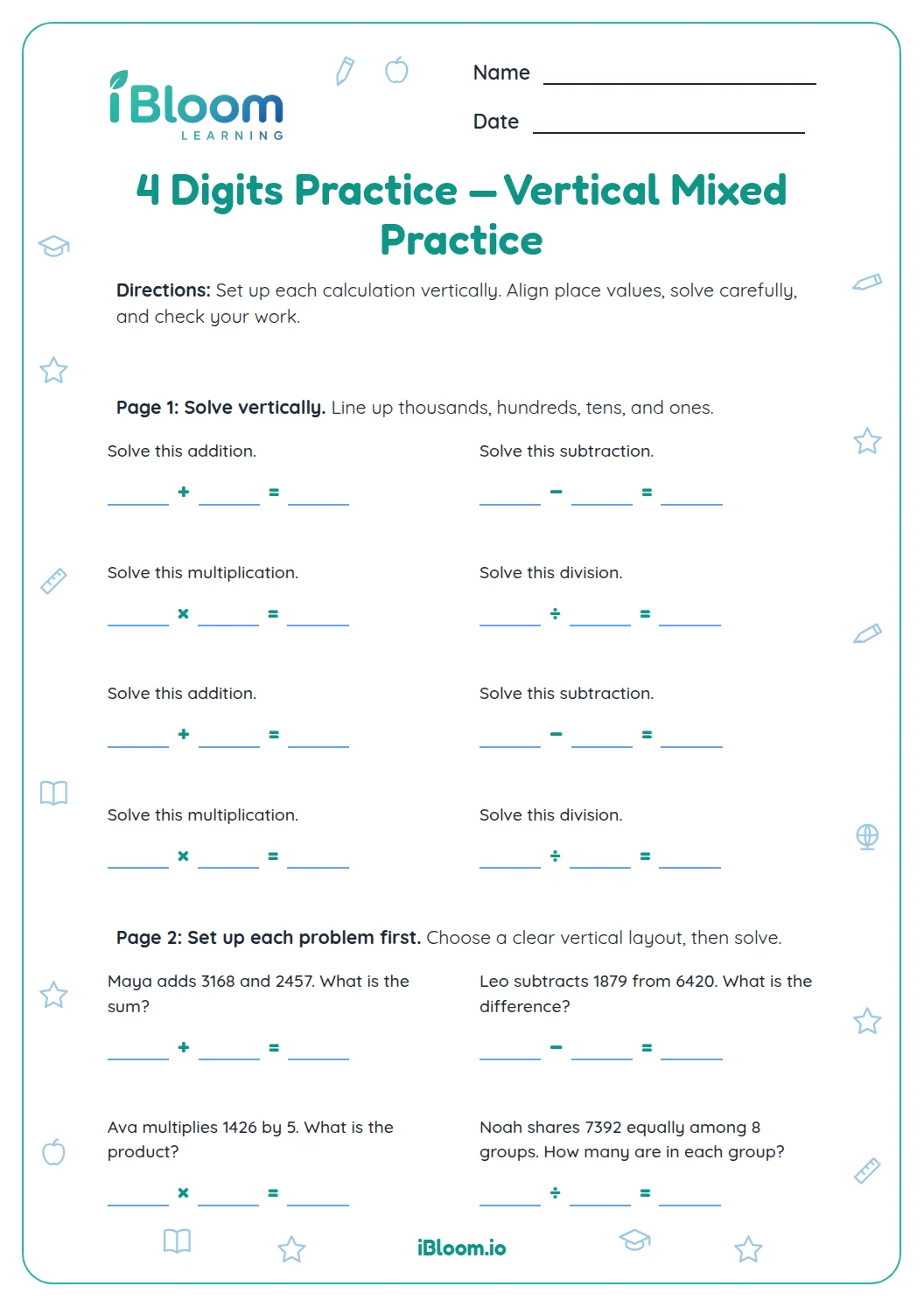
This Grade 4 worksheet gives students 20 horizontal problems with three-digit whole numbers. It practices addition, subtraction, multiplication by one-digit numbers, and division by one-digit numbers, including two short story problems. The page aligns with Common Core 4.NBT.B.4 for multi-digit whole-number addition and subtraction; its multiplication and division items provide related mixed computation practice.
Aligned to 4.NBT.B.4
How do you solve horizontal mixed practice problems?
Read the operation sign first, then calculate and check whether the result is reasonable. For multiplication and division, use place-value reasoning and a related fact to verify the answer.
- 1438 + 275 = 713
- 2Check: 713 − 275 = 438
What will students practice on the page?
The 20 horizontal problems include three-digit addition and subtraction, multiplication and division by one-digit numbers, and two short applications. Each item shows its numbers and operation on the student page.
How can an adult use the answer key?
Have the student show work for multi-digit problems, then compare both the answer and the method. If an answer differs, check place value and recompute with the inverse operation.
How to use this worksheet
- 1Read the operation and all numbers before calculating.
- 2Write intermediate steps in the open work area.
- 3Keep digits aligned by place value when using a written method.
- 4Estimate first when the problem asks for a reasonable result.
- 5Check division with multiplication or multiplication with a related fact.
- 6Use the answer key after the student has completed the page.
Common mistakes and quick fixes
The mistake
Forgetting to regroup in addition or subtraction.
The fix
Mark each place where a ten or hundred is regrouped, then recheck the column.
The mistake
Treating the digits in a multiplication problem as if they had no place value.
The fix
Multiply the nonzero digits, then account for the tens or hundreds in the factor.
The mistake
Stopping after finding a quotient.
The fix
Multiply the quotient by the divisor and compare the product with the dividend.
Common Core alignment
The problems practice the computation skill described by this standard.
Add and subtract multi-digit whole numbers accurately using place value and the standard algorithm.
On this sheet: The addition and subtraction items practice multi-digit whole-number computation.
Show the official wordingHide the official wording
Fluently add and subtract multi-digit whole numbers using the standard algorithm.
What to practice next
Make more practice
Further reading
Questions parents and teachers ask
Which operations are included?
The sheet practices addition, subtraction, multiplication by one-digit numbers, and division by one-digit numbers. Two questions use short everyday situations with quantities. The remaining items are horizontal number sentences with all operands printed. This also helps students notice whether their answer makes sense in the original problem.
How many questions are there?
There are 20 numbered questions across three parts. The student page shows the numbers and signs for every calculation and both story problems. The answer key follows the same numbering, so checking is straightforward. This also helps students notice whether their answer makes sense in the original problem.
Is order of operations part of this sheet?
Each calculation has one operation, so students focus on its sign and accurate computation. The questions do not combine operations into expressions. Students can still use inverse operations to check results when appropriate. This also helps students notice whether their answer makes sense in the original problem.
How should students check addition and subtraction?
Use the inverse operation when helpful. For example, check 438 + 275 = 713 by subtracting 275 from 713 to recover the starting number, 438. This is a quick way to verify addition. This also helps students notice whether their answer makes sense in the original problem.
What does the answer key include?
The separate two-page key lists the answer to each of the 20 problems. Adults can compare results and review the operation or place-value step that needs attention. Ask the student to correct one item and explain the check used. This also helps students notice whether their answer makes sense in the original problem.