


About this worksheet
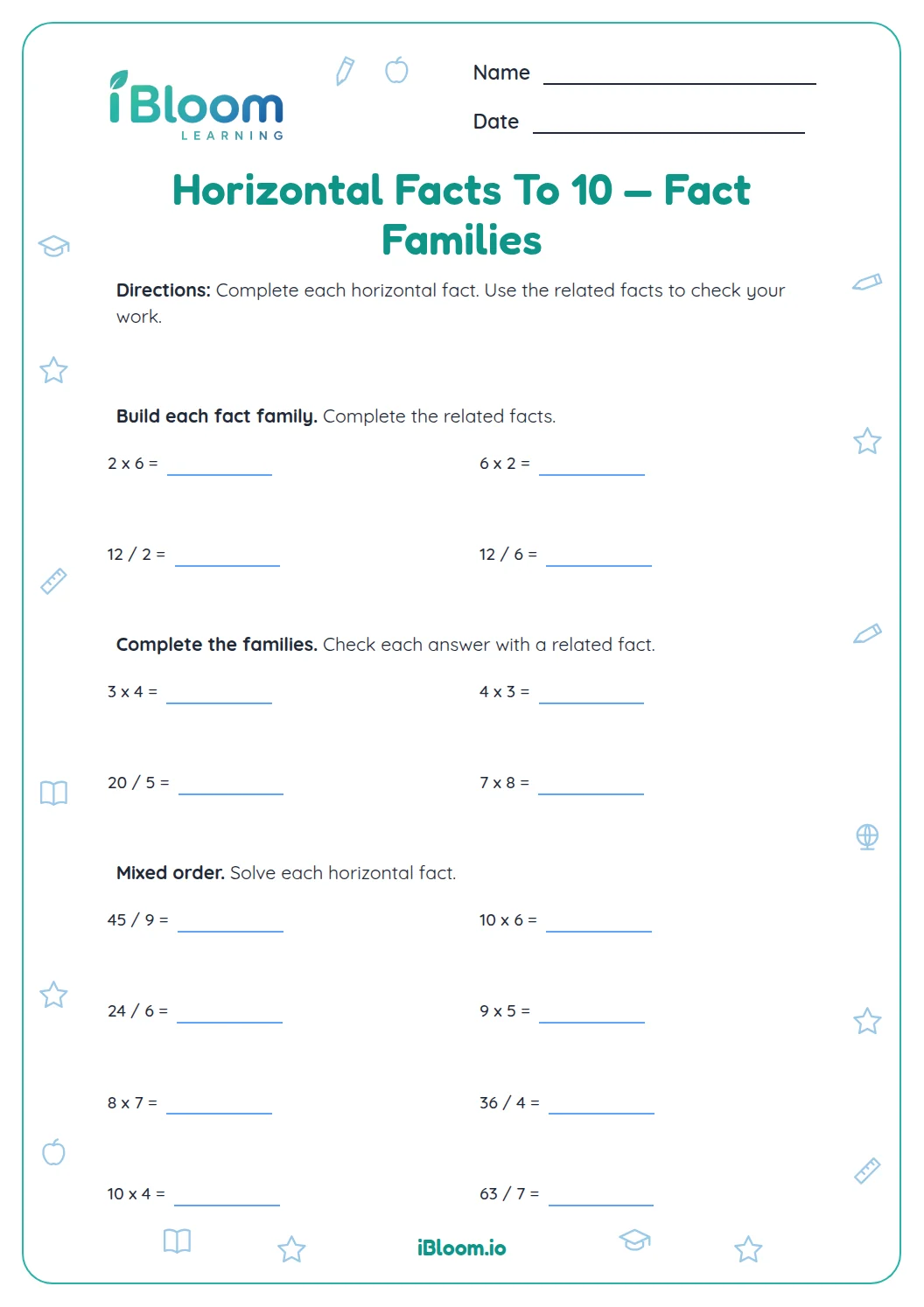
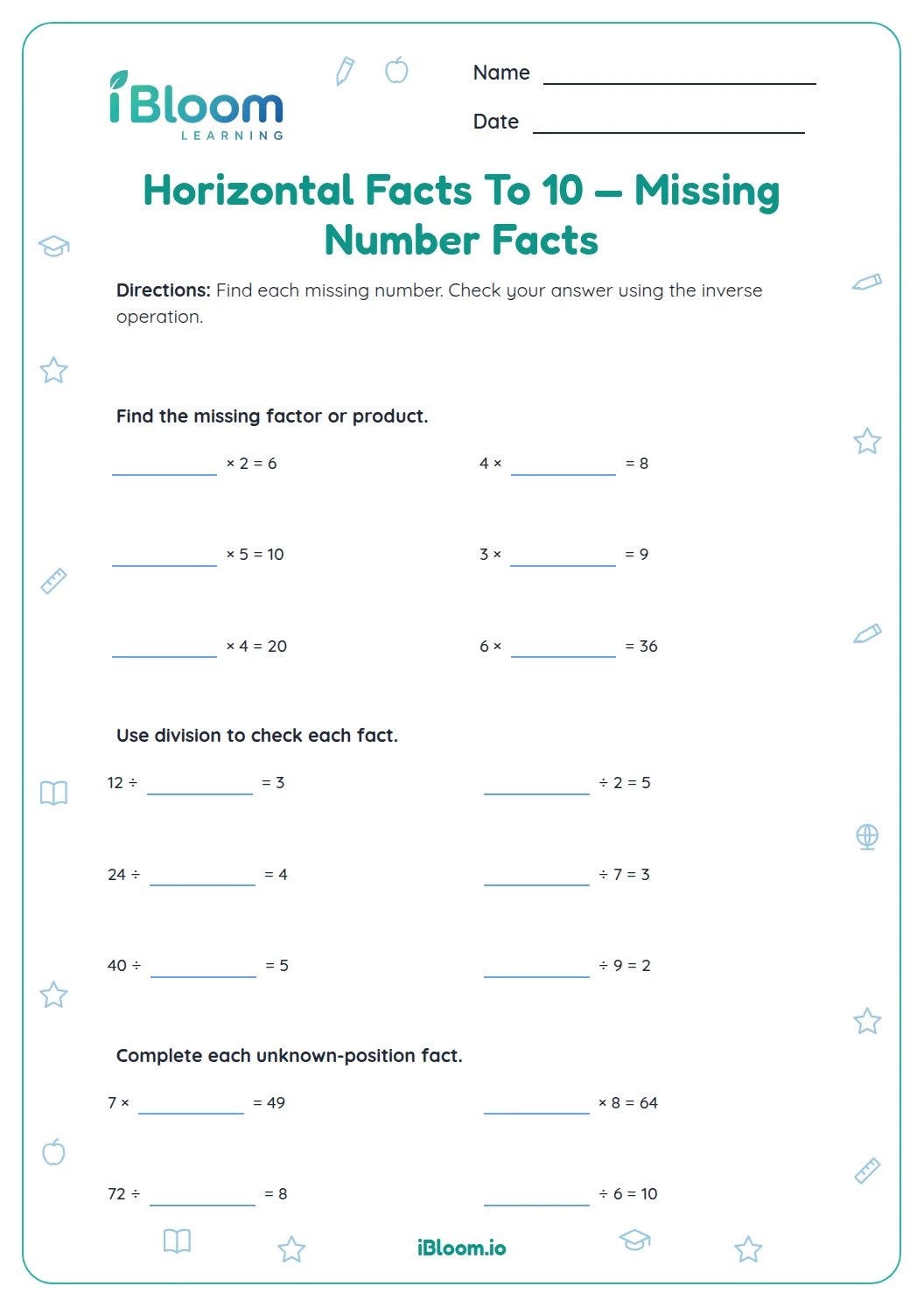
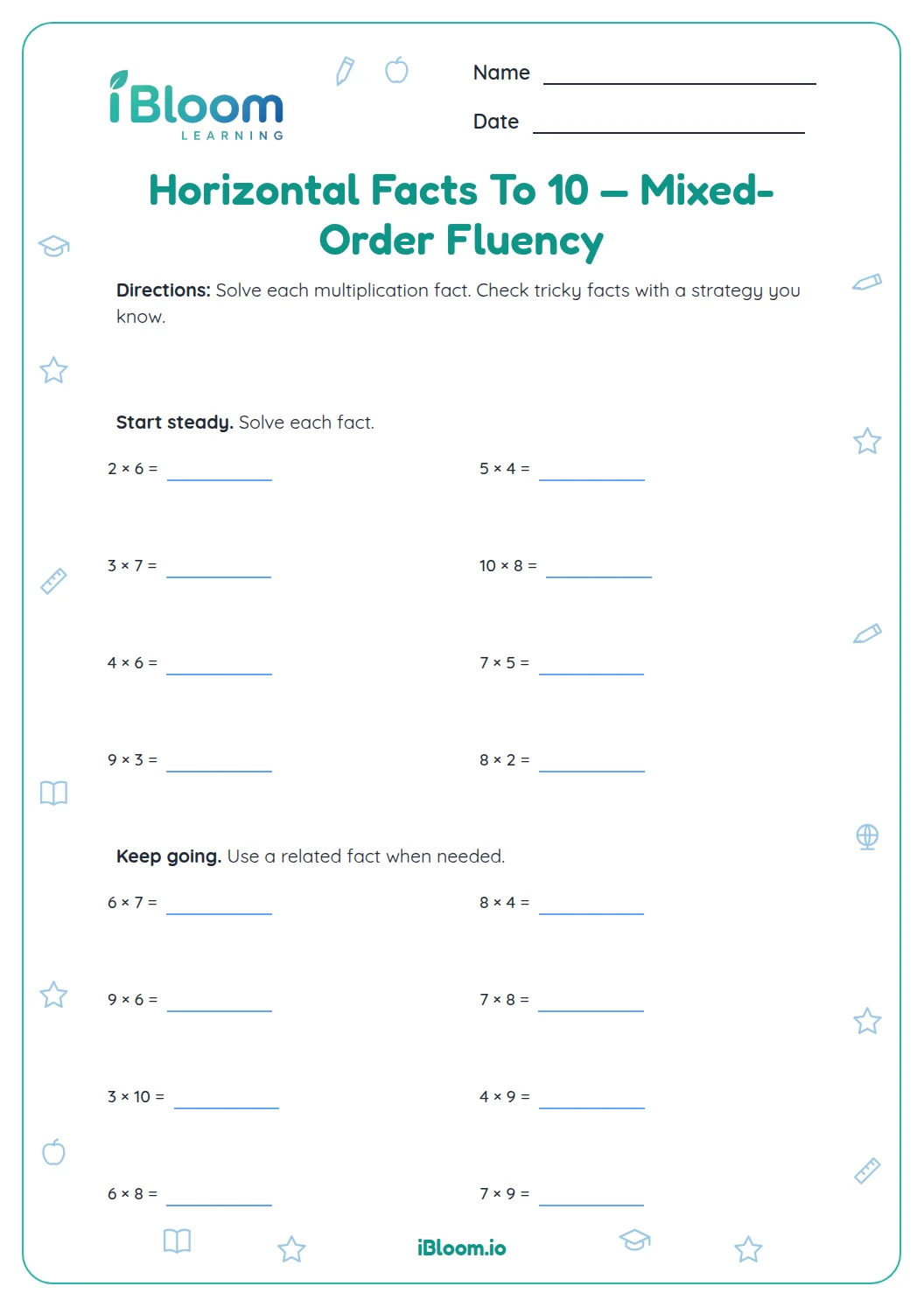
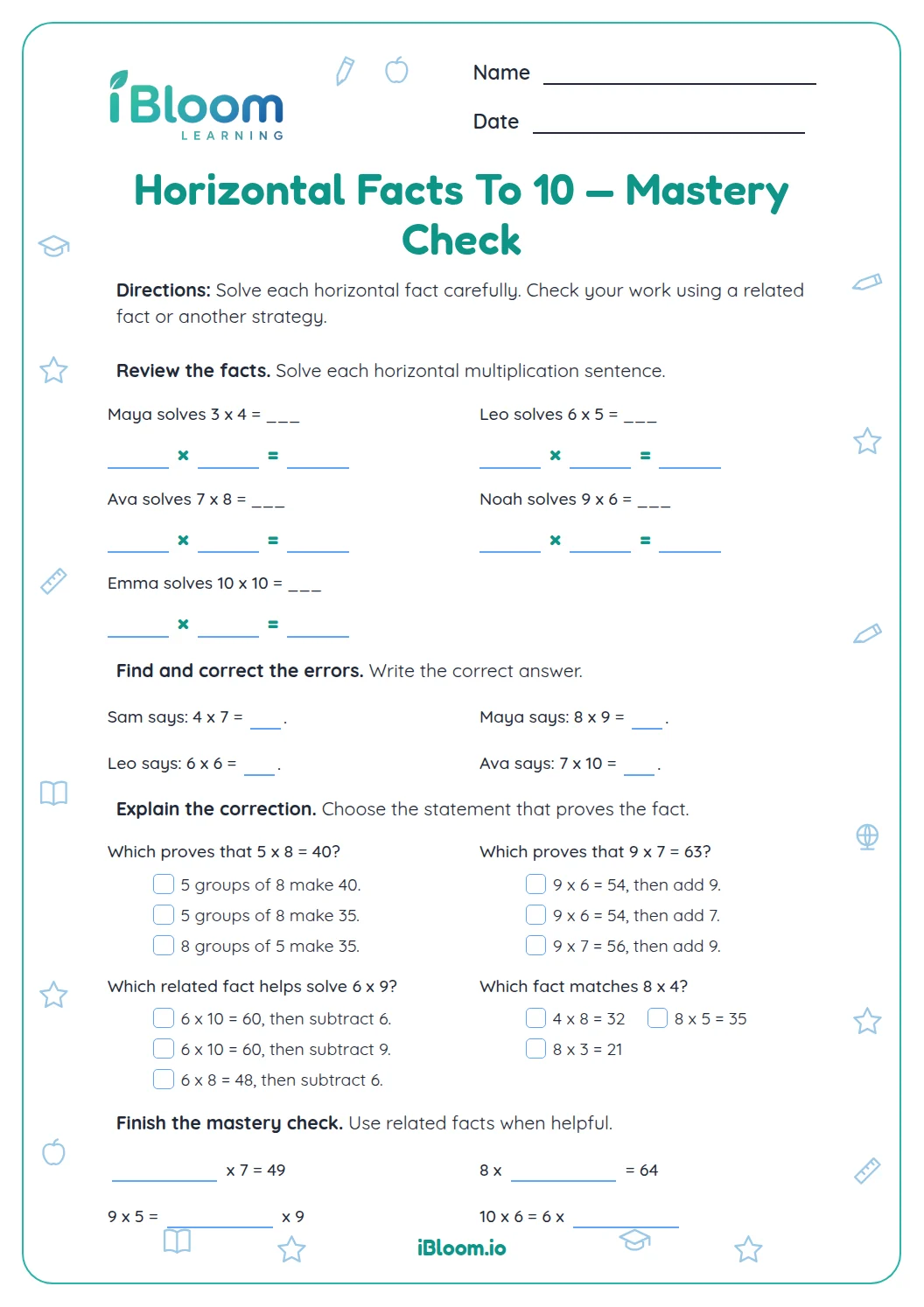
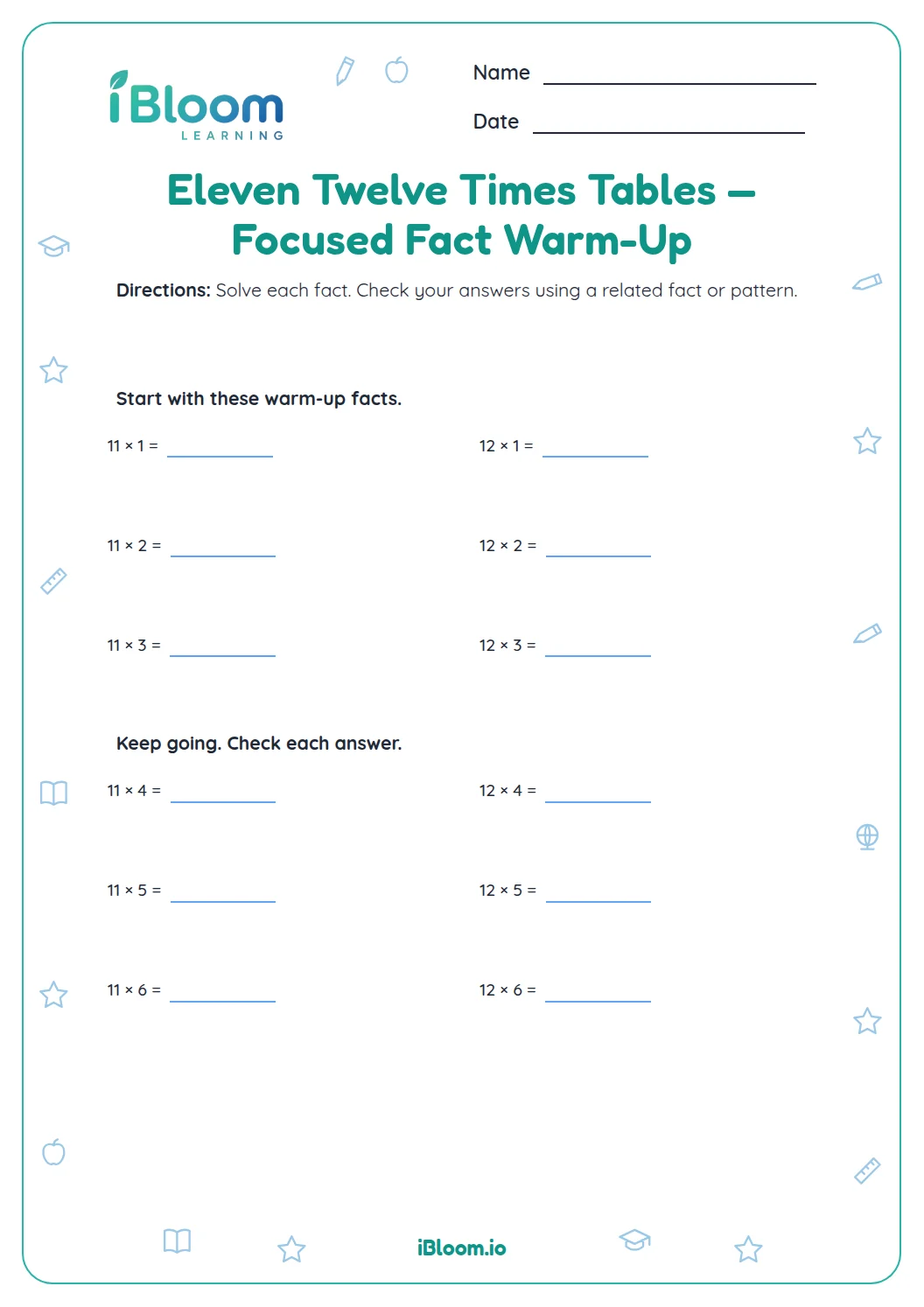
This free printable gives Grades 3–4 students 16 multiplication facts to solve in two rounds. Every problem prints both factors, so students can work independently and write each product in the blank. The page practices horizontal facts to 10 with equal groups, skip counting, and known facts as checking strategies. A separate answer key lists the products.
How does this fact practice work?
Part A gives the first eight horizontal facts to 10 problems. For example, question 1 is 3 × 7 = ___. Students write the product and can check it with equal groups, skip counting, or a known fact.
- 13 × 7 = ___
- 23 × 7 = 21
What happens in Part B?
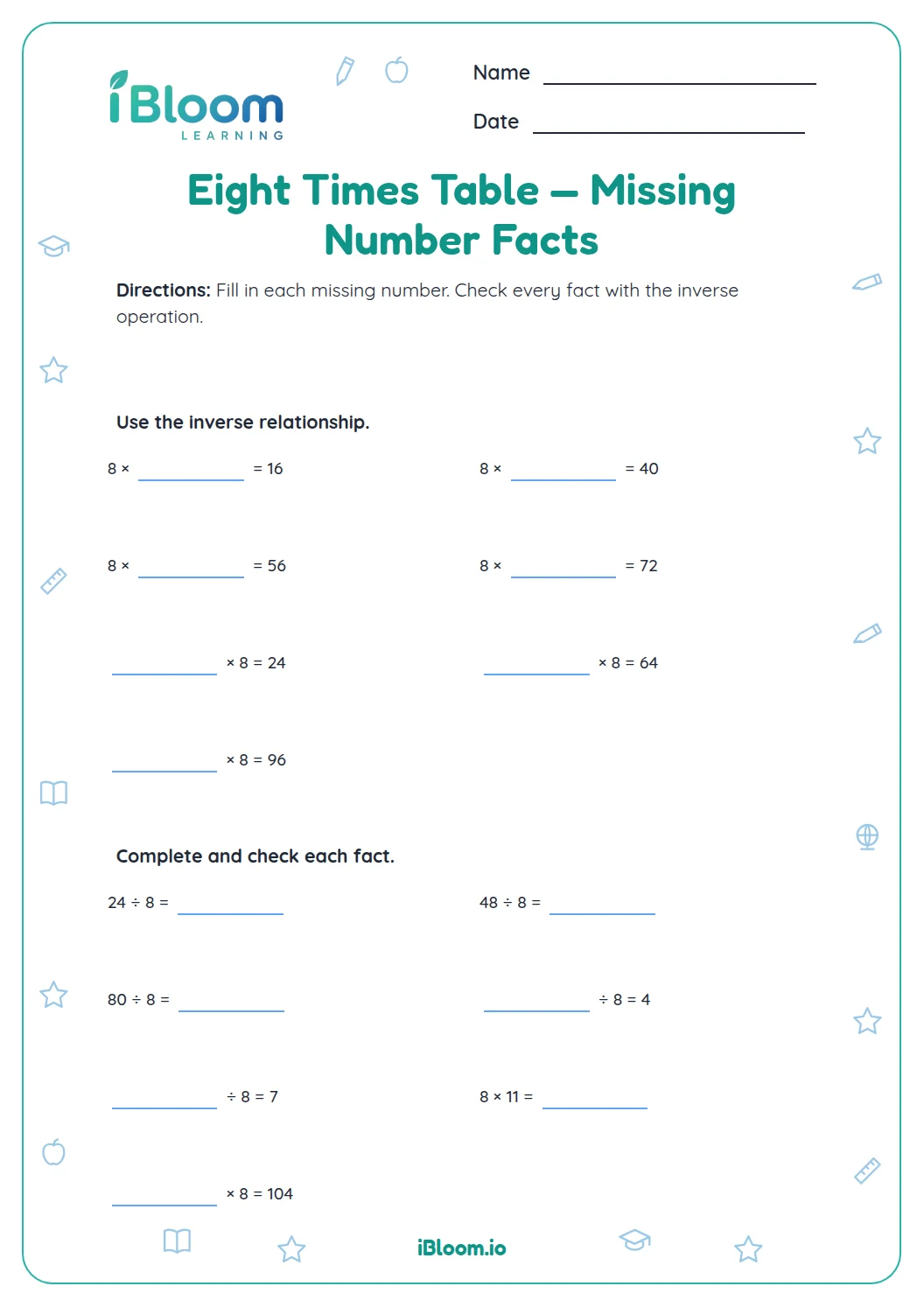
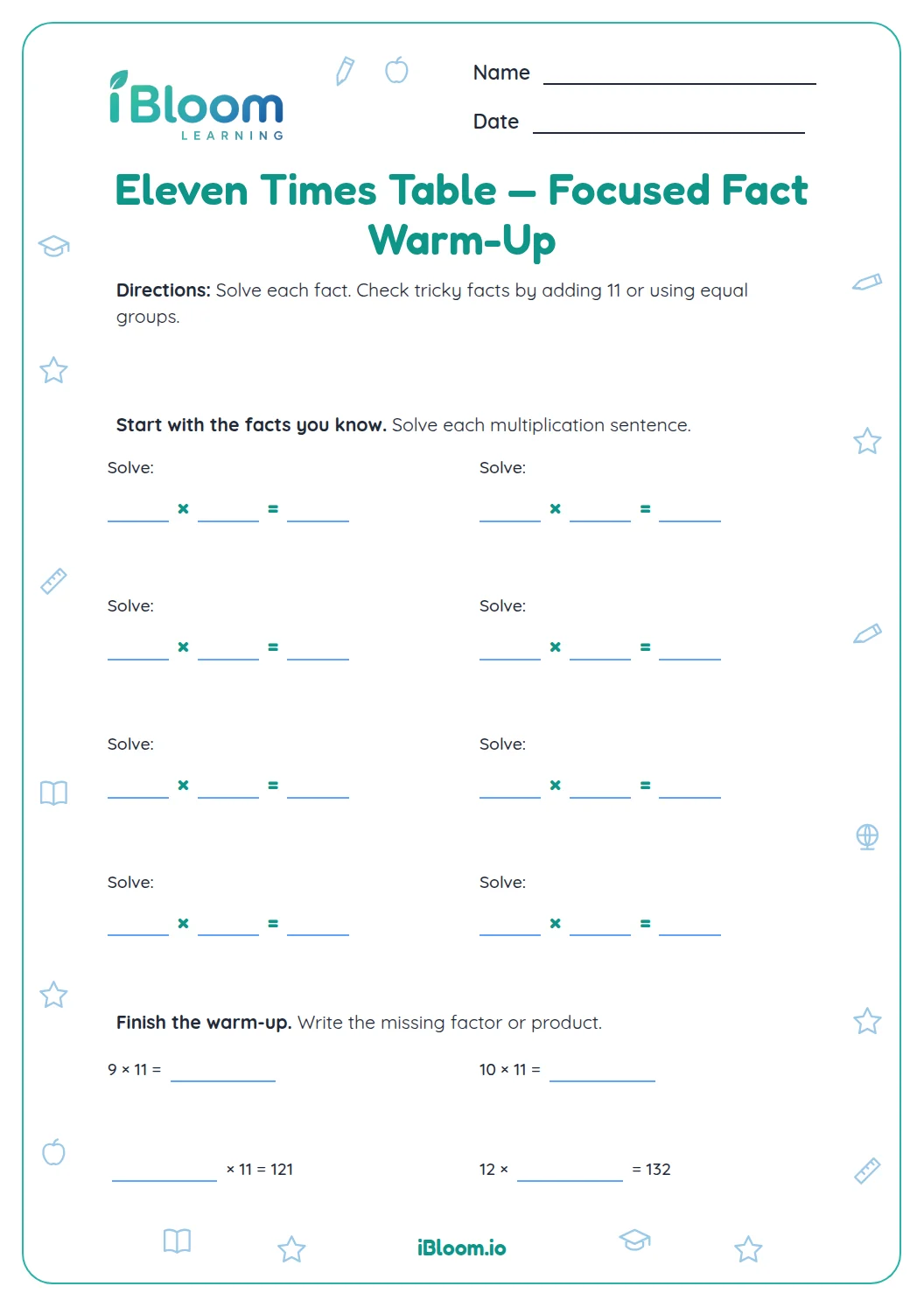
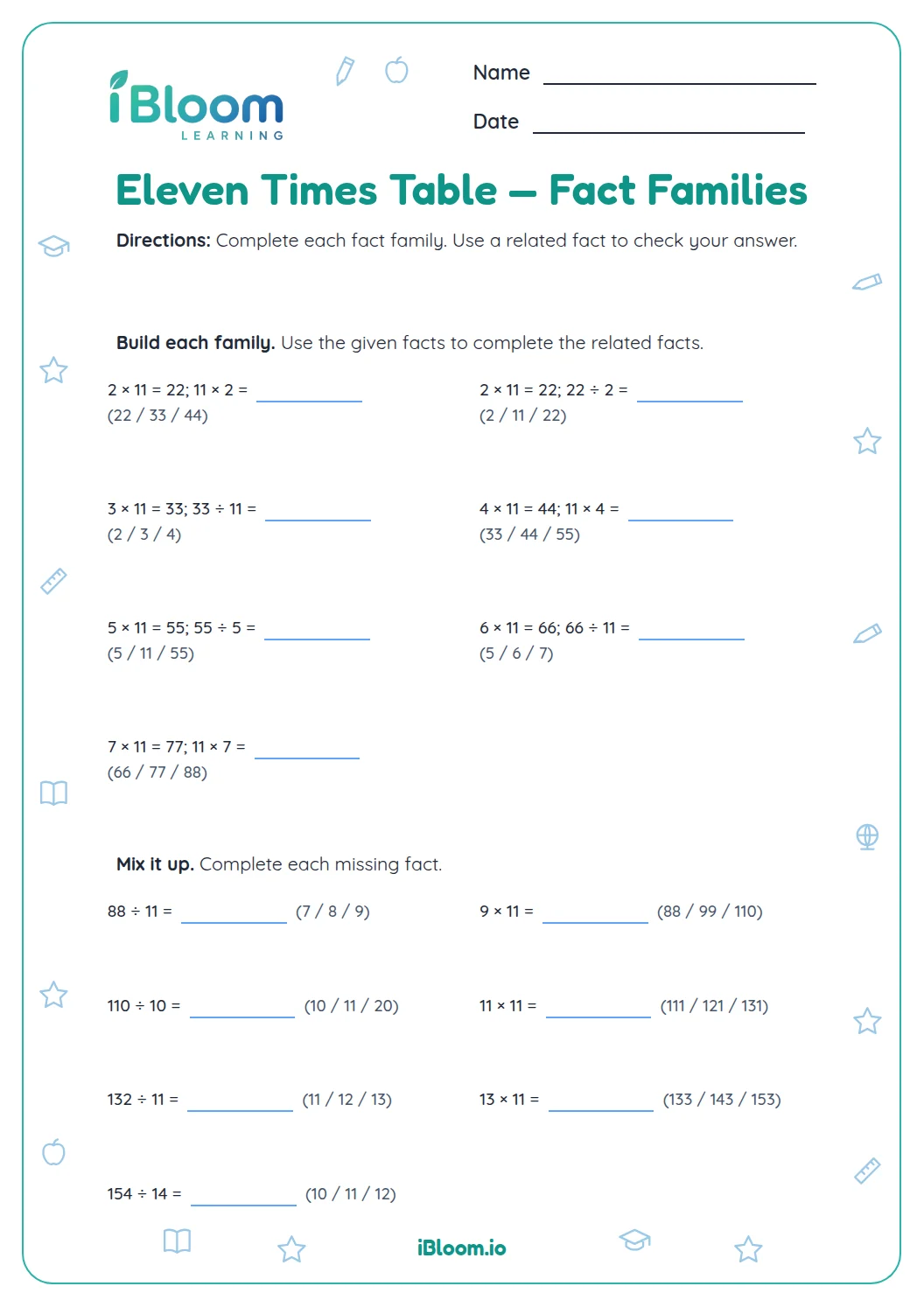
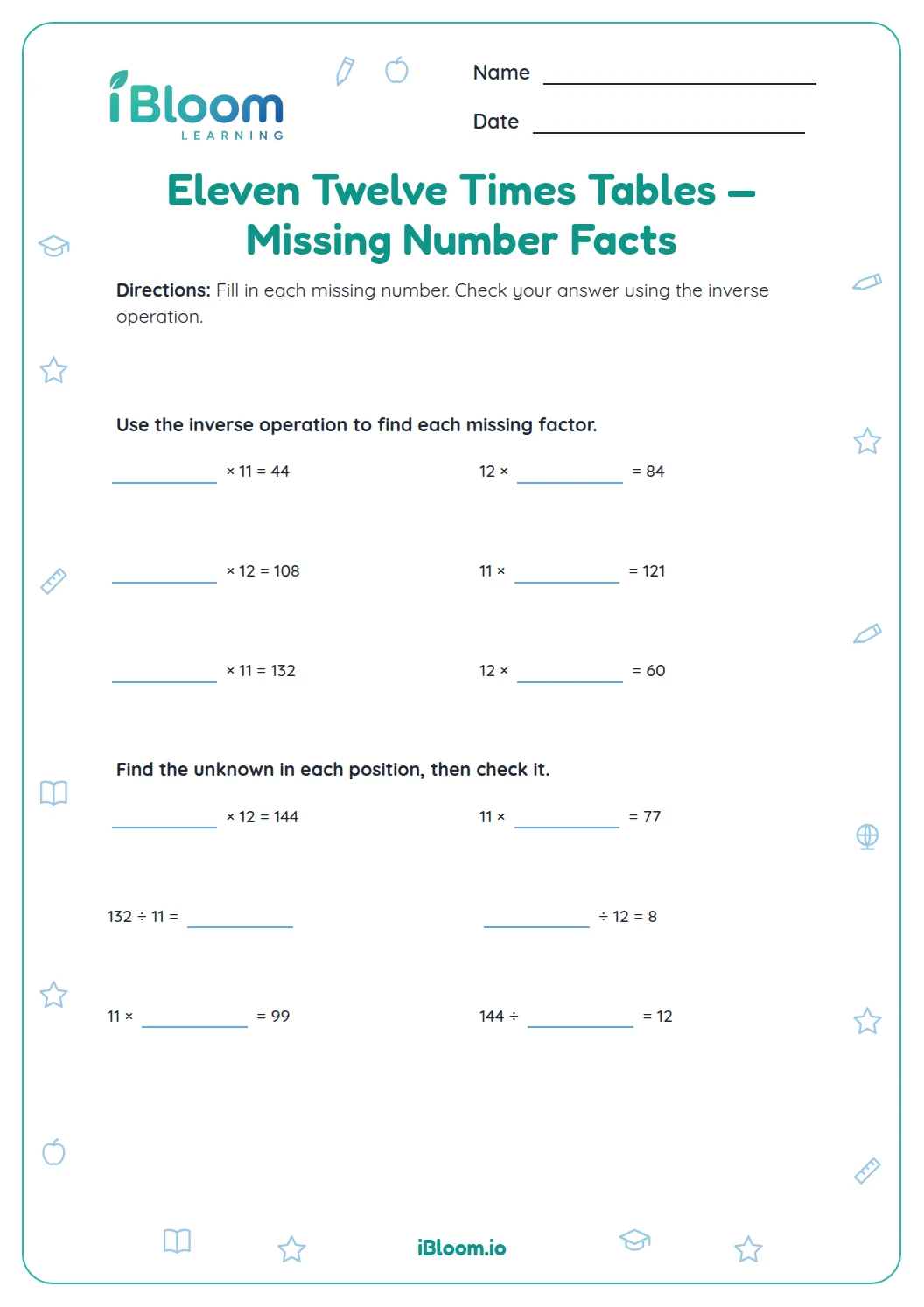
Part B adds eight more printed facts for a second round of horizontal facts to 10 practice. In the mixed-order pages, the focus factor appears in either position; on the focused pages, each problem stays within its named fact range or table.
How can a student check a product?
For a fact that is hard to recall, make equal groups or skip-count by one factor. For example, 4 × 6 is four groups of six: 6, 12, 18, 24. Check the product after solving, then use the separate key when the page is complete.
How to use this worksheet
- 1Read each printed fact and solve for the product.
- 2Use a known fact, equal groups, or skip counting when needed.
- 3Complete all eight facts in Part A before moving on.
- 4Solve the eight new facts in Part B.
- 5Use the separate answer key to check all 16 products.
Common multiplication mistakes
The mistake
Adding the factors instead of multiplying them.
The fix
Think of equal groups: 4 × 6 means 4 groups of 6.
The mistake
Skipping or repeating a group while skip-counting.
The fix
Say one multiple for each group and keep track of the number of groups.
The mistake
Changing the product when switching the factors.
The fix
The order of factors can switch without changing the product; check with equal groups.
What to practice next
Make more practice
Further reading
Questions parents and teachers ask
How many questions are on the worksheet?
There are 16 multiplication facts in two parts of eight. Every problem shows both factors on the student page, with a blank for the product. The answer key is a separate page, so students can finish the full worksheet before checking their work.
Which facts does this page practice?
The page focuses on horizontal facts to 10. It includes 16 printed equations, with the factors visible in each one. Students can solve the products from memory or check them with equal groups, skip counting, or a related fact before using the answer key.
How can a student solve a fact they do not remember?
Build equal groups or skip-count by one factor. For example, 4 × 6 can be counted as four groups of six: 6, 12, 18, 24. Write that product in the blank, and check it with the answer key after attempting the full worksheet.
Does the worksheet need to be timed?
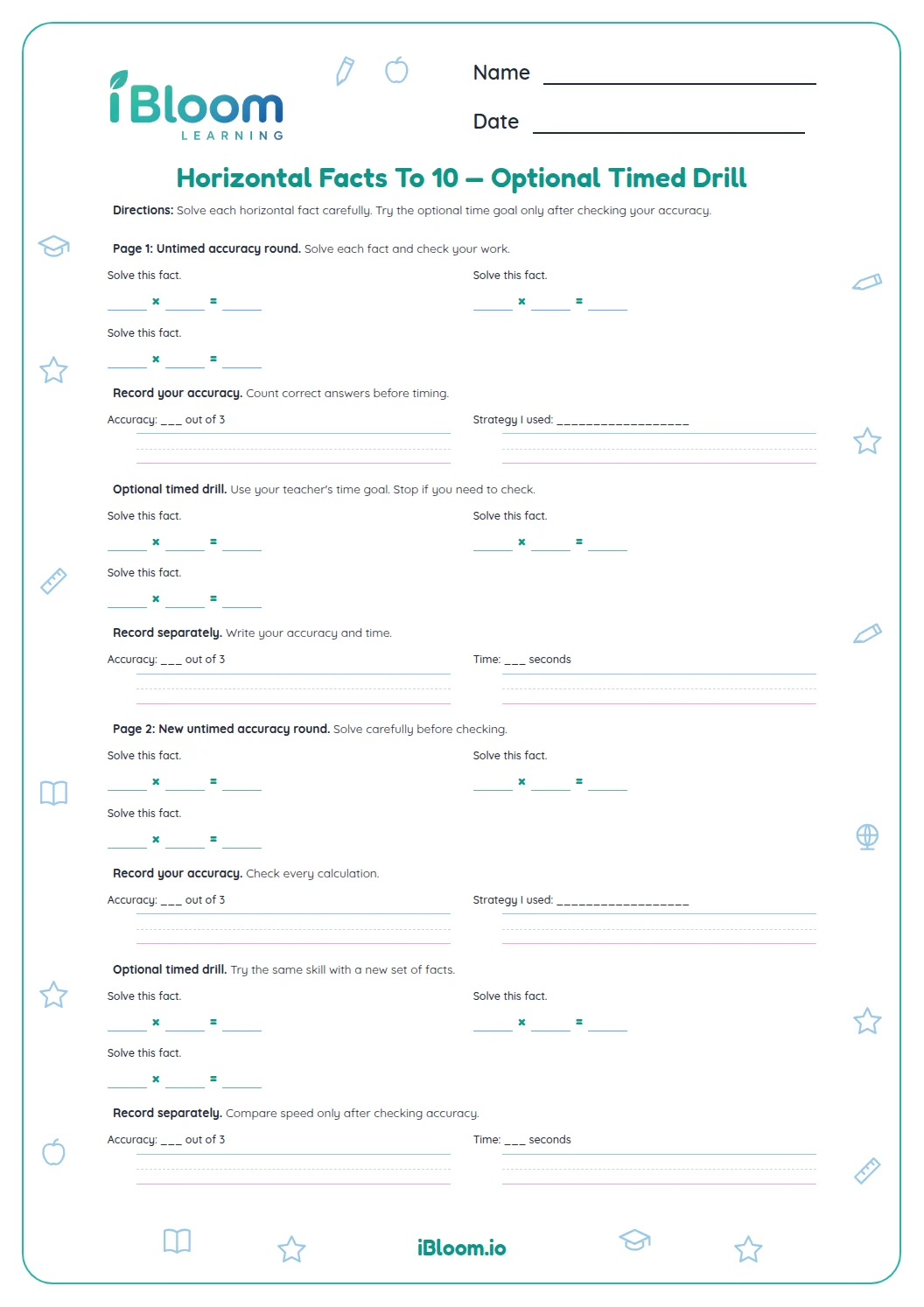
No timer is needed to complete the worksheet. Students can solve each product carefully and use a strategy to check it. A parent or teacher may time a later attempt, while keeping accuracy the priority and treating the first round as practice.
How should we use the answer key?
The answer key is a separate page that lists the product for each printed fact. Have the student complete both parts first, then compare answers. For any missed product, revisit the factor pair with equal groups or a known multiplication pattern.
What can we practice next?
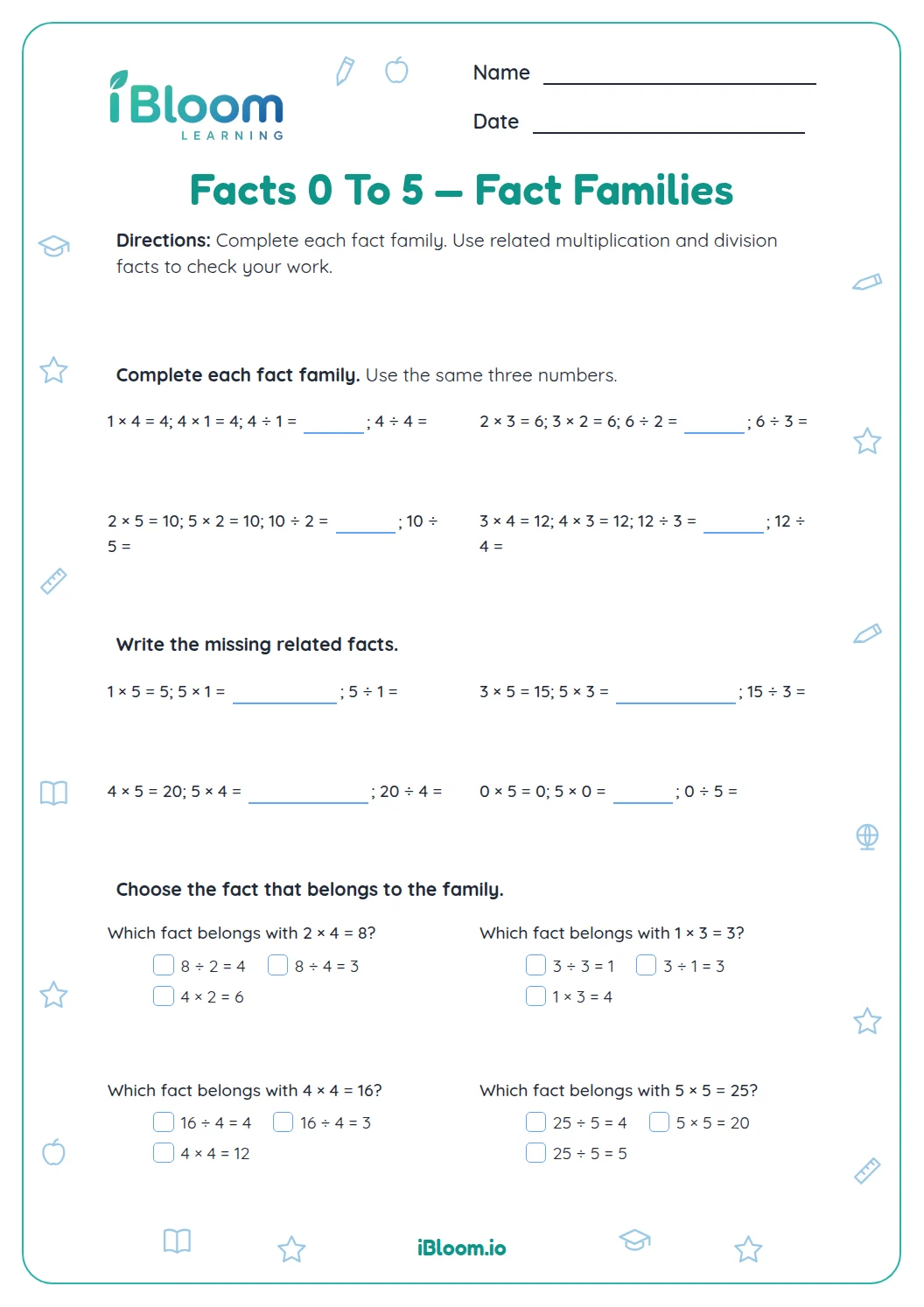
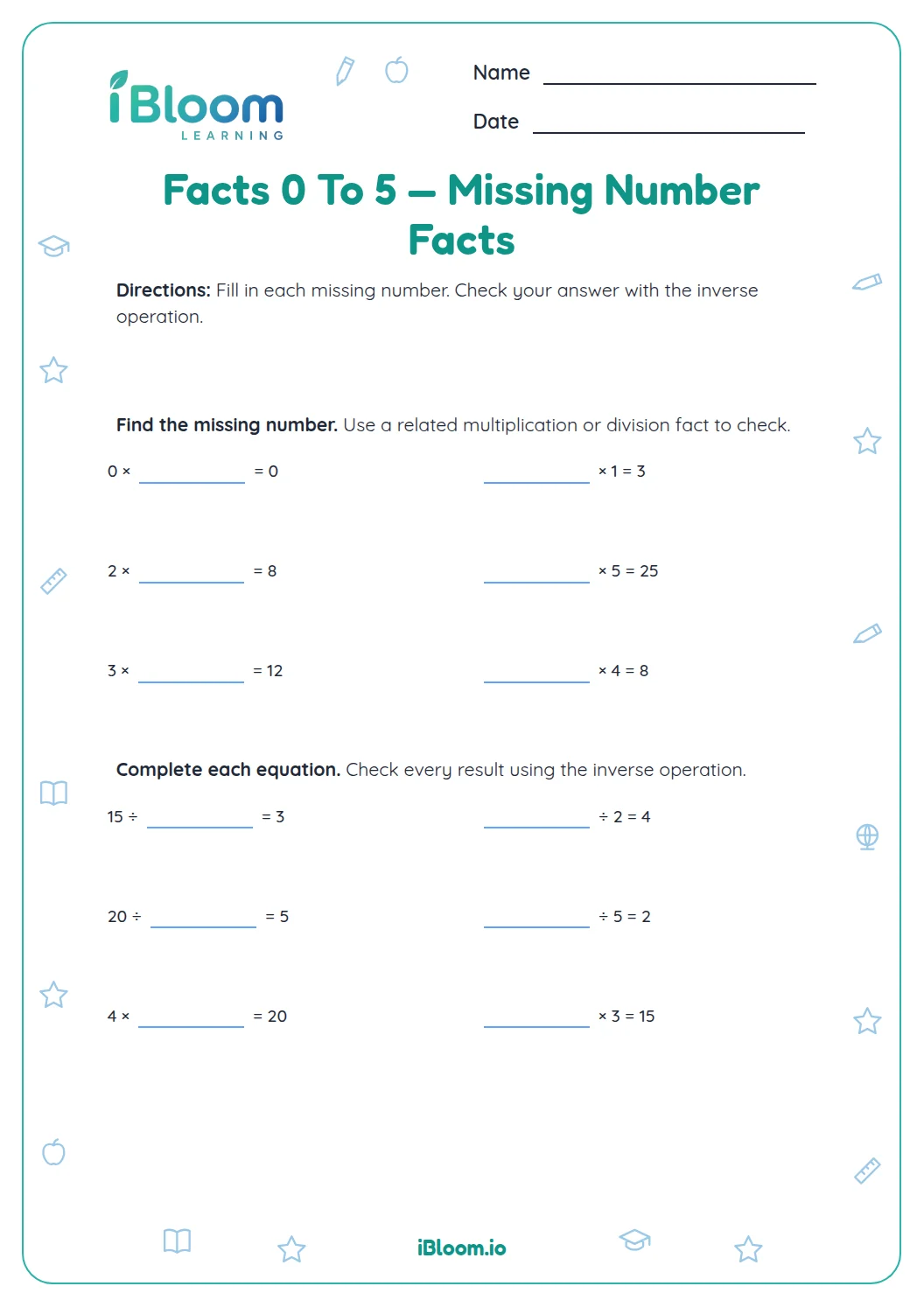
A related page in the multiplication facts collection can provide another set of practice. This sheet focuses on horizontal facts to 10, while the collection includes other tables, missing-factor problems, and fact families. Move on when the student can solve and check these products comfortably.